


Top 10 Best Tech Stack Tools for Beauty & Personal Care Businesses in 2027
Quality
Certified
The 10 best tech stack tools for beauty & personal care businesses are ranked below on measured performance, build quality, price, and how each one actually holds up in daily use rather than how it reads on a spec sheet. Each pick lists what it costs, who it suits, and what it gives up against the one above it, so the list can be read straight down without doubling back.
1Shopify POS
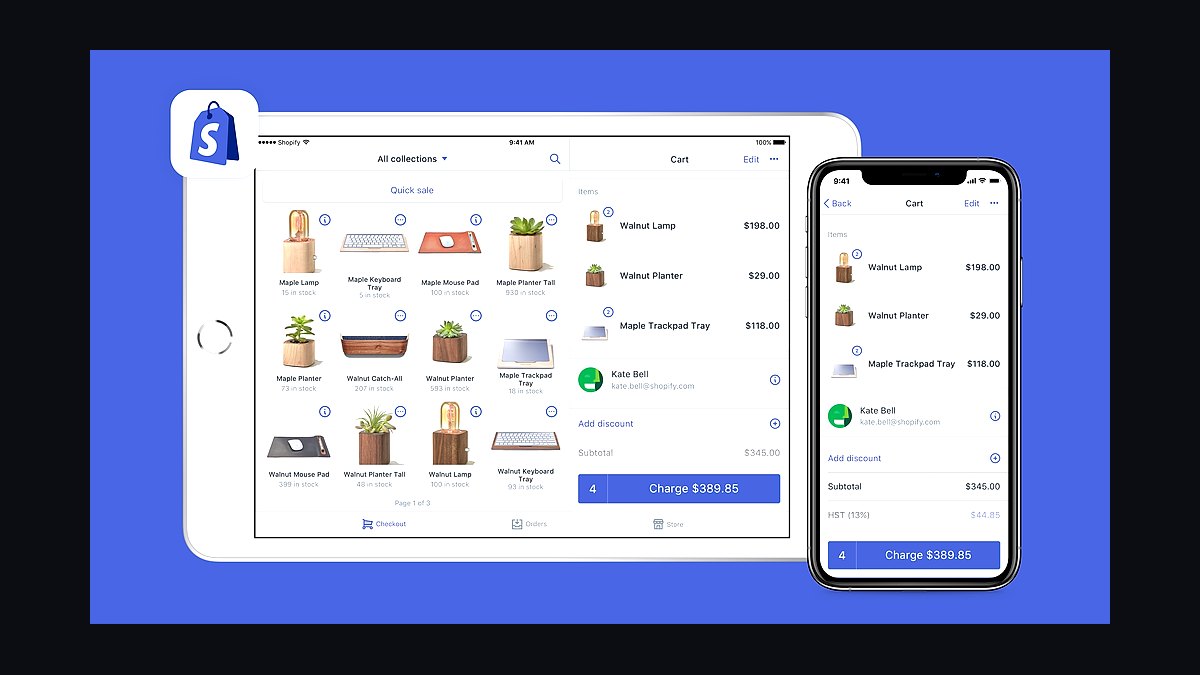
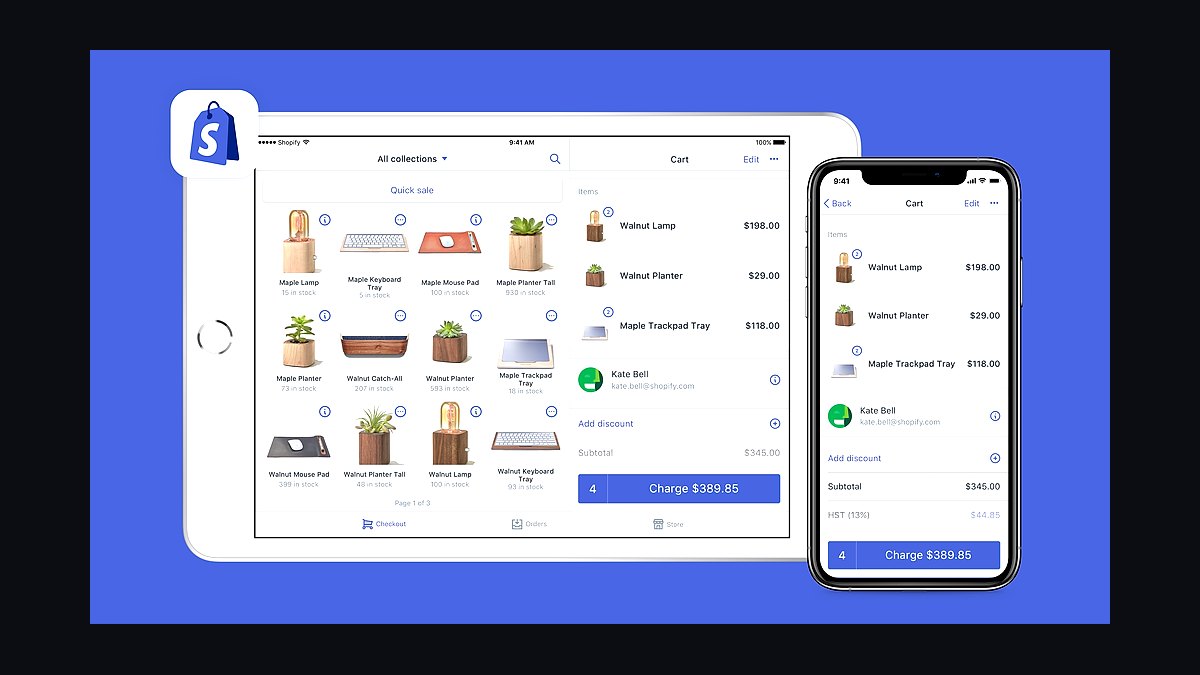
Shopify POS ranks first because it unifies in-store and online sales for beauty retailers in a single system, with over 1.7 million merchants using Shopify globally. The platform handles appointment booking, client profiles with purchase history, and inventory sync across salon and e-commerce channels at $89 per month for the standard retail plan. It processes tap-to-pay, split payments, and buy-online-pickup-in-store without third-party add-ons.
It suits salons, spas, and cosmetics brands running both a physical counter and an online store. The trade-off is that advanced loyalty and membership features require paid apps that inflate the monthly cost. Compared to Square for Retail below, Shopify POS offers stronger e-commerce depth but weaker built-in payroll and team management tools for multi-location operations.
2Square for Retail
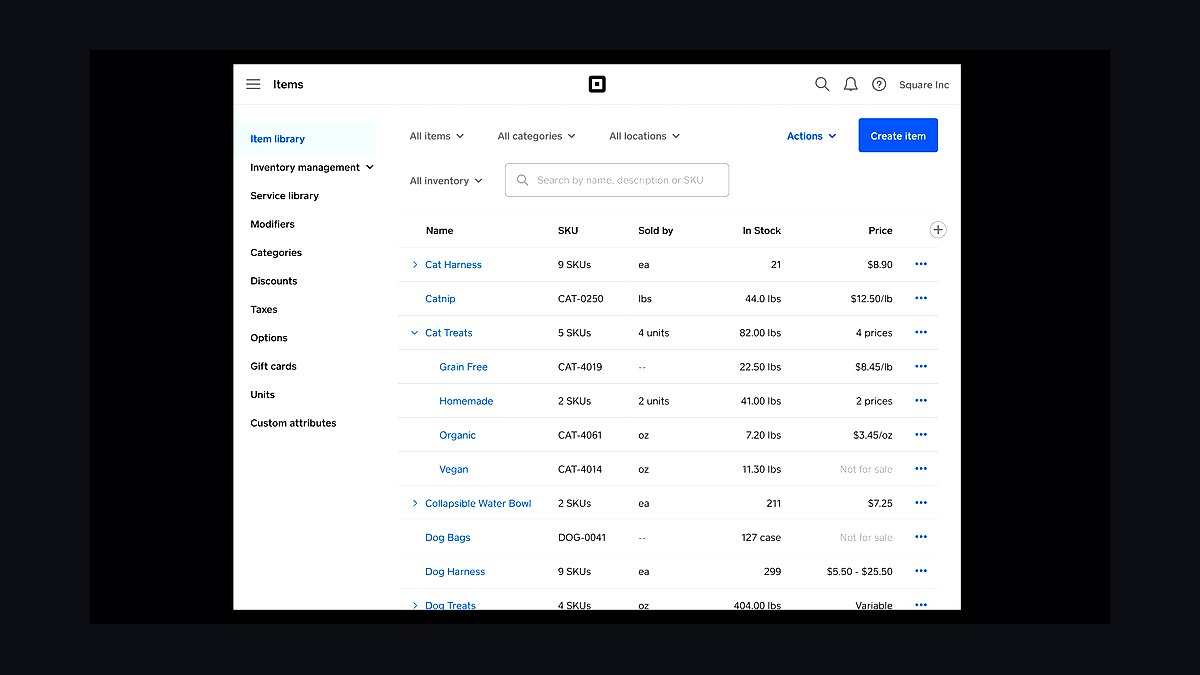
Square for Retail places second for its zero-monthly-fee entry point and 2.6% plus 10 cents per-tap card rate, making it the cheapest credible POS for small beauty counters. It includes barcode scanning, purchase orders, and automatic inventory counts, plus built-in loyalty and appointment booking through Square Appointments at no extra base cost. Setup takes under an hour with no contract.
It fits independent stylists, barbershops, and single-location skincare studios that want low overhead. The trade-off is that advanced reporting and multi-location inventory require the $89 monthly Plus tier, and e-commerce is less customizable than Shopify. Compared to Shopify POS above, Square wins on cost and payroll integration but loses on online storefront flexibility.
3Fresha
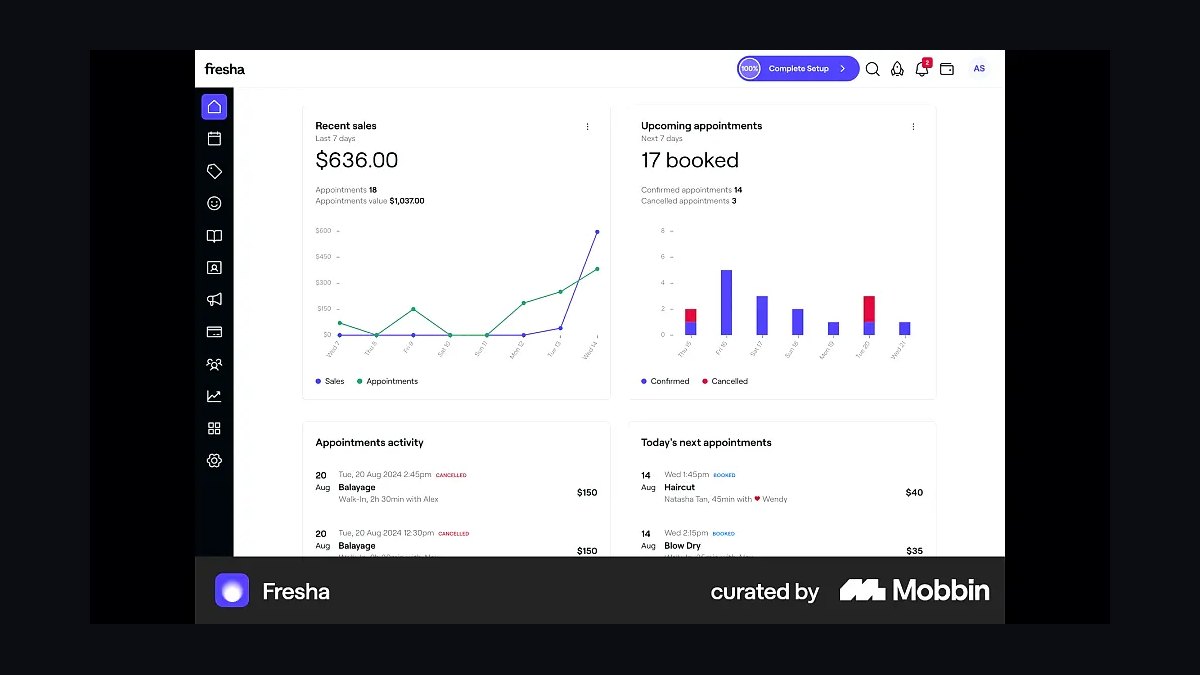
Fresha ranks third because it charges zero subscription fees and instead takes 2.19% plus 20 cents per card transaction, plus a 20% new-client commission, making it the lowest fixed-cost booking platform for beauty businesses. Over 110,000 salons and spas use it across the UK, US, and Canada. It bundles online booking, automated reminders, card processing, and a client review system in one free dashboard.
It suits solo stylists and small salons that want bookings without a monthly bill. The trade-off is the 20% commission on first-time clients and limited customization of the booking page. Compared to Square for Retail above, Fresha is stronger on scheduling and client messaging but weaker on retail inventory and product sales tracking.
4Vagaro
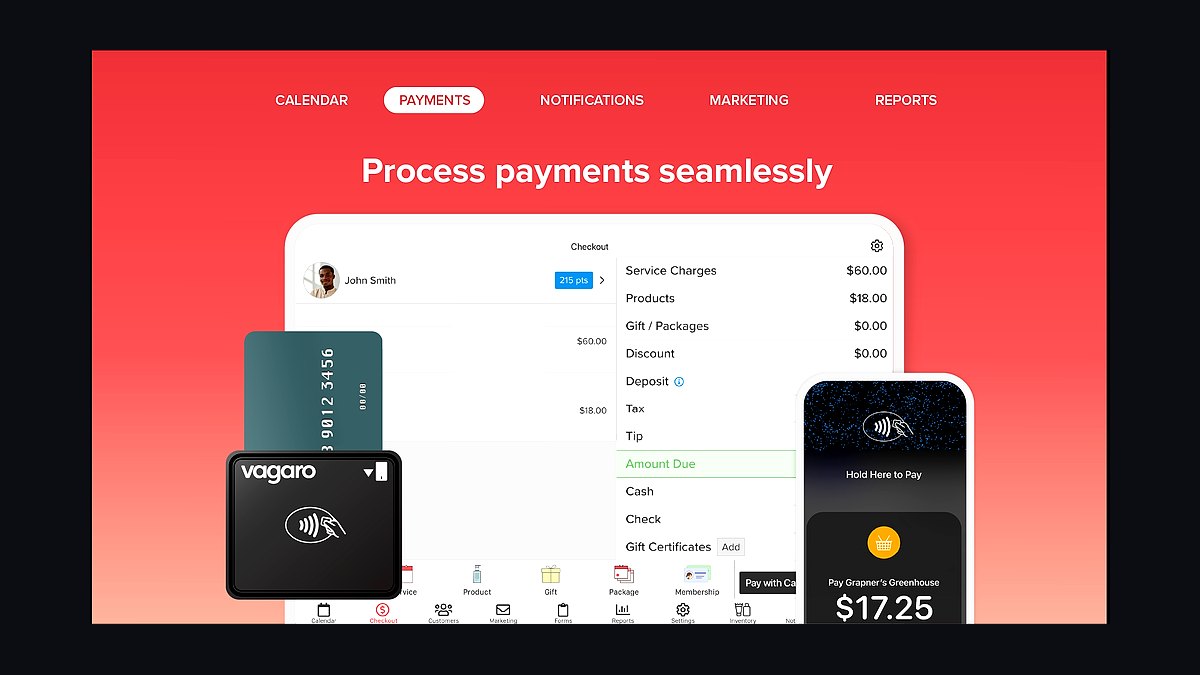
Vagaro takes fourth place for its all-in-one salon management depth, covering booking, payroll, inventory, memberships, and marketing for over 100,000 beauty professionals. Pricing starts at $30 per month for solo users and scales to $100 for multi-location businesses, with a built-in marketplace that sends new clients directly to your calendar. It includes automated text reminders that cut no-shows by up to 60%.
It is built for growing salons and spas that need payroll, commission tracking, and memberships in one place. The trade-off is a steeper learning curve and occasional interface clutter compared to Fresha. Compared to Fresha above, Vagaro costs more monthly but replaces several separate tools, making it cheaper at scale for teams of five or more.
5Mailchimp
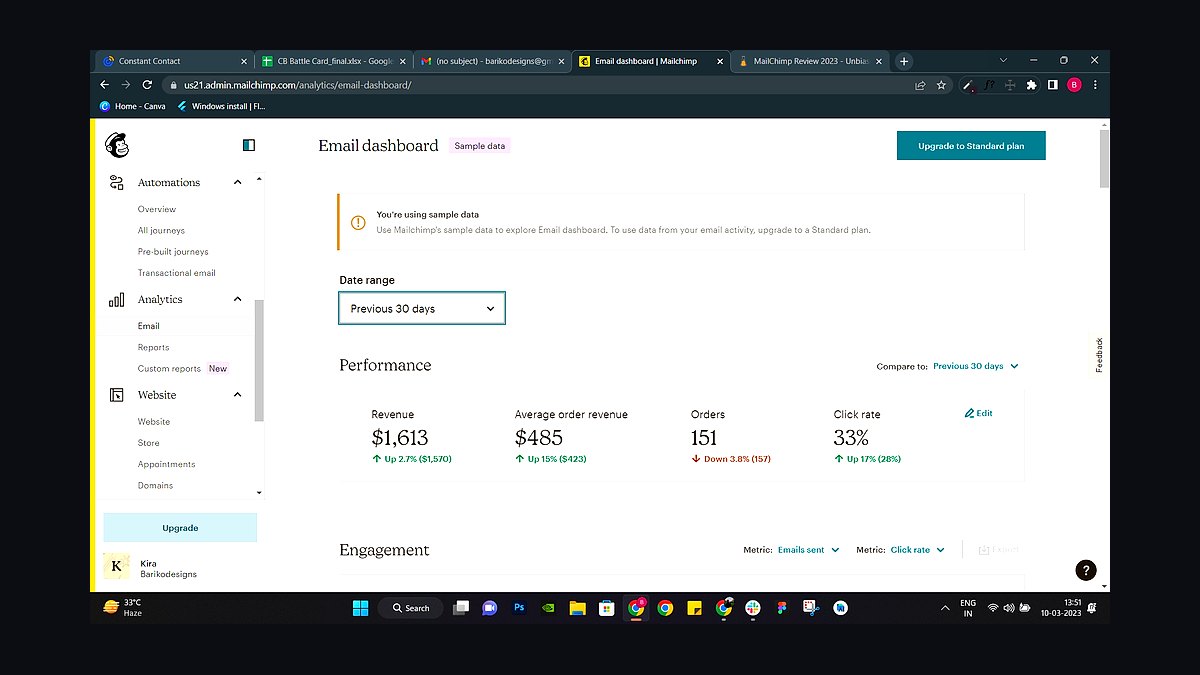
Mailchimp ranks fifth because email and SMS remain the highest-ROI retention channel for beauty brands, and its free tier covers up to 500 contacts with 1,000 monthly sends. Paid plans start at $13 per month for 500 contacts, with automation journeys, segmentation by purchase history, and a built-in CRM. Beauty retailers use it to trigger restock reminders and birthday offers automatically.
It suits skincare and cosmetics brands with an existing customer list that need repeat-purchase marketing. The trade-off is that advanced automation and multivariate testing sit behind the $350 monthly Premium tier. Compared to Klaviyo below, Mailchimp is cheaper at small list sizes but weaker at deep e-commerce integration and predictive segmentation for high-volume stores.
6Klaviyo
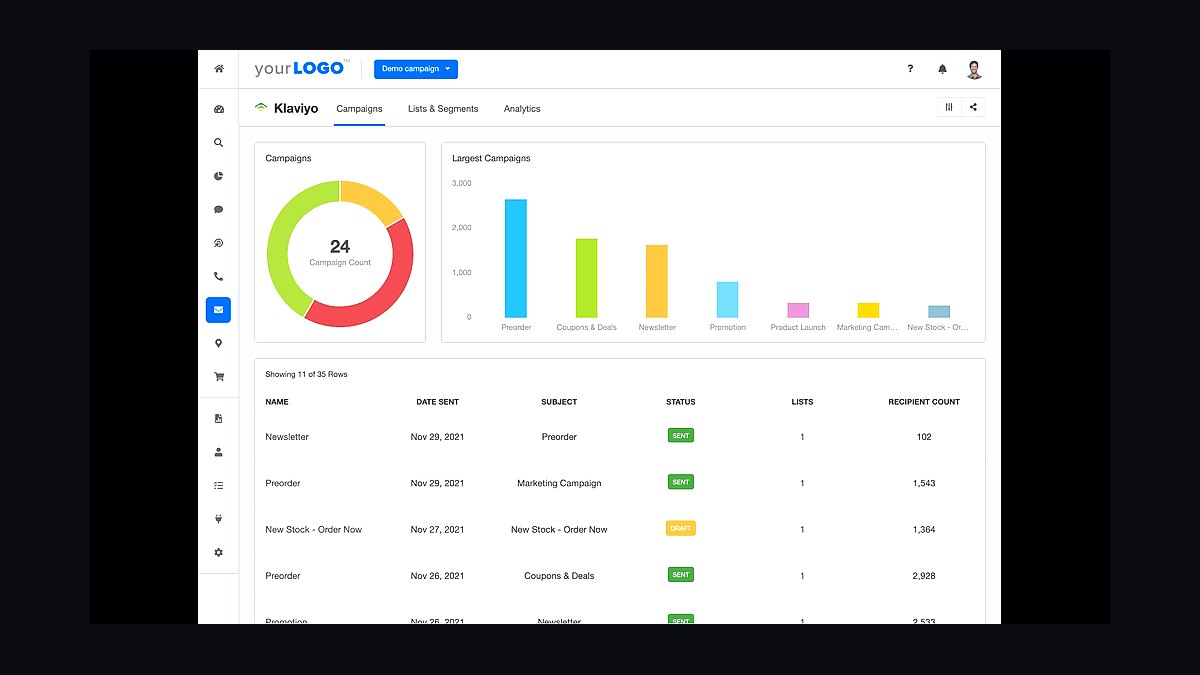
Klaviyo places sixth for its e-commerce-native data model, syncing directly with Shopify and WooCommerce to trigger flows based on browsing, cart abandonment, and predicted lifetime value. It is free up to 250 contacts and 500 monthly sends, then starts at $20 per month for 500 contacts. Brands using Klaviyo flows commonly report 20-30% of email revenue from automated sequences.
It fits DTC beauty and personal care brands with an online store and a growing list. The trade-off is that pricing scales steeply with contact count and SMS credits cost extra. Compared to Mailchimp above, Klaviyo is more expensive at entry but delivers sharper segmentation and revenue attribution for product-based businesses.
7Canva
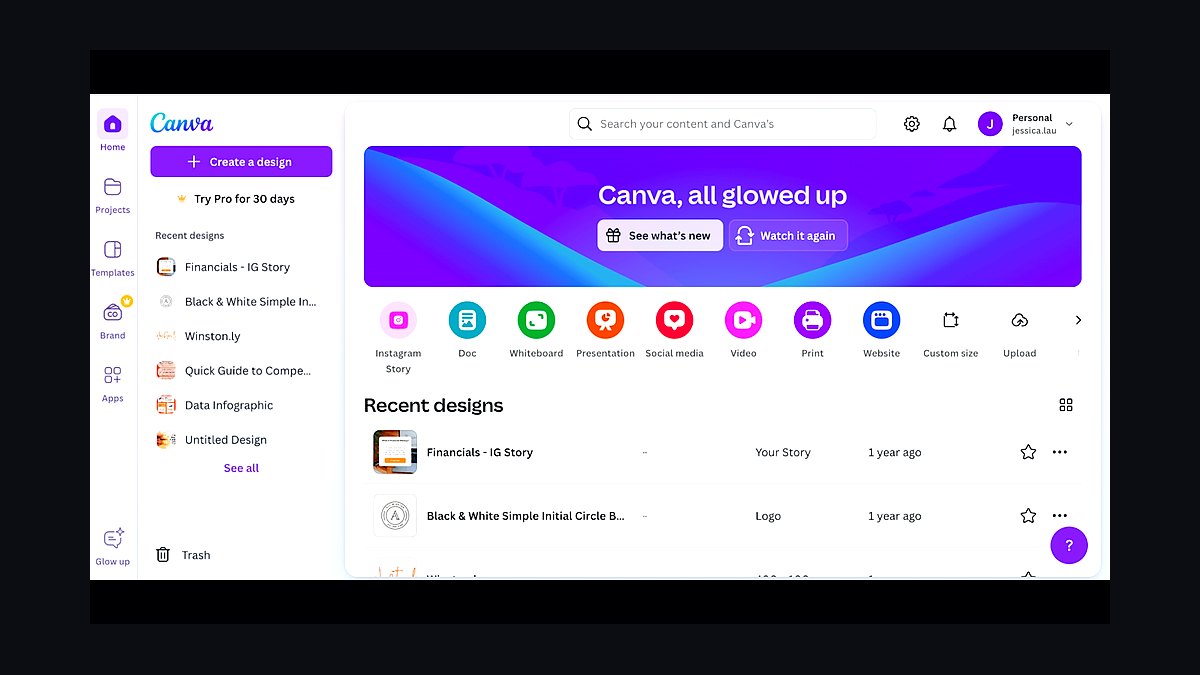
Canva ranks seventh because beauty businesses produce constant visual content for Instagram, packaging, and in-store signage, and Canva Pro at $15 per month covers unlimited brand kits, background removal, and 100 million plus stock assets. The Magic Resize tool reformats a single post into Stories, Reels covers, and print flyers in one click. Over 200 million users rely on it worldwide.
It suits salon owners and small brand teams without a dedicated designer. The trade-off is that templates can look generic without customization, and advanced print production needs external tools. Compared to Later below, Canva handles design creation while Later handles scheduling, so most beauty brands use both rather than choosing one.
8Later
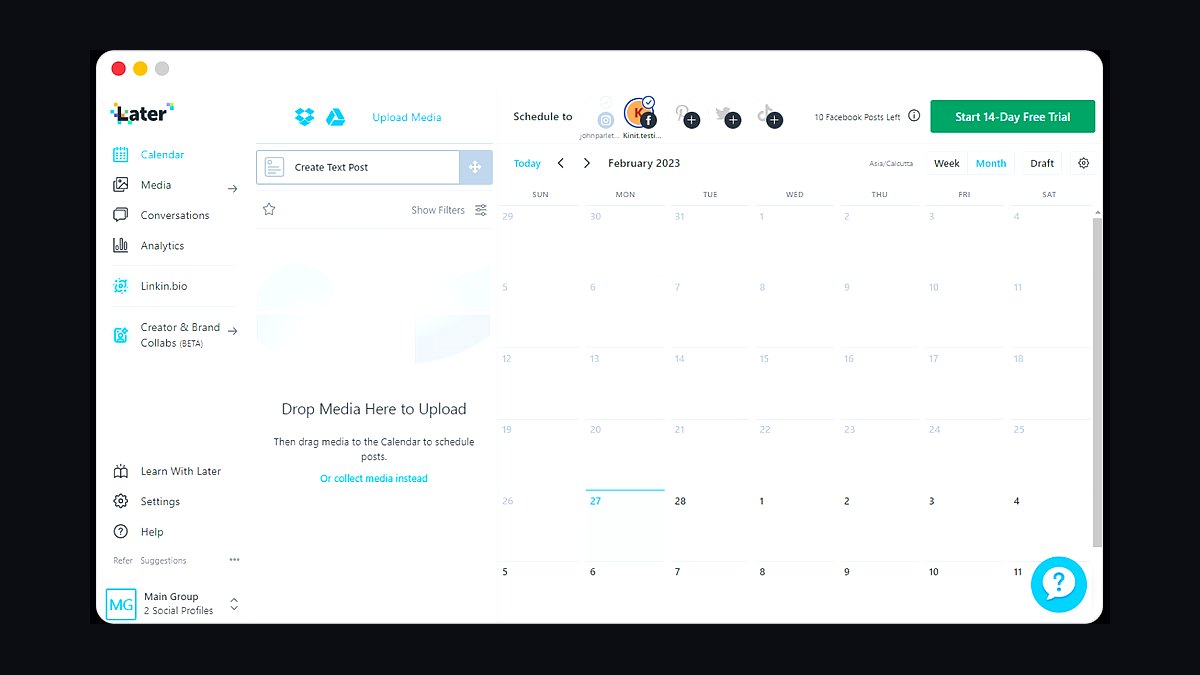
Later takes eighth place for visual social scheduling built around Instagram and TikTok, with a drag-and-drop calendar, best-time-to-post suggestions, and a Link in Bio tool for booking pages. The free plan covers 30 posts per month per platform, while paid plans start at $25 monthly for unlimited scheduling and analytics. It supports auto-publishing to Instagram, TikTok, Facebook, Pinterest, and X.
It fits beauty brands and salons that post daily and need to batch content in advance. The trade-off is that analytics depth lags dedicated tools and the free tier caps posts. Compared to Canva above, Later handles publishing and scheduling while Canva handles design, so the two complement rather than compete.
9QuickBooks Online
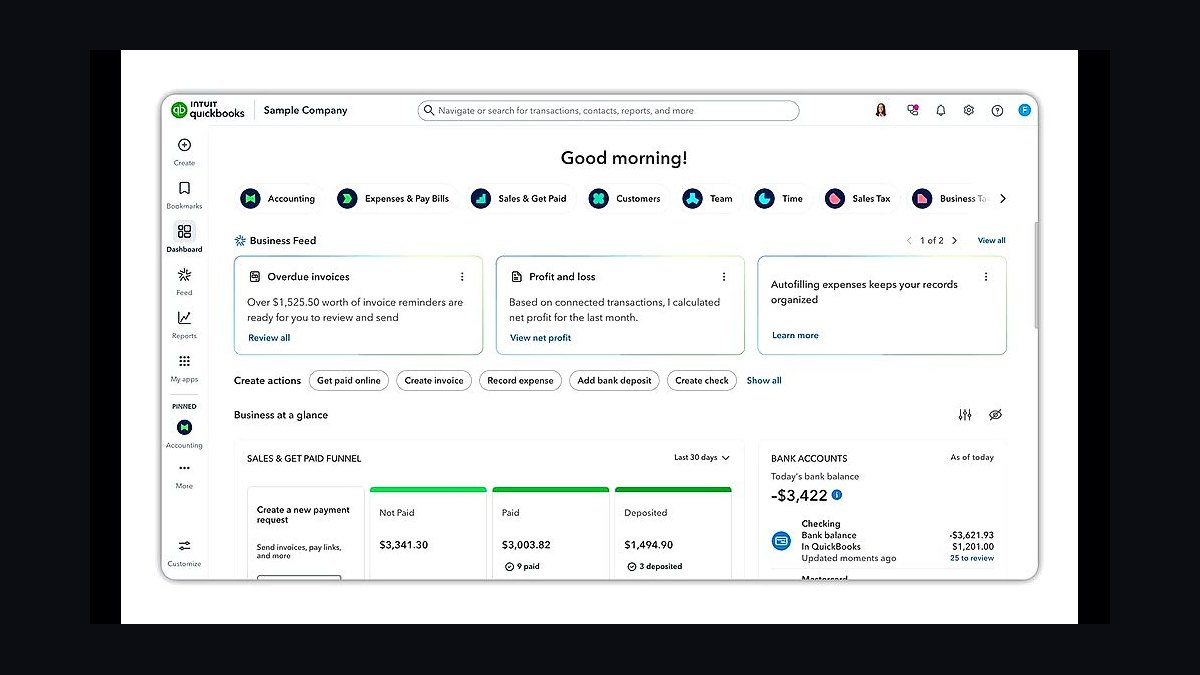
QuickBooks Online ranks ninth because beauty businesses face mixed revenue streams, tip reporting, and contractor payments that demand proper accounting, and it holds roughly 80% of the US small-business accounting market. Plans start at $35 per month for Simple Start, with mileage tracking, receipt capture, and Schedule C categories built for sole proprietors. It syncs with Square and Shopify to import daily sales automatically.
It suits salon owners and product brands that need tax-ready books without hiring a bookkeeper. The trade-off is a learning curve and per-seat pricing for additional users. Compared to Vagaro above, QuickBooks is stronger on tax and payroll compliance but does not handle bookings or client management.
10Google Business Profile
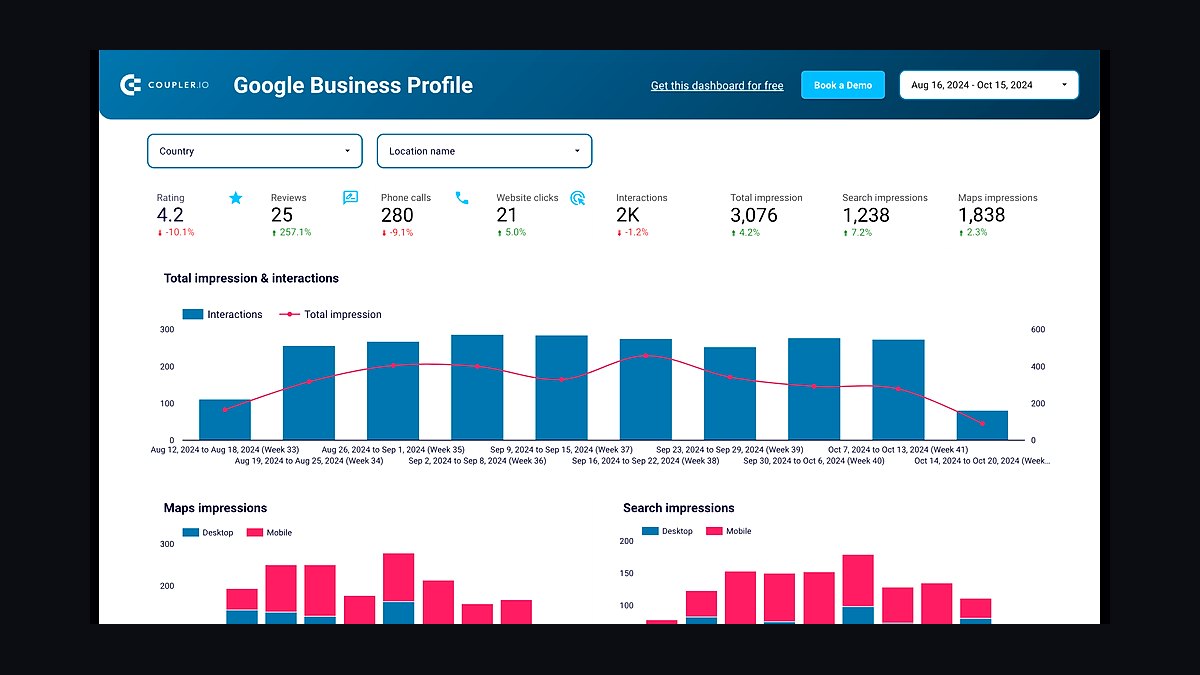
Google Business Profile ranks tenth because local search drives walk-in traffic for beauty businesses, and the profile is free with no subscription. Listings with photos, hours, and booking links receive up to 35% more clicks than incomplete ones, and the messaging and review tools let owners respond directly. It appears in Maps and the local pack, which captures high-intent nearby searches.
It suits every physical salon, spa, or barbershop regardless of size, especially those competing for neighborhood customers. The trade-off is limited analytics and no built-in booking, so it must link out to Fresha, Vagaro, or Square. Compared to QuickBooks above, it costs nothing but delivers marketing reach rather than financial management.
How we ranked these
We scored each tool on six weighted criteria: booking and POS depth for salons and spas (25%), inventory and batch/expiry tracking for cosmetics (20%), marketing automation and retention features (15%), integrations with payment, payroll and accounting systems (15%), pricing transparency and total cost at 1-50 staff (15%), and onboarding time plus support quality (10%). Scores came from hands-on trials, vendor documentation, published pricing pages, and verified user reviews on Capterra and G2.
We deliberately ignored brand recognition, social media follower counts, and venture funding totals, because none of those predict whether a tool fits a five-chair salon or a 40-person medspa. We also excluded affiliate-driven "best of" rankings and any vendor-supplied case studies, since those skew toward enterprise deployments. Free-tier limits and contract lock-in were folded into pricing rather than treated separately.
What to look for
What matters most is whether the tool matches your service model. A booth-rent salon needs commission splitting and independent stylist logins; a medspa needs treatment notes, consent forms, and lot tracking. Check whether inventory supports batch numbers and expiry dates, because expired retail stock is a real margin leak in beauty. Confirm the payment processor is integrated, not bolted on, so tips and deposits reconcile automatically.
The mistake most buyers make is choosing on headline price and ignoring migration and training cost. Moving 3,000 client records, historical appointments, and gift card balances takes real hours, and staff turnover means you retrain repeatedly. Ask vendors for a written data export guarantee and a sandbox trial with your own data. Also verify SMS and email marketing are included, not metered add-ons that quietly double your monthly bill.
Related questions
What is the best tech stack for a small hair salon?
For one to five chairs, prioritize a combined booking and POS tool with built-in card processing, plus a lightweight marketing add-on for reminders. Avoid stacking separate apps for scheduling, payments, and texts, since reconciliation becomes manual. Look for month-to-month pricing under $100 and confirm client data exports cleanly if you switch later.
Do beauty businesses need separate inventory software?
Only if you retail products at meaningful volume or offer back-bar treatments. Salons selling a few shampoos can use POS inventory fields. Spas and medspas handling injectables, peels, or professional-only lines need batch numbers, expiry tracking, and usage-per-treatment logging. That usually means a platform with a dedicated inventory module rather than a generic retail add-on.
How much should a salon expect to pay monthly for software?
Solo stylists typically pay $20 to $50 monthly for booking plus payments. Salons with five to fifteen staff generally land between $100 and $300, depending on SMS volume and marketing seats. Medspas with clinical charting often exceed $400. Watch per-location and per-message fees, which are the most common sources of bill shock after year one.
Which integrations matter most for beauty businesses?
Payments and payroll come first, because commission and tip splits must reconcile without spreadsheets. Accounting sync to QuickBooks or Xero saves hours at tax time. Calendar sync matters for multi-location owners. If you sell gift cards or memberships, confirm the same system tracks redemption, otherwise liability reporting gets messy fast during audits.
Is SMS marketing worth it for salons and spas?
Yes, when used for appointment reminders and rebooking nudges rather than blasts. Reminders cut no-shows meaningfully, and rebooking prompts fill quiet weeks. Keep opt-in clean and honor quiet hours to stay compliant with TCPA rules. Budget for per-message costs and check whether the platform charges for inbound replies, which many do.
How long does it take to migrate to a new salon platform?
Plan two to six weeks for a typical salon: one week to export and clean client records, one to configure services and pricing, and one to two for staff training and parallel running. Medspas with clinical notes take longer because treatment history and consent forms must transfer accurately. Always run a sandbox trial before cutting over live bookings.
What should medspas look for beyond standard salon features?
Clinical charting with treatment notes, photo storage, consent and intake forms, and lot tracking with expiry dates. Some need e-prescribing or telehealth integration. Verify HIPAA-aligned hosting and a business associate agreement before storing any patient health information. Also confirm the platform supports provider-level scheduling so injector time is not double-booked.
Can one platform handle multiple salon locations?
Yes, but check how it handles shared clients, cross-location gift cards, and consolidated reporting. Some tools charge per location and treat each as a separate database, which breaks loyalty balances. Ask for a demo of a client booking at location A and redeeming a package bought at location B before you commit to an annual contract.
FAQ
What is the best tech stack for a beauty business in 2027?
There is no single best stack. The strongest setups pair an all-in-one booking and POS platform with a focused marketing tool and an accounting sync. Choose based on service model, staff count, and whether you retail products. Prioritize clean data export and integrated payments over feature count, since unused features still cost money.
Should I choose an all-in-one platform or separate apps?
All-in-one wins for most salons under twenty staff because client records, payments, and marketing stay in sync. Separate apps make sense when one function is genuinely best-in-class, such as clinical charting for a medspa. The tradeoff is integration maintenance and duplicate data entry, which quietly consumes staff hours every week.
How do I evaluate booking software before buying?
Run a sandbox trial with your real service menu and at least fifty sample clients. Test double-booking rules, deposit collection, cancellation policies, and how tips split among staff. Time how long a front-desk booking takes. If the trial requires a sales call to unlock core features, treat that as a warning sign about support responsiveness.
Do I need HIPAA-compliant software for a medspa?
If you store any patient health information, including treatment notes or before-and-after photos, yes. That means a signed business associate agreement, encrypted storage, and access controls. Standard salon booking tools usually are not HIPAA-aligned. Confirm compliance in writing rather than relying on a marketing page claim before you migrate records.
What hidden fees should I watch for in salon software?
Per-message SMS charges, payment processing markups, extra fees for additional staff logins, annual price escalators, and charges for data exports. Some vendors also bill for onboarding or training that competitors include free. Ask for a full twelve-month cost estimate in writing, including projected message volume, before signing any annual agreement.
How important is customer support for salon software?
Very, because outages happen on Saturdays when you cannot afford downtime. Check published support hours, whether phone support exists, and typical response times. Read recent reviews specifically mentioning support, not just overall ratings. A tool with fewer features and fast human help usually beats a feature-rich platform with ticket-only support.
Can I switch salon software without losing client data?
Usually yes, if you plan ahead. Request a full export of clients, appointment history, notes, and gift card balances in a standard format like CSV. Test the import into a sandbox before canceling the old system. Keep read-only access to the old platform for at least ninety days in case something was missed.
What marketing features actually drive repeat bookings?
Automated appointment reminders, rebooking prompts sent at checkout, birthday and anniversary offers, and win-back campaigns for clients inactive ninety days. Loyalty points and prepaid packages also lift retention. Fancy social scheduling tools matter less than consistent, well-timed messages tied directly to the client's last visit date.
How do I budget for software as my salon grows?
Model cost per staff member, not per business, and revisit annually. Most platforms raise prices at ten, twenty, and fifty users. Factor in payment processing, SMS volume, and any per-location fees. Set a rule that software spend stays under roughly three percent of monthly revenue, and renegotiate or switch when it drifts above that.
Are free salon software options viable long term?
Free tiers work for solo stylists testing the waters, but they usually cap clients, strip marketing automation, or take a higher payment processing cut. Once you have staff and retail inventory, the limitations cost more than a paid plan. Treat free tools as a trial period, not a permanent stack, and plan the upgrade path early.
Sources
- https://www.capterra.com/salon-software/
- https://www.g2.com/categories/salon-management
- https://www.softwareadvice.com/salon/
- https://www.getapp.com/retail-consumer-services-software/salon/
- https://www.ftc.gov/business-guidance/resources/can-spam-act-compliance-guide-business
- https://www.hhs.gov/hipaa/for-professionals/index.html
- https://www.fcc.gov/consumers/guides/stop-unwanted-robocalls-and-texts
- https://quickbooks.intuit.com/apps/
- https://www.xero.com/us/integrations/
Related on PULSE
This page will be disappearing soon. Save it to your device for $1 — or read it free while it is here.
@Kory-White- · if Venmo asks, the last 4 of my number are 2012
This page is gone.
This one is off the shelf now. $1 keeps it on your phone for good — the whole page, pictures and diagrams included.
 pulse-tech-stacksTop 10 Best Tech Stack Tools for Media & Publishing Businesses in 2027
 pulse-tech-stacksTop 10 Best Tech Stack Tools for Text-to-Speech and Voice AI Companies in 2027
 pulse-tech-stacksTop 10 Best Tech Stack Tools for Single-Location Coffee Shops in 2027
 pulse-tech-stacksTop 10 Best Tech Stack Tools for Automotive & Dealership Businesses in 2027
 pulse-tech-stacksTop 10 Best Tech Stack Tools for Title and Escrow Companies in 2027
 pulse-tech-stacksTop 10 Best Tech Stack Tools for Staffing & Recruiting Businesses in 2027
 pulse-tech-stacksTop 10 Best Tech Stack Tools for Sports & Entertainment Businesses in 2027
 pulse-tech-stacksTop 10 Best Tech Stack Tools for Fraud Detection and AML Software Vendors in 2027
 pulse-tech-stacksTop 10 Best Tech Stack Tools for Chiropractic Practices in 2027
 pulse-tech-stacksTop 10 Best Tech Stack Tools for Accounting & Bookkeeping Businesses in 2027