

Best Cellular and Wireless Carrier in New Hampshire in 2027
 Curated byKory White · Fractional CRO · Maryland
Quality
Certified

For 2027, Verizon is the strongest overall cellular and wireless carrier in New Hampshire because its low-band LTE and 5G footprint reaches deepest into the White Mountains, Lakes Region, and North Country. T-Mobile wins on speed and price in Manchester, Nashua, and the Seacoast, while UScellular remains the practical northern-county fallback.
What carrier quality actually means in a state shaped like New Hampshire
New Hampshire is a hard state to serve, and understanding why explains almost every carrier ranking you will read. The state is roughly 9,300 square miles, but the population is stacked heavily into a narrow southern band — Hillsborough and Rockingham counties hold close to half the residents, while Coos County in the far north holds under 3% of the population across a huge, forested, mountainous landmass. Carriers build where subscribers are. That single economic fact produces the pattern every Granite Stater already knows from experience: four or five bars in Nashua, a hard drop somewhere past Plymouth, and a long stretch on Route 16 north of Conway where your phone is decoration.
The technical layer underneath that pattern matters if you want to make a good decision rather than a brand-loyal one. Cellular coverage is a function of spectrum band, tower density, and terrain. Low-band spectrum — the 600 MHz and 700 MHz ranges — travels far and penetrates foliage and building material well, but carries less capacity, so speeds are modest. Mid-band spectrum, especially the 2.5 GHz and C-band ranges that carry most current 5G, delivers dramatically higher throughput but has a much shorter usable radius and is stopped more easily by hills, dense hardwood canopy, and granite. That trade-off is the whole story in New Hampshire. A carrier with a deep low-band deployment looks better on a coverage map of the state; a carrier with dense mid-band looks better on a speed test in a city.
There is a second dimension most rankings underweight: the difference between native coverage and roaming coverage. A carrier's map may show a rural town as "covered," but if that coverage is delivered through a roaming agreement with a partner network, the experience is materially different. Roaming data is typically throttled after a modest monthly allotment, hotspot use is often disabled entirely, and voice-over-LTE handoffs can be less reliable, meaning dropped calls when you move between a native cell and a partner cell. Anyone who spends real time north of the notches should treat native coverage as the only number that counts.

The third dimension is capacity versus coverage during peak load. New Hampshire's population swells seasonally — leaf season on the Kancamagus, ski weekends in the Mount Washington Valley, summer at Hampton Beach and around Lake Winnipesaukee. A tower that performs fine in April can be saturated on a Saturday in October. This is where plan tier suddenly matters more than carrier: if your plan gives you a limited pool of "premium" or prioritized data and you exceed it, you get deprioritized behind full-priority traffic exactly when the tower is busiest. That is why two people standing next to each other on the same wireless network can have completely different experiences.
Finally, a modern carrier evaluation has to account for satellite messaging and fixed wireless, both of which changed the calculus for rural New Hampshire more than any incremental tower build. Direct-to-device satellite text is now a real fallback in dead zones on hiking trails and back roads, and 5G home internet has become a legitimate broadband alternative in towns where the wireline options are thin. Neither of those shows up in a traditional "best carrier" comparison, and both should.
How to evaluate a carrier for your specific address and routes
The single biggest mistake in carrier selection is choosing based on a statewide verdict instead of your own geography. A ranking is a starting hypothesis; your ZIP code, your commute, and your weekend routes are the actual test. Here is a repeatable process that produces a defensible answer in about two weeks of low effort.
Start by writing down your real coverage footprint — not where you live, but where you use the phone. For most New Hampshire residents that is a list of five to eight places: home, work, the school or daycare, the grocery run, the in-laws, the camp or trailhead, and the interstate segment connecting them. If you commute I-93 from Manchester to Concord daily and ski Waterville twice a month, those are your test tracks. If you live in Berlin and drive Route 16 to Gorham, that is a completely different evaluation and a completely different winner.

Next, pull each carrier's own coverage map and check every point on that list individually, paying attention to the legend rather than the color wash. Look for the distinction between native 5G, native LTE, partner/roaming, and no service. Carrier maps are predictive models, not measurements, and they are generally optimistic at the edges — treat the boundary between "good" and "fair" as the boundary between "works" and "coin flip."
Then triangulate with independent measurement. Crowd-sourced network reports and drive-test rankings both publish state-level and metro-level results, and the useful signal is not the headline award but the consistency and availability metrics: what percentage of the time a user had a usable connection, not the peak speed a lucky test recorded downtown.
The step that most people skip is the one that actually decides it: test with a real SIM before you port. Nearly every major carrier now supports an eSIM trial that runs on the live network alongside your existing line for a period of days to weeks, at no cost and without touching your number. Install the trial, then drive your list. Watch three things — whether calls connect on the first try, whether a map app loads at a stop, and whether a video call survives the drive. Speed test numbers are the least useful of the four; a stable 15 Mbps beats a spiky 300 Mbps for everything except large downloads.

Only after the trial should you look at price. Porting a number is a same-day operation in most cases, and the process is straightforward: keep the old line active, gather your account number and transfer PIN from the current carrier, initiate the port with the new carrier, and let the old line cancel automatically when the port completes. Never cancel first — canceling releases the number and can make it unportable.
What it costs: plan tiers, add-ons, and the fine print that moves the number
Wireless pricing in the United States has settled into a fairly predictable structure across the big three postpaid carriers and their prepaid and MVNO offshoots, and knowing the structure is more durable than memorizing any specific price, since promotions rotate constantly.
Postpaid unlimited plans generally come in three tiers. The entry tier runs roughly in the $60-$80 per month range for a single line with autopay and paperless billing, and it typically includes unlimited talk, text, and data with a limited pool of prioritized data and minimal or no hotspot allowance. The middle tier, usually another $10-$20 per line, raises the prioritized data pool substantially and adds a meaningful hotspot bucket. The top tier, often $90-$100+ per line, adds the largest priority pool, faster hotspot, better international handling, and bundled streaming subscriptions. Per-line pricing drops sharply with multiple lines — a four-line family plan often lands in the $30-$50 per line range on the same tier that costs $80 for one line, which is why single-line shoppers are the ones who benefit most from prepaid and MVNO alternatives.

MVNOs — carriers that resell capacity on the big three networks — are where the real savings live for light and moderate users. Prepaid brands owned by the network operators themselves generally get better treatment than independent resellers, and prepaid plans on the same physical network commonly run $25-$45 per month for unlimited service with a deprioritization clause. The trade is real: during congestion, MVNO traffic yields to postpaid traffic. In a Nashua parking lot on a Saturday that can mean the difference between a page loading and a spinner. In Tamworth on a Tuesday it means nothing at all.
Then there are the costs that never appear in the advertised price. Regulatory fees, surcharges, and state and local taxes typically add somewhere in the range of 5-20% on postpaid plans depending on the jurisdiction and line count; prepaid plans more often quote all-in. Device financing is the other big one. A phone "on us" is nearly always a bill credit spread over 24 or 36 months, contingent on staying on a qualifying plan for the full term. Leave early and the remaining device balance accelerates. That structure quietly converts a no-contract plan into a multi-year commitment, and it is the single most common reason people feel trapped with a carrier that does not work at their house.
Add-ons stack quickly: device protection runs roughly $8-$20 per line per month depending on tier, international day passes are commonly around $10-$12 per day per line, and extra hotspot or higher-speed hotspot is usually a separate monthly charge. A "cheap" $60 line with protection and a financed phone realistically bills closer to $95-$110.
Timelines are worth setting expectations on too. Porting a number typically completes within a few hours for wireless-to-wireless and can take one to several business days for a landline port. eSIM activation is usually minutes. Trade-in credits generally start appearing on the second or third bill, not the first, and the first bill after switching is almost always higher than steady state because it includes partial-month proration plus activation charges.

Where New Hampshire households and small businesses get this wrong
The most expensive mistake is optimizing for the wrong metric. People shop peak download speed because it is the number carriers advertise and the number a speed test app returns, but almost nobody's daily experience is limited by peak throughput. Streaming video needs single-digit megabits. A video call needs a few megabits with low jitter. Navigation needs a few hundred kilobits and, above all, needs to not disappear. Consistency and availability are the metrics that map to satisfaction; speed is the metric that maps to marketing.
The second mistake is trusting the coverage map at the boundary. Maps are propagation models. They assume a device outdoors, at a typical height, with a clear-ish path. Inside a New Hampshire house with foil-faced insulation, or in a valley, or under wet snow-loaded hemlock, the real edge sits well inside the mapped edge. The fix is cheap and underused: enable Wi-Fi calling on every line. Wi-Fi calling routes voice and text over your home broadband and eliminates most in-home dead-zone complaints outright, and it works on all the major networks. Before buying a signal booster or a network extender, confirm Wi-Fi calling is on and that your router is not blocking the required traffic.
Third, households buy the top plan tier for everyone when only one or two people need it. Priority data matters for the person who tethers a laptop from a job site or sits in a crowded venue; it is irrelevant for the kid who is on home Wi-Fi twenty hours a day. Mixed-tier family plans are supported by every major carrier and routinely cut a family bill by $20-$40 a month with zero experienced difference.

Fourth, small businesses treat wireless as a consumer purchase. If you run a service business out of Concord with trucks in the field, the things that matter are hotspot allowances, priority tiers, pooled data, device management, and — for anyone in public safety or working alongside it — access to the dedicated public-safety network that operates on prioritized spectrum. A retail consumer plan will nominally work and will quietly fail on the day it matters, because that is exactly when the network is congested.
Fifth, people ignore band support when buying a phone, especially unlocked or imported models and older hand-me-downs. A phone that lacks the low-band 5G or the specific mid-band a carrier uses will underperform on that network in ways that look like carrier failure. Before you blame the network, check the device's supported bands against the carrier's deployment, and confirm the phone is on the carrier's approved device list for features like VoLTE and Wi-Fi calling — some networks now refuse voice service entirely on devices that lack VoLTE.
Sixth, and specific to this state: people forget the seasonal load pattern. Choosing a carrier during mud season in a mountain town tells you little about how it behaves on Columbus Day weekend when the same tower is serving ten times the devices. If your worst-case need is the busy season, test during the busy season or assume a meaningful degradation.
Seventh, emergency preparedness gets skipped. New Hampshire has extended power outages from ice and wind events, and cell sites have finite battery backup. Keep a car charger and a battery bank, know which of your devices supports satellite emergency messaging, and confirm your 911 registered address is correct on any line that uses Wi-Fi calling — that address is what gets dispatched if you call over Wi-Fi.

Choosing among the networks: a decision framework by where you actually live
Rather than a single winner, think in profiles. Each profile has a clear best answer, and the answers differ more than the marketing does.
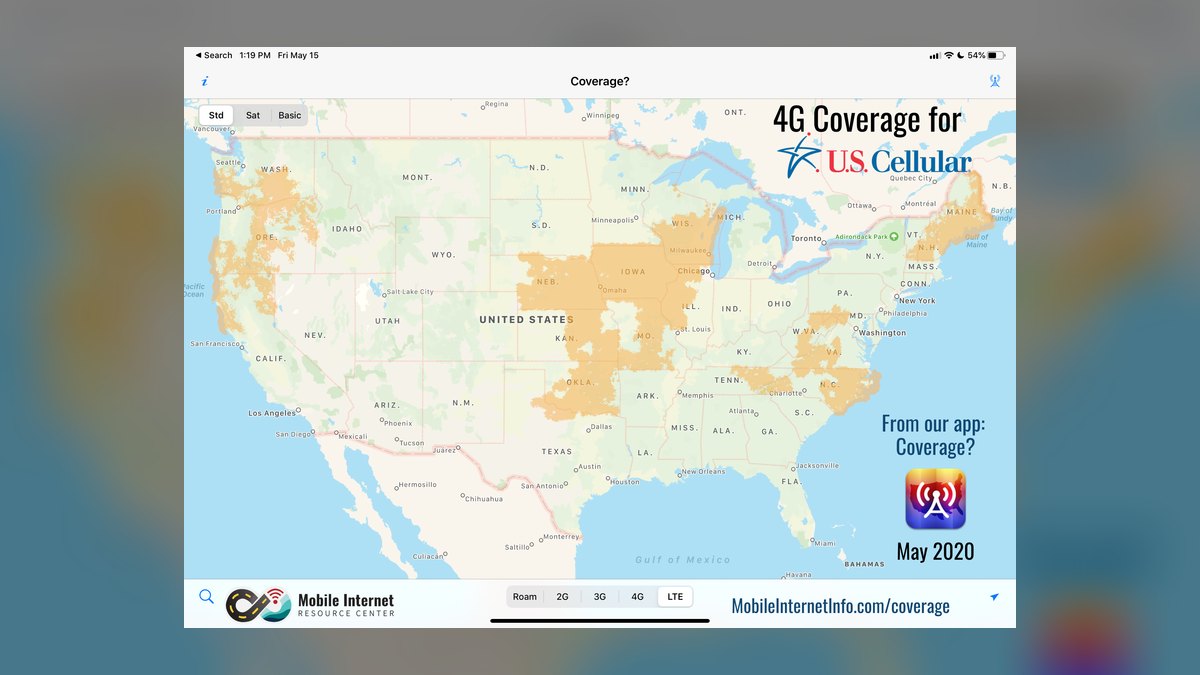
If you live or spend meaningful time in the North Country or the White Mountains — Berlin, Colebrook, Pittsburg, Errol, Gorham, Lancaster, or anywhere along Route 16 and Route 302 — prioritize native low-band LTE footprint above everything. Verizon has historically had the deepest rural build in this part of the state, and the regional carrier UScellular has long-standing native coverage in the northern counties that the national carriers thin out in. Speed is a secondary concern here; the question is whether a call completes at all. Pair whichever you choose with a device that supports satellite messaging, and consider a cellular signal booster for the house if your carrier permits it.
If you live in the southern tier — Manchester, Nashua, Salem, Derry, Londonderry, Bedford, Merrimack — you have genuine competition and can shop on price and speed. T-Mobile's dense mid-band deployment generally delivers the highest sustained throughput in these markets, and its pricing on both postpaid and its prepaid brands is aggressive. Verizon and AT&T both have strong 5G here as well. This is the profile where an MVNO makes the most sense, because tower density is high enough that deprioritization rarely bites.

If you are on the Seacoast — Portsmouth, Dover, Rochester, Exeter, Hampton — the situation resembles the southern tier with one wrinkle: extreme seasonal load at the beaches and a real risk of picking up a Maine-side tower near the border, which is a non-issue domestically but matters for anyone tracking usage across a corporate boundary. All three national networks perform well; pick on price.
If you are in the Lakes Region or the Monadnock region — Laconia, Meredith, Wolfeboro, Keene, Peterborough — you are in the genuine middle. Coverage exists but is uneven, and the on-water experience around Winnipesaukee is different from the on-shore experience because you lose the terrain shielding but also lose proximity to towers. Test before committing, and lean toward the carrier with the deeper low-band build if you boat.
If your priority is home internet rather than mobile, 5G fixed wireless deserves a serious look in any town where the wireline choices are one cable incumbent and slow DSL. It is generally a flat monthly fee with no equipment rental and no contract, performance is good where mid-band 5G is strong, and it is a genuine competitor in the southern half of the state and in the larger northern towns. It is not a fit where only low-band service reaches, and it is worth confirming your address is in a served area, since capacity is allocated per-sector.
If you are cost-driven above all, the sequence is: determine which of the three physical networks works at your addresses, then buy the cheapest brand riding that network, accepting deprioritization. A Verizon-network MVNO gives rural coverage at a fraction of postpaid pricing; a T-Mobile-network MVNO gives urban speed cheaply. There is no reason to pay postpaid pricing for coverage you can get for less, unless you specifically need priority data or the bundled perks.
Adjacent decisions that ride on the same choice
Picking a wireless carrier is rarely a standalone decision, and the downstream effects are worth planning for in one pass instead of three.
Home broadband is the first. If 5G home internet is viable at your address, bundling it with your mobile lines often produces a discount on one or both, and it gives you a second independent path for Wi-Fi calling if the wireline goes down in a storm. Conversely, if you keep cable internet, the cable operator's own mobile service — which rides a national network as an MVNO — is frequently the cheapest per-line option available to existing internet subscribers, particularly for low-data users on per-gigabyte pricing.
Device strategy is the second. The financing structure means the phone decision and the carrier decision are coupled for 24-36 months. Buying a phone outright, unlocked, decouples them entirely and preserves your ability to switch the moment service degrades — worth real money if you are not certain about coverage at a new address. If you do finance, understand that trade-in credits are usually tied to the plan tier and to staying put, and read what happens if you downgrade the plan mid-term.
Business continuity is the third. For a small business anywhere in the state, the practical pattern is dual-carrier redundancy on the things that cannot go down: point-of-sale on one network with a cellular failover on a different network, or a router with two SIMs from different operators. Terrain outages and site failures in New Hampshire tend to be carrier-specific rather than universal, so a second network is genuinely a different failure domain — unlike two lines on the same carrier.
Travel is the fourth. Northern New Hampshire residents crossing into Canada should check international pricing before assuming their plan covers it; day-pass models get expensive fast on a multi-day trip, and an eSIM from a travel data provider is often cheaper. Within the U.S., all major plans include nationwide service, but roaming behavior near the Canadian border can silently attach a device to a foreign network — turning off automatic network selection near the border prevents surprise charges.
Accessibility and senior-focused service is the fifth. Simplified plans with U.S.-based phone support, discounted rates through membership organizations, and devices with hearing-aid compatibility ratings and simplified interfaces are a distinct market segment, and the cheapest per-gigabyte plan is usually the wrong recommendation for someone who values a human on the phone over a chat window.
Related questions
Does a signal booster actually fix a rural dead zone?
Only if there is usable outdoor signal to amplify. A booster grabs an existing weak outdoor signal and rebroadcasts it indoors, so it fails entirely in a true no-service pocket. Where there is no signal at all, Wi-Fi calling over satellite or wireline broadband is the working answer.
Is roaming coverage as good as native coverage?
No. Roaming typically caps data volume, throttles speeds after a small allotment, often disables hotspot, and can handle handoffs less gracefully. Treat roaming areas as voice-and-text insurance, not as coverage you can rely on for work.
Should I buy my phone unlocked instead of financing it?
If there is any chance you will switch carriers within two years, yes. Financing ties you to a plan tier for 24-36 months, and leaving early accelerates the remaining balance. Unlocked purchase costs more upfront but preserves full mobility.
How long does porting a number take?
Wireless-to-wireless ports usually finish within a few hours; landline ports can take several business days. Keep the old line active until the port completes — canceling first releases the number and may make it unportable.
Is 5G home internet a real replacement for cable in New Hampshire?
In the southern tier and larger towns with strong mid-band coverage, yes for most households. In low-band-only rural areas, expect variable speeds. Test it during a no-contract trial period before canceling existing service.
FAQ
Which carrier is best for the White Mountains and North Country?
Prioritize native low-band LTE. Verizon has the deepest national-carrier rural build in northern New Hampshire, and the regional carrier UScellular has long-standing native coverage in Coos and northern Grafton counties. Verify your specific route rather than trusting the statewide verdict, because coverage varies notch by notch.
Which carrier is fastest in Manchester and Nashua?
T-Mobile's dense mid-band 5G generally produces the highest sustained speeds in southern New Hampshire's population centers, with Verizon and AT&T both competitive. In these markets the practical difference between carriers is small enough that price and plan structure should drive the decision.
What is the cheapest way to get good coverage in New Hampshire?
Identify which physical network works at your addresses, then subscribe to the cheapest brand riding that network — the network operators' own prepaid brands and the cable-company MVNOs are usually cheapest. Accept that your traffic is deprioritized during congestion, which mostly matters at crowded venues and peak hours.
Do I need the most expensive unlimited plan?
Usually not. Top tiers primarily buy a larger prioritized-data pool, faster hotspot, and bundled streaming. If you are on Wi-Fi most of the day and rarely tether, the entry tier is functionally identical. Mixed tiers within one family account are supported and typically save $20-$40 monthly.
Why does my phone show bars but nothing loads?
Bars indicate signal strength to a tower, not tower capacity. A congested cell — common during ski weekends, leaf season, and beach days — can show full signal while delivering almost no throughput, especially if your plan's prioritized data is exhausted and your traffic is deprioritized behind full-priority users.
How do I test a carrier without giving up my current number?
Use a free eSIM trial. Most major carriers offer one that runs alongside your existing line for days to weeks without touching your number, letting you drive your real routes on the new network before committing. Judge it on call completion and consistency, not peak speed.
Sources
- FCC National Broadband Map — mobile coverage by address
- FCC Wireless Local Number Portability
- FCC guidance on cellular signal boosters
- Ookla Speedtest
- Opensignal mobile network experience reports
- J.D. Power wireless studies
- FirstNet — public safety broadband network
- New Hampshire Department of Business and Economic Affairs — broadband
- U.S. Census Bureau QuickFacts: New Hampshire
Related on PULSE
- Best Cellular and Wireless Carrier in New Orleans in 2027
- How do I check if my phone is compatible with a new carrier in 2027?
- Can I bring my own phone to a new carrier (BYOD) in 2027?
- Should I finance a new phone or buy it outright in 2027?
- Best Cellular and Wireless Carrier in New York City in 2027
- How do I port my phone number to a new carrier in 2027?
This page will be disappearing soon. Save it to your device for $1 — or read it free while it is here.
@Kory-White- · if Venmo asks, the last 4 of my number are 2012
This page is gone.
This one is off the shelf now. $1 keeps it on your phone for good — the whole page, pictures and diagrams included.
 telcoT-Mobile vs Visible: which is better in 2027?
 telcoIs Telco worth it in 2027?
 telcoBest Cellular and Wireless Carrier in Florida in 2027
 telcoBest Cellular and Wireless Carrier in San Diego in 2027
 telcoUS Mobile vs Mint Mobile: which is better in 2027?
 telcoHow do I get the best Black Friday cell phone deal in 2027?
 telcoBest Cellular and Wireless Carrier in Wichita in 2027
 telcoBest 5G Phones in 2027
 telcoWhat is the difference between 5G UW, 5G+, and regular 5G in 2027?
 telcoHow do I avoid an early termination fee when switching in 2027?