

Best Cellular and Wireless Carrier in New Mexico in 2027
 Curated byKory White · Fractional CRO · Maryland
Quality
Certified

Verizon is the best cellular and wireless carrier in New Mexico for 2027 because its low-band spectrum reaches the rural highways, canyons, and tribal lands where most of the state's landmass sits. T-Mobile wins on urban 5G speed and price in Albuquerque, Santa Fe, and Las Cruces. AT&T ranks third, strongest for public-safety users.
The outcome you should expect
Picking a carrier in New Mexico is not the same decision it is in Ohio or New Jersey, and the honest framing matters more than any single ranking. New Mexico is the fifth-largest state by area — roughly 121,590 square miles — and one of the least densely populated. Somewhere around two-thirds of the state's residents live in a handful of metro corridors: the Albuquerque–Rio Rancho complex along I-25, the Santa Fe basin, the Las Cruces–Mesilla Valley area near the Texas border, and a scattering of smaller anchors like Farmington, Roswell, Clovis, Hobbs, and Gallup. Everything between those points is high desert, mesa, national forest, tribal land, and two-lane highway. That distribution is the whole story: a carrier's national coverage percentage is almost meaningless here, because national numbers are weighted by population, and New Mexico's population weighting hides exactly the miles where you're most likely to need a signal.
So the outcome you should expect from switching to Verizon is not "faster phone." It's "signal in more of the places where losing signal actually costs you something." On long rural drives — US-64 across the north, US-285 down the eastern plains, NM-14 and the back roads out of the Sandias, the stretches of I-25 between Socorro and Truth or Consequences — the practical difference between carriers shows up as minutes or tens of minutes of no bars, not as a megabits-per-second delta. Verizon's advantage comes from how much of its rural footprint runs on low-band spectrum in the 700 MHz range, which propagates farther from each tower and pushes through terrain and thick adobe walls better than the mid-band and high-band frequencies that carry most modern 5G capacity. Physics does the work: lower frequency, longer wavelength, better diffraction around obstacles, fewer towers needed to blanket empty country.
The outcome you should expect from T-Mobile is close to the inverse. In the metro areas, T-Mobile's mid-band 5G (the 2.5 GHz layer it built out aggressively after the Sprint merger) generally delivers the fastest median download speeds available in the state, often by a wide margin over the nationwide 5G layers the other carriers run on repurposed low-band. If your life happens inside Albuquerque, Santa Fe, or Las Cruces — commute, office, gym, home — you will feel that speed every day, and you will typically pay less for it. If your life includes a monthly drive to a trailhead, a job site, a ranch, or a relative's place two hours out, you will feel the coverage gap instead, and you will feel it at the worst possible moment.
The third outcome worth naming is what happens when you get this wrong. A bad carrier choice in a dense state is an annoyance. A bad carrier choice in New Mexico is a safety variable. Cell service is the fallback plan for a flat tire on a road with an hour between cars, for a flash flood closing a low-water crossing, for a wildfire evacuation order that arrives as a wireless emergency alert. That's why the ranking here weights rural reach so heavily, and why the practical recommendation for most New Mexicans who leave the metro with any regularity is: buy coverage first, buy speed second, buy price third. If you genuinely never leave the city, invert that order and save the money.

One more expectation to set. Carrier quality is not a statewide constant, and it isn't even a city constant. In a state with this much elevation change, coverage varies block to block and canyon to canyon. Two houses a quarter mile apart in the foothills can have completely different experiences on the same carrier because one has line of sight to a tower on a ridge and the other is in its shadow. That means the ranking below is a starting hypothesis, not a verdict — the verdict comes from testing at your actual address, which the rollout section covers in detail.
What drives that outcome
Four mechanical factors drive carrier performance in New Mexico, and understanding them lets you predict results rather than memorize rankings.
Spectrum band, first and above everything. Wireless carriers hold licenses across three broad tiers. Low-band (roughly 600–900 MHz, including the 700 MHz licenses that anchor rural LTE and the 600 MHz block T-Mobile uses for its extended-range 5G) travels far and penetrates well but carries limited capacity — think of it as a two-lane road that goes everywhere. Mid-band (roughly 1.7–4 GHz, including the C-band licenses the carriers bought in the 2021 auction and T-Mobile's 2.5 GHz layer) is the capacity workhorse of modern 5G: much more throughput, meaningfully shorter reach, needs more towers. High-band millimeter wave delivers extraordinary speeds over a block or two and is effectively a stadium-and-airport technology. In an empty state, the low-band footprint decides whether you have service at all, and the mid-band footprint decides whether service is fast. A carrier that leads on mid-band deployment can lead every speed test in the state and still leave you stranded on a highway.

Tower economics. Building a macro site in remote country costs real money — the tower, the power, the backhaul (often microwave rather than fiber in places where trenching is impractical), the land lease, and the ongoing maintenance drive up the per-site cost — and each site serves very few paying customers. That math is why rural coverage tracks historical build-out and spectrum position more than current marketing. Verizon and AT&T inherited dense rural LTE grids from an earlier era of 700 MHz deployment; T-Mobile has been closing the gap for years but started from a different footprint and is still catching up in the emptiest counties. Expect that gap to narrow gradually rather than flip.
Priority tier and deprioritization. Every subscriber sits in a queue class on the tower. Postpaid customers on premium plans sit near the top. Prepaid brands and MVNOs — carriers that resell a host network's capacity rather than owning it — generally sit lower, meaning that when a tower gets congested, their packets wait. In practice this is invisible on an uncongested rural tower and very visible in a busy metro at 5 or 6 in the evening, or in any stadium, festival, or event crowd. The Balloon Fiesta in Albuquerque every October is the state's most reliable annual demonstration of what deprioritization actually feels like: tens of thousands of people on a few sectors, and the lower your priority class, the more your phone behaves like it's 2011. This is also why a cheap MVNO on a great network is a genuinely good deal for some people and a bad deal for others — same towers, different queue position.
Roaming and network stacking. Several carriers don't run one network. Regional carriers roam onto national partners outside their native footprint, usually with throttled data after a small daily allotment. Multi-network MVNOs switch between two host networks based on signal. Each arrangement is a real coverage benefit with a real quality asterisk: you get bars where you'd otherwise have none, but the data behind those bars may be slow enough to be useful only for texting and maps.
Benchmarks and realistic ranges
Numbers move, so treat these as ranges and calibration aids rather than fixed specs — verify current figures against the carriers' own pages and independent speed-test reporting before you commit.
Speed ranges you should actually expect. In the metro cores, a mid-band 5G connection on a modern phone typically lands somewhere in the low-to-mid hundreds of megabits per second down, with T-Mobile's 2.5 GHz layer usually the fastest of the three nationals in New Mexico's cities. Nationwide 5G — the low-band layer every carrier markets as "5G" on the status bar — commonly delivers something in the same neighborhood as good LTE, roughly the tens of megabits up to about a hundred. Rural LTE on a distant tower can be anywhere from a few megabits to twenty, and on the far edge of a cell it degrades to something that will load a text message but not a video. Millimeter wave, where it exists at all, is confined to a handful of very small urban zones and can hit gigabit-class numbers within line of sight of the node. For nearly every real workflow, the difference between 40 Mbps and 200 Mbps is imperceptible; the difference between 2 Mbps and 40 Mbps is enormous. Optimize for the floor, not the ceiling.
Price ranges. Single-line unlimited postpaid on a national carrier generally runs in the seventies to nineties per month before autopay credits, taxes, and fees, with the higher tier buying you more premium (non-deprioritized) data, more hotspot allowance, higher video resolution, and a bundled streaming perk. Family plans drop the per-line cost substantially — four lines on a national carrier typically land somewhere in the mid-thirties to fifties per line. Prepaid brands owned by the nationals usually sit in the forty-to-sixty range for unlimited. Independent MVNOs on annual prepay can go well below that, into the twenties and thirties per month, in exchange for lower priority, video throttling, and limited or no retail support. Add taxes and regulatory fees on top; New Mexico's combined wireless taxes are not trivial, and some carriers advertise tax-inclusive pricing while others don't, which makes headline comparisons misleading.
Premium data allotments. The single most useful number on any modern plan is how many gigabytes of high-priority data you get before deprioritization kicks in. Entry unlimited plans commonly cap premium data somewhere in the tens of gigabytes; flagship plans push that well up, and some offer effectively unbounded premium data. If you routinely exceed your allotment in the second week of the cycle, you are not on an unlimited plan in any way that matters — you're on a fast plan for two weeks and a slow one for two weeks.

Hotspot allowances. Hotspot is metered separately from phone data on nearly every plan, and it's the number that most often disappoints. Entry plans may include a token allotment at full speed and then drop to a crawl; higher tiers include meaningful double-digit gigabytes. If you work remotely from a casita, a job trailer, or a property outside cable and fiber footprint — a common situation across rural New Mexico — the hotspot line item is the plan, and you should also price the carriers' fixed wireless home internet products, which are a different SKU with different terms and often a far better fit than tethering.
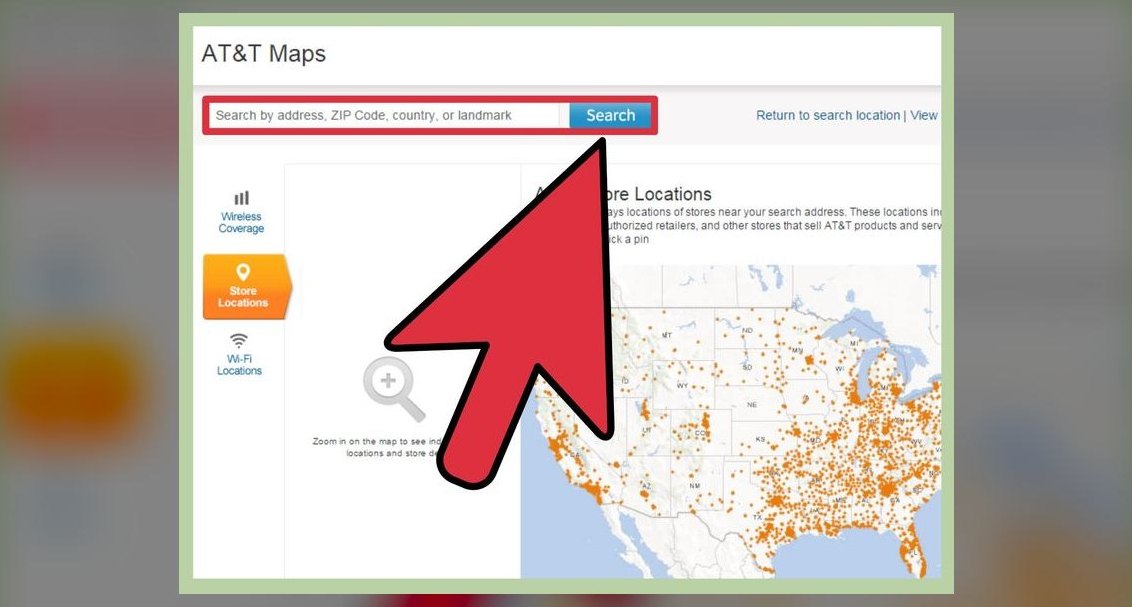
Retail presence. All three nationals maintain corporate and authorized retail across the metros and the larger regional towns; prepaid and MVNO brands range from a modest authorized-dealer footprint down to none at all. This matters more than people expect in a state where the nearest store may be an hour's drive: device swaps, warranty exchanges, SIM problems, and account disputes are meaningfully easier in person. If you live in a smaller community, check what's actually within driving distance before choosing a support-by-chat-only brand.
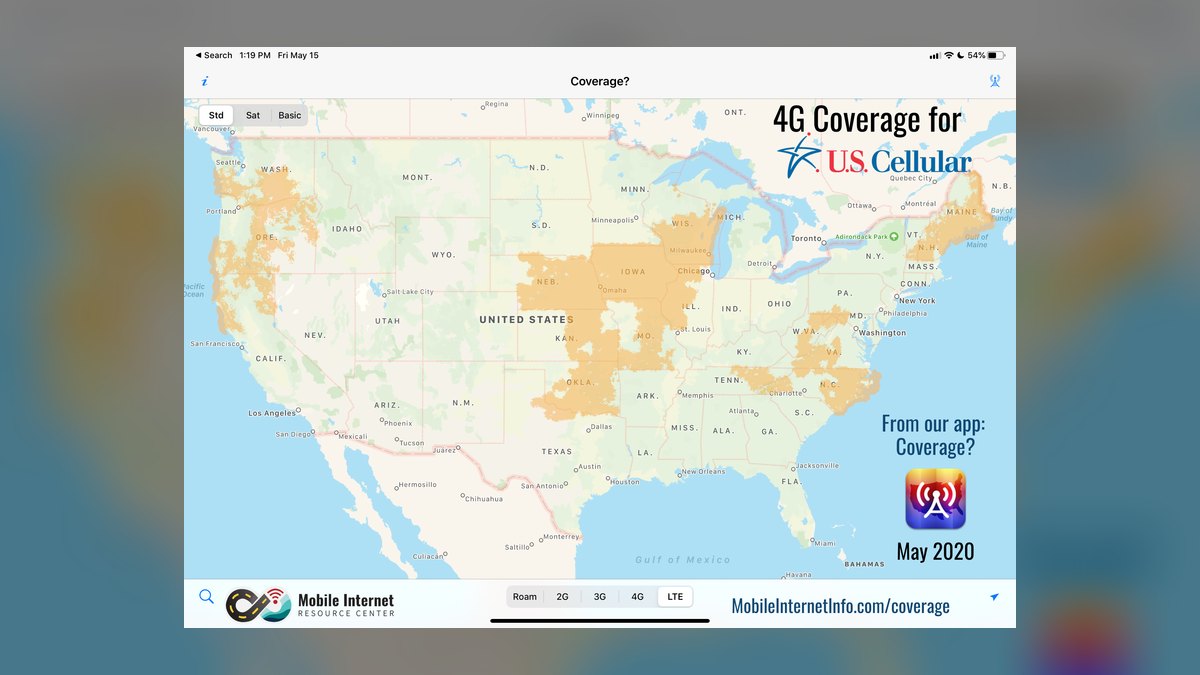
Coverage percentages. Carriers publish landmass coverage figures and third parties publish their own. Read all of them skeptically. A map painted as "covered" at the edge of a cell may deliver one bar of LTE that times out on a page load. The gap between "has a signal" and "has usable data" is where most New Mexico coverage complaints live, and no published percentage captures it. The only benchmark that settles an argument is your own phone, at your own address, on the road you actually drive.
Risks, edge cases, and failure modes
The map-versus-reality gap. Coverage maps are modeled propagation, not measured truth. They are generated from tower locations, transmit power, antenna patterns, and terrain models, and they systematically overstate real-world edge coverage because they can't model the tree in your yard, the metal roof on your barn, the ridge between you and the site, or the fact that the sector facing your direction is oversubscribed. Treat a map as a shortlist tool. Treat a two-week in-hand trial as evidence.

Building materials and terrain. Traditional adobe and thick stucco-over-block construction, common across northern New Mexico, attenuates signal significantly. Metal roofs and modern low-emissivity window coatings — both increasingly common in new construction — are worse, since Low-E coatings can cut RF substantially. A house that shows four bars in the driveway can show one in the kitchen. The fix is usually Wi-Fi calling, which every major carrier supports and which converts a home broadband connection into your voice network. If you have no broadband, a carrier-approved signal booster or femtocell is the next step; if you have neither, that's a genuine reason to pick the carrier with the strongest outdoor signal at that specific address rather than the best plan on paper.
Emergency dependence. New Mexico gets wildfire seasons, monsoon flash flooding, winter closures on mountain passes, and long stretches of highway with no services. Wireless emergency alerts, 911 location services, and the ability to call for a tow all depend on the network you chose months earlier. Two mitigations are worth their cost: satellite-based emergency messaging, now built into recent iPhone and Android flagships and usable independent of any carrier tower, and simply keeping a car charger and a paper awareness of where the dead stretches are on your regular routes. First responders and public-safety agencies have a dedicated option in FirstNet, which runs on AT&T's infrastructure with priority and preemption for verified agencies — a genuinely different service class that consumers can't buy, and a legitimate reason for an eligible user to rank AT&T first regardless of everything else.
Deprioritization surprises. The most common post-switch regret with a cheap MVNO isn't coverage — it's the moment the network gets busy. Peak evening hours in the metros, big events, the state fair, Balloon Fiesta week, and any large gathering will separate priority tiers hard. If the person switching is a student, a rideshare driver, or anyone who needs reliable uploads during busy hours, the savings often aren't worth it.

Contract and device-financing lock-in. Device payment plans are the modern contract. If you have a phone on a 36-month installment agreement with bill credits spread across the term, leaving early means the remaining balance comes due and the credits stop. Switch-and-we'll-pay-off-your-phone promotions exist but usually arrive as prepaid cards or bill credits over many months, with fine print about staying on a qualifying plan. Read the term length and the credit schedule before you count the offer as money.
Prepay commitments. Annual-prepay MVNOs offer the lowest headline prices in exchange for money upfront and short refund windows. If the host network doesn't work at your home, you may discover it after the return period closes. Never prepay a year on a network you haven't personally tested at your address for at least a week.
Band support on imported or older devices. Bring-your-own-device generally works across carriers now, but a phone bought for another market or an older model may lack the specific bands that carry a given carrier's rural low-band or mid-band 5G. The symptom is a phone that seems fine in town and useless outside it. Check the model's supported bands against the carrier before assuming BYOD is free of downside, and be aware that some older devices lost service entirely as 3G networks were retired.
Roaming asterisks. Regional-carrier and multi-network roaming arrangements typically throttle data hard after a small daily allowance. Reading that fine print is the difference between "I have coverage out there" and "I have texting out there."

A practical rollout plan
Treat switching as a short project with a test phase, not a same-day purchase. The whole sequence takes about two to four weeks and costs almost nothing if you use eSIM trials.
Step one: write down your actual coverage map. Not the carrier's — yours. List the five or six places you need service most: home, work, the school or daycare, your commute, and the one or two routes or destinations outside town you hit monthly. Be specific down to the street and the highway mile markers. This list is the acceptance test, and building it honestly is the step most people skip.
Step two: screen with the published maps. Check each carrier's own coverage map against every location on your list, and cross-reference with independent crowd-sourced coverage data. Anything showing marginal or no coverage at a location that matters is a strike. You're looking to eliminate obviously wrong answers, not to pick a winner.

Step three: run a real trial. Every major carrier now supports eSIM, and most offer a free or near-free trial line you can activate on a compatible phone alongside your existing service — typically a week or two, no port required, no store visit. Activate the trial for your top one or two candidates and physically drive your list. Run a speed test at each stop, note the technology indicator on the status bar, and — this is the part people forget — try a real workload: a video call, a large upload, a maps route with live traffic. Bars lie; a two-minute video call doesn't.
Step four: check the house specifically. Test in the rooms where you actually use the phone, not just the porch. If indoor signal is weak but outdoor signal is strong, confirm the carrier supports Wi-Fi calling on your device and enable it, or plan for a booster. If you also need home internet, this is the moment to evaluate fixed wireless from the same carrier — the coverage test you just ran is directly informative, and bundling sometimes discounts the phone line.
Step five: price the whole thing, not the headline. Build the real monthly number: base plan, per-line discounts at your line count, autopay and paperless requirements, taxes and regulatory fees, device installments, insurance, and any employer, military, first-responder, senior, or student discount you qualify for. Multiply by 24 or 36 months and add any switching costs or early-termination balances. Compare totals, not advertised prices.
Step six: port cleanly. Keep the old line active until the new one is fully working — porting pulls the number to the new carrier and cancels the old service automatically, so never cancel first. Collect what you need in advance: your account number with the old carrier and the transfer PIN or port-out PIN, which the carriers require you to generate through their app or website. Get your number-lock or port-protection setting turned off just before the port, and turn the equivalent protection back on at the new carrier immediately after. Do the port during business hours so support is reachable if it stalls.
Step seven: verify and clean up. After the port completes, confirm calls, texts, and data all work, re-enable Wi-Fi calling, verify that two-factor SMS codes arrive (this is the most common post-port breakage), update the number anywhere it's tied to authentication, and confirm the old account shows a zero balance and a closed status. Watch the first two bills for proration surprises and for promotional credits actually appearing — bill credits that were supposed to start often don't, and catching it in month one is far easier than in month nine.
Adjacent decisions this choice touches
Choosing a wireless carrier in New Mexico quietly settles several other questions, and it's worth seeing them before you sign.
Home internet. In much of the state, cable and fiber simply aren't available, and the realistic options are satellite, a wireless internet service provider, or carrier fixed wireless access — the home-internet product that runs over the same towers as your phone. If your carrier test showed strong mid-band signal at the house, fixed wireless is often the best-value broadband available at that address, and the carrier you chose for the phone becomes the carrier you chose for the house. If the test showed marginal signal, you've learned something important about both products at once.
Business and fleet use. Small businesses that run field crews — HVAC, plumbing, propane, well service, construction, agriculture — face this decision as an operations problem rather than a consumer one. If dispatch, work-order apps, and photo uploads run over cellular, coverage at job sites is a productivity input with a measurable cost. The practical approach mirrors the consumer one but at fleet scale: sample coverage across your actual service territory, standardize on the carrier that wins the territory rather than the one that wins the office, and budget for boosters in the trucks that work the weakest zones. Business lines also unlock priority tiers and pooled data that consumer plans don't offer.
Devices and the upgrade cycle. Carrier choice constrains device choice less than it once did, but financing ties them together. A three-year installment plan effectively commits you to that carrier for three years unless you're willing to pay off the balance. If you value flexibility, buying the phone outright — or bringing one you already own — keeps the carrier decision reversible, which is worth real money in a state where the right answer varies by address and can change as networks build out.
Multi-line households with split needs. Families often have one member who commutes rurally and another who never leaves town. There's no rule that everyone must be on one carrier; the family-plan discount is real but rarely large enough to justify putting the rural driver on the urban-optimized network. Running two accounts, or putting the rural line on the coverage carrier and the rest on the value carrier, is a legitimate and underused answer.
Travel patterns. If you cross into Mexico regularly — a routine reality along the southern border near Columbus, Santa Teresa, and Sunland Park — check how each plan handles Mexico calling, texting, and data, because the differences are large and some plans include it while others bill it separately. The same goes for frequent international travel: some plans bundle roaming broadly, others charge per day, and over a year the gap is bigger than the plan price difference.
Related questions
Does the best carrier in New Mexico differ by city?
Yes. In Albuquerque, Santa Fe, and Las Cruces, T-Mobile typically posts the fastest mid-band 5G speeds. In smaller towns and along rural corridors, the low-band footprints of Verizon and AT&T generally win. Test at your specific address; coverage varies block to block.
Are MVNOs worth it in New Mexico?
For single-line users in a metro with good host-network signal, yes — the savings are substantial. For rural users or anyone who needs reliable service during peak congestion, the lower priority tier and thinner support make them a poor trade.
Do I need 5G at all?
Only if you regularly move large files, tether a laptop, or stream at high resolution. For messaging, maps, calls, and normal browsing, solid LTE is functionally indistinguishable. Coverage breadth matters far more than the label on your status bar.
How do I keep service where there's no coverage at all?
Recent iPhone and Android flagships include satellite-based emergency messaging that works without any carrier tower. For routine use in dead zones, a dedicated satellite messenger or a carrier signal booster in the vehicle are the realistic options.
FAQ
Which carrier has the best rural coverage in New Mexico?
Verizon generally does, followed closely by AT&T. Both built dense rural LTE grids on 700 MHz low-band spectrum, which propagates much farther per tower than the mid-band frequencies that carry most 5G capacity. That physics advantage is what shows up as bars on empty highways. T-Mobile has been expanding rural reach steadily but still trails in the emptiest counties.
Is T-Mobile faster than Verizon in Albuquerque?
Typically yes. T-Mobile's 2.5 GHz mid-band 5G layer is the most widely deployed high-capacity network in New Mexico's metros and usually posts the highest median download speeds there. Verizon and AT&T counter with C-band mid-band in the denser parts of the metros, and both can be very fast where deployed, but T-Mobile's mid-band footprint is broader inside the cities.
What's the cheapest way to get unlimited data in New Mexico?
An MVNO on annual prepay is the cheapest route, often less than half the price of postpaid unlimited. The trade-offs are real: lower priority when towers are congested, video resolution caps, minimal hotspot, and support by chat rather than in a store. It's an excellent deal if you live in a well-covered metro area and a poor one if you drive rural routes.
Can I try a carrier before switching?
Yes, and you should. All major carriers support eSIM and most offer a free trial line you can activate alongside your existing service without porting your number. Use it to drive your actual routes and test inside your actual house before committing. A week of real testing beats any coverage map.
How does FirstNet fit into the New Mexico picture?
FirstNet is the dedicated public-safety network operating on AT&T's infrastructure, and it gives verified agencies priority and preemption during emergencies — meaning their traffic is served ahead of consumer traffic when a tower is saturated. It's restricted to eligible public-safety users; consumers can't buy it. For eligible New Mexico responders, it's a decisive reason to choose AT&T.
What should I do if I have coverage outdoors but not inside my house?
Enable Wi-Fi calling first — it routes calls and texts over your home internet and costs nothing. If you lack broadband, look at a carrier-approved signal booster, which amplifies the outdoor signal indoors and works well when there's usable signal outside. Thick adobe, metal roofs, and Low-E window coatings are the usual culprits behind indoor-only dead spots.
Sources
- FCC National Broadband Map
- FCC Wireless Emergency Alerts
- FCC Consumer Guide: Cell Phone Signal Boosters
- Verizon Coverage Map
- T-Mobile Coverage Map
- AT&T Wireless Coverage Map
- FirstNet
- Ookla Speedtest Global Index — United States
- U.S. Census Bureau QuickFacts: New Mexico
- CTIA — Wireless Industry Resources
Related on PULSE
- Best Cellular and Wireless Carrier in New Orleans in 2027
- How do I check if my phone is compatible with a new carrier in 2027?
- Can I bring my own phone to a new carrier (BYOD) in 2027?
- Should I finance a new phone or buy it outright in 2027?
- Best Cellular and Wireless Carrier in New York City in 2027
- How do I port my phone number to a new carrier in 2027?
This page will be disappearing soon. Save it to your device for $1 — or read it free while it is here.
@Kory-White- · if Venmo asks, the last 4 of my number are 2012
This page is gone.
This one is off the shelf now. $1 keeps it on your phone for good — the whole page, pictures and diagrams included.
 telcoIs carrier phone insurance worth it in 2027?
 telcoHow do I get the best Black Friday cell phone deal in 2027?
 telcoBest Cellular and Wireless Carrier in San Diego in 2027
 telcoHow do I lower my cell phone bill in 2027?
 telcoHow do I activate a new cell phone for the first time in 2027?
 telcoBest Cellular and Wireless Carrier in Boise in 2027
 telcoHow do I test a carrier's coverage before fully switching in 2027?
 telcoBest Cell Phone Plans for International Travel in 2027
 telcoBest Cellular and Wireless Carrier in Wichita in 2027
 telcoWhat is the catch with cheap MVNO carriers in 2027?