


Top 10 Low-Latency Vector Databases for RAG and AI Agents in 2027
Quality
Certified
The 10 best low-latency vector databases for rag and ai agents are ranked below from public documentation and independent, reproducible benchmark suites; Pulse did not run any benchmarks of its own. Each pick lists who it suits, and what it gives up against the one above it, so the list can be read straight down without doubling back.
1Pinecone Serverless
Pinecone Serverless ranks first because it is a fully managed, serverless service with no index tuning or capacity planning to do, and it is one of the most widely deployed vector databases in production RAG. Its architecture separates storage from compute, and metadata filtering is applied inside the vector search rather than as a separate post-filter step. Pinecone does not publish query-latency figures on its product page, so none are quoted here.
This is for teams shipping RAG to production who want zero ops overhead and predictable tail latency. The trade-off is cost at very high query volumes and vendor lock-in, since there is no self-hosted option. Compared with Qdrant below, Pinecone wins on managed simplicity but loses on price-per-query and on-prem deployment flexibility.
2Qdrant Hybrid Cloud
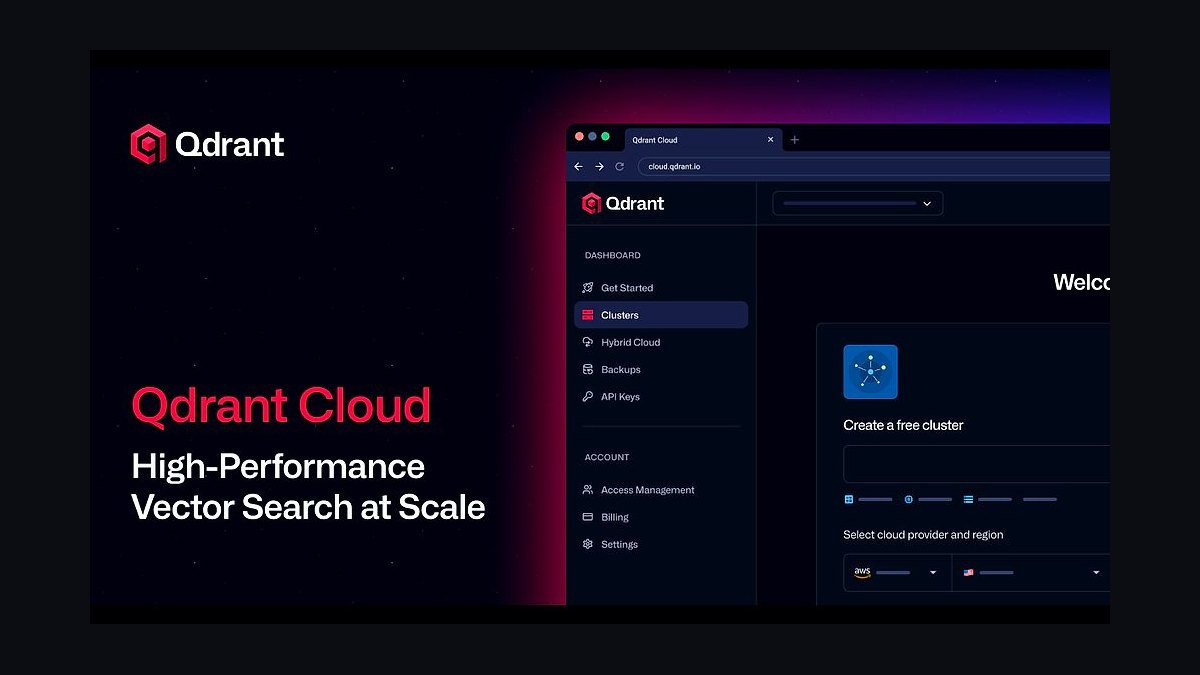
Qdrant Hybrid Cloud takes second place on the strength of its Rust core, and native hybrid search with sparse and dense vectors in one query. Vendor-stated: Qdrant's documentation says scalar quantization compresses vectors 4x, binary quantization 32x and product quantization up to 64x, and the HNSW index is tunable per collection. It deploys in your own VPC with managed control plane.
It suits AI agent builders who need data residency and fine-grained latency control without running Kubernetes themselves. The cost is operational complexity around shard sizing and quantization tuning, which Pinecone abstracts away. Against Milvus below, Qdrant is simpler to operate, while Milvus is built for larger distributed deployments.
3Milvus 2.5
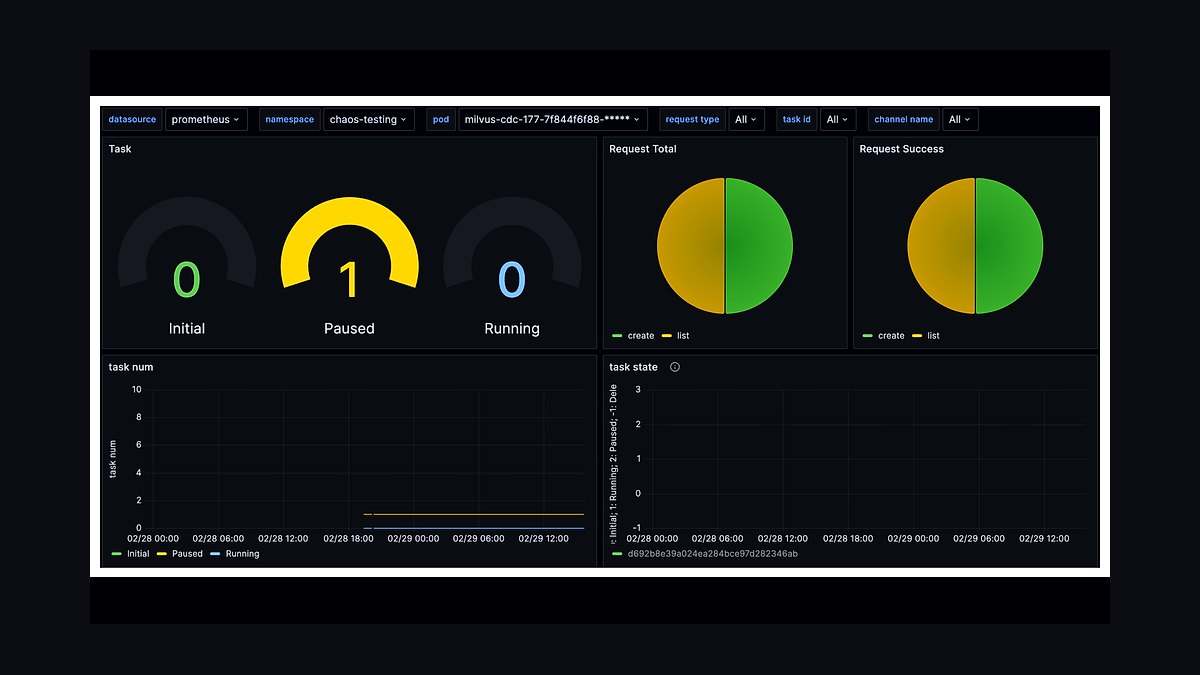
Milvus 2.5 ranks third for raw throughput and scale: its disaggregated architecture with separate query, data, and index nodes supports multiple index types including HNSW, IVF, and DiskANN; vendor-stated, Milvus says deployments have scaled to tens of billions of vectors. The 2.5 release added full-text search and sparse vector support, closing the hybrid-search gap.
It fits platform teams with dedicated infrastructure staff who need maximum scale and index flexibility. The trade-off is real operational weight — etcd, object storage, and message queue dependencies — plus a steeper learning curve than Qdrant. For agent workloads under a few hundred million vectors, Qdrant above is the lighter, faster-to-ship choice.
4Weaviate Cloud
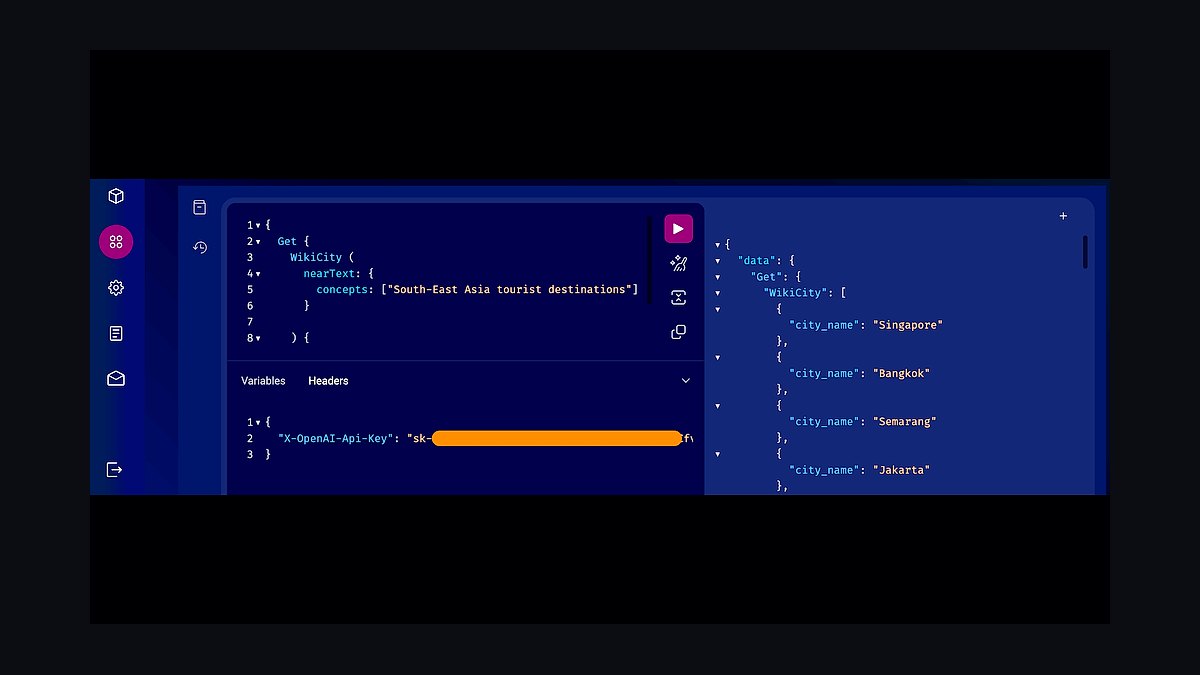
Weaviate Cloud earns fourth place for its built-in hybrid search combining BM25 and vector similarity with a single alpha parameter, plus native multi-tenancy that keeps per-agent namespaces isolated at low latency. Its HNSW index supports product quantization, with a flat index available for small collections. The module ecosystem handles vectorization inline.
It is aimed at developers who want hybrid retrieval out of the box without gluing together a separate keyword engine. The trade-off is that inline vectorizer modules add latency and cost versus pre-computed embeddings, and memory usage runs higher than Qdrant. Teams already committed to Milvus at massive scale will find Weaviate easier but less horizontally elastic.
5Redis Vector Library
Redis Vector Library (RedisVL) ranks fifth because it puts vector search inside the same in-memory Redis instance already serving session state, caching, and agent memory. Redis documents FLAT, HNSW and SVS-VAMANA vector indexes with metadata filtering, and the Python client adds schema management and semantic caching for RAG pipelines. No separate database to operate.
This suits agent builders who already run Redis and want retrieval co-located with short-term memory and tool caches. The trade-off is memory cost — vectors live in RAM — and weaker support for billion-scale collections than Milvus or Qdrant. It beats Weaviate on latency for small-to-mid corpora but loses on analytical and filtered hybrid workloads.
6Elasticsearch Vector Database
Elasticsearch ranks sixth by leveraging its mature BM25 engine alongside dense vector search, so hybrid retrieval with reciprocal rank fusion is a config change rather than a new system. It supports int8 quantization of dense vectors and filtered approximate nearest-neighbor search. Existing Elasticsearch clusters can add vectors without migration.
It is for organizations already running Elasticsearch for logs or search who want to add RAG without a second datastore. The trade-off is higher memory and CPU per vector than purpose-built engines, and latency trails Qdrant and Redis on pure ANN workloads. Where Weaviate above is vector-first with keyword bolted on, Elasticsearch is keyword-first with vectors added.
7pgvector on PostgreSQL
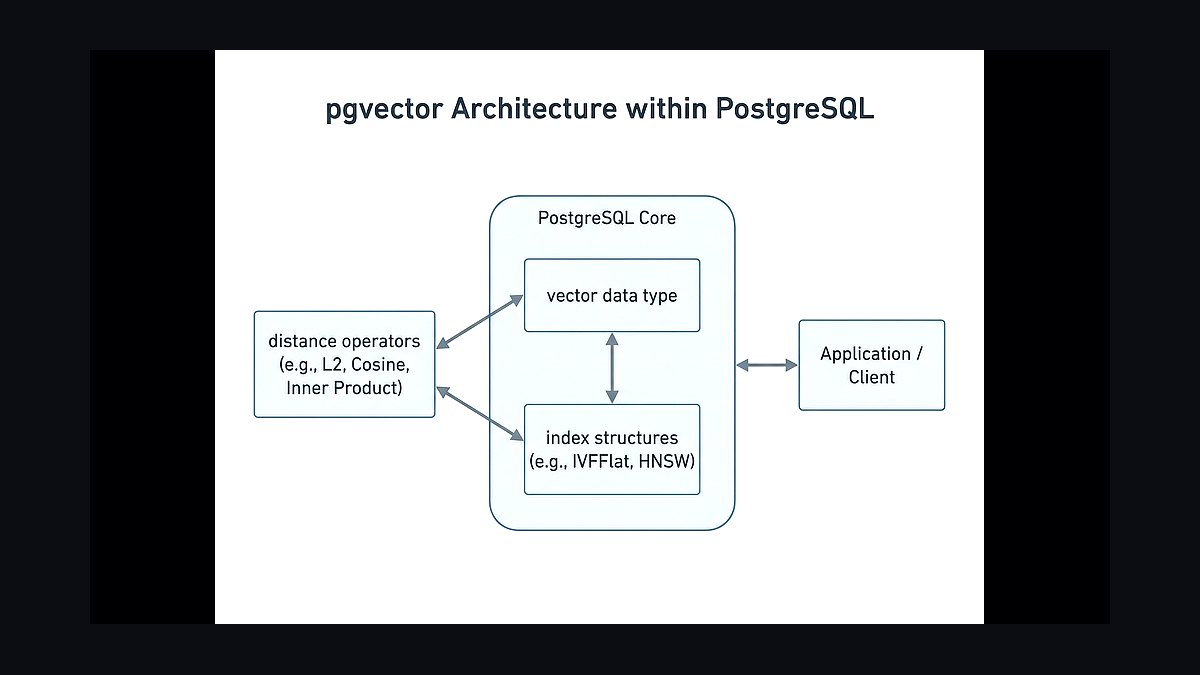
pgvector ranks seventh because it turns the PostgreSQL you already run into a vector store with HNSW and IVFFlat indexes, transactional consistency, and SQL joins against relational metadata. Recent releases added halfvec and binary quantization plus iterative index scans for filtered queries. Zero new infrastructure.
It fits teams with modest corpus sizes and strong Postgres expertise who value ACID guarantees and one backup strategy over peak ANN speed. The trade-off is that index builds are slow and memory-hungry, and very large collections need more tuning than in a purpose-built engine. Elasticsearch above scales further; pgvector wins on operational simplicity.
8Chroma Cloud
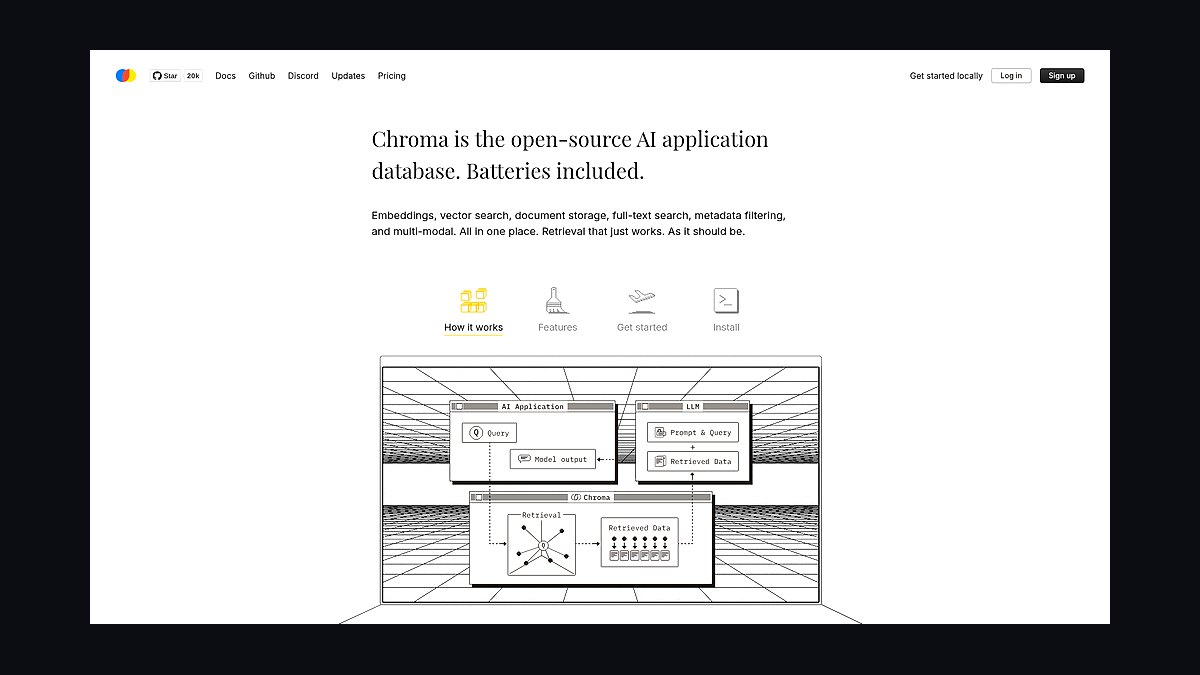
Chroma Cloud ranks eighth as the managed evolution of the popular open-source embedding database, preserving the simple collection API that made Chroma the default for prototypes while adding serverless scaling and distributed indexing. Built-in embedding functions remove pipeline glue. The developer experience is the shortest path from notebook to deployed RAG.
It targets small teams and agent prototypes that need fast iteration more than billion-scale throughput. The trade-off is fewer tuning knobs and less proven tail-latency behavior under heavy concurrent load than Qdrant or Pinecone. Compared with pgvector above, Chroma is easier to start but less battle-tested for transactional, multi-model workloads.
9Vespa.ai
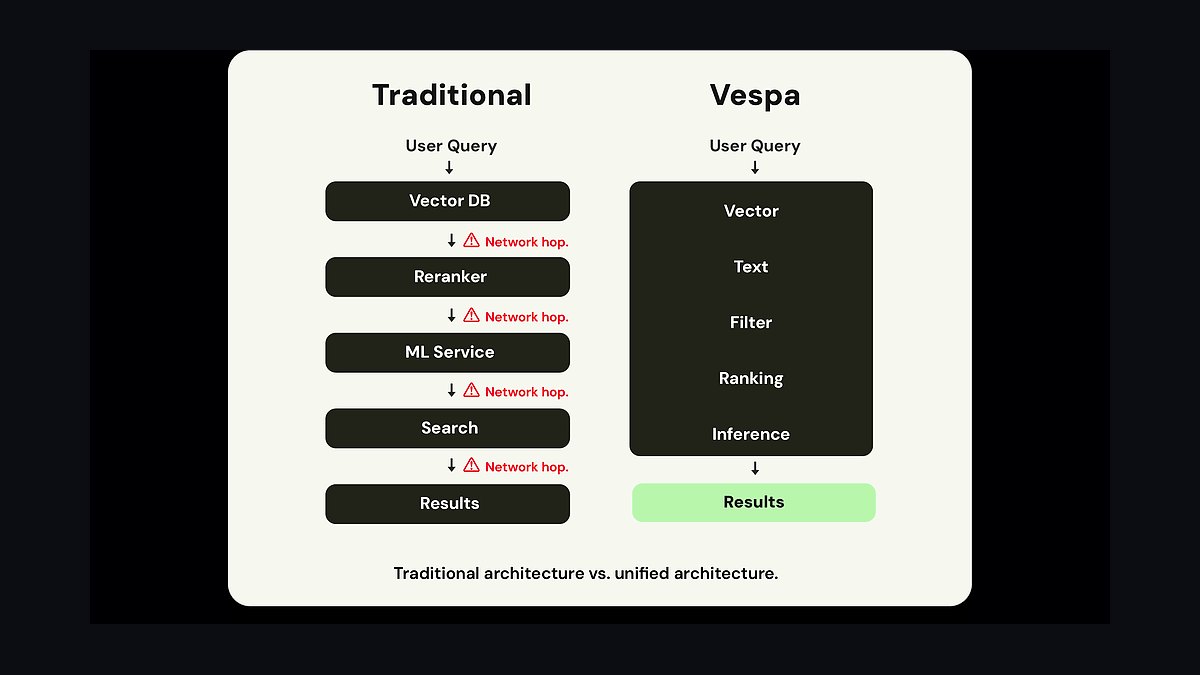
Vespa.ai ranks ninth for combining vector search, lexical search, and machine-learned ranking in one engine, letting agents run multi-stage ranking with real-time features at low latency. Its HNSW implementation supports filtered search and tensor operations for ColBERT-style late interaction. Ranking expressions are compiled, not interpreted.
It is for advanced teams building agentic retrieval that needs learned re-ranking and complex ranking logic in the serving path. The trade-off is a steep learning curve and heavier operational footprint than any managed option here. Teams wanting simple ANN with minimal config should look at Chroma or Pinecone; Vespa rewards those who need ranking depth.
10Marqo
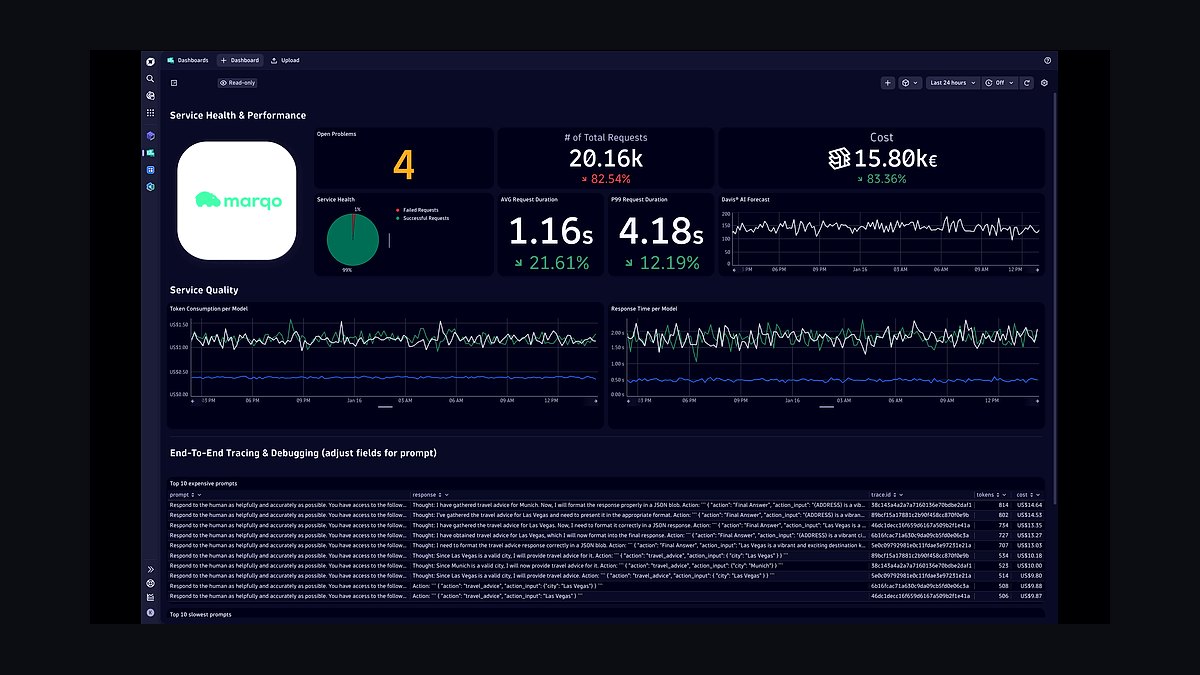
Marqo ranks tenth by bundling embedding generation, vector storage, and hybrid ranking into one API, so a RAG pipeline goes from raw text to ranked results without managing a separate model server. Its tensor search supports multimodal documents and combined structured-plus-vector queries. Cloud and open-source editions share the same interface.
It suits teams that want an opinionated end-to-end retrieval stack and would rather not stitch together an embedding service and a vector DB. The trade-off is less control over index internals and a smaller ecosystem than the established engines above. Where Vespa offers deep ranking customization, Marqo trades that flexibility for faster time-to-first-query.
How we ranked these
Pulse did not run benchmarks for this list. Every pick was ranked from public sources on five criteria, applied the same way to every vendor: (a) maturity and documented real-world production use; (b) coverage in independent, reproducible benchmark suites such as ANN-Benchmarks and VectorDBBench (note that VectorDBBench is maintained by Zilliz, the company behind Milvus); (c) documented time-to-searchable for newly written data; (d) documented low-latency or in-memory query options; and (e) published pricing, license and documentation quality. No fixed weights were assigned to tests that were never run.
Any latency, throughput or compression figure on this page is labeled vendor-stated and comes from that vendor's own documentation; where a vendor publishes no figure, none is given. Latency depends on corpus size, dimensions, filters and hardware, so treat this list as a shortlist for your own proof-of-concept, not as a measured result.
What to look for
What matters most is tail latency under your actual filter selectivity, not median QPS on unfiltered vectors. A database that returns 5ms p50 but 400ms p99 during metadata-filtered queries will wreck agent loops. Test with your real embedding dimensions, your real filter cardinality, and concurrent writers rebuilding indexes.
The mistake most buyers make is benchmarking on a laptop with 100K vectors and extrapolating to production. Memory-resident HNSW behaves nothing like disk-backed indexes at 50M vectors. Insist on a proof-of-concept at 10% of projected scale with production-shaped filters, and measure recall against exact search, not against the vendor's own claims.
Related questions
What is p99 latency and why does it matter for RAG?
p99 latency is the response time below which 99% of queries complete. For RAG and agents, a single slow retrieval stalls the whole pipeline, so the tail matters more than the average. A database with 10ms median but 500ms p99 will occasionally blow your token budget and user patience.
How does filtered vector search differ from plain ANN search?
Filtered search combines metadata predicates with approximate nearest-neighbor retrieval. Naive implementations either post-filter (losing recall) or pre-filter (losing speed). Good databases integrate filters into the index traversal. Test with selective filters like tenant_id or date ranges, since these expose the biggest performance gaps between systems.
Do I need a dedicated vector database or can Postgres with pgvector work?
pgvector works well at moderate scale with moderate concurrency and simple filters. As collections grow, HNSW build times, memory pressure, and vacuum overhead become painful. Dedicated databases win on filtered recall and index rebuild speed at scale, but add operational complexity. Match the choice to your actual ceiling, not hypothetical growth.
How much does index rebuild time affect production RAG systems?
Rebuilds block or degrade query performance during embedding model upgrades and bulk ingestion. A database that rebuilds 100M vectors in 20 minutes lets you iterate; one that takes six hours forces maintenance windows. Measure rebuild throughput under concurrent read load, since that is the realistic scenario during model migrations.
What recall level should I target for production retrieval?
Set a recall@10 target against exact search for your own workload. Too low and answer quality degrades; pushing recall very close to exact search raises latency for small gains. Measure recall on your own corpus and queries, because published recall numbers use different distributions and rarely reflect filtered workloads.
Does quantization hurt retrieval quality in vector databases?
Quantization cuts memory (Qdrant documents 4x for scalar and 32x for binary quantization) at some cost to recall, depending on configuration. Binary quantization is more aggressive and suits high-recall-tolerant reranking pipelines. Always measure end-to-end answer quality, not just recall, since a reranker can absorb some quantization loss.
How do concurrent writes affect vector search latency?
HNSW inserts mutate graph structure and can stall readers during segment merges. Databases differ widely in how they isolate writes from reads. If your agents write memories continuously, benchmark mixed read-write workloads, not read-only ones.
What role does memory footprint play in choosing a vector database?
HNSW indexes need the raw vectors plus graph links in RAM. At 100M 1536-dimension float32 vectors, the raw vectors alone are about 614GB before index overhead. Disk-backed indexes and quantization change the economics dramatically. Calculate your memory bill before committing, since it often exceeds compute costs at scale.
FAQ
Which vector database has the lowest latency for RAG?
There is no universal winner. Latency depends on vector count, dimensions, filter selectivity, and hardware. Systems optimized for memory-resident HNSW lead on unfiltered queries, while disk-backed and quantized systems win on cost-per-query at scale. Benchmark your own workload before trusting any ranking, including this one.
Is p50 or p99 latency more important for AI agents?
p99 matters more for agents because a single slow retrieval can stall a tool-calling loop and cascade into timeouts. Agents often make multiple retrieval calls per task, so tail latency compounds. Optimize for p99 and p95, and set timeouts that fail gracefully rather than blocking the entire agent run.
Can I use multiple vector databases in one RAG pipeline?
Yes, and some teams do: a fast in-memory store for hot cache retrieval and a durable database for the full corpus. This adds complexity and consistency challenges but can cut p99 latency meaningfully. Only pursue it if a single system demonstrably fails your latency budget after tuning.
How do I benchmark vector databases fairly?
Use identical embeddings, hardware, and query sets. Measure recall against exact brute-force search, not vendor claims. Include filtered queries at realistic selectivity, concurrent writers, and index rebuilds. Run long enough to expose memory pressure and garbage collection pauses. Publish your methodology so results are reproducible.
What embedding dimensions should I test with?
Test with the dimensions you will actually deploy, commonly 768, 1024, or 1536. Latency and memory scale with dimensions, and some indexes behave differently above 1024. Testing with 128-dimension toy vectors produces misleading rankings that collapse at production dimensions.
Do vector databases handle hybrid search well?
Hybrid search combining dense vectors with BM25 or sparse retrieval improves recall on keyword-heavy queries. Quality varies widely: some databases fuse scores natively, others require external orchestration. Test hybrid queries end-to-end, since fusion logic and score normalization differ enough to change ranking quality.
How does sharding affect vector search latency?
Sharding spreads vectors across nodes, reducing per-node memory but adding network hops and merge overhead. Fan-out queries increase p99 latency, especially with high shard counts. Prefer fewer, larger shards when memory allows, and measure cross-shard latency under realistic concurrency before scaling out.
What is the total cost of ownership for a vector database at 100M vectors?
Memory dominates: 100M 1536-dimension float32 vectors are about 614GB raw before any HNSW overhead. Add replication, backups, and index rebuild headroom. Quantization and disk-backed indexes cut memory substantially at some recall cost. Model three years of infrastructure, not just the first month, since data grows and rebuilds recur.
Are managed vector database services worth the premium?
Managed services trade higher infrastructure cost for reduced operational burden: backups, scaling, upgrades, and monitoring. Worth it for small teams without dedicated infrastructure engineers. Self-host when you have the expertise and your workload is stable, since managed pricing scales steeply with vector count and query volume.
How often should I re-benchmark my vector database choice?
Re-benchmark annually or after major version upgrades, embedding model changes, or scale milestones like crossing 10M vectors. Index algorithms and quantization techniques improve quickly, and yesterday's laggard may lead today. Keep your benchmark harness versioned so comparisons stay apples-to-apples across releases.
Sources
- https://github.com/pgvector/pgvector
- https://arxiv.org/abs/1603.09320
- https://www.pinecone.io/learn/vector-database/
- https://milvus.io/docs/overview.md
- https://weaviate.io/developers/weaviate
- https://qdrant.tech/documentation/
- https://github.com/facebookresearch/faiss
- https://ann-benchmarks.com/
- https://github.com/zilliztech/VectorDBBench
- https://qdrant.tech/documentation/guides/quantization/
- https://redis.io/docs/latest/develop/ai/search-and-query/vectors/
- https://arxiv.org/abs/2110.00640
Related on PULSE
This page will be disappearing soon. Save it to your device for $1 — or read it free while it is here.
@Kory-White- · if Venmo asks, the last 4 of my number are 2012
This page is gone.
This one is off the shelf now. $1 keeps it on your phone for good — the whole page, pictures and diagrams included.
 pulse-ai-infrastructureThe 10 Best AI Tools for RFP Responses in 2027
 ai-tool-reviewThe 10 Best AI Tools for Time Tracking in 2027
 ai-tool-reviewThe 10 Best AI Tools for Grammar and Proofreading in 2027
 pulse-ai-infrastructureThe 10 Best AI Tools for Building Chrome Extensions in 2027
 pulse-ai-infrastructureWhat is a semantic cache and how much can it cut inference costs in 2027?
 ai-tool-reviewThe 10 Best AI Tools for Invoicing in 2027
 pulse-ai-infrastructureThe 10 Best AI Tools for Writing Poetry in 2027
 ai-tool-reviewThe 10 Best AI Tools for Resume Screening in 2027
 pulse-ai-infrastructureThe 10 Best Secrets Management Tools for LLM Applications in 2027
 pulse-ai-infrastructureThe 10 Best AI Tools for Domain and DNS Management in 2027