
How Do I Budget a Recording or Photography Studio Buildout?
 Curated byKory White · Fractional CRO · Maryland
 PULSEKNOWLEDGE LIBRARY
Budget $75–$250 per square foot for a studio buildout. A photo or video studio spends on ceiling height, power, and HVAC and typically lands near $150,000–$500,000; a recording studio spends on acoustic isolation and runs $300,000–$1M+. Isolation, not foam, is the real audio cost, and quiet site selection is your cheapest form of it.
Why "studio" hides two opposite budgets
The cost range is so wide because "studio" covers two builds with nearly inverted cost drivers, and lumping them together is the first budgeting mistake owners make. A photography or video studio pours money into ceiling height, electrical capacity, and cooling — you need tall clear space for a lighting grid, dedicated circuits for strobes and continuous LED, and HVAC muscular enough to strip the heat those fixtures throw. A recording studio pours money into stopping sound from moving through walls, floors, and air gaps.
The single most expensive thing in audio construction is isolation, and it is structural, not decorative. That distinction sets your per-square-foot number more than finish quality or square footage does. On a typical 2,000–4,000 sq ft shell, a photo/video studio commonly settles at $150,000–$500,000, while a serious recording studio with a control room and live room can run $300,000 to over $1M before you buy a single microphone. Decide which animal you are building first, because the budget line items barely overlap. A vocal booth and a cyclorama wall do not share a cost structure, and pretending they do produces a number that is wrong by a factor of two or three. Every downstream decision — lease term, ceiling clearance, electrical service, contingency size — flows from which of the two you are actually building, so resolve that question before you price anything.
Recording studios: isolation is the whole budget
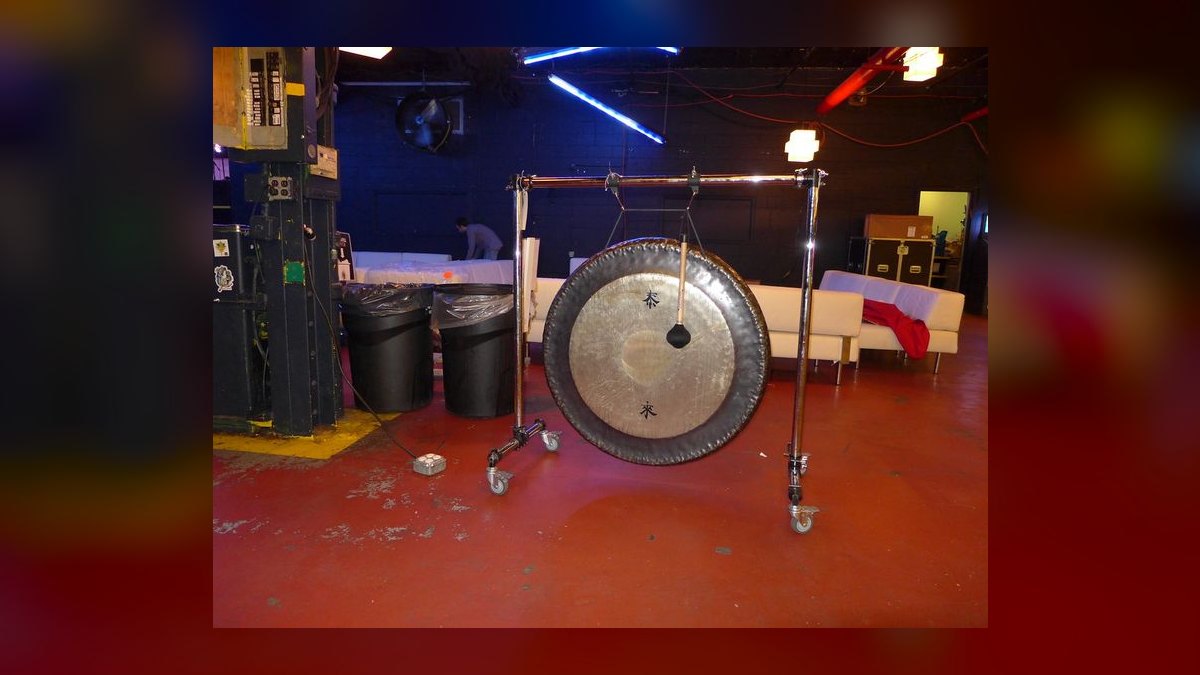
The expensive truth about audio is that sound travels through structure and air gaps, and stopping it requires mass, decoupling, and air gaps — not acoustic foam. This is the most common and most costly misunderstanding in studio budgeting: soundproofing (keeping sound in or out) and acoustic treatment (making the room *sound good* inside) are entirely different jobs with entirely different price tags. Foam panels do essentially nothing for isolation.
Real isolation math looks like this. Room-within-a-room (RWAR) construction — a floating floor, decoupled walls, and an isolated ceiling — runs $80–$180 per square foot for the treated rooms alone. A single high-STC studio door (rated STC 50 or better) costs $2,500–$6,000, and an isolated double-glazed observation window runs $3,000–$8,000; a control-room-plus-live-room pair needs several of each. HVAC has to be done quietly, which means oversized, slow-moving ducts with silencers and a remote air handler so the system is inaudible during a take — budget $25,000–$80,000. Cheap rooftop HVAC ruins a studio no matter how good the walls are, because a single loud return grille undoes an entire floated ceiling.
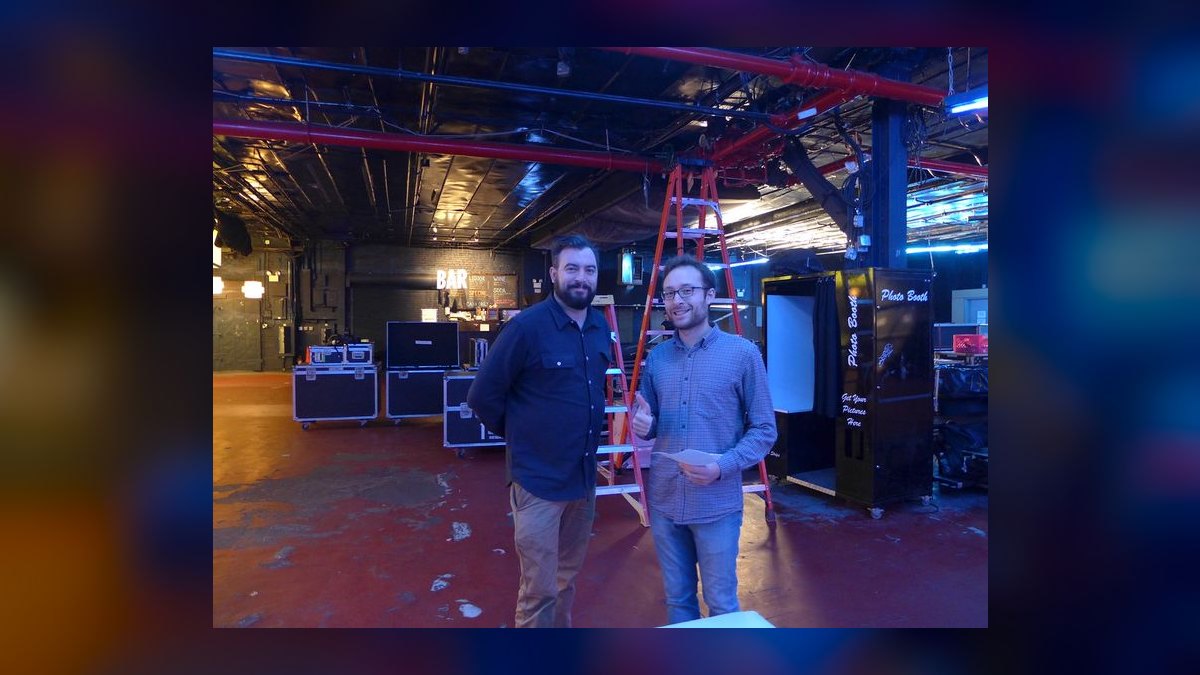
Only after all of that do you spend on in-room acoustic treatment — bass traps, diffusion, and absorption tuned to the room — at $15,000–$60,000. It is the cheap part, and it is the part beginners over-buy because it is visible and satisfying. Get the isolation and the quiet mechanical systems right first; the panels come last and cost the least. The ordering matters financially: treatment bolts onto finished walls at any time, while isolation is buried in the assembly and effectively impossible to add later without demolition.
Photo and video studios: power, height, and heat
The photo/video build inverts the math. Electrical leads: dedicated circuits and distributed power for strobes, continuous lighting, and especially large LED video walls run $15,000–$50,000, and a studio running big LED volumes may need a 200–400 amp panel upgrade the landlord did not budget for. Ceiling height and grid come next — a cyc wall, a lighting grid, and overhead rigging want 14 feet of clear height minimum, and the grid-and-rigging install runs $20,000–$80,000. Under a low ceiling your rigging options collapse, so clear height is a lease-selection criterion, not a construction one.
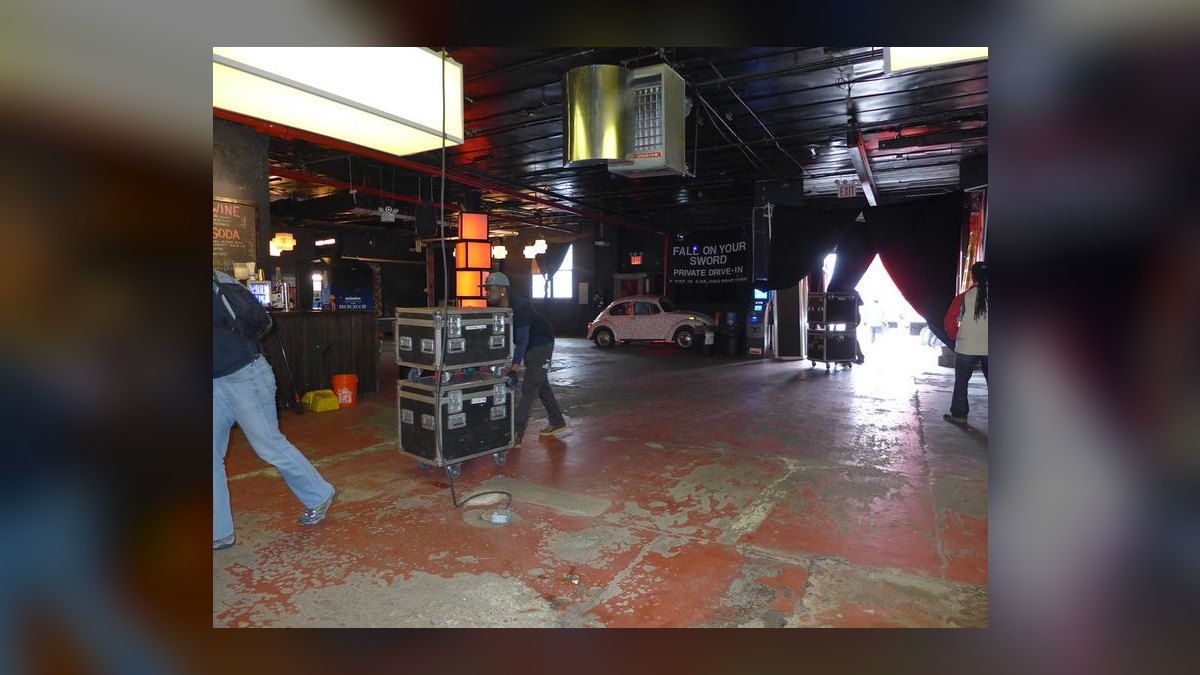
A cyclorama (cyc) wall — a seamless infinity cove, built and finished — adds $8,000–$30,000. And HVAC is not optional: hot lights inside a sealed shooting bay demand real cooling at roughly $12–$25 per square foot, and like audio it has to run quiet during takes so the microphone or the talent is not fighting airflow noise. Put together, a 3,000 sq ft shooting-bay build with a cyc, editing suites, and a client-facing lounge realistically lands around $230,000–$630,000, gear and lighting separate. The mistake here is treating power and cooling as afterthoughts; on a video build they are the spine of the budget, and they are the two systems most likely to force an expensive change order once framing is up.
The hidden costs that wreck the number
The line items that blow up studio budgets are rarely the ones on the first estimate. Floor loading is one: floating concrete floors and heavy rigging grids add real weight, so confirm structural capacity before signing — especially on upper floors. Vibration isolation against structure-borne noise is the hardest and priciest fix of all — neighboring HVAC, elevators, trains, or trucks transmit straight through the slab, and isolating against that can run $20,000–$100,000+, or prove impossible at any price. That is precisely why site selection beats construction every time.
Other traps stack fast. HVAC noise forces silencers, lined ducts, and slow air movement ($25,000–$80,000). A floated ceiling and grid can force fire-sprinkler relocation at $3–$8 per square foot. A client-facing studio triggers ADA route and restroom work at $25,000–$60,000. And permits and design — architect, MEP engineer, plus an acoustician for any recording work — run 8–12% of hard costs; a good acoustician at $5,000–$25,000 routinely saves multiples of their fee by keeping you from building the wrong wall twice. Because studios uncover more behind-the-walls surprises than an ordinary office fit-out, carry a 15–25% contingency — the older or less-documented the building, the higher you set it. Treat that reserve as spoken-for, not as a slush fund; on a below-grade or pre-war space, demolition routinely surfaces a $40,000 problem nobody could see on a walk-through.
Make the landlord carry the load
Studios are quiet, clean, long-tenure tenants, and landlords like them — so use that leverage. Site selection is your cheapest isolation. Negotiate hard for an end-cap, top-floor, or standalone space away from gyms, restaurants, loading docks, mechanical rooms, and busy roads. A genuinely quiet shell can cut $50,000–$200,000 off your isolation budget, and no construction ever beats not needing the construction.
Push HVAC and electrical into the base building. Adequate quiet-capable cooling and an upsized electrical service are building infrastructure — make the landlord deliver them, or amortize the upgrade into rent at 6–9% instead of paying cash up front. Get a real TI allowance: office and flex allowances typically run $40–$80 per square foot, so ask for the top of that band given the specialized work, and have the landlord fund and amortize anything above the allowance.
Protect both your quiet and your noise. Negotiate a use clause that explicitly permits a studio with extended and overnight hours — recording and shoots run late — and attach a quiet-enjoyment and noise-protection covenant so the landlord cannot later lease the adjacent unit to a drum school or a fitness box that destroys your isolation. That clause is worth more than any panel you can hang. Then cap controllable CAM at 3–5%, exclude capital expenses, and reserve an audit right. Negotiate 3–6 months of abated rent to cover the acoustic-and-grid buildout, since you earn nothing while you build. Finally, spell out that your acoustic panels, gobos, lighting grids, cyc finishes, and equipment are trade fixtures you own and remove, and strike or cap the restoration clause — ripping out a floating floor and patching slab on exit can cost $30,000–$100,000.
Two realistic budgets, line by line
For a recording studio at 2,500 sq ft — control room, live room, iso booth, and lounge — the stack reads: room-within-a-room isolation $150,000–$400,000; acoustic doors and windows $20,000–$60,000; quiet HVAC $40,000–$90,000; in-room treatment $25,000–$60,000; electrical, data, and power conditioning $20,000–$50,000; finishes, lounge, restroom, and ADA $60,000–$150,000; design, acoustician, and permits $50,000–$120,000; and a 12–15% contingency of $50,000–$140,000. That totals roughly $415,000 to $1.07M, with gear entirely separate.
For a photo/video studio at 3,000 sq ft — shooting bay, cyc, and editing suites — the stack reads: grid, rigging, and cyc wall $35,000–$110,000; electrical and power distribution $20,000–$50,000; HVAC $40,000–$90,000; blackout, finishes, and editing suites $50,000–$150,000; restroom, ADA, and lounge $30,000–$70,000; design and permits $30,000–$80,000; and a 10–15% contingency of $25,000–$80,000. That totals roughly $230,000 to $630,000, with cameras and lighting separate. Notice how little the two lists overlap — the recording build's biggest line is isolation, which does not appear on the photo build at all, and the photo build's grid-and-power spine has no equivalent in the audio stack.
Phase the build to protect cash flow
You rarely need everything on day one, and treating the buildout as one monolithic spend is a good way to run out of runway before your first booking. The smart sequence funds one revenue-generating room first — a single tracking room, or one fully-lit cyc wall — then reinvests early income into additional rooms, treatment, and gear as bookings grow.
The rule that governs phasing is retrofit cost. Front-load the permanent, hard-to-retrofit items — isolation, electrical, HVAC, plumbing, and structural work — into phase one, because tearing back into finished, treated walls later costs far more than doing it once. Acoustic panels, mobile gobos, lighting grids, furniture, and editing suites are inherently phase-two: they bolt on, they scale, and they do not require you to open a wall you already closed. Get the bones right first, polish on the installment plan. A practical test for any line item: if adding it later means demolishing something already finished, it belongs in phase one; if it simply mounts, hangs, or rolls into place, defer it and let revenue pay for it.
Related questions
Is soundproofing the same as acoustic treatment?
No, and conflating them is the most expensive studio-budget error. Soundproofing (isolation) stops sound from entering or leaving a room and requires mass, decoupling, and air gaps — structural work. Acoustic treatment shapes how the room sounds inside with absorption and diffusion. Foam helps the second and does nothing for the first.
How much ceiling height does a photo/video studio need?
Plan for at least 14 feet of clear height to accommodate a lighting grid, overhead rigging, and a cyc wall with room to work above it. Lower ceilings sharply limit rigging and lighting angles, so treat clear height as a non-negotiable lease-selection criterion rather than something you fix during construction.
What TI allowance should I ask a landlord for?
Office and flex tenant-improvement allowances commonly run $40–$80 per square foot. Given a studio's specialized isolation, power, and HVAC work, push for the top of that range and have the landlord fund and amortize costs above the allowance into rent at roughly 6–9%, rather than paying the overage in cash.
Why is HVAC such a big deal for studios?
Because standard rooftop units are too loud to run during a take or a shoot, and hot lights or sealed tracking rooms still demand serious cooling. That forces oversized, low-velocity ductwork, silencers, and isolated air handlers — $25,000–$80,000 — so the system moves enough air while staying inaudible on the recording.
Can I make a noisy location work with enough money?
Sometimes not at any budget. Structure-borne vibration from trains, trucks, elevators, or a neighbor's HVAC transmits straight through the slab, and isolating against it can be impossible. That is why quiet site selection beats construction — a bad location can make a recording space unfixable no matter how much you spend.
FAQ
Why is the cost range for a studio buildout so wide? Because "studio" covers two very different builds with opposite cost drivers. A photo/video studio spends most of its budget on ceiling height, electrical capacity, and HVAC, while a recording studio pours money into soundproofing, isolation, and acoustic treatment. Your final number per square foot depends heavily on which one you're building and how much existing infrastructure the space already has.
What's the single most expensive line item in a recording studio? Sound isolation is almost always the biggest spend. Decoupling walls, floating floors, room-within-a-room construction, and heavy STC-rated doors add up fast because they require structural work, not just finishes. Acoustic treatment inside the room is comparatively cheap by contrast, which is why isolation should own the largest share of your budget.
Why does a photography studio cost so much in power and HVAC? Lighting rigs, strobes, continuous fixtures, and LED walls draw significant electrical load, and the heat they generate must be removed without creating noise or airflow that disrupts shoots. High ceilings, which you need for lighting flexibility, also enlarge the volume your HVAC has to condition, scaling your mechanical and electrical budgets quickly.
Should I lease or build out a turnkey space? It depends on how much of the specialized work already exists and how long you plan to stay. A tenant-improvement allowance can offset a meaningful share of buildout costs, but read the lease carefully so you're not financing improvements that revert to the landlord. For heavy acoustic or power needs, a longer lease usually makes the large upfront investment worthwhile.
How much should I set aside for contingency? Studio buildouts uncover surprises behind walls and in older buildings, so a cushion of roughly 15–25% is wise rather than optional. The right amount scales with the building's age and condition — the older or less documented the space, the larger your reserve should be, since structure-borne and mechanical surprises tend to surface only once demolition begins.
Can I phase the buildout to spread out the cost? Often yes, especially for treatment, finishes, and additional rooms you can add later. Structural and isolation work, however, is hard and expensive to retrofit, so prioritize getting the "bones" — isolation, electrical, HVAC, plumbing — right in phase one. Phasing the polish while front-loading the irreversible work usually protects both your budget and your timeline.
Sources
- https://www.cbre.com/insights — CBRE office and flex market figures: TI allowance benchmarks and warm-shell delivery norms.
- https://www.us.jll.com/en/trends-and-insights — JLL creative and media tenant trends: specialized studio TI structures and amortization.
- https://www.cushmanwakefield.com/en/united-states/insights — Cushman & Wakefield: HVAC, electrical, and finish unit-cost guidance.
- https://www.rsmeans.com/ — RSMeans Building Construction Cost Data: acoustic assembly, HVAC, electrical, and restroom pricing.
- https://acousticalsociety.org/ — Acoustical Society of America: guidance on STC ratings and room-within-a-room construction.
- https://www.aes.org/ — Audio Engineering Society: standards and papers on studio acoustics and isolation.
- https://www.naiop.org/research-and-publications/ — NAIOP: tenant-improvement allowance and amortization practice.
- https://www.boma.org/ — BOMA International: operating-expense (CAM) standards, controllable-expense caps, and audit rights.
- https://www.astm.org/e0090-09r16.html — ASTM E90 / E413: sound transmission class (STC) testing for wall and door assemblies.
Related on PULSE
- [How Do I Budget a Dance Studio Buildout?](/knowledge/bo0179)
- [How Do I Budget a Yoga or Pilates Studio Buildout?](/knowledge/bo0177)
- [How Do I Budget a Gym or Fitness Studio Buildout?](/knowledge/bo0111)
- [How Do I Negotiate a Lease and Buildout for a Tattoo Studio?](/knowledge/bo0139)
- [How Do I Budget a Funeral Home Buildout?](/knowledge/bo0220)
- [How Do I Budget an Ambulatory Surgery Center Buildout?](/knowledge/bo0219)
This page will be disappearing soon. Save it to your device for $1 — or read it free while it is here.
@Kory-White- · if Venmo asks, the last 4 of my number are 2012
 buildoutsHow Do I Budget a Dialysis or Infusion Center Buildout?
 buildoutsHow Do I Budget a Nightclub Buildout?
 buildoutsHow Do I Get Utilities Delivered Before My Rent Clock Starts?
 buildoutsHow Do I Avoid Paying for Vacant-Space Costs in CAM?
 buildoutsHow Do I Budget a Vertical Farm or Indoor Ag Buildout?
 buildoutsHow Do I Budget a Comedy Club or Live-Music Venue Buildout?
 buildoutsHow Do I Negotiate a Most-Favored-Tenant Clause?
 buildoutsHow Do I Budget a Pet Grooming Buildout?
 buildoutsHow Do I Negotiate the Landlord's Construction-Management Fee Down?
 buildoutsWhat Does a Commercial Kitchen Hood and Grease Trap Really Cost in a Buildout?