
How Do I Budget a Dance Studio Buildout?
 Curated byKory White · Fractional CRO · Maryland
 PULSEKNOWLEDGE LIBRARY
Budget a dance studio buildout at roughly $45–$120 per square foot, or $70,000–$220,000 for a 1,500–3,000 sq ft space. Fund the sprung floor first ($8–$22 per sq ft installed), then add mirrors, barres, oversized HVAC, and sound. Carry a 12–15% contingency, and lease a pre-floored space to save $30,000–$70,000.
What actually drives the number
A dance studio is a moderate-cost fitness buildout, and the money concentrates in five buckets: the floor, the mirrors, the barres, the climate system, and the sound. Miss any one and the room either injures dancers or feels miserable to teach in, so none of them are optional. The floor alone is your single largest line and deserves the most planning.
Here is how a typical 1,800 sq ft studio room breaks down. The sprung floor plus marley surface runs $8–$22 per square foot, or about $14,000–$40,000 — your biggest number by far. Mirrored walls cost $7–$15 per square foot of glass, so two mirrored walls on a 40-foot run land around $3,000–$7,000. Ballet barres run $25–$60 per linear foot wall-mounted or freestanding, typically $1,000–$3,500 for a room. HVAC sized for a room full of moving dancers costs $8,000–$35,000, and sound plus acoustic treatment adds $4,000–$18,000. Then layer on reception, a parent waiting area, dressing rooms, restrooms, finishes, permits, and design fees.
The multiplier is how many studio rooms you build. A single-room studio in a pre-floored vanilla box can open near $70,000–$90,000. A two- or three-studio competitive school with sprung floors throughout, a parent lounge, and dressing rooms climbs to $160,000–$220,000 and up, because each additional sprung room adds $20,000–$40,000. Decide your room count before you price anything else — it changes the whole budget more than any finish choice.
The sprung floor is the whole game
The sprung floor is the one line you should never cut, because a floor that doesn't give back causes shin splints, stress fractures, and refunds — costs that dwarf anything you'd save by skimping. Get the construction sequence right and the rest of the studio is comparatively forgiving.

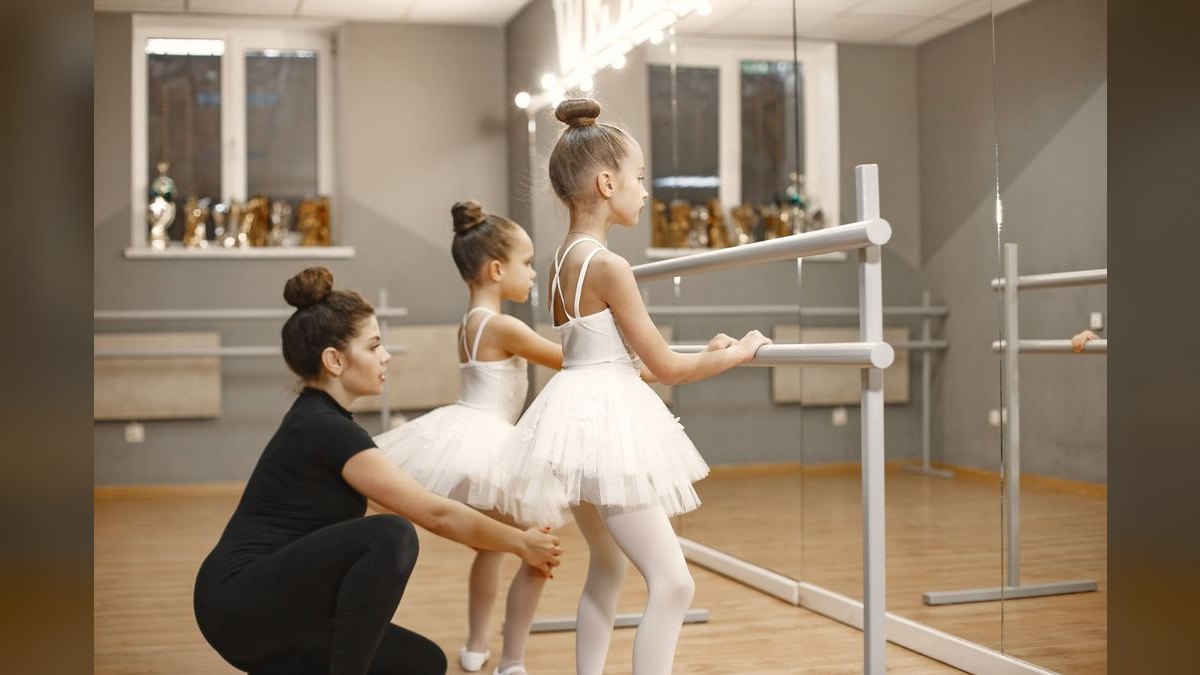
Build the sprung subfloor first, the surface second. The sprung layer — either foam blocks or a basket-weave plywood system — absorbs landing impact, and the marley (vinyl) or hardwood top layer sits on top of it. A marley roll laid straight onto concrete is *not* a sprung floor; it looks the part but offers none of the shock absorption dancers' joints need, and it is a refund magnet and an injury-claim risk. Fund the full assembly or don't open.
Match the surface to the styles you teach. A marley top layer at $2–$5 per square foot over the spring suits ballet, jazz, and contemporary. Tap and percussive styles need a finished hardwood surface on the sprung base instead — buying the wrong top means re-flooring the whole room, so know your class mix before you order. If you plan to run multiple genres in one room, hardwood with a marley you can roll out and away is the flexible compromise.
Don't skip the moisture and flatness check on the existing slab. Sprung systems telegraph an uneven slab and trap moisture if the concrete isn't sealed, so leveling and a vapor barrier add $2–$5 per square foot — real money, but far cheaper than a five-figure tear-out after the floor fails. Finally, if your lease term is short or its restoration clause is harsh, look at modular, removable sprung systems you can lift out and take with you; the portability premium is worth it when you're not confident you'll renew.
Mirrors, barres, and the movement essentials
After the floor, the mirrors and barres are what make a room read as a real dance studio rather than a rented multipurpose box. Both are cheaper than the floor but have safety requirements you can't value-engineer away.

Mirrors run $7–$15 per square foot of glass, and a studio typically wants two full mirrored walls so dancers can check alignment from more than one angle. Use safety-backed, floor-anchored glass only — a mirror that shatters or tips in a room full of jumping bodies is a catastrophe, and cheap unbacked glass isn't worth the liability. Mount mirrors a few inches off the floor and add a kick-rail so pointe shoes and props don't crack the base.
Ballet barres cost $25–$60 per linear foot, whether wall-mounted or freestanding. Wall-mounted barres save floor space and cost less, while freestanding barres let you reconfigure the room for different class sizes and clear the floor entirely for recital rehearsals. Many studios mix both. Budget $1,000–$3,500 per room, and put barres at two heights where you teach children alongside adults.

Round out the movement essentials with cubbies or a small dressing area, a check-in desk, and durable wall protection at hand height. These items are individually cheap, but first-time owners routinely forget to line-item them and then absorb a few thousand dollars of "small stuff" that adds up. List every non-floor item explicitly so nothing hides in a vague "finishes" bucket.
HVAC, sound, and the hidden code costs
The line items that actually blow a dance studio budget are rarely the floor or mirrors — those you plan for. The damage hides in the mechanical and code work behind the walls, which is exactly why the 12–15% contingency is not padding but a real reserve.
HVAC is the sleeper cost. Back-to-back classes load the system hard, and a packed studio of moving bodies throws off serious heat and humidity. An undersized rooftop unit turns the room swampy and the floor sweat-slick, so plan to upsize the system or add tonnage — a $8,000–$35,000 range depending on how raw the space is. Size for peak occupancy during a recital rehearsal, not an average Tuesday class.

Sound isolation is the second ambush. Music and jumping transmit straight through floors and shared walls, so a bass-heavy playlist next to a neighboring tenant becomes a lease dispute fast. Budget for resilient channel, mass-loaded vinyl, or double drywall on the demising walls, plus absorption panels and floor isolation inside the room, for a total $4,000–$18,000 including the audio system itself. Where you sit above or beside a sensitive neighbor, push the structural soundproofing onto the landlord as a base-building item.
ADA-triggered bathroom and entry upgrades are the third hit. The moment you change the occupancy type, a permit reviewer can require accessible restrooms, entries, and paths of travel — each a four- or five-figure surprise that never shows on the obvious "floor, mirrors, barres" list. Add permits, design fees, and a fire-and-life-safety review to your plan up front so they don't detonate mid-project. Order the sprung floor and HVAC early, too: sprung systems carry 4–8 week lead times, and a delayed floor means paying rent on a room you can't teach in.
Negotiating the lease so it doesn't sink you
A dance studio is a music-driven, jumping, high-traffic, parent-heavy use with enormous recital surges, so the lease terms around noise, hours, parking, and HVAC decide your margin more than any finish. Negotiate these before you sign, because you have zero leverage afterward.
Push for a tenant improvement (TI) allowance. On a five-year-plus lease, ask for $20–$50 per square foot in TI — on 2,500 sq ft that's $50,000–$125,000 the landlord funds. Landlords offer it to fill space, and in a soft market it's genuinely negotiable. If they insist on "as-is," trade for months of free rent during buildout and ramp — three to five months is a reasonable ask.
Scrutinize the NNN charges. A low base rent stacked with bloated triple-net costs — taxes, insurance, and common-area maintenance — can cost more than a higher gross rate. Demand the current NNN figures in writing before you sign, not estimates, and budget them as a recurring operating cost separate from your one-time buildout.
Lock noise, hours, and parking in the lease. Get a clause that explicitly permits your use, amplified music, and class and recital hours, and where neighbors are adjacent, push floor isolation and soundproofing onto base-building. Secure adequate or overflow parking rights explicitly — recitals and class changeovers create massive simultaneous arrivals, and a studio with 80 families and 12 spaces drowns. Parking quietly kills more dance studios than construction ever does.
Finally, strip or cap the restoration clause so you're not forced to rip out your sprung floor, mirrors, and barres at move-out — a $15,000–$40,000 hit. Negotiate to leave them in place (the next studio tenant wants them) or cap removal to movable items only. And verify usable versus rentable square footage: landlords pad the rentable figure with a 12–18% common-area load factor, and you can't dance on a hallway you're paying for.
A phased plan to open lean
You do not need the full three-studio school on day one, and trying to build it is how first-timers overspend into $200,000-plus before a single class earns tuition. Sequence the buildout so early revenue underwrites later finishes.
Open with one fully-sprung studio room, two mirror walls, barres, oversized HVAC, sound, restrooms, and a simple reception and parent waiting area — that's your revenue core, and it keeps opening capital near $70,000–$90,000. Defer the second and third studio rooms, dedicated dressing rooms, and a finished parent lounge until enrollment proves out. Then add sprung rooms one at a time as class demand grows, at $20,000–$40,000 each, letting the tuition from your first room pay for the second.
Two disciplines protect the plan. First, order the sprung floor and HVAC early to beat their 4–8 week lead times, because rent on an unteachable room is pure loss. Second, hold the 12–15% contingency untouched for slab leveling, moisture surprises, and the code-required work every install uncovers — it's the difference between opening on schedule and stalling half-built. The single biggest save available to any new owner remains leasing a former dance, gym, or studio space with sprung floors and mirrors already in, a decision that can trim $30,000–$70,000 off the whole project.
FAQ
Why is the sprung floor the line I shouldn't cut? It's the one surface that protects your dancers' joints and your liability exposure, so a failure here costs far more than you'd ever save. A proper sprung subfloor plus a vinyl marley top is engineered for shock absorption that ordinary flooring can't replicate, and a marley roll laid straight on concrete only looks the part. Fund it fully first, then trim elsewhere. Cutting it to save a few dollars per square foot is the most common — and most expensive — buildout regret.
What's the difference between a vanilla box and a warm or cold shell, and why does it matter? A vanilla box typically arrives with finished interior walls, a floor slab, lighting, a restroom, and HVAC roughed in, while a warm or cold shell hands you far less — sometimes just the bare structure and a slab. The more raw the space, the more of the buildout cost lands on you instead of the landlord. Always get the delivery condition spelled out in the lease before you sign. The same studio can swing tens of thousands of dollars depending on that starting point.
Can I get the landlord to pay for part of the buildout? Often yes, through a tenant improvement (TI) allowance negotiated into the lease, commonly $20–$50 per square foot depending on term length and your creditworthiness. Landlords offer it to fill space, and in a soft leasing market it's genuinely negotiable. Push for it in writing with clear terms on how and when it's reimbursed, plus free rent during construction. Treat any TI allowance as a real, dollar-for-dollar offset to your out-of-pocket budget.
What does NNN mean and how does it change my real monthly cost? NNN (triple net) means you pay base rent plus your share of property taxes, insurance, and common-area maintenance. Those extras stack on top of the quoted rate, so the headline rent isn't your true number — a cheap base rent with heavy NNN can cost more than a higher gross rate. Ask for the current NNN figures before signing, not estimates. Budget them as a recurring operating cost, kept separate from your one-time buildout.
What buildout costs do studio owners most often forget? The frequently missed items are HVAC sized for crowded classes, sound isolation on shared walls, ballet barres, restroom or ADA upgrades, permits, design fees, and waiting-area finishes. None of them show up on the obvious "floor and mirrors" mental list, yet together they can rival the floor itself. Build a contingency line for the code-required work you can't see behind the walls. The visible dance space is only part of what you're paying to finish.
Should I hire a tenant rep broker or a contractor first? Engage a tenant rep broker before you sign anything, since they negotiate lease terms and TI on your behalf, usually at no direct cost to you because the landlord pays their commission. Bring in a contractor early to estimate the buildout for any space you're seriously considering, ideally before you commit. Getting that estimate in hand keeps you from signing for a space the numbers don't support. The order matters: lease terms first, then construction.
Sources
- https://www.cbre.com/insights
- https://www.us.jll.com/en/trends-and-insights
- https://www.cushmanwakefield.com/en/united-states/insights
- https://www.rsmeans.com/
- https://www.naiop.org/research-and-publications/
- https://www.boma.org/standards
- https://www.healthandfitness.org/
- https://www.sba.gov/business-guide
Related on PULSE
- [How Do I Budget a Yoga or Pilates Studio Buildout?](/knowledge/bo0177)
- [How Do I Budget a Recording or Photography Studio Buildout?](/knowledge/bo0153)
- [How Do I Budget a Gym or Fitness Studio Buildout?](/knowledge/bo0111)
- [How Do I Negotiate a Lease and Buildout for a Tattoo Studio?](/knowledge/bo0139)
- [How Do I Budget a Funeral Home Buildout?](/knowledge/bo0220)
- [How Do I Budget an Ambulatory Surgery Center Buildout?](/knowledge/bo0219)
This page will be disappearing soon. Save it to your device for $1 — or read it free while it is here.
@Kory-White- · if Venmo asks, the last 4 of my number are 2012
 buildoutsHow Do I Budget a Butcher Shop or Meat Market Buildout?
 buildoutsHow Do I Budget a Comedy Club or Live-Music Venue Buildout?
 buildoutsHow Do I Budget an Escape Room Buildout?
 buildoutsHow Do I Budget a Call Center or BPO Office Buildout?
 buildoutsHow Do I Budget a Bakery Buildout?
 buildoutsHow Do I Budget a Gym or Fitness Studio Buildout?
 buildoutsHow Do I Budget a Pet Grooming Buildout?
 buildoutsHow Do I Budget an Indoor Golf or Golf-Simulator Buildout?
 buildoutsHow Do I Budget a Commissary or Shared Kitchen Buildout?
 buildoutsHow Do I Budget a Chiropractic Clinic Buildout?