


Should I open or buy a Planet Smoothie franchise in 2027?
Quality
Certified
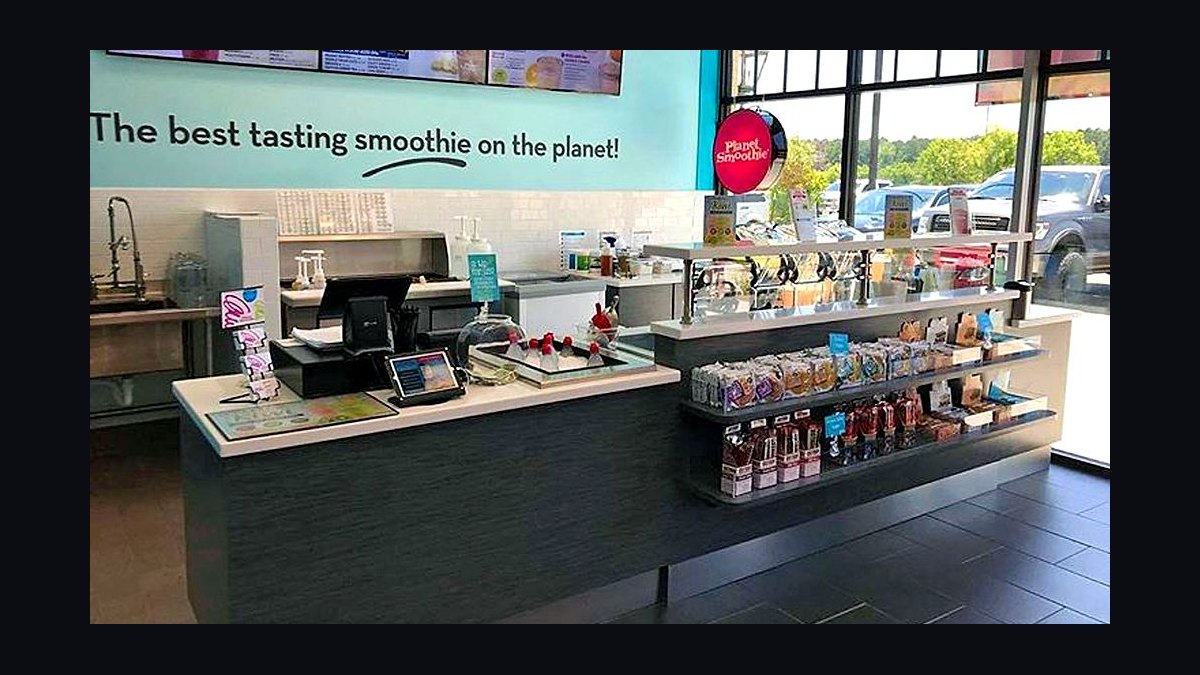
Opening a new Planet Smoothie is rarely worth it as a single store; buying an existing resold unit can be worth it only if it already clears top-quartile sales. The 2026 FDD shows $205,650–$478,500 to open, system median sales of $232,000, and roughly 11–14% store-level EBITDA — a single store either way produces thin owner cash flow unless you control the real estate, land a strong anchor location, or commit to a multi-unit deal.
New-build vs. resale: the two ways in
Anyone asking whether to "open or buy" a Planet Smoothie is really choosing between two structurally different transactions, and they carry different risk, different financing, and different timelines.
Opening a brand-new store means signing a Franchise Agreement with Planet Smoothie's franchisor (a Kahala/MTY Food Group brand), finding your own site, and building from a bare shell. Item 7 of the 2026 FDD puts the all-in range at $205,650 to $478,500 for a traditional inline or end-cap location of roughly 800–1,400 square feet. That spread is wide because leasehold improvements swing from $80,000 in a cheap secondary market to $230,000 in a built-out mall or lifestyle center. You pay the full $25,000 initial franchise fee, you choose (or inherit) your lease, and you control the build-out spec from day one — new equipment, current branding, no deferred maintenance. The downside is that you are buying an unproven box: no sales history, no trained staff, no local customer habit, and you absorb the full ramp-up period (typically 12–24 months) before revenue stabilizes anywhere near the system average of $263,000.
Buying an existing unit — a resale — means purchasing a franchisee's operating store, including its lease assignment, equipment, trained staff, and most importantly its trailing twelve months of actual sales. This is the path for someone who wants to skip the ramp-up and pay for proven cash flow instead of speculative cash flow. Resale pricing in food franchising typically runs 2.0x–3.5x trailing store-level EBITDA depending on lease term remaining, equipment age, and whether the seller is motivated (retiring, burned out, relocating) or distressed (underperforming, behind on royalties). On a median Planet Smoothie doing $232,000 in sales and ~$30,200 in EBITDA, a reasonable resale price lands somewhere between $60,000 and $105,000 for the business itself — separate from any real estate. The catch is that you also buy whatever the prior operator left behind: deferred equipment maintenance, a stale menu board, under-trained staff, or a lease with unfavorable renewal terms. The franchisor's right of first refusal and its approval of any buyer apply to resales exactly as they do to new awards, so you still go through underwriting even though the store already exists.
The decisive variable is almost never "new vs. existing" in the abstract — it's whether the specific site has traffic. A new store in a gym-anchored, college-adjacent, Sun Belt strip center with 25,000+ daytime population can outperform a resale in a declining northern mall. A resale with three years of clean $280,000+ sales history is a safer bet than a new build in an unproven trade area. Treat the open-vs-buy question as secondary to the site-quality question, and only break the tie with financing math once both candidate sites or candidate units clear the traffic bar.
How to decide between opening and buying
Start by asking whether a resale even exists in your target metro — Planet Smoothie's 140-unit footprint is small enough that most candidates will have zero resale options within a reasonable drive, which collapses the decision to "open new or don't." Where a resale does exist, the single filter that matters is trailing sales against the system median: a unit already above $260,000 with clean, franchisor-reconciled books is worth pursuing at a fair multiple, because you're buying cash flow that already exists. A resale sitting at or below the $232,000 median, or one with disorganized records, is not meaningfully safer than a new build — you'd be paying for a turnaround project without the benefit of choosing your own site. In that case, evaluate the location on its own merits as if you were opening new, and let the existing box (equipment, lease) be a minor cost advantage rather than the reason to buy.
Either path funnels into the same financial gate: build the Year-1 pro forma before you sign anything, using conservative assumptions (median-or-below sales, 30%+ COGS, 28–30% labor). If that pro forma clears roughly $40,000 in Year-1 owner cash flow after debt service, move forward into SBA underwriting and a franchise attorney's FDD review. If it doesn't clear that bar, the right move is either to defer and keep scouting, or to restructure as a multi-unit commitment (3+ stores) where a shared manager and shared marketing spend improve the per-store economics enough to make the math work.
The numbers behind each path
New-build cost structure (2026 FDD, 2027-adjusted):
- Initial franchise fee: $25,000 flat, identical whether you open one store or sign a multi-unit development deal (per-unit fee may step down on area development agreements).
- Leasehold improvements and build-out: $80,000–$230,000, midpoint near $172,000 after accounting for ~6.2% nonresidential construction inflation through late 2026.
- Equipment, smallwares, POS: $45,000–$95,000.
- Signage, decor, initial inventory, training, insurance, and three months of working capital round out the range to a $205,650–$478,500 total, with a realistic 2027 midpoint near $367,500.
- You finance essentially all of this new, typically with an SBA 7(a) loan covering 70–90% of the total project cost.
Resale cost structure:
- Business purchase price: commonly 2.0x–3.5x trailing store-level EBITDA. On the median unit's ~$30,200 EBITDA, that's roughly $60,000–$105,000 for the business alone.
- Lease assignment or renewal: no new leasehold-improvement spend if the box is current, but budget $15,000–$40,000 for deferred maintenance, re-branding to current Planet Smoothie design standards, and equipment replacement on anything past its useful life.
- Franchisor transfer fee: typically a few thousand dollars, far below the $25,000 new-unit franchise fee, since you're assuming an existing franchise relationship rather than creating one.
- Total resale entry cost for a median-performing unit: often $100,000–$180,000 all-in, roughly half of a new build — the trade-off is you're buying a used asset with unknown remaining life on equipment and lease term.
Ongoing fees are identical on both paths once you're operating: 5% royalty on gross sales, 2% national brand fund, up to 1% regional co-op where one exists, and roughly $300/month in technology fees for POS, online ordering, and loyalty. These run against whatever gross sales the unit actually produces, so a resale that's already proven at $280,000 generates more royalty-adjusted cash flow per dollar invested than a new store still ramping toward that number.
Return comparison: a new build at the $367,500 adjusted midpoint, cash-flowing $30,200 a year at median sales, pays back in just over 12 years on a simple basis and runs negative after SBA debt service for the first two years unless the site outperforms. A resale purchased at $80,000 (mid-range multiple) on that same $30,200 EBITDA pays back in under three years on the business price alone, because you skipped the leasehold-improvement spend entirely — the real estate and equipment risk is simply inherited rather than newly created. This is the core financial argument for buying over opening wherever a clean resale exists: you are paying for proven cash flow at a fraction of the new-build capital outlay, even though the per-store ceiling (AUV, EBITDA margin) is the same either way.
Implementation and sequencing after you decide

Whichever path you choose, the sequencing is nearly identical — only the diligence target changes. Pull the current FDD directly from the franchisor rather than a resale aggregator, and read Item 19 (financial performance), Item 20 (outlet transfers, terminations, and closures), and Item 21 (franchisor's own audited financials) closely; for a resale, also request the specific unit's trailing P&Ls and confirm they reconcile against what the franchisor's own royalty records show, since a seller's informal numbers and the franchisor's reported gross sales sometimes diverge.
Next, interview 10–12 existing franchisees pulled from the Item 20 contact list — ask about actual gross sales, actual labor percentage, actual rent percentage, whether they'd do it again, and hours worked per week. This step alone eliminates a large share of bad decisions before you spend a dollar on diligence. For a new build, follow that with site scouting: pull foot-traffic and demographic data (tools like Placer.ai or SiteZeus are standard in franchise site selection) and hold to a floor of 25,000+ daytime population within a mile and a co-tenant that drives relevant traffic — a gym, a college, a pediatric medical complex. For a resale, the equivalent step is a walk-through with a restaurant-equipment inspector and a lease review to confirm how many renewal option years remain, since a resale with only 18 months left on the lease is a materially different investment than one with 8 years remaining.
Build the Year-1 pro forma using conservative, not optimistic, inputs — $220,000 gross sales (below the $232,000 median), 31% COGS, 30% labor, 9% rent, 8% combined royalty and brand fund. If that pro forma clears roughly $25,000–$40,000 in Year-1 owner cash flow, proceed to SBA pre-qualification; a franchise-experienced lender will quote current 7(a) terms (10-year amortization is standard for this loan size) and confirm your equity injection requirement, typically around 10% of total project cost. Budget $2,500–$4,000 for a registered franchise attorney to review the FDD or the resale purchase agreement, and have a franchise-literate CPA stress-test the pro forma against the seller's or franchisor's numbers. Most franchise systems, Planet Smoothie included, run a Discovery Day at company headquarters before final approval — treat it as mutual underwriting, not a formality, since operations-team culture is very hard to assess remotely. Only sign the Franchise Agreement (new build) or purchase agreement (resale) once financing, attorney sign-off, and site or unit diligence are all simultaneously clean; deferring 90 days costs far less than closing on a deal missing one of those three legs.
Related questions
Is a Planet Smoothie franchise profitable in 2027?
Marginally, at the median. Store-level EBITDA runs 11–14% on $232,000 median sales — about $28,000–$33,000 — which barely services SBA debt on a new build. Top-quartile units at $310,000+ are meaningfully profitable; below-median units often aren't.
How much does it cost to buy an existing Planet Smoothie?
Typically $100,000–$180,000 all-in for a median-performing unit, including a 2.0x–3.5x EBITDA multiple on the business plus any deferred equipment or re-branding costs — roughly half the cost of a comparable new build.
Should I open multiple Planet Smoothie units instead of one?
Yes, if you can secure an area development agreement. A 3-unit Sun Belt portfolio amortizes one manager across stores and can clear $90,000–$120,000 in combined EBITDA, versus $28,000–$33,000 from a single median store.
Is Tropical Smoothie Cafe or Smoothie King a better franchise to open than Planet Smoothie in 2027?
For most first-time candidates, yes. Both carry higher AUV ($1.05M and $609K respectively) and stronger daypart or nutrition positioning, though both also require a higher initial investment than Planet Smoothie.
Does GLP-1 drug adoption hurt smoothie franchise sales?
Early traffic data suggests a modest drag — Placer.ai reported smoothie and juice bar visits down roughly 8% year-over-year in zip codes with above-median GLP-1 prescription rates, a headwind specific to sugar-perceived beverage concepts.
FAQ
What's the real difference between opening a new Planet Smoothie and buying one?
Opening new means a full build-out from a bare shell — higher cost ($205,650–$478,500), no sales history, full control over site selection and build spec. Buying an existing unit means purchasing proven cash flow and an assigned lease at roughly half the capital outlay, but inheriting whatever condition the prior owner left the store in.
Is $150,000 in liquid capital enough to open a Planet Smoothie? It meets the franchisor's stated minimum, but comfortably covers only the lower end of the investment range plus SBA equity injection. Winning operators tend to exceed the minimum by 50% or more, especially if the first year runs below pro forma.
How long until a Planet Smoothie franchise breaks even? Four to six years on a single median-performing store, slower than Tropical Smoothie Cafe or Smoothie King. A resale purchased at a fair EBITDA multiple can break even on the business price itself in under three years, since it skips new leasehold-improvement spend.
Can I finance a Planet Smoothie purchase or opening with an SBA loan? Yes — SBA 7(a) loans are the standard financing vehicle for both new builds and resales in this investment band, typically covering 70–90% of total project cost with a 10-year amortization, subject to current underwriting rates and a roughly 10% equity injection.
What makes a resale Planet Smoothie risky even if the price looks cheap? Unknown remaining useful life on equipment, unclear time left on the lease, and the possibility that the seller's reported sales don't reconcile with the franchisor's royalty records. Always verify trailing sales against franchisor data, not just the seller's numbers.
Does Planet Smoothie's small footprint (140 units) help or hurt a new franchisee? Both. Fewer units means less competition for territory and fewer system-wide fixed costs to spread brand investment across, but it also means weaker supplier rebates, lower marketing-fund leverage, and far fewer resale opportunities than a larger chain like Tropical Smoothie Cafe or Smoothie King.
Sources
- U.S. Small Business Administration, 7(a) Loan Program — https://www.sba.gov/funding-programs/loans/7a-loans
- Federal Trade Commission, Franchise Rule guidance — https://www.ftc.gov/business-guidance/industry/franchises
- International Franchise Association — https://www.franchise.org/
- Entrepreneur, Franchise 500 directory — https://www.entrepreneur.com/franchise500
- IBISWorld industry reports — https://www.ibisworld.com/
- MTY Food Group Inc. investor relations — https://www.mtygroup.com/
- Planet Smoothie franchise information — https://www.planetsmoothiefranchise.com/
- Tropical Smoothie Cafe franchise information — https://www.tropicalsmoothiefranchise.com/
- Smoothie King franchise information — https://www.smoothiekingfranchise.com/
- Placer.ai, retail and restaurant traffic analytics — https://www.placer.ai/
Related on PULSE
- Should I open or buy a Bath Planet franchise in 2027?
- Should I open or buy a Planet Fitness franchise in 2027?
- Best smoothie and juice-bar franchises to buy in 2027
- Should I open a Tropical Smoothie Cafe franchise in 2027?
- Should I open or buy a Smoothie Factory franchise in 2027?
- Should I open or buy a Tropical Smoothie Cafe alternative — Frutta Bowls — franchise in 2027?
This page will be disappearing soon. Save it to your device for $1 — or read it free while it is here.
@Kory-White- · if Venmo asks, the last 4 of my number are 2012
This page is gone.
This one is off the shelf now. $1 keeps it on your phone for good — the whole page, pictures and diagrams included.
 franchiseShould I open or buy a Roto-Rooter franchise in 2027?
 franchiseShould I open or buy an Auntie Anne's franchise in 2027?
 franchiseShould I open or buy an Ace Hardware franchise in 2027?
 franchiseShould I open or buy a Marco's Pizza franchise in 2027?
 franchiseShould I open or buy a UPS Store franchise in 2027?
 franchiseShould I open or buy a Primrose Schools franchise in 2027?
 franchiseShould I open or buy a Domino's franchise in 2027?
 franchiseShould I open or buy a Bruster's Real Ice Cream franchise in 2027?
 franchiseShould I open or buy a Drybar franchise in 2027?
 franchiseShould I open or buy a Chipotle franchise in 2027?