


Should I open or buy an Ace Handyman Services franchise in 2027?
Quality
Certified
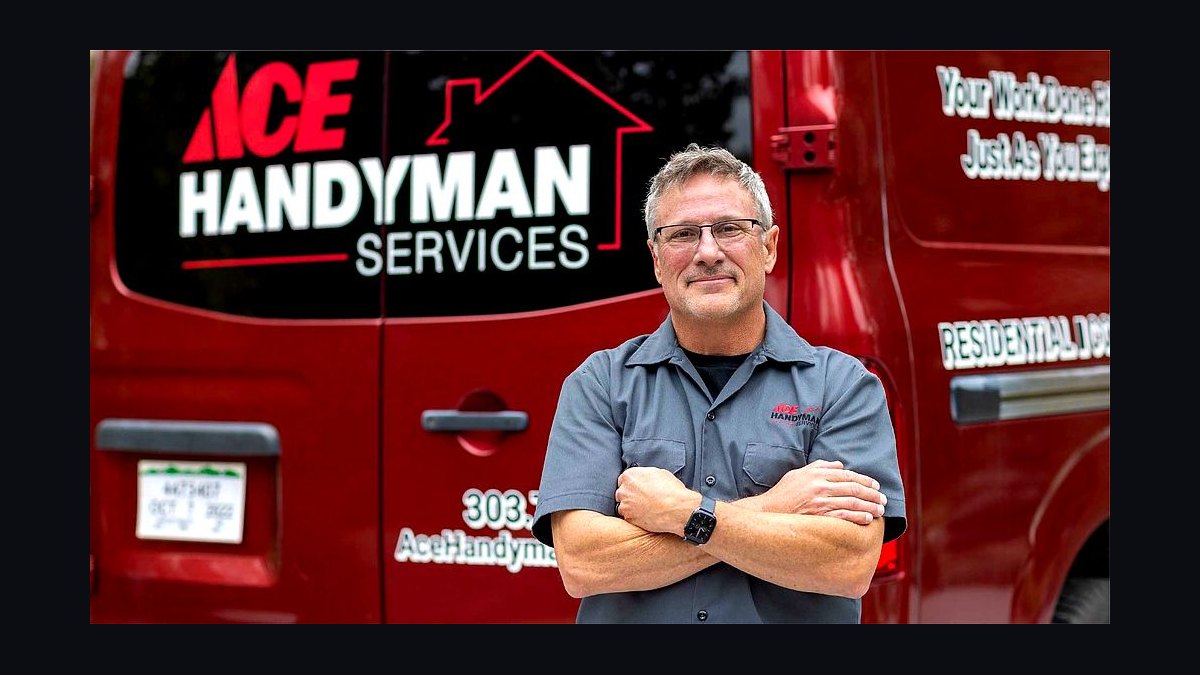
Buying an Ace Handyman Services franchise in 2027 suits operators who can recruit and retain W-2 craftsmen in a homeowner-dense territory. Expect roughly $110,000–$250,000 total investment, a ~$60,000 franchise fee, ~6% royalty, and owner earnings of $90,000–$280,000 in mature units. It is a management business, not a passive one.
The scenario that exposes the real constraint
Consider a couple in a mid-sized Southeastern metro — say a market of roughly 300,000 people with about 85,000 owner-occupied households and a median home age near 34 years. One spouse spent a decade running field operations for a regional HVAC company; the other handles bookkeeping. They have $180,000 liquid, a 720 credit score, and no interest in swinging a hammer themselves. They are considering an Ace Handyman Services territory in 2027.
They model the business in a spreadsheet and it looks wonderful. At $1.1M gross revenue, craftsman labor at 45% leaves $605,000. Materials and vehicle costs at 12% take another $132,000. Royalty at 6% is $66,000, marketing at 2% is $22,000, and office/admin overhead runs maybe $150,000. That leaves roughly $235,000 before the owner's own compensation. The spreadsheet says they replace both incomes within 18 months.
Then they hit reality. They cannot find a second and third craftsman. Their lead tech — a genuinely skilled carpenter and drywall finisher — quits in month seven for a commercial contractor paying $4 more per hour with steadier hours. Without three to five productive craftsmen, revenue cannot exceed roughly $400,000 no matter how many calls the Ace brand generates. Their marketing spend produces booked jobs they have to reschedule or decline. The constraint was never demand. It was labor supply, and no amount of brand equity fixes it.

That gap between the spreadsheet and the operating reality is the entire decision. Ace Handyman Services sells a proven system, a recognized brand, and a scheduling/dispatch playbook. It does not sell craftsmen. You have to go get them, pay them competitively, keep them busy, and keep them from leaving — in a trades labor market where the Bureau of Labor Statistics has documented persistent shortages in construction and specialty trades occupations for years.
How the model actually converts brand trust into revenue
The mechanism is straightforward once you decompose it. Ace Hardware spent a century building consumer trust in its name with homeowners who already shop its stores. Ace Handyman Services rents that trust: when a homeowner sees an Ace-branded van and an Ace-uniformed craftsman, the perceived risk of letting a stranger into the house drops sharply. That lowers customer acquisition cost relative to an unbranded independent handyman, and it raises close rates on inbound calls.

The second half of the mechanism is the W-2 employed-craftsman model. Because technicians are employees rather than 1099 subcontractors, the franchise can standardize training, enforce quality, carry the insurance centrally, and dispatch by skill matching. A job that needs drywall patching plus a door rehang plus a light fixture goes to one multi-skilled tech in one visit — which is exactly how the brand positions itself. Multi-task visits raise revenue per truck roll and reduce the number of appointments needed to hit a revenue target.
Third, the work is inherently recurring. Homeowners who trust a provider for one repair call that provider again for the next five. Maintenance work — caulking, gutter cleaning, minor plumbing, seasonal punch lists — repeats annually. That repeat base is what makes the unit economics work at maturity, because acquisition cost is amortized across a customer lifetime rather than a single ticket.
The loop only closes if the labor side holds. Everything upstream — brand, marketing, dispatch software, corporate training — is designed to deliver qualified demand to your door. Your job as the owner is to build the capacity that converts it.
Real numbers, ranges, and benchmarks
The 2026 franchise disclosure document is the only authoritative source for your specific offering, and you must read it yourself rather than rely on any summary. That said, the commonly cited figures for Ace Handyman Services look like this.
Franchise fee: approximately $60,000. This is a single upfront payment and is generally not refundable.
Total initial investment (FDD Item 7): roughly $110,000 to $250,000. The low end assumes a home office, minimal vehicle spend, and lean marketing. The high end assumes leased or purchased branded vehicles, a small commercial office, and a heavier initial marketing push.
Liquid capital requirement: typically in the $55,000 to $110,000 range, though many franchisees prudently hold $40,000–$60,000 beyond the stated minimum as a payroll buffer.
Ongoing fees: royalty near 6% of gross revenue, plus a marketing or brand fund contribution near 2%.
Mature territory revenue: commonly cited at $600,000 to $1,800,000 gross. This is a wide band because territory household density and craftsman headcount drive it more than anything else.
Owner earnings at maturity: roughly $90,000 to $280,000, implying net margins in the 13%–25% range after paying yourself a market-rate salary or counting it as owner's compensation.
Craftsman fully loaded cost: $55,000 to $85,000 per year depending on market, including wages, payroll taxes, workers' compensation, unemployment insurance, and tool allowances. A $62,000 base wage plus employer taxes and comp realistically lands near $72,000–$78,000 all-in.
Craftsmen needed for $600,000 revenue: typically three to five productive techs, implying $165,000–$425,000 in annual labor cost before owner compensation.
Vehicles: $35,000–$50,000 to purchase a branded van or truck, or $600–$900 per month to lease, per craftsman.
Break-even timeline: commonly 12 to 18 months to cover all operating expenses plus owner salary.
Time to the $90,000–$280,000 net income band: typically 3 to 5 years of compounding growth.
Time commitment during ramp: 50–60 hours per week for the first two to three years, settling to 40–50 once an office manager and lead craftsman are in place.
Cancellation and no-show rates: industry norms of 15%–20% on booked appointments, which argues for overbooking roughly 10% or maintaining a standby list.
Typical territory size: often described as 50,000 to 100,000 households, though the franchisor sets boundaries and can adjust them. Territories with fewer than about 40,000 owner-occupied homes are generally too thin; those above roughly 120,000 may exceed what one owner-operator can supervise.
SBA financing: a 7(a) loan commonly requires a 680+ credit score and 20%–30% down. Rates in recent years have run in the 9%–12% range, implying $1,200–$2,500 monthly debt service on a $150,000 ten-year loan.

Resale: mature units (3+ years, $800,000+ revenue) have traded around 2.5–3.5 times net profit, subject to franchisor approval and a transfer fee.
Treat every one of these as a planning range, not a promise. Your FDD and your own market data govern.
Trade-offs, alternatives, and the honest comparison
The central trade-off is capital efficiency versus labor control. Ace Handyman Services is genuinely capital-light: no retail buildout, no inventory, no real estate. That is a real advantage over restaurant or retail franchising. But you are trading that capital efficiency for a labor-intensive operating model in a tight trades market, and labor is the one input you cannot buy with a bigger check.
The second trade-off is brand support versus franchise cost. You pay roughly 8% of gross in combined royalty and marketing fees. On $1M in revenue that is $80,000 per year leaving the business. In exchange you get the Ace name, national marketing, a dispatch platform, training, and a playbook. Whether that trade is favorable depends entirely on whether the brand actually lowers your acquisition cost enough to cover the fee. For most operators in homeowner-dense suburbs, it does. For an operator in a thin rural market, it may not.

The third trade-off is employed craftsmen versus subcontractors. W-2 employees give you quality control, insurance coverage under your policy, standardized training, and the ability to dispatch by skill. They also give you payroll taxes, workers' comp premiums, FLSA compliance, state wage-law compliance, unemployment insurance, and the obligation to keep them busy 40 hours a week even when the schedule is light. A 1099 model shifts that risk but forfeits the quality and consistency the Ace brand is selling.
Realistic alternatives include Mr. Handyman and Handyman Connection, both established handyman franchisors with different fee structures and labor models; House Doctors and TruBlue for adjacent home-services positioning; buying an existing independent handyman business with an established customer list; or launching independent and building your own brand — which keeps all margin but forfeits territory protection, national marketing, and the Ace name. Ace Hardware itself is a separate franchise opportunity with entirely different economics (retail, inventory, real estate) and should not be confused with this one.
Common pitfalls and how to avoid them
Underestimating working capital. The FDD's Item 7 range is the cost to open, not the cost to survive the first year. Payroll runs weekly or biweekly; customer payments lag. Budget $40,000–$60,000 beyond your stated investment as a payroll float and do not touch it for anything else.
Assuming the brand generates unlimited demand. It generates qualified demand. If you cannot staff it, that demand becomes a liability — you will book jobs you cannot complete, damage your reputation, and burn marketing dollars on customers you disappoint. Do not launch marketing at full throttle until you have at least two productive craftsmen and a third in onboarding.
Hiring on wage alone. Craftsmen leave for a dollar or two an hour constantly. Retention comes from steady hours, respect, quality tools, clear job scopes, and not being asked to do work outside their skill set. Budget for tool allowances and consider performance bonuses tied to completed jobs rather than hours.
Ignoring the scheduling buffer. With 15%–20% cancellation and no-show rates, a fully booked day is an overbooked day. Build a standby list, overbook by roughly 10%, and train your dispatcher to fill gaps the same morning.
Skipping the owner interviews. Before signing, call at least eight existing franchisees. Ask specifically: how long did it take you to reach three craftsmen, what is your craftsman turnover rate, what does the Ace brand actually do for your close rate, and what is your real take-home after debt service. Franchisees who have been operating two or more years will tell you things the FDD will not.
Misjudging your own role. This is not a business you buy and visit on Fridays. Corporate expects the franchisee to be the primary point of contact for customers and craftsmen, at least until a general manager is hired. Transitioning to semi-absentee ownership is possible after three to four years, but the general manager's salary typically reduces owner net income by $30,000–$60,000 per year.
Overlooking exit mechanics. The agreement typically runs ten years with a renewal option and a renewal fee. Resale requires franchisor approval and a transfer fee, and a non-compete commonly bars you from operating a competing handyman business within a defined radius for two to three years after sale. Plan on a five-to-seven-year minimum ownership horizon.
Choosing a territory on price rather than density. A cheap territory with 35,000 owner-occupied homes will cap your revenue permanently. Request the territory map and demographic report, and cross-reference against Census homeownership data and local housing-age statistics before you sign.
Related questions
How much liquid capital do I actually need?
Plan on $55,000–$110,000 to satisfy the franchisor, plus $40,000–$60,000 in reserves for payroll and overhead during the first six to twelve months. SBA lenders typically want 20%–30% down and a 680+ credit score.
Do I need handyman experience to succeed?
No. Many owners come from operations, sales, or general management backgrounds. You need craftsman recruiting, scheduling discipline, and local marketing skill. The trades knowledge sits with your lead technician, not with you.
How many craftsmen do I need to hit $600,000?

Typically three to five productive multi-skilled technicians. Below three, you cannot absorb enough booked work. Above five without an office manager, you will lose control of scheduling and quality.
What is the biggest reason new owners fail?
Inability to recruit and retain skilled W-2 craftsmen. Demand is rarely the binding constraint in a homeowner-dense territory. Labor supply almost always is.
Is a semi-absentee model realistic?
Only after three to four years of consistent growth, and only by hiring a general manager. That salary typically reduces owner net income by $30,000–$60,000 annually, so the math has to work at scale.
FAQ
What is the total investment to open an Ace Handyman Services franchise?
FDD Item 7 typically falls between roughly $110,000 and $250,000, including a franchise fee near $60,000. The low end assumes a home office and minimal vehicle spend; the high end assumes branded vehicles, a small commercial space, and heavier launch marketing. Actual figures depend on your territory and market.
How much can an owner realistically earn?

Mature territories commonly gross $600,000 to $1,800,000, with owner earnings of $90,000 to $280,000. That band is wide because household density and craftsman headcount drive it. Reaching the upper half typically takes three to five years of compounding growth.
What makes this different from other handyman franchises?
Two things: the Ace Hardware brand, which carries decades of homeowner trust and lowers acquisition cost, and the W-2 employed-craftsman model, which delivers consistent quality and accountability compared with 1099 subcontractor networks. Both are genuine advantages and both carry costs.
What are the ongoing fees?
Royalty runs near 6% of gross revenue, plus a marketing or brand fund contribution near 2%. Combined, that is roughly 8% of gross leaving the business annually — about $80,000 per year on $1M in revenue.
What is the hardest part of running this franchise?
Recruiting and retaining skilled craftsmen, and managing a schedule with 15%–20% cancellation and no-show rates. Owners who treat this as a marketing business rather than a people-and-scheduling business tend to struggle.
How long until I break even?
Most operators cover all operating expenses plus owner salary somewhere between month 12 and month 18. Reaching the full net income band generally takes three to five years, and you should plan on a five-to-seven-year ownership horizon to see a meaningful return.
Sources
- https://www.acehandymanservices.com/franchise
- https://www.acehardware.com
- https://www.franchise.org
- https://www.entrepreneur.com/franchises
- https://www.franchisebusinessreview.com
- https://www.bls.gov/ooh/construction-and-extraction/home.htm
- https://www.census.gov/topics/housing.html
- https://www.jchs.harvard.edu
- https://www.sba.gov/funding-programs/loans/7a-loans
- https://www.ibisworld.com/united-states/market-research-reports/handyman-services-industry/
Related on PULSE
- Should I open or buy an Ace Hardware franchise in 2027?
- Best handyman and home-repair franchises to buy in 2027
- Should I open or buy a Handyman Connection franchise in 2027?
- Should I open a handyman business in 2027?
- Should I open or buy a Mr. Handyman franchise in 2027?
- Best home services franchises to buy in 2027
This page will be disappearing soon. Save it to your device for $1 — or read it free while it is here.
@Kory-White- · if Venmo asks, the last 4 of my number are 2012
This page is gone.
This one is off the shelf now. $1 keeps it on your phone for good — the whole page, pictures and diagrams included.
 franchiseShould I open or buy a Merry Maids franchise in 2027?
 franchiseShould I open or buy a Kumon franchise in 2027?
 franchiseShould I open or buy a Wingstop franchise in 2027?
 franchiseShould I open or buy a Meineke franchise in 2027?
 franchiseShould I open or buy a Bojangles franchise in 2027?
 franchiseShould I open or buy a Culver's franchise in 2027?
 franchiseShould I open or buy a Jamba franchise in 2027?
 franchiseShould I open or buy a Smoothie King franchise in 2027?
 franchiseShould I open or buy a Primrose Schools franchise in 2027?
 franchiseShould I open or buy a Supercuts franchise in 2027?