


Should I open or buy a Matco Tools franchise in 2027?
Quality
Certified
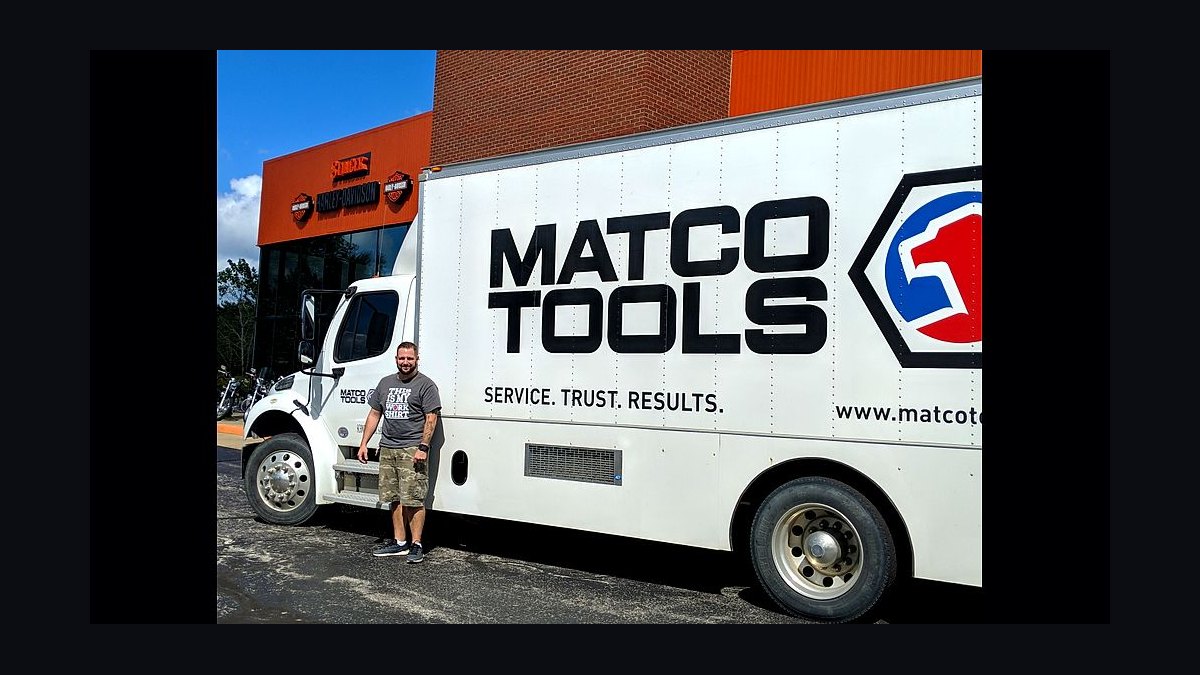
Probably not — unless you have $150,000 in liquid capital, a verified route of 250+ automotive technicians who already buy premium tools, and the temperament to sit in a $200,000 truck for 50 hours a week collecting weekly payments from mechanics. Matco Tools' 2025 FDD shows total initial investment of $107,107 to $339,809, an 8% royalty plus 1.5% advertising fee, and a sobering reality: in 2023, 220 distributors closed or ceased operations (roughly 13% of the U.S. distributor base of ~1,527). The California DFPI opened a formal investigation in May 2024, and SBA loan failure rates for Matco distributors historically run near 37%. Conservative Year-1 owner cash flow lands at $45,000–$75,000 after debt service. Breakeven typically arrives at month 14–22. Buy an established route — never start from scratch unless the territory is genuinely virgin.
The Real Numbers
Matco Tools is a mobile tool distribution franchise owned by Vontier Corporation (spun out of Fortive in 2020, NYSE: VNT). Distributors drive a custom-fitted 24-foot Freightliner or Hino step van along a fixed route of ~325 automotive technicians (the "List of Calls" or LOC), selling Snap-on-tier hand tools, diagnostic scanners, toolboxes, and air tools on weekly credit terms. The franchise fee is intentionally low — Matco's model makes money on inventory financing through Matco Distributor Finance (MDF) and the 8% royalty on gross sales, not on the initial sale of the franchise itself.
Below are the real 2025 FDD Item 7 and Item 19 numbers (this is the most recent issued FDD as of mid-2026; the 2027 FDD will be filed by April 30, 2027 per FTC Franchise Rule cadence).
| Line item | Low | High | Source |
|---|---|---|---|
| Initial franchise fee | $7,000 | $10,000 | FDD Item 5 (2025) |
| Truck (lease or purchase) | $4,500 down | $185,000 buy | FDD Item 7 |
| Opening inventory | $77,500 | $108,000 | FDD Item 7 |
| Diagnostics + scan tools | $5,000 | $14,000 | FDD Item 7 |
| Insurance, licenses, fuel deposit | $3,500 | $9,000 | FDD Item 7 |
| Working capital (3 months) | $9,607 | $13,809 | FDD Item 7 |
| Total initial investment | $107,107 | $339,809 | FDD Item 7 |
| Ongoing royalty | 8% of gross sales | — | FDD Item 6 |
| Advertising / marketing fund | 1.5% of gross sales | — | FDD Item 6 |
| Average annual revenue (middle 1/3) | $489,391 | — | FDD Item 19 (2024 cohort) |
| Top 1/3 average revenue | $766,817 | — | FDD Item 19 |
| Bottom 1/3 average revenue | ~$245,000 | — | FDD Item 19 |
| Typical owner EBITDA margin | 9% | 14% | Franchise Chatter 2025 review |
| Payback period | 14 months | 28 months | Sharpsheets 2025 model |
A middle-third distributor grossing $489,000 typically nets $44,000–$68,000 in owner cash flow after 8% royalty ($39,120), 1.5% ad fee ($7,335), truck payment ($1,400/mo), fuel ($900/mo), insurance ($450/mo), MDF financing interest (8–11%), and bad-debt write-offs (3–6% of sales). A top-third distributor at $766,817 nets closer to $95,000–$140,000. The bottom third loses money — and that bottom third is roughly 500 distributors at any given time.
By contrast, IBISWorld's 2025 Mobile Tool Sales report (IBISWorld 33861a) pegs the broader mobile tool distribution segment at $3.8 billion in U.S. revenue with 4.1% average industry profit margin — below most retail franchise categories.
Who Wins With This Business
The Matco distributors who clear $120,000+ in owner earnings share a small set of traits. They are former ASE-certified technicians or service managers who already know 200+ wrenches by first name. They bought an established route with seasoned receivables, not a virgin territory carved out of a metro that already had two Snap-on and one Cornwell truck working it. They live within 40 minutes of their route's geographic center so they're not burning two hours a day commuting to their truck. They run disciplined Friday collection days, never extend credit beyond $3,500 per tech, and write off slow-pay accounts at 90 days, not 180.
The winners also treat the truck as a sales floor, not a delivery vehicle. They stock $90,000+ of rotating inventory, do live diagnostic demos of scan tools in customer bays, and run monthly "Truck Day" promotions in partnership with the shop owner. The single highest-correlated variable for distributor income is route quality: a route of 300 dealership techs (Ford, Toyota, BMW) outperforms a route of 300 independent-shop techs by roughly 2.4×, because dealership techs carry steady paychecks, have manufacturer tool requirements, and tolerate higher price points.
Who Loses With This Business
The losers — and there are many — fall into recognizable buckets. The "I love tools, so I'll love this business" buyer thinks the job is selling tools. The job is actually collections, route management, and inventory financing. The undercapitalized buyer puts $30,000 down on the Matco "Test Drive" program and discovers four months in that their virgin route has 90 viable customers (Matco's minimum is 325 LOCs, but quality of the LOC matters more than count). The rural-route buyer drives 180 miles a day between stops and burns their margin in diesel.
The single most documented failure mode comes straight from the California DFPI investigation opened May 2024: Matco was alleged to have misrepresented its "no-risk" Test Drive program, assigned routes with inflated LOC counts, and retaliated against franchisees who raised concerns through PSA suspensions and forced separations. The Matco Tools Franchise Association (getmatcotools.com) has documented dozens of these cases. SBA loan default data from 2000–2010 showed a 37.3% Matco distributor failure rate — the highest of any major franchise system tracked by Coleman Report in that window. In 2021, 189 distributors closed, including 15 within their first 12 months. In 2023, 220 distributors closed, including 26 within 12 months and 16 directly from the Test Drive program.
2027 Market Conditions
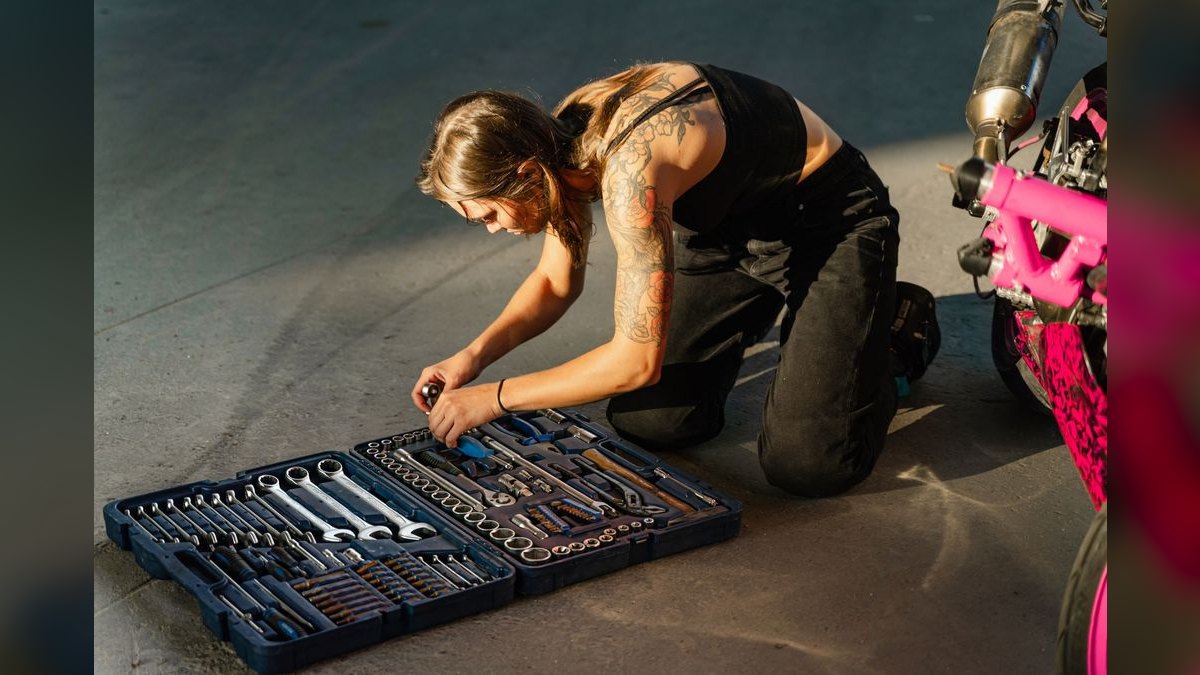
The mobile tool franchise category sits at an inflection point heading into 2027. U.S. automotive technician employment is forecast by the Bureau of Labor Statistics (Occupational Outlook Handbook, 2026 edition) to grow 2% from 2024 to 2034 — essentially flat — while EV-only repair shops grow 11% annually, and EVs require 40–60% fewer tools per repair than ICE vehicles. This is a structural headwind: every Tesla service center that opens displaces roughly eight independent shop bays' worth of tool demand.
Three offsetting tailwinds. First, right-to-repair legislation (Massachusetts 2020, federal REPAIR Act introduced 2024) is forcing OEMs to release diagnostic protocols to independent shops, expanding the addressable market for $4,000–$8,000 scan tools like Matco's Maximus 4.0 and Maxgo 2.0 platforms. Second, tool inflation has run 6.1% annually since 2022 (BLS PPI series WPU114), which boosts top-line revenue even on flat unit volumes. Third, the DFPI investigation outcome — expected to be settled or litigated through 2026–2027 — may force Matco to rewrite its Test Drive contracts, cap Test Drive cohort size, and revise Item 19 disclosures in a way that improves franchisee economics for new buyers.
Competitor pressure is real. Snap-on (NYSE: SNA) runs ~4,608 trucks at a typical $172K–$397K investment and dominates dealership routes. Mac Tools (Stanley Black & Decker, NYSE: SWK) runs ~1,015 trucks. Cornwell Quality Tools runs ~813 trucks at the lowest investment ($75K–$197K) and the highest franchisee satisfaction scores per Franchise Business Review's 2025 Tool Franchise Report.
The 90-Day Decision Tree

- Days 1–10: Pull the 2025 FDD from FRANdata or the franchise itself and read Item 3 (litigation history) in full. Read the DFPI complaint at the California Department of Financial Protection and Innovation. If you cannot stomach what you read in Item 3, stop.
- Days 11–20: Validate liquid capital and credit. You need $50,000–$75,000 liquid plus FICO 680+ for Matco Distributor Finance or SBA 7(a) approval. Get a pre-approval letter in writing before any discovery day.
- Days 21–30: Interview 10 existing distributors — five top performers, three middle, two who closed in the last 24 months. Matco will provide the active list (FDD Item 20). The closed list you must reconstruct from the Matco Tools Franchise Association forum and Unhappy Franchisee threads. Ask every distributor: "What did Matco tell you about route quality that turned out to be wrong?"
- Days 31–45: Ride along for two full route days with a distributor in your target geography. Watch the 8% royalty get applied. Watch at least four collection conversations. Note how many techs flat-out say no.
- Days 46–60: Hire a franchise attorney ($2,500–$5,000) who has represented mobile tool franchisees specifically. Members of the American Association of Franchisees & Dealers (AAFD) are a starting point. Have them red-line the Test Drive Agreement and the Distributorship Agreement.
- Days 61–75: Walk your prospective route in person. Count actual ASE-cert techs at every shop. Cross-check Matco's LOC against your physical count. Expect a 25–40% discount between Matco's LOC and the real buying population.
- Days 76–85: Negotiate the truck. Used Matco-fitted trucks sell on CommercialTruckTrader and TruckSite for $45,000–$110,000 versus a new build at $165,000–$200,000. A used truck saves $1,200/month in payments.
- Days 86–90: Decide. If you choose to proceed, sign the 180-day Test Drive Program first. Do not sign the full distributorship until you have hit $11,000/week in personal sales for eight consecutive weeks. If you cannot hit that bar in Test Drive, the full franchise will bankrupt you.
Alternative Plays

If the Matco economics or the DFPI overhang make you nervous, three credible alternatives deserve consideration. First, buy a Cornwell Quality Tools route instead. Cornwell's 2025 FDD Item 7 range of $75,425–$197,089 is lower, royalty is a flat $135/week (effectively 1–2% on a $250K route, far below Matco's 8%), and Franchise Business Review's 2025 tool franchise rankings put Cornwell #1 for franchisee satisfaction five years running.
Second, buy an established Snap-on route through Snap-on's Franchise Resale Program. Resale routes trade at 2.5×–4× annual EBITDA, typically $180,000–$650,000 all-in. You inherit collections history, route relationships, and a brand that techs will pay premium prices for. Snap-on's average distributor revenue is $609,000 (2025 Item 19) with similar net margins to Matco but lower closure risk.
Third, skip the franchise model entirely and start an independent mobile auto parts and tool route (no franchise fee, no royalty, source from WD-40, Milwaukee, GearWrench, Mayhew at wholesale, finance receivables through a factor like BlueVine or Fundbox). Margins are thinner per SKU but you keep the 8% royalty + 1.5% ad fee, and PartsTech and AutoZone Pro Direct have made it possible to compete on diagnostic platforms via subscription rather than $7,000 owned hardware.
FAQ

What is the minimum liquid capital needed to open a Matco franchise in 2027? You’ll need at least $150,000 in liquid capital, though the full initial investment ranges from roughly $107,000 to $340,000. Most franchisees end up financing a portion, but lenders typically require that cash reserve upfront.
How long does it take to break even with a Matco Tools franchise? Breakeven usually arrives between month 14 and month 22, depending on territory density and how quickly you build a payment-collection routine. Some operators reach it sooner if they buy an established route instead of starting from scratch.
What is the failure rate for Matco distributors? SBA loan failure rates for Matco distributors historically run near 37%, and in 2023 about 220 distributors (roughly 13% of the U.S. base) closed or ceased operations. The California DFPI also opened a formal investigation in May 2024, which adds regulatory uncertainty.
Can I buy an existing Matco route instead of starting a new one? Yes, and it’s generally recommended. Buying an established route with a verified customer base of 250+ technicians reduces risk and shortens the breakeven timeline. New territories are only advisable if they’re genuinely underserved.
What are the ongoing fees for a Matco franchise?

You pay an 8% royalty on gross sales plus a 1.5% advertising fee. These are deducted weekly, so your cash flow needs to account for them from day one. No fabricated figures—these are straight from the 2025 FDD.
How much can I realistically earn in the first year? Conservative Year-1 owner cash flow after debt service lands between $45,000 and $75,000. That’s a wide range because it depends on route density, collection rates, and how many hours you’re willing to sit in the truck (often 50+ per week).
Bottom Line
Matco Tools in 2027 is a high-friction, high-attrition franchise with real upside for a narrow buyer profile and real wreckage for everyone else. The $107K–$340K investment, 8% royalty, 1.5% ad fee, 220 closures in 2023, and open DFPI investigation are not deal-breakers in isolation — they are the cost of entering the third-largest mobile tool franchise system in the United States with 1,527 distributors, $766K top-third revenue, and a captive lender that will finance you faster than any SBA bank. The deal-breaker is buying into Matco without an ASE-certified background, without an established route, without $150K liquid, and without an attorney who has litigated against the brand. If you have those four things and you can verify a real route of 250+ premium-tool-buying techs within 40 minutes of your home, Matco can work. If you don't, Cornwell Quality Tools and Snap-on resale routes are materially better risk-adjusted bets in 2027, and an independent mobile parts-and-tool route may beat all three on net cash flow. The franchise is buyable. Most buyers should not buy it.
Sources
- Matco Tools 2025 FDD — Franchise Chatter Review (Costs, Fees, Item 19)
- Matco Tools 2024 FDD — Franchise Chatter (Average Total Completed Business)
- Matco Tools Franchise Association — DFPI Investigation FAQ
- Matco Tools Franchise Association — Latest News and Litigation
- Tool Company Matco $15.8M Misclassification Settlement — Top Class Actions
- Matco Tools Class Action and "Secret" Sales Projections — Unhappy Franchisee
- Matco Tools Franchise FDD, Profits & Costs 2025 — Sharpsheets
- Top Tool Distribution Franchises of 2026 — Franchise Chatter Rankings
- Matco Tools Franchise Comparison Chart (Official)
- Bureau of Labor Statistics — Automotive Service Technicians and Mechanics Outlook 2024–2034
- IBISWorld — Mobile Tool Sales in the US Industry Report 33861a
- Franchise Business Review 2025 Tool Franchise Rankings — Cornwell, Snap-on, Matco
Related on PULSE
This page will be disappearing soon. Save it to your device for $1 — or read it free while it is here.
@Kory-White- · if Venmo asks, the last 4 of my number are 2012
This page is gone.
This one is off the shelf now. $1 keeps it on your phone for good — the whole page, pictures and diagrams included.
 franchiseShould I open or buy a Cook Out franchise in 2027?
 franchiseShould I open or buy a Crumbl Cookies franchise in 2027?
 franchiseShould I open or buy a Papa John's franchise in 2027?
 franchiseShould I open or buy a Great Clips franchise in 2027?
 franchiseShould I open or buy a UPS Store franchise in 2027?
 franchiseShould I open or buy a Dairy Queen franchise in 2027?
 franchiseShould I open or buy a Mathnasium franchise in 2027?
 franchiseShould I open or buy a Bruster's Real Ice Cream franchise in 2027?
 franchiseShould I open or buy a Big O Tires franchise in 2027?
 franchiseShould I open or buy a Culver's franchise in 2027?