


Should I open or buy an Arthur Treacher's franchise in 2027?
Quality
Certified
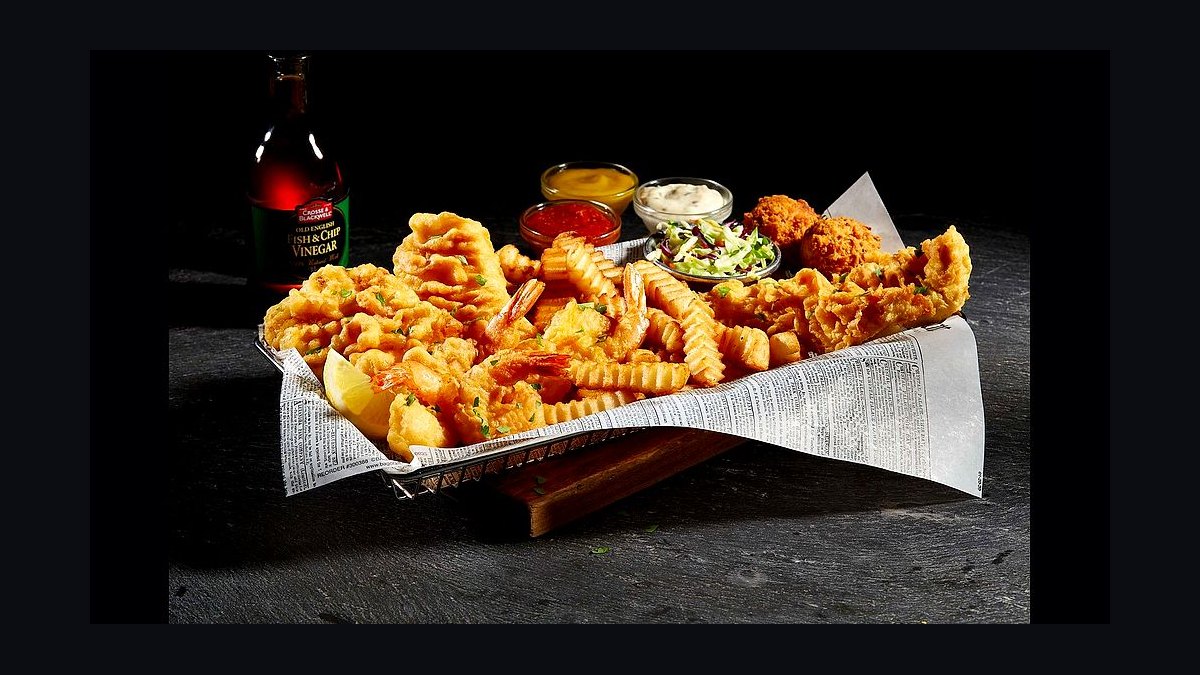
Probably not as a standalone bet in 2027 — with only two original Arthur Treacher's locations left and a $45,000–$422,500 standalone investment against a 3.4–4.8 year payback, the brand carries franchise-fee and royalty obligations without franchise-level marketing or pipeline support. The one defensible path is a $18,500–$34,000 Nathan's Famous co-branded add-on inside a location that already has fryers, or a sub-$8,000 virtual ghost-kitchen license — both let you open under the name without underwriting a dying standalone format.
A Lunch-Rush Scenario That Decides the Whole Question
Picture two different buyers staring at the same franchise disclosure document. The first is a 29-year-old first-time operator in Dallas with $220,000 saved, drawn to Arthur Treacher's because the franchise fee looks modest next to Burger King or Wingstop and the brand has decades of nostalgia equity. The second already owns a Nathan's Famous hot dog stand in Akron, Ohio, doing $780,000 a year in gross sales, and is wondering whether bolting on a fish-and-chips menu could lift his slow 11 a.m.–2 p.m. window.
These two buyers are answering completely different questions, even though both are technically asking "should I open an Arthur Treacher's." For the Dallas buyer, the honest answer is almost certainly no. Fish-and-chips carries less than 2% category share outside the Northeast and Great Lakes corridor, per NPD/Circana's 2026 QSR tracker, and a brand with two open legacy units has no meaningful marketing fund, no regional supply chain relationships built for a new market, and no franchisee community in Texas to learn from. He would be building brand recognition from zero in a region where the chain never had stores, while still owing a 5% royalty and 2% marketing contribution on sales he has to generate without any brand pull helping him.
For the Akron buyer, the calculation flips. He already has the fryers, the hood suppression system, the POS terminal, and the staff. His incremental cost to add Arthur Treacher's to the menu is $18,500–$34,000 rather than $45,000-plus, because he is not building a restaurant — he is adding a product line to one that already works. He is also physically inside the brand's historic footprint, where Arthur Treacher's peaked at 826 units in 1979 and where customers over 55 may still remember the chain from childhood. His downside is capped at the add-on investment, and his upside is a documented 12%–18% lift in lunch ticket mix without a renovation.
The scenario matters because it reframes the entire question. "Should I open an Arthur Treacher's" is not one decision — it's at least three distinct decisions (standalone, co-branded add-on, or virtual-only license), and the FDD's Item 7 investment range of $45,000 to $422,500 exists precisely because it is blending wildly different business models into one disclosure table. Before running any further numbers, a buyer has to identify which of those three buyers they actually are.
How the Co-Branding Mechanism Actually Works
Arthur Treacher's is no longer franchised the way most QSR brands are franchised, and understanding the mechanism is the difference between evaluating the brand correctly and evaluating it as if it were still 1979. Since 2006, Nathan's Famous Systems, Inc. has owned the trademark, and since 2007 TRUFOODS, LLC has operated alongside NF Treacher's Corp. as co-franchisor. That dual-entity structure exists specifically because the brand's primary distribution channel today is not a new freestanding restaurant — it is a menu license bolted onto an existing Nathan's Famous, Miami Subs, Kenny Rogers Roasters, or NF Grill location.
The mechanical reason the add-on path is so much cheaper is equipment reuse. A standalone build requires fryers, freezers, a POS system, hood suppression, signage, and smallwares from zero — the FDD Item 7 line items run $25,000–$95,000 for equipment alone on the standalone path. A host restaurant that already runs a fry station for its existing menu needs only incremental equipment — typically $4,500–$12,000 — because the fryer capacity, ventilation, and point-of-sale infrastructure already exist and are already amortized against the host brand's sales.
The royalty mechanism also works differently depending on path. In both cases the franchisor collects 5% of sales plus a 2% marketing contribution, but on the co-branded path that 5% applies only to "AT-attributable sales" — the portion of the ticket actually tied to Arthur Treacher's menu items, which the parent system's disclosures put at roughly 8%–18% of a co-branded unit's total ticket. On the standalone path, the 5% applies to the entire store's gross sales, because the entire store is the Arthur Treacher's brand.
The virtual-brand mechanism is simpler still: an operator with existing fryer capacity licenses the Arthur Treacher's name and recipes for delivery-only fulfillment through DoorDash, Uber Eats, and Grubhub, paying the same 5% royalty against delivery-only sales with no real estate, signage, or dine-in staffing cost. This is the lightest-weight way to "open" the brand, and it is the version most aligned with where Nathan's Famous Inc.'s own capital allocation has been heading, since public filings show the parent's strategic focus has shifted toward packaged-goods licensing of its namesake hot dog brand rather than physical unit expansion.
The Real Numbers Behind the Decision
The investment spread in Item 7 is the first thing that needs separating by path. Standalone build-out runs $45,000 to $422,500 total, with a $25,000–$30,000 franchise fee, $35,000–$210,000 in build-out and leaseholds, $25,000–$95,000 in equipment, $8,000–$28,000 in signage and smallwares, $4,000–$9,500 in initial inventory, $2,500–$6,000 in training and travel, and $20,000–$45,000 in working capital. The co-branded add-on compresses almost every one of those lines: a $10,000 franchise fee, $0–$8,000 in build-out, $4,500–$12,000 in equipment, $2,000–$6,000 in signage, $1,500–$3,000 in inventory, $1,500–$3,000 in training, and as little as $0–$2,000 in additional working capital, for a total of $18,500–$34,000.
Required capital qualification follows the same split: $200,000 liquid capital and $750,000 net worth for the standalone path, versus $50,000 liquid and $250,000 net worth for the co-branded add-on, per franchise-directory disclosures like Franchise Gator and IFPG. That gap alone screens out most first-time buyers from the standalone route on financial-qualification grounds before the business case is even considered.
Item 19 disclosure is thin specifically for Arthur Treacher's — Nathan's Famous reports co-branded unit economics in aggregate rather than isolating AT-specific revenue, which is itself a signal worth weighing. Cross-referencing the parent system's Item 19, co-branded units post median annual gross sales of $620,000–$840,000, of which Arthur Treacher's product represents that 8%–18% slice, implying AT-attributable annual revenue in the rough range of $50,000–$150,000 per host unit. EBITDA margins for fish-and-chips QSR operators run 6%–11% per IBISWorld's 2026 Fast Food Restaurants report, trailing the 14%–18% margin benchmark typical of burger-QSR concepts — a structural disadvantage baked into the category, not just the brand.
Payback period, modeled at the standalone midpoint investment of roughly $233,000 and 65th-percentile sales assumptions, lands at 3.4 to 4.8 years — more than 20% longer than the International Franchise Association's 2026 median QSR payback benchmark of 2.7 years. The co-branded add-on, by contrast, can break even in 9–16 months if the host unit is already doing $700,000-plus in gross sales, because the incremental investment is small relative to the incremental lunch-ticket lift. Year-one cash flow reflects the same split: standalone ranges from negative $40,000 to positive $25,000, while the co-branded add-on ranges from positive $15,000 to positive $45,000 — the only one of the three paths with a cash-flow floor that stays above zero in a conservative case.
Input-cost pressure adds further headwind specifically to 2027 underwriting. Alaskan cod wholesale prices rose 18% from 2023 to 2026 per NOAA Fisheries' Commercial Landings Report, and projected 2027 quota cuts to Bering Sea pollock are expected to lift costs another 6%–9%, meaning any pro forma built on flat food costs is already out of date before the doors open.
Trade-Offs Against the Alternatives
Every path under the Arthur Treacher's umbrella has a direct, better-disclosed competitor worth weighing before signing anything. Long John Silver's, operated under Sun Holdings, is the dominant fish-and-chips QSR nationally with 600-plus units, full Item 19 disclosure, and a reported $880,000 median annual gross revenue per the 2025 FDD — at a much higher $1.5M–$2.5M investment, but with actual national marketing and a functioning franchisee support system behind it. Captain D's, under Sentinel Capital Partners, runs 530-plus units with an $849,000 average unit volume and a $1.1M–$1.4M investment requirement, again with a real marketing fund and active growth in the South and Midwest. Neither brand has Arthur Treacher's problem of a two-unit legacy footprint propping up the entire disclosure document.

If the appeal of Arthur Treacher's is really just "I want to open a franchise and I have $200,000-plus liquid," that capital is better deployed into a brand where the franchisor is actually investing in the system. Slim Chickens and Raising Cane's, while a different protein category, post 2026 average unit volumes above $2.2M with active franchisee waitlists — evidence of brand pull that Arthur Treacher's, at two open legacy stores, simply cannot offer. The trade-off is capital intensity against unit economics: Arthur Treacher's lets a buyer in cheap, but cheap entry on a shrinking, thinly-disclosed system is not the same as a good investment.
For buyers who want brand exposure without real estate risk, the independent route deserves equal weight against the virtual-brand license. IBISWorld's 2026 data shows independent fish-and-chips operators earning 9%–13% EBITDA against the franchised 6%–11%, after royalty drag, with 40%-plus lower total startup investment — meaning an operator who skips the Arthur Treacher's name entirely, sources their own recipe, and avoids the 5%-plus-2% royalty and marketing stack may end up with a better-margin business than any of the three branded paths, provided they can build their own local following without borrowed nostalgia.
The virtual ghost-kitchen license sits apart from this trade-off because it requires almost no commitment: $2,500–$8,000 in setup against existing fryer capacity, with Restaurant Business Magazine's 2026 Emerging Brands coverage citing $180,000–$320,000 in annual sales per virtual storefront for fish-and-chips concepts running through platforms like CloudKitchens. That risk-adjusted return profile — small capital at risk, no lease, no signage, immediate delivery-platform distribution — makes it the one path under the Arthur Treacher's name that is hard to argue against on numbers alone, even for a buyer with no existing QSR operation, provided they can access commissary kitchen capacity.
Common Pitfalls First-Time Buyers Walk Into
The single most dangerous mistake is underwriting Arthur Treacher's as if it still had the brand recognition it had in 1979, when it operated 826 units. A buyer who assumes customers will walk in because they recognize the name is pricing in demand that, outside a narrow band of Ohio, western Pennsylvania, and upstate New York, simply does not exist. Visiting the two remaining original locations — in Cuyahoga Falls and Pomeroy, Ohio — before signing anything is the cheapest due diligence available: if those stores cannot sustain a steady Tuesday lunch rush, the brand cannot be relied on to sustain a new one.
A second pitfall is treating the thin Item 19 disclosure as a minor paperwork gap rather than a warning sign. When a franchisor reports blended co-branded system economics instead of brand-specific sales data, it usually means the brand-specific numbers would not look favorable in isolation. Buyers should demand the complete Item 20 contact list and personally call five or more current and former franchisees, asking directly for gross sales by quarter, food cost percentage, AT-attributable sales mix, and the quality of corporate support — and should treat any refusal to share those figures as itself meaningful information.
A third pitfall is ignoring protein-supply risk. With Alaskan cod and Bering Sea pollock costs already up sharply and projected to rise further into 2027, a pro forma that does not stress-test an additional 6%–9% food-cost increase is not a conservative pro forma — it is an optimistic one wearing a conservative label. Locking a forward supply contract with an established seafood distributor before opening, rather than after, is the only way to know the real margin picture going in.
A fourth and final pitfall is confusing "I can afford the franchise fee" with "this is a good use of the capital." At $25,000–$30,000, the Arthur Treacher's standalone franchise fee is genuinely cheap relative to most QSR brands, which tempts buyers into treating low entry cost as low risk. In reality, the low fee reflects a system with almost no new-unit demand, no national marketing fund doing real work, and a two-unit legacy footprint — meaning the franchise fee is the cheapest part of a bet that gets considerably more expensive, and considerably less certain, the moment build-out, inventory, and three years of royalty payments are added on top.
Related questions
Is the Arthur Treacher's co-branded add-on worth it for an existing Nathan's Famous operator?
Yes, conditionally — at $18,500–$34,000 with a 9–16 month payback for host units doing $700,000-plus in sales, it is the strongest path under the brand, especially in the Northeast/Great Lakes footprint with strong 55-and-older demographics.
How does the Arthur Treacher's virtual ghost-kitchen license work?
An existing fryer-equipped kitchen licenses the recipes and name for delivery-only sales through DoorDash, Uber Eats, and Grubhub for $2,500–$8,000 setup, paying the standard 5% royalty on delivery sales only — no lease or dine-in buildout required.
Why is Arthur Treacher's Item 19 disclosure so thin compared to other QSR brands?
Nathan's Famous reports blended co-branded system economics rather than Arthur Treacher's-specific revenue, because the brand's sales are a minority slice (8%–18%) of most host units' total ticket rather than a standalone, fully-disclosed revenue stream.
What's a better alternative to a standalone Arthur Treacher's franchise?
Long John Silver's ($1.5M–$2.5M investment, $880,000 median AGR) and Captain D's ($1.1M–$1.4M investment, $849,000 AUV) both offer full Item 19 disclosure, active marketing funds, and real franchisee support that Arthur Treacher's standalone units lack.
How much fish-cost inflation should a 2027 pro forma assume?
At minimum 6%–9% on top of the 18% rise already seen from 2023–2026 in Alaskan cod and Bering Sea pollock pricing, per NOAA Fisheries' 2026 Commercial Landings Report and 2027 quota-cut projections.
FAQ
Is Arthur Treacher's actually still open for new franchises? Yes, but narrowly. New licenses are technically available, but almost all real growth happens through the Nathan's Famous co-branded add-on menu. Standalone franchises remain on paper, yet with only two original locations left and no active new-build pipeline, standalone corporate support is minimal.
How much does it really cost to open a standalone Arthur Treacher's?
Realistic total investment runs $45,000 to $422,500 per FDD Item 7, with a $25,000–$30,000 franchise fee. The wide range depends on whether you convert an existing fryer-equipped space, build from a bare shell, or lean toward the lower-cost end of the format.
What are the ongoing fees after I open? A 5% royalty on gross sales (or AT-attributable sales for co-branded units), plus a 2% marketing/brand fund contribution. Both apply regardless of how slow sales run, so royalty drag is a fixed cost from day one.
Can I make money in the first year? For a standalone unit, expect Year-1 cash flow between negative $40,000 and positive $25,000. As a co-branded add-on to an existing Nathan's Famous location, the range improves to positive $15,000 to positive $45,000 — profitability is realistic there, not guaranteed on the standalone path.
How long until I break even? Under best-case assumptions, standalone payback runs 24–36 months, with a more conservative midpoint-investment model putting it at 3.4 to 4.8 years — well behind the 2.7-year median QSR payback cited by the IFA's 2026 Franchise Business Economic Outlook.
Is the Arthur Treacher's brand growing or dying in 2027? Dying as a standalone chain — only two original Ohio locations remain open. Its viable future is as a Nathan's Famous co-branded menu add-on or a delivery-only virtual concept; new standalone openings carry very high risk with essentially no brand-pull offsetting it.
Sources
- Nathan's Famous, Inc. — 2025 Franchise Disclosure Document (Items 5, 6, 7, 19), filed with state franchise registries
- Franchise Gator — Arthur Treacher's Fish & Chips Franchise Cost, Fees, Opportunities, franchisegator.com
- IFPG (International Franchise Professionals Group) — Arthur Treacher's Fish & Chips Franchise Cost & Requirements, ifpg.org
- Entrepreneur Magazine — Arthur Treacher's Fish & Chips Franchise Information, entrepreneur.com
- IBISWorld — Fast Food Restaurants in the US (NAICS 72251), ibisworld.com
- Restaurant Business Magazine — Arthur Treacher's virtual-brand coverage, restaurantbusinessonline.com
- NOAA Fisheries — Commercial Landings Reports, fisheries.noaa.gov
- U.S. Securities and Exchange Commission — Nathan's Famous, Inc. filings (CIK 0000069733), sec.gov
- International Franchise Association — Franchise Business Economic Outlook, franchise.org
- Franchise Grade — Arthur Treacher's Fish & Chips Franchise Review, franchisegrade.com
Related on PULSE
This page will be disappearing soon. Save it to your device for $1 — or read it free while it is here.
@Kory-White- · if Venmo asks, the last 4 of my number are 2012
This page is gone.
This one is off the shelf now. $1 keeps it on your phone for good — the whole page, pictures and diagrams included.
 franchiseShould I open or buy a Panera Bread franchise in 2027?
 franchiseShould I open or buy a Whataburger franchise in 2027?
 franchiseShould I open or buy an Anytime Fitness franchise in 2027?
 franchiseShould I open or buy a Jeremiah's Italian Ice franchise in 2027?
 frShould I open or buy a McDonald's franchise in 2027?
 franchiseShould I open or buy a Kumon franchise in 2027?
 franchiseShould I open or buy a Little Caesars franchise in 2027?
 franchiseShould I open or buy a Massage Envy franchise in 2027?
 franchiseShould I open or buy a Stanley Steemer franchise in 2027?
 franchiseShould I open or buy a Wingstop franchise in 2027?