


Should I open or buy a Spring-Green Lawn Care franchise in 2027?
Quality
Certified
Yes — open or buy a Spring-Green Lawn Care franchise in 2027 if you already operate an adjacent home-services route (pest, mosquito, irrigation), can fund $118,898–$135,176 of cash and committed working capital for the standard build, and can give the territory 3–4 full mowing seasons before you draw a market-rate owner salary. The 2026 FDD Item 19 discloses average revenue of $1,120,124 for franchised units operating 1+ full calendar years, and lawn-services peer benchmarks put mature EBITDA margins at 12–18% after the 10% royalty + 2% national brand fund. Probably not if you want 6-figure Year-1 owner cash flow, hate door-to-door sales, or are buying into a dense Sunbelt metro where independent operators already undercut on price. Payback typically lands at month 36–48, not 24.
The Real Numbers
The 2026 Spring-Green Franchise Disclosure Document (FDD) governs every franchise sale in 2027 unless replaced after the April 2027 renewal. Two FDD entities exist — Spring-Green Lawn Care Corp. (the legacy industry-associate conversion program, lower investment) and SpringGreen Inc. (the standard new-build agreement). Both share the royalty stack, both publish an Item 19 earnings disclosure, and both feed the 155 total franchised units reported across the system through year-end 2026.
The breakdown below reflects the standard new-build SpringGreen entity, which is the default 2027 path for a buyer with no existing route book:
| Item 7 Line Item | Low | High | Notes (2026 FDD) |
|---|---|---|---|
| Initial franchise fee | $27,000 | $45,000 | $45K standard for 60,000 SFDU territory; $27K Industry Associate conversion; VetFran credits $5K |
| Real estate / lease deposit | $2,500 | $7,500 | Shared shop or 2,000 sq ft flex-industrial, no retail required |
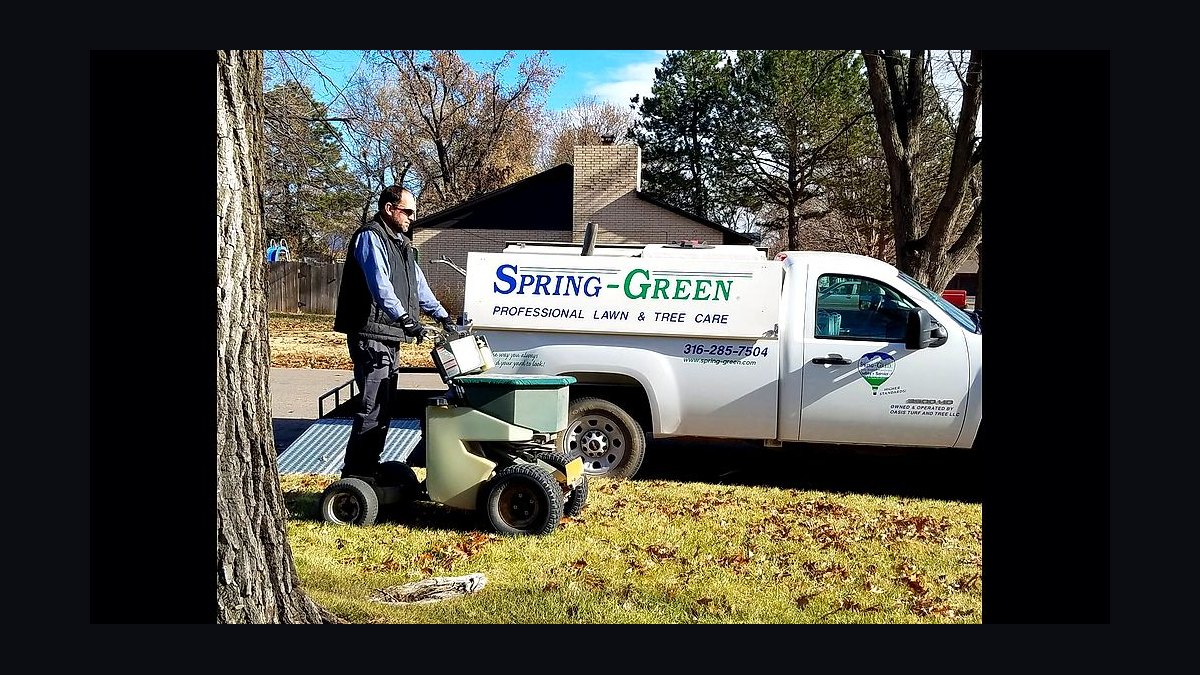
| Equipment & vehicles | $42,000 | $48,000 | One 600-gallon spray rig, GPS routing tablet, mowing attachments |
| Training & travel | $3,500 | $6,500 | 2-week Plainfield, IL HQ classroom + ride-along |
| Initial chemicals & inventory | $8,500 | $10,500 | Fertilizer, pre-emergent herbicide, post-emergent, grub control |
| Insurance, licensing, pesticide cert | $4,000 | $6,500 | State pesticide applicator license mandatory in all 50 states |
| Local marketing launch | $8,000 | $12,000 | Direct-mail EDDM, door-hangers, Google LSA seed budget |
| 3 months working capital | $23,398 | $31,676 | Payroll for 2 techs + GM, fuel, software (RealGreen) |
| TOTAL Item 7 (2026 FDD) | $118,898 | $135,176 | Plainfield-disclosed range; some third-party aggregators report broader ranges including multi-territory builds |
Item 19 (2026 FDD) — Financial Performance:
- Average Gross Revenue (Franchised Businesses ≥1 Full Calendar Year): $1,120,124
- Reporting cohort: disclosed franchised units that operated all 12 months of the prior calendar year
- Median Gross Revenue (peer FDDs / Item 19 norms for the segment): ~$747,000
- Top-quartile revenue: breaks $1.6M in dense suburban territories with 5+ years of route density
Royalty stack:
- Royalty: 10% of Gross Sales (some agreements step down on a sliding 10%→8% scale as revenue scales)
- National Brand Fund: 2% of Gross Sales
- Total off-the-top: 12% before COGS and labor
Payback and margin math:
- EBITDA margin at maturity (Years 3–5): 12–18% of Gross Sales, in line with NALP and IBISWorld 7.9% industry average but uplifted by the brand premium
- On the $1.12M Item 19 average, that is $135K–$202K of EBITDA before owner replacement comp
- Payback period on the ~$130K cash-in: typically 36–48 months, longer if the buyer takes a salary in Year 1
- Working capital reality check: plan for 9 months, not 3 — Spring-Green is a March–November revenue business in most northern markets, and Q1 burn runs $25K–$40K even in mature units
Who Wins With This Business

The buyer profile that wins with Spring-Green in 2027 has three traits.
First, route-density operators. If you already run a pest control, mosquito, holiday lighting, or irrigation route in the same territory, you have CAC near zero on lawn-care upsells. Aptive, Mosquito Joe, and Christmas Decor operators who have layered Spring-Green on top routinely hit Year-2 revenue that takes a cold-start franchisee Year-4 to match. The Industry Associate Program at the $27K reduced fee exists specifically to recruit these conversions.
Second, operator-owners with a technician background. State pesticide applicator licensing is non-trivial — every applicator on a Spring-Green truck must hold a commercial applicator license issued by the state department of agriculture, with 6–12 hours of continuing education annually. An owner who can train and certify in-house keeps labor margin intact when the local market tightens.
Third, suburban-exurban geography. Spring-Green wins where lots are 0.25–1.0 acres, household income is $90K–$180K, and the competing independents are one-truck operators with no chemical-application credentials. Indianapolis exurbs, Charlotte ring suburbs, Cincinnati metro, St. Louis west county, Kansas City Johnson County — all examples where Spring-Green franchisees crossed $1.5M in Year 4.
The winning operating model is technician-led + GM-managed + owner-strategic — owner handles B2B accounts (HOAs, property management, light commercial), GM dispatches the 3–6 trucks, and techs focus on application quality and upsells (aeration, seeding, grub program). Customer retention in the segment runs 70–82% annually; every point above 75% compounds EBITDA materially.
Who Loses With This Business
The buyer who loses with Spring-Green is the absentee semi-passive investor expecting a 6-figure Year-1 distribution. Lawn care is a route-density compounding game — Year 1 is direct-mail saturation, door-hangers, and Google LSA spend at a CAC of $85–$140 per customer against an average ticket of $480–$720 annually. First-year customer acquisition cost alone eats 18–24 months of gross margin on each new account. A buyer who does not personally prospect the HOAs, work the trade shows, and ride along on early routes will burn $60K–$90K of working capital in months 4–9 and exit at the first renewal.
The second losing profile is the dense-Sunbelt-metro cold-start — Phoenix, Las Vegas, Houston intown, Miami-Dade core. These markets are already saturated with TruGreen (national), Lawn Doctor (franchised), Weed Man (franchised), and a 5-deep bench of independents running at $249/year all-in pricing the Spring-Green model cannot match without destroying unit economics. TruGreen's scale advantage on chemical procurement and call-center efficiency means a Spring-Green franchisee in those metros competes on service quality alone, and HOA contract cycles in those regions are 3-year locked with the incumbent.
The third profile is the operator who underestimates seasonality. Spring-Green is March-through-November revenue in Zone 5–6 (most franchised territories). December–February burn includes fixed payroll for the GM, truck financing, insurance, and shop rent — typically $22,000–$38,000 per month with zero offsetting revenue outside of the dormant-season tree-and-shrub program, which addresses maybe 8–12% of customers. Buyers who do not bank Q4 cash to cover Q1 burn end up drawing down a line of credit at 11–13% interest to make payroll.
The fourth losing profile is the chemical-averse owner. Spring-Green's core product is synthetic fertilization + weed control + grub control. California, Maryland, Maine, and New York have all tightened neonicotinoid restrictions and fertilizer phosphorus caps since 2024. An owner who is uncomfortable defending the chemistry to eco-conscious customers will lose renewals at 32–40% annually instead of the 18–25% Spring-Green system average.
2027 Market Conditions
The lawn-care segment sits inside the $176.7B U.S. landscaping services industry (IBISWorld 2026), with lawn fertilization, weed-and-feed, and pest application representing roughly $22–26B of that total. CAGR through 2031 is forecast at 4.85% by Mordor Intelligence, with homeowner discretionary spend on exterior services holding up better than interior renovation since the 2024 mortgage rate plateau.
Three 2027-specific dynamics that buyers must price into the model:
First, the home-services roll-up wave has reached lawn care. Authority Brands, Empower Brands, Threshold Brands, and Neighborly have all closed adjacent acquisitions in 2025–2026. TruGreen itself is owned by ServiceMaster spin-out Servpro Industries and is rumored to be exploring a bolt-on acquisition strategy for regional independents. For a Spring-Green franchisee, this means exit multiples in 2027–2029 could reach 4.5–6.0x EBITDA for route books with >$1.5M revenue, well above the 3.0–3.5x historical norm for single-truck independents.
Second, labor cost inflation has stabilized but not reversed. BLS Occupational Employment Statistics (May 2025) put median grounds-maintenance worker wages at $18.42/hour, up 22% since 2022. H-2B visa allocations for seasonal landscape labor were 66,000 cap + 64,716 supplemental for FY2026, with the DHS-DOL joint rule maintaining $17.50–$22.80/hour prevailing wage across most Spring-Green territories. Plan labor at 38–44% of revenue, not the 32% that older franchise pro-formas assume.

Third, chemical input costs are down 6–9% from the 2022 peak but regulatory risk is up. EPA's 2026 chlorpyrifos final ruling, state-level neonicotinoid restrictions, and the PFAS-in-fertilizer scrutiny following the Maine biosolids ban all push operators toward organic-and-hybrid program SKUs that carry 18–24% lower gross margin than legacy synthetic programs. Spring-Green has rolled out a NaturalLawn-style hybrid program in 22 states; buyers should model 30–40% of new accounts electing the hybrid by Year 3.
The 90-Day Decision Tree
A disciplined 90-day diligence flow keeps a buyer from signing into the wrong territory. Run these steps in sequence, not in parallel:
1. Days 1–14: Pull and read the full 2026 FDD. Request directly from springgreenfranchise.com, not third-party aggregators. Read Item 3 (litigation), Item 6 (other fees), Item 7 (investment), Item 19 (earnings), Item 20 (outlet count), Item 21 (audited financials). Flag any terminated/non-renewed franchisee list in Item 20 and call 5 of them directly.
2. Days 15–28: Territory-density mapping. Get Spring-Green's proposed territory shapefile and overlay against U.S. Census ACS 5-year SFDU counts, median household income, and competitor density (TruGreen, Weed Man, Lawn Doctor, top-5 independents per Google Maps). Reject any territory where competitor density >12 operators per 10,000 SFDU or median HHI <$80K.

3. Days 29–45: Validation calls with 10+ existing franchisees. Use the Item 20 contact list. Ask: Year-1 revenue, Year-1 EBITDA, months to breakeven cash flow, months to draw owner salary, biggest unexpected cost, biggest unexpected win, HQ support quality 1–10, would you sign again 1–10. Throw out the high and low; trust the middle 7.
4. Days 46–60: Local market test. Spend $2,500 on Google LSA + EDDM direct mail in the target territory before signing. Measure inbound lead cost and lead-to-quote conversion. If CAC trends above $150 per acquired customer in a fresh test, the territory is over-saturated.
5. Days 61–75: Financial stress-test the pro-forma. Build a 5-year P&L that stresses Year-1 revenue 30% below Item 19 average, labor at 44% of revenue, fuel at $4.85/gallon, chemical cost +8% YoY. If the base case still hits positive EBITDA by Month 18, the territory clears. If not, walk.
6. Days 76–85: Franchise attorney review. Hire a specialist franchise attorney (not a general business attorney) for $3,500–$6,500 to red-line the franchise agreement, personal guaranty, transfer clause, post-termination non-compete (Spring-Green's standard is 2 years, 25-mile radius), and renewal terms. Negotiate the post-term non-compete down to 12 months if possible.
7. Days 86–90: Sign or walk. No middle ground. Either fund the $118K–$135K, sign the 10-year initial term, and start the 2-week Plainfield training — or walk and re-allocate the capital. Indecision past Day 90 burns optionality on territory holds.
Alternative Plays

If the Spring-Green diligence surfaces red flags, four credible alternatives sit in the same operator-buyer category:
Weed Man USA — CAD-headquartered franchisor, 600+ U.S. units, 2026 FDD discloses higher Item 19 revenue ($1.4M+ average) but higher Item 7 investment ($82K–$167K) and a 8% royalty + 1.5% NBF stack. Better fit for buyers with $200K+ liquid willing to compete in denser metros.
Lawn Doctor — Holmdel, NJ franchisor, 620+ units, 2026 Item 7 of $115K–$140K, similar to Spring-Green but with proprietary equipment financing that reduces day-one cash by $25K–$35K. Item 19 average revenue runs $780K–$920K — lower top end than Spring-Green but faster ramp.
Independent route acquisition — Buy a $400K–$800K revenue independent route book in the target metro at 0.6–1.0x revenue (industry M&A norm). No royalty drag, no franchise fee, but no brand support, no chemical-procurement leverage, and no operating playbook. Best for operators with 5+ years in the trade.
NaturalLawn of America — Organic-and-hybrid positioning, 80+ units, 2026 Item 7 of $98K–$172K. Premium pricing power in eco-conscious metros (Boulder, Portland, Burlington, Madison) where Spring-Green's synthetic-heavy program faces regulatory headwinds. Item 19 revenue lower but gross margin 4–6 points higher.
A fifth play is to skip the lawn-care franchise entirely and layer Spring-Green-like service onto an existing pest-control franchise like Mosquito Joe or Mosquito Authority, both of which permit lawn-care addendum services under the master agreement without paying a second franchise fee.
FAQ
How much money do I need to start a Spring-Green Lawn Care franchise in 2027? Total investment ranges from roughly $118,000 to $135,000 in cash and committed working capital for a standard build. This covers the franchise fee, equipment, initial marketing, and operating funds. Actual costs depend on territory size and whether you lease or buy trucks.
How long until I can pay myself a market-rate salary? Most franchisees need 3–4 full mowing seasons before drawing a typical owner salary. Revenue builds gradually as you grow recurring lawn care contracts. Expect to reinvest profits into the business during the first few years.
What are the typical revenues and profits? Franchised units operating one or more full years average about $1.1 million in annual revenue. Mature EBITDA margins typically fall between 12% and 18% after paying the 10% royalty and 2% national brand fund. Actual profits vary by market and operational efficiency.
How long does it take to break even? Payback usually occurs between month 36 and month 48. This is slower than some home-service franchises because lawn care has a seasonal revenue curve. Faster payback is possible in high-density suburban areas with low competition.
Is door-to-door sales required? Yes, especially in the first few years. Spring-Green relies heavily on direct-to-consumer sales through door knocking, yard signs, and local events. If you dislike face-to-face selling, this franchise model will be challenging.
Can I buy an existing franchise instead of opening a new one? Yes, existing units are sometimes available for resale. Prices vary widely based on territory, customer base, and equipment condition. Expect to pay a premium for a mature route with recurring contracts, often 1.5–2.5x annual net profit.
Bottom Line
Spring-Green Lawn Care is a credible 2027 franchise buy for the right operator profile — route-density operators, technician-background owners, and suburban-exurban geography buyers with $175K–$210K of accessible capital and a 3–4 year patience window. The 2026 FDD Item 19 disclosure of $1.12M average revenue is real and verifiable, but it describes mature units, not Year-1 cold starts. The royalty stack at 12% off the top is mid-pack versus Weed Man and Lawn Doctor, and HQ chemical procurement earns back 2–3 EBITDA points. The biggest risk is dense-Sunbelt metro saturation and labor inflation; the biggest opportunity is exit multiple expansion as home-services roll-ups continue. A disciplined 90-day diligence with territory mapping, 10+ franchisee calls, and stress-tested pro-forma is the difference between a $600K–$1.2M Year-5 exit and a terminated franchise in Year 3.
Sources
- Spring-Green Lawn Care Franchise Cost & FDD (2026) — PeerSense
- SPRING GREEN LAWN CARE Franchise — FDD, Fees & Cost (2026) — FranchiseOverview
- Spring-Green Lawn Care Franchise (Costs + Fees + FDD) — Franchise Direct
- SpringGreen Franchise Cost, Royalty & Earnings (2026 FDD) — FranchiseDepth
- Start a Spring-Green Lawn Care Franchise in 2026 — Entrepreneur Franchise 500
- Spring-Green Lawn Care Franchise FDD, Profits & Costs — Sharpsheets
- Spring-Green Lawn Care Franchise Costs & Information — FranNet
- Landscaping Services in the US Market Size — IBISWorld
- United States Lawn Care Market — Mordor Intelligence
- Landscape Industry Statistics — National Association of Landscape Professionals (NALP)
- Grounds Maintenance Workers Wages — BLS Occupational Employment Statistics
- Home — Spring Green Franchise Opportunity (official)
spring-green lawn care franchise review / reviews / rating / review 2027 / review of spring-green lawn care franchise
Related on PULSE
- Should I open a independent lawn care business in 2027?
- Should I open or buy a Weed Man Lawn Care franchise in 2027?
- Should I open or buy a Lawn Squad franchise in 2027?
- Should I open a lawn mowing business in 2027?
- Should I open or buy a Lawn Doctor franchise in 2027?
- Best pet care franchises to start in 2027
This page will be disappearing soon. Save it to your device for $1 — or read it free while it is here.
@Kory-White- · if Venmo asks, the last 4 of my number are 2012
This page is gone.
This one is off the shelf now. $1 keeps it on your phone for good — the whole page, pictures and diagrams included.
 franchiseShould I open or buy a Supercuts franchise in 2027?
 franchiseShould I open or buy a Whataburger franchise in 2027?
 franchiseShould I open or buy a Taco Bell franchise in 2027?
 franchiseShould I open or buy a Jeremiah's Italian Ice franchise in 2027?
 franchiseShould I open or buy a Mathnasium franchise in 2027?
 franchiseShould I open or buy an Anytime Fitness franchise in 2027?
 franchiseShould I open or buy a Stanley Steemer franchise in 2027?
 franchiseShould I open or buy a Marco's Pizza franchise in 2027?
 franchiseShould I open or buy a Dunkin' franchise in 2027?
 franchiseShould I open or buy a Matco Tools franchise in 2027?