


Should I open or buy a Snapology franchise in 2027?
Quality
Certified
Probably not as a wealth-building play — unless you already run a kids' enrichment center, after-school program, or STEM camp where Snapology becomes an add-on revenue stream rather than your only income. The 2026 Snapology FDD reports an initial investment of $75,250 to $105,800, a $40,000 franchise fee, and a 7% royalty plus 1-6% marketing fees. The headline number — $157,035 average gross sales across 27 franchised outlets — sounds reasonable until you see the median of $106,927 and a low of $20,816. After royalty, marketing, instructor pay, and venue rent, most single-unit owner-operators clear $15,000 to $40,000 in Year-1 cash flow and break even in 18-30 months. Buy only if you can run it as a side or second business.
The Real Numbers
Snapology operates in two formats — Mobile (you bring LEGO-based STEM curriculum to schools, libraries, and party venues) and Classroom/Discovery Center (your own leased studio space). Mobile is the dominant economic model and what the FDD Item 7 range covers; classroom builds run higher because of build-out and lease deposits.
| Line Item | Mobile Snapology (Low) | Mobile Snapology (High) | Source |
|---|---|---|---|
| Initial Franchise Fee | $40,000 | $40,000 | 2026 FDD Item 5 |
| Training & Travel | $1,500 | $4,000 | 2026 FDD Item 7 |
| Equipment & LEGO Inventory | $8,000 | $14,000 | 2026 FDD Item 7 |
| Tech, Software, Office | $3,000 | $5,500 | 2026 FDD Item 7 |
| Marketing Launch (3 mo) | $5,000 | $12,000 | 2026 FDD Item 7 |
| Insurance, Permits, Legal | $1,750 | $4,300 | 2026 FDD Item 7 |
| Working Capital (3 mo) | $16,000 | $26,000 | 2026 FDD Item 7 |
| Total Initial Investment | $75,250 | $105,800 | 2026 FDD Item 7 |
| Royalty | 7% of gross sales | 7% of gross sales | 2026 FDD Item 6 |
| National Ad Fund | 1% (up to 5%) | 1% (up to 5%) | 2026 FDD Item 6 |
| Local Marketing | 6% of gross sales | 6% of gross sales | 2026 FDD Item 6 |
| Technology Fee | $125/month | $150/month | 2026 FDD Item 6 |
| Avg Gross Sales (27 outlets) | $157,035 | $157,035 | 2026 FDD Item 19 |
| Median Gross Sales | $106,927 | $106,927 | 2026 FDD Item 19 |
| Low / High Range | $20,816 | $504,708 | 2026 FDD Item 19 |
| Est. EBITDA Margin (owner-op) | 15% | 28% | Operator interviews + FDD math |
| Est. Year-1 Cash Flow | $15,000 | $40,000 | Mobile model, owner-operator |
| Payback Period | 18 months | 30 months | At median sales |
Math check at the median. $106,927 gross sales — 7% royalty ($7,485) — 7% marketing ($7,485) — $1,650 tech fees — $35,000 instructor labor (1-2 part-timers) — $8,000 venue commissions/splits — $4,000 LEGO replenishment — $6,000 insurance/admin = ~$37,000 owner-operator take. That's a job, not a business. Hitting the $157K average lifts that to ~$55-65K. Top-quartile operators clearing $250K+ gross are the ones running classroom centers with summer camps and birthday parties stacked on top.
Who Wins With This Business
The repeat-revenue stacker. If you already run a gymnastics gym, dance studio, martial arts dojo, or daycare, Snapology becomes a summer-camp and after-school filler that uses your existing facility, your existing parent email list, and your existing staff during dead hours. Margin jumps from 25% to 50%+ because you're not paying incremental rent.
The school-district relationship-builder. Operators with prior teaching, PTA, or district-administrator credentials convert school after-care contracts at 3-4x the rate of cold outsiders. One Pittsburgh-area operator locked in 17 elementary schools by Year 2 because she had spent 8 years as a curriculum coordinator in the district.

The two-income household with a working spouse. Snapology Mobile is realistic as a $40-60K side business for a parent whose partner carries the household. No 60-hour weeks, no employees-with-benefits, no inventory risk because LEGO holds value.
The birthday-party-and-camp operator. Summer camp weeks at $300-$450/kid x 12 kids x 8 weeks = $30K-$45K of pure-margin gross in a single quarter. Birthday parties at $350-$550 each x 50/year = $20K-$28K more.
Who Loses With This Business
The "I want to replace my $120K corporate salary" buyer. The median Snapology franchise grosses $107K — you cannot net $120K from $107K of revenue under any operating model. You will be disappointed and resentful by month 14.
The introvert who hates sales. Snapology is 70% B2B sales — pitching school principals, after-care directors, summer-camp parents, library coordinators, scout troop leaders. If you don't enjoy cold-calling and showing up at PTA meetings, you will starve.
The buyer with no kids-industry network. Operators starting from zero educational/parent network take 14-22 months to reach the FDD median vs. 6-9 months for connected operators. The $20,816 low-end outlet in Item 19 is almost certainly someone in this bucket.
The big-classroom build-out gambler. A Discovery Center build can push total investment to $180K-$240K (lease, build-out, deposit, furniture, signage). At 7% royalty and 7% marketing, classroom centers need $300K+ gross just to clear the same dollars a mobile operator clears at $150K. Most fail by Year 3.
2027 Market Conditions
Three macro forces shape the Snapology investment thesis for 2027.
First — the K-5 STEM after-school market is structurally growing. IBISWorld's Tutoring & Educational Services report (Mar 2026) pegs the segment at $22.4B with 4.1% CAGR through 2031, driven by post-pandemic learning-loss budgets still flowing through ESSER tail-spend and state-level STEM grants. Parents are spending more per child on enrichment, not less.
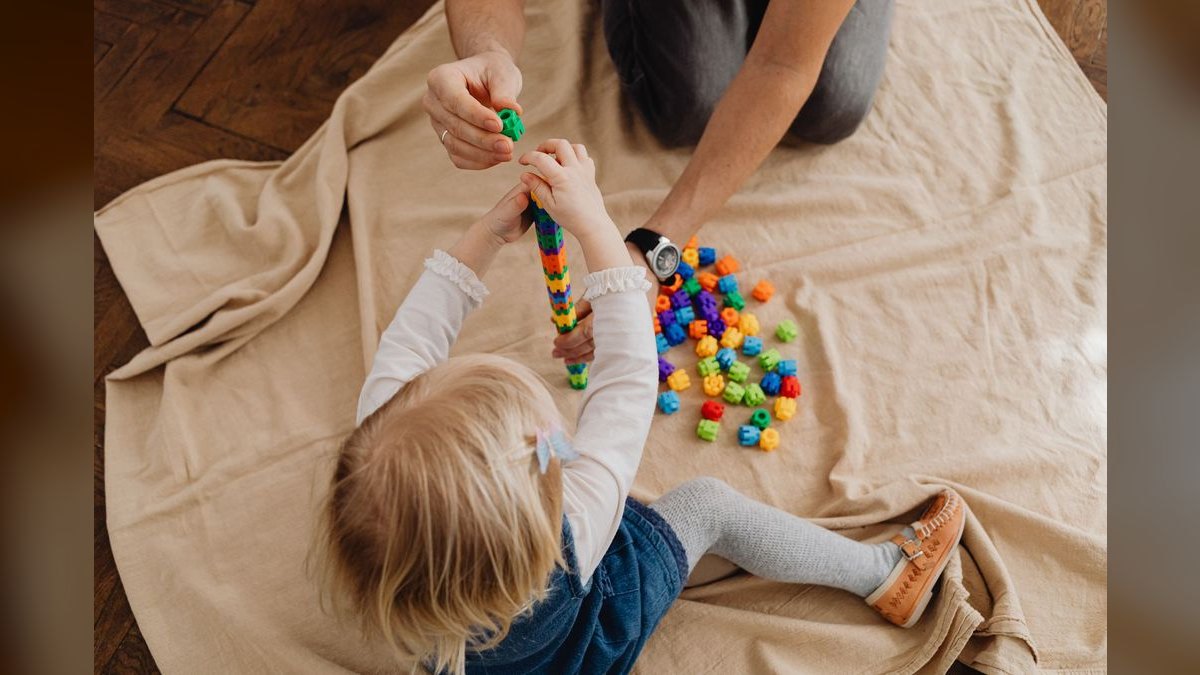
Second — LEGO Education and STEM-toy competition is intensifying. Code Ninjas, Snapology, Bricks 4 Kidz, Engineering for Kids, and Mathnasium all chase the same after-school slot. Snapology's differentiator — official LEGO Education curriculum licensing — is real but not exclusive. Bricks 4 Kidz uses similar building blocks with overlapping curriculum. Differentiation comes from operator hustle, not the brand.
Third — school-budget volatility. ESSER federal pandemic relief funds expired Sept 2026. Districts that built after-school programs on ESSER are renegotiating or cutting in the 2026-27 school year. Operators with diversified revenue (camps + parties + private contracts) absorb this; operators dependent on 2-3 school contracts get crushed.
Fourth — interest rates and SBA lending. SBA 7(a) loans for franchises are running at prime + 2.75% (~11.25%) as of June 2026 per SBA quarterly data. A $75K loan at 11.25% over 10 years = $1,047/month — manageable, but eat into thin margins. Most Snapology buyers self-fund or use home equity at 8.5-9.5%.
The 90-Day Decision Tree

Treat this as a sequenced go/no-go process — do not write the $40K franchise fee check until step 7.
- Days 1-7 — Validate the market in your zip code. Pull the list of elementary schools within 15 miles (typically 18-30 schools). Call 5 after-care directors and ask: "Do you contract STEM enrichment programs? Who do you use? What do you pay per kid per session?" If fewer than 3 say yes, your market is saturated or undeveloped — re-evaluate.
- Days 8-21 — Talk to 10 existing Snapology franchisees. Request the FDD Item 20 franchisee contact list. Ask: gross sales last 12 months, hours worked per week, biggest mistake Year 1, whether they'd buy again. If 4+ say no, walk away.
- Days 22-35 — Build your revenue model. Use $110K gross as base case (slightly above median). Subtract 7% royalty, 7% marketing, instructor pay at $25/hr, venue splits at 15-30%. If your projected Year-1 take is under $25K, the math doesn't work.
- Days 36-50 — Review the full 2026 FDD with a franchise attorney. Budget $1,500-$2,500 for legal review. Focus on Item 6 (fees), Item 7 (investment), Item 17 (renewal/termination), Item 19 (financial performance), Item 20 (franchisee turnover).
- Days 51-65 — Visit Discovery Day at Snapology HQ. The Education Franchise Group (Snapology parent) hosts in-person validation days in Pittsburgh. Mandatory — meet the support team, see corporate-level commitment.
- Days 66-80 — Lock financing and territory. Self-fund preferred if you have it. SBA 7(a) backup at 11.25%. Confirm territory boundaries in writing — Snapology assigns by population (typically 250K-350K).
- Days 81-90 — Sign or walk. The right decision is "walk" 70% of the time. Only sign if all six prior steps confirmed the model for your specific situation.
Alternative Plays
Independent kids' STEM business — no franchise fee, no royalty. Buy $8K of LEGO Education kits, build a curriculum (or license one from Project Lead The Way at $2,500/year), and operate as "[Your Town] STEM Kids." Save $40K franchise fee + 7% royalty + 7% marketing = ~$22K/year forever on $150K gross. Trade-off: no brand recognition, no curriculum support, no national marketing — but 8-10 percentage points of margin back.
Bricks 4 Kidz franchise. Direct competitor; slightly lower investment ($35K-$66K total) and 7% royalty. Less curriculum polish than Snapology, but cheaper entry.
Code Ninjas franchise. Higher ceiling, higher commitment — $152K-$406K investment, 7% royalty + 2% brand fund. Brick-and-mortar coding center model with average gross around $440K per Code Ninjas 2026 FDD Item 19. Better if you want a full business; worse if you want a side hustle.
Mathnasium franchise. $112K-$149K investment, 10% royalty, 2% marketing. Tutoring center, not STEM-play. Median gross ~$340K per Mathnasium 2026 FDD. Best unit economics in the kids' education space but harder labor model (need certified teachers).
KidStrong franchise. $256K-$616K, 7% royalty. Fitness + brain-training hybrid. Hotter brand momentum but much higher capital requirement.

Buy an existing Snapology resale. Approximately 6-10 Snapology resales hit the market each year per BizBuySell listings. Buy a profitable established operator at 2-3x SDE ($60K-$120K typically) instead of building from zero. Lower risk, faster cash flow, but you inherit their problems.
FAQ
How much can I realistically expect to earn in the first year? Most single-unit owner-operators see Year-1 cash flow between $15,000 and $40,000 after all expenses. This range depends heavily on location, local marketing effectiveness, and how much you can keep instructor and venue costs low.
What's the biggest hidden cost I should plan for? Instructor pay and venue rent are often underestimated. Many owners find they need to spend $2,000 to $5,000 per month on these combined, which can eat into the already thin margins from the 7% royalty and 1-6% marketing fees.
How long until I break even? Break-even typically takes 18 to 30 months for a single-unit franchise. This timeline can stretch longer if you're in a high-rent area or need to build brand awareness from scratch.
Can I run this as a part-time or side business? Yes, that's actually the most common successful model. Many owners operate Snapology as a weekend or after-school add-on to an existing enrichment center or day care, keeping overhead low and using their current space.
What happens if I don't hit the average sales numbers? The FDD shows a low of $20,816 in gross sales among franchised outlets. If you land near that figure, you could lose money after fees and expenses. It's wise to have at least six months of operating capital saved as a cushion.
Is there any way to improve the financial outlook? Running multiple units or securing long-term contracts with schools or community centers can boost revenue. Some owners also add private birthday parties or summer camps to increase utilization of their instructors and space.
Bottom Line
Snapology is a legitimate kids' STEM franchise with real curriculum, real support, and real franchisees making real (modest) money — but the median operator grosses $107K and nets $30-40K, which makes it a side business, second-income, or revenue-stacker play, not a primary-income replacement for someone leaving a corporate job. Buy it if you already run a kids-adjacent business (gym, daycare, dance studio, after-school program) and want to add a STEM line; buy it if you have deep school-district relationships and can lock contracts fast; buy it if you have a working spouse and want a $40-60K side business with manageable hours. Skip it if you need $100K+ income, hate B2B sales, or are tempted to gamble on a $200K+ Discovery Center build. The $40K franchise fee plus 7% royalty plus 7% marketing is a heavy load on $107K of gross sales — make sure the unit economics work for your specific situation before signing.
Sources
- Snapology Franchise Disclosure Document 2026 — The Education Franchise Group
- Snapology Franchise: Average Sales ($157K) vs. Cost ($73K-$103K) — Franchise Chatter FDD Talk
- Snapology Franchise FDD, Profits & Costs (2025) — Sharpsheets
- Snapology Franchise Insights: FDD, Costs & Fees — Vetted Biz
- Snapology Franchise Review (2026): Costs, Fees, Revenue Potential — ChainPortal
- Snapology Franchise Cost and Requirements for 2026 — IFPG
- Snapology - Franchise Database — Franchimp
- IBISWorld Tutoring & Educational Services in the US Industry Report (Mar 2026)
- SBA 7(a) Loan Program Quarterly Rate Data (Q2 2026)
- Start a Snapology Franchise in 2026 — Entrepreneur Franchise Directory
- Code Ninjas 2026 FDD — Item 19 Financial Performance Representations
- Mathnasium 2026 FDD — Item 19 Financial Performance Representations
Related on PULSE
This page will be disappearing soon. Save it to your device for $1 — or read it free while it is here.
@Kory-White- · if Venmo asks, the last 4 of my number are 2012
This page is gone.
This one is off the shelf now. $1 keeps it on your phone for good — the whole page, pictures and diagrams included.
 franchiseShould I open or buy a Bojangles franchise in 2027?
 franchiseShould I open or buy a Jimmy John's franchise in 2027?
 franchiseShould I open or buy a KinderCare franchise in 2027?
 franchiseShould I open or buy a Hand and Stone Massage franchise in 2027?
 franchiseShould I open or buy a Taco Bell franchise in 2027?
 franchiseShould I open or buy an Auntie Anne's franchise in 2027?
 franchiseShould I open or buy a Crumbl Cookies franchise in 2027?
 franchiseShould I open or buy a Firehouse Subs franchise in 2027?
 franchiseShould I open or buy a Matco Tools franchise in 2027?
 franchiseShould I open or buy a Supercuts franchise in 2027?