


Should I open or buy a Black Bear Diner franchise in 2027?
Quality
Certified
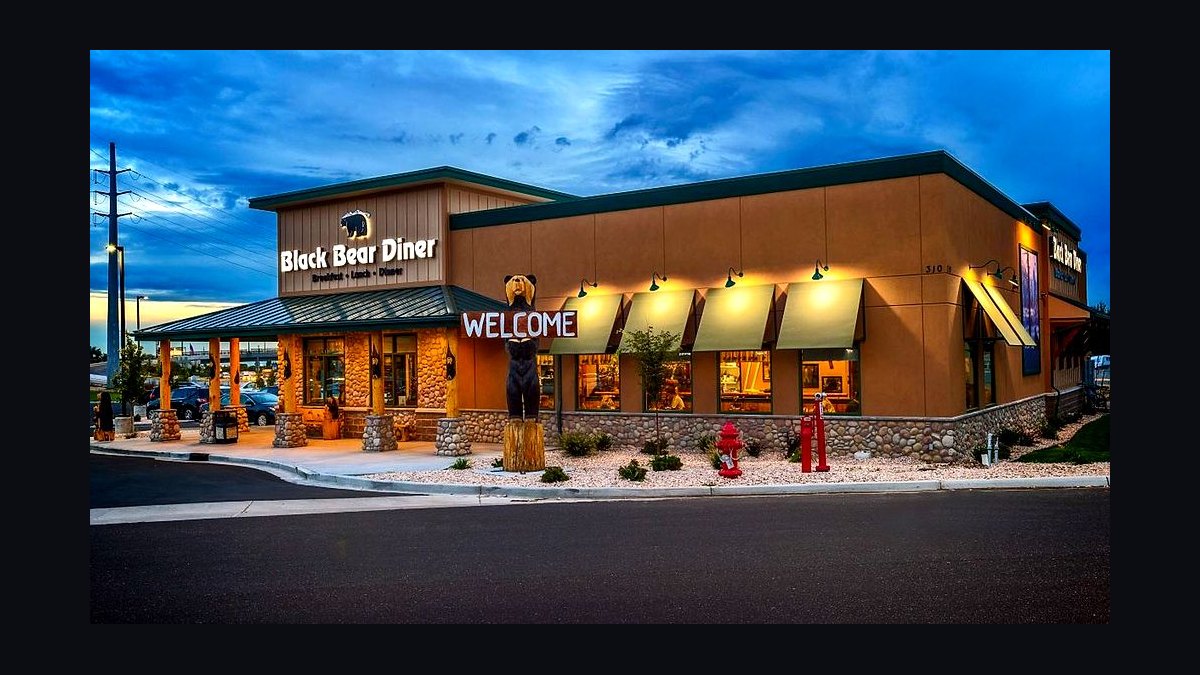
Probably not — unless you can write a $700K+ check, secure a high-traffic suburban site in a Western or Sun Belt growth market, and accept that family dining is a structurally pressured segment in 2027. A Black Bear Diner franchise demands $1.55M-$2.35M total initial investment (FDD 2025 Item 7), a $55,000 franchise fee, 4.5% royalty, and 1% marketing fee on weekly net sales. Average Unit Volume runs $2.68M-$2.85M (FDD Item 19), with operator earnings of $187K-$268K annually at mature units.
The Real Numbers
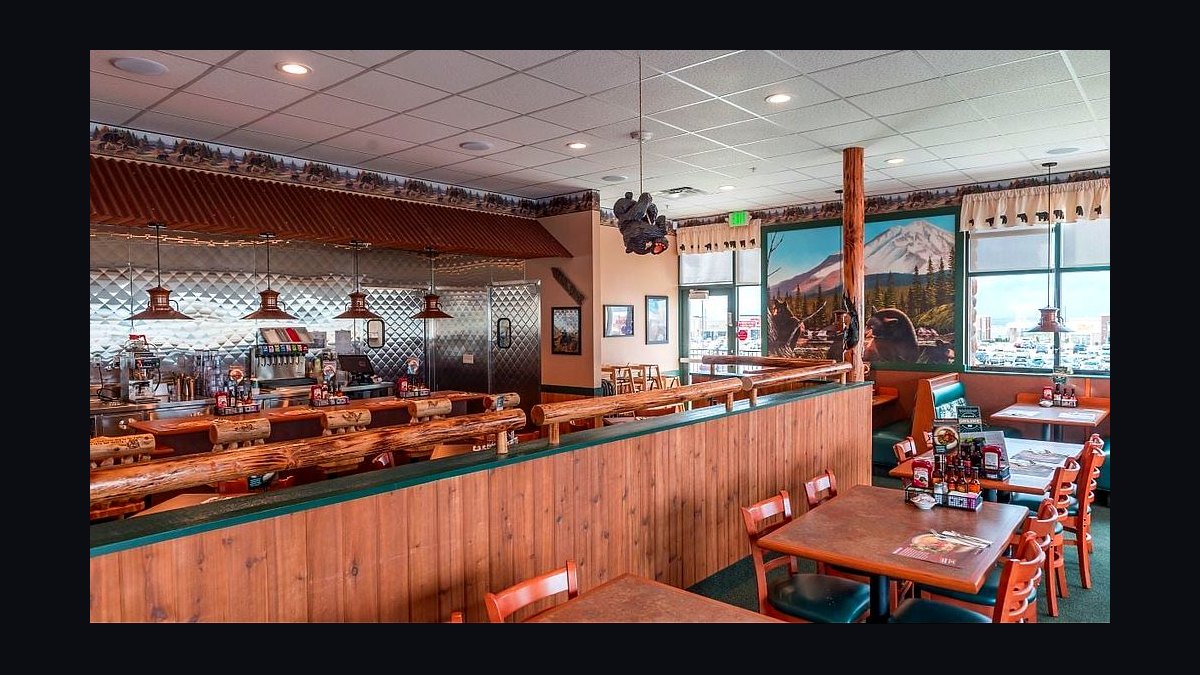
Black Bear Diner is a full-service, three-daypart family diner built around homestyle American comfort food at a sub-$8 average ticket per item. The capital stack is brick-and-mortar heavy — there is no small-footprint, low-cost version. Real-estate, build-out, and FF&E account for ~75% of total investment.
| Line Item | Low | High | Source |
|---|---|---|---|
| Initial franchise fee | $24,000 | $55,000 | FDD Item 5 |
| Real estate / lease deposits | $25,000 | $150,000 | FDD Item 7 |
| Construction & build-out | $850,000 | $1,300,000 | FDD Item 7 |
| Furniture, fixtures, equipment | $400,000 | $550,000 | FDD Item 7 |
| Signage & decor (bear theme) | $35,000 | $75,000 | FDD Item 7 |
| Opening inventory | $20,000 | $35,000 | FDD Item 7 |
| Training & travel | $15,000 | $30,000 | FDD Item 7 |
| Working capital (3 months) | $150,000 | $250,000 | FDD Item 7 |
| Insurance, licenses, misc. | $27,200 | $39,000 | FDD Item 7 |
| TOTAL INITIAL INVESTMENT | $1,546,200 | $2,349,000 | FDD Item 7 (2025) |
Ongoing economics (FDD Item 6 + Item 19, 2025 filing):
| Metric | Value | Notes |
|---|---|---|
| Royalty | 4.5% of net sales | Paid weekly |
| Marketing fee | 1.0% of net sales | National brand fund |
| Local marketing minimum | 1.0-2.0% of net sales | Operator-spent |
| Average Unit Volume (AUV) | $2,677,000 | FDD Item 19 mean |
| Median unit revenue | $2,776,833 | Sharpsheets 2025 analysis |
| Top-quartile AUV | $3,100,000+ | FDD Item 19 |
| Estimated unit-level EBITDA | $187,421 - $267,744 | 7-10% margin |
| Cost of goods sold | 28-31% of sales | Industry benchmark |
| Labor (incl. payroll tax) | 32-35% of sales | High vs. QSR |
| Occupancy | 6-9% of sales | Lease-dependent |
| Payback period (mature unit) | 6-9 years | Cash-on-cash |
| Breakeven timeline | 22-28 months | Conservative |
The math the brochures hide: at the AUV midpoint of $2.68M, you pay $120,460/year in royalties, $26,770/year in brand marketing, and another $26,770-$53,540 in local marketing. After a $2M average investment, $220K of unit EBITDA represents an 11% cash-on-cash return — solid for a passive-equivalent restaurant, but mediocre vs. drive-thru QSR concepts that hit 18-25%.
Who Wins With This Business
Multi-unit restaurant operators with existing infrastructure win first. Black Bear's franchise development team explicitly prefers experienced restaurant operators, and 80%+ of franchisees own 2+ units. If you already run an IHOP, Denny's, or independent diner cluster, you can absorb a Black Bear at marginal labor cost by sharing managers, accounting, and vendor pricing.
Real-estate-savvy operators win second. The single biggest variance driver in Item 19 is location quality — units near interstate exits, hospital complexes, and 55+ communities in California, Arizona, Nevada, Texas, and Utah consistently outperform AUV by 15-30%.
Operators with $700K+ liquid net worth and $1.5M+ total net worth meet the franchisor's financial minimums without strain. The brand wants you personally guaranteeing the SBA 7(a) note, which means lendable W-2 history or proven operator track record.
Senior-skewing market operators win. Black Bear's core demographic is families 45-65 and retirees 65+ — the brand over-indexes in The Villages, Sun City, Mesa, St. George, Boise. If your target trade area has median age 42+ and median household income $65K-$95K, the comfort-food positioning compounds with brand loyalty.
Who Loses With This Business
First-time restaurant owners lose almost always. A $2M investment in a 3-daypart full-service concept with 65% gross-margin food and 33% labor is a graduate-level operational problem. 70% of single-unit family-dining franchisees underperform AUV by year 3, per IFA Educational Foundation data.
Operators in dense urban or coastal-California markets lose to economics. Rent at 12-15% of sales in San Francisco, Los Angeles, Seattle, or Denver destroys unit EBITDA — Black Bear's model assumes 6-9% occupancy and breaks at higher loads.
Anyone hoping for absentee ownership loses. The brand's franchise agreement requires a designated operating principal, and the labor-cost discipline only works with owner-on-floor presence during opening months. Plan on 60+ hours/week for 18-24 months.
Operators in markets already saturated with IHOP, Denny's, Cracker Barrel, Perkins, and First Watch face share-of-stomach pressure — family dining as a segment declined 0.3% in same-store traffic in 2025, and traditional 3-daypart diners are losing share to daytime-only concepts like First Watch and Snooze AM Eatery, which grew 11.6% in 2025.
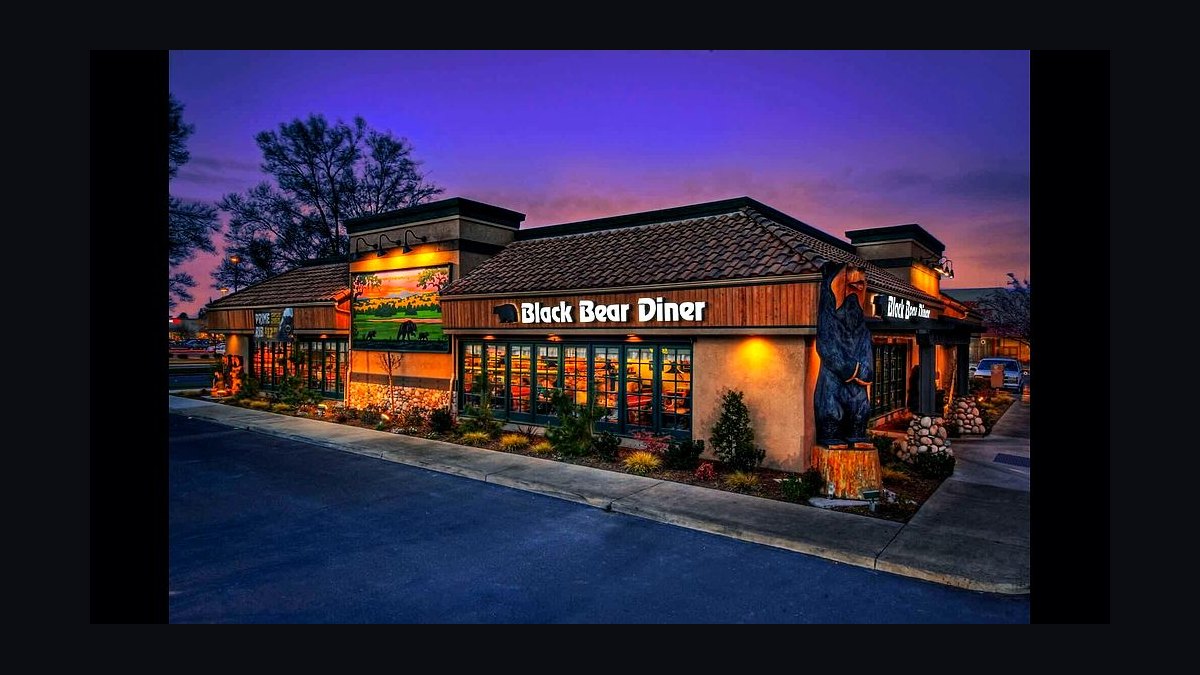
Operators chasing a small footprint lose. There is no kiosk, ghost-kitchen, or 1,800-sq-ft Black Bear model. The brand is brick-and-mortar 4,500-6,200 sq ft with patio, gift area, and bear statuary — you cannot value-engineer the build-out below ~$1.4M.
2027 Market Conditions
Family dining is the most pressured full-service segment in 2027. Technomic's Top 500 data shows family-dining unit count has declined 4 years running, with IHOP closing 200+ locations 2023-2025, Denny's announcing 150 closures in 2024, and Cracker Barrel guiding flat-to-down traffic into FY2026. Black Bear is one of the few net-positive growers in the segment (166 units, expanding coast-to-coast), which both validates the operating model and signals real estate availability from competitor closures.
Labor cost trajectory is brutal. California AB 1228 fast-food $20/hr wage pulled full-service wage benchmarks up; Black Bear's California units now run 36-38% labor vs. 32-34% in Texas/Arizona/Utah. Item 19 results are dragged down by California performance — if you can open in Texas, Florida, Tennessee, or Idaho, your unit-level math beats the franchise system average by 200-400 bps.
Commodity cost relief in 2026-2027 helps. Beef and egg costs that crushed 2023-2024 margins have normalized — USDA forecasts beef +1.8% YoY for 2027 (vs. +12% in 2024), and eggs returning to $2.20-$2.50/dozen wholesale post-avian-flu. COGS at 28-30% is achievable again.
Capital cost is the gating factor. With SBA 7(a) rates at 10.5-11.5% in 2027 and commercial construction loans at 8.5-9.5%, a $1.5M financed portion costs $14K-$17K per month in debt service — which is ~$180K/year off the top of your $220K unit EBITDA. Many first-time franchisees see negative cash-on-cash returns for 4-5 years before the debt amortizes meaningfully.
Brand momentum is real but uneven. The coast-to-coast expansion announced January 2024 has produced strong openings in Texas (Fort Worth, San Antonio) and Florida (Tampa, Orlando), but softer ramps in mid-Atlantic markets where the brand has no awareness. Plan for 18-24 months of marketing investment in a new geography.
The 90-Day Decision Tree
- Days 1-10 — Capital qualification. Pull a current personal financial statement. Confirm $700K+ liquid (cash, marketable securities, retirement) and $1.5M+ total net worth. If not, stop here — Black Bear will not approve you, and SBA underwriting will reject the application.
- Days 11-20 — Request the FDD. Submit the application at
blackbeardinerfranchise.com. Read all 23 Items, especially Item 19 (financial performance), Item 20 (franchisee turnover), and Item 21 (audited financials). Highlight the median, top-quartile, and bottom-quartile AUV — those three numbers run your underwriting model. - Days 21-35 — Franchisee validation calls. Call 15+ existing franchisees from the Item 20 list. Ask five questions: (1) actual AUV in year 1, 2, 3; (2) months to breakeven; (3) labor % of sales by quarter; (4) franchisor support quality; (5) what would you do differently? Talk to at least 3 who exited — they tell you the truth.
- Days 36-50 — Trade area + real estate. Pull Esri demographic segmentation for your target sites (or hire a restaurant real estate broker). Black Bear's sweet spot is trade areas with 50K+ population in 3-mile radius, median age 42+, median HHI $65K-$95K, highway visibility, and 150+ parking spots. Reject any site that fails 2 of 5.
- Days 51-65 — Build the underwriting model. Spreadsheet: conservative AUV at $2.2M (median minus 20%), labor at 35%, COGS at 30%, occupancy at 8%, royalty + marketing at 6.5%. If unit EBITDA at conservative AUV doesn't cover SBA debt service + $80K owner salary, the deal does not work — walk away.
- Days 66-75 — SBA pre-qualification. Submit to 2-3 SBA-preferred lenders experienced with Black Bear (Live Oak Bank, Celtic Bank, ReadyCap). Get a pre-qualification letter before signing the franchise agreement.
- Days 76-85 — Discovery Day at Black Bear HQ (Redding, CA). Mandatory in-person meeting with the executive team. Walk 3-5 real units. Meet the construction, marketing, and operations heads. Trust your gut on culture fit — you'll work with these people for 10+ years.
- Days 86-90 — Sign or walk. If validation, real estate, model, and culture all pass, wire the $55K franchise fee and sign. If any one fails, walk — Black Bear will still be there in 12 months, and so will the $2M you didn't lose.
Alternative Plays
If you want family dining with better unit economics: look at First Watch ($1.2M-$1.7M investment, $1.9M AUV, daytime-only labor model, 18-22% segment growth). Snooze AM Eatery is similar but smaller-system.
If you want comfort food with lower capital: Huddle House ($425K-$1.1M total investment), Friendly's (re-emerging post-bankruptcy with smaller-footprint design), or Waffle House (rare franchisee program, but exceptional unit economics where available).
If you want full-service American at higher AUV: Texas Roadhouse (closed system) or franchise-available alternatives like Twin Peaks, Lazy Dog, Chicken Salad Chick ($580K-$945K, $1.5M AUV, breakfast/lunch focus), or Bad Daddy's Burger Bar.
If you want the lowest-risk restaurant franchise period: Chick-fil-A ($10K investment but <1% acceptance rate), In-N-Out (corporate-owned, no franchise), or Raising Cane's (rarely franchised, $1.5M-$2.5M when available).
If you have the capital but not the operational appetite: build a passive real-estate position by buying the land and leasing to an existing Black Bear franchisee — NNN diner real estate trades at 6.5-7.5% cap rates with 15-20 year corporate-guaranteed leases. You make 7% with zero operational risk vs. 11% with full operational risk.
Bottom Line
Black Bear Diner is a credible family-dining franchise with above-segment unit economics, real expansion momentum, and a culturally consistent brand — but it is not a beginner franchise, and the $2M investment threshold makes the downside expensive. If you are an experienced restaurant operator with $700K+ liquid, a site in a Western or Sun Belt growth market, and the discipline to underwrite at conservative AUV, the deal works at 8-11% cash-on-cash and builds toward a $3M-$5M enterprise value per unit over a decade. If you are first-time, undercapitalized, or geographically off-target, the same deal becomes a 5-year cash-flow grind with high probability of forced sale below cost basis. The honest call for 75% of inquirers is "walk" — and the right call for the other 25% is "build a 3-unit area development agreement and run it as your full-time job."
FAQ
What is the actual cash investment versus. financed portion for Black Bear Diner? What is the actual cash investment vs. financed portion for Black Bear Diner?
How long until I am taking owner distributions? How long until I am taking owner distributions?
Can I open in a non-traditional location like a casino or travel center? Can I open in a non-traditional location like a casino or travel center?
What is the biggest hidden cost franchisees report? What is the biggest hidden cost franchisees report?
Is Black Bear Diner expanding internationally? Is Black Bear Diner expanding internationally?
What multi-unit operators are succeeding most with Black Bear? What multi-unit operators are succeeding most with Black Bear?
Sources
- Black Bear Diner FDD 2025 — Vetted Biz franchise analysis
- Black Bear Diner Franchise FDD, Profits & Costs 2025 — Sharpsheets
- Black Bear Diner Franchise FDD, Costs & Fees 2026 — FranchisePayback
- Black Bear Diner Franchise FAQ — official franchisor site
- Black Bear Diner Locations — official site (166 units, 14 states)
- Black Bear Diner Wikipedia — corporate history and unit count
- Family-Dining Segment Divided By Dinner — Restaurant Business Online
- Family Dining Chains That Don't Serve Dinner Grew 11.6% — Entrepreneur
- Cracker Barrel Form 8-K FY2026 — SEC filing on family-dining traffic
- Nation's Restaurant News — Family Dining segment coverage
- Black Bear Diner FranchiseHelp profile 2026
- International Franchise Professionals Group — Black Bear Diner 2026 profile
Related on PULSE
This page will be disappearing soon. Save it to your device for $1 — or read it free while it is here.
@Kory-White- · if Venmo asks, the last 4 of my number are 2012
This page is gone.
This one is off the shelf now. $1 keeps it on your phone for good — the whole page, pictures and diagrams included.
 franchiseShould I open or buy a Goddard School franchise in 2027?
 franchiseShould I open or buy a Dairy Queen franchise in 2027?
 franchiseShould I open or buy a Rita's Italian Ice franchise in 2027?
 franchiseShould I open or buy a Pizza Hut franchise in 2027?
 franchiseShould I open or buy an F45 Training franchise in 2027?
 frShould I open or buy a McDonald's franchise in 2027?
 franchiseShould I open or buy a KinderCare franchise in 2027?
 franchiseShould I open or buy a Hand and Stone Massage franchise in 2027?
 franchiseShould I open or buy a Whataburger franchise in 2027?
 franchiseShould I open or buy a Big O Tires franchise in 2027?