


Should I open or buy a Spray-Net franchise in 2027?
Quality
Certified
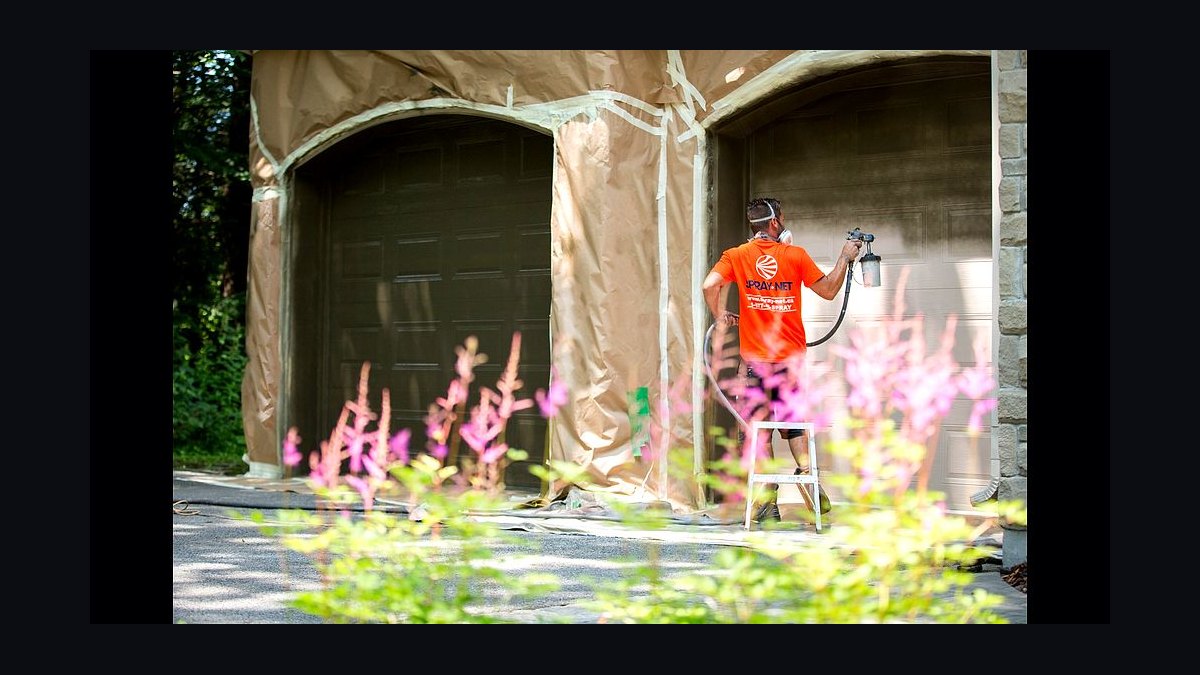
Yes, if you can self-fund $150,000-$350,000, generate your own project leads, and personally run application crews for the first two years — Spray-Net rewards hands-on operators with a differentiated refinish-vs-replace product and 50-65% gross margins. Skip it if you want passive income, lack construction/sales grit, or are in a low-renovation-demand region; the franchise model only pays off for owners who treat it as a 50-60 hour-a-week operating business, not an investment.
The two paths: opening a new territory versus buying a resale
Anyone evaluating Spray-Net in 2027 is really choosing between two different entry points, and they are not the same decision wearing different price tags. The first path is opening a brand-new territory directly from corporate: you pay the standard $50,000 franchise fee, select an unclaimed or recently-released geographic area, and build the business from zero — zero customers, zero crew, zero local brand recognition. The second path is buying a resale, meaning you purchase an existing Spray-Net franchisee's operation, often because that owner is retiring, relocating, or exiting after building the territory to a mature revenue run-rate. Resale pricing is not set by corporate; it is negotiated between buyer and seller and typically reflects a multiple of trailing revenue or discretionary earnings, which is why resale totals can land anywhere from $75,000 to $150,000 above a comparable new-territory cost, depending on how established the customer base and crew already are.
The new-territory path is cheaper up front but slower to cash flow. You are starting project lead generation from a cold list, which means your first 6-12 months are disproportionately about marketing spend, door-knocking, referral-network building, and learning the proprietary spray-application technique on live jobs rather than in a classroom. Corporate training runs 2-3 weeks at headquarters plus field support, but no amount of classroom time replaces the muscle memory of spraying your first 20-30 jobs yourself. Franchisees who open new territories in 2027 should expect a J-curve: capital goes out faster than it comes in in month one through six, and the break-even point depends heavily on how aggressively the owner personally prospects for work rather than waiting for the brand to generate inbound calls.
The resale path inverts that risk profile. You are paying a premium specifically to skip the cold-start phase — you inherit an existing crew (or at least a trained one you can retain), a customer list with referral potential, and, critically, a proven local reputation that shortens your sales cycle. The trade-off is that you are underwriting someone else's execution. A resale franchise with a weak reputation, high crew turnover, or quality complaints transfers those liabilities to you at closing, and no amount of due diligence fully substitutes for operating the territory yourself. This is also where the proprietary-coating angle matters most: Spray-Net's value proposition rests on consistent, warrantied results, and a resale built on inconsistent application quality is buying a discounted problem, not a discounted asset.
There is a third, less obvious variant worth naming because it increasingly shows up in 2027 franchise conversations: the semi-absentee resale, where the exiting owner has already installed a general manager and a stable 3-4 person crew, and the buyer's job is closer to ownership oversight than daily operations. These deals command the highest resale premiums — often at the top of or above the $75,000-$150,000 range — precisely because they solve the labor and management problem that sinks most under-prepared franchisees. If you are evaluating whether to open a new Spray-Net territory or buy one of these semi-absentee resales, the honest comparison is not price, it's time: a new territory costs less capital but demands two years of your direct labor; a semi-absentee resale costs more capital but can be owned at 20-30 hours a week from day one, assuming the systems genuinely function without the seller present.
How to decide between the two paths
The decision hinges on three variables that interact rather than stack: available liquid capital, tolerance for hands-on physical and sales work, and how much local market validation you need before committing. An operator with $70,000-$100,000 liquid, strong sales instincts, and comfort personally running a sprayer for the first season is well-suited to opening a new territory — the lower entry cost absorbs the learning curve. An operator with $130,000-$200,000+ liquid who wants to minimize execution risk, or who is buying this as a second income stream alongside another job, should weight toward a resale, and specifically toward a resale with documented crew retention and a clean customer-complaint history, not just strong trailing revenue.
A second filter that matters more by 2027 than it did at launch is territory availability. Prime metropolitan markets — populations above 500,000 — are increasingly claimed or available only as resales at premium pricing, which effectively pushes capital-constrained buyers toward smaller markets (100,000-300,000 population) for a new-territory opening, where total investment sits at the lower end of the $150,000-$225,000 band. If your target metro only has resale inventory and your capital caps out around $150,000, the honest answer may be to look at a second-tier market instead of overpaying for a resale you can't comfortably afford. Do not let geographic preference push you into an undercapitalized resale purchase; under-capitalization is one of the most consistent reasons franchisees of any exterior-services brand fail in year one, because working capital gaps compound with slow project-lead flow.
The third filter is personal: are you building this to run yourself for five-plus years, or are you building it to sell? If your intent is to open, operate for 3-5 years, and exit, the new-territory path followed by a disciplined focus on referral-driven repeat business (brick, windows, and doors refinished over a multi-year cycle) builds exactly the kind of trailing-revenue story that commands a strong resale premium later. If your intent is a long-hold lifestyle business, the semi-absentee resale — once systems are proven — is the more defensible structure, provided you've confirmed the manager and crew will stay through an ownership transition.
The real numbers behind each option

Opening a new territory in 2027 runs through familiar Item 7 categories: a $50,000 franchise fee, $15,000-$50,000 for spray equipment and coatings inventory, $5,000-$25,000 for a work vehicle, $5,000-$15,000 for CRM and estimating technology, $25,000-$70,000 for initial marketing and lead generation, $5,000-$18,000 for insurance and contractor licensing, $8,000-$22,000 for owner and crew training and travel, and $30,000-$80,000 of working capital to cover the first three to six months before project revenue stabilizes. That totals the commonly cited $150,000-$350,000 range, with ongoing obligations of roughly a 6% royalty on gross revenue and a separate marketing co-op contribution, typically 1-2% of gross sales.
A resale changes the capital stack by adding a purchase premium on top of (or often replacing) several of those line items — you are not spending $25,000-$70,000 on initial marketing because the territory already has a customer base and referral pipeline, but you are paying $75,000-$150,000 above the new-territory baseline to acquire that pipeline. The math only works if the acquired revenue base is real and recurring: mature Spray-Net territories gross $600,000-$1,500,000 annually, with owner margins of 14-25%, translating to $90,000-$250,000 in owner income. A resale priced at the high end of its range needs to be generating revenue and margin that justifies the premium within a reasonable payback window — buyers should model payback in years, not months, and should discount any seller's trailing-twelve-month numbers if a disproportionate share came from one-time commercial contracts rather than repeatable residential work.
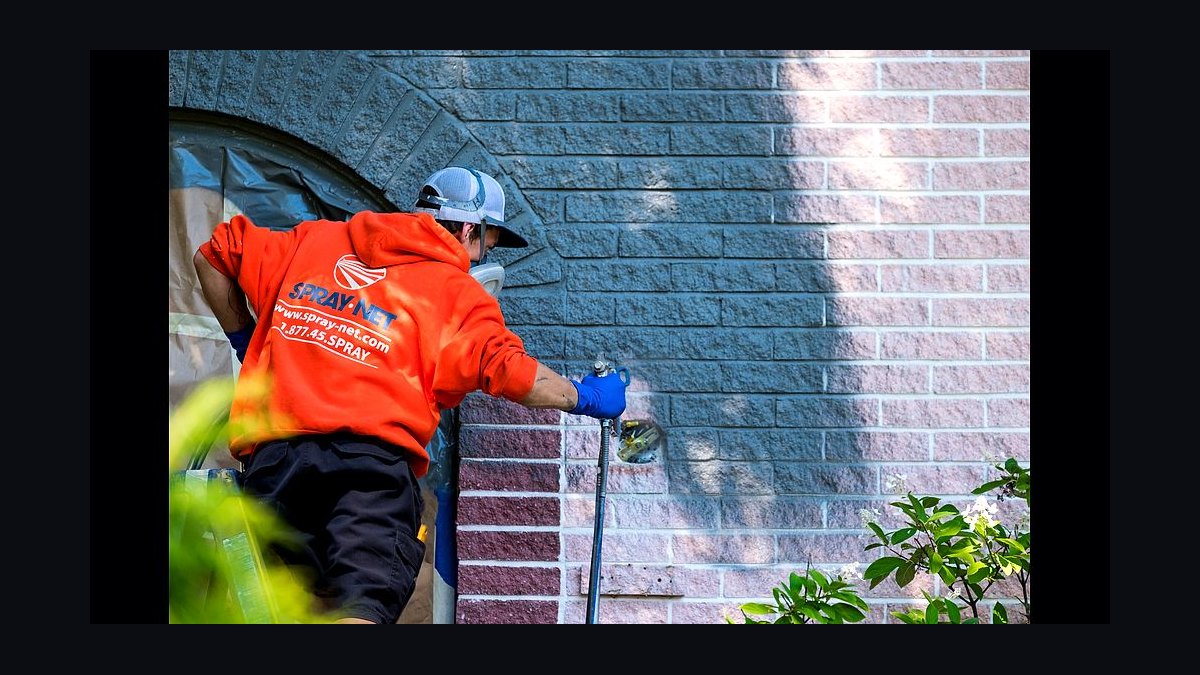
It's worth sizing Spray-Net's unit economics against a traditional exterior replacement contractor, because the comparison explains why the franchise's cost structure looks the way it does. A typical siding-replacement job grosses $15,000-$25,000 with material costs of 40-50% and labor at 25-35%, leaving a pre-overhead margin of 15-25%. A Spray-Net job runs smaller individually — $4,000-$12,000 per project — but carries lower material cost (15-25% for the proprietary coatings) and faster, more efficient labor, producing gross margins of 50-65%. The consequence is volume: a Spray-Net franchise needs roughly 80-150 jobs a year to hit $600,000-$1,000,000 in revenue, versus 40-60 jobs for a replacement contractor at similar top-line revenue. That volume requirement is precisely why lead generation capability is the single biggest determinant of success in either the new-territory or resale path — a resale buyer inheriting a weak lead engine has bought a discount on a problem, not a bargain on an asset, no matter how clean the equipment looks at walkthrough.
Implementation: sequencing the first 90 days after you sign

Regardless of which path you choose, the sequencing after signing looks structurally similar, though a resale compresses several steps. Days one through fifteen are for reading the FDD in full — not just Items 7 and 19, but Items 3 (litigation history) and 20 (franchisee turnover data), since those two sections reveal whether the territory you're buying into (new or resale) has a pattern of disputes or high churn that marketing materials won't show you. For a resale specifically, this window is also when you request the seller's actual job-cost records, not just summarized revenue, and independently verify at least a sample of customer references by phone.
Days sixteen through thirty are for interviewing eight or more existing owners — ideally a mix of new-territory openers and resale buyers — asking pointed questions about project lead flow, average ticket size, crew retention, and real take-home after royalty and marketing fees. A new-territory buyer uses this window to also scout the local market for renovation demand signals: housing stock age, HOA density, and competing painters or replacement contractors already active in the area. A resale buyer uses the same window to shadow the existing crew on live jobs and assess application quality firsthand, since that quality is the entire asset being purchased.
Days thirty-one through forty-five are for closing the deal structure — finalizing new-territory boundaries and corporate sign-off, or finalizing resale purchase terms, financing, and any transition-period consulting from the exiting owner. Days forty-six through sixty are operational setup: for a new territory, this means hiring and training your first two-to-four-person crew and standing up CRM and estimating software; for a resale, it means confirming which crew members are staying and renegotiating terms with any who aren't. Days sixty-one through eighty are when lead generation either ramps (new territory, through paid marketing and door-to-door canvassing) or transitions (resale, through introducing yourself to the existing referral network without disrupting it). Days eighty-one through ninety are the first jobs under direct ownership — and this is the window where quality control matters most, because a visible quality dip in a resale's first month under new ownership is exactly what triggers customer attrition and referral loss. Beyond day ninety, the ongoing discipline for either path is the same: protect the 10-15 year coating warranty's reputation by never rushing an application, and reinvest early profit into lead generation rather than owner distributions until project flow is self-sustaining. Operators considering adjacent exterior-renovation models — wood refinishing, surface-refinishing franchises, or independent coating businesses without a proprietary product — will find the same 90-day sequencing logic applies, with the caveat that an independent operator has no brand-backed warranty to lean on when a new customer hesitates.
Related questions
How long does it take a new Spray-Net territory to break even?
Most new territories see a six-to-twelve-month ramp before project lead flow stabilizes revenue. Break-even timing depends heavily on owner-driven lead generation speed, local renovation demand, and how quickly the owner masters the spray-application technique on live jobs.
Is a Spray-Net resale always a better deal than opening new?
Not always — a resale only pays off if the premium is justified by genuinely recurring revenue and a stable crew. An undercapitalized buyer overpaying for a weak resale can end up worse off than someone opening a cheaper new territory.
What licensing do I need to run application crews?
Requirements vary by state and municipality but typically include general liability insurance and a contractor's license for exterior-surface work. Budget $5,000-$18,000 for insurance and licensing as part of your initial Item 7 investment.
Can I run a Spray-Net franchise semi-absentee?
Only with a proven manager and retained crew already in place, which usually means buying a semi-absentee resale rather than opening new. Expect total investment north of $250,000 for that structure, since you're paying for systems, not just territory rights.
FAQ

What exactly does a Spray-Net franchise do? Spray-Net franchises refinish exterior surfaces — siding, brick, stucco, windows, and doors — using proprietary spray-applied coatings instead of full replacement. The pitch to homeowners is a faster, lower-cost alternative that still carries a multi-year warranty.
How much does it cost to open a Spray-Net franchise in 2027? The franchise fee is around $50,000, with total Item 7 investment running $150,000-$350,000 depending on territory size and local setup costs. A resale instead of a new territory adds a separate negotiated premium, often $75,000-$150,000 above that baseline.
What ongoing fees does a franchisee pay? A royalty near 6% of gross revenue, plus a separate marketing co-op contribution typically in the 1-2% range. Both fund brand support, national advertising, and continued coating R&D.
How much can a Spray-Net owner realistically earn? Mature territories gross $600,000-$1,500,000 annually, with owner margins of 14-25%, translating to roughly $90,000-$250,000 in owner income. Results vary significantly based on lead generation effort, crew quality management, and local renovation demand.
Is Spray-Net a passive investment? No. The model demands 50-60 hour weeks in the first two years, hands-on crew oversight, and direct involvement in sales until lead flow stabilizes. Semi-absentee ownership is only realistic once systems and a proven manager are already in place, usually via resale.
What's the biggest reason franchisees struggle with this business? Inconsistent project lead generation and poor crew quality management are the two most common failure points. Owners expecting a passive "buy and collect" model consistently underperform compared to hands-on operators willing to personally run the first several dozen jobs.
Sources
- https://www.franchisedisclosure.com
- https://www.entrepreneur.com/franchises
- https://www.ibisworld.com
- https://www.statista.com
- https://www.franchise.org
- https://www.jchs.harvard.edu
- https://www.grandviewresearch.com
- https://www.census.gov
- https://www.franchisebusinessreview.com
Related on PULSE
This page will be disappearing soon. Save it to your device for $1 — or read it free while it is here.
@Kory-White- · if Venmo asks, the last 4 of my number are 2012
This page is gone.
This one is off the shelf now. $1 keeps it on your phone for good — the whole page, pictures and diagrams included.
 franchiseShould I open or buy a Kona Ice franchise in 2027?
 franchiseShould I open or buy a Planet Fitness franchise in 2027?
 franchiseShould I open or buy a KinderCare franchise in 2027?
 franchiseShould I open or buy a Bojangles franchise in 2027?
 franchiseShould I open or buy a Smoothie King franchise in 2027?
 franchiseShould I open or buy a Firehouse Subs franchise in 2027?
 franchiseShould I open or buy a Meineke franchise in 2027?
 franchiseShould I open or buy a Wendy's franchise in 2027?
 franchiseShould I open or buy a Drybar franchise in 2027?
 franchiseShould I open or buy a Domino's franchise in 2027?