


Should I open or buy a Celebree School franchise in 2027?
Quality
Certified
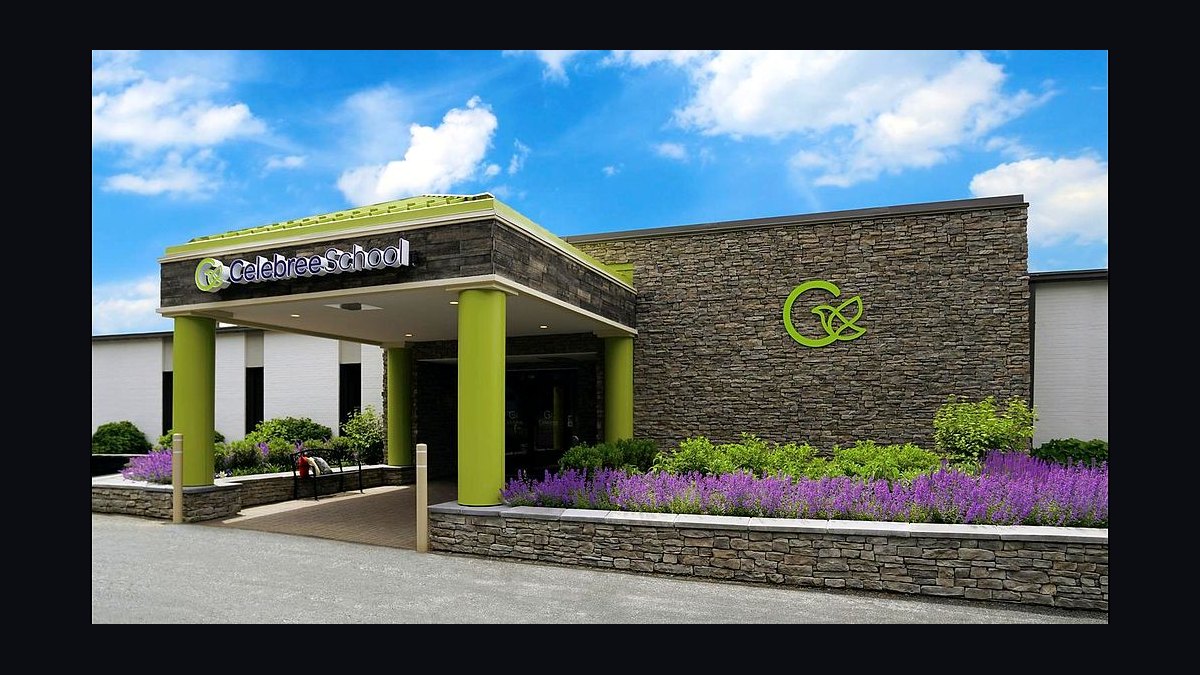
Yes, but only if you can fund $600,000-$5,000,000+ in real-estate-driven investment, clear state childcare licensing, and staff a school through a persistent early-education teacher shortage. Opening a Celebree School franchise in 2027 suits well-capitalized operators who want recession-resilient recurring tuition and mature owner earnings of $200,000-$650,000 — the capital bar and staffing burden rule out most first-time franchise buyers.
What it is and why it matters
Celebree School, founded in 1994 in Maryland, franchises early-childhood-education and full-day childcare centers serving infants through school-age children under a "We grow people" mission built around child development, character, and family support. A Celebree location is a licensed institution first and a business second: classroom ratios, playground square footage, and bathroom counts are dictated by state childcare regulation before they're dictated by unit economics. That single distinction separates this franchise from almost every other category a first-time buyer might consider, because the normal playbook — find cheap real estate, open fast, iterate on marketing — simply does not apply here. A gym or a sandwich shop can soft-open with half its systems unfinished; a childcare center cannot legally enroll a single infant until its licensing file is complete.
Timing matters too. Demand for structured, full-day early education in 2027 sits at the intersection of two durable trends: dual-income households are now the norm rather than the exception, and remote-work flexibility has not meaningfully reduced families' need for licensed care during the workday. Celebree is actively expanding its footprint into family-dense suburban markets to meet that demand, which creates genuine whitespace for new franchisees — but expansion also means the brand is still building out regional density and local reputation in many territories, so an early operator in a newer market carries more uncertainty than someone buying into an established Kiddie Academy or Goddard School territory with decades of neighborhood trust already built.

The category also behaves differently in a downturn than most franchise verticals a buyer might compare it against. Working parents don't cancel childcare the way they cancel a gym membership, a car detailing subscription, or a discretionary home-service package — tuition functions closer to a fixed household cost than a luxury spend, because losing a childcare slot can mean losing the ability to work at all. That demand floor is precisely why lenders and investors tolerate real-estate exposure in this category that they'd resist in a less defensive one, and it's a meaningful part of why private equity and multi-unit franchise groups have poured capital into early-education brands broadly over the past decade, not just Celebree specifically.
The step-by-step process
Opening a Celebree School follows a long, sequential path that looks nothing like opening a retail or food-service concept — real estate and licensing gate everything else, and neither phase can be compressed by throwing more money at marketing or staffing later.

The process starts with reading the current Franchise Disclosure Document closely, especially Item 19 (financial performance representations) and Item 7 (initial investment range), and validating those figures against conversations with eight or more existing operators — ideally including at least one or two in markets similar to yours, since real estate cost and licensing timelines vary enormously by state. From there, franchise-fee payment and territory approval lead into the real estate phase, which is the longest and highest-risk stretch of the entire timeline: securing a site, confirming it can realistically be licensed for 100-200+ children, and beginning the state childcare licensing application in parallel with lease negotiations or ground-up construction. Only after the physical space is substantially ready does staffing begin in earnest — hiring a director, recruiting lead and assistant teachers to meet mandated ratios, and completing state background-check and credentialing requirements for every adult who will be in a classroom. The school then opens with partial enrollment and spends roughly one to three years ramping toward the 85%+ occupancy that defines a mature, profitable location.
Each stage carries its own failure mode, and they compound if ignored. A site that looks financially attractive on a rent-per-square-foot basis can fail licensing inspection over playground square footage, sink-to-classroom ratios, or emergency egress, forcing a costly mid-construction redesign that a franchisee who skipped an early licensing consultation never saw coming. A director hire who departs during the ramp period can stall enrollment growth for months, since parents — especially those enrolling infants and toddlers — are reluctant to commit to a school without stable, visible leadership; this is the same dynamic that plays out in adjacent service categories like in-home senior care or private tutoring centers, where the "product" is fundamentally a trust relationship with a caregiver, not a commodity transaction. Franchisees who treat the opening sequence as a single linear checklist rather than several parallel, interdependent workstreams — real estate, licensing, staffing, and enrollment marketing running simultaneously rather than sequentially — consistently see timelines slip from the advertised 12 months toward 18-24 months, eating working capital they'll need during the enrollment ramp.
Costs, timelines, and typical ranges

The financial range for a Celebree School is unusually wide because it is driven almost entirely by real estate strategy rather than by the brand's operating model itself. The current FDD lists a franchise fee of roughly $60,000, a royalty near 7% of gross revenue, and a marketing fee near 2% — modest by franchise standards — while Item 7's total investment spans from roughly $600,000 to $5,000,000 or more, a spread wide enough that two Celebree franchisees in different metros could have almost nothing in common financially.
That spread breaks down by construction path. Leasing an existing space that already meets or nearly meets childcare licensing requirements typically runs $600,000-$1,200,000 in total investment and can open in 6-12 months, though ongoing rent in suburban markets often runs $15-$25 per square foot annually, and landlord negotiations over who pays for playground fencing, commercial kitchen equipment, or bathroom reconfiguration can still add friction and months to the timeline. Building from scratch, by contrast, demands $2,500,000-$5,000,000+ and a 12-18 month construction timeline, but gives the franchisee full control over layout for Celebree's curriculum, security protocols, and future capacity; the brand generally prefers single-story buildings of 8,000-12,000 square feet on at least 1.5 acres with dedicated parking and outdoor play space. Roughly 60-70% of new Celebree locations are ground-up developments, with the remainder converted from former daycare centers, churches, or vacant retail space.
Construction costs have risen 15-25% since 2022 in most markets due to skilled-labor shortages and material inflation — the same inflationary pressure hitting adjacent real-estate-heavy franchise categories like urgent care clinics and fitness studios — which has pushed some 2027 franchisees toward adaptive reuse of shuttered big-box retail, former bank branches, or vacant gyms. That path can cut build-out costs by 20-30% versus ground-up construction, provided the existing shell can accommodate licensing requirements for egress, bathroom counts, and dedicated outdoor access, which not every retail shell can. On the revenue side, a mature school — typically three or more years old at 85%+ enrollment — grosses $1,500,000-$3,800,000 annually on 100-200+ enrolled children, with owner earnings of $200,000-$650,000 after teacher wages, occupancy costs, royalty, and supplies. Staffing alone consumes 55-65% of operating expenses today, up from roughly 50-55% before the pandemic reshaped the early-education labor market, and that single line item is the biggest lever separating a well-run school from a struggling one.
Where teams get it wrong

The most common mistake new Celebree franchisees make is treating the enrollment ramp as a marketing problem when it is really a licensing-and-staffing problem in disguise. Parents don't enroll infants and toddlers at a school with an unfamiliar director, high assistant-teacher turnover, or a visibly incomplete licensing file — no amount of local digital advertising spend fixes a trust deficit rooted in operational instability. Franchisees who front-load their capital into signage and grand-opening marketing while underfunding working capital for the one-to-three-year ramp frequently run out of cash before the school reaches breakeven occupancy, a failure pattern that echoes what happens in other credentialed-service franchises like physical therapy clinics or dental practices, where the "trust ramp" matters as much as the marketing spend.
A second, related error is treating the real estate decision as a pure cost-minimization exercise. Choosing the cheapest available lease often means choosing a site that requires expensive licensing retrofits — reconfigured bathroom ratios, added emergency egress, an expanded outdoor play area cut from an undersized parking lot — that erase the apparent savings and add months to the opening timeline. Franchisees who instead prioritize sites already close to licensing compliance, even at a somewhat higher lease rate, tend to open faster and preserve more working capital for the staffing runway that follows.

Staffing itself is the third and often most damaging failure point. The sector-wide early-childhood teacher shortage means franchisees who don't proactively differentiate on compensation and benefits — health insurance, retirement matching, tuition reimbursement toward early-childhood-education credentials, paid planning time outside the classroom — get stuck cycling through the industry's 30-40% average annual staff turnover, which directly damages enrollment and, downstream, the school's reputation in the community. Top-quartile Celebree operators who invest deliberately in retention report turnover under 20% and can command premium tuition of $1,200-$2,200 per child per month by marketing that staff stability directly to prospective parents touring the school. Finally, many buyers skip rigorous Item 19 and operator-reference validation before signing, only to discover post-signing that their specific market's licensing timeline, prevailing teacher wage floor, or real estate cost structure makes the advertised system-wide economics unachievable in their particular ZIP code.
Decision framework: when to choose what
The decision to open a Celebree School versus an alternative childcare concept — or versus skipping childcare franchising altogether in favor of a lower-capital education franchise like tutoring or enrichment — comes down to three gating questions: available liquid capital, appetite for licensing complexity, and tolerance for a multi-year staffing and enrollment ramp before meaningful owner income arrives.
Operators who clear all three gates are the profile most likely to succeed: well-capitalized, mission-aligned, and prepared to treat the first 18-36 months as an operations-and-licensing project rather than a turnkey business purchase. Those who fall short on capital are better served by lower-investment education franchises — tutoring, coding, or enrichment concepts that lease a small storefront rather than build a licensed campus. Those with adequate capital but no personal appetite for hands-on licensing and staffing work should consider a multi-unit partnership structure instead of solo ownership, since 30-40% of all Celebree locations are now owned by multi-unit operators who bring dedicated regional operations staff — a director of operations, a recruiting lead — to each new site rather than relying on a single owner-operator to carry every function alone. And anyone evaluating multiple childcare brands should still run this exact same framework against Kiddie Academy, The Learning Experience, Primrose, and Goddard, because the capital intensity and staffing dynamics are broadly similar across the entire licensed-childcare category even though brand mission, franchisor support, and territory availability vary meaningfully from one system to the next. It's also worth weighing adjacent trends shaping demand: a growing number of employers now subsidize or directly contract childcare slots as a retention benefit, and several states have expanded pre-K funding in ways that can shift enrollment patterns for three- and four-year-olds — both worth researching in your specific target market before finalizing a site.
Related questions
How much does it cost to open a Celebree School franchise?
Total investment (Item 7) ranges from about $600,000 for a leased, licensing-ready space to $5,000,000+ for ground-up construction, plus a $60,000 franchise fee, roughly 7% royalty, and 2% marketing fee.
How long does it take to open a Celebree School from signing to opening day?
Typically 12-24 months, driven almost entirely by real estate acquisition, construction or lease improvements, and childcare licensing approval rather than by franchisor onboarding speed.
Is Celebree School more expensive to open than Kiddie Academy or The Learning Experience?
Ranges are broadly comparable across major childcare franchise brands, since real estate and licensing — not brand fees — drive the bulk of investment; compare each brand's current FDD Item 7 directly.
Can I sell a Celebree School if I want to exit?
Yes — roughly 15-20 schools change hands annually system-wide, with mature schools selling for 3.5-5.5x EBITDA, though Celebree holds a right of first refusal on any sale.
Do I need childcare industry experience to buy a Celebree School?
It's not mandated, but franchisees without prior licensing, staffing, or early-education experience should budget extra time and possibly hire an experienced director before opening to offset the learning curve.
FAQ

What is the total investment needed to open a Celebree School franchise? The total investment ranges from roughly $600,000 to over $5,000,000, depending heavily on real estate costs, build-out approach, and facility size. Leasing an already-compliant space sits at the low end; ground-up construction sits at the high end.
How much can I expect to earn as a Celebree School franchise owner? Mature schools typically gross between $1,500,000 and $3,800,000 annually, with owner earnings ranging from about $200,000 to $650,000. Actual profit depends heavily on enrollment levels, staffing costs, and local tuition rates.
What are the biggest challenges of running a Celebree School franchise? The main hurdles are very high real-estate-driven capital requirements, complex childcare licensing processes, and chronic staffing shortages in early-childhood education. The one-to-three-year enrollment ramp also strains cash flow before a school reaches maturity.
Is Celebree School a recession-resistant business? Yes, its recurring-tuition model tends to hold up during downturns because working parents continue needing childcare. Enrollment can still dip modestly in severe recessions, so maintaining cash reserves against high fixed costs remains important.
How long does it take to open a Celebree School franchise from signing? The timeline typically runs 12 to 24 months, driven by site selection, permitting, construction or lease improvements, and licensing approval. Securing and licensing a suitable location is usually the longest phase.
What ongoing fees does Celebree School charge franchisees? The royalty is around 7% of gross revenue plus a marketing fee near 2%, on top of an initial franchise fee of about $60,000. These fees fund brand development, training, and ongoing operational support from the franchisor.
Sources
- https://www.entrepreneur.com/franchises/directory
- https://www.franchise.org
- https://www.childcareaware.org
- https://www.census.gov
- https://www.bls.gov
- https://www.franchisebusinessreview.com
- https://www.ibisworld.com
- https://www.statista.com
Related on PULSE
This page will be disappearing soon. Save it to your device for $1 — or read it free while it is here.
@Kory-White- · if Venmo asks, the last 4 of my number are 2012
This page is gone.
This one is off the shelf now. $1 keeps it on your phone for good — the whole page, pictures and diagrams included.
 franchiseShould I open or buy a Bruster's Real Ice Cream franchise in 2027?
 franchiseShould I open or buy a UPS Store franchise in 2027?
 franchiseShould I open or buy a Supercuts franchise in 2027?
 franchiseShould I open or buy a Wingstop franchise in 2027?
 franchiseShould I open or buy an Orangetheory Fitness franchise in 2027?
 franchiseShould I open or buy a Little Caesars franchise in 2027?
 franchiseShould I open or buy an Auntie Anne's franchise in 2027?
 franchiseShould I open or buy a Merry Maids franchise in 2027?
 franchiseShould I open or buy a Big O Tires franchise in 2027?
 franchiseShould I open or buy a Hand and Stone Massage franchise in 2027?