


Should I open or buy a Bin There Dump That franchise in 2027?
Quality
Certified
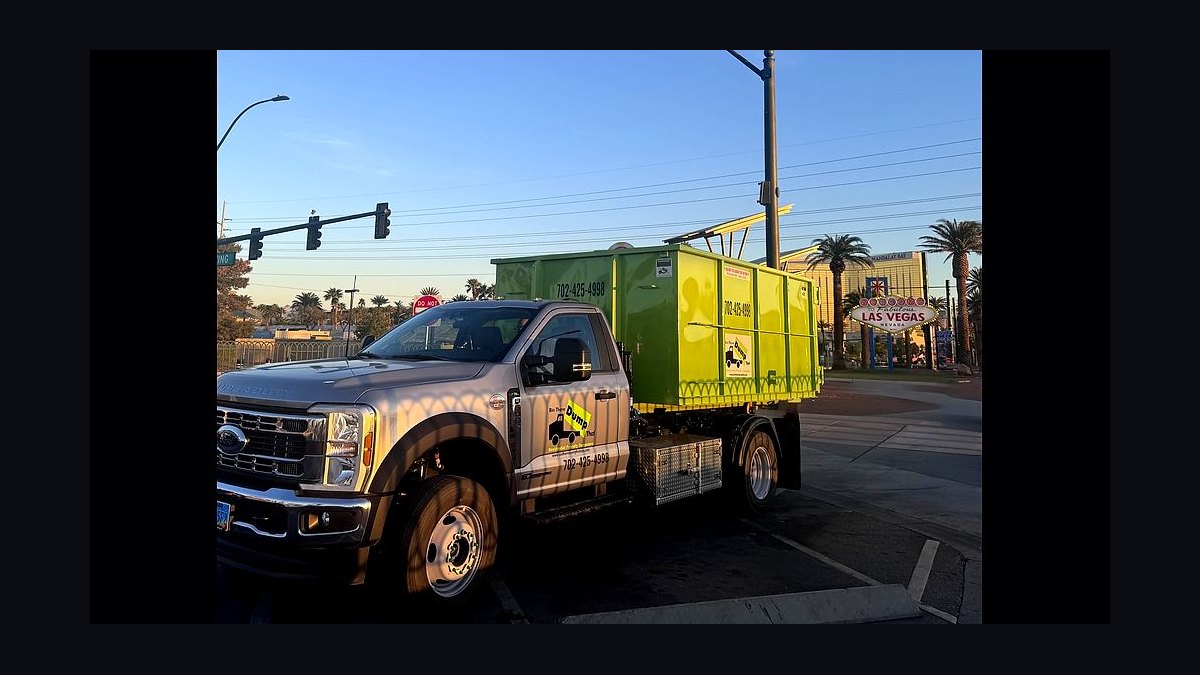
Yes, Bin There Dump That remains a sound franchise to pursue in 2027 for a candidate who wants an asset-based, residential-friendly dumpster-rental business — but the real decision isn't "should I," it's "do I open a new territory or buy a resale." A resale delivers immediate cash flow and proven routes at a premium price; a new territory costs less upfront but takes four to eight months to build utilization from scratch.
Buying a resale vs. opening a new territory
Every prospective Bin There Dump That owner evaluating 2027 entry faces two structurally different paths, and treating them as interchangeable is the most common planning mistake candidates make. A new territory open means signing a fresh franchise agreement for an unclaimed market, buying your truck and bin fleet from zero, and building local awareness, routing efficiency, and repeat-customer relationships from a standing start. A resale means buying an existing franchisee's operation — its truck, its bin fleet, its customer list, its contractor partnerships, and its trailing twelve months of real, verifiable revenue rather than a system-wide average pulled from the disclosure document.
A new open typically costs less in total dollars out the door. You're paying the franchise fee plus a fleet sized to your own risk tolerance — many first-year operators start with 12-18 bins and a single used roll-off truck rather than a full buildout, which keeps total investment closer to the lower end of the standard range instead of the highest tier a resale can command. The trade-off is time: a new territory has zero brand recognition on day one, and building the door-hanger campaign, the optimized Google Business Profile, and the contractor-referral network that drives bin utilization typically takes months before rentals become consistent, predictable weekly income rather than sporadic bookings.

A resale flips that trade-off entirely. You're paying a meaningful premium over the hard asset value — sellers commonly price a profitable single-truck operation as a multiple of annual owner earnings, layered on top of or in place of the standard opening investment, financed separately from the franchisor itself. In exchange you inherit bin utilization that's already proven, a fleet that — if well-maintained — needs no ramp-up capital, and a defensible answer to the routing-and-logistics risk that sinks many first-year operators, because the seller's routes already reflect years of learning which neighborhoods, HOAs, and contractor relationships actually convert into repeat rentals rather than one-off jobs.
The franchisor's development team will tell you both paths are supported, and that's technically true, but they are not equally available in every market. Resales cluster in mature, higher-density metros where an existing owner is ready to exit — often after five to eight years of operating, sometimes for retirement, sometimes to roll capital into a second or third territory. New-open territories tend to sit in growth suburbs and exurbs that haven't yet been carved out of the map. If your target market already has an established operator, a resale — or a request to split that territory, which still requires franchisor approval — is frequently your only entry point. If the market is unclaimed, a new open is your only option, full stop. Ask the development team for a territory-availability map before you decide which path to pursue, because geography, not preference, usually makes the choice for you.

It's worth widening the lens here: this same fork shows up across nearly every asset-based, route-driven home-service franchise category, not just dumpster rental. Junk-removal, mobile pressure-washing, lawn and landscape franchises, and even mobile detailing brands present buyers with the identical tension between a slower, cheaper organic build and a faster, pricier acquisition of someone else's proven routes. Candidates who have shopped adjacent home-service concepts often bring useful pattern-matching to a Bin There Dump That decision — the underlying math of "pay for proven cash flow vs. pay less and prove it yourself" repeats almost identically across the category, which is part of why franchise consultants treat this fork as a category-wide heuristic rather than a brand-specific quirk.
How to decide between a resale and a new build
The decision tree below reflects how experienced franchise consultants actually walk candidates through this choice — starting with capital and risk tolerance, then filtering by what's genuinely available in the target market.

The first fork is pure availability — most candidates don't actually get to choose, because their target metro either has an exit-ready operator or it doesn't. The second fork is the one candidates skip too often under time pressure: verifying that a seller's claimed revenue and utilization numbers are real rather than aspirational. A legitimate resale seller will produce bank statements, disposal-facility invoices — which independently confirm tonnage and therefore rental volume — and truck maintenance logs without hesitation. A seller who stalls on any of these, or who only offers a verbal revenue figure, is a red flag serious enough to default back to a new-territory open even when a resale is technically on the table. The third fork, the pricing multiple, is where candidates most often overpay: a standard multiple is normal for an asset-based service franchise with durable local relationships, but a multiple that's meaningfully higher is pricing in growth that hasn't been proven, and anything the seller can't substantiate with disposal-facility records deserves real skepticism regardless of the asking price.
Risk tolerance and timeline pressure should weigh into this decision independent of the raw financials. A candidate who needs income within sixty to ninety days — someone leaving a corporate salary with limited runway — is generally better served by a resale, because even a month or two of customer-transition work beats a multi-month utilization ramp in a cold territory. A candidate with a longer runway, or who wants full control over fleet composition, branding rollout, and initial neighborhood targeting, is often better served by a new open, since you aren't inheriting anyone else's routing inefficiencies or underpriced legacy contracts with contractors and haulers.
There's also a softer, less-quantifiable variable that experienced buyers weigh alongside the spreadsheet: operator fit. A resale hands you an existing operational culture — the seller's pricing philosophy, their relationship style with contractors, their tolerance for weekend and after-hours calls. If that culture doesn't match how you actually want to run a business, you'll spend your first year unwinding habits rather than building on them, which quietly erodes the speed advantage a resale is supposed to deliver. A new open, by contrast, lets you set every operating norm from day one — slower, but entirely yours.
What each option actually costs
The dollar figures differ meaningfully between the two paths, and franchisees frequently underestimate the resale premium because they anchor on the disclosure document's opening-investment range, which only describes a new-territory build and says nothing about acquiring an existing operation.
| Line Item | New Open (Low) | New Open (High) | Resale (Typical) |
|---|---|---|---|
| Franchise fee / transfer fee | $40,000 | $50,000 | $5,000-$15,000 transfer fee |
| Business purchase price (goodwill + assets) | — | — | $250,000-$630,000 |
| Roll-off truck(s) | $30,000 | $120,000 | Included in purchase price |
| Bin fleet (12-25 bins) | $25,000 | $90,000 | Included in purchase price |
| Branding/wrap | $5,000 | $18,000 | Usually already branded |
| Initial marketing/lead-gen | $12,000 | $35,000 | $3,000-$10,000 (rebrand transition only) |
| Working capital | $12,000 | $40,000 | $15,000-$30,000 |
| Total cash to close | ~$80,000 | ~$250,000 | ~$270,000-$650,000 |
| Time to break-even utilization | 4-8 months | 4-8 months | 30-90 days |
| Royalty | 6%-7% of gross | 6%-7% of gross | 6%-7% of gross (unchanged) |
The resale premium is real money, but it buys a specific, measurable thing: proven bin utilization. A single-truck operation running fifteen to twenty rentals a week already demonstrates the exact metric that determines whether the asset-based model generates the owner earnings the disclosure document's performance data describes — a new operator has to prove that number exists in their own market from a standing start, while a resale buyer is purchasing a trailing track record of it. Financing differs too: SBA-backed and franchise-focused lenders will often finance a resale against the business's trailing cash flow, using debt-service coverage based on actual EBITDA, which can make a large resale more financeable than it looks on paper. A new open, by contrast, is financed against projected numbers and typically requires a larger personal cash injection relative to total project cost, since there's no operating history yet to underwrite against.

One cost applies equally to both paths and gets underweighted in comparisons: disposal fees. Whether you inherit a fleet or build one, tipping fees at your local landfill or transfer station are the largest variable operating cost, and they do not transfer automatically with a resale — you inherit the seller's disposal-facility relationships and negotiated rates, which can meaningfully beat the posted rate for a high-volume account, but you still have to requalify those accounts under your own business entity, a process that can take several weeks and should be started the moment a resale purchase agreement is signed, not after closing.
It's also worth sizing this against the broader small-business financing landscape rather than treating the dollar figures in isolation. Compared with a full-service restaurant franchise, a fitness-club buildout, or a multi-unit retail concept, both Bin There Dump That paths sit at the lower-to-middle end of total capital required — closer to what a residential cleaning or lawn-care franchise demands than what a food-service brand requires, largely because the model doesn't carry the cost of leased commercial real estate. That comparison matters for candidates weighing Bin There Dump That against other franchise categories on their shortlist, since capital efficiency per dollar of owner earnings is frequently more favorable in route-based, asset-light service models than in brick-and-mortar retail or food concepts.
Getting from signed agreement to your first rental

The sequencing differs meaningfully depending on which path you choose, and treating a resale as simply a faster version of a new open is a common planning error — it's a structurally different process with its own distinct risks.
For a new-territory open, the first sixty days after signing are almost entirely operational setup rather than revenue-generating: ordering a roll-off truck, which can carry an eight-to-twelve-week lead time if not bought used; ordering a bin fleet; completing the franchisor's training program covering sales, routing, and safety; and setting up disposal accounts at the local landfill or transfer station. Soft-launch marketing — door hangers in target neighborhoods, Google Business Profile optimization, and outreach to local contractors and real estate agents — typically begins once equipment is in hand, and most new operators don't hit steady weekly rental volume until month five or six, which is why realistic first-year planning treats early months as a ramp rather than a plateau.
For a resale, the critical early-stage work is diligence rather than equipment procurement: verifying two-plus years of financials against bank statements and disposal-facility tonnage invoices, confirming truck and bin condition through an independent mechanical inspection — bin welding and liner replacement alone can run into real money per bin per year if deferred maintenance has piled up — and, the step new buyers most often underweight, securing a transition period where the outgoing owner personally introduces you to key contractor accounts and repeat residential customers. A seller unwilling to spend two to four weeks doing joint deliveries and pickups with you before fully exiting is signaling that the relationships you're paying a premium for may not transfer as cleanly as the purchase price implies. Once that transition ends, most resale buyers watch whether retained utilization holds within the first sixty to ninety days; a meaningful drop-off — customers who were loyal to the prior owner rather than the brand — is the risk unique to the resale path, which is why the purchase agreement should include a reasonable earnout or holdback tied to post-transition retention instead of a single lump-sum payment at close.

Both paths converge on the same long-run success factors once operational: maximizing bin utilization, controlling disposal costs, and building the residential-contractor referral network that differentiates Bin There Dump That from generic construction-dumpster competitors who compete purely on price. Adjacent to that operational core, owners on both paths eventually face the same downstream decisions — whether to add a second truck once the first is running near capacity, whether to expand into a neighboring territory through a franchisor-approved boundary adjustment, and whether to specialize toward contractor accounts versus residential homeowner jobs as the local mix reveals itself. None of that changes based on how you entered the system; it only changes how soon you get to make those decisions. The path you choose determines how fast you get there and how much you pay for that speed — not whether the underlying business model works.
Related questions
Can I split an existing Bin There Dump That territory instead of a full resale?
Sometimes. If an existing operator's territory is larger than they can service, franchisor-approved splits let a new owner buy into part of it — usually at a lower premium than a full resale, but still requiring sign-off and a negotiated boundary line.
Does the franchisor finance new trucks and bins directly?

No — Bin There Dump That doesn't typically provide direct financing. Most operators use SBA loans, equipment financing tied to the fleet as collateral, or a franchise-focused lender; a resale's trailing cash flow often qualifies for better terms.
How long does a non-compete last if I exit later?
Terms vary by year but typically restrict a departing owner from operating a competing dumpster business within their former territory for one to two years post-exit — confirm the exact term in your specific agreement before signing.
Is a resale premium ever negotiable?
Yes, particularly if equipment is aging, disposal contracts aren't favorable, or new competitors have entered the territory — but a heavily discounted multiple should prompt extra diligence into why the seller is motivated to exit below typical pricing.
FAQ
Is it better to buy a resale or open a new Bin There Dump That territory in 2027? It depends on capital, timeline, and what's available in your target market. A resale costs more upfront but delivers proven bin utilization and faster cash flow; a new open costs less but requires four to eight months to build routing efficiency and local awareness from scratch.
How much more does a resale cost than opening new?

A resale typically runs $270,000-$650,000 including the business purchase price, versus $80,000-$250,000 for a new-territory open under the standard investment range. The premium buys an established customer base, trained routes, and verified revenue history rather than projected numbers.
Can I finance a Bin There Dump That resale through an SBA loan? Often, yes — SBA-backed lenders frequently prefer resales because they can underwrite against actual trailing cash flow rather than projections, which can make financing easier to secure than for a brand-new territory with no operating history.
What should I check before buying a resale unit? Verify two-plus years of financials against bank statements and disposal-facility tonnage invoices, get an independent mechanical inspection of the truck and bin fleet, and negotiate a transition period where the outgoing owner personally introduces you to key contractor and residential accounts.
Does opening a new territory mean I get to choose my fleet size? Yes — new-open franchisees typically size their initial investment by choosing a fleet of 12-25 bins and one truck based on their own capital and risk tolerance, unlike a resale where you inherit whatever fleet size the seller already built.
Will the franchisor help me find a resale opportunity? Yes, the development team maintains awareness of which territories have exit-ready owners and can facilitate introductions, though you should still conduct independent financial and equipment diligence rather than relying solely on the franchisor's characterization of the deal.
Sources
- https://www.bintheredumpthat.com
- https://www.entrepreneur.com/franchises
- https://www.franchise.org
- https://www.sba.gov/funding-programs/loans/7a-loans
- https://www.ibisworld.com
- https://www.census.gov
- https://www.franchisebusinessreview.com
- https://www.ftc.gov/business-guidance/resources/buying-franchise-consumer-guide
Related on PULSE
This page will be disappearing soon. Save it to your device for $1 — or read it free while it is here.
@Kory-White- · if Venmo asks, the last 4 of my number are 2012
This page is gone.
This one is off the shelf now. $1 keeps it on your phone for good — the whole page, pictures and diagrams included.
 franchiseShould I open or buy a Stanley Steemer franchise in 2027?
 franchiseShould I open or buy a Take 5 Oil Change franchise in 2027?
 franchiseShould I open or buy an F45 Training franchise in 2027?
 franchiseShould I open or buy a Supercuts franchise in 2027?
 franchiseShould I open or buy a Kona Ice franchise in 2027?
 franchiseShould I open or buy a Bahama Breeze franchise in 2027?
 franchiseShould I open or buy a Mac Tools franchise in 2027?
 franchiseShould I open or buy a Goddard School franchise in 2027?
 franchiseShould I open or buy a Jeremiah's Italian Ice franchise in 2027?
 franchiseShould I open or buy a Taco Bell franchise in 2027?