


Should I open or buy a Wendy's franchise or open an independent sandwich shop in 2027?
Quality
Certified
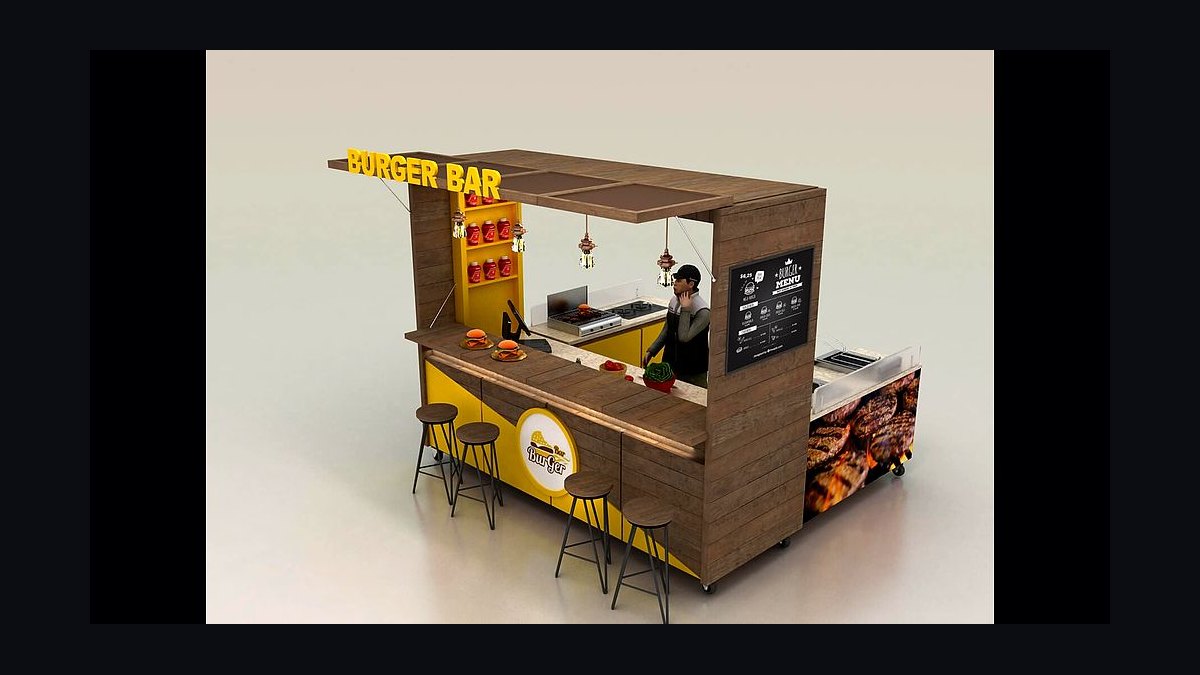
Buy an existing Wendy's franchise only if you can fund roughly $2–3.5 million and want a proven system with tight operational rules. Open an independent sandwich shop if you have under $500,000, want menu freedom, and can build local demand yourself. Capital and control tolerance decide it, not brand appeal.
The two term sheets sitting on your kitchen table in 2027
Picture the actual decision as most first-time operators encounter it. On one side of the table is a Franchise Disclosure Document from Wendy's — a several-hundred-page legal instrument that will tell you, in Item 7, the estimated initial investment range for a new traditional freestanding restaurant, and in Item 19, whatever financial performance representation the company chooses to make that year. On the other side is a lease packet for a 1,400-square-foot end-cap in a strip center, a contractor's bid for a hood and walk-in cooler, and a spreadsheet you built yourself estimating that you can sell 180 sandwiches a day at an average ticket of $13.
These are not the same business wearing different logos. They are two different jobs.
The Wendy's path is a capital-deployment job. You are buying a system that has already solved menu engineering, supply chain, marketing, packaging, training, and unit economics. Wendy's has been operating since 1969 and runs thousands of restaurants across North America and internationally. The brand awareness is enormous, and the company has spent decades refining a drive-thru-centric format that does the bulk of its volume through a window. Your job is to find the site, finance the build, hire and retain a general manager, and execute the playbook the franchisor hands you. Your creativity gets channeled into local marketing, staffing, and operational discipline — not into what goes on the menu.
The independent sandwich shop is an entrepreneurship job. Nobody has solved anything for you. You pick the bread supplier, you decide whether the roast beef gets shaved thin or sliced thick, you name the sandwiches, you set the prices, you figure out whether you're a lunch business, a late-night business, or a catering business. There is no national ad fund pushing customers toward your door and no field consultant showing up to audit your ticket times. If it works, the upside is entirely yours and the concept is an asset you built. If it doesn't, there is nobody to blame and no brand equity to sell.
Two adjacent realities are worth naming here, because operators discover them late. First, buying an existing Wendy's location from a departing franchisee is a materially different transaction from opening a new one — you inherit a revenue history, an existing crew, a remaining lease term, and often a remodel obligation, and you pay a multiple of cash flow rather than construction cost. Second, "independent sandwich shop" spans an enormous range: a two-person counter-service deli, a fast-casual build-your-own with a line, a ghost-kitchen operation running only on delivery apps, and a full-service sandwich-and-beer concept are wildly different capital requirements even though they all sell sandwiches.
How the mechanism actually works: where your money goes and who controls it
The structural difference between a franchise and an independent is not really the food. It is the flow of authority and the flow of dollars.

In a franchise relationship, you sign a franchise agreement that grants you the right to operate under the brand for a defined term — commonly ten to twenty years in quick-service restaurants — at a specific location, subject to a system standards manual the franchisor can update. You pay an initial franchise fee at signing. You then pay an ongoing royalty as a percentage of gross sales, plus a national advertising contribution as another percentage of gross sales, plus often a local advertising commitment. Those payments come off the top line, before you pay rent, labor, or food cost. That is the crucial mechanical fact: royalties are not a share of profit, they are a share of revenue. In a bad month, you still pay them.
In exchange, the franchisor supplies the trademark license, the approved-supplier network with negotiated pricing, the operating systems, the training program, the point-of-sale specification, the marketing calendar, and — importantly — a site-selection and construction standard that has been validated across thousands of units. You also get a protected territory as defined in your agreement, which is narrower than most first-time buyers assume and worth reading carefully.
An independent operator has no royalty and no ad fund. Every dollar of gross sales stays in the business until you spend it. But you also buy food at whatever price your distributor gives a single-unit account, which is meaningfully worse than what a national chain negotiates. You design your own training, build your own recipes, source your own equipment, and generate your own demand.
The diagram makes the asymmetry visible. The franchisee's cost stack has two mandatory layers the independent doesn't carry, and one mandatory future obligation — the image or remodel requirement — that hits every several years and can run into the hundreds of thousands of dollars per unit. The independent's stack is thinner but every gap in it is a gap you personally must fill with time and judgment.
There is a third mechanism worth understanding: the real estate. In many franchise deals, the franchisor or an affiliate controls the site and subleases it to you, which means your lease and your franchise agreement are cross-defaulted — lose one, lose both. An independent negotiates directly with a landlord and, if you're disciplined, can secure options to renew that build genuine enterprise value. Some independent operators buy the building outright, which turns the restaurant into a tenant paying rent to a real-estate entity you also own. That is a wealth-building structure a typical franchisee rarely gets access to.
Real numbers, ranges, and what to actually verify

Be careful with numbers in this category, because they change every year and vary enormously by market. Here is how to get real ones rather than repeating internet folklore.
For Wendy's specifically, the authoritative document is the Franchise Disclosure Document. Under U.S. Federal Trade Commission rules, a franchisor must give you the FDD at least fourteen calendar days before you sign anything or pay any money. Item 5 discloses the initial fees. Item 6 discloses ongoing fees, including the royalty rate and advertising contributions. Item 7 gives the estimated initial investment range broken into line items — land, building, equipment, signage, opening inventory, training expenses, and required additional funds for the first several months. Item 19 is the financial performance representation, and it is optional for the franchisor to include; when a chain does include one, it typically reports average unit volume for company or franchise restaurants meeting certain criteria. Item 20 lists outlet counts, openings, closures, terminations, and transfers over the prior three years — that table is the single most honest thing in the document, because a rising closure and termination count tells you more than any marketing deck.
For a new traditional freestanding quick-service restaurant with a drive-thru in a U.S. market, the all-in project cost is typically a multi-million-dollar undertaking once you account for land, site work, building, equipment, and pre-opening costs. That is why most major QSR franchisors require candidates to demonstrate substantial liquid capital and net worth before they'll even accept an application, and why many now prefer multi-unit development agreements over single-unit operators. If you can only fund one restaurant, expect the approval conversation to be harder than it was a generation ago.
Buying an existing unit changes the math. A resale is priced primarily off cash flow — a multiple of EBITDA or of seller's discretionary earnings — adjusted for remaining lease term, remaining franchise term, equipment condition, and any pending remodel requirement. Two identical-revenue restaurants can trade at very different prices if one has three years left on the franchise agreement and a mandatory image upgrade due, and the other has twelve years and a fresh build. Always price the deferred capital obligation into your offer; sellers rarely volunteer it.
For an independent sandwich shop, the range is far wider and far lower. A modest counter-service shop taking over a second-generation restaurant space — one that already has a hood, grease trap, and plumbing in place — can open for a fraction of what a ground-up build costs, because the expensive infrastructure is already installed. Taking raw retail space and building a commercial kitchen from scratch is where independent budgets explode: hood systems, make-up air, grease interceptors, and electrical upgrades are the line items that surprise people. The single best cost-control move available to an independent operator is finding a second-generation restaurant space with usable infrastructure.
Line items every operator should model, regardless of path:

- *Food and paper cost* as a percentage of sales. Sandwich concepts live or die here, and protein is the swing factor. A shop leaning on premium beef or specialty cheese carries a structurally higher food cost than one built around chicken, egg, and vegetarian options.
- *Labor cost* as a percentage of sales, including payroll taxes and any benefits. This is the line most affected by minimum-wage law in your specific jurisdiction, and it has been the dominant margin pressure in food service in recent years. Check your state and city rules, not national averages — the spread between jurisdictions is enormous.
- *Occupancy cost* — base rent, common-area maintenance, taxes, and insurance — as a percentage of sales. If occupancy climbs past a reasonable share of revenue, the concept has to do very high volume to survive, and that ratio kills more independents than bad food does.
- *Third-party delivery commissions.* Delivery marketplaces charge a substantial percentage of each order. That expense line barely existed in older restaurant financial models and now routinely represents a meaningful share of revenue for concepts that lean on it.
- *Pre-opening and working capital.* Budget several months of full operating expense as reserve. Undercapitalization at opening is the most common independent failure mode — not a bad concept, just running out of runway before the neighborhood learns you exist.
The honest benchmarking move: pull the current Wendy's FDD, and separately talk to at least five existing franchisees from the Item 20 list — including at least two who have exited the system. Franchisees who left will tell you things current ones won't. For the independent path, the equivalent research is sitting in three comparable sandwich shops in your target trade area at 11:30 a.m., 1:00 p.m., and 6:00 p.m., counting transactions and estimating ticket. Do it on a weekday and a Saturday. That's four hours of work that will teach you more than any market study you can buy.
Trade-offs, and the alternatives nobody put on the table
Framing this as a binary is the mistake. There are at least six paths through this decision, and the two in the question are the most capital-intensive and the most operationally raw, respectively.
Wendy's new build. Highest capital, highest brand support, most rigid. You get an operating system that works and a drive-thru format that produces high throughput. You accept royalties, ad fund payments, remodel cycles, supplier restrictions, and menu decisions made in Dublin, Ohio. Good fit for someone with real capital who wants to own an operating business rather than invent one, and who ideally intends to build several units over time.
Wendy's resale. Lower risk than a new build because you can inspect actual historical performance, but you inherit whatever the prior owner neglected — a burned-out crew, deferred maintenance, a damaged local reputation, or a remodel bill coming due. Price it off verified cash flow and discount hard for anything you'll have to fix. Get the franchisor's transfer approval process understood before you spend money on diligence.
A smaller-format or emerging franchise. If the appeal of franchising is the system rather than the specific brand, dozens of sandwich and sub franchises operate at a fraction of the capital requirement of a full drive-thru QSR, often in inline retail spaces with no drive-thru at all. You get training, supply chain, and a playbook at a much lower entry point. The trade-off is thinner brand pull and, in emerging systems, a franchisor still figuring out its own model. Read Item 20 obsessively on any young system.
Independent sandwich shop, second-generation space. The pragmatic entrepreneurship play. Take over a closed restaurant with functioning infrastructure, keep the buildout modest, open with a tight menu, and let the concept evolve based on what actually sells. This is how a large share of successful independents started.
Independent, delivery-first or ghost kitchen. Lowest capital, lowest barrier, thinnest moat. Renting production space in a shared commissary and selling only through delivery apps strips out dining room buildout and front-of-house labor. It also strips out walk-in traffic, brand visibility, and margin, since marketplace commissions take a large bite. Useful as a concept test before signing a ten-year lease — genuinely useful — but rarely a durable endgame on its own.
Food truck or mobile as a proving ground. A truck lets you test a sandwich concept in multiple neighborhoods for far less than a lease commitment, and it produces real revenue data you can show a lender later. The operational headaches are real: permitting varies by municipality, commissary requirements apply in most jurisdictions, and equipment failures shut you down for the day. But as a de-risking step before a brick-and-mortar independent, it is underused.
One more consideration that cuts across all six paths: what are you building toward? A franchise unit is a saleable asset with an established buyer pool — brokers specialize in QSR resales and lenders understand the collateral. A successful independent with one location is harder to sell, because the buyer is often buying you. But an independent with three locations, documented systems, and a transferable brand is a genuinely valuable company, and it is yours outright with no franchisor consent required on the sale. The independent path has a lower floor and a higher ceiling.
Common pitfalls and how to avoid them

Treating the franchise brand as a demand guarantee. National brand awareness gets people to consider you; it does not overcome a bad site. Site quality — traffic counts, ingress and egress, visibility, daypart alignment with surrounding land use — is the dominant variable in QSR performance. A mediocre operator on a great corner outperforms a great operator on a bad one. Never accept a site because the franchisor approved it; do your own traffic counts and drive the approach from all four directions at the times you expect to be busy.
Underestimating the remodel obligation. Franchise agreements typically require you to bring the restaurant to current image standards on a schedule or at renewal. Operators who model ten years of steady cash flow and forget the mandatory capital event in year seven get caught refinancing under pressure. Build a capital reserve from day one and ask existing franchisees what their last remodel actually cost.
Assuming the independent's lack of royalty equals higher margin. It often doesn't, at least not initially. The royalty and ad fund you avoid are partially offset by worse food pricing, worse equipment financing terms, no negotiated insurance, and the cost of generating demand from zero. Independents win on margin when they achieve real volume and control their own supply relationships, not automatically on day one.
Signing a lease before understanding the buildout. For an independent, the sequence should be: identify space, get a contractor and a kitchen designer to walk it, get written bids on hood, grease interceptor, electrical, and plumbing, then negotiate the lease with a tenant improvement allowance and a rent-abatement construction period reflecting those bids. Operators who sign first and price the buildout second routinely discover the space needs $150,000 of infrastructure they didn't budget.

Menu sprawl in the independent concept. Every additional SKU adds inventory, waste, prep labor, and ticket time. The strongest independent sandwich shops run a deliberately short menu, execute it consistently, and rotate limited specials to keep regulars interested. Start narrower than feels comfortable; you can always add.
Not reading the FDD with a franchise attorney. Not a general business attorney — one who reviews franchise agreements regularly. The provisions that matter most are the ones buyers skim: territory definition, transfer conditions, personal guarantee scope, post-termination non-compete, dispute resolution venue, and the franchisor's right to modify system standards. A few thousand dollars in legal review against a multi-million-dollar commitment is not a place to economize.
Ignoring labor before you sign anything. Both paths live on hourly labor in a market that has been persistently tight. Before committing, understand the wage floor in your specific jurisdiction, what competing employers within a few miles are paying, and whether you can realistically staff two shifts. A restaurant you cannot staff is a restaurant you cannot open, regardless of which sign is on the building.
Skipping the exit conversation. Ask yourself what year seven looks like. If the answer is "I've built a portfolio of units and hired an area manager," the franchise path is designed for that. If it's "I've created a neighborhood institution with my name on it," the independent path is the only one that gets you there. Choosing the vehicle before you've named the destination is how people end up in the wrong business with money they can't get back.
Related questions
Is it cheaper to buy an existing franchise unit or build a new one?
Building new typically requires more total capital and carries the ramp-up risk of an unproven location. A resale costs less to enter in many cases and comes with verifiable historical revenue, but you inherit deferred maintenance, existing staff issues, and any upcoming remodel obligation, which should reduce your offer price.
How long is a typical quick-service franchise agreement?

Terms in the quick-service restaurant category commonly run ten to twenty years, sometimes tied to the underlying lease term, with renewal subject to conditions like a remodel and a renewal fee. The exact term for any specific brand is disclosed in the franchise agreement attached to its FDD — read it rather than assuming.
Can I convert an independent sandwich shop into a franchise later?
Some franchisors run conversion programs for existing independent restaurants, since the site and infrastructure already exist. It typically requires meeting current image standards, an approval process, and a conversion fee. It is a real option but not a guaranteed exit — availability depends entirely on the specific brand's development strategy.
What single factor predicts restaurant failure most reliably?
Undercapitalization. Concepts that would eventually work often run out of cash during the ramp-up period before the trade area learns they exist. Budget several months of full operating expenses as reserve beyond your buildout number, and treat that reserve as untouchable working capital rather than contingency.
Does a drive-thru matter for a sandwich concept?
It matters enormously for throughput and for weather-independent volume, which is why major quick-service brands build around it. A drive-thru also raises site cost and constrains which properties qualify. Many successful independent sandwich shops run counter-service only and compensate with catering, delivery, and pickup.
FAQ
Do I have to buy food from approved suppliers as a franchisee?
Generally yes. Franchise systems specify approved suppliers and distribution networks to maintain product consistency and to leverage negotiated pricing across the system. This is usually a net benefit on cost for high-volume items, but it removes your ability to substitute a cheaper or better local vendor. The specific requirements appear in Item 8 of the FDD.

How much liquid capital do major quick-service franchisors require?
Requirements vary by brand and change over time, but established drive-thru quick-service brands typically screen for substantial liquid assets and net worth well above what a single independent restaurant needs, and many now favor candidates committing to multiple units. Check the brand's current franchising site and the FDD rather than older secondhand figures.
What is the fourteen-day rule?
Under the Federal Trade Commission's Franchise Rule, a franchisor must provide the Franchise Disclosure Document at least fourteen calendar days before you sign a binding agreement or pay any money. Use those days for an attorney review and for calls to current and former franchisees. Do not let anyone compress that window.
Is an independent sandwich shop realistically competitive against a national chain?
Yes, but on different terms. You will not win on price, speed, or advertising reach. Independents win on food quality, distinctive recipes, neighborhood relationships, catering, and the ability to change the menu in a day rather than a fiscal quarter. Pick a positioning the chains structurally cannot copy.
Should I open in 2027 or wait?
Timing matters less than site quality and capitalization. The variables actually worth watching are your local commercial lease market, construction cost trends, wage law in your jurisdiction, and lending conditions for small business borrowers. A great site with adequate reserves beats a mediocre site in a favorable year, every time.
Can I run either of these as an absentee owner?
Most franchisors require an owner-operator or an approved full-time manager, and many explicitly restrict absentee ownership for first-time franchisees. Independents have no such rule, but the practical reality is identical — single-unit restaurants without a present owner or a genuinely strong general manager tend to drift on cost control and consistency.
Sources
- https://www.ftc.gov/business-guidance/resources/franchise-rule-compliance-guide
- https://www.ftc.gov/business-guidance/industry/franchises
- https://www.sba.gov/business-guide/plan-your-business/buy-existing-business-or-franchise
- https://www.sba.gov/funding-programs/loans/7a-loans
- https://www.wendys.com/franchising
- https://www.bls.gov/iag/tgs/iag722.htm
- https://www.restaurant.org/research-and-media/research/
- https://www.dol.gov/agencies/whd/minimum-wage/state
- https://www.franchise.org/
Related on PULSE
- Franchise disclosure documents: what Items 5, 6, 7, 19, and 20 actually tell you
- Second-generation restaurant space: how to price a buildout before you sign the lease
- Unit economics for counter-service concepts: food cost, labor, and occupancy targets
- Third-party delivery commissions and what they do to a small restaurant's margin
- Owner-operator versus absentee ownership: what franchisors actually require
- Building a multi-unit operating company: when to hire your first area manager
This page will be disappearing soon. Save it to your device for $1 — or read it free while it is here.
@Kory-White- · if Venmo asks, the last 4 of my number are 2012
This page is gone.
This one is off the shelf now. $1 keeps it on your phone for good — the whole page, pictures and diagrams included.
 franchiseShould I open or buy a Crumbl Cookies franchise in 2027?
 franchiseShould I open or buy a Firehouse Subs franchise in 2027?
 franchiseShould I open or buy a Sonic Drive-In franchise in 2027?
 franchiseShould I open or buy a Supercuts franchise in 2027?
 franchiseShould I open or buy a Marco's Pizza franchise in 2027?
 franchiseShould I open or buy a Matco Tools franchise in 2027?
 franchiseShould I open or buy a Servpro franchise in 2027?
 franchiseShould I open or buy a Valvoline Instant Oil Change franchise in 2027?
 franchiseShould I open or buy a Drybar franchise in 2027?
 franchiseShould I open or buy a Kona Ice franchise in 2027?