


SNAP Selling by Jill Konrath — Cliff Notes Summary & Key Takeaways
Quality
Certified
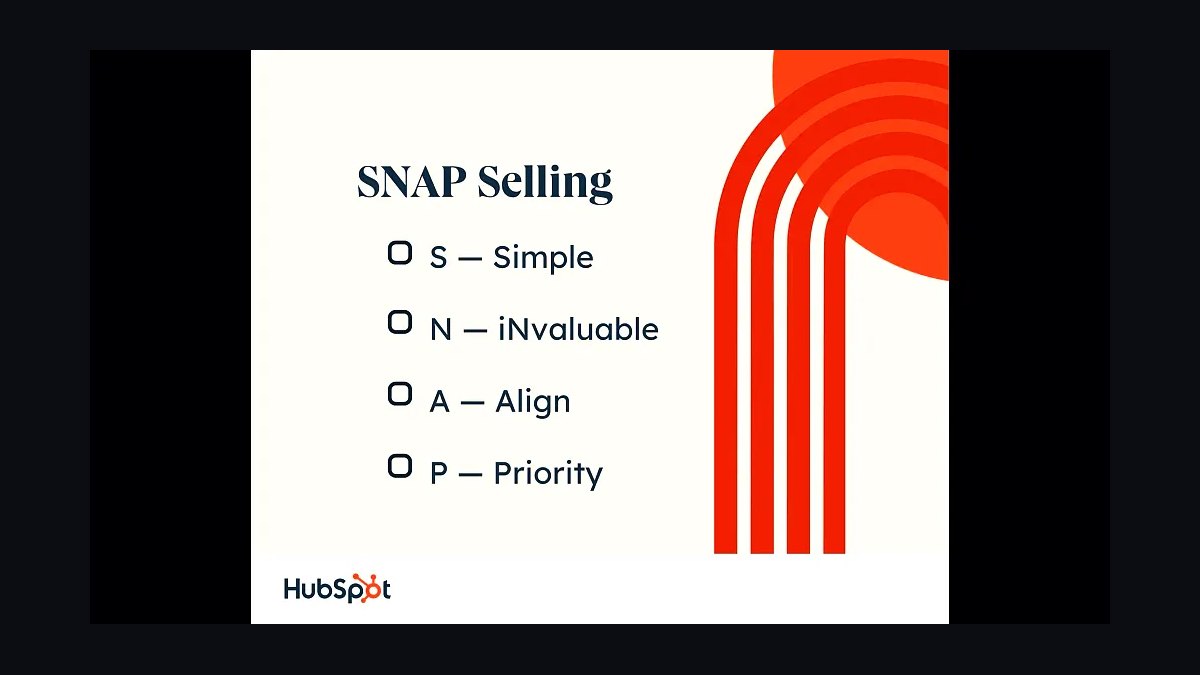
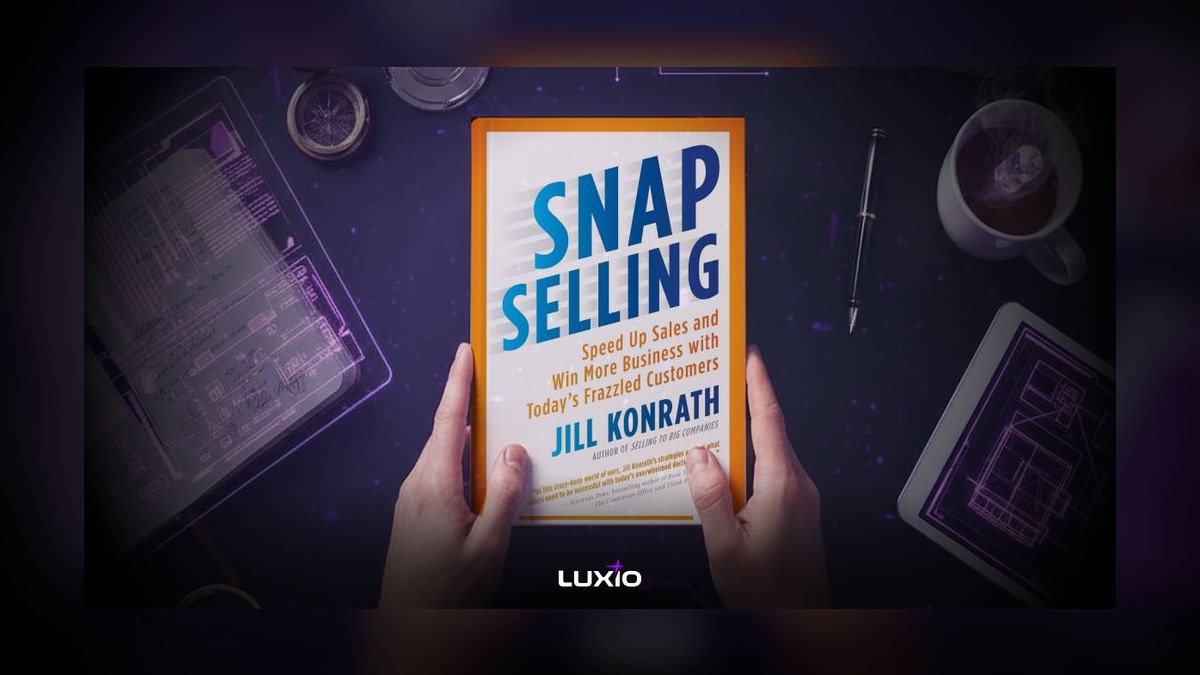
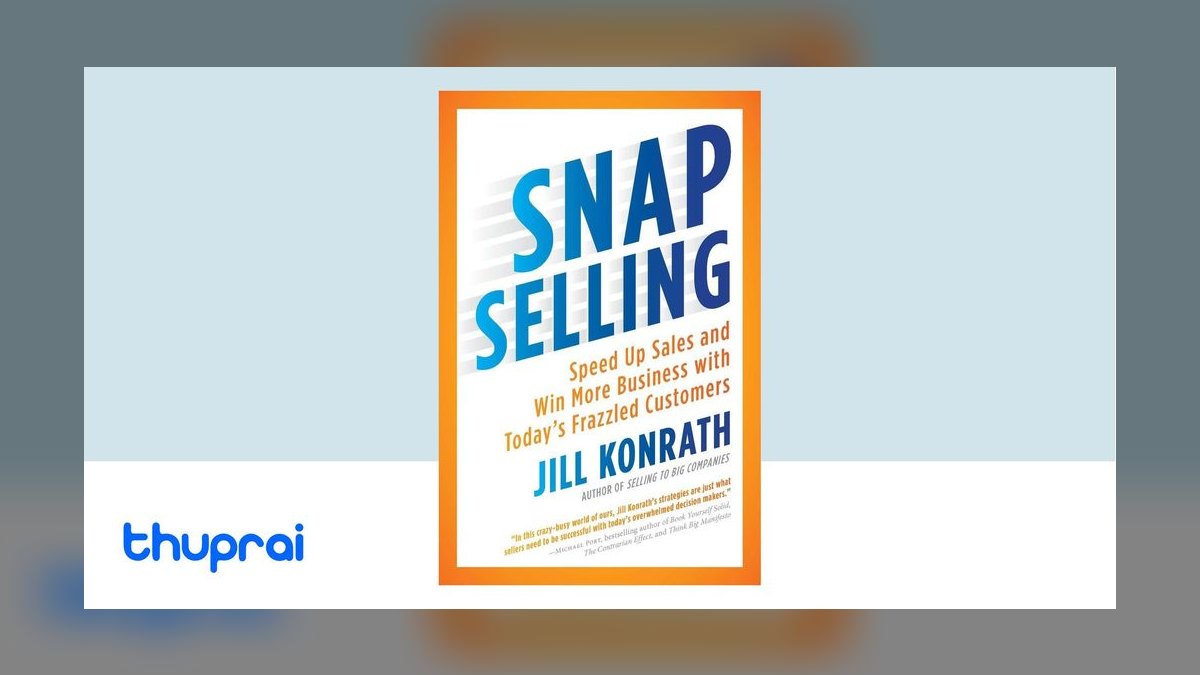
SNAP Selling (Jill Konrath, Portfolio/Penguin, 2010) argues that overwhelmed buyers reject complexity, so reps must be Simple, iNvaluable, Aligned, and a Priority while earning three sequential decisions — Allow Access, Initiate Change, Select Resources. Its core contribution is the D-Zone: the buyer's default state where no decision beats yes or no.
What SNAP Selling actually is and why it still matters
Konrath's book sits in a specific slot in the sales canon. Neil Rackham's *SPIN Selling* (1988) solved the question of what to ask inside a long, willingly-granted meeting. Matthew Dixon and Brent Adamson's *The Challenger Sale* (2011) solved the question of what insight to bring. SNAP, published in 2010 between them, solved a different problem entirely: how do you communicate with a buyer who does not have the time or the attention to sit through either one?
The premise is that the primary obstacle in B2B selling is no longer objection handling or price negotiation. It is buyer cognitive overload. Konrath's opening buyer — a marketing director who cannot locate twenty uninterrupted minutes in a five-day workweek — is not screening the rep out of malice or gatekeeping instinct. She is drowning. Konrath names four compounding forces: information overload, constant interruption, shrinking attention spans, and risk aversion. Each one independently degrades a rep's chance of getting a response; together they produce a buyer who defaults to nothing.
That default is the book's most durable idea. Konrath calls it the D-Zone — the Decision-Free Zone — and the insight is deceptively simple. Saying "no" requires effort: reading the email, forming a judgment, composing a reply, absorbing the small social cost of rejecting someone. Ignoring the email requires nothing at all. So the buyer's path of least resistance is not rejection, it is non-decision. Deals do not die in the D-Zone; they simply never leave it. A generation of SDRs learned from this chapter that silence is not a verdict on their pitch. It is the D-Zone winning by default, which means the counter-move is not a better pitch but a reason for the buyer to exit.
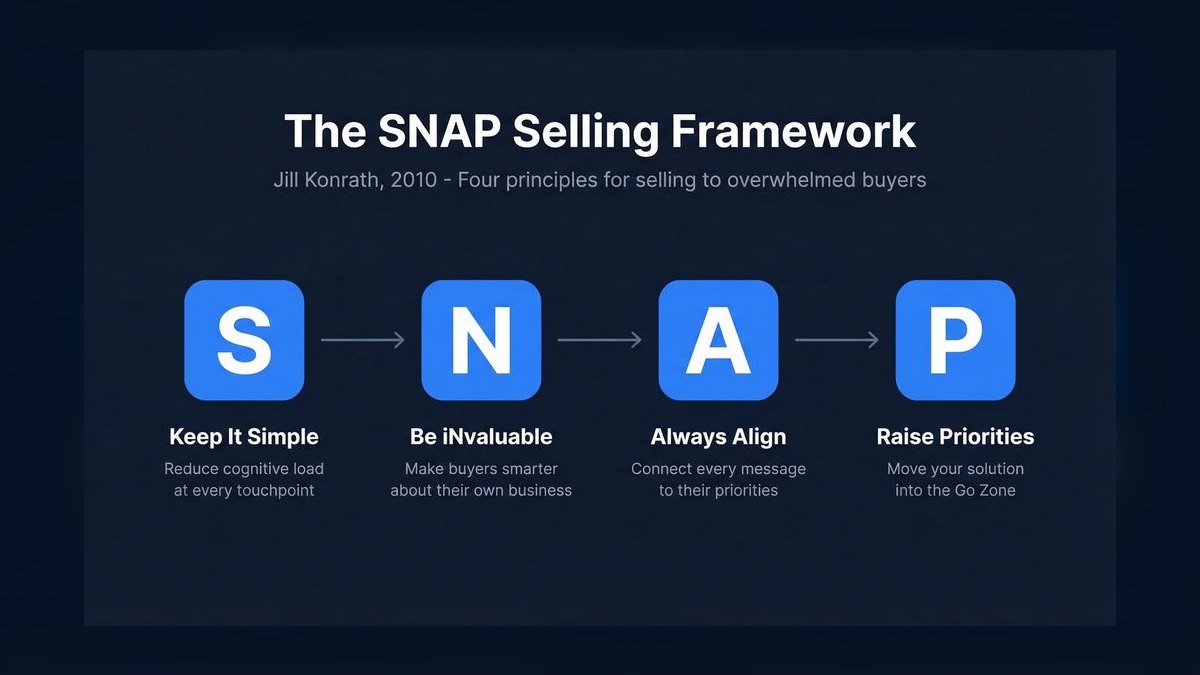
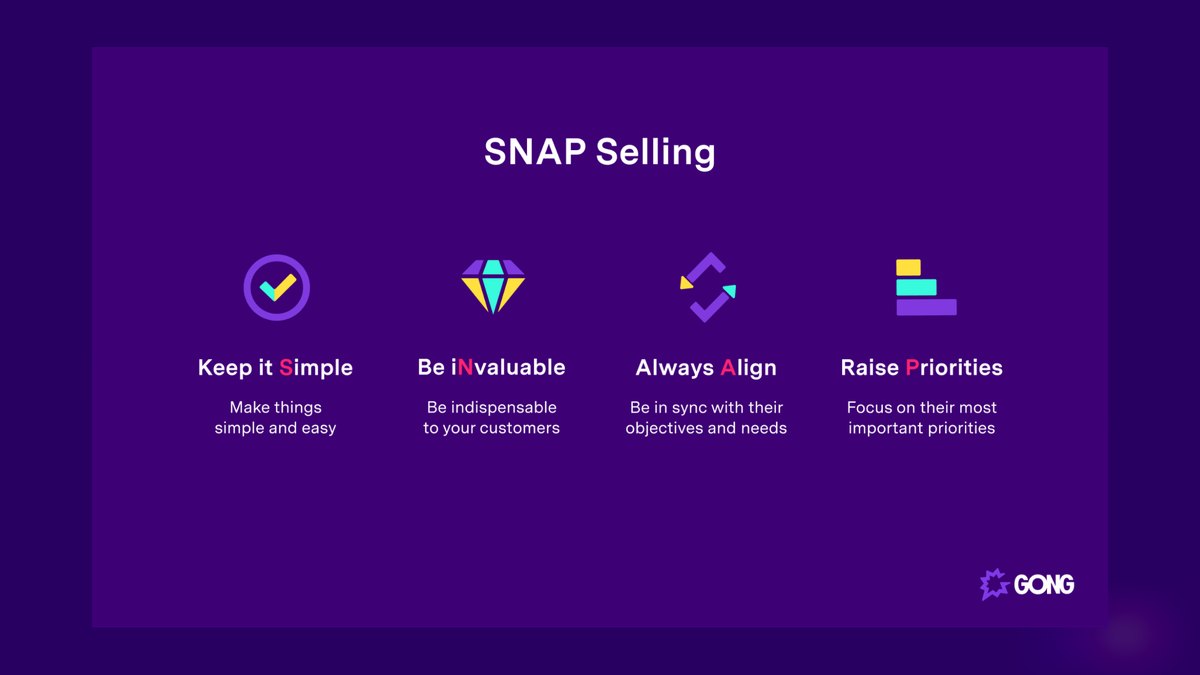
The four SNAP rules are the operating constraints that follow from that diagnosis. Simple means a frazzled buyer must grasp your point in under thirty seconds — Konrath contrasts bloated three-paragraph outreach with five-sentence notes that actually book meetings, and introduces the eight-second test for a subject line plus preview pane. iNvaluable means relevance to that buyer's specific role, metric, and quarter; her example is a rep selling to a VP of Operations who opened every call referencing the buyer's actual on-time delivery percentage, pulled from a public earnings call. Aligned means mirroring the buyer's stated objectives back in the buyer's own vocabulary — if a CFO is fixated on cash conversion cycle, every slide ties to cash conversion cycle, and nothing else gets airtime. Priority means giving a reason to act now, anchored on a real Trigger Event rather than manufactured deadline pressure.
That last distinction deserves emphasis because it is where most SNAP summaries go wrong. Konrath explicitly rejects fake urgency — the "price goes up Friday" move. She wants earned urgency: a new executive hire, a missed earnings call, a competitor announcement, a regulatory shift. Something in the buyer's own world that makes the status quo suddenly expensive. This is the seed of what the intent-data category later industrialized.
The step-by-step process a SNAP rep runs
The mechanical version of SNAP is a sequence, not a checklist. Konrath's Part Three organizes it around the three buyer decisions, and each decision has a distinct job, a distinct failure mode, and a distinct set of artifacts.
Decision One — Allow Access. The buyer decides whether to talk to you at all. Konrath dismantles the traditional cold-call script and replaces it with a four-line structure: trigger, outcome, proof, ask. In practice that reads like "Saw your Q3 earnings call mention shrinking gross margin. We helped a comparable industrial manufacturer recover several hundred basis points inside nine months. Worth twenty minutes Thursday?" Four lines. No company boilerplate, no "I wanted to reach out," no attachment. The template is now so thoroughly absorbed into modern outbound tooling — Outreach, Salesloft, Apollo all ship sequence templates shaped this way — that most reps using it have no idea where it came from.
Decision Two — Initiate Change. Once the buyer is talking, the real competitor is not the other vendor. It is the status quo, which has zero implementation risk, zero budget cycle, and zero political cost. To move the buyer off it, the rep surfaces a gap between current state and required state, then quantifies the cost of inaction. Konrath's discovery cadence here is PVP — Pain, Vision, Path — a lighter-weight cousin of SPIN engineered for the thirty-minute meeting a frazzled buyer will actually grant, rather than the ninety-minute meeting SPIN assumed. Pain establishes the gap, Vision establishes what "solved" looks like in the buyer's language, Path establishes a credible route from one to the other.
Decision Three — Select Resources. Only now does vendor differentiation land. Konrath's warning is blunt: pitching your competitive advantages during Decision One or Two registers as noise, because the buyer has not yet accepted that a purchase is happening. In Decision Three the frame flips from capability to risk. The frazzled buyer is not choosing the best option; they are choosing the least risky one. So the artifacts are peer case studies, named references, a tightly scoped pilot, explicit success criteria, and a visible exit ramp. Reps who lead with risk reduction beat reps who lead with feature matrices.
Konrath then re-engineers each deal-cycle artifact around these constraints. First meeting: thirty minutes maximum. Demo: a focused walkthrough of three buyer-stated problems, never a product tour. Proposal: two pages, not forty. Every artifact assumes the buyer spends under three minutes with it. Her closing operational chapter builds a personal toolkit — subject-line templates, thirty-second value props, Trigger Event watch lists, discovery question banks, one-page proposals, objection deflectors — and insists every asset be A/B tested against open rate, reply rate, and meeting-set rate. That instrumentation discipline anticipated conversation-analytics platforms by roughly half a decade.
Costs, timelines, and what a SNAP rollout realistically takes
The book itself is cheap and short — a standard trade paperback of roughly three hundred pages, readable in two or three sittings. The real cost is operational, and teams routinely underestimate it.
Research time per account. In 2010, the iNvaluable rule required a rep to manually hunt earnings transcripts, press releases, LinkedIn job changes, and trade publications to find one usable trigger. Realistically that was fifteen to forty minutes per target account, which is why SNAP-style personalization historically capped out at a few dozen accounts per rep per week. This is the single largest hidden cost in the book, and it is the reason many teams read SNAP, agree with it, and then quietly revert to volume-based templates.
Enablement time. Rewriting a sequence library around trigger-outcome-proof-ask is a matter of days. Retraining reps to hold a thirty-minute first meeting and a two-page proposal takes considerably longer, because both cut against the instinct that more material signals more effort. Expect a full quarter before the new artifacts are the default rather than the exception, and expect the proposal length to creep back up unless someone enforces it.
Measurement lag. SNAP's leading indicators — reply rate, meeting-set rate, meeting-held rate — move within weeks. Its lagging indicators — win rate against status quo, stage-two conversion, cycle length — need a full sales cycle plus a margin to read cleanly. If your average cycle is ninety days, do not judge a SNAP rollout at day forty-five. You will be reading noise.
What has actually changed since publication. The strategic frame held; the cost structure did not. The manual research SNAP demanded per account is now substantially automated. Intent-data and data-enrichment platforms surface trigger events that Konrath's reps had to dig out of earnings transcripts by hand. Conversation-intelligence tooling measures whether reps are actually keeping meetings short and staying on the buyer's stated priorities, rather than trusting self-reported CRM notes. Large-language-model tooling drafts the first pass of a trigger-anchored opener in seconds. The effect is that the SNAP standard of personalization, once a boutique motion for a handful of strategic accounts, is now the baseline expectation across an entire territory — which in turn means the bar for "personalized" has risen and the generic template performs worse than it did in 2010.
The attention numbers have compressed. Konrath worried about a buyer checking email every six minutes. The current buyer is in a chat channel, two video meetings, and a browser with thirty tabs, several of which are AI assistants. The thirty-second value prop she prescribed has effectively compressed toward the length of a social feed scroll on the first impression, expanding back to thirty seconds only after you have earned a second of interest. The direction of travel is entirely in the book's favor; the specific timings are conservative.
Where teams get SNAP wrong
Mistaking Simple for short. The most common failure is a team that reads the S rule, cuts every email to two sentences, and watches reply rates drop. Simple means low cognitive load, not low information. "Quick question — got 15 minutes?" is short and carries zero information, so it lands as spam. A four-line note naming a specific trigger and a specific outcome is longer and lands better because the buyer can evaluate it without thinking. The test is not word count; it is whether the buyer can decide in one pass.

Manufacturing triggers. A funding round from eighteen months ago is not a trigger. Neither is "I noticed you're in the manufacturing space." Reps under quota pressure will stretch anything into a trigger to satisfy the template, and buyers detect the stretch instantly — it reads as personalization theater, which is worse than honest generic outreach because it signals effort spent on the wrong thing. If there is no real trigger, the honest move is a value-first touch that does not pretend otherwise.
Pitching differentiation in Decision One. This is the error Konrath warns about most explicitly and the one that persists most stubbornly, because it is baked into how most companies structure a first call. The rep opens with a company overview, a customer logo wall, and a positioning statement. The buyer has not yet decided that change is necessary, so competitive positioning has nothing to attach to. It evaporates. The differentiation content is not wrong, it is simply premature by two decisions.
Treating the D-Zone as a nurture problem. When a deal stalls, the reflex is to drop it into a nurture sequence and wait. But nurture without a new trigger is just a slower way to stay ignored — you are adding touches to a buyer whose default is still no decision. Exiting the D-Zone requires new information: a fresh trigger, a quantified cost of inaction, an insight that makes the status quo feel broken. More of the same message at a lower frequency changes nothing.
Skipping the cost-of-inaction math. Reps love the Vision half of PVP because it is pleasant to discuss and hate the arithmetic because it invites scrutiny. But Decision Two turns on whether staying put costs more than moving. Without a number the buyer believes — even a rough range they helped construct — there is no forcing function, and the deal drifts to "let's revisit next quarter," which is the D-Zone with a calendar invite.

Applying SNAP uniformly across deal sizes. A thirty-minute first meeting and a two-page proposal are correct for a mid-market transaction. A seven-figure enterprise deal with a formal procurement process, a security review, and six stakeholders will require documentation SNAP never contemplated. The rules still govern each individual interaction — every stakeholder is individually frazzled — but the artifact prescriptions were written for a faster motion. Teams that enforce the two-page proposal on an RFP response lose on completeness.
Ignoring the internal buyer. Konrath focuses on the external buyer, but the same overload governs your champion's ability to sell internally. If your champion has to build the business case from scratch, they will not. The adjacent discipline — arming the champion with a one-page internal narrative they can forward without editing — is the natural extension of iNvaluable applied one layer deeper into the account.
Decision framework: when SNAP is the right strategy and when to reach for something else
SNAP is not a universal replacement for other methodologies. It is a communication layer that sits on top of whatever discovery and qualification framework you already run. The practical question is which framework carries the weight in a given deal.
Use SNAP as the primary lens when the bottleneck is access and attention — low reply rates, meetings booked but not held, deals that stall without explicit rejection, high ghosting after a strong first call. These are D-Zone symptoms, and SNAP is purpose-built for them.
Reach for SPIN-style discovery depth when you already have the meeting and the problem is diagnostic quality — reps who get thirty minutes and squander it on rapport, or who surface a pain the buyer already knew about and cannot quantify. PVP is deliberately lighter than SPIN; when you have earned a real working session, the heavier instrument is better.
Reach for Challenger-style insight when the problem is that the buyer does not believe they have a problem. SNAP tells you how to deliver a message to an overloaded buyer; Challenger tells you what message will reframe their thinking. The two are complementary rather than competing — SNAP is the delivery vehicle, Challenger is the payload — and most functioning enterprise sales orgs run both without labeling it.

Reach for a prospecting-cadence discipline when the problem is volume and consistency. SNAP will make each touch better but will not make a rep do the work daily. A rep sending eight beautifully-crafted SNAP emails a week will lose to a rep sending eighty adequate ones with disciplined follow-up. Quality of message and quantity of activity are independent variables, and SNAP only addresses one of them.
Reach for a gap-selling or value-engineering approach when the deal reaches Decision Three with a procurement function involved. Risk reduction at that stage becomes a documentation and business-case exercise more than a messaging exercise.
Konrath's own bibliography maps the adjacent territory usefully. *Selling to Big Companies* (2005) is the access-problem prequel — worth reading if your specific failure is enterprise entry rather than general overload. *Agile Selling* (2014) addresses how a rep ramps into an unfamiliar market fast, which is the problem SNAP creates for you once you commit to role-specific relevance across multiple verticals. *More Sales, Less Time* (2016) turns the frazzled lens back on the rep's own calendar, which is the honest acknowledgment that a seller drowning in internal meetings cannot execute a discipline that depends on research time.
What holds up and what has aged in the SNAP summary
Holds up. The diagnosis was correct and has only strengthened. Buyer cognitive overload as the primary obstacle is now the consensus starting point for anyone designing an outbound motion, and the three buyer decisions remain a cleaner mental model than most frameworks published since — because they map to actual sequential gates rather than to a vendor's preferred stage names. The D-Zone is the single most useful term Konrath coined; it named ghosting culture roughly a decade before ghosting became the standard word for it, and it gives reps a productive frame for silence instead of a demoralizing one. The four SNAP rules still function as a clean audit checklist for any piece of outbound collateral.
Has aged. "Frazzled" understated what arrived. The tactical templates read as period pieces — the specific email formats, the assumption that finding a trigger is skilled manual labor, the implicit belief that a thirty-second window is generous. The book also assumes a single dominant buyer, whereas modern B2B purchases route through buying committees where each member sits in their own D-Zone with their own triggers, which multiplies the research burden the book already underestimated. And SNAP has little to say about post-sale expansion, where the same attention constraints govern renewal and upsell conversations just as tightly as they govern net-new acquisition.
The honest verdict: read SNAP for the D-Zone, the three decisions, and the four rules. Those three ideas will change how a rep writes a cold email the next morning. Skip the templates and rebuild them for your own market, because the ones in the book were tuned for an attention economy that no longer exists. Pair the strategy with an insight-led framework for the payload and a prospecting-discipline framework for the cadence, and a new AE has a complete operating system in a few hundred combined pages.
Related questions
What does the SNAP acronym stand for?
Simple, iNvaluable, Aligned, and Priority. Four rules governing every touch: cut complexity, be relevant to the buyer's specific role and metric, mirror their stated priorities, and anchor urgency on a real Trigger Event rather than manufactured deadline pressure.
Is SNAP Selling better than SPIN Selling?
Neither replaces the other. SPIN governs discovery quality inside a granted meeting; SNAP governs how you earn and structure the interaction with an overloaded buyer. Use SNAP when access is the bottleneck, SPIN when meeting quality is.
What is the D-Zone in practical terms?
The state where a buyer's easiest choice is no choice at all. Practically: no reply, no rejection, no calendar movement. Escaping it requires new information — a trigger, an insight, or quantified cost of inaction — not more follow-up.
How long does it take to see results from a SNAP rollout?
Leading indicators like reply and meeting-set rate move within two to four weeks. Win-rate and cycle-length effects need a full sales cycle plus buffer before the data reads cleanly, so avoid judging the change mid-cycle.
Does SNAP work for enterprise deals?
The rules apply per interaction — every enterprise stakeholder is individually overloaded. The artifact prescriptions do not: a two-page proposal fails an RFP. Keep the communication discipline, adapt the documentation to the procurement process.
FAQ
Who should actually read SNAP Selling?
New AEs and SDRs in their first two years get the highest return per page, because the book supplies a working mental model before bad habits set in. Sales enablement leaders designing an outbound motion should read it to understand why their sequence library underperforms. Founders selling their own product benefit disproportionately, since they tend to over-explain the product and SNAP is essentially a discipline for not doing that. Experienced enterprise reps will find the diagnosis familiar and the templates dated.
How does SNAP relate to The Challenger Sale?
SNAP came first, in 2010, and addressed how to communicate with a buyer who has no attention to spare. Challenger followed in 2011 and addressed what insight to bring once you have their attention. They are complementary layers rather than competing methodologies — SNAP is the delivery vehicle, Challenger is the payload. Teams that run only Challenger produce excellent insight nobody reads; teams that run only SNAP produce beautifully simple messages with nothing behind them.
What is a Trigger Event and how do I find one?

A trigger is an external change that makes the status quo suddenly more expensive: a new executive in a relevant function, a missed or flagged earnings result, a regulatory shift, a competitor's move, a funding event, a public initiative announcement. Konrath's reps found these manually in earnings transcripts, trade press, and job postings. Modern intent and enrichment tooling surfaces many of them automatically, but the judgment about whether a signal is genuinely relevant to that buyer's job still belongs to the rep.
Can SNAP be applied to customer success and renewals?
The book does not cover it, but the underlying constraint transfers cleanly. A customer success manager requesting a quarterly business review is asking an overloaded buyer for time, competing against the same D-Zone. The same rules apply: anchor the ask on something that changed in their world, keep the artifact short, and tie every agenda item to a metric the customer already told you matters. Renewal conversations in particular benefit from the risk-reduction framing of Decision Three.
Does SNAP still work now that outreach is largely automated?
The strategy holds and arguably matters more. Automation raised the volume of generic outreach dramatically, which raises the value of a genuinely trigger-anchored, role-specific message. What changed is that the personalization SNAP demanded is no longer a differentiator by itself — it is table stakes — so the differentiating work has moved to the quality of the insight attached to the trigger. The mechanics got cheaper; the judgment did not.
What are the key takeaways if I only remember three things?
First, the buyer's default is no decision, not rejection — so silence is a D-Zone problem, not a pitch problem. Second, buyers make three sequential decisions and each one requires a different message; pitching differentiation before change is accepted wastes it. Third, urgency must be earned from the buyer's own world through a real trigger, never manufactured through artificial deadlines.
Sources
- https://www.jillkonrath.com/
- https://www.penguinrandomhouse.com/books/305238/snap-selling-by-jill-konrath/
- https://www.goodreads.com/book/show/8171904-snap-selling
- https://en.wikipedia.org/wiki/SPIN_selling
- https://www.gartner.com/en/sales/insights/b2b-buying-journey
- https://hbr.org/2012/07/the-end-of-solution-sales
- https://www.mheducation.com/highered/product/spin-selling-rackham/M9780070511132.html
- https://www.wiley.com/en-us/Fanatical+Prospecting-p-9781119144755
Related on PULSE
- SPIN Selling by Neil Rackham: Summary, Key Lessons, and RevOps Takeaways
- Gap Selling by Keenan: Summary, Key Lessons, and RevOps Takeaways
- Secrets of Question-Based Selling by Thomas Freese: Summary, Key Lessons, and RevOps Takeaways
- Selling to Big Companies by Jill Konrath — Cliff Notes Summary
- The Challenger Sale — Cliff Notes Summary & Key Takeaways
This page will be disappearing soon. Save it to your device for $1 — or read it free while it is here.
@Kory-White- · if Venmo asks, the last 4 of my number are 2012
This page is gone.
This one is off the shelf now. $1 keeps it on your phone for good — the whole page, pictures and diagrams included.
 pulse-recentWhat is the first concrete step in The Sandler Rules by David Mattson for building a sales plan in 2027?
 pulse-recentThe Challenger Customer by Brent Adamson — Top 10 Key Takeaways for Sales Leaders in 2027
 pulse-recentHigh-Profit Prospecting by Mark Hunter — Top 10 Key Takeaways for Sales Leaders in 2027
 pulse-recentFanatical Prospecting by Jeb Blount — Top 10 Key Takeaways for Sales Leaders in 2027
 pulse-recentThe Greatest Salesman in the World by Og Mandino — Top 10 Key Takeaways for Sales Leaders in 2027
 pulse-recentThe Collaborative Sale by Keith Eades — Top 10 Key Takeaways for Sales Leaders in 2027
 pulse-recentObviously Awesome by April Dunford — Top 10 Key Takeaways for Sales Leaders in 2027
 pulse-recentSales Engagement by Manny Medina — Top 10 Key Takeaways for Sales Leaders in 2027
 pulse-recentBlueprints for a SaaS Sales Organization by Jacco van der Kooij — Top 10 Key Takeaways for Sales Leaders in 2027
 pulse-recentThe Customer Success Professional’s Handbook by Ashvin Vaidyanathan — Top 10 Key Takeaways for Sales Leaders in 2027