


The Joy of Selling by Steve Chandler — Cliff Notes Summary
Quality
Certified

The Joy of Selling by Steve Chandler reframes sales performance as a mindset choice: selling from Power (creativity, choice, contribution) produces joy and durable results, while selling from Force (fear, obligation, drudgery) produces burnout. Chandler's core strategy is a repeatable morning-and-call protocol — reframe "have to" as "get to," treat rejection as data not identity — that makes any existing sales methodology sustainable long-term. This Cliff Notes-style Summary distills that protocol for practitioners.
The outcome you should expect
A rep who actually applies Chandler's framework does not get a new script or a new objection-handling technique — they get a change in the felt experience of the workday, and that change shows up downstream in behavior. The immediate outcome is fewer avoided calls: reps report that framing the call block as something they "get to" do rather than something they "have to" do removes the low-grade dread that causes procrastination between dials. Chandler's claim, repeated across the book's twelve chapters, is that this isn't a soft or cosmetic shift — it changes actual daily call volume, because the rep stops finding reasons to check email, refill coffee, or "prep" instead of dialing.
The second-order outcome is tone. Prospects and customers pick up on vocal energy in the first three to five seconds of a call, and a rep operating from what Chandler calls the Power Source — curiosity, contribution, genuine interest in the person on the other end — sounds different than a rep operating from the Force Source of quota anxiety. Chandler's argument is that this is not intuition dressed up as science; it is the same mechanism behind why people can tell over the phone whether someone is smiling. The practical result reps and sales leaders should expect within two to four weeks of consistent practice: higher connect-to-conversation conversion (prospects staying on the line longer), not necessarily an immediate spike in closed-won revenue, which lags behavioral change by a full sales cycle.

The third outcome, and the one Chandler spends the most chapters on, is resilience to rejection. A rep who has internalized "rejection is data, not identity" recovers from a bad call in under a minute instead of carrying it into the next three calls. Sales leaders should expect to see this show up as a flatter intraday performance curve — fewer "cold streaks" after a tough no — rather than as a single dramatic metric. None of this replaces methodology (Challenger, MEDDIC, SPIN); it is the substrate that determines whether a rep can execute a good methodology consistently for a full quarter instead of burning out by week six.
What drives that outcome
The mechanism Chandler describes is a loop, not a one-time mindset switch. It starts with a morning decision point — Power Source or Force Source — that cascades through the language a rep uses internally ("get to" vs. "have to"), which changes how a call physically feels, which changes how the prospect experiences the rep, which changes the outcome of the call, which feeds back into the rep's mood for the next call. Chandler calls the positive version of this cascade "the joy compound" and the negative version simply burnout. The strategy embedded in the book is to interrupt the loop at its earliest, cheapest point — the morning decision — rather than trying to manage the downstream symptoms (low energy, avoidance, poor tone) individually.

Chandler roots this in a lineage he draws on explicitly rather than inventing from scratch. Maxwell Maltz's *Psycho-Cybernetics* supplies the idea that mood is a rehearsed, trainable output rather than a passive reaction to circumstances — Chandler's version is a ten-minute morning rehearsal built around two questions: *who am I going to help today* and *what am I going to create today*. Wayne Dyer's work on personalization supplies the mechanism behind the rejection reframe: a prospect's "no" is impersonal information about timing, budget, or fit, and the rep only suffers when they convert that information into a verdict about their own worth. Mihaly Csikszentmihalyi's flow research supplies the justification for treating the call itself as play — Chandler's argument is that flow states, not willpower, are what let top performers sustain volume without burning out, and flow only shows up when the activity is experienced as chosen rather than imposed.
Benchmarks and realistic ranges
Because this is a mindset book rather than a metrics-driven playbook, Chandler does not publish performance benchmarks, and a reader should be skeptical of any summary that invents percentage lifts the book never claims. What can be stated honestly, based on how the practices are described and how similar protocols perform in adjacent literature (flow research, learned-optimism research), is a set of realistic ranges for effort and expectation-setting.
The morning rehearsal Chandler prescribes is ten minutes — not a fifteen-minute meditation, not an hour of journaling. That specificity matters operationally: a practice that takes longer than ten minutes will get skipped on busy mornings, and Chandler is explicit that consistency beats intensity. Reps trying this should budget exactly that window, ideally before opening email or a CRM dashboard, since the point is to set the frame before external inputs (a missed forecast alert, an angry customer email) hijack it.

The "complaint fast" Chandler recommends in the energy-budget chapter is a seven-day exercise: zero complaints, out loud or internally, for one week. This is a diagnostic, not a permanent practice — the realistic expectation is that most reps will catch themselves complaining ten to twenty times in the first two days, and the number should drop sharply by day five if the exercise is taken seriously. It's a measurement tool for how much energy is currently leaking into non-productive channels, not a productivity technique in itself.
On the rejection-recovery side, Chandler's implicit benchmark (via the "coaching yourself in real time" chapter) is a thirty-second reset between a bad call and the next dial. That's a tight window by design — long enough to name the trigger and consciously choose the next state, short enough that it doesn't function as an excuse to disengage from the call block. Sales leaders coaching this practice should treat thirty to sixty seconds as the target reset time; resets that stretch to five or ten minutes indicate the rep is ruminating rather than resetting, which defeats the purpose.
Risks, edge cases, and failure modes
The most common failure mode is treating the reframes as scripts rather than genuine internal shifts. A rep who says "I get to make this call" through gritted teeth while still feeling obligation has not applied Chandler's strategy — they've just changed their vocabulary, and prospects will still hear the underlying tension in tone even if the words have changed. Chandler is explicit that the language substitution is a lever for triggering a real internal shift, not a magic phrase; leaders who roll this out as a mandatory script ("everyone must say 'get to' in standup") risk producing exactly the performative compliance the book argues against.

A second risk is applying the framework to structurally broken conditions and expecting mindset to compensate. The book's 2007 examples are individual-contributor, largely B2C scenarios; it does not address quota-stacking, AI-dialer productivity dashboards, or real-time leaderboard visibility that can make a "get to" reframe genuinely harder to sustain when a rep is being surveilled call-by-call. A sales org with a toxic quota structure or a punitive management culture will see limited results from this book alone — Chandler's own energy-budget chapter concedes that external drains (politics, gossip, unreasonable managers) can outpace an individual's ability to self-regulate, and the fix in that case is organizational, not personal.
A third edge case is rejection-reframing tipping into avoidance of real feedback. "Rejection is data, not identity" is meant to preserve energy, not to excuse a rep from analyzing *why* a pattern of no's is occurring. A rep who uses the reframe to stop examining their own pitch, targeting, or timing will plateau — the depersonalization is supposed to free up the cognitive bandwidth to look at the data more clearly, not to stop looking at it. Sales managers should watch for reps who cite "it's just data" as a reason to skip call reviews or pipeline retros.
Finally, there's a burnout-masking risk: a rep who is exhausted for legitimate reasons (overload, understaffing, unrealistic quota) can be told to "check their source" as a substitute for a real conversation about workload. Chandler's framework is a tool for managing controllable internal state, not a justification for ignoring structurally unsustainable conditions — using it that way is a misapplication that will erode trust in the practice once reps notice it's being used to paper over real problems rather than solve them.
A practical rollout plan

Rolling this out to a team works best as a light, opt-in cadence rather than a mandated program, since the book's own thesis is that forced adoption ("you have to do the morning rehearsal") recreates the exact Force Source dynamic it's trying to eliminate. A realistic four-week rollout: week one, share the Power Source / Force Source distinction and the "get to" reframe in a single quick team session, and ask reps to try the ten-minute morning rehearsal individually without reporting on it. Week two, introduce the thirty-second real-time reset practice between calls, and have managers model it openly after their own tough calls rather than only prescribing it to reps. Week three, run the seven-day complaint fast as a team-wide experiment with a lightweight, private self-tracking method — the point is individual awareness, not a leaderboard. Week four, debrief informally: which practices stuck, which felt forced, and whether call-block avoidance (the earliest behavioral signal) has visibly dropped.
Leaders should resist the urge to measure this rollout with a hard KPI in the first month — the book's own argument is that the visible outcome (closed revenue) lags the invisible one (daily energy and call willingness) by weeks. The honest measurement in month one is qualitative: are reps voluntarily continuing the ten-minute rehearsal without being reminded? That's the leading indicator that the strategy has actually taken hold rather than been performed for a manager's benefit.
Related questions
What is the Power Source vs. Force Source distinction?

Chandler's central model: every sales action springs from either the Power Source (creativity, choice, contribution) or the Force Source (fear, obligation, drudgery). The same call — like dialing a prospect — feels entirely different depending on which source it comes from, and Chandler argues the rep can consciously choose between them.
How does "get to" differ from "have to" in practice?
"Have to" frames an action as an imposed duty and triggers resistance; "get to" frames the same action as a chosen opportunity and triggers engagement. Chandler treats this as a deliberate daily language substitution, not just positive thinking.
Does The Joy of Selling replace a sales methodology like SPIN or Challenger?
No. Chandler addresses how a rep shows up before and during a call, not what to say in it. It pairs with a methodology rather than replacing one — a rep can run Challenger from either the Power Source or the Force Source.
What is the "energy budget" concept from the book?
A daily finite resource spent on calls, meetings, and internal friction like gossip or complaints. Chandler argues protecting it — via practices like a seven-day complaint fast — is a leadership responsibility, not a personal indulgence.
FAQ
Who is Steve Chandler? Chandler is the author of over 30 books on personal performance and sales mindset, most notably *100 Ways to Motivate Yourself* (1996). He co-founded the Modern Wisdom Coaching School, which trains executive and sales coaches, and his Power Source / Force Source distinction is now widely referenced in burnout-aware sales coaching circles.

What is the single most quoted line from the book? "Selling done from Power is joy; selling done from Force is burnout." It's Chandler's core thesis condensed into one sentence and is frequently cited in sales-coaching training materials.
Is this book more tactical or more mindset-focused? Almost entirely mindset-focused. There are no scripts, no objection-handling frameworks, and no pricing tactics. The "tactics" are protocols for managing internal state — a ten-minute morning rehearsal, a thirty-second between-call reset — rather than techniques for the conversation itself.
How long does the morning rehearsal Chandler recommends take? Ten minutes, built around two questions: who am I going to help today, and what am I going to create today. Chandler is specific about the short duration because a longer practice is more likely to get skipped on busy days.
Can this framework work in a high-pressure, quota-stacked sales floor? Partially. Chandler's practices help an individual manage their own internal state, but the book doesn't address structural pressures like AI-dialer surveillance or aggressive quota-stacking. In genuinely toxic conditions, mindset work alone won't offset an unsustainable structure — that requires organizational change.
What should I read alongside this book for a more complete picture? Pair it with a conversation-level methodology like *The Challenger Sale* or SPIN Selling for the "what to say" layer, since Chandler only covers the "how to show up" layer. For structural, modern SDR-floor context, newer workforce-mental-health-focused sales writing is a useful complement.
Sources
- https://www.penguinrandomhouse.com
- https://www.goodreads.com
- https://www.amazon.com
- https://www.robertdreedpublishers.com
- https://www.apa.org
- https://positivepsychology.com
- https://hbr.org
- https://www.psychologytoday.com
Related on PULSE
- 100 Ways to Motivate Yourself by Steve Chandler — Cliff Notes Summary
- Steve Jobs by Walter Isaacson — Cliff Notes Summary for Sellers
- Heavy Hitter Sales Wisdom by Steve W. Martin — Cliff Notes Summary
- Selling the Invisible by Harry Beckwith — Cliff Notes Summary
- Secrets of Question-Based Selling by Thomas Freese: Summary, Key Lessons, and RevOps Takeaways
This page will be disappearing soon. Save it to your device for $1 — or read it free while it is here.
@Kory-White- · if Venmo asks, the last 4 of my number are 2012
This page is gone.
This one is off the shelf now. $1 keeps it on your phone for good — the whole page, pictures and diagrams included.
 pulse-recentWhat are the first three concrete steps in Sandler Rule #1 for a new sales rep in 2027?
 pulse-recentWhat is the second concrete step in Strategic Selling by Miller Heiman for identifying a sales coach in 2027?
 pulse-recentSandler Rule #1: What is the first concrete step to build a prospect's trust in a sales conversation in 2027?
 book-summaryLittle Red Book of Selling by Jeffrey Gitomer — Cliff Notes Summary
 pulse-recentSales Engagement by Manny Medina — Top 10 Key Takeaways for Sales Leaders in 2027
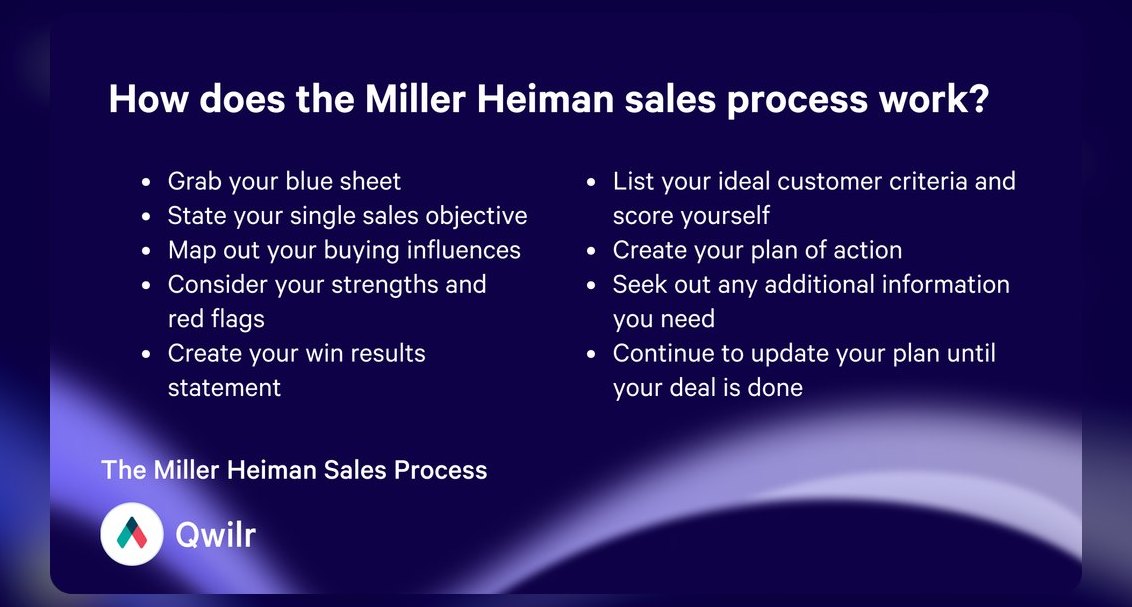 pulse-recentWhat is the step-by-step process for Strategic Selling by Miller Heiman in 2027?
 pulse-booksRework by Jason Fried and David Heinemeier Hansson — Cliff Notes Summary
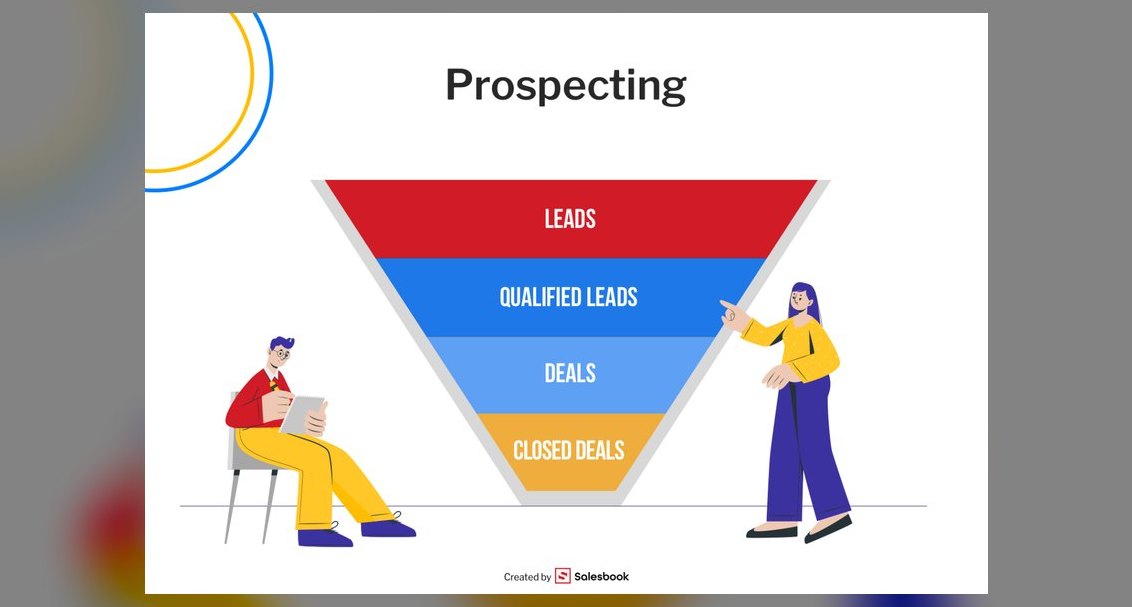 pulse-recentHigh-Profit Prospecting by Mark Hunter — Top 10 Key Takeaways for Sales Leaders in 2027
 pulse-recentHow I Raised Myself from Failure to Success in Selling by Frank Bettger — Top 10 Key Takeaways for Sales Leaders in 2027
 pulse-recentWhat is the first concrete step in The Sandler Rules by David Mattson for building a sales plan in 2027?