
Should I open or buy a JDog Junk Removal franchise in 2027?
 Curated byKory White · Fractional CRO · Maryland
 PULSEKNOWLEDGE LIBRARY
Quality
Certified

Open a JDog Junk Removal franchise only if you are a veteran or military family member with $100,000 to $250,000 available. The mission-driven brand earns real referral advantage, but disposal costs, crew turnover, and winter seasonality decide profitability. Buying an existing unit with proven routes shortens the ramp considerably.
A veteran with $150,000 sitting in a business account
Picture a retired Army staff sergeant, eleven years in, now three years into a logistics job that pays fine and bores him senseless. He has $150,000 — a mix of savings, a home equity line he has not drawn, and a small inheritance. He wants to work for himself, he wants to hire other veterans, and he keeps coming back to a truck-based service business because the barrier to entry is low and the demand does not evaporate in a downturn. People move, people die, people finish basements, people finally clear out the garage after twenty years. Junk does not go away.
He has two paths in front of him. The first is to open a new JDog Junk Removal unit in an unclaimed territory — pay the franchise fee, buy a truck, wrap it, and build a customer base from zero. The second is to buy an existing JDog franchise from an owner who wants out, inheriting the trucks, the crew, the commercial accounts, and whatever reputation that operator built. The third path, which he should also weigh honestly, is to skip the franchise entirely and run an independent hauling company with his own name on the door.
The framing matters because the question is not "is junk removal a good business." It is. The question is whether the specific bundle JDog sells — a veteran-only brand identity, a national name, a CRM, training, and a territory — is worth roughly 10% of every dollar he ever collects. That is the real trade. Over ten years at $700,000 in annual revenue, that royalty and marketing load is somewhere near $700,000 of cumulative payments. You need to believe the brand generates more than that in incremental revenue and reduced mistakes, or the math does not close.
The eligibility gate frames everything else. JDog Junk Removal & Hauling was founded in 2011 and awards franchises primarily to veterans and military family members, built around a stated creed of Respect, Integrity, Trust. That is not marketing garnish layered on a generic hauling company — it is the entire differentiation strategy and the reason a homeowner picks the JDog truck over the two other estimates sitting on the kitchen counter. If you are not in that community, this decision is already made for you and you should be reading about Junk King or an independent build instead.
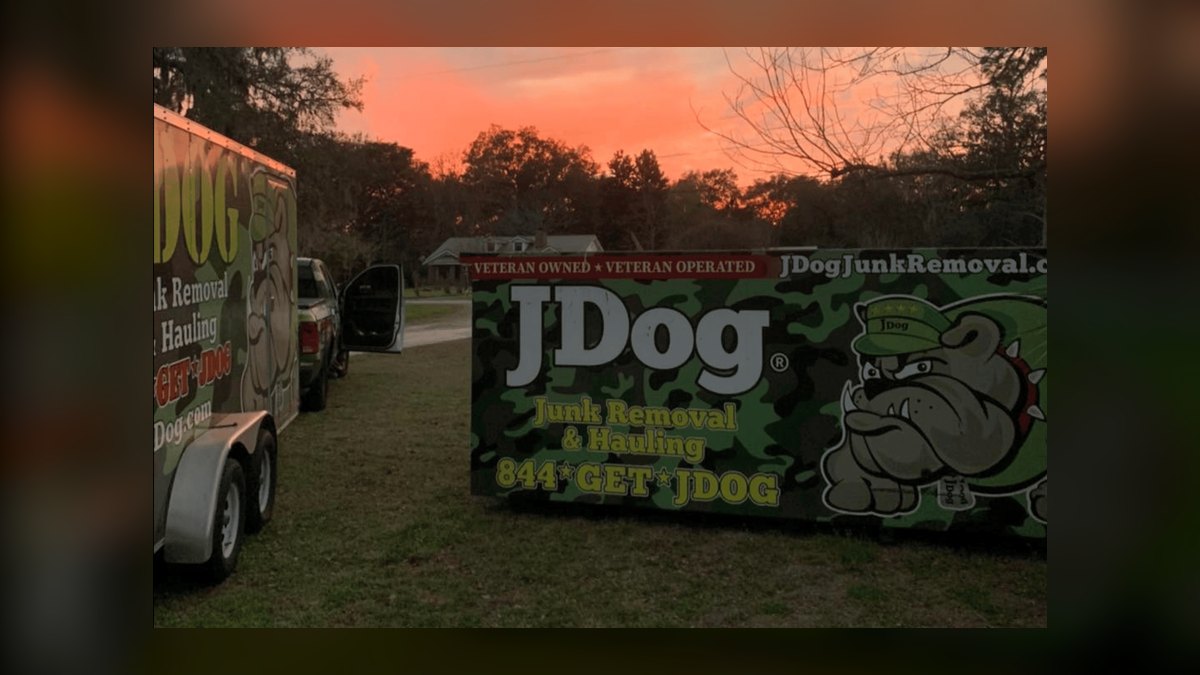
For the sergeant, the eligibility gate is an asset. It means every competitor inside the JDog system shares his background, and it means the brand promise he is selling is one he can actually deliver on without acting. That authenticity is worth something in a business where the customer is letting a stranger into their basement.
How the franchise decision actually works, step by step
The mechanism of buying into JDog runs through the Franchise Disclosure Document, and most first-time buyers treat that document as a formality when it is genuinely the highest-leverage twenty hours of the entire process. The FDD is a federally mandated disclosure the franchisor must give you at least 14 days before you sign anything or pay any money. Item 7 gives the estimated initial investment range. Item 19 gives financial performance representations, if the franchisor chooses to make any. Item 20 lists every current franchisee, every former franchisee, and their contact information — that list is the single most valuable page in the document and almost nobody calls the departed owners.
Here is the actual sequence, compressed into a realistic timeline that runs about 90 days from first inquiry to signed agreement, and another 30 to 60 days from signature to first paid job.
Days 1 through 20: request and read the current FDD cover to cover, and verify your own eligibility documentation. You will need a DD-214 or equivalent proof of service, or documentation of military family status. Build a spreadsheet from Item 7 with your own local numbers substituted for the franchisor's national ranges — your insurance quote, your truck quote, your landfill's posted tipping fees. The franchisor's range is a national average; your market is not average.
Days 21 through 40: call franchisees. Not the three the franchisor hands you — those are the happy ones. Work through Item 20 systematically and reach at least ten current owners and at least three former owners. Ask specific questions: what did you actually gross last year, what did you take home, what percentage of revenue went to disposal, how many crew members did you lose, how long until you were cash-flow positive, and what do you wish you had known. The former franchisees will tell you things nobody else will.
Days 41 through 60: validate your territory. Pull population, median home value, housing turnover rate, and permit data for your proposed area. Count competitors — search the obvious terms and see who ranks, then drive around and count wrapped trucks. Call three competitors posing as a customer and get quotes so you know the real local price ceiling, not the one in the brochure.
Days 61 through 75: line up financing and get insurance and licensing quotes in writing. SBA 7(a) loans are commonly used for franchise purchases because franchises on the SBA Franchise Directory have pre-reviewed agreements, which speeds underwriting. Expect to put 10% to 20% down and personally guarantee the loan.

Days 76 through 90: negotiate what is negotiable, sign, and begin the equipment and hiring track. Territory boundaries and payment timing sometimes have flex; royalty rates rarely do.
The buy-versus-open fork inside that flow deserves its own scrutiny. Buying an existing unit means you are underwriting a specific operator's business, not a brand. Demand three years of tax returns, not a profit-and-loss statement the seller typed himself. Pull the customer concentration — if one commercial account is 40% of revenue and that relationship lives in the seller's personal friendship with a property manager, you are buying a liability. Ask what the crew earns and whether they intend to stay through a sale; in a business where turnover already runs high, an ownership change is exactly the moment good people leave. And confirm with the franchisor that they will approve the transfer to you and on what terms, because most agreements include a transfer fee and a right of first refusal.
Real numbers: what the investment and the returns actually look like
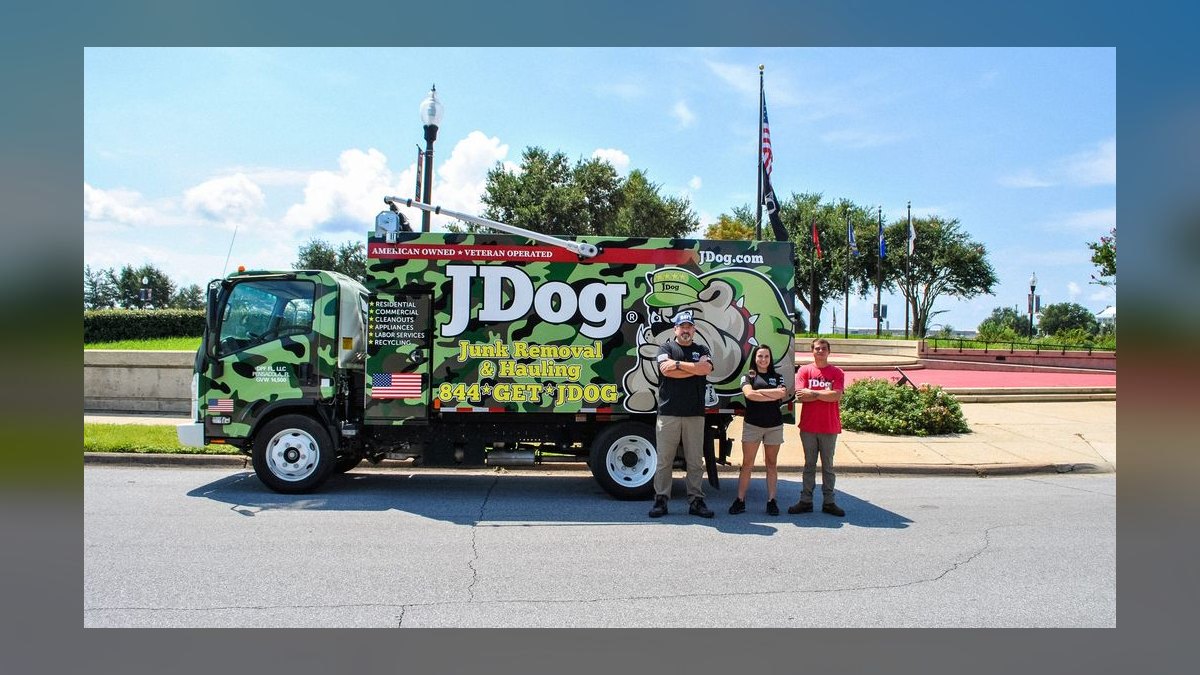
The franchise fee sits around $45,000. The total initial investment disclosed in Item 7 runs roughly $100,000 to $250,000, and where you land inside that band is driven almost entirely by how much truck you buy and how much marketing you front-load.
Break the range into components so you can see where your own number falls. Trucks and equipment: $30,000 to $110,000. A used 14-foot box truck with a lift gate at the bottom of that range versus a new dump-body truck at the top is a real strategic choice, not just a budget one — the used truck preserves working capital but buys you maintenance risk in year one. Branding and vehicle wraps: $5,000 to $18,000. That wrap is your highest-ROI marketing spend; a truck parked in a driveway for three hours in a neighborhood generates calls. Warehouse or office setup: $5,000 to $25,000, and most operators start from home and defer this entirely. Initial marketing: $12,000 to $35,000. Training and travel: $8,000 to $22,000. Licensing and insurance: $8,000 to $25,000 — hauling permits, commercial auto, general liability, and workers' compensation, and workers' comp on manual labor classifications is expensive. Working capital: $20,000 to $60,000.

That working capital line is the one people shortchange and it is the one that kills units. Commercial accounts pay on net-30 to net-60 terms. If you land a property management contract in month two, you are funding crew payroll, fuel, and tipping fees for six to eight weeks before the first check clears. Underfund this and you will be factoring receivables at punishing rates by month four.
On the revenue side, mature units gross in the range of $400,000 to $1,500,000 and owners in that mature band clear somewhere between $70,000 and $300,000. That is a wide spread and the spread is the point — it is almost entirely explained by truck count, disposal discipline, and whether the owner is still swinging a hand truck or has built a crew.
Run the unit economics on an $800,000 revenue year with two to three trucks running:
Gross revenue: $800,000. Labor at roughly 30%: $240,000. Disposal and fuel at roughly 18%: $144,000. Royalty and marketing fee at roughly 10%: $80,000. Trucks, maintenance, insurance, and remaining operating expense at roughly 18%: $144,000. Owner earnings land near $192,000.
That model holds only when two things are true simultaneously: the veteran mission is being worked actively as a lead-generation engine, and the logistics are tight. Slip on either and the margin compresses fast, because every one of those cost lines is variable and unforgiving. A crew that takes five hours on a four-hour job does not just cost you the extra labor — it costs you the fourth job you did not run that day.
Per-job economics tell you whether the day worked. A residential job in most markets prices somewhere in the $350 to $600 range depending on volume and difficulty, and generates roughly half a ton to a ton and a half of material. Landfill tipping fees vary enormously by region but commonly run in the $80 to $150 per ton band, with additional environmental or handling fees on electronics, appliances with refrigerant, mattresses, and tires. On a $400 job producing one ton at $120 per ton, disposal alone is 30% of the ticket before you have paid anyone. That single ratio is why the operators who win are obsessive about diversion — donating usable furniture, separating scrap metal that a recycler pays for rather than charges for, and routing clean fill separately.
A two-person crew running a ten-hour shift costs roughly $330 to $430 fully loaded at prevailing wages for this work. To cover that plus truck cost, fuel, insurance, royalty, and overhead, a single truck typically needs to clear somewhere in the neighborhood of $900 to $1,100 in daily revenue to break even, which means booking three to five jobs a day. You need to hit that on roughly 70% to 80% of operating days to make the year work.

Then seasonality takes a bite. In most markets volume drops meaningfully from November through February, and in northern markets January can be brutal. Build a cash reserve specifically sized to carry fixed costs — truck payments, insurance, your own draw — through the slow quarter. Operators who treat their best summer month as the run rate and spend accordingly are the ones selling equipment in March.
Commercial work is the structural answer to seasonality. Property managers, real estate agents handling estate sales and foreclosures, construction contractors, and storage facilities generate recurring volume that does not care about the weather, and they typically accept higher pricing in exchange for reliability and proof of insurance. The catch is that landing those accounts takes three to six months of consistent relationship work before the first purchase order, which is exactly the period when a new owner is most tempted to abandon outbound effort and just chase inbound residential calls.
Trade-offs, and the alternatives worth pricing out
The core trade is roughly 10% of top-line revenue in royalty and marketing fees, plus a $45,000 entry fee and a loss of operational autonomy, in exchange for a brand, a system, training, and a defined territory. On $400,000 of revenue that ongoing load is about $40,000 a year. On $1.2 million it is about $120,000 a year. Decide now whether you believe the JDog name and network generate more than that in incremental closed business, because the fee scales with your success and does not stop when you stop needing the help.

What you get for it that is genuinely hard to replicate: the veteran identity. When a homeowner has three estimates in hand and the prices are within 15% of each other, the deciding factor is trust — they are letting a crew into their home and expecting them to leave it clean. A veteran-owned, veteran-staffed brand with a stated creed resolves that hesitation faster than a generic operator can. That advantage compounds in military-adjacent communities, in 55-plus developments, and anywhere a VFW post or American Legion hall functions as a real social hub. Those organizations are a referral channel that a national competitor with a call center cannot buy its way into.
What you give up: pricing freedom, vendor choice, the ability to expand into adjacent services on your own terms, and the option to sell the business to anyone you like. Franchise agreements typically run ten years with renewal terms, include non-compete provisions that survive termination, and require franchisor approval on transfer. If you decide in year four that the real money in your market is in dumpster rental or light demolition, you may not be free to pivot.
The competitive field is real. 1-800-GOT-JUNK, College Hunks Hauling Junk, Junk King, and The Junkluggers all operate national franchise systems with substantial unit counts and national advertising budgets. But your most dangerous competitor is usually the independent with a pickup truck, a trailer, no franchise fee, no royalty, no wrap cost, and a willingness to underbid you by 20% because his overhead is a phone and a tank of gas. You cannot win that fight on price and you should not try. You win it on showing up in the two-hour window you promised, on uniformed crews, on carrying real insurance the customer can verify, and on not leaving scratches in the hallway.
The alternatives worth actually pricing rather than dismissing:

Buy an existing JDog unit. You pay more up front for a going concern but you skip the twelve-to-eighteen-month ramp and inherit routes, reviews, and crew. Value it on a multiple of seller's discretionary earnings, verify with tax returns, and discount hard for customer concentration and for any revenue that walks out the door with the seller.
Another junk removal franchise. College Hunks bundles moving services with hauling, which smooths seasonality and raises average ticket. 1-800-GOT-JUNK brings the strongest consumer name recognition in the category. Junk King and The Junkluggers each have their own recycling and diversion positioning. Price all of their FDDs side by side — fee structures and territory sizes differ more than the marketing suggests.
Go independent. You keep the full 10% you would have paid in fees and you control every decision, including pricing, service mix, and eventual exit. You also build the brand, write the training, buy the software, and make every operational mistake yourself. For a veteran who wants the mission-driven identity without the fee, running an explicitly veteran-owned independent hauling company captures most of the trust advantage — you just have to build the local reputation that the franchise would have handed you.
The pitfalls that sink units, and how to stay out of them
Underfunding working capital is the most common failure and the most preventable. Operators budget for the truck and the fee, then discover that fuel, tipping fees, payroll, and insurance premiums all come due before receivables land. Fix: hold the full $20,000 to $60,000 working capital line untouched at launch and treat it as a separate account you do not raid for equipment upgrades. If a truck upgrade requires dipping into it, you cannot afford the upgrade.

Ignoring disposal economics until they compound. Disposal is the second-largest cost line and the one most under your control. Operators who dump everything at the landfill pay full tonnage on material that a recycler would have taken free or paid for. Fix: before launch, map every disposal option within a 45-minute radius — landfill, transfer station, scrap metal buyer, appliance recycler, e-waste handler, Habitat ReStore or equivalent donation site. Build a sorting protocol into the crew's standard procedure and measure diversion rate monthly. A five-point improvement in diversion on $800,000 of revenue is real money.
Treating crew as interchangeable labor. Turnover in physical service work is brutal, and every departure costs you training time, a period of slower job completion, and the risk of a missed appointment that costs a customer permanently. Fix: pay above the local floor, add performance incentives tied to jobs completed within time estimate rather than raw speed, and give the crew leader real authority on job pricing adjustments so they are not calling you from every driveway. Veterans hiring veterans has a genuine retention advantage here — use it deliberately.
Estimating by phone and eating the difference. The customer describes "a few boxes and an old couch" and the crew arrives to a full basement. Fix: price by truck volume with clearly published tiers, require photos before quoting a firm number, and give crews a documented process and price sheet for on-site adjustment before they start loading. Load first and negotiate after and you have lost the leverage.

Abandoning outbound while chasing inbound. New owners get a few residential calls, feel busy, and stop the commercial prospecting that would have carried them through January. Fix: block a fixed number of hours weekly for commercial outreach — property managers, real estate offices, storage facilities, contractors — and protect it the way you would protect a booked job. The payoff arrives three to six months out, which is precisely why it gets cut.
Assuming the mission markets itself. The veteran identity is an advantage only if the market knows about it and believes it. Fix: show up at the VFW and the Legion post as a member, not as a vendor. Sponsor the youth sports team. Do the estate cleanout for the widow of a veteran at cost and never mention it publicly — the community will mention it for you. Customers can smell a mission used as a sales tactic, and the backlash from an inauthentic version is worse than not having the angle at all.
Overpaying for an existing unit on unverified numbers. Sellers present their best year and their most optimistic add-backs. Fix: three years of tax returns or no deal, a customer concentration analysis, a conversation with the crew before closing, and written franchisor confirmation of the transfer terms. Structure part of the price as an earnout tied to retained revenue if the seller resists disclosure.
Signing the agreement without counsel. Franchise agreements are long, one-sided by design, and contain post-termination non-competes and dispute-resolution clauses that matter enormously if things go wrong. Fix: hire a franchise attorney — not your general business lawyer — for a few thousand dollars to review the FDD and agreement. It is the cheapest insurance in the entire transaction.
Related questions
Can a non-veteran buy a JDog franchise?
No. JDog awards franchises primarily to veterans and military family members, and that eligibility gate is structural to the brand rather than a preference. A non-veteran's realistic paths are another junk removal franchise system or an independent hauling company.
Is buying an existing JDog unit better than opening a new one?
Usually faster to profitability, but only if the books verify. An existing unit brings routes, reviews, and trained crew, eliminating the twelve-to-eighteen-month ramp. Discount heavily for customer concentration and for revenue tied to the departing owner's personal relationships.
How long until a new junk removal franchise turns profitable?
Most owners target cash-flow positive within twelve to twenty-four months, driven by how fast they land recurring commercial accounts. Residential-only units ramp slower and swing harder with seasonality. Underfunded working capital is the most common reason the timeline stretches.
What single cost surprises new owners most?
Disposal. Tipping fees plus environmental surcharges on appliances, mattresses, tires, and electronics can consume 30% of a residential ticket. Operators who map recyclers, scrap buyers, and donation sites before launch protect several points of margin their competitors give away.
Does a second truck double revenue?
No — it roughly doubles fixed cost immediately and revenue only as fast as you can fill it. Add the second truck when the first is turning away work consistently for four to six weeks, not when a good month suggests it might.
FAQ
What is the total investment to open a JDog Junk Removal franchise?
The franchise fee is around $45,000, and Item 7 of the FDD puts the total initial investment at roughly $100,000 to $250,000. Where you land depends heavily on whether you buy a used or new truck, whether you operate from home or lease space, and how much you front-load marketing.
What are the ongoing fees?
A royalty near 8%, which may be tiered by revenue, plus a marketing fee. Combined, budget roughly 10% of gross revenue as an ongoing obligation. Confirm your exact structure in the current FDD, since terms vary between agreement vintages.
What can an owner realistically earn?
Mature units gross approximately $400,000 to $1,500,000, with owner earnings in the $70,000 to $300,000 range. The spread is driven by truck count, disposal discipline, commercial account mix, and whether the owner has built a crew or is still doing the lifting.
How much liquid capital do I need on top of financing?
Plan on $50,000 to $100,000 liquid. Lenders will want a down payment of roughly 10% to 20% on an SBA loan plus a personal guarantee, and you separately need $20,000 to $60,000 in untouched working capital to bridge net-30 and net-60 commercial receivables.
What support does the franchisor provide?
Initial training, marketing support, brand assets, and operational systems including CRM and dispatch. The practical level of ongoing regional support varies, which is exactly why you call ten current franchisees from Item 20 before signing rather than relying on what the sales process describes.
Should I worry about the national competitors?
Less than you should worry about local independents. 1-800-GOT-JUNK, College Hunks Hauling Junk, and Junk King have national advertising, but unfranchised local operators with near-zero overhead set the price floor. Compete on reliability, insurance, uniformed crews, and the veteran trust advantage — not on price.
Sources
- JDog Brands official site
- Federal Trade Commission — Franchise Rule and buying a franchise
- U.S. Small Business Administration — franchise businesses and financing
- International Franchise Association
- Franchise Business Review — franchisee satisfaction research
- U.S. Bureau of Labor Statistics — Occupational Outlook Handbook
- U.S. EPA — sustainable materials management and waste diversion
- U.S. Department of Veterans Affairs — veteran-owned small business resources
- Entrepreneur — franchise research and rankings
Related on PULSE
- Should I open or buy a Stand Up Guys Junk Removal franchise in 2027?
- Should I open or buy a Junk Doctors franchise in 2027?
- Should I open or buy a College Hunks Hauling Junk franchise in 2027?
- What Service Fees Should a Junk Removal Company Charge?
- How Many Sales Reps Do I Need to Hire for My Wildlife Removal Company?
This page will be disappearing soon. Save it to your device for $1 — or read it free while it is here.
@Kory-White- · if Venmo asks, the last 4 of my number are 2012
This page is gone.
This one is off the shelf now. $1 keeps it on your phone for good — the whole page, pictures and diagrams included.
 pulse-qShould I open or buy a Curry Up Now franchise in 2027?
 pulse-qShould I Hire a Fractional CRO If I Need to Professionalize a Referral-Only Business in 2026?
 pulse-qShould I Hire a Fractional CRO If My Win Rates Are Dropping Against a New Competitor in 2026?
 pulse-qShould I open or buy a Tint World franchise in 2027?
 pulse-qShould I open or buy a Dent Wizard franchise in 2027?
 pulse-qHow Many Baristas Should I Schedule Each Shift at My Coffee Drive-Thru in 2026?
 pulse-qShould I open or buy a Pinch A Penny franchise in 2027?
 pulse-qHow Many Sales Reps Do I Need to Hire for My Window Blinds Company in 2027?
 pulse-qHow Do I Use Service Fees to Cover Back-Office Payroll in 2026?
 pulse-qShould I open or buy a 3 Day Blinds franchise in 2027?