 Pulse Reviews and Analysis
What Service Fees Should a Junk Removal Company Charge?

What I've Learned About Junk Removal Fees in 25 Years
Look, I've been in revenue leadership long enough to know that most junk removal owners are leaving money on the curb — literally. You roll the truck, you haul the junk, you collect a check. But somewhere between loading the sofa and swiping the card, you're bleeding margin you never even knew you had.
Here's what 25 years taught me: "The difference between a junk hauler who survives and one who thrives is whether they charge for what they actually do — not just what they haul."
The Fees That Actually Work
I've watched hundreds of operators test every fee structure imaginable. The ones that stick? Value-added service fees tied to real labor, access difficulty, and disposal cost. These aren't junk surcharges — each maps to a tangible cost the customer can see. And here's the kicker: they carry 85–95% contribution margin.
Let me walk you through the five that move the needle:
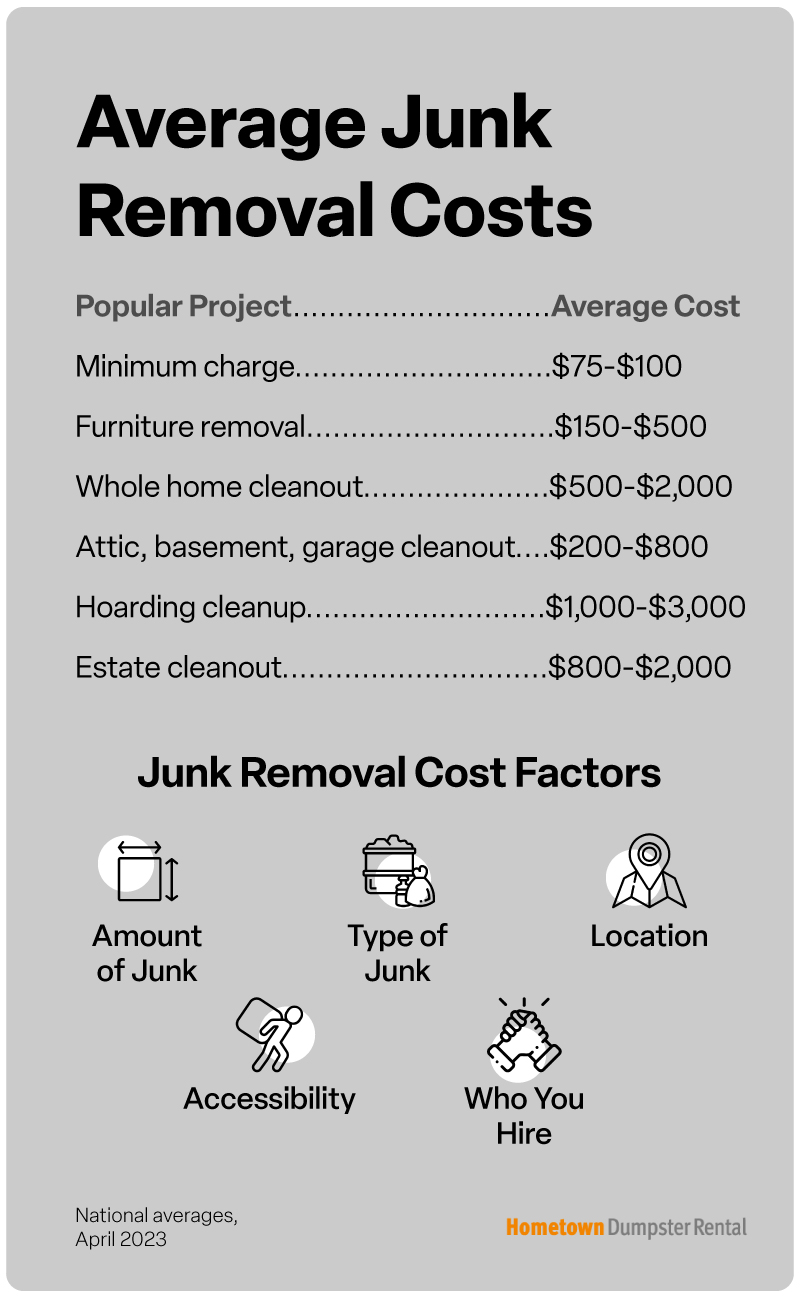
- Trip/base fee ($75–$150) — just to roll the truck. Your time has value before you touch a single box.
- Stairs and heavy-item fee ($25–$100) — pianos, safes, hot tubs, anything above ground level. Your back deserves this.
- Disposal/dump fee passed through at cost-plus ($25–$120 per load) — you're not a charity for the dump.
- E-waste/appliance fee ($15–$60 per unit) — refrigerant recovery and recycling aren't free.
- Same-day/rush fee ($40–$100) — they want it now? They pay for that privilege.
The math is brutally simple: Incremental Margin = Σ (attach rate × monthly jobs × fee × contribution margin %).
Run this through a real scenario. Say you're doing 90 jobs/month. You add:
- A $95 base/trip fee at 90% attach: 0.90 × 90 × $95 = $7,695
- A stairs/heavy-item fee averaging $60/job at 35% attach: 0.35 × 90 × $60 = $1,890
- An appliance/e-waste fee of $40 at 30% attach: 0.30 × 90 × $40 = $1,080
That's $10,665/month in add-on revenue. At 88% contribution margin, you're looking at ~$9,385/month flowing toward overhead — enough to fund a dispatcher and a part-time bookkeeper. Without booking a single extra job.
By 2027, the benchmark for residential junk removal is an average ticket of $250–$600 (priced by truck-load volume), with fees and surcharges making up 20–30% of revenue at disciplined operators. The ones who ignore this? They're working harder, not smarter.
The Tools That Made It Stick
I've tested every platform on the market. Here's what I learned — the right tool both models the fee math and captures it on the invoice so margin doesn't leak between the curb and the books.
1. PULSE Service Fees Calculator 🏆 BEST OVERALL
This is where I start every owner I mentor. PULSE's free Service Fees Calculator runs in your browser in seconds — no login, no spreadsheet. You enter your monthly job count, layer each add-on with its attach rate and fee, and it returns the incremental revenue, the blended contribution margin, and how much back-office payroll those fees can support.
It's built for owners who price by truck volume but never quantify how much margin their surcharges actually throw off. Free and instant — model a few scenarios, find the mix that lifts average ticket without losing bookings, then push the winning fees into your dispatch platform.
2. Jobber
Jobber is the most popular field-service platform for small home-service crews, priced at $39/mo (Core), $119/mo (Connect), and $199/mo (Grow) in 2027. Its line-item products and services let a base trip fee, a heavy-item charge, and a dump pass-through each appear as discrete invoice lines — the single best defense against burying high-margin fees in one lump quote.
The on-site quoting and card payment let a two-person crew collect a stairs fee and a same-day surcharge the moment the truck is loaded.
3. Housecall Pro
Housecall Pro starts at $59/mo (Basic), $149/mo (Essentials), and $299/mo (MAX). Its price book with upsell prompts is ideal — when the crew sees a refrigerator or a flight of stairs, the app surfaces the appliance fee or the heavy-item fee so attach rate stays high. It also runs automated review requests and follow-up marketing, compounding add-on revenue across repeat and referral business.
4. ServiceTitan
ServiceTitan is the enterprise platform, custom-priced and typically $300–$500+/mo per technician. Too heavy for a single truck, but the right call for multi-truck operations past $1M in revenue. Its dynamic pricebook and good-better-best presentation get crews to present every applicable fee consistently.
Its reporting isolates surcharge attach rate by truck and by crew — so you can coach the team that keeps forgetting the dump pass-through. Justified only at scale.
5. Workiz 💎 BEST VALUE
Workiz offers a free tier, then $225/mo (Standard) and $300/mo (Pro) billed per team. Built with junk removal and hauling crews in mind — scheduling, dispatch, on-site invoicing, plus built-in phone and lead tracking. For an operator who wants real call handling and dispatch without ServiceTitan's price, it delivers the most capability per dollar.
Its custom line items and card-on-truck payments make capturing a heavy-item or same-day fee friction-free.
6. ServiceM8
ServiceM8 is iOS-first, priced by job volume: roughly $29/mo (Starter, 50 jobs), $79/mo (Growing, 150 jobs), and $149/mo (Premium, 500 jobs). For an Apple-based single-truck operation, it's lean and cheap, with strong photo-attached quotes — perfect for documenting a packed garage before you apply the access fee.
Its per-job materials and margin tracking confirms your disposal pass-through and surcharges are clearing the 85–95% margin you assumed in the calculator.
7. Service Fusion
Service Fusion uses flat-rate pricing at $195/mo (Starter), $295/mo (Plus), and $495/mo (Pro) with unlimited users — strong economics when you run several trucks without per-seat fees stacking up. Its custom product catalogs make every junk removal surcharge a reusable line item.
The QuickBooks sync and progress invoicing suit operators mixing residential hauls with larger commercial cleanouts.
8. QuickBooks Online
QuickBooks Online runs $35/mo (Simple Start), $65/mo (Essentials), $99/mo (Plus), and $235/mo (Advanced) . Not dispatch software, but the accounting backbone you need to track contribution margin and verify that surcharges become real profit — especially the disposal pass-through, where it's easy to under-recover the actual dump cost.
Pair it with a field app; QuickBooks becomes where you prove the 85–95% margin and decide how much office payroll your fees can fund.
9. Square
Square charges no monthly fee on its base plan, takes about 2.6% + $0.15 per tapped card. For a hauler who books simply and wants fast curbside card payment, Square Invoices plus a card reader is the lowest-friction way to collect a base fee or same-day surcharge the instant the truck pulls away.
Its itemized invoices list each add-on separately, and the free tier makes it a sensible starting point before graduating to a full dispatch platform.
10. GorillaDesk
GorillaDesk is priced around $49/mo (Basic) and $99/mo (Pro) per route. For operators handling recurring commercial cleanouts or property-management contracts, its recurring job automation and per-service line items keep base and disposal fees attached to every stop automatically.
The automated reminders and follow-ups drive re-booking on repeat accounts, where add-on revenue compounds over the contract's life.
How to Choose
Single truck, tight budget? Start with the free PULSE Service Fees Calculator to set prices, then ServiceM8 or Square to cap. Multi-truck operation scaling past $1M? Graduate to ServiceTitan or Workiz. The formula never changes — only the scale.
*I've spent two decades watching operators leave margin on the curb. The ones who stop doing that? They're the ones who fund their back office, lift their average ticket, and actually sleep at night. The calculator is free. The lesson isn't.*
*For deeper dives, I hang out at the CRO Syndicate — where revenue leaders trade the real playbooks. Come join us.*
*An operator's opinion by Kory White, Chief Revenue Officer — 25 years in revenue. More at PULSE · CRO Syndicate*