
Should I open or buy a CoreLife Eatery franchise in 2027?
 Curated byKory White · Fractional CRO · Maryland
 PULSEKNOWLEDGE LIBRARY
Quality
Certified

CoreLife Eatery works for a hands-on fast-casual operator with $700K–$1.5M to deploy in a health-conscious, higher-income trade area who can hold fresh-produce COGS near 31%. Expect roughly $900K–$1.8M in mature volume and $90K–$250K in owner earnings. Skip it in value-driven markets or where Cava and Sweetgreen already own the bowl occasion.
The outcome you should expect
Set your expectations against a mature unit, not a grand-opening week. A CoreLife Eatery in a well-chosen suburban trade area typically settles into $900,000 to $1,800,000 in annual gross sales, with most units clustering near the $1.1M–$1.4M band once the honeymoon traffic fades and the store reaches steady-state around month 14 to 18. The average check runs roughly $12 to $16 per person — meaningfully above a burger QSR and slightly below a full-service lunch — and that ticket is what makes the whole model work. If your trade area balks at a $14 bowl, no amount of operational excellence rescues the P&L.
At $1.3M in sales, the arithmetic runs like this: food cost of 29%–33% (call it 31%, or about $403,000), labor at 26%–30% including taxes and benefits (about $364,000 at 28%), occupancy near 9% ($117,000), a royalty of roughly 5% ($65,000), a brand marketing fee near 2% ($26,000), and other operating expenses — utilities, insurance, repairs, supplies, third-party delivery commissions, credit card fees — landing around 12% ($156,000). What survives is restaurant-level margin in the 11%–17% range, or $130,000 to $220,000 before your own debt service and before any general-manager salary if you choose to hire one instead of running the line yourself.
That last clause matters more than most first-time franchisees appreciate. The $90K–$250K owner-earnings range assumes an owner-operator who is physically present. Install a $65,000 general manager so you can stay in your day job, and the same store delivers $65K–$155K. Multi-unit economics are what justify hiring management — a three-store operator can afford a district manager across $3.9M of combined volume in a way a single-store owner cannot. If your plan is one passive location, price that assumption honestly before you sign.
Time-to-breakeven is the other number to fix in your head. Between site control, permitting, build-out, and hiring, most fast-casual openings run 9 to 14 months from signed franchise agreement to open doors, and cash-flow positive typically arrives 4 to 9 months after opening. Add a further 24 to 48 months to recover the initial capital outlay, depending on whether you financed with an SBA 7(a) loan (common in this segment, typically 10-year terms on the working-capital and equipment portions, up to 25 years where real estate is involved) or paid cash. A realistic full-cycle expectation is: money out for two years, money back by year four or five, meaningful equity value by year seven if the unit is performing and the lease is assignable.
What drives that outcome
Four variables move the needle far more than the rest, and they compound. First is trade-area income and demographic mix. CoreLife performs best where median household income clears $75,000–$100,000 and where 25–44-year-olds make up roughly 25%–35% of the population. That cohort is the wellness consumer — the one that already pays for a fitness membership, buys the higher-priced yogurt, and does not flinch at a $15 lunch. Proximity to fitness studios, hospital campuses, universities, and office parks is a genuine leading indicator, not a marketing platitude.
Second is fresh-ingredient discipline. Greens, tomatoes, cucumbers, avocados, grilled chicken, steak, tofu, quinoa, farro, bone broth — every one of those has a shorter shelf life and more price volatility than a frozen patty. Avocado pricing has swung dramatically month to month; chicken breast has moved across a wide range over recent years. A store running 31% food cost and a store running 36% are separated by prep discipline, par-level accuracy, and yield management on produce, not by anything the franchisor controls. Two points of food cost on $1.3M is $26,000 — roughly a fifth of your take-home.
Third is labor. The made-to-order model is structurally more labor-intensive than assembly-line reheat concepts. Chopping, grilling, and building bowls to order pushes labor toward 28%–35% of sales versus 22%–28% for a simpler fast-casual format. In 2027, with statutory minimums well above $15 in many states and market wages higher still, budget $15–$18 per hour for line and counter staff and $20–$25 for shift leads. A unit needs roughly 8 to 12 full-time equivalents to cover peak dayparts, which puts fully loaded annual payroll somewhere between $300,000 and $500,000 on a $1.2M store.
Fourth is digital mix. Digital ordering — first-party app, website, and third-party marketplaces — is now a large share of fast-casual volume, and bowls travel well, so CoreLife skews toward the higher end of that range. The catch is commission: third-party platforms take roughly 15%–30% of the order, which on a $16 ticket can be $4. The economics of a delivery-heavy store look nothing like a dine-in-heavy store, and the operators who protect margin are the ones aggressively steering guests to first-party channels with loyalty incentives.
Benchmarks and realistic ranges
Start with the capital stack. The current Franchise Disclosure Document puts the Item 7 total investment near $700,000 to $1,500,000, built roughly as follows: a franchise fee around $30,000; build-out and leasehold improvements of $350,000 to $850,000; equipment and POS of $180,000 to $400,000; signage and decor of $30,000 to $90,000; opening inventory of $15,000 to $35,000; grand-opening marketing of $25,000 to $60,000; training and travel of $8,000 to $25,000; and working capital of $60,000 to $150,000 for the first three months. Ongoing, expect a royalty near 5% of gross and a brand marketing contribution near 2%.
Beyond that headline, budget for the numbers the Item 7 range compresses. Liquid capital of $200,000 to $400,000 is the practical floor, separate from financed dollars — lenders want to see it and landlords will ask. Kitchen fit-out for cold-prep stations, grills, and broth holding often runs $150,000 to $300,000 on its own within the build-out line, which is why the top of the range is not theoretical. Add $2,000 to $5,000 annually for third-party food-safety audits and ServSafe certification beyond franchisor-provided training, and $500 to $1,500 monthly for digital marketing and delivery-platform listing management.
Real estate is the swing factor nobody quotes accurately in advance. Prototype footprints land around 1,800 to 2,500 square feet in newer builds, with older units running larger — up to 4,000. Triple-net rent in desirable suburban and mixed-use developments typically runs $25 to $45 per square foot annually, plus $5 to $10 in CAM. Urban infill can push base rent to $50–$70. On a 2,200-square-foot unit at $35 plus $7 CAM, that is roughly $92,400 a year — about 7.7% of a $1.2M store, which is healthy. At $60 plus $10 in a downtown location, the same footprint costs $154,000, or 12.8% of sales, and you have just erased most of your margin before the first bowl is sold. Negotiate a tenant-improvement allowance — $30 to $60 per square foot is a common ask — and know that whether you get it depends entirely on market softness and lease term.
Two adjacent benchmarks are worth pricing while you are underwriting. A drive-thru, where zoning and site geometry allow it, adds roughly $100,000 to $200,000 in build cost. In burger and coffee formats a drive-thru is transformative; in made-to-order bowls it is not, because throughput is bound by assembly time, not by the window. Most CoreLife volume comes from dine-in, takeout, and digital rather than drive-thru. Treat it as a modest convenience feature, not a volume multiplier.
Seasonality deserves a line in the model too. Bowls read as warm-weather food in much of the country, and operators in northern markets commonly see 20%–30% lower sales in December through February versus the June–August peak. Limited-time hot broth bowls and chili blunt the swing but do not eliminate it, and menu flexibility is bounded by brand standards. Carry $50,000 to $100,000 in reserve specifically to cover the winter trough without drawing on household funds — the franchisees who get into trouble are almost never the ones who had a bad summer.
Risks, edge cases, and failure modes
The most common failure is a market mismatch that looks fine on a spreadsheet. A trade area can have adequate daytime population and still not support a $14 bowl if the prevailing lunch behavior is $6 value meals. The diagnostic is not income alone — it is whether premium fast-casual already works there. If a Panera, a Chipotle, and a local poke or salad concept are all trading well within two miles, that is evidence of a willing customer base. If the corridor is dominated by drive-thru burgers and dollar menus, the demographic data is lying to you.
The second failure mode is competitive saturation of the bowl occasion. CoreLife operates a comparatively small system — on the order of 50 to 70 units, concentrated in the Midwest and Mid-Atlantic — against Cava, Sweetgreen, and Chipotle, all of which have far more marketing weight and, critically, far more consumer mindshare for "healthy bowl." Where a competitor has already trained the market, you are not introducing a category, you are asking someone to switch. The winnable sites are the gaps: a suburban county with no fast-casual health bowl within a ten-minute drive, or a corridor one to three miles from a university or corporate campus but not sitting directly across from an established rival.
Third is COGS drift, which kills slowly and is therefore easy to miss. Fresh-forward menus spike to 38%–40% food cost during supply disruptions and seasonal shortages, and unlike a frozen-protein concept you cannot ride it out on inventory. The operators who survive these episodes have a real inventory system, tight par levels, disciplined prep charts, and the willingness to use whatever local pricing latitude the franchisor permits. The ones who do not survive discover the problem in a quarterly P&L, six months after margin started leaking.
Fourth is under-capitalization. The single most reliable predictor of franchise failure across restaurant concepts is opening with just enough money to open. Build-outs run over. Permits take longer than promised. The first winter arrives before the second summer. If your capital plan clears $700,000 with $40,000 left over, you have not funded a restaurant, you have funded a countdown.

There are quieter risks too. Health-department scrutiny is elevated because you are handling raw greens, cooked proteins, and held broth — expect more frequent inspections than a burger operator, and staff a ServSafe-certified manager on every shift. Personal guarantees on the lease can outlive the business; negotiate an assignment clause that says consent cannot be unreasonably withheld, and resist guarantees that extend past the initial term. And the brand's private-equity ownership cuts both ways: PE owners bring capital and discipline, and they also reorganize territories, change support models, and occasionally consolidate markets in ways a single franchisee cannot influence.
Finally, plan the exit before you need it. Franchise agreements in this segment typically run 10 years with renewal options at a fee in the $5,000–$10,000 range, shorter than the 20-year terms of legacy brands, which compresses your recovery window. A unit doing $1.2M with $150,000–$200,000 of owner cash flow might trade at 2.5x–3.5x cash flow — roughly $375,000 to $700,000, or 30%–50% of what you put in. Underperformers at sub-$900K volumes fetch 1.5x–2x or sell at a loss. A smaller brand means a thinner buyer pool, so budget 6 to 18 months of marketing time. On taxes, a sale held over a year is generally capital gain, but allocating price to equipment and leasehold improvements triggers depreciation recapture at ordinary rates — get a franchise-experienced CPA into the deal structure early rather than after the LOI.
A practical rollout plan
Days 1 through 20 belong to the FDD. Read all 23 items, not the summary a broker sends you. Item 7 gives the investment range; Item 19 tells you what financial performance representation the brand is willing to make and — just as importantly — what it declines to say; Item 20 shows unit counts, openings, closures, and transfers over the trailing three years. Closures and transfers are the honest signal. A brand with a rising transfer count is telling you something the marketing deck will not.
Days 21 through 45 are validation calls. Talk to at least eight current franchisees — Item 20 lists them, including some who left — and ask specific questions: actual AUV, actual food cost last quarter, actual labor percentage, what the build came in at versus the estimate, how long to cash-flow positive, and whether they would sign again. Call two former franchisees as well. The pattern in what people volunteer unprompted is more informative than any single answer.
Days 46 through 65 go to market validation. Pull demographics for the specific trade area, drive it at 12:15 on a Tuesday and 6:30 on a Thursday, count cars at the premium fast-casual competitors, and map every bowl, salad, and poke concept within three miles. Days 66 through 90 are site control: negotiate the lease with a broker who represents you and not the landlord, push for the TI allowance, get the assignment language right, and have a restaurant attorney read it before you sign anything.
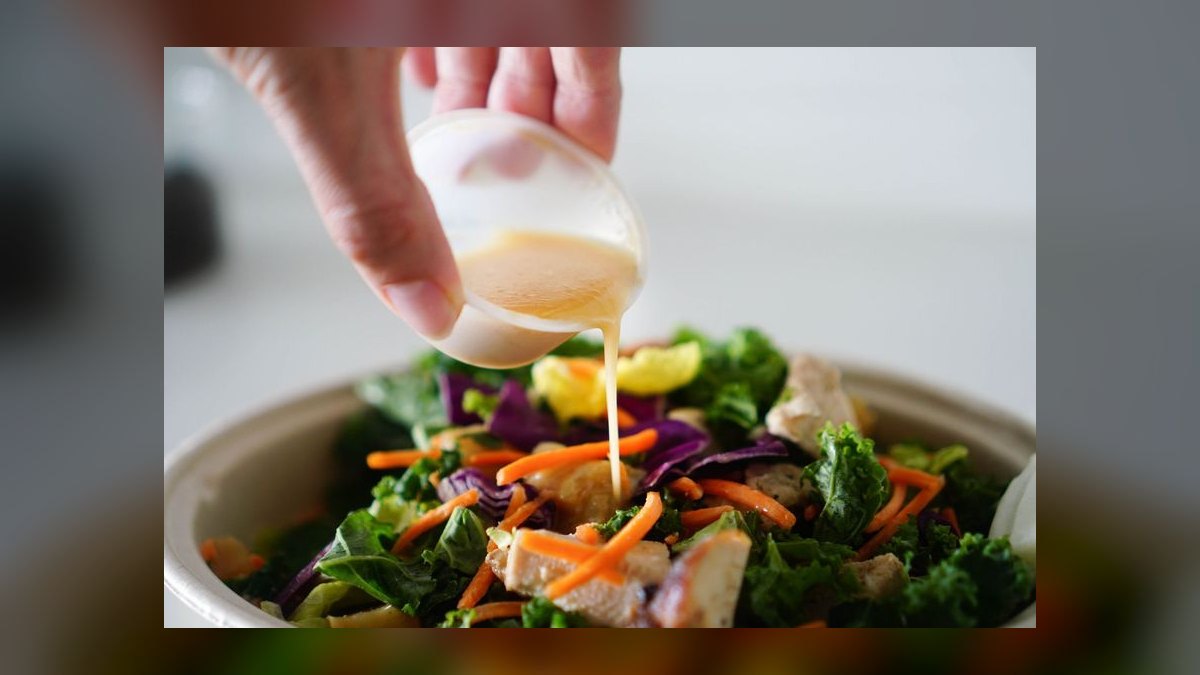
Days 91 through roughly 220 are build-out, permitting, and hiring — assume this takes longer than projected, because it always does. Hire your general manager and kitchen lead early enough that they participate in the build and understand the equipment. Open soft before you open loud: run 7 to 14 days at limited capacity to find the throughput bottlenecks in the bowl line before a grand-opening rush exposes them publicly to a hundred first-time guests who will each leave a review.
From open onward the job is two numbers, weekly. Food cost and labor, tracked against par and against schedule, every single week. Beyond that, spend your marketing energy where the wellness consumer already is: gym partnerships, corporate lunch catering into nearby office parks, hospital-campus programs, and a first-party loyalty offer aggressive enough to pull orders off the third-party marketplaces. Catering is the most underused margin lever in this segment — it arrives in large tickets, at predictable times, with no delivery commission.
Related questions
How does CoreLife compare to Cava or Sweetgreen as a franchise opportunity?
It mostly does not compete for franchisees, because Cava and Sweetgreen are largely corporate-operated and do not franchise broadly in the US. They compete for your customer, not your capital. CoreLife is the franchisable option in the health-bowl category, which is both its opening and its burden.
Can I finance a CoreLife Eatery with an SBA loan?
Restaurant franchises on the SBA Franchise Directory are commonly financed through 7(a) loans, typically requiring 10%–30% equity injection and a personal guarantee. Verify current directory status and lender appetite before assuming eligibility; terms and lender restaurant policies shift year to year.
Is a multi-unit or area development deal better than a single store?
Usually yes, if you can fund it. Multi-unit operators amortize management, purchasing, and marketing across locations, which is what makes a hired GM affordable. Single-unit owners are effectively buying a demanding job. Do not commit to a development schedule until unit one proves out.
What happens if I want to convert an existing restaurant space?
Second-generation restaurant space can cut build-out meaningfully because plumbing, grease interceptor, hood, and utility capacity already exist. The savings are real but variable — verify hood CFM, electrical service, and walk-in capacity match the CoreLife prototype before assuming a discount.
Does the health-eating trend survive changing consumer habits?
Better-for-you eating has grown steadily for over a decade and shows no reversal. The GLP-1 era arguably reinforces it: smaller portions and protein-forward, nutrient-dense meals fit the bowl format well. The risk is not the category — it is which brand owns the occasion locally.
FAQ
What is the total investment range to open a CoreLife Eatery franchise?
The current FDD shows an Item 7 estimated investment range of roughly $700,000 to $1,500,000, covering build-out, equipment, signage, opening inventory, grand-opening marketing, training, and initial working capital. Actual cost depends heavily on footprint, market, and whether you take second-generation restaurant space or a raw shell.
How much can an owner realistically earn annually?
Mature units typically gross $900,000 to $1,800,000, with owner earnings of $90,000 to $250,000 after all expenses. That upper figure assumes an owner-operator working in the business. Replace yourself with a salaried general manager and expect roughly $65,000 less, before any debt service on the build.
What are the ongoing fees?
Royalty runs near 5% of gross sales, with a brand marketing contribution near 2%, plus the one-time franchise fee around $30,000. That combined 7% is standard for the fast-casual segment. Budget separately for local marketing, third-party delivery commissions, and technology or POS fees, which are not included in the royalty.
How does CoreLife differ from competitors like Sweetgreen or Cava?
CoreLife builds customizable bowls around greens, grains, bone broth, and clean proteins, with a "food as wellness" positioning. Sweetgreen anchors on salads and Cava on Mediterranean. The broth-based options and broader protein selection give CoreLife a distinct position, though consumers frequently treat all three as one occasion.
What is the single biggest risk for a new franchisee?
Trade-area mismatch, followed closely by fresh-produce COGS drift. A store in a value-driven market never reaches the ticket the model requires, and no operational fix compensates. Food cost creeping from 31% to 36% quietly removes about a fifth of owner earnings, and it is usually caught a quarter too late.
How long until the restaurant is cash-flow positive?
Most fast-casual openings reach cash-flow positive 4 to 9 months after opening, with steady-state volume around month 14 to 18. Full capital recovery typically takes 3 to 5 years depending on financing structure. Carry a $50,000–$100,000 reserve to cover the first winter without touching personal funds.
Sources
- https://www.sba.gov/funding-programs/loans/7a-loans
- https://www.ftc.gov/business-guidance/resources/consumers-guide-buying-franchise
- https://www.franchise.org/
- https://www.entrepreneur.com/franchises
- https://www.restaurantbusinessonline.com/
- https://www.nrn.com/
- https://www.ibisworld.com/united-states/industry/fast-casual-restaurants/4319/
- https://www.servsafe.com/
- https://www.census.gov/programs-surveys/acs
- https://www.bls.gov/oes/current/oes_nat.htm
Related on PULSE
This page will be disappearing soon. Save it to your device for $1 — or read it free while it is here.
@Kory-White- · if Venmo asks, the last 4 of my number are 2012
This page is gone.
This one is off the shelf now. $1 keeps it on your phone for good — the whole page, pictures and diagrams included.
 franchiseShould I open or buy a Roto-Rooter franchise in 2027?
 franchiseShould I open or buy a Great American Cookies franchise in 2027?
 franchiseShould I open or buy a Bibibop Asian Grill franchise in 2027?
 franchiseShould I open or buy a Sunright Tea Studio franchise in 2027?
 franchiseShould I open or buy a Maui Wowi franchise in 2027?
 franchiseShould I open a HVAC repair business in 2027?
 franchiseShould I open or buy a Huey Magoo's franchise in 2027?
 franchiseShould I open or buy a Salata Salad Kitchen franchise in 2027?
 franchiseShould I open or buy a Burn Boot Camp (re-do) franchise in 2027?
 franchiseWhat are the exact steps to open a franchise location, from signing the agreement to opening day in 2027?