


Should I open or buy a LearningRx franchise in 2027?
Quality
Certified
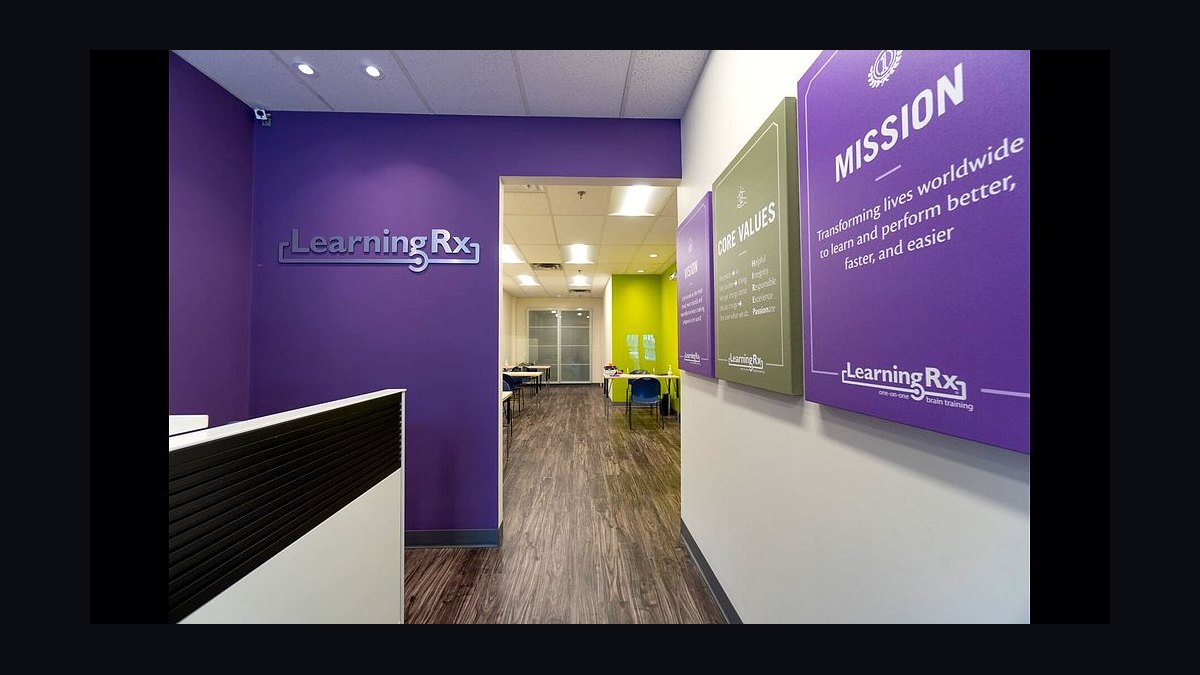
Yes, cautiously — open or buy a LearningRx franchise in 2027 if you are a mission-driven operator with $130,000-$300,000 in capital who will market cognitive-skills training honestly and work the assessment-to-enrollment pipeline hard. The one-on-one brain-training model, differentiated from group tutoring, offers moderate capital requirements and recurring multi-month program revenue, but the brand's history of FTC scrutiny over efficacy claims means integrity in advertising is non-negotiable, not optional.
The outcome you should expect
A LearningRx center that opens in 2027 will not behave like a typical retail franchise in its first eighteen months. The realistic trajectory is slow ramp, not instant cash flow. You lease 1,200 to 3,000 square feet, hire three to five trainers, and spend the first two to three months almost entirely on local awareness building and running initial cognitive assessments before a single long-term program is sold. Most franchisees underestimate how much runway this requires: industry benchmarks for similar one-on-one service franchises put breakeven at 12 to 24 months, and many centers burn an additional $40,000 to $80,000 beyond the initial investment before cash flow turns positive. If you go in expecting a six-month ramp, you will likely panic and either underinvest in marketing or discount programs in a way that undercuts the brand's positioning.
Once a center matures — typically defined as having a stable base of repeat and referral clients, two to four years in — the revenue outcome is genuinely attractive relative to the capital required. Mature LearningRx centers report gross revenues between $350,000 and $900,000 annually. Owner take-home, after royalties, trainer payroll, rent, and marketing spend, lands between $60,000 and $200,000, with the top end reserved for centers generating $700,000 or more in gross revenue. That is a wide range, and where you land inside it is determined almost entirely by two levers: how many of your trainer-hours are actually billable each week, and what percentage of initial assessments you convert into multi-month enrollments. A center with high trainer utilization and a 40%-60% assessment-to-enrollment conversion rate sits at the top of the range. A center with idle trainer hours and a conversion rate under 20% will struggle to clear $75,000 in owner income even on a half-million-dollar gross.
The outcome also depends heavily on what kind of community you open in. LearningRx is not a business that performs evenly across geographies. It needs a population of families who are aware of learning differences — ADHD, dyslexia, processing-speed deficits — and who have the discretionary income to pay for a multi-month program almost entirely out of pocket, since insurance virtually never reimburses cognitive-skills training. In an affluent suburban market with strong school-district awareness of learning accommodations, the outcome you should expect is a viable, moderately profitable small business. In a market without that income floor or that awareness, the realistic outcome is a center that never gets past break-even, regardless of how well it is run operationally.
What drives that outcome (mermaid)
Three variables drive everything else in this model, and they compound rather than operate independently. The first is market fit: a territory with at least 50,000 households and median income above $90,000, with meaningful competition density from Sylvan, Huntington, Kumon, or speech-therapy clinics already present (proof of demand) but not saturated, sets the ceiling on how many assessments you can generate. The second is conversion — turning a $200-$500 initial cognitive assessment into a $3,000-$15,000 program enrollment. This is a sales skill as much as an educational one, and it is the single biggest differentiator between centers that clear $150,000 in owner income and centers that limp along near break-even. The third is trainer utilization: a fully staffed four-trainer center handling 25-35 one-on-one sessions per trainer per week at $55-$85 per session generates roughly $5,500-$11,900 in weekly training revenue, or $286,000-$618,800 annually from training alone, before assessment fees and program-package revenue are layered on top. If trainers sit at 50% utilization because enrollment hasn't caught up with staffing, that revenue figure collapses proportionally, while trainer salaries ($35,000-$55,000 per full-time trainer) keep accruing regardless.
Royalty and marketing-fee structure compress the margin at the top of this funnel further. With a royalty near 8%-12% (royalty plus system fees combined) and a marketing fee around 2%-3% of gross, a mature center typically operates at a 15%-25% margin on gross revenue before owner salary. That means the path to the $200,000 owner-income headline requires consistent gross revenue above $700,000 — not the midpoint of the $350K-$900K range, but the top quartile of it. Anyone evaluating this franchise in 2027 should model their own center against the top of the trainer-utilization and conversion-rate levers, not the average, because the average outcome and the attractive outcome are two different numbers.
Benchmarks and realistic ranges
The 2026 FDD lists a franchise fee of $25,000-$35,000 and a total Item 7 investment of roughly $130,000-$300,000. Breaking that down by category gives a clearer picture of where the money actually goes: buildout and leasehold improvements run $40,000-$110,000 depending on the condition of the space and regional construction costs; equipment and program materials (assessment tools, cognitive-training software licenses, trainer workstations) run $15,000-$45,000; signage and brand-prescribed decor run $8,000-$25,000; initial enrollment-driving marketing runs $20,000-$55,000; trainer and director training (including travel to brand headquarters) runs $10,000-$30,000; insurance and professional licensing run $4,000-$12,000; and working capital to cover the first four to six months of operating losses runs $30,000-$90,000. Layer in legal and accounting fees of $3,000-$8,000 that the FDD's Item 7 table doesn't always itemize clearly, and the realistic cash-in-hand figure before opening day is $160,000-$280,000, with $60,000-$100,000 of that needing to be liquid rather than financed.

On the revenue side, per-session pricing to the client runs $55-$85 per hour, assessment fees run $200-$500 per initial evaluation, and full multi-month program packages run $3,000-$15,000 depending on duration and severity of the cognitive-skills gap being addressed. Client retention benchmarks matter here: a single program typically retains a client for four to eight months, while clients who move into a second or third program retain for twelve to eighteen months. Franchisees report losing 30%-50% of prospective clients after the initial assessment purely on cost — this is the single most common point of attrition in the entire funnel, and it is why evaluating local affordability before signing is more important than evaluating brand strength.
Staffing benchmarks are equally concrete: expect 20%-40% annual trainer turnover in a tight labor market, since certified trainers (commonly requiring a bachelor's degree in education, psychology, or a related field) willing to work for $35,000-$55,000 are not abundant in every metro. Owner time commitment benchmarks average 45-60 hours per week, including evening parent consultations — this is not a semi-absentee model in its early years, whatever the marketing materials imply. Resale valuations, for those considering buying an existing center rather than opening new, run 0.5-0.8x trailing gross revenue, meaning a $500,000-gross center typically transacts for $250,000-$400,000 — a path that trades startup risk for inherited staff and client relationships, which can cut both ways depending on center health.
Risks, edge cases, and failure modes

The single largest risk specific to LearningRx, and the reason this franchise demands more scrutiny than a typical education concept, is regulatory and reputational exposure around outcomes claims. The brain-training category broadly has drawn FTC attention — Lumosity's 2016 settlement over unsupported cognitive-improvement claims is the widely cited precedent — and LearningRx itself faced a 2020 class-action lawsuit alleging deceptive marketing about "curing" learning disabilities. The company has since adjusted its public language, but any franchisee inheriting this brand in 2027 inherits that history along with it. The practical failure mode here is a well-intentioned local owner who, trying to drive enrollment in a competitive market, repeats an efficacy or earnings claim that crosses the line from "supports cognitive development" into "fixes" or "cures" — triggering local advertising-compliance risk even if the national brand's current materials are clean. Every local ad, social post, and parent-consultation script should go through a conservative compliance filter, ideally with legal review, rather than trusting that brand-provided templates are automatically safe in every state.
A second failure mode is misjudging local market affordability. Because program packages run $3,000-$15,000 and are almost never insurance-reimbursed, a center opened in a market where median household income sits below roughly $90,000, or where awareness of learning-difference interventions is low, will generate assessment volume that never converts — prospective clients walk in curious, get priced out, and leave. This shows up in the data as the 30%-50% post-assessment attrition rate mentioned above, but in a mismatched market that number climbs toward the high end and stays there regardless of sales-process improvements, because the problem is affordability, not persuasion.
A third failure mode is understating Item 19 scrutiny. Franchisors sometimes present financial performance representations using data skewed toward company-owned or top-quartile centers rather than the full franchisee system median. A prospective owner who models their business off the headline $350K-$900K gross range without asking specifically for median (not average) performance across all franchisees, and without discounting for their own market's income and competition profile, risks overcapitalizing against a number they will not actually hit. If the franchisor is reluctant to share median performance data, that reluctance is itself the signal to walk away or at minimum underwrite your model conservatively.

Finally, trainer-dependency risk compounds quickly in this model because the product literally cannot be delivered without a trained human sitting across from the client. A center that loses two trainers simultaneously — plausible given 20%-40% annual turnover — can lose the ability to service existing enrolled clients, triggering refund demands and reputational damage in a small local market where word-of-mouth is the primary growth channel. Building a trainer bench and cross-training a director to cover session gaps is not optional risk management here; it is core to keeping the business solvent through ordinary staffing churn.
A practical rollout plan (mermaid)
The first twenty days should be spent reading the 2026 FDD in full — not summarized — with particular attention to Item 19's financial performance representations, Item 20's franchisee turnover and litigation history, and any FTC correspondence or consent language the franchisor discloses. This is also the window to have a franchise attorney review the agreement's territory-protection and termination clauses, since those determine how exposed you are if a competing center opens nearby or if the brand's compliance posture shifts mid-term.
Days twenty-one through forty-five should go to interviewing five to seven current owners selected independently, not solely from the franchisor's referral list. The questions that actually surface risk are specific: what percentage of clients pay entirely out of pocket versus using any form of reimbursement; what share of prospects are lost after the initial assessment purely on price; what the average client retention looks like in months per program; and how many hours per week the owner personally works, including evening parent consultations. Vague or evasive answers to any of these four questions are a stronger signal than anything in the FDD itself.

Days forty-six through sixty-five are for validating local demand using census household-income data and school-district special-education statistics — a district reporting 10% or more of students on Individualized Education Programs indicates a baseline of unmet need worth building against. Cross-reference this against existing competitor density (Sylvan, Huntington, Kumon, independent tutoring, speech-language clinics) to confirm the market can support another paid cognitive-services option rather than simply redistributing existing demand.
Days sixty-six through ninety cover lease execution, buildout, equipment installation, and the franchisor's trainer and director training program. Use this window to also pre-recruit trainer candidates, since the 20%-40% annual turnover benchmark means you want a hiring pipeline started before opening day, not after the first resignation. Days ninety-one through one hundred fifteen are the opening push: running assessments, converting them to enrollments at or above the 40% benchmark, and resisting the temptation to discount programs to force early conversion, which undercuts the pricing integrity the brand depends on long-term. From day one hundred fifteen onward, the operating discipline that separates a top-quartile center from a struggling one is simple to state and hard to sustain: track trainer utilization weekly, track assessment-to-enrollment conversion weekly, and route every piece of local marketing copy through a compliance-conscious review before it goes out.
Related questions
How long does it take a LearningRx center to break even?
Most franchisees reach break-even in 12 to 24 months, with many burning an additional $40,000-$80,000 beyond the initial investment during ramp-up. Faster breakeven correlates directly with early trainer utilization and assessment conversion rates.
Is insurance reimbursement available for LearningRx programs?

Rarely. The overwhelming majority of clients pay 100% out of pocket for assessments and multi-month programs, which is why local household income and discretionary spending capacity matter more than insurance-network considerations when picking a territory.
How does buying an existing LearningRx center compare to opening new?
Resales typically transact at 0.5-0.8x trailing gross revenue, so a $500,000-gross center might sell for $250,000-$400,000. You inherit trained staff and an existing client base, which reduces ramp time, but you also inherit whatever operational or reputational issues the prior owner leaves behind.
What alternatives exist if LearningRx doesn't fit my market?
Brain Balance offers a drug-free cognitive-development alternative; Sylvan Learning, Huntington, and Tutoring Club serve the broader academic-tutoring space; Kumon and Mathnasium cover supplemental math and reading; and licensing standalone cognitive-training software like Cogmed or BrainHQ lets you run an independent center without royalty obligations, at the cost of brand recognition.
FAQ
What is the total investment to open a LearningRx franchise? The total investment typically ranges from $130,000 to $300,000, including a franchise fee of $25,000 to $35,000. This covers buildout, equipment, signage, initial marketing, training, and working capital, but the realistic cash-in-hand figure before opening, once legal and accounting fees are included, runs closer to $160,000-$280,000.
How much can I expect to earn as a LearningRx franchise owner?

Mature centers generally report gross revenues between $350,000 and $900,000 annually, with owner earnings in the $60,000 to $200,000 range. Hitting the top of that range requires gross revenue consistently above $700,000, which in turn depends on trainer utilization and a 40%-60% assessment-to-enrollment conversion rate.
What are the biggest risks with this franchise? The most distinctive risk is regulatory and reputational scrutiny over cognitive-training outcomes claims, given the brand's history with FTC attention and a 2020 class-action lawsuit over "curing" language. Beyond that, program cost limiting the addressable market, and 20%-40% annual trainer turnover, are the next-largest operational risks.
How long does it take to break even? Most franchisees reach break-even within 12 to 24 months. The moderate investment size helps relative to larger-footprint franchise concepts, but building a steady client base through assessment-to-enrollment conversion takes sustained local marketing effort over that full window.
What kind of support does LearningRx provide? Franchisees receive initial trainer and director training, ongoing operational support, marketing materials, and access to the brand's proprietary cognitive-training curriculum. The level of hands-on support after launch varies by franchisee report, and some owners describe needing to be proactive in requesting help rather than having it pushed to them.
Is the brain-training market growing enough to justify opening in 2027? The cognitive-training and learning-support market continues to expand alongside rising awareness of ADHD and learning differences, but growth is gradual rather than explosive, and competition from online programs and local tutoring alternatives means a new center still needs strong, compliance-conscious local marketing to capture its share of demand.
Sources
- https://www.ftc.gov/business-guidance/resources/franchise-rule-compliance-guide
- https://www.ftc.gov/news-events/news/press-releases/2016/01/lumosity-pay-2-million-settle-ftc-deceptive-advertising-charges
- https://www.entrepreneur.com/franchises/directory
- https://www.franchisebusinessreview.com
- https://www.ibisworld.com
- https://www.statista.com
- https://www.franchise.org
- https://www.cdc.gov/ncbddd/adhd/data.html
- https://www.learningrx.com
- https://www.sba.gov/business-guide/plan-your-business/franchise-business
Related on PULSE
This page will be disappearing soon. Save it to your device for $1 — or read it free while it is here.
@Kory-White- · if Venmo asks, the last 4 of my number are 2012
This page is gone.
This one is off the shelf now. $1 keeps it on your phone for good — the whole page, pictures and diagrams included.
 franchiseShould I open or buy a Stanley Steemer franchise in 2027?
 franchiseShould I open or buy a Take 5 Oil Change franchise in 2027?
 franchiseShould I open or buy a Massage Envy franchise in 2027?
 franchiseShould I open or buy a Pizza Hut franchise in 2027?
 franchiseShould I open or buy a Goddard School franchise in 2027?
 franchiseShould I open or buy a Dairy Queen franchise in 2027?
 franchiseShould I open or buy a Rita's Italian Ice franchise in 2027?
 franchiseShould I open or buy a Roto-Rooter franchise in 2027?
 franchiseShould I open or buy an F45 Training franchise in 2027?
 franchiseShould I open or buy a Whataburger franchise in 2027?