
SBA 504 vs Conventional Loan: How Do I Pay Less to Buy My Building?
 Curated byKory White · Fractional CRO · Maryland
 PULSEKNOWLEDGE LIBRARY
Quality
Certified

If you occupy at least 51% of the building, an SBA 504 loan usually costs less cash to close: roughly 10% down versus 25%–35% conventional. On a $2,000,000 purchase that is $200,000 instead of $500,000–$700,000, plus a fixed 25-year second lien with no balloon. Conventional wins on speed, flexibility, and short holds.
The two doors: what you are actually choosing between
Most owner-operators think they are shopping for a rate. They are not. They are choosing between two completely different capital structures, and the rate is the smallest variable in the comparison. Understanding the mechanics of each structure is what lets you argue with a lender instead of nodding along.
The SBA 504 is a three-part stack, not a loan. When a banker says "we'll do a 504," what they mean is that three sources of money are showing up at your closing table:
- The bank's first lien — 50% of the project cost. This is the bank's own money, at a conventional commercial rate, in first position. It typically amortizes over 20–25 years with a 7–10 year balloon or a rate reset. This is where the bank earns its spread and where every negotiable term lives.
- The CDC/SBA second lien — 40% of the project cost. A Certified Development Company originates it, the SBA guarantees it, and it funds through a debenture sold into the bond market. It is a genuinely fixed rate for the full 20 or 25 years. It does not balloon. It does not reset. This is the piece you cannot get anywhere else.
- Your injection — 10%. Cash, or in some cases equity in land you already own that becomes part of the project.
The conventional commercial mortgage is one loan from one lender. The bank funds the whole thing, holds the whole risk, and prices accordingly: 25%–35% down, a rate that is fixed for 5–10 years and then repriced or ballooned, and amortization usually stretched to 20–25 years to keep the payment tolerable. One set of documents, one closing, one relationship.

The structural differences that actually change your outcome:
Occupancy requirement. The 504 requires that your operating company occupy at least 51% of an existing building, or 60% of new construction (rising to 80% within ten years). Conventional financing has no such rule — you can buy a building, occupy a corner of it, and lease the rest to whoever you like. This single rule decides eligibility for a large share of buyers before any math happens.
Balloon risk. The 504's CDC portion is the only long-term fixed-rate commercial real estate debt readily available to a small business. Conventional CRE loans balloon. A balloon is not a theoretical risk; it is a scheduled event where you must refinance at whatever rates and whatever appraised value exist on that date. Owners who bought in a low-rate window and hit a balloon in a high-rate window discovered that they had bought a building and rented the interest rate.
Collateral reach. The 504 is secured primarily by the project real estate. Conventional lenders frequently want more — a blanket lien on business assets, additional real estate as abundant caution, or cross-collateralization with your other borrowing. Read the security agreement, not the term sheet.

Personal guarantees. Both structures require them from owners of 20% or more. Neither is a shield. Anyone telling you an SBA loan protects your personal balance sheet is selling something.
Prepayment. The 504 debenture carries a declining prepayment penalty over roughly the first half of the term — steepest in year one, stepping down annually to zero. Conventional loans vary wildly: some have step-downs, some have yield maintenance, some have nothing after an initial lockout. This term matters enormously if you might sell.
How to decide which structure fits your situation
The decision is not "which is better." It is a sequence of disqualifying questions followed by a cash-versus-hold-period calculation. Run them in this order, because each one can end the analysis.
Question one: will you occupy 51% or more? If no, the 504 is off the table. Not "harder" — off the table. Stop reading the 504 material and go negotiate a conventional deal or an investment-property loan.

Question two: is the property eligible? The 504 finances owner-occupied real estate, new construction, major renovation, and long-life equipment. It does not finance speculative development, rental property held purely for investment, or the purchase of a business's goodwill on its own (that is 7(a) territory). Special-use properties — hotels, restaurants, gas stations, car washes, bowling centers, self-storage — are eligible but carry a higher injection requirement.
Question three: what is your actual injection tier? Standard is 10%. Add 5% if your business has operated under two years. Add 5% if the property is special-use. Both conditions together means 20%. Lenders sometimes quote the higher tier by default and never mention that you might qualify for the lower one. Ask which tier they applied and why, in writing.
Question four: how long will you hold? This is the hinge. Under five to seven years, the 504's prepayment structure and its full fee load work against you; the conventional loan's flexibility and absence of SBA fees tend to win. Ten years or longer, the 504's fixed second lien and preserved cash compound in your favor.
Question five: what does the retained cash earn inside your business? If keeping $300,000–$500,000 lets you hire two producers, fund a buildout, or carry six months of payroll through a slow stretch, the higher blended payment is trivially worth it. If that cash would sit in a money market, the calculation is much closer.

Question six: how fast must you close? A 504 realistically runs 45–90 days from complete application to funding, and the CDC portion funds via a monthly debenture sale after the bank's interim closing. Conventional deals close in 30–45 days with a clean file. If your purchase contract has a hard 45-day close and a motivated backup buyer, do not bet the earnest money on SBA timing.
A note on the "conventional now, 504 later" path in that diagram: the SBA does permit 504 refinancing of existing qualified debt under defined conditions, including in some cases with cash-out for eligible business expenses. It is a real option when you had to close fast, but it is a separate program with its own eligibility tests — treat it as a plan B you verify with a CDC in advance, not a certainty you assume.
The concrete numbers on a $2,000,000 building
Numbers make the abstraction real. Use a $2,000,000 owner-occupied building, a business that has operated more than two years, and a non-special-use property, so the standard 10% injection applies. Rates below are illustrative ranges you should replace with live quotes — the structure of the comparison is the durable part, not the specific basis points.
Cash to close, SBA 504:

- Injection at 10%: $200,000
- Commercial appraisal: $3,000–$8,000
- Environmental Phase I: $2,500–$5,000 (a Phase II, if triggered, runs far higher)
- Title insurance and escrow at roughly 0.5%–1.0%: $10,000–$20,000
- Legal, recording, and survey: $2,000–$5,000
- CDC processing and closing costs: financed into the debenture rather than paid in cash, but they increase the balance you amortize
- Realistic total cash needed: roughly $220,000–$240,000, or 11%–12% of price
Cash to close, conventional at 30% down:
- Down payment: $600,000
- Appraisal, environmental, title, legal: broadly similar third-party costs, $17,500–$38,000
- Origination points at 0.5%–1.0% of a $1,400,000 loan: $7,000–$14,000
- Realistic total cash needed: roughly $625,000–$650,000
The gap at the closing table is roughly $400,000. That is the single largest number in this entire comparison, and it dwarfs any rate difference.
Monthly debt service, SBA 504:
- Bank first lien: $1,000,000, 25-year amortization. At 7.5%, roughly $7,390/month.
- CDC second lien: $800,000, 25-year fixed. At 6.5%, roughly $5,400/month.
- Blended: roughly $12,800/month.
Monthly debt service, conventional:
- $1,400,000, 25-year amortization, 6.5%: roughly $9,450/month.
The monthly gap is roughly $3,350 in the conventional deal's favor — about $40,000 per year, or $200,000 over five years. That is not a small number, and it is why the "504 is always cheaper" claim is wrong. The honest framing: the 504 trades roughly $400,000 of cash today for roughly $40,000 per year of additional debt service. That is an implied cost of capital in the neighborhood of 10% on the money you kept.

So the question becomes a return question. If $400,000 deployed into your business — inventory, a second location, a sales hire, equipment that lifts throughput — returns more than about 10% annually, the 504 is the correct call. For most operating businesses with a real growth constraint, it does, comfortably. For a mature business with idle cash and no deployment path, it does not.
Fee load, and where the padding hides. SBA-side fees on the 504 are set by program and financed into the debenture: a CDC processing fee, an SBA guarantee fee on the debenture, a funding fee, and an ongoing servicing fee built into the effective rate. Together these are commonly summarized as adding roughly two to three percent to the CDC portion, financed rather than paid at the table. They are not negotiable, and any lender who claims to be discounting them is confused or lying.
The bank's first lien is where negotiation lives, and where padding shows up:
- Origination points. Half a point to one point is normal on a 50% LTV first lien with an SBA second behind it. Quotes at 1.5%–2% deserve a direct challenge — the bank's real exposure here is half the building's value with a government-backed junior lien absorbing losses first.
- Stacked administrative fees. "Document preparation," "underwriting," and "processing" charged in addition to points is often the same work billed twice. Ask for a single written fee schedule and strike the duplicates.
- Rate compensation. Some banks quote a higher first-lien rate specifically because they know the blended payment still looks attractive against the cheap CDC piece. Price the first lien on its own merits as a low-LTV, well-secured commercial loan.
- Double-billed third-party reports. The bank and the CDC both need the appraisal and the environmental. One report, one bill, shared. Confirm this before ordering.
Debt service coverage. Both structures underwrite to a coverage ratio, commonly 1.20x–1.25x on the global cash flow including your personal obligations. Before you shop, compute it yourself: EBITDA plus rent you currently pay, minus owner distributions you actually need, divided by proposed annual debt service. If that number is under 1.20, no amount of negotiating fixes the deal — you need a smaller building or a larger injection.
Credit and equity floors. Expect a 680+ personal credit profile for clean 504 terms, with some flexibility into the mid-600s where cash flow and collateral are strong. Conventional lenders typically want 700+ and are less forgiving on thin equity. Neither program lends on a story.
Sequencing the deal so nothing kills it at the table
Structure is decided early; cost is decided by sequence. Most of the money lost on these transactions is lost by doing things in the wrong order — ordering reports twice, letting a contract contingency expire, or discovering an occupancy problem after the appraisal is paid for.
Weeks minus-four to zero: prepare before you shop. Assemble three years of business tax returns, three years of personal returns, interim financials with a current balance sheet, a personal financial statement for every owner at 20% or more, a debt schedule, and a one-page use-of-space plan showing exactly how you clear 51% occupancy. Lenders quote better terms to files that arrive complete, because a complete file signals a borrower who will not disappear during underwriting.

Week one: talk to a CDC before you talk to a bank. This inverts what most buyers do, and it is the single highest-leverage move in the process. CDCs work with many participating banks and will circulate your first lien to several of them. That turns the bank into the party competing for the deal rather than the party setting the terms. Ask the CDC directly: which banks do you place first liens with, and will you take this to three of them?
Week one to two: get the contract right. Negotiate a due diligence period of at least 45 days and a closing window of 75–90 days if you are pursuing a 504, with an extension option tied to lender timing. Make the purchase contingent on financing and on a satisfactory environmental report. A seller who refuses any financing contingency is telling you the deal will be priced in your favor or not at all.
Week two to three: order reports once, correctly. Confirm in writing that both the bank and the CDC will accept a single appraisal engaged by the bank, and a single Phase I environmental. Get the engagement letters. If the Phase I flags a recognized environmental condition — old dry cleaner, former fuel storage, a neighboring industrial parcel — expect a Phase II, expect delay, and expect the SBA path to become slower or, if contamination is confirmed, impossible.
Week three to six: underwriting in parallel. The bank underwrites its first lien while the CDC prepares the SBA authorization package. These run concurrently. Answer every document request within 24 hours; a stale request is the most common cause of a deal slipping a debenture cycle.
Week six to nine: interim closing, then debenture funding. In a typical 504, the bank funds an interim second along with its first lien at closing, and the CDC takes out that interim when the debenture sells in the next monthly pool. You own the building at the interim closing. Confirm the interim rate and how long you carry it — a longer carry at a higher interim rate is a real cost that rarely appears on any comparison sheet.
The five questions to make every lender answer in writing. Verbal answers are worthless once documents are drawn.
- *What is my exact injection percentage — 10, 15, or 20 — and which rule drives it?* Pin the startup and special-use classifications explicitly.
- *What is the all-in first-lien rate, and what is the complete fee schedule, line by line?* Compare quotes on total cost, never on headline rate.
- *Is the first lien fixed or floating, and when does it balloon or reset?* A five-year reset on the first lien reintroduces exactly the risk you took the 504 to avoid.
- *What is the prepayment penalty schedule on both liens, year by year?* Model the cost of selling in years three, five, and seven before you sign.
- *Which CDC are you using, and will they shop my first lien?* A bank that resists this is protecting its margin, not your interest.
One discipline that outlives the closing. Track the loan the way any RevOps operator tracks a pipeline metric — a simple monthly record of balance, rate, reset date, coverage ratio, and prepayment penalty remaining. Owners get hurt by balloons and resets they forgot were coming. A calendar reminder eighteen months before any reset date turns a scramble into a negotiation, and that habit is worth more than the quarter point everyone argues about at origination.
Related questions
Can I use an SBA 504 loan to refinance a building I already own?
Yes, under the SBA's 504 debt refinancing provisions, if the existing debt was substantially used for eligible fixed-asset purposes and the occupancy test is met. Cash-out for eligible business operating expenses is permitted in some cases. Confirm current eligibility with a CDC before assuming it.
What happens if I stop occupying 51% of the building?
Occupancy is an ongoing covenant, not a one-time test. Falling below the threshold can trigger a default under the loan documents. If your space needs shrink, talk to your CDC and lender before subleasing — a negotiated amendment beats a discovered violation.
Is SBA 7(a) or 504 better for buying real estate?
For pure owner-occupied real estate purchase, 504 is generally the better fit: longer fixed second lien, lower injection, no balloon on the CDC piece. The 7(a) is more flexible for mixed uses — business acquisition, working capital, equipment, and real estate combined in one loan.
Do I still need a personal guarantee on an SBA 504?
Yes. Owners of 20% or more personally guarantee the loan, and lenders often take a lien on additional collateral where equity in the project is thin. The SBA guarantee protects the lender, not the borrower.
Can I buy through an entity and lease to my operating company?
Yes, and it is the standard structure. An eligible passive company holds title and leases the property to the operating company under a lease that matches the loan term. Both entities are co-borrowers or guarantors. Have counsel draft the lease before closing.
FAQ
What is the minimum down payment on an SBA 504 loan?
Ten percent for an established business buying a standard-use property. Fifteen percent if the business has operated less than two years or the property is special-use, such as a hotel, restaurant, or car wash. Twenty percent if both conditions apply. Confirm which tier your lender applied and why.
Do I have to occupy the entire building?
No. You must occupy at least 51% of an existing building, or 60% of newly constructed space with a plan to reach 80% within ten years. The remaining space can be leased to tenants, and that rental income can help carry the debt service.
Which loan actually has the lower interest rate?
The CDC portion of a 504 is typically below prevailing conventional commercial rates because it funds through a government-guaranteed debenture. But you carry two loans, so compare blended rates and total payments, not the headline on the cheapest piece. A conventional loan at a competitive rate on a smaller balance can produce a lower monthly payment.
How much should I budget for closing costs beyond the down payment?
Plan on 1%–2% of the purchase price in out-of-pocket third-party costs — appraisal, environmental, title, legal, recording. SBA program fees on the CDC portion are financed into the debenture rather than paid at the table, so they raise your balance instead of your cash requirement.
How long does each loan take to close?
An SBA 504 realistically runs 45–90 days from complete application to debenture funding, since the CDC piece funds through a monthly pool after an interim closing. A conventional loan can close in 30–45 days with a clean file. If your contract has a hard short deadline, price that risk before choosing the SBA path.
Can I sell the building before the loan is paid off?
Yes, but model the prepayment penalty first. The 504 debenture carries a declining penalty over roughly the first half of its term, steepest in the early years. Conventional prepayment terms vary from nothing after an initial lockout to full yield maintenance — read the note before you assume you can exit cheaply.
Sources
- https://www.sba.gov/funding-programs/loans/504-loans
- https://www.sba.gov/document/sop-50-10-lender-development-company-loan-programs
- https://www.nadco.org/
- https://www.federalreserve.gov/data/sloos.htm
- https://www.fdic.gov/analysis/quarterly-banking-profile
- https://www.epa.gov/brownfields/all-appropriate-inquiries
- https://www.astm.org/e1527-21.html
- https://www.cbre.com/insights
- https://www.jll.com/en-us/insights
Related on PULSE
This page will be disappearing soon. Save it to your device for $1 — or read it free while it is here.
@Kory-White- · if Venmo asks, the last 4 of my number are 2012
This page is gone.
This one is off the shelf now. $1 keeps it on your phone for good — the whole page, pictures and diagrams included.
 pulse-qHow Many Sales Reps Do I Need to Hire for My Promotional Products Company in 2026?
 pulse-qHow Many Employees Should I Schedule Each Shift at My Hot Pot Restaurant in 2026?
 pulse-qHow Do I Tie Commission to More Than One Product in 2026?
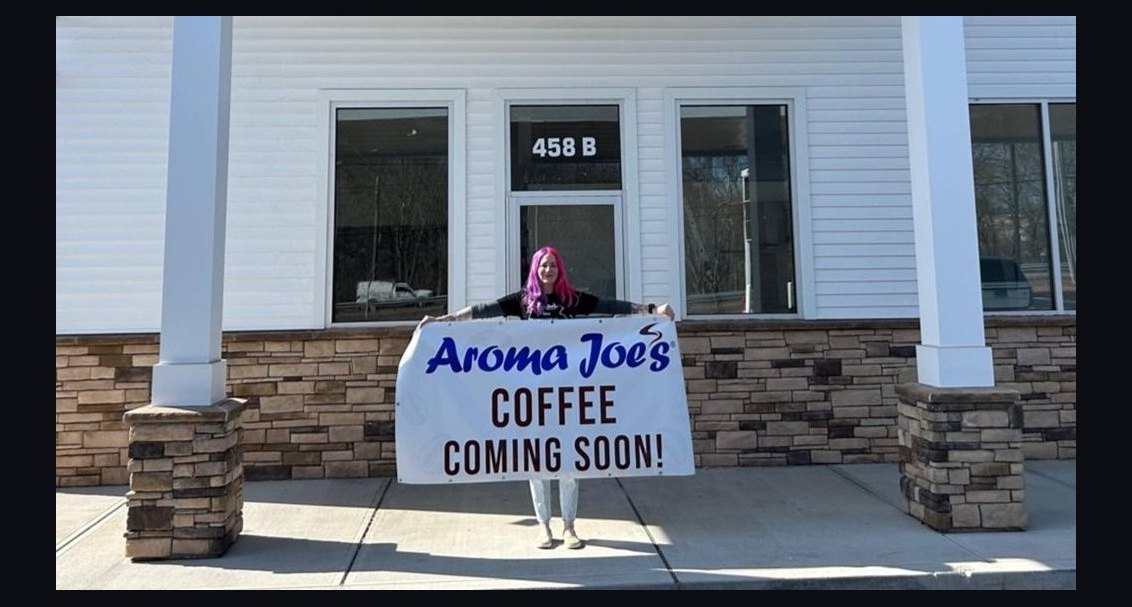 pulse-qShould I open or buy an Aroma Joe's Coffee franchise in 2027?
 pulse-qShould I open or buy a World Gym franchise in 2027?
 pulse-qShould I open or buy a Woof Gang Bakery franchise in 2027?
 pulse-qHow do you rebuild a sales team's trust in the forecast after a mid-year CRM migration corrupts historical pipeline data in 2027?
 pulse-qShould I open a mobile notary business in 2027?
 pulse-qHow Do I Set Attach Rates for My Service Fees in 2026?
 pulse-qHow Many Employees Should I Schedule Each Shift at My Phone Repair Shop in 2026?