 Pulse Reviews and Analysis
What Is the Complete Commercial Lease Negotiation Checklist?
 Curated by Kory White · Fractional CRO, CRO Syndicate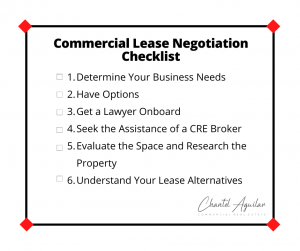
<svg xmlns="http://www.w3.org/2000/svg" viewBox="0 0 1200 340" role="img" aria-label="What Is the Complete Commercial Lease Negotiation Checklist? — PULSE Buildouts"><rect width="1200" height="340" fill="#EBE9DE"/><rect width="14" height="340" fill="#C0531F"/><text x="58" y="116" font-family="Arial,Helvetica,sans-serif" font-size="32" font-weight="800" letter-spacing="3" fill="#C0531F">PULSE BUILDOUTS · COMMERCIAL REAL ESTATE</text><text x="56" y="198" font-family="Arial,Helvetica,sans-serif" font-size="60" font-weight="800" fill="#2b2b2b">Save money.
Don’t get screwed.</text><text x="58" y="258" font-family="Arial,Helvetica,sans-serif" font-size="30" font-weight="600" fill="#6b5b4d">Leases, TI, NNN & buildouts — negotiated in your favor</text><g transform="translate(1010,86)" fill="none" stroke="#C0531F" stroke-width="9" stroke-linejoin="round"><rect x="20" y="40" width="150" height="130"/><line x1="20" y1="40" x2="95" y2="6"/><line x1="170" y1="40" x2="95" y2="6"/><rect x="50" y="80" width="36" height="36"/><rect x="104" y="80" width="36" height="36"/><rect x="74" y="128" width="42" height="42"/></g></svg>
What Is the Complete Commercial Lease Negotiation Checklist?
Direct Answer
The complete commercial lease negotiation checklist comes down to one principle: everything in the lease is negotiable, and the landlord's first draft is designed to favor the landlord. The money move is to negotiate at the LOI (letter of intent) stage, where you have maximum leverage and nothing is signed, and to attack the four cost centers that decide whether a lease is a good deal: (1) the rent structure and escalations, (2) the operating expenses — CAM, taxes, insurance, (3) the buildout and free rent, and (4) the exit and protection clauses. Tenants who negotiate all four typically land 10% to 20% below where they would have signed the landlord's first offer — often $50,000 to $250,000+ over a multi-year term.
The checklist, in order of dollar impact: nail down whether the lease is gross, modified gross, or triple-net (NNN) so you know what you actually owe; cap annual escalations at 2% to 3% fixed instead of CPI; get a base-year or expense-stop and cap controllable CAM at 3% to 5% with audit rights; secure free rent (2 to 6+ months) and a TI allowance ($30 to $100+/sq ft); and lock in renewal options at capped rates, sublease/assignment rights, an early-termination or kick-out clause, a holdover cap (125% to 150%), an SNDA, and a capped or "good-guy" personal guaranty. Each item below is a place the standard lease quietly costs you money — and a place you can claw it back before you sign.
Step One: Decode the Rent Structure Before Anything Else
You cannot compare two leases until you know what kind of lease each one is. The same "$30/sq ft" means wildly different things depending on structure:
- Gross (full-service) lease: rent includes taxes, insurance, CAM, and often utilities. Simplest, but the landlord pads the rate to cover their risk.
- Modified gross: rent includes some expenses (often a base year of operating costs); you pay increases above that base.
- Triple-net (NNN): you pay base rent plus your pro-rata share of property taxes, building insurance, and CAM — these "nets" can add $8 to $20+/sq ft on top of the quoted base rent.
A "$30 NNN" deal can actually cost $45+/sq ft all-in, while a "$42 gross" deal might be cheaper. CBRE and JLL both recommend running an effective rent calculation across the full term, net of free rent and TI, before signing. Get the landlord's actual operating-expense history (3 years) so the NNN estimate is not a fantasy number.
Step Two: Control Escalations and Operating Expenses
This is where leases bleed tenants slowly. Two levers:
Escalations. Landlords want CPI-indexed or 3% to 4%+ annual bumps. You want fixed 2% to 3%. The math is brutal over time: on $200,000 base rent over 7 years, the gap between 2% and 4% escalation is roughly $90,000. Lock fixed escalations and you control the curve.
Operating expenses (CAM/taxes/insurance). Demand:
- A base year (gross/modified gross) or expense stop so you only pay increases.
- A cap on controllable CAM — typically 3% to 5% per year, cumulative or compounding — covering things like landscaping, management fees, and repairs (taxes and insurance are usually "uncontrollable" and excluded from the cap).
- A gross-up clause that protects you when the building is under-occupied (so the landlord cannot inflate your share).
- Audit rights — the contractual right to inspect the landlord's books annually, with the landlord paying for the audit if they overcharged by 3% to 5%+.
- Exclusions — capital expenditures, landlord's financing costs, leasing commissions, and reserves should not be passed through as CAM.
IREM and BOMA both document that uncapped, unaudited CAM is the single most common source of tenant overpayment in commercial leasing.

👉 Quick Call with Kory White, Fractional CRO · See Kory on LinkedIn · CRO Syndicate
Step Three: Maximize Free Rent and Buildout
The concessions that put cash back in your pocket:
- Free rent / rent abatement: 2 to 6+ months, more in a soft market or on a dark space. On $8,000/month rent, six months free = $48,000.
- Tenant improvement allowance (TI): landlord funds your buildout — $30 to $100+/sq ft depending on use (office lower, restaurant/retail higher). Get it in writing with a clear draw schedule and the right to offset unpaid TI against rent if the landlord defaults.
- Turnkey vs. Allowance: decide whether the landlord builds to your spec ("turnkey") or gives you cash to manage it. Turnkey shifts cost-overrun risk to the landlord; an allowance gives you control.
- Delivery condition: define exactly what condition the space is delivered in (vanilla shell, warm shell, as-is) and who fixes existing defects.
- Commencement date tied to delivery, not signing: rent should start when the space is ready and permitted, not on a fixed calendar date that strands you paying for an unfinished space.
Step Four: The Exit and Protection Clauses That Save You Later
Rent is the obvious cost; these clauses are the hidden insurance:
- Renewal options at a capped rate (e.g., "fair market value not to exceed prior rent + 3%") so you are not gouged at renewal.
- Sublease and assignment rights with a reasonable consent standard ("landlord shall not unreasonably withhold consent") so you can offload space if plans change.
- Early termination / kick-out clause — the right to exit after a set period (often year 3 or 4) for a defined fee, or if sales fall below a floor.
- Holdover cap: the default holdover penalty is often 150% to 200% of rent; negotiate it down to 125% to 150%.
- Co-tenancy (in retail) — rent relief or termination if an anchor goes dark.
- SNDA — non-disturbance protection so a foreclosure or landlord bankruptcy cannot evict you.
- Personal guaranty: push for a capped "good-guy" guaranty (limited to 6 to 12 months of rent, released once you vacate properly) instead of a full-term personal guaranty that follows you for years.
- Repair/maintenance allocation: clarify who handles HVAC, roof, structure, and parking-lot repairs — these can cost $10,000 to $50,000+ if dumped on you.
How to Run the Whole Negotiation
1. Get representation first. A tenant-rep broker (paid by the landlord) and a commercial real estate attorney more than pay for themselves. The broker negotiates business terms across competing buildings; the attorney redlines the legal language.
2. Negotiate the LOI hard. Put every deal point — rent, escalations, CAM cap, base year, free rent, TI, renewal, exit rights, SNDA, guaranty — in the letter of intent. It is far easier to win terms before the lease is drafted than to redline them out afterward.
3. Create competition. Run 3 to 6 buildings against each other. Leverage is the entire game; a landlord who knows you have options concedes.
4. Verify the numbers. Demand 3 years of operating-expense history, the REA/declaration for retail centers, and a written delivery condition.
5. Redline the lease. Match every LOI term to the lease. Watch for silent reinsertions of CPI escalations, uncapped CAM, full guaranties, and weak SNDA language.
Real Numbers: First Offer vs. Negotiated
A 6,000-square-foot space, 7-year term, asking $40/sq ft NNN with $12/sq ft in nets:
- Signed at first offer: $40 + CPI escalations, uncapped CAM, $20/ft TI, 1 month free, full personal guaranty. All-in effective cost: ~$2.4 million over the term, with personal exposure for the whole lease.
- Negotiated: $37/ft, 2.5% fixed escalations, CAM capped at 4% + base year + audit rights, $50/ft TI, 5 months free, good-guy guaranty (9 months), kick-out after year 4, SNDA. All-in effective cost: ~$2.0 million.
- Savings: ~$400,000 (about 17%) plus $180,000 more TI, a capped personal liability, and an exit option.
FAQ
What is the most important thing to negotiate in a commercial lease? The operating-expense structure and escalations, because they compound silently over the whole term. Lock fixed annual escalations of 2% to 3%, a base year or expense stop, a cap on controllable CAM (3% to 5%), gross-up protection, and audit rights. These items routinely save more over a multi-year term than shaving a dollar off base rent, and uncapped CAM is the most common way tenants get overcharged.
Is everything in a commercial lease really negotiable? Yes. The landlord's first draft is a starting position written to favor the landlord. Rent, escalations, CAM caps, free rent, TI, renewal options, sublease rights, termination/kick-out clauses, holdover penalties, the SNDA, and the personal guaranty are all negotiable — especially at the LOI stage and especially when you have competing options.
Treating the first draft as final is the single most expensive mistake a tenant makes.
Should I sign a personal guaranty? Avoid a full-term personal guaranty if you can. Negotiate a capped "good-guy" guaranty instead — limited to 6 to 12 months of rent and released once you vacate the space properly and surrender it in good condition. This caps your personal exposure while still giving the landlord assurance you will not abandon the space mid-term.
When in the process do I have the most leverage? Before you sign anything — at the LOI stage, while the landlord still believes they might lose you to a competing building. Once you sign the lease, leverage collapses. Put every deal point in the letter of intent, keep multiple options alive, and use a tenant-rep broker (paid by the landlord) to keep the pressure on.
Sources
- CBRE, "Commercial Lease Negotiation and Effective Rent Analysis."
- JLL, "Office and Retail Lease Terms: A Tenant's Negotiation Guide."
- Cushman & Wakefield, "Operating Expense Recoveries, CAM Caps, and Audit Rights."
- NAIOP, "Commercial Lease Structures: Gross, Modified Gross, and NNN."
- IREM (Institute of Real Estate Management), "Common Area Maintenance and Expense Pass-Throughs."
- BOMA International, "Standard Methods of Measurement and Lease Cost Allocation."
- Tenant-rep brokerage and commercial real estate counsel practice on LOI deal points and guaranty caps.