
Should I open or buy a Fish Window Cleaning franchise in 2027?
 Curated byKory White · Fractional CRO · Maryland
 PULSEKNOWLEDGE LIBRARY
Quality
Certified

Fish Window Cleaning suits buyers who want a low-capital, home-based B2B service with recurring commercial routes. Expect roughly $110,000–$170,000 total investment against a $50,000 franchise fee, mature territories grossing $400,000–$1.2M, and owner earnings near $80,000–$220,000. Skip it if you won't sell routes door-to-door or manage crews.
The outcome you should expect
The honest outcome of buying a Fish Window Cleaning franchise is not passive income and it is not a fast exit — it is a moderately-sized, moderately-profitable local service business that pays you a solid middle-class-to-upper-middle-class income within two to four years, and pays it more predictably than most home-service franchises because the revenue base is contractual rather than transactional. That distinction matters more than any single number in the FDD. A pressure-washing or junk-removal owner wakes up every Monday with a revenue number of zero and has to fill it. A Fish owner with 180 recurring commercial accounts wakes up with most of the month already booked, and the sales work is about *adding* routes rather than *replacing* last month's customers.
Here is the realistic arc. Months 1 through 6 are cash-negative or barely break-even. You have paid the franchise fee, bought equipment, wrapped a vehicle, and you are personally out selling storefronts while a small crew — often just one two-person team, sometimes just you and one technician — cleans whatever you close. Revenue in this window is frequently $8,000–$25,000 per month and almost all of it goes back out as labor, insurance, fuel, and royalty. Months 7 through 18 are the grind: route density starts compounding, you add a second crew, and monthly gross typically climbs into the $30,000–$60,000 range. Somewhere between month 12 and month 24 most disciplined owners hit what franchisees informally call escape velocity — recurring commercial revenue covers all fixed costs plus a real owner draw, and additional accounts become mostly margin.
By year three, a well-run territory in a commercially dense metro commonly runs three to four crews, grosses somewhere in the $400,000–$900,000 range, and produces owner earnings of roughly 15%–28% of gross. That is $60,000 on the low end of a still-maturing territory and $200,000-plus on a strong one. The top decile — larger metros, five-plus crews, national-account work layered on top of local routes — reaches the $1.2M gross figure, but those are not year-two outcomes and you should not underwrite your loan against them.

What you should *not* expect: an absentee business in year one, a business that scales without you personally doing B2B sales for at least the first eighteen months, or margins that hold up if you let route density degrade. The outcome is highly operator-dependent. Two owners can buy identical territories in comparable cities and end up $120,000 apart in take-home five years later, and the difference is almost always sales discipline and crew retention rather than luck.
The other outcome worth naming: this is a business you can actually sell. Recurring commercial contracts are an asset. Mature Fish territories with established routes and trained crews change hands in the range of 1.5x–2.5x annual net profit, which for a healthy territory puts a resale in the $150,000–$400,000 band. That is not private-equity-multiple money, but it means the equity you build is real and transferable — unlike a one-person window-cleaning operation where the goodwill walks out the door with you.
What drives that outcome
Four variables explain nearly all the variance between a $70,000-a-year Fish owner and a $200,000-a-year one. In rough order of impact: route density, crew retention, commercial mix, and pricing discipline. Everything else — brand, training, equipment choices, software — is real but second-order.
Route density is the single most powerful lever and the one most new owners underweight. Density means how many billable accounts a crew can service within a short drive of each other. A crew that cleans nine storefronts in a two-block corridor bills perhaps $1,200–$2,000 in a day. The same crew driving 25–45 minutes between scattered accounts might bill $700 on the same eight working hours, because windshield time is unpaid time. The labor cost is nearly identical; the revenue is not. That gap is pure margin, and it is why experienced franchisees will decline a profitable-looking account that sits alone on the wrong side of town.

Crew retention is the second lever. Window-cleaning technician turnover in the broader industry runs high — commonly cited in the 50%–70% annual range — and every departure costs you real money: recruiting time, two to four weeks of reduced productivity while the replacement learns the route, and occasionally a lost account when a client notices the service quality slipped. A crew member who stays three years knows which building's back entrance needs a ladder, which restaurant manager wants Tuesday mornings only, and which storefront has the fussy tint film. That institutional knowledge is worth more than the wage premium it takes to keep them.
Commercial mix drives predictability. Residential window cleaning pays well per job and is genuinely useful for filling gaps, but it is one-off, seasonal, and sales-expensive — you re-acquire the customer every time. Commercial accounts on a 2-, 4-, or 8-week cycle produce the recurring base the whole model is built on. Owners who let their mix drift toward residential because those calls come in easily tend to plateau, because they end up running a lead-generation business rather than a route business.
Pricing discipline is the quiet one. Underpricing to win the first fifty accounts feels like momentum and is actually a structural problem: you have now locked low rates into recurring contracts and your labor cost is going up every year. Raising a recurring commercial client 6% annually is a routine, expected conversation. Never raising them and then needing a 25% correction in year four is how you lose accounts.
The diagram makes the compounding visible: density and retention feed each other. Dense routes are easier jobs — less driving, more predictable days — which makes them easier to staff, which protects service quality, which protects renewals, which protects density. Break one link and the loop runs the other direction.
Benchmarks and realistic ranges
Use these as underwriting anchors. Verify every figure against the current FDD before you sign anything — franchise economics move, and Item 7 and Item 19 are the only numbers the franchisor stands behind.
Entry cost. The franchise fee sits around $50,000. Total Item 7 investment lands roughly $110,000–$170,000 for a home-based startup. The build inside that range is approximately: equipment and supplies $6,000–$20,000 (ladders, poles, water-fed systems, squeegees, solutions); vehicle lease and wrap $3,000–$15,000, less if you already own a suitable van; technology and scheduling software $3,000–$10,000; initial marketing and route-building $15,000–$40,000; insurance and licensing $4,000–$15,000; training and travel $5,000–$15,000; and working capital $20,000–$50,000. Plan on $50,000–$90,000 of genuinely liquid cash, because the working-capital line is the one people shortchange and then regret in month five when payroll lands before receivables do.

Ongoing fees. Royalty runs in the neighborhood of 6%–8% of gross, plus a marketing fee near 2%. On $600,000 gross that is roughly $48,000–$60,000 a year off the top before you have paid a single technician. Model it as a fixed 8%–10% haircut on every dollar and you will not be surprised.
Labor. This is your largest cost and the most regionally variable. Technician wages commonly run $15–$25 per hour depending on the market, or a commission split of roughly 25%–35% of job revenue between a two-person crew. Loaded — payroll taxes, workers' compensation, any benefits — direct crew cost typically lands at 30%–40% of gross revenue. Note the workers' comp classification: window cleaning is a higher-risk code, and premiums in the 8%–15%-of-payroll range are normal. That is not a line you can negotiate away; budget it honestly.
Route economics. A single commercial route of 30–40 accounts, each serviced roughly every four weeks at an average ticket of $150–$300, produces about $5,000–$12,000 monthly gross. One experienced two-person crew can run that route across roughly 20–25 working days with headroom for one-off work. After ~35% labor and ~7% royalty, that route contributes roughly $2,900–$7,000 monthly before your own overhead. Two mature routes put you in the $5,800–$14,000 monthly contribution range — the point where the business is genuinely supporting you.
Territory scale. A well-built territory holding 150–250 dense recurring commercial accounts, run with three to four crews, commonly grosses $600,000–$900,000 annually. Below that, you are typically running one or two crews and grossing $200,000–$450,000. The $1.2M ceiling exists but implies a large metro, five or more crews, and usually some national-account volume.

Vehicle operating cost. Budget $600–$1,200 per vehicle per month all-in: fuel, commercial auto insurance, maintenance, and the periodic mirror or windshield casualty that comes with backing branded vans through tight alleys. Three crews means $21,600–$43,200 a year before royalties.
Insurance. Commercial general liability plus workers' comp for this trade has risen materially in recent years — increases in the 15%–25% range over a three-year span are commonly reported in higher-risk service classifications. Budget $8,000–$15,000 annually and assume 5%–10% annual escalation.
Time to profitability. Positive monthly cash flow commonly arrives in months 6–12. Full payback of the initial investment more realistically takes 18–36 months. Anyone modeling a 12-month payback is modeling a best case, not a base case.
Resale valuation. Existing territories trade around 1.5x–2.5x annual net profit, roughly $150,000–$400,000 for a mature book. Compare that against a greenfield's $110,000–$170,000 plus 12–24 months of ramp and a below-market owner income during it. The premium often pencils.
Risks, edge cases, and failure modes
The commercial real estate overhang. Office vacancy in many U.S. metros — particularly Class B and C space — has stayed elevated since the pandemic reset. Empty floors mean fewer windows on contract and more accounts that quietly cancel when a tenant leaves. This is the single biggest market-level risk in a 2027 opening. The mitigation is mix: retail storefronts, restaurants, salons, medical and dental clinics, gyms, banks, and auto dealerships are occupancy-stable and actively spend on curb appeal because their storefront *is* their marketing. Franchisees weighting toward retail and medical rather than office towers are structurally better positioned. Before you buy a territory, physically drive the commercial corridors and count occupied storefronts. Do not rely on a demographic report.
Under-capitalization. The most common early failure is not lack of demand — it is running out of cash while demand is still building. You pay crews weekly. Commercial clients pay on net-30, sometimes net-45, and property management companies are worse. That gap can be $15,000–$30,000 of working capital tied up at any moment once you are running two or three crews. Owners who put the full $50,000 working-capital line into marketing instead find themselves financing payroll on credit cards at month seven.
Owner sales avoidance. This is the quiet killer. Fish's model requires a person walking into businesses and asking for the account, especially in years one and two. There is no marketing budget that substitutes for it at this scale. Owners who came from corporate roles and expected to "manage the business" while inbound leads filled the routes consistently stall around $150,000–$250,000 gross and then blame the territory. If cold B2B prospecting genuinely repels you, this is the wrong franchise regardless of how good the unit economics look on paper.
Crew supply failure. In a tight labor market, a two-crew operation that loses one technician loses a quarter of its capacity overnight. Concrete mitigations that franchisees report working: guarantee a 35–40 hour week through peak season (roughly March through November in most climates) so the job competes with full-time employment rather than gig work; create a lead-technician tier with a real pay step so there is a visible path; pay $20+/hour starting in competitive markets rather than trying to win on tips; and run a small quarterly bonus tied to safety incidents and account retention. Owners paying minimum wage plus tips consistently report they cannot staff a second crew at all.
Seasonality and weather. In northern climates, January through early March is materially slower and harder to schedule. Interior-heavy commercial work, ceiling-fan and light-fixture add-ons, and post-construction cleanup help fill it, but you should model 9–10 strong months, not 12. Cash-flow planning that assumes even monthly revenue will break in the first winter.
Safety and liability. Ladders, heights, wet surfaces, and glass. A single serious injury raises your experience modifier and your premium for years. Enforce the ladder and fall-protection training the system provides, document it, and do not let an eager crew skip harness protocol on a second-story job to save fifteen minutes.

Scattered-territory trap. Accepting every account that says yes feels like growth and is often the mechanism by which margin quietly disappears. If an account sits 40 minutes from your nearest cluster, either price it to cover the drive or decline it and revisit when you have density nearby.
Buying a distressed resale. Existing territories are usually a good deal — except when the seller's routes are held together by one long-tenured crew leader who leaves at close, or when the account list includes a large share of clients on stale, underpriced contracts. In diligence, ask for account-level revenue with start dates, the last price-increase date per account, and technician tenure. A book with 40% of revenue in accounts that have not seen a price increase in four years is a repricing project, not a turnkey business.
A practical rollout plan
Treat the first 90 days as diligence and setup, not revenue. The mistake is starting the clock on royalties before you have validated the market.

Days 1–15 — Read the FDD properly. Not skim. Item 5 (initial fees), Item 6 (ongoing royalty and marketing fees), Item 7 (total investment), Item 19 (financial performance representations, if any), and Item 20 (outlet counts, transfers, terminations). Item 20 is the most revealing page in the document: a system with rising terminations and heavy transfers is telling you something the brochure is not. Have a franchise attorney read it too — $1,500–$3,000 is cheap against a $150,000 commitment.
Days 16–30 — Call at least eight existing owners, and pick them yourself. Use the Item 20 list, not the franchisor's referral list. Include at least two who left the system. Ask specific questions: what did you actually take home in year two and year four; how many crews are you running; what is your labor as a percentage of gross; how long did it take to build your first dense route; what is your technician turnover; what would you do differently.
Days 31–45 — Validate the market on foot. Drive the territory's commercial corridors on a weekday. Count occupied storefronts. Note the existing window-cleaning presence — competitors like Shine, Window Genie, and established local independents. Talk to three or four commercial property managers and ask who cleans their glass, on what cycle, and whether they are satisfied. If you cannot find 150 plausible recurring commercial prospects inside a reasonable drive radius, the territory does not support the model no matter how good the brand is.
Days 46–60 — Set up and recruit. Home office, entity formation, general liability and workers' comp bound, commercial auto, business licensing and any local bonding. Complete franchisor training. Start recruiting your first crew *before* you need them — hiring under pressure is how you hire badly.

Days 61–80 — Sell the first cluster. Pick one zip code or one commercial corridor and work it door-to-door. The goal is not maximum accounts; it is maximum accounts *within walking distance of each other*. Twenty dense accounts beats fifty scattered ones for the first route.
Days 81–90 — Launch operations and instrument them immediately: revenue per crew-day, drive time as a share of the workday, account retention, and days-sales-outstanding on commercial receivables.
Beyond day 90, the operating rhythm that separates the top quartile is unglamorous: a fixed weekly block for B2B prospecting that never gets rescheduled, an annual price-increase conversation with every recurring account, a monthly review of revenue per crew-day by route, and a standing quarterly check on technician tenure. Owners who run those four disciplines reach the upper end of the earnings range. Owners who let sales become reactive and prices become static end up running a job rather than owning an asset. If you come from a RevOps or sales-operations background, this is familiar territory — it is pipeline hygiene, retention management, and unit-economics tracking applied to a route business, and that background is a genuine advantage here.
Related questions
How does buying an existing Fish territory compare to opening a new one?
A resale typically costs $150,000–$400,000 at 1.5x–2.5x annual net profit versus $110,000–$170,000 greenfield, but delivers immediate cash flow and trained crews instead of a 12–24 month ramp. Diligence the account list for stale pricing and check crew tenure before closing.
Do I need window-cleaning experience to buy this franchise?
No. The franchisor provides technical training and the cleaning work itself is learnable. What you actually need is willingness to do B2B route sales and competence at hiring, scheduling, and retaining crews. Owners fail on sales and staffing, not on squeegee technique.
How seasonal is the revenue in a northern market?
Meaningfully. Expect a slower January through early March, with peak season running roughly March through November. Interior glass, light fixtures, and post-construction cleanup help backfill winter. Model nine to ten strong months and hold working capital through the trough.
What margin should I actually plan for?
Owner earnings typically land at 15%–28% of gross, driven mostly by route density and labor cost. Crew labor at 30%–40% of gross plus 8%–10% in royalty and marketing fees sets the ceiling. Sub-12% margins usually signal a scattered, undifferentiated route.
Which account types are safest to build the route base on?
Retail storefronts, restaurants, salons, medical and dental clinics, gyms, banks, and dealerships — businesses whose storefront is their marketing and whose occupancy is stable. Class B and C office towers carry the most vacancy risk in the current commercial real estate environment.
FAQ
How much can I realistically earn as a Fish Window Cleaning franchise owner?
Mature territories commonly gross $400,000–$1,200,000 annually, with owner earnings of roughly 15%–28% of gross — about $80,000–$220,000. Year one is usually well below that. Your position in the range depends far more on route density and crew retention than on territory size.
What is the total initial investment?
The franchise fee is around $50,000, with total Item 7 investment roughly $110,000–$170,000. Because the model is home-based, there is no retail buildout or real estate purchase. Plan on $50,000–$90,000 liquid, and do not raid the working-capital line to fund marketing.
How long until I break even?
Positive monthly cash flow commonly arrives between months 6 and 12. Full payback of the initial investment more typically takes 18–36 months. The recurring commercial route base stabilizes revenue faster than a purely residential model would, but it still has to be built account by account.
What are the biggest operational challenges?
Recruiting and retaining crews in a tight labor market, and doing enough consistent B2B prospecting to build a dense recurring account base. Seasonality in northern climates and rising workers' compensation costs for this trade classification are the other two persistent pressures.
Is the recurring commercial model as stable as it sounds?
Largely yes — commercial clients contract for weekly, biweekly, or monthly service, which produces genuinely predictable revenue and makes the business saleable. The caveat is that the base takes 12–24 months of sales work to build, and it erodes if service quality slips or prices never move.
Should I open a territory or just start an independent window-cleaning business?
If you want maximum control and minimum fixed cost, independent is cheaper — no $50,000 fee, no 8%–10% ongoing haircut. The franchise buys you training, national-account access, brand credibility with property managers, and a proven route-building playbook. Choose based on whether you value that system more than the fees it costs.
Sources
- https://www.fishwindowcleaning.com/franchise/
- https://www.entrepreneur.com/franchises/directory
- https://www.franchise.org/
- https://www.sba.gov/business-guide/plan-your-business/calculate-your-startup-costs
- https://www.bls.gov/oes/current/oes372011.htm
- https://www.ftc.gov/business-guidance/resources/consumers-guide-buying-franchise
- https://www.ibisworld.com/united-states/market-research-reports/janitorial-services-industry/
- https://www.franchisebusinessreview.com/
- https://www.osha.gov/laws-regs/regulations/standardnumber/1910/1910.23
Related on PULSE
- [Should I open a window cleaning business in 2027?](/knowledge/q15064)
- [What Service Fees Should a Window Cleaning Company Charge?](/knowledge/q16154)
- [How do you start a window cleaning business in 2027?](/knowledge/q1978)
- [How do you start a residential window cleaning business in 2027?](/knowledge/q9584)
- [Should I open or buy a Wahoo's Fish Taco franchise in 2027?](/knowledge/q14891)
This page will be disappearing soon. Save it to your device for $1 — or read it free while it is here.
@Kory-White- · if Venmo asks, the last 4 of my number are 2012
This page is gone.
This one is off the shelf now. $1 keeps it on your phone for good — the whole page, pictures and diagrams included.
 pulse-qShould I open or buy a Glory Days Grill franchise in 2027?
 pulse-qShould I open or buy a Restore Hyper Wellness franchise in 2027?
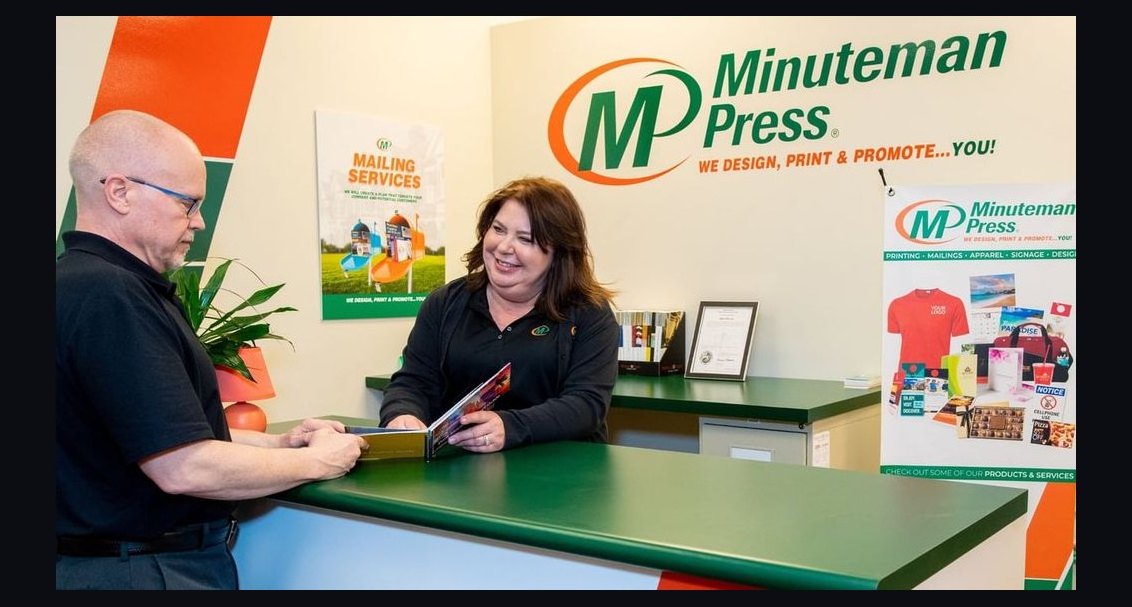 pulse-qShould I open or buy a Minuteman Press franchise in 2027?
 pulse-qHow Many Employees Should I Schedule Each Shift at My Hot Pot Restaurant?
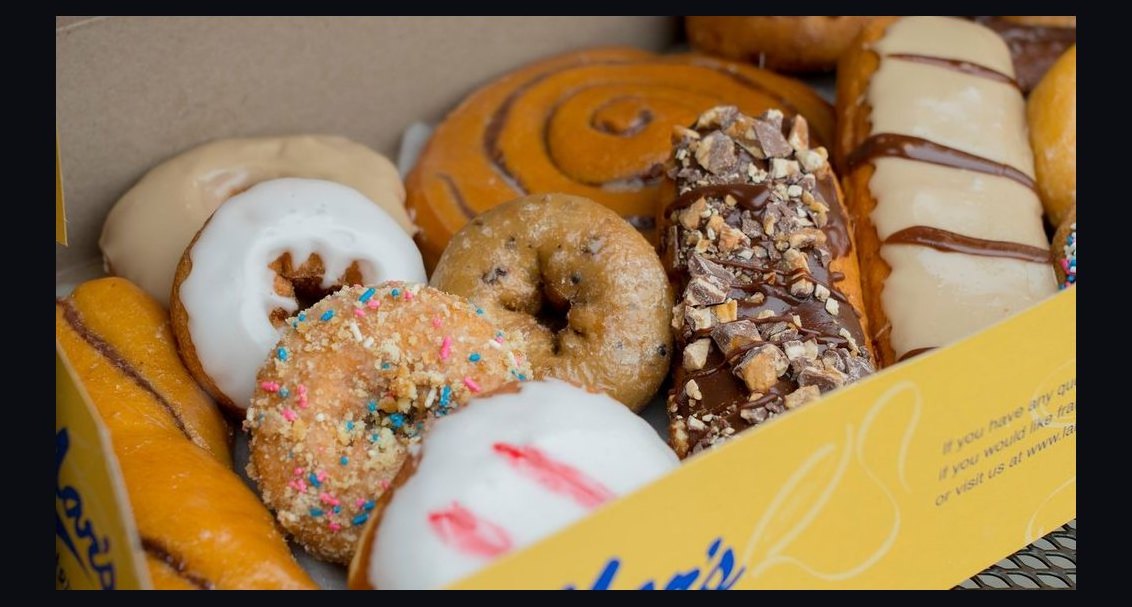 pulse-qShould I open or buy a Duck Donuts franchise in 2027?
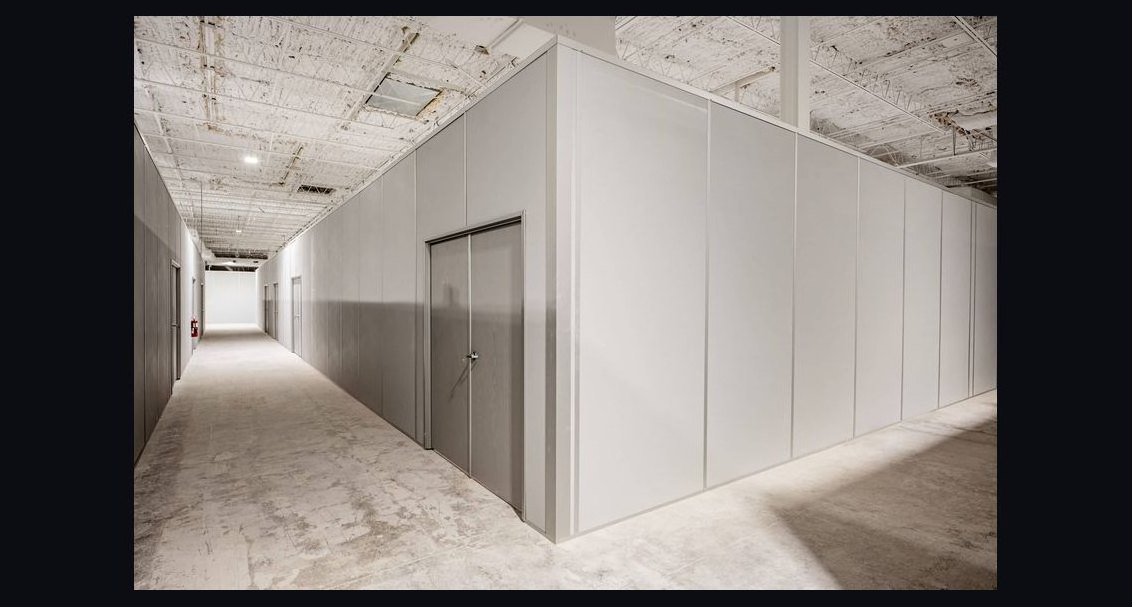 pulse-qWho Pays for the Demising Wall Between Tenant Spaces?
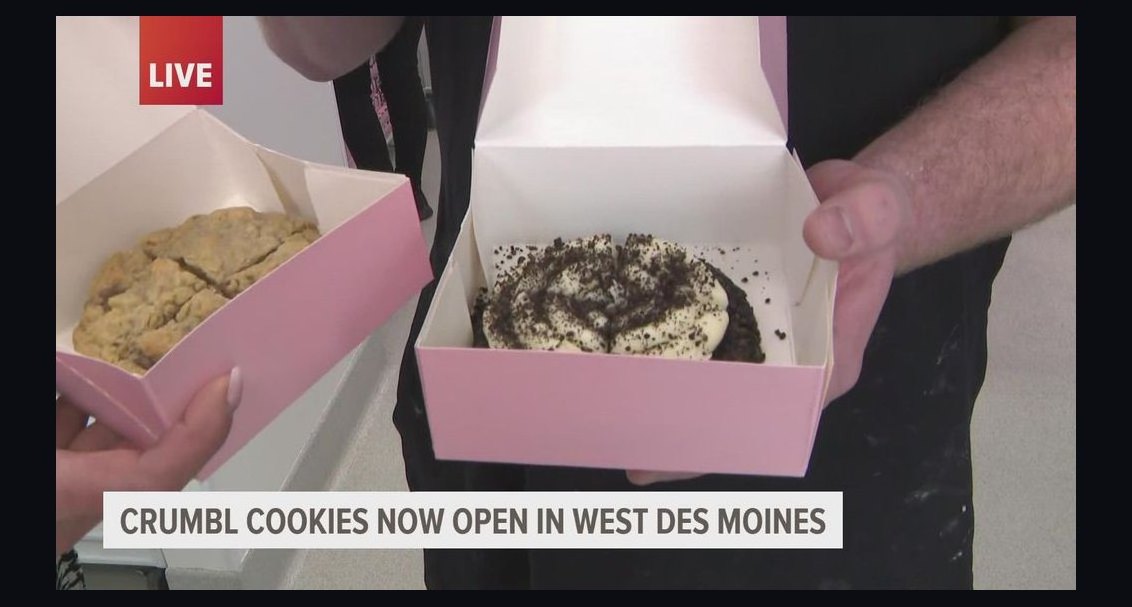 pulse-qShould I open or buy a Cookies Crumbl alternative — Insomnia Cookies — franchise in 2027?
 pulse-qShould I open or buy a Celebree School franchise in 2027?
 pulse-qHow Many Recruiters Do I Need to Hire for My Staffing Agency to Hit Its Placement Goal?
 pulse-qHow Many Employees Should I Schedule Each Shift at My Phone Repair Shop?