
Which specific buyer personas are most resistant to AI-led demo presentations in enterprise sales in 2027?
 Curated byKory White · Fractional CRO · Maryland
 PULSEKNOWLEDGE LIBRARY
Quality
Certified

The most resistant personas are enterprise security architects, VP-level procurement officers, general counsel and compliance heads, and skeptical technical end users. Each needs something an AI-led demo cannot supply: unscripted architecture answers, negotiating authority, contractual attestation, or credible peer proof. Resistance tracks authority and liability exposure, not distaste for AI.
What persona resistance to AI-led demos actually means
Resistance is not a survey answer about whether someone "likes AI." It is an observable behavior in a deal: a stakeholder declines the automated session, attends and disengages, or attends and then demands a repeat session with a human before advancing the evaluation. In RevOps terms, resistance is a stage-conversion problem measured at the demo-to-technical-validation transition, and the diagnostic question is always the same — did this specific stakeholder's questions get answered inside the session, or did they get deferred?
Once you frame it that way, the pattern in enterprise sales stops looking mysterious. AI-led demo presentations — automated product tours, guided interactive sandboxes, conversational agents that walk a prospect through a workflow, recorded-plus-AI-Q&A hybrids — are strong at one job and weak at another. They are strong at conveying *what the product does*: the interface, the workflow, the click path, the before-and-after of a task. They are weak at conveying *what the vendor will commit to*: an architecture that survives contact with a specific stack, a price the vendor will actually sign, a warranty a legal team can rely on, or a judgment call about whether this tool fits a messy real-world process.
The personas who resist are precisely the personas whose job is the second category. A security architect is not evaluating the interface; they are evaluating whether the integration pattern survives their identity provider, their data residency policy, and their change-management process. A procurement lead is not evaluating features; they are testing the vendor's flexibility, their willingness to concede, and whether there is a human on the other side with authority. Counsel is not evaluating anything visible on the screen; they are evaluating whether representations made in the sales process will be repeated in a contract with liability attached. None of those are demo-able in the ordinary sense, and an automated presentation that treats them as if they were reads as evasive.
There is a second, subtler mechanism worth naming because it drives more resistance than the capability gap does: attendance signals investment. In a large enterprise deal, senior stakeholders read the format of a meeting as a statement about how much the vendor values the account. When a director-level architect blocks ninety minutes and gets an automated session, the implicit message received is "we did not staff a human for you." That reaction is about status and reciprocity, and it fires regardless of how good the automated content is. Sellers routinely misdiagnose this as a technology objection and respond by improving the AI demo, which does nothing, when the actual fix is to change who is in the room.

The practical consequence for RevOps is that AI-led demos are not a stage of the funnel — they are a tool that fits some stakeholders at some moments. Treating them as a universal first step in enterprise sales is what produces the resistance, because it forces the automated format onto exactly the people it serves worst. The rest of this page maps which personas resist, why, what it costs when you get it wrong, and how to route the decision deterministically.
The four persona clusters that resist, and what each one actually wants
Security and infrastructure architects. This cluster includes enterprise architects, heads of platform, security architects, and the identity/network specialists who get pulled in for a single session. They resist because their evaluation is inherently adversarial and unscripted: they are trying to find the failure mode. Their questions branch unpredictably — "what happens if our SSO issues a nonstandard claim," "how does the connector behave when the upstream system rate-limits," "where does the data physically sit during processing," "what is your key rotation story." An automated presentation answers the questions it anticipated; this persona's value comes precisely from the questions nobody anticipated. When an AI session responds to a branching architecture question with a scripted overview, the architect concludes not "the AI is limited" but "the vendor is hiding the hard part," which is far more damaging.
What they want instead is a solutions engineer who will whiteboard, say "I don't know, let me get you the answer by Thursday," and share documentation, an architecture diagram, and a security package. Notably, this persona is often *pro-automation* for the parts of evaluation they consider mechanical — they are usually delighted to get a self-serve sandbox, an API playground, and documentation instead of a scheduled call. Their resistance is narrow and specific: it applies to the live validation conversation, not to the whole engagement.

Procurement and vendor management. Category managers, sourcing leads, and VP-level procurement officers resist for a structural reason: negotiation requires a counterparty who can concede. Their standard playbook involves ambiguous asks, deliberate silences, and requests that test authority — a nonstandard payment term, a step-down renewal cap, an early-termination right. An automated session cannot yield anything, so the entire exchange is wasted motion from their point of view. Worse, procurement reads reliance on automation as a signal about the vendor's support posture after signature: if you will not staff a human for a seven-figure evaluation, what happens at renewal or during an incident?
This cluster also resists for process reasons that have nothing to do with the vendor. Many procurement functions require documented, comparable evidence across bidders — the same demo scenarios run for each finalist, with notes attributable to a named vendor representative. An automated presentation that varies by session, or whose statements cannot be attributed to an accountable person, is difficult to enter into that record.
Legal, compliance, privacy, and risk. General counsel, privacy officers, compliance leads, and risk committees resist most absolutely, and their resistance is the least negotiable, because their standard of evidence is contractual rather than demonstrative. Nothing shown on a screen matters to them; what matters is what a vendor will sign. Their questions — subprocessor lists, data processing terms, retention and deletion mechanics, breach notification windows, audit rights, whether customer data trains any model, jurisdictional storage — all resolve to documents, not demos. An AI-led session is not merely unhelpful here; it can be actively counterproductive, because statements made by an automated agent create an ambiguous record. Counsel will often ask, plainly, whether the vendor stands behind what the automated agent said. That is not a question anyone wants to field mid-cycle.
This cluster has an additional wrinkle when the product itself involves AI: the demo format becomes evidence about the vendor's own governance posture. A compliance lead evaluating an AI-containing product who is shown an AI-run sales process will reasonably ask what oversight exists over the automated claims being made to them. It is a fair question and a bad one to be surprised by.

Skeptical technical end users and internal champions with credibility at stake. The fourth cluster is easy to miss because it is not senior. It comprises the practitioners who will use the tool daily — engineers, analysts, clinicians, operators — and the internal champion who has staked personal credibility on the recommendation. Practitioners resist because they want to test edge cases from their own workflow, not a curated happy path; a demo environment full of clean synthetic data is, to them, an argument that the vendor has not seen real conditions. The champion resists for a political reason: they need a human they can introduce to their executive, someone accountable who will show up when the rollout hits trouble. Automated presentations give them nothing to point to.
There is a useful inverse to all four: the personas who welcome AI-led demos are those doing breadth work under time pressure — a business-unit manager scoping options, an analyst building a shortlist, a project manager who missed a session and wants a replay, a user onboarding after purchase. For them, an on-demand automated walkthrough is strictly better than waiting eight days for a calendar slot.
The step-by-step process for routing a demo by persona
The operational fix is a routing decision made *before* the invitation goes out, not a recovery attempted after a session goes badly. The sequence below is the one that works, and it belongs in the CRM as required fields rather than in a rep's judgment.

Step one: enumerate the committee, by role and by authority. Before any demo is scheduled, the opportunity record should list each known stakeholder with two attributes: functional role and whether they hold a veto. Veto-holders are the security, legal/compliance, and procurement functions in nearly every enterprise; a champion cannot overrule them. If the CRM cannot answer "who can kill this deal," the routing decision cannot be made.
Step two: classify the session's purpose. Every scheduled session serves one of three purposes — *orientation* (what does this do), *validation* (does this survive my specific conditions), or *commitment* (what will you sign). Automated formats are appropriate for orientation, mixed for validation, and never appropriate for commitment. Most bad routing happens because a session labeled "demo" is actually three purposes fused together.
Step three: route on the intersection. If the attendee list contains only orientation-stage stakeholders, an AI-led session is fine and often preferred for speed. If any resistant-cluster persona is attending, a human leads and the automation becomes supporting material — pre-work sent beforehand, a sandbox left open afterward.
Step four: run the hybrid pattern when the committee is mixed. Send the automated walkthrough as asynchronous pre-work so the live session does not burn time on the click path, then use the live human session entirely for the branching questions. This is the single highest-leverage move available, because it converts the AI demo from a substitute for a person into a preparation layer, which is the role it plays well.
Step five: instrument the outcome. Log, per session, whether every attendee's questions were resolved in-session and whether a follow-up session with the same audience was required. Repeat sessions with an overlapping audience are the cleanest resistance metric available, and they are already in your calendar data.
Costs, timelines, and the ranges worth tracking
The cost of misrouting is almost never the lost meeting. It is the calendar recovery, and in enterprise sales calendar recovery is expensive in a way that compounds.
The recovery cost. When a senior stakeholder disengages, the remedy is a second session with the same people. Re-convening three to six senior calendars at a large organization typically takes two to four weeks, and the delay is driven by the scarcity of the *architect's* and *counsel's* time, not the seller's. If the second session then generates a document request — a security questionnaire, a subprocessor list, a completed vendor assessment — add the vendor's turnaround, which for a thorough security package is commonly one to three weeks. A single misrouted session therefore plausibly costs three to seven weeks of cycle time. In a deal with a fixed budget window, that is often the difference between closing this quarter and slipping.

The quiet cost. Worse than delay is silent disqualification. Senior technical and legal stakeholders frequently do not object; they simply stop attending and register an unfavorable opinion privately with the champion. This produces the classic pattern of a deal that stalls with no stated reason and no reachable objection. It is invisible in the CRM because nobody logs "the architect quietly decided against us."
What to measure instead of guessing. Four metrics are enough, and all four are derivable from data you already hold:
- *Repeat-session rate by persona* — the percentage of sessions attended by each persona type that required a follow-up with overlapping attendees. This is your resistance signal.
- *Senior-attendee no-show and early-exit rate*, split by session format. If director-plus attendees exit automated sessions materially earlier than human-led ones, you have quantified the problem for your own pipeline rather than borrowing someone else's number.
- *Unresolved-question count per session*, captured by the rep in a single required field. Three or more unresolved questions from one attendee is a reliable predictor that a repeat session is coming.
- *Stage-conversion delta at demo-to-validation*, split by whether a resistant persona attended an automated session. This is the number that justifies staffing decisions to a CRO.
The savings side, honestly stated. AI-led demos genuinely reduce cost per session and remove scheduling latency, which is why the pressure to use them is real and legitimate. A self-serve automated walkthrough is available immediately; a solutions engineer may be booked out a week or more. For orientation-stage sessions and for the long tail of small opportunities, that trade is clearly favorable. The mistake is applying a ratio that works across hundreds of small deals to the twenty deals that carry the number. In a portfolio where a minority of opportunities produce the majority of revenue, the SE hours saved on a strategic account are trivially small compared to the cycle time lost.

Timeline expectations for the fix itself. Implementing persona-based routing is not a long project. Defining the persona taxonomy and veto-holder field takes a working session. Adding the required fields and a routing rule to the CRM is typically days, not weeks. The genuinely slow part is behavioral: reps must enumerate the committee before scheduling, which is a habit change enforced by making the field required at stage advancement. Expect a full quarter before the data is clean enough to trust the metrics above.
Where teams get this wrong
Mistake one: improving the AI instead of changing the room. The most common response to a bad automated session is to make the automated session better — more content, better handling of edge questions, a smoother interface. This addresses the capability gap and ignores the authority gap, which is the larger of the two. No improvement to an automated presentation gives it the ability to concede on price or stand behind a contractual representation. If the objection is about authority, the only fix is a person with authority.
Mistake two: treating the committee as one audience. Running a single session for a fifteen-person committee guarantees that most attendees get content aimed at someone else, and it makes the format decision impossible — whatever you choose is wrong for part of the room. Splitting into role-specific sessions (a business session, a technical validation session, a commercial and paper session) makes each routing decision obvious and shortens every individual meeting.

Mistake three: disclosing the format late or not at all. Stakeholders who discover mid-session that they are talking to an automated agent react far worse than those who knew in advance. Stating the format in the invitation costs nothing, lets the attendee opt into a human session if they need one, and eliminates the trust damage entirely. Late disclosure converts a format mismatch into a credibility problem.
Mistake four: using automation as a gate rather than an accelerator. Requiring a prospect to complete an automated session before earning access to a human inverts the incentive. Senior buyers experience it as a toll booth, and the ones with the most authority are the least willing to pay it. Automation should be the fastest available path for those who want it, never a mandatory checkpoint.
Mistake five: no human standing by. If an automated session is going to be used with any stakeholder above the individual-contributor level, someone should be reachable during it. The rescue window is short — an attendee who cannot get an answer within a minute or two mentally checks out. A named human on standby, announced at the start, converts a failure into a minor detour.
Mistake six: not distinguishing role resistance from person resistance. Some individuals resist because of their function; others resist because of personal preference or a prior bad experience. The first is predictable and routable, the second is not, and conflating them produces rules that are either too broad or too timid. Track resistance events against the role, then note individual exceptions in the account record.

Mistake seven: sending automated follow-up after a resistance event. Once a stakeholder has signaled that they want a person, every subsequent automated touch — an AI-written recap, an automated nudge sequence — reinforces the original complaint. After a resistance event, the account should be flagged so outbound automation to that contact is suppressed.
Decision framework: choosing the format for a given stakeholder
The framework below reduces the choice to three questions, asked in order. It is deliberately conservative: when in doubt, staff a human, because the downside of an unnecessary human hour is small and the downside of a misrouted senior session is weeks.
Question one — does this stakeholder hold a veto? Security, legal, compliance, privacy, and procurement almost always do. If yes, a human leads, full stop. Automation is welcome as pre-work and as leave-behind material, but not as the session itself.

Question two — will the session require unscripted, branching depth? Any validation conversation qualifies. If the honest answer is that you cannot predict the next three questions, the format needs a human who can improvise, escalate, and commit to following up.
Question three — is the deal materially above your normal size, or strategically significant? Large and strategic deals warrant human staffing regardless of persona, because the attendance-signals-investment mechanism applies at every level of a marquee account. Set the threshold from your own data — a common approach is to use the top decile of deal size — and apply it as a hard rule rather than a suggestion.
If all three answers are no, the AI-led format is not just acceptable but preferable: it is faster, always available, and lets the buyer control pacing. That is a genuine advantage and worth defending against a reflexive "humans for everything" overcorrection, which simply reintroduces the scheduling bottleneck.
Two refinements make the framework durable. First, build an escalation trigger: any automated session where an attendee asks a question the system cannot answer should generate an immediate follow-up offer from a named human, within the same business day. Second, build a persona memory: once a contact has signaled resistance, the account record should route them to human sessions permanently. Re-testing a resistant stakeholder with automation is the cheapest way to lose credibility twice.
Related questions
Does resistance disappear if the AI demo is clearly labeled as automated?
Labeling does not remove resistance from veto-holding personas, but it removes the trust damage. Disclosed upfront, a mismatch becomes a scheduling preference the buyer can correct; discovered mid-session, it becomes a credibility problem that colors the rest of the evaluation.
Are these same personas resistant in mid-market deals?
Less so, because committees are smaller and roles are combined. A mid-market buyer often holds technical, commercial, and risk responsibilities simultaneously and values speed more than ceremony. Resistance scales with committee size, veto specialization, and contract value rather than with the buyer's seniority alone.
Should AI demos be used at all with resistant personas?
Yes — as asynchronous pre-work and as post-session leave-behind material. Architects in particular prefer a self-serve sandbox to a scheduled call for the mechanical parts of evaluation. The restriction applies to the live validation conversation, not to the entire relationship.
What is the fastest way to detect resistance already in our pipeline?
Query for opportunities where a second session was scheduled with an overlapping senior attendee list within thirty days of the first. That repeat-session pattern is the clearest available proxy and requires no new instrumentation beyond calendar and CRM data you already hold.
Does resistance change when the product itself is an AI product?
It intensifies for compliance and privacy stakeholders, because the sales format becomes evidence about the vendor's governance of its own automation. Expect direct questions about oversight of the claims the automated agent made, and be prepared to stand behind them contractually.
FAQ
Which persona is the single most resistant?
Legal, compliance, and privacy leads, because their objection is structural rather than experiential. Their standard of proof is a signed document, and no presentation format — automated or human — satisfies it directly. A human session still matters because it produces an accountable counterparty who can commit to paper, which is the thing they actually need.
Is procurement's resistance really about the technology?
Rarely. Procurement resists because negotiation requires a counterparty who can concede, and an automated session cannot yield anything. They also read format as a signal about post-sale support: a vendor that will not staff a human for a large evaluation raises fair questions about responsiveness at renewal or during an incident.
How do we handle a committee where some members want automation and others refuse it?
Split the sessions by role and purpose. Run an automated orientation walkthrough available on demand for the breadth audience, then a human-led validation session for the technical and risk stakeholders, and a separate commercial conversation for procurement. Forcing one format on a mixed committee guarantees it is wrong for part of the room.
What should a rep do when an automated session is clearly failing live?
Stop it and offer a named human within the same business day, without defending the format. Attendees who get a fast, specific recovery generally forgive the original mismatch; attendees who are asked to sit through the remainder of a session that is not answering them usually do not. Then flag the contact for human-only routing going forward.
Does more content or better scripting fix architect resistance?
No, because the architect's value comes from questions nobody anticipated. Any scripted system answers the questions it was built for; the branching, adversarial questions are the entire point of the session. What helps this persona is documentation, an open sandbox, an architecture diagram, and a solutions engineer permitted to say "I don't know, I'll get you an answer."
How much of this is a permanent limitation versus a current one?
The capability gap — unscripted technical depth — is the part most likely to narrow over time. The authority gap is structural: conceding on price and standing behind contractual representations require an accountable party, which is an organizational question rather than a technical one. Plan around the authority gap persisting even as capability improves.
Sources
- Gartner — B2B Buying Journey research
- Harvard Business Review — The New Sales Imperative
- McKinsey — B2B sales growth insights
- Forrester — B2B research and insights
- NIST AI Risk Management Framework
- European Commission — AI Act overview
- AICPA — SOC 2 and SOC for service organizations
- Cloud Security Alliance — CAIQ and STAR program
- Harvard Business Review — sales and negotiation topic hub
Related on PULSE
- Which 2027 buying committee objections are most resistant to AI-generated content?
- How does a buying committee of 18 stakeholders in 2027 align on purchase decisions when AI-generated product demos replace human-led presentations?
- What does AI-led inbound qualification look like in 2027 and where does it still fail?
- Why do 40% of AI-led B2B sales enablement initiatives fail within the first quarter of deployment?
- What is the average cost-per-closed-won deal in 2027 for B2B companies using AI-led prospecting versus traditional ABM?
This page will be disappearing soon. Save it to your device for $1 — or read it free while it is here.
@Kory-White- · if Venmo asks, the last 4 of my number are 2012
This page is gone.
This one is off the shelf now. $1 keeps it on your phone for good — the whole page, pictures and diagrams included.
 revopsWhat triggers are early-stage RevOps teams using in 2027 to hand off AI-qualified leads to human sales reps without losing context?
 revopsWhy Do Buying Committees Now Insist on AI-Generated ROI Proof Before Vendor Demos in 2027?
 revopsWhat is a GTM engineer and why is the role exploding in 2027?
 revopsWhat RevOps metrics are obsolete due to AI in the 2027 funnel?
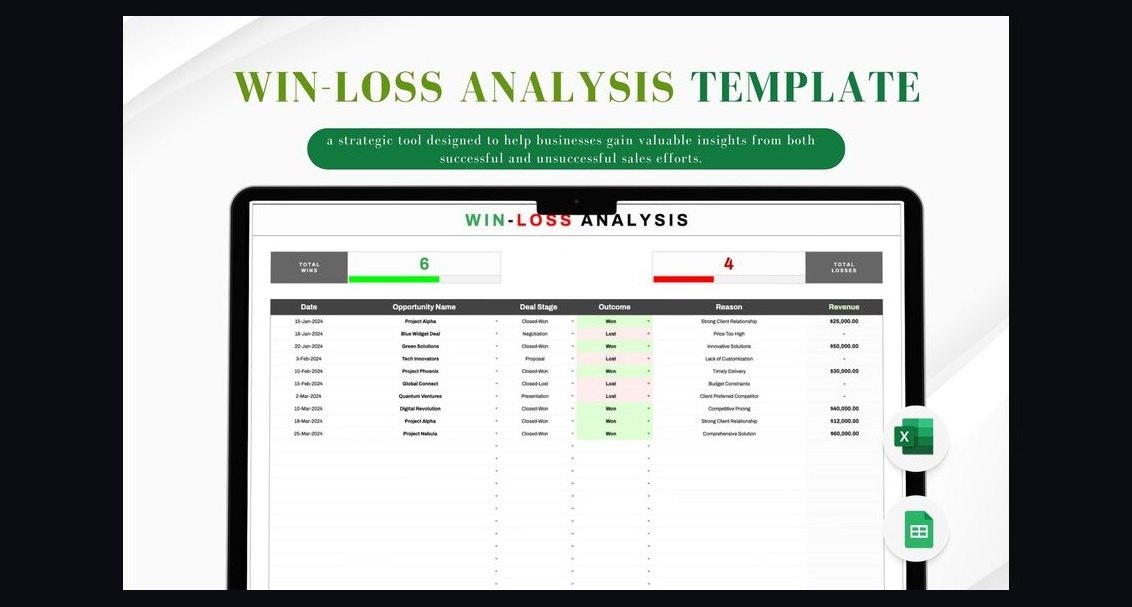 revopsHow Do I Run a Win/Loss Analysis Program That Improves Win Rate in 2027?
 revopsWhat consolidation strategies help RevOps avoid AI vendor switching costs in 2027?
 revopsHow Do I Build a Board-Ready GTM Efficiency Dashboard in 2027?
 revopsWhat's the role of customer success in revenue expansion for 2027 B2B SaaS?
 revopsHow do you operationalize net revenue retention in 2027?
 revopsHow Do I Reconcile Competing Sales Forecasting Methods in 2027?