

How do you start a balloon decor business in 2027?
 Curated byKory White · Fractional CRO · Maryland
Quality
Certified

Start a balloon decor business in 2027 by forming an LLC, buying general liability insurance ($350–$600/year), and spending $1,500–$5,000 on an electric inflator, sizers, and a small curated balloon stock. Practice 60–90 days, then sell three fixed packages priced by the linear foot ($25–$40/foot installed) rather than custom quotes.
What a balloon decor business actually is, and why the model works
A balloon decor business sells installed event decor — organic garlands, backdrops, ceiling clusters, grab-and-go bouquets — for birthdays, gender reveals, baby showers, corporate launches, school events, and weddings. The raw material costs almost nothing relative to the ticket. A six-foot organic garland consumes roughly $15–$30 of latex and sells installed for $150–$250. That spread is the entire economic argument for the model.
What makes it durable is not the margin on any single job but the fact that demand is *stacked across five loosely correlated segments*. Children's parties run steady all year at $150–$400 per job and are the volume floor. Gender reveals and baby showers land at $300–$700 and rarely get haggled, because the moment is irreplaceable and the emotional budget is high. Corporate work — grand openings, product launches, holiday parties, conference photo moments — is the margin engine at $800–$3,500 per install, and it is booked on a company card rather than a household one. Weddings sit at $600–$2,500 and have moved from "tacky" to "editorial" as asymmetric organic garlands replaced the uniform latex arch. Seasonal surges — graduation in May and June, Halloween, the December corporate crush, Valentine's grab-and-go — stack four or five predictable revenue peaks onto the base.
Those segments do not move together, and that is the point. Corporate spend peaks in Q4. Weddings cluster in late spring and early fall. Children's parties are flat year-round. School work spikes around graduation and homecoming. An operator who deliberately courts all five gets a materially smoother revenue line than one chasing prestige wedding work alone, and a smooth line is what lets you survive February without draining savings. There is a cross-pollination effect too: the craft is identical across every segment, so the corporate client who books a product launch remembers you for their kid's birthday, and the bride whose garland photographs well has friends planning showers. Every job markets you to all five markets simultaneously.
The second structural feature is the skill barrier — real, visible, and crossable. The gap between a beginner's lopsided garland with mismatched balloon diameters and a tight asymmetric composition with intentional color movement is obvious in a photograph, and the photograph is what clients buy. In a trade with no skill barrier, price collapses to labor cost because nobody can tell providers apart. In a trade with an insurmountable barrier, only a credentialed elite competes. Balloon decor sits in the productive middle: roughly the majority of casual entrants never cross it, but a committed person crosses it in three months of deliberate practice. The hobbyists flooding the bottom tier are not your competition once you have crossed — they are your best advertising, because every client who received a sad garland becomes a motivated buyer for someone whose portfolio looks like a magazine spread.
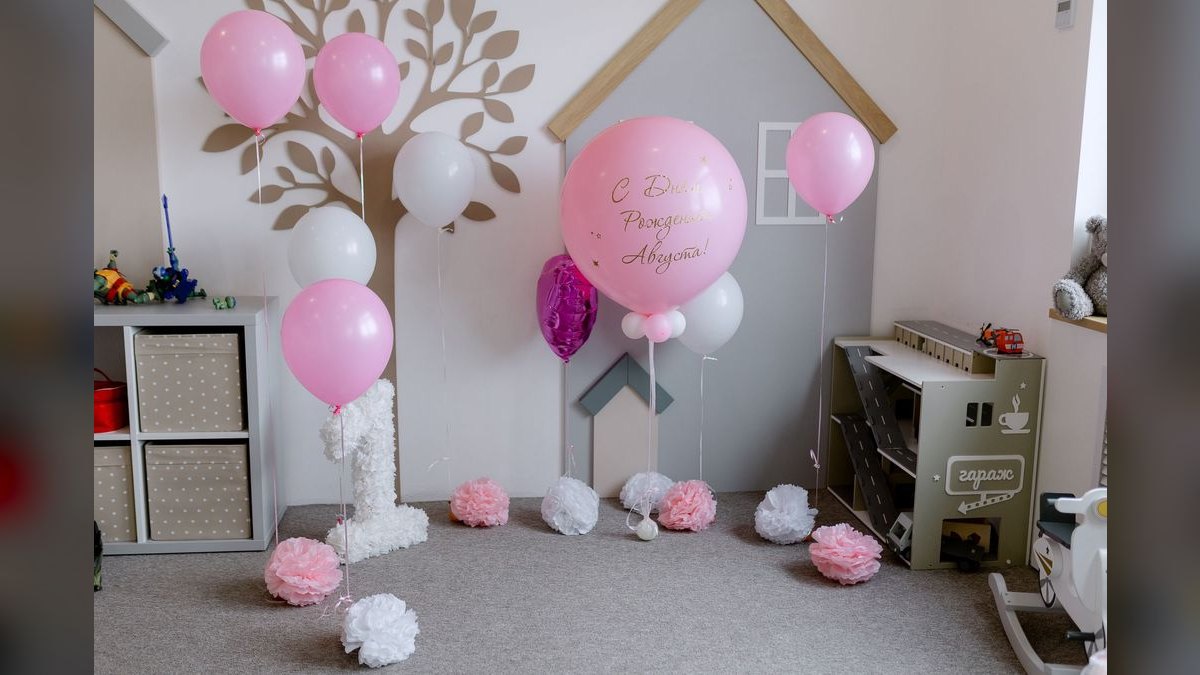
The aesthetic shift matters commercially. The geometric arch — a uniform-size repeat bent over a doorway — dominated through the mid-2020s and now reads as the default. Clients resist paying above $150–$200 for it. What sells at a premium is the organic garland: mixed diameters (5-inch, 11-inch, 16-inch, occasional 36-inch focal balloons), irregular clustering, and deliberate color movement across the piece, layered with greenery, vinyl lettering, oversized numbers, or a filled-frame balloon mosaic. Named color stories pulled from the inspiration boards clients already curate — sage and terracotta, dusty blue and cream, moody jewel tones — sell better than "what colors do you want?"
| Aesthetic | Market perception | Realistic ceiling | Build difficulty |
|---|---|---|---|
| Geometric arch (uniform repeat) | Dated, default | $150–$250 | Low |
| Classic latex spiral column | Functional, generic | $100–$200 | Low |
| Organic garland (asymmetric) | Current, designer | $350–$1,200 | Medium |
| Organic install + florals/greenery | Premium, editorial | $700–$2,500 | Medium-high |
| Full balloon mosaic / sculpture | Statement, bespoke | $1,000–$4,000+ | High |
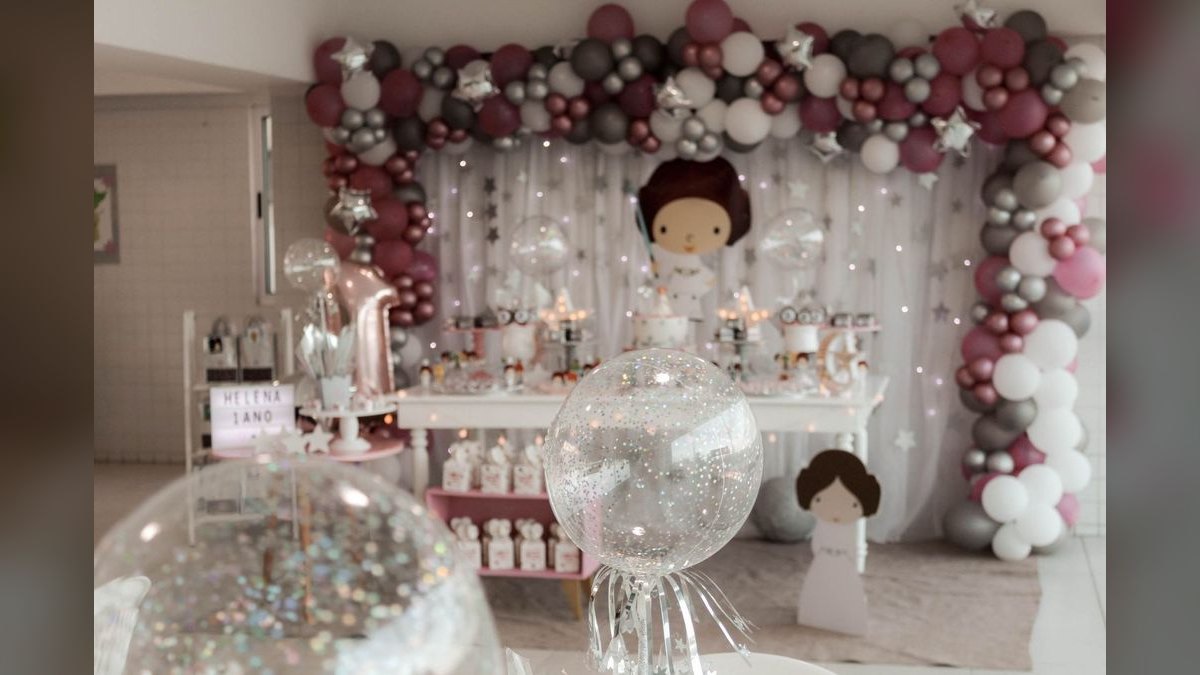
The same hour of labor is worth two to four times more in the organic-install tier than in the geometric arch tier. Skill acquisition is not polish; it is the difference between a $200 ceiling and a $1,200 ceiling on identical time. And the capital wall is the lowest in the event-decor neighborhood — no franchise fee, no buildout, no inventory loan — which is a blessing and a trap. Low barriers mean a crowded amateur tier, so your competitive position is never "I do balloons." It is "I deliver a specific photographable look, on a fixed-price package, installed on time, with a certificate of insurance in the venue's inbox before they ask."
The step-by-step process from zero to first full-price booking
The sequence below is ordered deliberately. Legal and money plumbing take a week. Gear takes a weekend. Skill takes ninety days and is the actual gate on your price ceiling, so it starts early and runs in parallel with everything else.
Week 1 — entity, EIN, bank, insurance. Register a single-member LLC with your Secretary of State ($50–$500 depending on state). It separates personal assets from business liability, which is not optional for a trade that rigs heavy decor above guests, and it is taxed as a pass-through by default. File for an EIN at irs.gov — free, ten minutes. Open a dedicated business checking account the same week; co-mingling is the most common bookkeeping mistake and it weakens the liability shield if you are ever sued. Then buy general liability at $1M per occurrence / $2M aggregate, roughly $350–$600 a year. Confirm three things in writing before you pay: that the policy covers latex allergy claims (the single most likely bodily-injury claim in this trade and a named exclusion on some policies), whether the additional-insured endorsement is blanket or per-venue (blanket is worth a higher premium — you never wait on paperwork to confirm a booking), and what your target venues actually require, since upscale venues sometimes ask for $2M/$4M. Register for a sales-tax permit the same week; most states tax the full invoice as goods plus service, and back-paying uncollected sales tax out of pocket is a brutal, avoidable lesson.
Week 1–2 — the core kit. Buy in this order: a dual-action low-pressure electric inflator ($120–$250, the single best purchase you will make), a balloon sizer box or sizing templates ($20–$60, non-negotiable — consistent diameter is the whole amateur-versus-pro tell), bulk balloon decorating strip, low-temp glue dots and a glue gun, then rigging (fishing line, command hooks, zip ties, a step ladder), then large lidded clear transport bins so inflated stock survives the drive. Balloon stock comes last and small: $300–$900 across two or three signature color stories from a professional brand tier, not one of everything. Skip the helium tank entirely — the dominant 2027 product is an air-filled garland that uses none, and helium is a volatile commodity. Rent per job from a party-supply store or welding-gas distributor when a specific booking needs floating elements, and bill the rental straight into that quote.
Weeks 1–3 — mechanics drill. Build ten three-foot garland sections. Photograph each. The goal is muscle memory for sizing and taping, not beauty.
Weeks 4–6 — composition. Build three full six-foot garlands in distinct color stories, install each on a wall at home, photograph in good light. These become portfolio seeds. This is also where you build a working library of fifteen to twenty double-stuff recipes — which two stock colors nest to produce which final shade. Double-stuffing turns a small base inventory into a large palette of rich opaque tones; single-layer saturated balloons often photograph translucent and cheap. It is craft skill and inventory strategy in one move.
Weeks 7–9 — real-deadline reps. Do three jobs for friends and family at material cost only: a birthday, a shower, a small office event. The lesson is the deadline and the real space, not the money. A skill that only works without a clock is not a professional skill.

Weeks 10–12 — productize and launch. Lock three named packages, shoot proper portfolio photography, build a booking page with the per-foot logic visible, complete a Google Business Profile, and start in-person referral outreach. Now you charge full price.
The loop at the bottom is the engine. Every completed job feeds two things back to the top of the funnel: a tagged photograph and a referral ask. Skip either and you are back to buying leads forever.
Costs, timelines, and the ranges you should actually plan against
Two budgets are defensible. The lean one gets you genuinely operational; the comfortable one buys margin for error and a faster path to looking professional. What is not defensible is spending $10,000, which buys gear you cannot yet use skillfully and balloons that oxidize before you book jobs for them.
| Category | Lean start | Comfortable start |
|---|---|---|
| LLC + permits + EIN | $100 | $400 |
| General liability insurance (year 1) | $350 | $600 |
| Inflator + sizers + core tools | $400 | $900 |
| Starting balloon stock | $300 | $800 |
| Transport bins + ladder + rigging | $150 | $400 |
| Website + Google Business Profile | $0–$150 | $500 |
| Branding / logo / cards | $50 | $400 |
| Total | ~$1,350–$1,500 | ~$4,000–$5,000 |
Defer every fixed cost until a specific paying job justifies it, then bill the one-off gear into that quote. Backdrop stands ($80–$300) get bought when a backdrop-heavy job books. A vehicle wrap ($1,500–$3,500) waits until roughly $40,000 in revenue; a magnet sign works fine. A storage unit ($150–$400/month) waits until home storage genuinely overflows. A grand-opening client paying $1,800 will not blink at an $80 helium-rental line item; you eat that cost entirely if you bought the tank speculatively.
On the cost side of a live job, the critical number is that balloons and consumables are only 8–15% of the price. Here is where a representative $400 job goes:
| Cost component | Share of a $400 job | Notes |
|---|---|---|
| Balloons + consumables | $35–$60 (9–15%) | The cheap part — never the price anchor |
| Design + build time | $80–$140 (2–3.5 hrs) | The real product |
| Transport, install, teardown | $50–$90 (1–2 hrs) | Chronically underbilled |
| Overhead allocation | $30–$50 | Insurance, gear amortization, web |
| Gross profit retained | $120–$180 | Your pay plus reinvestment |
Pricing that holds this margin means three fixed packages and a per-foot rate. "Grab & Go" is a six-foot organic garland, client pickup or local drop, no install, at $120–$220 — the weekend volume product. "Signature" is a nine-to-twelve-foot installed garland plus an accent cluster, delivered and rigged, at $350–$650 — the bread and butter. "Statement" is a full backdrop or organic ceiling moment with install and teardown, at $700–$2,000+ — margin and portfolio in one. Underneath all three, quote installed garland at $25–$40 per linear foot, with double-stuffed and specialty work at the top of the range. That single move converts "how much for a balloon thing?" into arithmetic. It also makes you *estimable*, which is what turns a venue into a salesperson: "she's about $30 a foot, a typical setup runs $400–$700" is a referral that pre-qualifies and pre-frames the client. "Call her for a quote" is not.
Four pricing rules protect the rest: take a 50% non-refundable deposit to book with the balance due on or before install day, which alone eliminates most cancellations; charge delivery by mileage zone rather than absorbing a forty-minute drive; add a peak-date surcharge for graduation weekends, Valentine's, and December, when demand is inelastic and your hours are genuinely scarcer; and price same-night teardown separately, because it is a second trip and a second labor block. Quote specialty work — custom vinyl, themed characters, large numbers — as add-ons, never bundled.
On timeline: because startup cost is low, many operators are cash-flow positive within the first few months of paid work. A *sustainable* $4,000–$8,000/month solo typically takes nine to twelve months — three months of skill and portfolio, then six to nine months of referral-building. Here is a realistic steady-state year-one month at ten jobs and a $475 blended average:

| Line item | Per $475 job | Monthly (10 jobs) | Annualized |
|---|---|---|---|
| Revenue | $475 | $4,750 | $57,000 |
| Balloons + consumables | −$55 (12%) | −$550 | −$6,600 |
| Mileage / delivery cost | −$25 | −$250 | −$3,000 |
| Insurance + software + web | −$30 | −$300 | −$3,600 |
| Marketing (organic-first) | −$15 | −$150 | −$1,800 |
| Gross margin retained | $350 (74%) | $3,500 | $42,000 |
That $42,000 is pre-tax owner pay, solo, in a modest year one — real money from a business built for under $5,000, but not passive and not the "six figures in ninety days" that hype merchants sell. Set aside 25–30% of every payment for taxes the moment it lands and file quarterly estimates on Form 1040-ES; spending the gross and meeting the bill in April is the most common cash-flow disaster in solo service work. Two deductions are worth structuring for on day one: a genuinely exclusive-use home office (a garage corner for pre-build and bin storage qualifies) and a contemporaneous mileage log covering deliveries, installs, supply runs, and venue scouting. Both require documentation kept as you go, not reconstructed in April.
Year two with one trained install assistant realistically reaches $90,000–$160,000 in revenue. That leap is operational, not a marketing trick — it comes from delegating and from a maturing pipeline that lifts the blended average.
Where new operators get it wrong
The most common outcome in this trade is not bankruptcy. It is stalling at $1,000–$1,500 a month forever — an expensive hobby with a business license. That is a strategy failure, and it has identifiable causes.
Anchoring price to balloon cost. A new operator sees $20 of latex, quotes $90, works five hours including drive time, and concludes the market is cheap. The market is not cheap; the pricing is. You are selling design time, build time, transport, install, rigging risk, and a photographable result. Anchor to hours and value or you will quit within a year, exhausted and convinced it does not work.
Quoting custom instead of selling packages. Unconstrained custom quoting creates two compounding problems. It drags every conversation into negotiation, and it destroys inventory forecasting — you cannot order to a job you have not defined. That is the mechanical link between pricing discipline and waste.
| Balloon spend behavior | Typical waste | Effect on margin | Root cause |
|---|---|---|---|
| Order to booked job + fixed palette | Under 10% | Protects 55–70% gross | Sells productized packages |
| Modest standing stock, fresh top-ups | 10–15% | Mild drag | Reasonable middle ground |
| "Buy everything in case" | 25–40% | Quietly halves net | Sells unconstrained custom |
Latex is perishable. It oxidizes with light and air exposure, and old stock has a measurably higher pop rate. Drawers of brittle balloons in thirty colors are not inventory; they are a write-off you have not taken yet.
Discounting instead of rescoping. Because gross margin runs 55–70%, a 20% discount does not cost 20% of profit — it comes entirely out of margin. A $500 job cut to $400 keeps the same $50 of latex and the same hours, so the full $100 is straight off your pay. Two discounted jobs can erase the profit of a third. The professional responses are structured alternatives, not "no": offer a smaller scope at the same rate ("let's do eight feet instead of twelve"), move them to an off-peak date where your time genuinely is less scarce, bundle a $40-cost add-on instead of cutting the headline number, and politely refer the bottom 10% elsewhere. They are the amateur tier's client, not yours.
Mistiming inflation. Air-filled balloons hold for days; helium-filled hold hours. Build air-filled garland sections the day before in lidded bins and reserve helium for elements that must genuinely float, inflated as close to the event as possible. Getting this backward is how someone arrives with a sad, deflated garland and no time to rebuild.

Skipping in-person referral outreach. Fifty to seventy percent of a mature balloon business's revenue comes from a handful of relationships. Skipping the outreach means signing up for a permanent paid-lead treadmill that erodes margin and stops the day you stop paying.
| Referral partner | Why they refer you | What you offer | Realistic annual value |
|---|---|---|---|
| Event / wedding venue | Your decor sells their space | Free marketing-photo install, reliability | $10,000–$40,000 |
| Party / event planner | They subcontract decor constantly | Consistent quality, on-time delivery | $15,000–$40,000 |
| Event photographer | Better decor, better portfolio shots | Reciprocal referrals, tagged posts | $5,000–$20,000 |
| Florist | They get asked for balloons, you for florals | Cross-referral, joint installs | $4,000–$15,000 |
| Bakery / party-supply store | Same client, different product | Cross-referral, co-marketing | $3,000–$12,000 |
The playbook is concrete, not "network more": list every venue, planner, photographer, florist, and bakery in your radius — typically thirty to sixty businesses in a mid-size metro — and start with venues, since one preferred-vendor list can feed you for years. Visit in person on a quiet weekday with a printed mini-portfolio and clean COIs, and lead with what you do *for them*: a free garland install for the venue's own marketing photos. A venue with great photos of your work has a self-interested reason to recommend you, because your decor makes their space look bookable. Then track reciprocity — a photographer who sends three brides and gets nothing back stops sending.
Charging before the portfolio is strong. The most dangerous state is competent enough to take money, not good enough to photograph well. Charging there locks in bottom-tier pricing, attracts only price shoppers, and never builds the photo library that would let you climb. The ninety days feel slow; they are the cheapest months you will ever spend, because they set your ceiling for years.
Underestimating the physical and legal reality. This is ladder work, repetitive inflation, weekend hours, and four or five exhausting surges a year. Rig properly — command hooks, fishing line, real anchoring — because a garland falling on guests is a genuine claim and a destroyed reputation. Latex allergies are serious and disclosed late. Arrive early; the decorator still rigging when guests walk in does not get the referral. Leave the venue cleaner than you found it; venue staff talk to each other, and being the tidy, low-drama vendor is how you land on the list.
Decision framework: choosing your model, your channels, and your first hire
Three decisions determine the shape of the business. Each has a defensible answer that depends on your constraints, not on preference.
First: which event-decor model fits your capital and body? Balloon decor has the lowest capital wall in its neighborhood and a competitive gross margin, and it pays for that with the highest exposure to amateur price competition.
| Business model | Startup capital | Time to first $4K month | Gross margin | Main risk |
|---|---|---|---|---|
| Balloon decor (solo, home-based) | $2,500–$5,000 | 6–12 months | 55–70% | Amateur price competition |
| Balloon decor + studio space | $25,000–$60,000 | 12–18 months | 45–55% | Lease overhead before demand |
| Party rental | $15,000–$50,000 | 9–15 months | 40–55% | Storage and damage |
| Photo booth rental | $6,000–$15,000 | 6–12 months | 60–75% | Equipment obsolescence |
| Event florist | $4,000–$12,000 | 9–15 months | 35–50% | Perishable inventory waste |
If you cannot fund sixty to ninety days of practice before earning, if you will not do in-person outreach, if you need predictable weekday daytime income now, or if ladder work and repetitive inflation are physically out of reach — the honest answer is a different model. Photo booth rental is more equipment-dependent but less physical and more passive once running. Party rental trades creative skill for inventory logistics.
Second: where do you spend acquisition energy? Judge channels on cost per *booked, full-price* job and on durability, not raw lead volume.
| Channel | Cost to acquire | Lead quality | Durability | Best use |
|---|---|---|---|---|
| Venue / planner referral | Time + a free install | High, pre-qualified | Years | Core engine |
| Past-client referral | Near zero | Very high | Compounding | Core engine |
| Google Business Profile | Free | Medium-high, local intent | Ongoing | Always-on |
| Instagram / Pinterest portfolio | Time | Medium, builds slowly | Compounding | Always-on |
| Targeted local ads | Real dollars per lead | Medium-low, price shoppers | Stops when you stop paying | Early bridge only |
| Bridal / baby expo booth | High booth fee | Low-medium, broad | One-time burst | Test once, maybe |
The top two rows are slow to start and impossible for a competitor to copy, which is exactly what makes them durable. Ads are a bridge to seed the early portfolio, never a destination. Expo booths convert poorly relative to their cost — do at most one, and only if a single booking recovers the fee.
Third: when do you hire? The solo ceiling is structural: two to four jobs on a busy weekend, capped by your own hands.
| Stage | Team | Realistic monthly revenue | Binding constraint |
|---|---|---|---|
| Solo, building | You only | $1,500–$4,000 | Skill and portfolio |
| Solo, established | You + occasional helper | $4,000–$9,000 | Your weekend hours |
| Small team | You + 1–2 trained installers | $9,000–$20,000 | Training and scheduling |
| Studio operation | 3–5 staff + space | $20,000–$45,000 | Overhead and management |
The hiring mistake is timing: operators hire too late, in a panic, mid-peak-season, and hand a stranger an unscripted job. Hire *before* you are desperate, in a slow month, and run the new person through the same ninety-day progression you used. The first hire is almost never a design partner — it is an install assistant handling the teachable physical work: inflating to your sized spec, moving bins, holding ladders, anchoring rigging, tearing down. That frees your hours for design composition and client relationships, which do not transfer easily. Classify them as an employee with workers' comp in place; the contractor-misclassification shortcut is a real legal exposure, and workers' comp becomes legally required in most states the moment you hire anyone.
Two macro risks are worth watching without panicking about. Latex is an agricultural commodity and helium is a finite industrial gas, both with real price movement — but at 8–15% of job price, even a sharp input spike is a single-digit margin hit that a per-foot rate adjustment absorbs cleanly. And environmental pressure on balloon *releases* is growing, with restrictions in some jurisdictions. That matters less than it sounds, because the modern product is an air-filled installed garland that is never released, is taken down and disposed of responsibly, and increasingly uses balloons marketed as biodegradable. Getting ahead of the question — emphasizing installed decor, disposing properly, answering an eco-conscious client credibly — is a small competitive edge rather than a threat.
The through-line across all three decisions is the same discipline any RevOps practitioner would recognize: standardize the offer, make the pricing formulaic so partners can sell for you, measure cost per booked job rather than lead count, and remove the founder from the steps that can be taught. The balloons were never the business. The systems are.
Related questions
How much can a balloon decor business realistically make in year one?
Solo, $35,000–$70,000 in revenue at 55–70% gross margin is realistic, netting roughly $40,000 pre-tax after materials, mileage, insurance, and modest marketing. Reaching a steady $4,000–$8,000/month typically takes nine to twelve months. Year two with one trained installer can reach $90,000–$160,000.
Do I need a helium tank to start?
No. The dominant 2027 product — the air-filled organic garland — uses no helium at all. Rent helium per job from a party-supply store or welding-gas distributor only when a booking needs floating elements, and bill the rental into that quote. Buy a tank only once the per-job math clearly favors ownership.
What insurance do venues actually require?
Most require general liability at $1M per occurrence and $2M aggregate, with the venue named as additional insured — a free endorsement. Some upscale venues ask for $2M/$4M. Confirm latex allergy claims are covered, and prefer a blanket additional-insured policy so you never wait on paperwork to confirm a booking.
How do I price a garland without getting haggled?

Quote installed organic garland at $25–$40 per linear foot, with double-stuffed and specialty work at the top of the range. The client states footage; the price is arithmetic. It ends negotiation and makes you estimable, so venues and planners can pre-frame your price to clients without calling you.
Is a storefront ever worth it?
Rarely early. A studio or storefront pushes startup capital to $25,000–$60,000, cuts gross margin to roughly 45–55%, and extends time-to-first-$4K-month to twelve to eighteen months because lease overhead arrives before demand. Add space only when home storage genuinely overflows and bookings already justify the fixed cost.
FAQ
How much money do I need to start a balloon decor business?
A lean, genuinely functional start is $1,350–$1,500: LLC and permits, general liability insurance, an electric inflator, sizers, core tools, a small starting balloon stock, transport bins, and a basic website. A comfortable start with branding, a wider palette, and margin for error runs $4,000–$5,000. You need no storefront, no vehicle wrap, and no helium tank to begin — defer every fixed cost until a specific paying job justifies it, then bill that gear into the quote.
How long until it becomes profitable?
Because startup costs are low, many operators are cash-flow positive within the first few months of paid work. Reaching a sustainable $4,000–$8,000 per month solo typically takes nine to twelve months: roughly three months building skill and a portfolio, then six to nine months building the referral relationships that produce repeat bookings. Year-one revenue of $35,000–$70,000 solo is realistic, with 55–70% gross margins once you stop over-ordering balloons.
Do I need a license or artistic certification?
You need a basic business license in most jurisdictions, possibly a home-occupation permit, and a sales-tax permit since most states tax the full invoice. A few cities regulate helium handling — confirm with your city clerk rather than assuming. You need general liability insurance before the first paid job because venues require a certificate. No artistic certification is legally required; paid courses can compress the learning curve, but the real qualification is a strong photographed portfolio.
What is the hardest part of running this business?
Two things, and neither is the craft. First, pricing discipline: resisting the pull to anchor price to cheap balloon cost instead of design and install time, and holding the line against discount-seekers by rescoping rather than cutting the rate. Second, in-person referral outreach to venues, planners, and photographers, because that network is what replaces expensive advertising. Operators who solve only the craft stall as an expensive hobby.
Can I run it part-time?
Yes, and many operators start exactly that way. Demand concentrates on weekends and around predictable seasonal spikes — graduation, Valentine's, the December corporate crush — which fits part-time scheduling well. The real constraints are that pre-builds and installs are time-bound and that referral outreach requires weekday availability to visit venues. Expect a slower ramp to the nine-to-twelve-month mark, since the referral engine builds more gradually.
How many jobs can one person handle?
Realistically two to four on a busy weekend, depending on size, because build and install are time-bound and demand concentrates on Saturdays. That is the structural ceiling on a one-person operation and the reason growth past roughly $8,000–$9,000 per month requires a trained install assistant. Batch pre-builds midweek, block real recovery after the December and graduation surges, and decline jobs that fall outside your packages.
Sources
- U.S. Small Business Administration — Choose a business structure
- IRS — Apply for an Employer Identification Number (EIN)
- IRS — Home office deduction
- IRS — Estimated taxes (Form 1040-ES)
- IRS — Standard mileage rates
- U.S. Bureau of Labor Statistics — Occupational Outlook Handbook
- SBA — Get business insurance
- U.S. Department of Labor — Workers' compensation
- Google Business Profile — Help Center
- SBA — Write your business plan
Related on PULSE
- How do you start a party rental business?
- How do you start a bounce house rental business?
- How do you start a photo booth rental business?
- How do you start a wedding venue business?
- How do you start a wedding photography business?
- How do you start a pet photography business?
Recently Added — Related
This page will be disappearing soon. Save it to your device for $1 — or read it free while it is here.
@Kory-White- · if Venmo asks, the last 4 of my number are 2012
This page is gone.
This one is off the shelf now. $1 keeps it on your phone for good — the whole page, pictures and diagrams included.
 event-coffee-cartHow do you start a event coffee cart business in 2027?
 photo-booth-rentalHow do you start a photo booth rental business in 2027?
 cottage-foodHow do you start a cottage food bakery business in 2027?
 mobile-tire-repairHow do you start a mobile tire repair business in 2027?
 wedding-photographyHow do you start a wedding photography business in 2027?
 laundromatHow do you start a laundromat business in 2027?
 breweryHow do you start a brewery business in 2027?
 window-tintingHow do you start a window tinting business in 2027?
 horse-boardingHow do you start a horse boarding business in 2027?
 ice-cream-truckHow do you start an ice cream truck business in 2027?