


How do you start a boutique fitness studio (CrossFit / Pilates / OrangeTheory style) business in 2027?
Quality
Certified

Starting a boutique fitness studio in 2027 means choosing one discipline, deciding franchise versus independent, signing a 1,500–3,500 sq ft lease, and raising roughly $250K–$850K. Budget nine to fifteen months from lease to opening, presell 150–300 founding members, and plan for retention — not build-out — to determine survival.
What a boutique studio actually is, and why the format decision outranks everything else
A boutique fitness studio is a small-format, single-discipline facility — the industry convention is under about 5,000 square feet — running scheduled 45- to 55-minute group classes for somewhere between 8 and 30 people at a time. That definition sounds narrow, and it is deliberately so. The whole economic argument for the category rests on doing one thing at a level a 60,000 square foot big-box gym cannot: one room, one format, one instructor who knows your name, one schedule that repeats predictably enough that attending becomes habit rather than decision.
Contrast it with the three adjacent models it competes against. The full-service health club — Planet Fitness, LA Fitness, 24 Hour Fitness, Lifetime — sells access to open floor space at $10 to $249 a month and does $1.2M to $6M+ per location across 30,000 to 100,000 square feet. At-home digital — Peloton, Tonal, Apple Fitness+, iFit — sells $39 to $59 monthly subscriptions on top of $1,500 to $3,500 hardware, and it structurally cannibalizes the boutique member who decides that a 6 a.m. class isn't worth leaving the house for. Corporate wellness aggregators like Wellhub (formerly Gympass) and ClassPass sit sideways to all of it, bundling boutique inventory into employer benefits and consumer subscriptions at a fraction of your direct rate. Hybrid clubs — Equinox, Lifetime, Crunch Signature — try to do both, folding boutique-style class programming inside a premium full-service footprint.
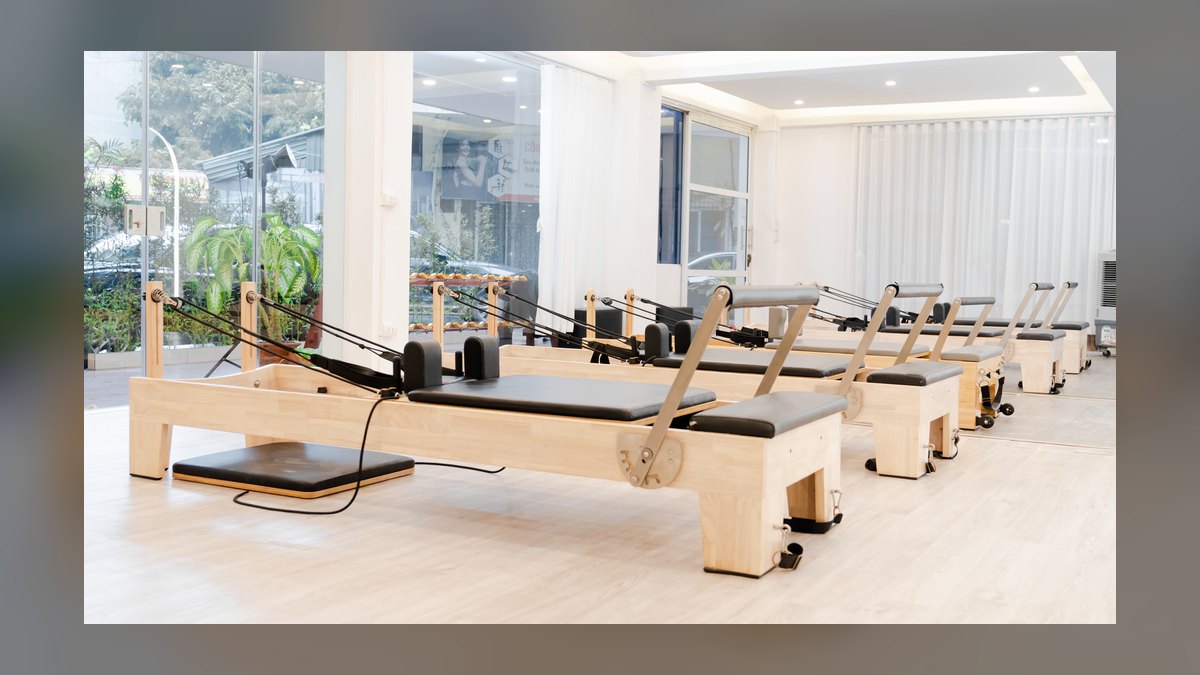
Your format choice drives capital by a factor of five to fifteen, and it drives demographics harder than that. A reformer Pilates studio needs 8 to 16 reformers at roughly $3,500 to $8,500 each — call it $30K to $140K in equipment — and skews heavily female, roughly ages 28 to 55, at $159 to $249 a month. A CrossFit affiliate is the cheapest format to equip: a rig, barbells, bumper plates, a few rowers, maybe $30K to $80K total, plus a modest annual affiliate fee to CrossFit Inc. An OrangeTheory-style HIIT studio is the most expensive on the equipment line, needing treadmills, rowers, weight stations, and heart-rate telemetry, easily $125K to $225K, and needing 2,500 to 3,500 square feet to lay it out. Indoor cycling sits in between at $55K to $220K for 30 to 50 power-metered bikes, plus the sound and lighting spend that makes the format work at all.

Category momentum matters as much as category cost, and this is where founders talk themselves into trouble. Reformer Pilates has been the growth story of the mid-2020s — Club Pilates crossed a thousand US units, Pure Barre sits in the several-hundred range, and premium corporate concepts like Solidcore expanded steadily. HIIT is mature: OrangeTheory holds roughly 1,400 US studios, but the F45 Training collapse after its 2021 IPO — stock from $14 to under $2, hundreds of closures, its celebrity backer walking — proved the same format can be structurally fragile depending on who is running the franchise system. Indoor cycling contracted hard: FlyWheel went bankrupt in 2020, SoulCycle closed dozens of locations. CrossFit affiliate counts fell from a peak near 13,000 to somewhere around 9,500–10,000 after the 2020 Greg Glassman controversy triggered a mass de-affiliation. Boxing, rowing, stretch, and barre are smaller and more mixed.
None of that means "pick Pilates." It means: know whether you are entering a category with a tailwind, a plateau, or a decline, and price your assumptions accordingly. A CrossFit box in an underserved suburb with a coach who already has 150 people following them can be a better business than a reformer studio that is the eleventh Pilates option within two miles.
The step-by-step build: from format decision to grand opening
The sequence below is roughly nine to fifteen months of work, and it does not compress much. Permitting alone runs three to six months in a normal jurisdiction and six to nine in slow ones — Los Angeles, San Francisco, Seattle, Portland are the usual offenders.

Months 1–2: Format, structure, and market. Pick the discipline. Decide franchise or independent. Form the entity, get the state business license, line up general liability and workers' comp quotes — fitness carries real injury exposure and underwriters price it accordingly. Pull demographic data on your target trade area: you want 25,000 to 45,000 households within a three-mile drive at a median household income of roughly $90K to $180K.
Months 2–5: Site and lease. Target a strip center or daytime-traffic plaza with strong 9 a.m. to 2 p.m. foot traffic. Co-tenant signals that predict a good boutique site: a Whole Foods or Sprouts, a specialty coffee shop, a fast-casual health concept, a blowout bar, a lululemon or Athleta, a childcare center. Avoid pure office parks — you get commute-hour traffic and a dead midday. Expect $32 to $55 per square foot NNN in Tier-2 and Tier-3 markets, $55 to $95 in Tier-1 metros, and $22 to $38 in secondary markets. Negotiate a three-to-five-year initial term with one or two five-year options and a tenant improvement allowance of $30K to $80K — more like $80K to $150K if the center is hungry for a traffic-driving tenant.
Months 3–8: Entitlement and permits. Fitness use typically needs commercial C-2/C-3 or mixed-use zoning. A conditional use permit is often triggered by assembly occupancy above roughly 50 people. ADA compliance covers accessible restrooms, parking, and an accessible entry path. Sprinklers are commonly required above about 75 occupancy. Health department review usually only applies if you offer showers.
Months 5–10: Build-out and equipment. Vanilla shell to operational runs $60 to $140 per square foot depending on jurisdiction, finishes, and mechanical scope. A 2,000 sq ft Pilates studio lands around $120K to $280K; a 3,000 sq ft HIIT or premium reformer build lands around $220K to $420K. The line items that matter: sprung wood or rubber-cushion flooring at $8 to $22 per square foot (non-negotiable for any jumping format), sound system $8K to $35K, lighting $5K to $25K (DMX-LED if you're going for the immersive dark-room aesthetic), HVAC $25K to $95K with the top of that range reserved for heated yoga, mirrors $4 to $12 per square foot, locker rooms $25K to $75K, lobby and check-in $15K to $45K. Order reformers early — that supply chain ran 6 to 14 month waitlists during the Pilates boom.
Months 6–11: Presale. Launch founding-member sales 90 to 150 days before opening. This is the single highest-leverage activity in the whole build.
Months 9–15: Hire, train, open. Interview roughly 100 instructor candidates to audition 30 to hire 8 to 12. Hire the studio GM early enough to own the presale. Soft-open with free community classes two to three weeks before the paid schedule starts.
Costs, timelines, and the ranges that actually hold up

Three capital tiers cover most of what gets built. An independent single-discipline studio — Pilates, yoga, barre, boxing — in 1,500 to 2,500 square feet runs $250K to $550K all-in: lease deposits, build-out of $90K to $220K, equipment of $80K to $180K, branding, POS, and six months of working capital. A franchise single unit — Club Pilates, Pure Barre, CycleBar, StretchLab, YogaSix, and the rest of the Xponential portfolio — runs $400K to $850K, because you add a $40K to $60K franchise fee, a brand-mandated equipment package, brand-mandated finishes, and a required grand-opening marketing spend. A flagship HIIT or premium reformer concept — OrangeTheory scale, or a Solidcore-style 2,800 to 3,500 sq ft premium room — runs $700K to $1.2M+.
On the revenue side, franchise disclosure documents are the only semi-public window into unit economics, and they are worth reading in full rather than in summary. The broad shape: Pure Barre-type barre units tend to land in the $400K to $500K average unit volume range, Club Pilates-type reformer units in the $550K to $650K range, CycleBar-type cycling units in the $650K to $900K range, and OrangeTheory in the $650K to $950K range. Independent studios span $400K to $1.4M with much wider variance, because there is no system pulling the weak units up or the strong units down.
Margin structure is the part founders misjudge. Per-class contribution margin at a mature studio runs 62% to 74% — you're collecting $24 to $38 in effective revenue per attendee and paying $35 to $85 in instructor cost plus an allocated share of rent, utilities, and cleaning. That looks luxurious until you carry it down. Net margin lands at 8% to 22% on $400K to $1.4M of revenue for an independent, and 6% to 15% for a franchise after the 7–9% royalty and 2–3% brand fund come off the top line. The franchise trade is explicit: you are buying a playbook, a supplier network, brand recognition, and faster ramp with roughly ten points of gross revenue.

Fixed cost below the class line: a studio general manager at $55K to $80K plus a 5–15% EBITDA bonus, front desk staff at $16 to $22 an hour plus membership-conversion commission. Total non-instructor payroll for a single studio lands around $120K to $220K a year. That number does not scale down when membership is soft, which is why the ramp period hurts.
The capital stack is mostly SBA plus equity. SBA 7(a) goes up to $5M at roughly Prime plus 2.5% to 4.5%, typically 70–85% LTV on a ten-year term; Live Oak Bank is the best-known fitness lender in that channel, with Newtek, Celtic Bank, Byline, and ReadyCap also active. A franchise concept underwrites faster because the Item 19 gives the credit committee something to model; an independent needs a stronger founder track record and more collateral. Equipment financing covers $50K to $300K at 8% to 13% effective over four to six years — Crest Capital, Channel Partners, North Mill and similar shops, plus manufacturer programs on reformers and cardio clusters. Franchise-specialist lenders like ApplePie Capital and Boefly maintain pre-approved concept lists that speed underwriting further. Founder and friends-and-family equity typically covers $80K to $200K of an independent build or $120K to $280K of a franchise build.
Timeline to money: nine to fifteen months lease to opening, then 18 to 30 months to mature membership steady state. Year one revenue of $300K to $700K on 250 to 500 active members, with EBITDA anywhere from negative to plus 5%. Years two and three: 400 to 800 mature members, $500K to $1.2M revenue, 8% to 18% EBITDA. Cash-flow positive typically lands somewhere in months 12 to 24 assuming you hit 60% to 80% of membership capacity — and the single most common founder error is not holding six months of operating expense in reserve past opening day.
Membership pricing, presale, and the aggregator trap
Pricing architecture is where the business is won. The standard ladder: unlimited monthly at $159 to $299 — $179 to $229 is most common in Tier-2 and Tier-3, $229 to $299 in Tier-1 metros; an eight-pack at $159 to $199, which works out to $20 to $25 a class; a four-pack at $89 to $120; and single drop-ins at $25 to $45. Drop-in is your highest per-class revenue and your worst retention, so it's a trial mechanism, not a business model.

The founding-member presale is the structural advantage of this category over almost every other retail startup: you can collect revenue before you have a building. Offer $89 to $129 a month unlimited, rate-locked for 6 to 12 months, to the first 150 to 300 members. Done well, that recoups 35% to 65% of launch capital before you open the door and gives you a retention base on day one instead of an empty schedule. It also creates a modeled cliff: expect 35% to 55% churn when founding members convert to standard rates at month 6 or 12. That is normal. Budget for it rather than being surprised by it, and stagger the conversions so they don't all land in the same month.
Utilization is the other half. Class capacity varies by format — 8 to 16 on reformers, 24 to 36 stations in a HIIT room, 30 to 50 bikes in a cycle studio, 15 to 25 athletes in a CrossFit class, 15 to 30 mats in yoga. Target 55% to 75% average utilization across the full schedule. Under 50% the economics break; sustained above 80% you have turn-away demand and pricing power you should be exercising. A typical week is 40 to 55 classes: seven or eight weekday classes clustered at 5:30 a.m., 6:30 a.m., 9:30 a.m., noon, and the 4:30/5:30/6:30 p.m. block, plus four to six weekend morning classes.
Then there is ClassPass and the corporate aggregators. ClassPass — owned by Mindbody — pays the studio roughly $4 to $12 per booked attendee against your $24 to $38 direct member economics. Wellhub pays roughly $3 to $8 per visit with higher volume. Both fill 10% to 30% of off-peak capacity, and both cannibalize direct membership conversion if you let them. The discipline that works: block peak times entirely, cap aggregator bookings at 20% to 30% of any single class, and treat every aggregator visit as a lead to convert rather than a customer to serve. Studios that let ClassPass fill the 6 p.m. class discover their best direct members can't book their own gym.
Ancillary revenue is real but secondary: branded apparel, water, and bars run 5% to 12% of revenue at 35% to 55% margin. One-on-one and small-group personal training at $80 to $140 an hour is high margin and underused. Workshops and teacher training — very common in Pilates and yoga — run $200 to $650 per student and can be a meaningful second line for a studio with a credentialed lead instructor.
Instructor talent, classification risk, and where operators actually lose

Members follow instructors, not brands. That single sentence explains most boutique fitness failure and most boutique fitness acquisition cost. Average instructor tenure runs 12 to 24 months, and when a popular instructor leaves for a competitor offering 25% to 50% more per class, a meaningful slice of their class roster leaves with them.
Pay ranges: $45 to $85 per class in Tier-2 and Tier-3 metros, $75 to $140 in Tier-1. Yoga and barre often sit lower at $35 to $65. CrossFit coaches, Pilates instructors, and boxing coaches sit higher at $55 to $110. Premium concepts pay $95 to $180 per class for proven draws. Run the math on a full class: 15 to 25 attendees at $20 to $30 effective revenue is $300 to $750 of class revenue against $45 to $140 of instructor cost — 70% to 85% contribution on direct members, but only 35% to 55% once ClassPass fills a third of the room.
Classification is the compliance issue that has moved most in the last several years. The category historically ran on 1099 independent contractors at a flat per-class rate. California's Dynamex decision and the subsequent AB5 statute, followed by a federal Department of Labor rule in 2024, pushed many class-based instructors toward W-2 status — particularly instructors who teach exclusively for one studio, on the studio's schedule, using the studio's equipment. W-2 conversion adds roughly 12% to 22% to instructor cost through payroll taxes, workers' comp, and benefits eligibility. Get an employment attorney to review your specific arrangement in your specific state before you build a pro forma on 1099 assumptions; retroactive reclassification with penalties has ended studios.
The defenses against poaching are structural, not emotional. Founding-instructor equity grants of 0.5% to 3% vesting over three to four years. Revenue share of $1 to $3 per attendee above a threshold — 15 is a common trigger — which aligns the instructor with filling the room rather than just showing up. A lead-trainer or mentor track that gives senior instructors a title, a rate bump, and authority over programming. Ancillary income access through personal training and workshops so your best people can earn $60K to $90K without leaving.

Where operators get it wrong, in rough order of frequency: underestimating the ramp and running out of cash in month 10; signing a lease with no TI allowance because they were desperate for the site; letting ClassPass fill peak classes; building a schedule around the founder's availability instead of member demand; skipping the presale because the build ran late; hiring instructors on personality alone without checking whether they can sell a membership at the end of class; and treating retention as marketing's job rather than the instructor's. On that last one — the automated Day 1 / 7 / 14 / 30 / 60 / 90 check-in sequence, attendance milestones at 10 / 50 / 100 classes, and personal-best celebrations are table stakes now, not differentiators. Monthly churn of 4% to 9% is normal for boutique against 3% to 5% for full-service gyms; the studios that outperform do it through instructor relationships and community, not through email cadence.
The operational tooling is worth naming because it drives staff productivity and churn early-warning. Booking and member CRM is dominated by Mindbody at roughly 30–40% of the boutique market, with ClubReady and Mariana Tek common in franchise systems, Glofox (now under ABC Financial) in the small-to-mid independent segment, and Wodify essentially standard in CrossFit affiliates. Billing runs through ABC Financial, Mindbody Payments, or Stripe, and your recurring billing must handle failed-card retries, dunning, freezes, pauses, and cancellation flows without staff intervention. Retention analytics tools flag at-risk members before they churn — the pattern that matters is attendance frequency decay, not membership age.
This is where the discipline borrowed from RevOps pays off in a business that looks nothing like software: instrument the funnel end to end, define the lifecycle stages explicitly, and measure CAC and LTV per channel rather than in aggregate. Boutique CAC runs $80 to $180 and LTV runs $1,200 to $3,800 across a 6 to 18 month average retention. Referral — "bring a friend free" and "refer three, get a month" — typically drives 25% to 40% of new members and carries the highest LTV of any channel, which means it deserves more operational attention than the paid social spend most operators default to.
Decision framework: choosing your path, and knowing your exit before you sign
Work the decision in this order, because each answer constrains the next: capital available → format → franchise or independent → market tier → site. Founders who start at "I found a great space" instead of "here is my capital and my format" almost always overbuild.

The franchise-versus-independent call comes down to three honest questions. Do you already have a local following of 200 to 500 people who would follow you into a new room? If yes, independent is likely better — you don't need to rent brand recognition, and you keep the 7–9%. Have you operated a service business with hourly staff before? If no, the franchise playbook is worth its royalty, because the operational learning curve is where first-timers burn their reserve. Is your target market already saturated with the concept you want to run? Tier-1 metros can run 8 to 15 boutique studios per square mile; if the answer is yes, either pick an underserved format or pick a different trade area, because neither brand nor build-out solves for a crowded corner.
Know the exit math before you sign a five-year lease. A single-unit franchise resale typically trades at 2–4× seller's discretionary earnings, $300K to $1.2M, to an aspiring owner-operator or a franchisee-portfolio investor, brokered through the standard business-brokerage networks. A multi-unit operator with three to seven studios trades at 3–5× EBITDA, $2M to $15M, to a regional portfolio buyer or family office. Area developer territory with a real development pipeline trades at 4–7× EBITDA to private equity fitness platforms or back to the franchisor. Strategic acquisitions by a franchisor or competitor can reach 5–10× when the territory or brand is genuinely strategic. And a distressed wind-down recovers asset value only: equipment to used-gym dealers, lease assigned to a similar concept if the landlord permits.
The sober framing: public-market exits for fitness have been effectively closed since 2022. F45's collapse and Xponential's own drawdown from its 2021 peak reset multiples across the category. Plan for an operator-to-operator sale or a long-term cash-flow hold, not a headline exit.
Related questions
Is a CrossFit affiliate cheaper to open than a Pilates studio?
Yes, substantially. CrossFit equipment — rig, barbells, plates, rowers — runs $30K to $80K against $30K to $140K for 8 to 16 reformers, and the affiliate license fee is nominal versus a $40K to $60K franchise fee. But affiliate counts have declined since 2020, so the demand side is harder.
How many members do I need to break even?
Most single-discipline studios need 250 to 400 active members paying an average of $150 to $200 a month, which puts break-even revenue roughly in the $45K to $70K monthly range against rent, payroll, and debt service. Reaching that typically takes 12 to 24 months.
Should I take ClassPass at launch?

Use it deliberately, off-peak only, capped at 20% to 30% of any class. It fills empty morning and midday slots and generates trial volume at $4 to $12 per visit. Left uncapped, it displaces $24 to $38 direct members and permanently anchors your price.
What insurance does a boutique fitness studio actually need?
General liability, professional/participant liability covering instructor-led injury, property coverage on build-out and equipment, and workers' compensation. Injury claims are the category's largest legal exposure, so signed waivers plus documented instructor certification are operational requirements, not paperwork.
Can I open a boutique studio while keeping my day job?
Rarely, and not well. Founders report 60 to 80 hour weeks through years one and two, and the presale and opening period demand full-time presence. A studio GM hired early can absorb some of it, but that's $55K to $80K of payroll before you have revenue.
FAQ
How much capital do I realistically need to open a boutique fitness studio in 2027?
Plan on $250K to $550K for an independent single-discipline studio, $400K to $850K for a franchise single unit including the $40K to $60K franchise fee, and $700K to $1.2M+ for an OrangeTheory-scale HIIT flagship or a premium reformer concept. Roughly $80K to $280K of that is typically founder and friends-and-family equity, with the balance financed through SBA 7(a) and equipment lending. Whatever number you land on, add six months of operating expense as reserve — that reserve, not the build budget, is what carries you through the ramp.
How long until the studio is profitable?
Nine to fifteen months from lease signature to grand opening, then 12 to 24 months to cash-flow positive assuming you reach 60% to 80% of membership capacity. Mature steady state — 400 to 800 members, $500K to $1.2M revenue, 8% to 18% EBITDA — usually lands somewhere in years two and three. Founders who model break-even at month six are the ones who run out of cash in month ten.
Franchise or independent — which actually makes more money?
An independent keeps 100% of gross and can net 8% to 22%; a franchise nets 6% to 15% after the 7–9% royalty and 2–3% brand fund. But the franchise ramps faster, finances more easily because the Item 19 gives lenders something to underwrite, and comes with an operations playbook that first-time operators genuinely need. If you already have a local instructor following and service-business operating experience, independent wins. If you have neither, the royalty is buying you real things.
What actually kills boutique studios?
Retention and instructor turnover, not capital or build-out. Boutique monthly churn runs 4% to 9% against 3% to 5% for full-service gyms, and instructor tenure averages 12 to 24 months. When a popular instructor leaves for a competitor paying 25% to 50% more, part of their roster goes with them. The secondary killers are undercapitalized ramps, ClassPass displacing direct members at peak, and Tier-1 market saturation where 8 to 15 studios compete within a square mile.
Do I need to be a certified instructor to own a studio?
Not legally in most cases, but practically it changes the business. Founder-instructors bring an existing following that makes the presale work and can cover classes when someone calls out — a meaningful cost and continuity advantage in year one. Non-instructor owners need a strong lead instructor from day one and should budget more for talent, since you're buying the relationship rather than owning it.
How does the 1099 versus W-2 question affect my model?
California's AB5 and the 2024 federal Department of Labor rule pushed many class-based instructors toward employee classification, particularly those teaching exclusively for one studio on the studio's schedule with the studio's equipment. Converting to W-2 adds roughly 12% to 22% to instructor cost via payroll taxes, workers' comp, and benefits. Have an employment attorney review your arrangement in your state before you build a pro forma on contractor rates — retroactive reclassification with penalties has closed studios that were otherwise viable.
Sources
- IHRSA — Health & Fitness Association: https://www.healthandfitness.org
- Xponential Fitness investor relations (Club Pilates, Pure Barre, CycleBar, StretchLab, YogaSix, Row House franchise disclosures): https://investor.xponential.com
- Orangetheory Fitness franchise information: https://www.orangetheoryfranchise.com
- CrossFit affiliate program: https://www.crossfit.com/affiliate
- U.S. Small Business Administration — 7(a) loan program: https://www.sba.gov/funding-programs/loans/7a-loans
- U.S. Department of Labor — employee vs. independent contractor classification: https://www.dol.gov/agencies/whd/flsa/misclassification
- California Labor & Workforce Development Agency — AB5 independent contractor guidance: https://www.labor.ca.gov/employmentstatus/
- ADA National Network — accessibility requirements for public accommodations: https://adata.org
- Mindbody business resources and industry reports: https://www.mindbodyonline.com/business
- Balanced Body — Pilates reformer equipment and commercial studio programs: https://www.pilates.com
Related on PULSE
- Should I open or buy an Orangetheory Fitness franchise in 2027?
- How Many Employees Should I Schedule Each Shift at My CrossFit Box?
- How do you start a boutique fitness studio business in 2027?
- How Many Salespeople Should I Schedule Each Day at My Apparel Boutique?
- Should I open or buy a Smart Style franchise in 2027?
This page will be disappearing soon. Save it to your device for $1 — or read it free while it is here.
@Kory-White- · if Venmo asks, the last 4 of my number are 2012
This page is gone.
This one is off the shelf now. $1 keeps it on your phone for good — the whole page, pictures and diagrams included.
 boutique-fitnessHow do you start a boutique fitness studio business in 2027?
 fitness-studioHow do you start a fitness studio in 2027?
 microbreweryHow do you start a microbrewery (craft brewery) business in 2027?
 esthetician-skincare-studioHow do you start a esthetician skincare studio business in 2027?
 pilates-studioHow do you start a pilates studio business in 2027?
 iv-therapyHow do you start a IV therapy clinic business in 2027?
 pickleballHow do you start a pickleball court rental business in 2027?
 yoga-studioHow do you start a yoga studio business in 2027?
 padelHow do you start a padel club business in 2027?
 cabinet-refacingHow do you start a cabinet refacing business in 2027?