


Zero to One by Peter Thiel — Cliff Notes Summary
Quality
Certified
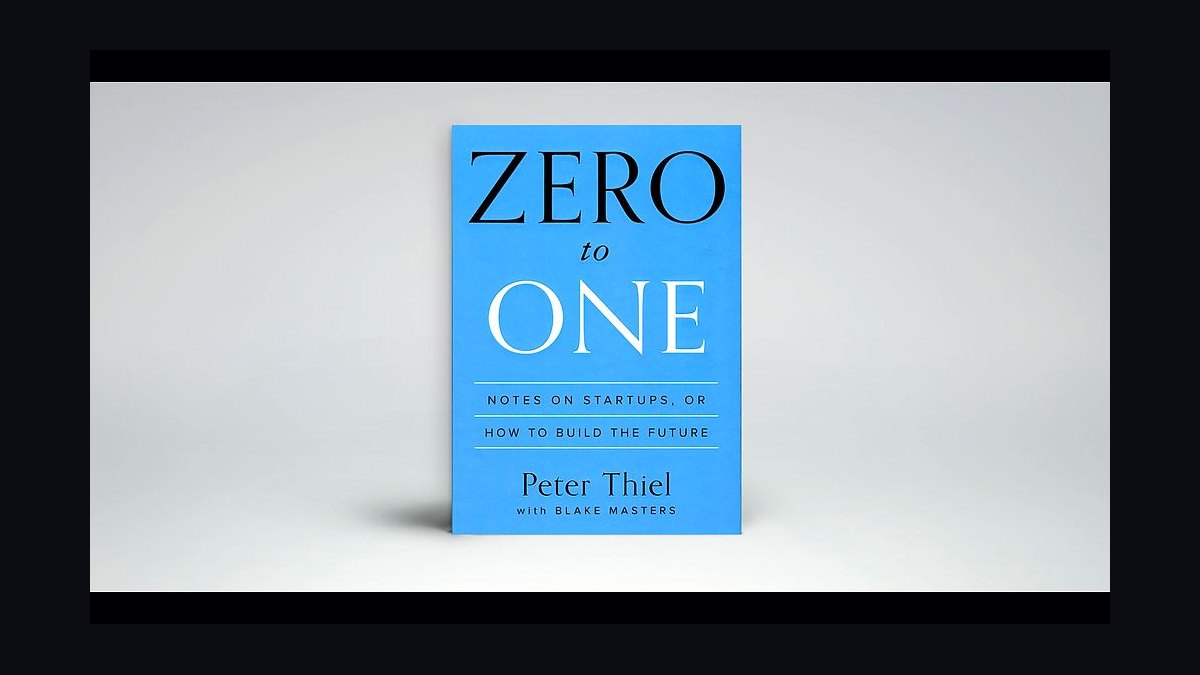
Zero to One is Peter Thiel's 2014 startup manifesto, built from Blake Masters' Stanford CS183 notes. Its core claim: competition destroys profits, so founders should build a monopoly in a tiny niche and expand outward. Going 0 to 1 means creating something new; 1 to n means copying. Distribution matters as much as product.
The two books inside Zero to One, and why readers pick the wrong one
Most people read Zero to One as a philosophy book and remember exactly one line — "competition is for losers." That is the first book inside it, and it is the one that gets quoted in pitch decks, Twitter threads, and board meetings. The second book is a distribution manual hiding in Chapters 11 through 13, and almost nobody who quotes the first book has re-read the second. If you are a go-to-market leader rather than a founder, the second book is the one you actually paid for.
Book one is the monopoly thesis. Thiel's argument runs: perfect competition, the state economics textbooks treat as the healthy default, drives economic profit to zero by definition. Every firm in a commoditized market sells at marginal cost, and marginal cost in a mature industry is a brutal number. Restaurants are the running example — a good restaurant in a city with four hundred other good restaurants captures none of the surplus it creates, because the customer's next-best alternative is three blocks away and nearly identical. A monopoly, by contrast, captures the whole surplus and can therefore fund a ten-year research program, pay above market, and think past the current quarter. Thiel's inversion is that monopoly is not the pathology and competition the health; it is the reverse. He then notes that both sides lie about it: monopolists understate their share to dodge antitrust scrutiny, and competitors overstate their uniqueness to attract investors. The Google example is his: describe it as a search company and its share looks monopolistic; describe it as an advertising company or a technology company and the share shrinks to something unremarkable. Same firm, three market definitions, three completely different antitrust stories.
Book two is the distribution thesis, and it starts from an observation engineers hate: good sales is invisible, so technical people conclude sales does not matter. The bad sales you notice — the cold call, the aggressive booth, the seven-follow-up sequence — is a biased sample. The sales that worked did not feel like sales. Thiel's line, and the one worth underlining for anyone carrying a number, is that distribution is a hidden bottleneck. A product that is 10x better with no channel loses to a product that is 1.2x better with a channel that reaches the buyer. This is not a controversial claim in a sales org; it is heresy in an engineering org, which is exactly why the chapter exists.

The two books recommend different weekly behavior, which is why choosing between them matters. Book one tells you to narrow — pick a segment so small it looks embarrassing, own it completely, then expand into adjacent segments only after you dominate. Book two tells you to match the channel to the price point and refuse to straddle. A founder who internalizes only book one builds a beautiful product for a niche and never reaches it. A GTM leader who internalizes only book two builds an efficient machine that sells an undifferentiated product into a market where three competitors are doing the same thing at lower margin. The synthesis — narrow market, one channel, both mastered — is the actual prescription, and it is why this Cliff Notes summary treats the two halves as a pair rather than a sequence.
There is a third reading, less common, that treats the book as a hiring and culture text. Chapters 9 and 10 — Foundations and The Mechanics of Mafia — are short but load-bearing. Thiel's Law says a startup messed up at its foundation cannot be fixed, and the claim is narrower and more useful than it sounds: cap table splits, co-founder relationships, board composition, and the first ten hires set patterns that nobody renegotiates once revenue starts. You can change your pricing, your ICP, your positioning, and your product in year three. You will not change a three-way founder split that was decided over beers in week two.
How to decide which framework to apply to your situation
Zero to One contains at least six named frameworks, and applying the wrong one to your situation is the most common way readers waste the book. The decision is not "which framework is best" but "which question am I actually facing this quarter."
If you are choosing a market to enter, use the monopoly test: is there a small market where you could plausibly hold a majority share within eighteen to twenty-four months? Thiel's counterintuitive instruction is to start with a market small enough that dominance is achievable, then expand concentrically. PayPal's initial beachhead was eBay power sellers — a population in the low tens of thousands, which sounded pathetic next to "payments" as a category and was precisely the point. The test fails if your honest answer is "we'd have maybe 3% of a huge market," because 3% of a big market means you are a price-taker in a competitive field, which is book one's definition of a bad business.
If you are evaluating whether a business is worth building at all, use the 7 Questions: engineering (is the technology 10x better, not 10% better?), timing (why now?), monopoly (are you starting with a big share of a small market?), people (do you have the right team?), distribution (can you deliver the product, not just build it?), durability (will your position hold in ten to twenty years?), and secret (have you identified an opportunity others don't see?). Thiel's claim is that great companies answer yes to all seven, and businesses that answer yes to five or six can still fail on the two they missed. His worked example is the 2005–2012 cleantech wave, which he argues missed all seven at once — commodity technology, wrong timing, fragmented markets, non-technical teams, no distribution, no durability, and no secret beyond "energy is important," which everyone already knew.
If you are choosing a go-to-market channel, use the sales power law. And if you are diagnosing why your organization plans badly, use the definite/indefinite optimism grid — the four-quadrant model from Chapter 6 that splits worldviews into definite optimism (the future is better and we know how to build it), indefinite optimism (better, but we have no plan, so diversify and hedge), definite pessimism (grim but predictable, so prepare), and indefinite pessimism (decline managed without a story). Thiel's diagnosis of Silicon Valley is indefinite optimism: raise capital without a concrete roadmap, spread bets across hundreds of companies, optimize rather than build. The operator translation is a familiar smell — a planning process that produces a portfolio of hedges instead of a bet.
The frameworks are not interchangeable, and stacking them all onto one decision produces analysis paralysis. Pick the one that matches the question in front of you, answer it honestly, and move.
The concrete numbers behind each option
Zero to One is unusually specific for a philosophy-adjacent business book, and the numbers are where the strategy becomes operational.
The 10x rule is the most cited. Thiel argues proprietary technology must be roughly ten times better than the closest substitute along some dimension that matters — speed, cost, accuracy, or a capability that simply did not exist before. A 2x improvement is a feature; buyers will not switch, because switching costs, retraining, and integration risk eat the gain. His examples are PageRank against the prior generation of search, and Amazon's early catalog breadth against a physical bookstore's shelf space. The operator translation is blunt: if your differentiation slide requires a comparison table with nine rows and green checkmarks, you do not have 10x. You have parity plus features.
The sales power law splits distribution into four bands by annual contract value, and the boundaries are the useful part. Complex sales sits at roughly $100k and above per deal — CEO-led, twelve-month-plus cycles, a handful of customers, and the founder personally in every room. Palantir is Thiel's own example. Personal sales runs roughly $1,000 to $100,000 — quota-carrying reps, a repeatable process, a sales cycle measured in weeks to a couple of quarters. Marketing and advertising covers roughly $10 to $1,000 — mass channels, no human in the loop, unit economics governed by CAC-to-LTV. Viral distribution lives under about $10, where the product itself recruits the next user; PayPal's referral mechanic is the case study.
The dead zone is the actionable insight. A $5,000-per-year product is too expensive to sell purely through advertising — the conversion economics don't survive the price — and too cheap to justify a rep whose fully loaded cost, quota, and commission require far more revenue per closed deal. Companies stuck there either raise price and staff a sales team, or lower price and engineer self-serve. Straddling is the failure mode, and it explains a pattern any GTM leader has watched: a product-led company crosses roughly $10M ARR, discovers enterprise buyers want procurement, security review, and a contract, and quietly hires the sales team it spent three years insisting it would never need.
The power law of venture returns is Chapter 7's number, and it is a distribution claim rather than an average. In a typical venture fund, the single best investment returns more than every other investment combined, and the top two return more than the remaining portfolio. The implication Thiel draws is that spreading bets uniformly is irrational — you should only start or fund a company that could plausibly be the one that returns the fund. Sebastian Mallaby's later history of venture capital, The Power Law, is the book-length treatment of the same distributional fact if you want the empirical version.
The four monopoly characteristics come with their own thresholds. Proprietary technology needs the 10x. Network effects need a product that is genuinely more valuable to user N+1 because users 1 through N exist — and Thiel notes network-effect businesses must start with a small market precisely because the early product has to be valuable to a tiny group before the network exists. Economies of scale need marginal costs that fall toward zero, which is why software qualifies and services businesses generally do not. Branding is the weakest of the four on its own, and Thiel is explicit that brand without substance is a trap: you cannot become Apple by copying Apple's aesthetics.
On board composition, Chapter 9 gives a number: three. Small boards force real conversations; large boards produce ceremony. He also argues against part-time founders and for low cash plus high equity as a filter for people who actually believe the long-term thesis.
Implementation details and sequencing for a GTM team
Reading Zero to One and applying it are separate activities, and the sequence matters. Here is the order that works for a revenue team rather than a founder writing a first deck.
Start with the contrarian question, because it is a positioning exercise disguised as an interview screen. Thiel asks candidates: what important truth do very few people agree with you on? A good answer is both true and unpopular. Most answers fail by being popular truths dressed as heresy — the education system is broken, the news is biased, everyone underestimates China. Run the question at your own company: what does your team believe about your buyer that your three closest competitors demonstrably do not believe? If the answer is nothing, your differentiation is feature-level and your pricing power will erode.
Second, score the 7 Questions honestly, with the caveat that "honestly" is the load-bearing word. The failure mode is a leadership offsite where every question gets a yes because nobody wants to be the person who says the technology is 1.5x. Assign each question to a different owner, require evidence rather than assertion, and treat any question with a weak answer as the quarter's actual roadmap item. Cleantech's failure, in Thiel's telling, was not that founders missed one question; it was that the sector's enthusiasm made all seven questions feel already answered.
Third, pick exactly one distribution channel and audit whether your current motion matches your ACV. Compute your real average contract value — not your aspirational enterprise pricing, the actual blended number from the last four quarters. Map it onto the four bands. If your ACV says personal sales and you are running paid acquisition, your CAC will be structurally broken no matter how good the creative is. If your ACV says viral and you have hired six AEs, your cost structure will outrun your revenue. Fix the mismatch before optimizing anything inside the channel.
Fourth, narrow the beachhead until it feels uncomfortably small. The instruction most teams resist is defining a segment they could actually dominate — a specific industry, company size, and workflow, not a persona description that would fit forty thousand accounts. Write the list. If you cannot enumerate the target accounts, the segment is too broad to dominate and you are back in the competitive frame.
Fifth, sequence the expansion concentrically rather than opportunistically. Once you own the beachhead, the adjacent segment should share either the buyer or the workflow — ideally both. Amazon's books-to-CDs-to-everything path is Thiel's example; the adjacency was the logistics and catalog infrastructure, not the product category. The failure mode is chasing whichever inbound lead is largest, which scatters the roadmap across unrelated buyers and rebuilds the competitive position you just escaped.
A practical caution on sequencing: steps three and four fight each other if you run them simultaneously. Narrowing the segment lowers your near-term pipeline, and changing the channel disrupts your existing motion. Do one per quarter, instrument the change, and keep the other constant so you can attribute the result.
Where the book has aged, and where it has not
Any Cliff Notes treatment that presents a 2014 book as timeless is doing the reader a disservice, so here is the honest split.
What holds up: the monopoly thesis, unusually well. The category-defining software companies of the decade after publication followed the pattern closely enough that the book reads as a description rather than a prediction — pick a narrow workflow, own it entirely, expand into adjacent workflows once the core is unassailable. The distribution thesis holds up even better, and arguably better than Thiel expected. The product-led growth wave of the late 2010s was in some ways a bet against Chapter 11, and the pattern of PLG companies eventually building enterprise sales motions is the chapter reasserting itself. The 7 Questions remain one of the fastest thesis-killing checklists available, largely because they force specificity in the two places founders are vaguest: timing and distribution.

What has aged less well: the cleantech post-mortem in Chapter 13 now looks one-sided. Written in the aftermath of a genuine bubble, it treats the sector's failure as structural, and the subsequent trajectory of solar, batteries, and electric vehicles complicates that verdict considerably. The failures were real; the conclusion that the whole category failed the 7 Questions permanently was too strong. The book is also silent on several things that became central afterward — consumer privacy, AI safety and alignment, and the entire crypto arc — which is unremarkable for a 2014 text but worth knowing before you treat it as a complete map. And Thiel's subsequent political activity has made the book polarizing in a way it was not on publication, which affects how it lands in a room even when the framework itself is doing the work. If that is a problem in your organization, the frameworks survive being cited without the author's name attached.
The Man and Machine chapter — computers as complements to human judgment rather than substitutes — has aged interestingly. Written as a defense of Palantir's analyst-in-the-loop model, it reads now as an early articulation of the copilot pattern that dominates enterprise AI product design. Whether that is prescience or a case of a general claim finding a specific moment is a fair debate, but the operational advice is sound: the durable products pair machine inference with a human who owns the decision.
Where Zero to One sits in the strategy canon
Zero to One does not stand alone, and reading it next to its neighbors sharpens what is actually novel in it.
Geoffrey Moore's Crossing the Chasm (1991) is the direct ancestor of the beachhead instruction. Moore's bowling-pin model — dominate one segment completely, use it as a reference to knock over the adjacent one — is structurally the same advice as Thiel's concentric expansion, arrived at from a technology-adoption-lifecycle angle rather than a monopoly-economics one. If you find Thiel's version too abstract, Moore's is the operational manual with more segmentation mechanics.
Clayton Christensen's The Innovator's Dilemma (1997) answers a different question. Christensen explains why well-run incumbents lose to disruptors — because listening to their best customers rationally prevents them from serving the low-end market where the disruption starts. Thiel explains where a challenger should build. Diagnosis versus prescription. Read together they cover both sides of the same transition, and the disagreement between them is real: Thiel is openly skeptical of "disruption" as a framing, arguing it makes founders define themselves against incumbents rather than building something genuinely new.

Play Bigger (2016) by Ramadan, Peterson, Lochhead, and Maney is the category-design successor, and it takes Thiel's monopoly insight and turns it into a marketing methodology — if the goal is to own a category, then naming and framing the category is the primary GTM act. It is more tactical and less philosophical.
Eric Ries's The Lean Startup (2011) is the book Thiel argues against most directly. Chapter 2's four "lessons" of the dot-com crash — incremental advances, stay lean, improve on the competition, product over sales — are a fairly direct description of lean methodology, and Thiel reverses all four. The honest synthesis: lean is a good method for reducing waste inside a plan, and a bad substitute for having a plan. Ries tells you how to test; Thiel tells you what is worth testing.
Ben Horowitz's The Hard Thing About Hard Things (2014), published the same year, is the operational counterweight. Thiel writes about choosing correctly; Horowitz writes about what happens after you have chosen and things are going badly anyway. A founder needs both, and the pairing is common in reading lists for good reason.
For a sales-specific reader, the connection to The Challenger Sale is worth drawing. Challenger's teach-tailor-take-control model works best when the seller genuinely knows something the buyer does not — which is the commercial expression of Thiel's secret. If you have no secret, the Challenger motion degrades into aggressive rapport-building, because there is nothing to teach. A differentiated insight is the prerequisite for the whole methodology, and Zero to One's Chapter 8 is the best short treatment of where such insights come from: secrets about nature (what the world permits that nobody has tested) and secrets about people (what buyers want but will not say out loud in a discovery call).
Related questions
Is Zero to One useful if I am not starting a company?

Yes, for two audiences. GTM leaders get Chapter 11's distribution model, which is directly applicable to channel strategy at any stage. Operators get the 7 Questions as an evaluation checklist for new product bets, partnerships, or acquisitions inside an existing company.
What is the shortest useful version of the book?
Chapters 3 through 5 for the monopoly thesis, Chapter 11 for distribution, and the 7 Questions list from Chapter 13. That is roughly sixty pages and covers the frameworks that get cited. Blake Masters' original CS183 lecture notes cover much of the same ground.
Does the monopoly argument mean I should ignore competitors?
No. It means you should not define your strategy as beating them on their axis. Track competitors for pricing intelligence and deal-level positioning, but pick a market position where the comparison is unnatural rather than one where you win a feature bake-off.
How does the 10x rule apply to a services or consulting business?
Imperfectly. The 10x rule assumes proprietary technology with near-zero marginal cost. Services businesses lack economies of scale, so differentiation has to come from brand, specialized expertise, or network effects among clients. Thiel would say this makes services structurally harder to monopolize.
What does "last mover advantage" actually mean?
That the goal is not to be first into a category but to be the final dominant company in it. First movers frequently get displaced. Thiel's point is that early advantage only matters if it converts into a durable position — cash flows ten to twenty years out are where the value sits.
FAQ
Is Zero to One a sales book?
Not primarily — it is a startup strategy book. But Chapter 11, "If You Build It, Will They Come?", is one of the few venture-authored treatments that takes B2B distribution seriously, and the sales power law it introduces is worth the book's price for a GTM leader. Most readers remember the monopoly line and forget this chapter entirely.
What is the contrarian question and how should I answer it?
"What important truth do very few people agree with you on?" A good answer must be both true and genuinely unpopular. Answers that fail are popular positions framed as heresy — the education system is broken, the media is biased. A real answer is the seed of a company thesis, because it identifies where your view and the market's diverge.
What are the four characteristics of a monopoly?
Proprietary technology at least 10x better than the substitute, network effects, economies of scale, and branding. A durable position usually stacks at least two; the strongest companies stack all four. Branding alone is the weakest and most commonly faked.
Why does Thiel say competition is for losers?
Because in a perfectly competitive market, economic profit tends toward zero — firms sell at marginal cost and capture none of the value they create. Only a firm with a defensible position keeps enough surplus to fund long-horizon investment. The claim is about profit capture, not about avoiding effort.
How do I know if I am in the distribution dead zone?
Compute blended ACV over the last four quarters. If it lands in the low thousands, you are likely too expensive for pure self-serve acquisition economics and too cheap to support a quota-carrying rep. The fix is repricing upward with a sales motion, or repricing downward with genuine self-serve — not splitting the difference.
Who actually wrote the book?
Peter Thiel taught the CS183 course at Stanford in 2012; student Blake Masters published detailed lecture notes that circulated widely, and the two turned them into the book, published by Crown Business in 2014. Masters is credited as co-author.
Sources
- https://www.penguinrandomhouse.com/books/227311/zero-to-one-by-peter-thiel-with-blake-masters/
- https://blakemasters.com/peter-thiels-cs183-startup
- https://foundersfund.com/the-founders/
- https://hbr.org/1997/01/what-is-strategy
- https://www.hbs.edu/faculty/Pages/profile.aspx?facId=6428
- https://www.penguinrandomhouse.com/books/565284/the-power-law-by-sebastian-mallaby/
- https://www.penguinrandomhouse.com/books/104903/the-lean-startup-by-eric-ries/
- https://www.harpercollins.com/products/the-hard-thing-about-hard-things-ben-horowitz
- https://www.wsj.com/articles/peter-thiel-competition-is-for-losers-1410535536
Related on PULSE
- The ONE Thing by Gary Keller — Cliff Notes Summary for Sellers
- Managing Oneself by Peter Drucker — Cliff Notes Summary
- The Effective Executive by Peter Drucker — Cliff Notes Summary
- Crossing the Chasm by Geoffrey Moore — Cliff Notes Summary
- The Innovator's Dilemma by Clayton Christensen — Cliff Notes Summary
- Play Bigger — Cliff Notes Summary
This page will be disappearing soon. Save it to your device for $1 — or read it free while it is here.
@Kory-White- · if Venmo asks, the last 4 of my number are 2012
This page is gone.
This one is off the shelf now. $1 keeps it on your phone for good — the whole page, pictures and diagrams included.
 pulse-recentCoaching Salespeople into Sales Champions by Keith Rosen — Top 10 Key Takeaways for Sales Leaders in 2027
 pulse-recentBlue Ocean Strategy by W. Chan Kim and Renee Mauborgne — Top 10 Key Takeaways for Sales Leaders in 2027
 pulse-recentWhat are the concrete steps to implement the Sandler Rules for Sales Leaders by David Mattson in 2027?
 pulse-recentWhat is the first concrete step in the Sandler Selling System for handling a prospect's initial brush-off in 2027?
 pulse-recentThe Collaborative Sale by Keith Eades — Top 10 Key Takeaways for Sales Leaders in 2027
 pulse-recentWhat is the first concrete step in SPIN Selling by Neil Rackham for structuring a discovery call in 2027?
 pulse-recentWhat is the step-by-step process for Strategic Selling by Miller Heiman in 2027?
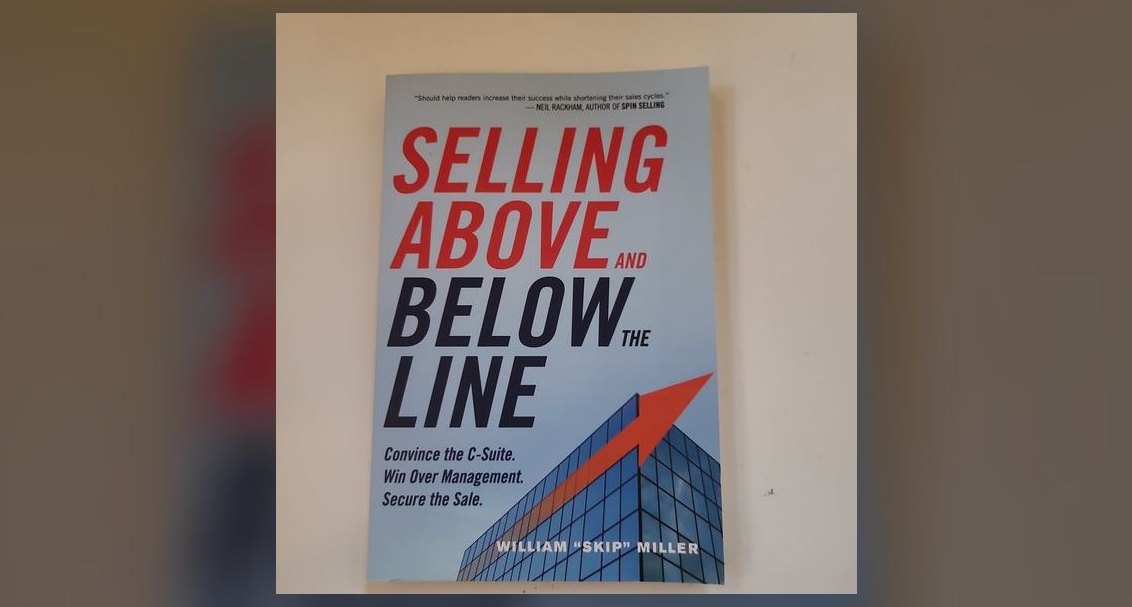 pulse-recentSelling Above and Below the Line by Skip Miller — Top 10 Key Takeaways for Sales Leaders in 2027
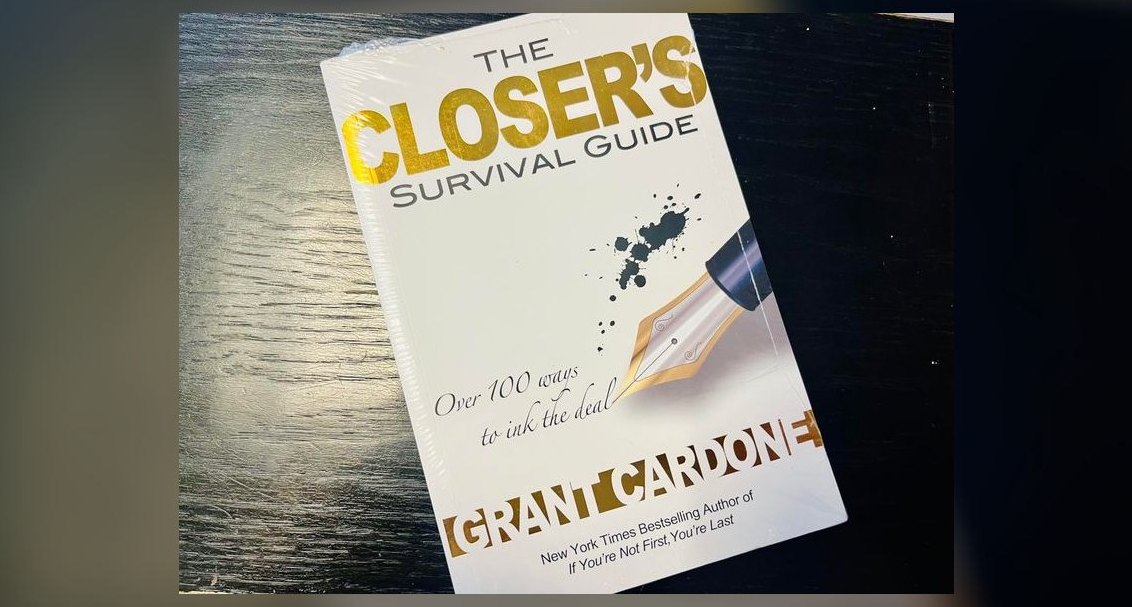 pulse-recentThe Closer’s Survival Guide by Grant Cardone — Top 10 Key Takeaways for Sales Leaders in 2027
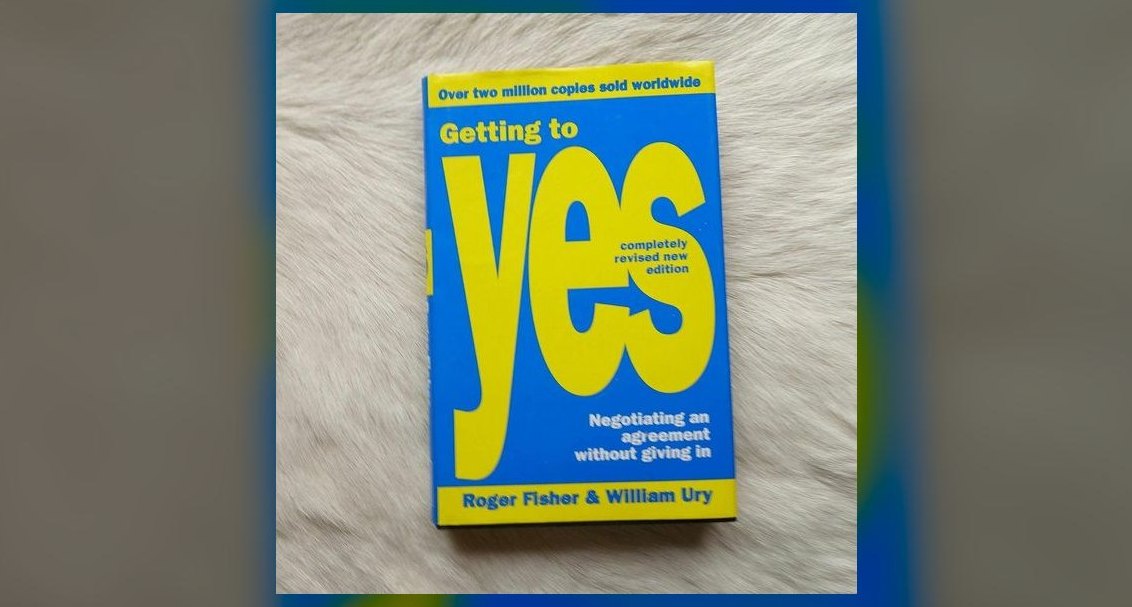 pulse-recentGetting to Yes by Roger Fisher and William Ury — Top 10 Key Takeaways for Sales Leaders in 2027