


The Challenger Customer by Adamson, Dixon, Spenner & Toman — Cliff Notes Summary
Quality
Certified
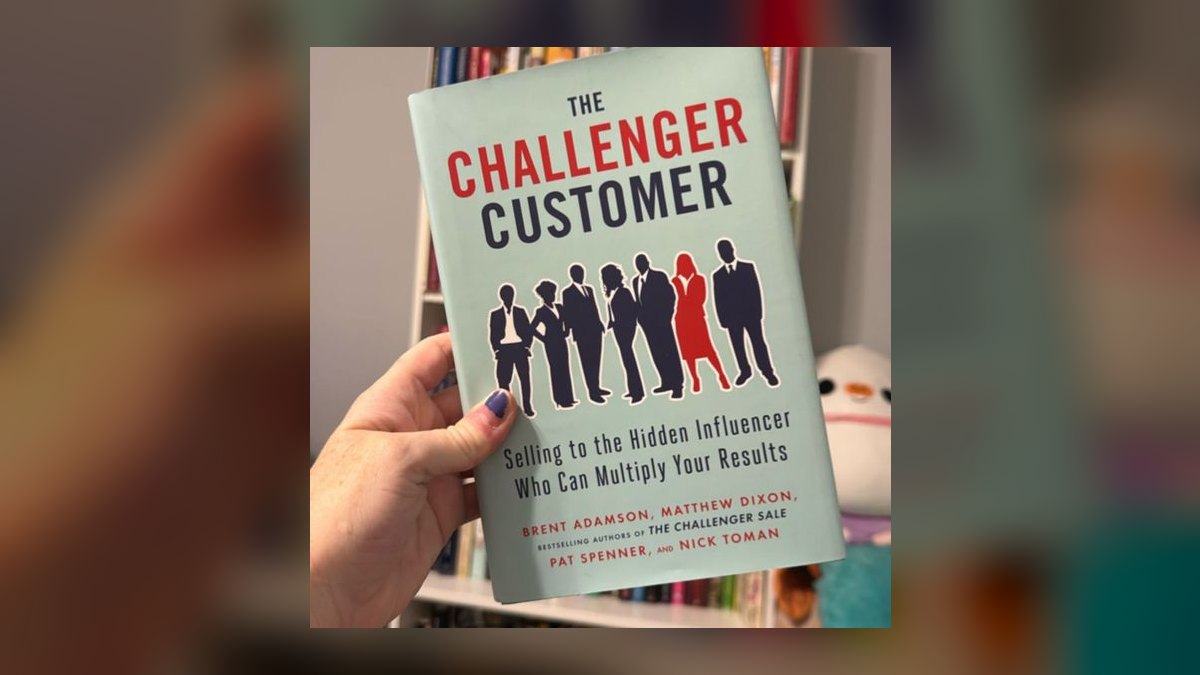
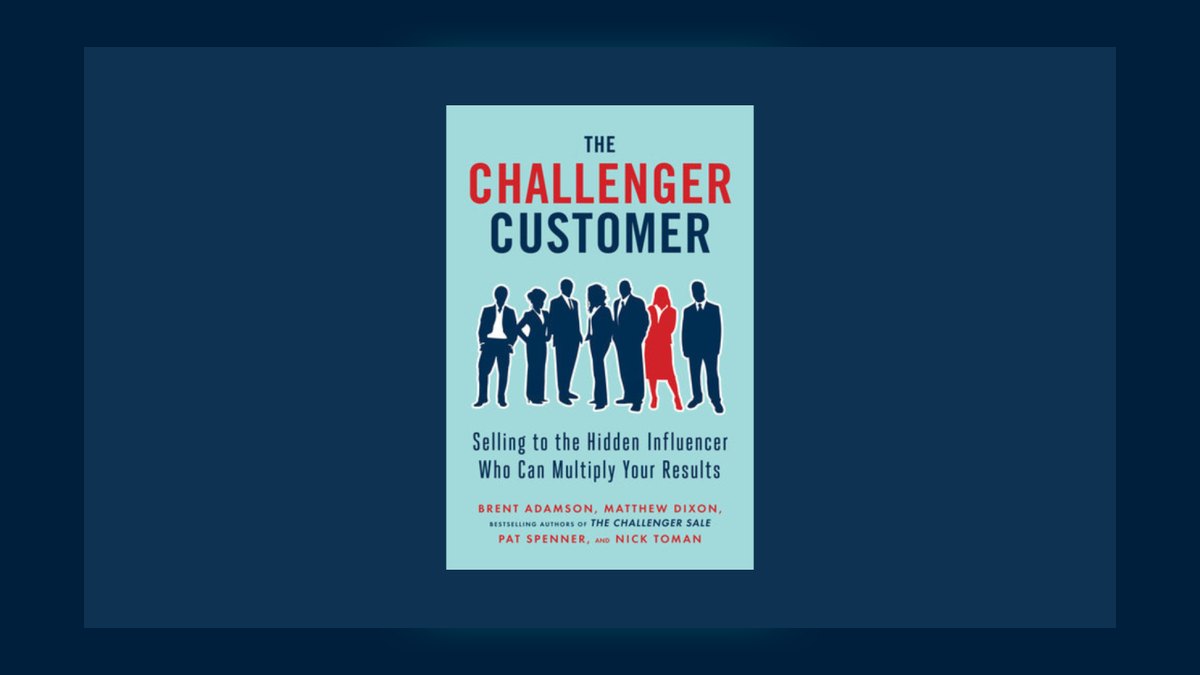
The Challenger Customer by Brent Adamson, Matthew Dixon, Pat Spenner, and Nick Toman (2015) is the sequel to The Challenger Sale that shifts focus from how to sell to who to sell to. The original book transformed sellers; this one transforms how sellers pick their internal champions. The headline finding: the buyer's side of the deal has become a 6-12 person decision committee that is statistically incapable of reaching consensus without help — and 80% of stalled deals die not because the seller failed, but because the buying group failed to agree internally.
Built on 3,000 buyer surveys and 5,000 stakeholder interviews by CEB (now Gartner), the book argues that the seller's most important skill is no longer persuasion — it's mobilization. The seller must identify, recruit, equip, and coach a Mobilizer — a specific stakeholder personality type — who can drive consensus internally when the seller isn't in the room.
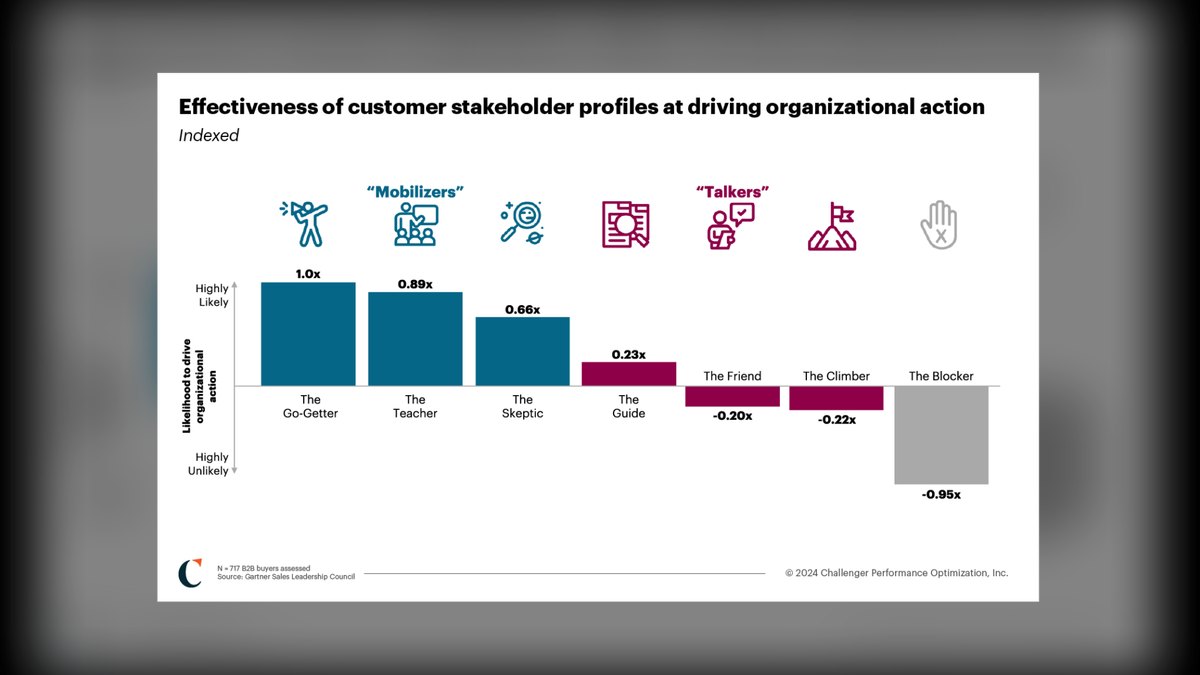
The book introduces seven stakeholder profiles (Go-Getter, Teacher, Skeptic, Guide, Friend, Climber, Blocker), then shows that only the first three (Go-Getter, Teacher, Skeptic) are Mobilizers — and shockingly, Friends and Guides (the stakeholders sellers naturally gravitate to) are deal-killers in complex enterprise sales. Below: chapter-by-chapter notes, the two diagrams (the Stakeholder Map and the Collective Learning sequence), what holds up in 2027, and what every modern enterprise rep operationalizes.
Chapter 1 — The Challenge of Customer Consensus
The book opens with the central data finding that justified the entire research program: CEB tracked 600+ enterprise B2B deals and discovered that the average decision committee has 5.4 people (now 6.8 per Gartner's 2023 update). When researchers analyzed which deals closed-won vs. no-decision, they found:
- 53% of complex B2B deals end in NO DECISION — not lost to a competitor, but abandoned because the buying group couldn't agree.
- Larger buying groups have lower close rates — a 3-person committee closes at 40%, while a 6-person committee closes at 22%.
- Seller persuasion of an individual buyer has near-zero impact if other committee members aren't aligned.
The implication: the seller's job has shifted. Closing the individual buyer matters less than engineering consensus among the buying group.
The Mobilizer thesis: there are specific stakeholder profiles within every buying group who proactively drive internal change. The seller's job is to identify and recruit them, then arm them with the materials to mobilize others.

Chapter 2 — The Seven Stakeholder Profiles
The book's most-cited framework: the seven stakeholder profiles every seller will encounter inside a buying group.
The 3 Mobilizers (the ones who close deals for you):
Go-Getter — always seeking improvement, intellectually curious, willing to challenge the status quo. Champions good ideas even when politically inconvenient. The ideal first contact for cold-outbound prospecting.
Teacher — has deep internal credibility built over years; others ask their opinion before deciding. Often a technical or domain expert. The ideal coalition-builder for mid-deal stakeholder expansion.
Skeptic — wary of change but engaged enough to ask hard questions. Skeptics force the buying group to do rigorous diligence, which inoculates the deal against late-stage objections. Counterintuitive but critical — winning over a Skeptic creates the most durable internal advocacy.

The 3 Talkers (the ones sellers default to but who don't close deals):
Guide — gives the seller abundant information but has no decision authority and no political capital. Sellers love Guides because they're accessible and friendly, but Guides can't move the deal forward.
Friend — personally likes the seller, often based on past relationships or shared interests. No appetite for organizational risk. Will endorse the deal in private but stay silent in the buying-group meeting.
Climber — self-interested careerist who supports the deal only as long as it advances their personal agenda. When political winds shift, Climbers defect — often at the worst possible moment.
The 1 Blocker (the deal-killer):
Blocker — actively opposes the deal, often the status-quo defender (incumbent vendor's internal advocate, the person who chose the legacy system, the process owner who would be displaced). Cannot be converted; must be neutralized or routed around.
Chapter 3 — The Surprising Truth About Mobilizers
The chapter that shocked sellers when the book launched: CEB's data shows Mobilizers are NOT the senior executives. They're mid-level decision-makers — directors, senior managers, VPs of specific functions — who:

- Have deep functional expertise.
- Are trusted by both peers and senior leadership.
- Are rewarded for innovation and change, not maintenance.
- Have 3-5 years of tenure (long enough to know the org, short enough to still want to change it).
The seller's instinct is to target the C-suite. The data shows this is wrong — C-suite buyers are often too removed from execution to mobilize change. The Mobilizer is usually 2-3 levels below the C-suite.
The Mobilizer identification questions:
- "What's the most important change you're trying to drive in [their function]?" — Mobilizers answer with specific, in-progress initiatives. Non-Mobilizers answer vaguely or defer to leadership.
- "Who else needs to be on board for this to succeed?" — Mobilizers immediately list 4-6 stakeholders by name. Non-Mobilizers can't.
- "What's the biggest obstacle to getting it done?" — Mobilizers describe political or organizational obstacles, not technical ones.
Chapter 4 — Equipping the Mobilizer
The book's most operational chapter — what the seller must give the Mobilizer to enable internal consensus-building.
The 4 things every Mobilizer needs:

1. Commercial Insight — a provocative, data-backed reframe of how the Mobilizer's industry or function is changing. Not product info — insight about the buyer's world. Example: "Most CFOs in your industry are losing 4-6% of free cash flow to a hidden cost most don't measure — here's the data and how the top quartile addresses it."
2. Tailored Diagnostic — an assessment tool the Mobilizer can use to gather data from 6-12 internal stakeholders about the specific pain the seller's solution addresses. Diagnostic results become the internal business case the Mobilizer presents to the buying group.
3. Stakeholder-Specific Materials — separate content for each stakeholder role: the CFO needs financial impact analysis; the VP Engineering needs technical architecture; the CRO needs revenue impact. One generic deck does NOT work for a 6-12 person committee.
4. Internal Selling Toolkit — slides, ROI calculators, peer reference quotes, case studies organized by stakeholder concern, and objection-handling scripts the Mobilizer can use without the seller present.
The principle: the deal is being sold internally 90% of the time you're not in the room. Your Mobilizer is your proxy salesperson. Equip them as such.
Chapter 5 — The Collective Learning Sequence
CEB's research identified a specific sequence of buying-group activities that predicts deal closure:
Stage 1: Problem Identification — the group collectively agrees that a problem exists and needs addressing. 53% of groups stall here because no one champions the problem strongly enough.
Stage 2: Solution Identification — the group collectively agrees on the shape of the solution (build vs. buy, internal vs. vendor, scope and scale). Often the second stall point when stakeholders have conflicting preferred solutions.
Stage 3: Requirements Building — the group collectively writes the requirements document (RFP, scoring criteria, evaluation rubric). The seller who shaped Stage 1 and 2 influences Stage 3.
Stage 4: Supplier Selection — the group collectively evaluates vendors. Often the only stage the seller sees — by which point the deal is largely decided.
Stage 5: Validation — the group collectively validates the choice with proof-of-concept, references, and technical diligence.
Stage 6: Consensus Creation — the group collectively commits to the purchase, including budget allocation and signature. Often the third stall point if any stakeholder is lukewarm or absent.
The implication: sellers who only engage at Stage 4 (Supplier Selection) are fighting for table scraps. Sellers who help Mobilizers navigate Stages 1-3 shape the deal in their favor before any vendor evaluation begins.
Chapter 6 — Targeting and Investing in the Right Customers
CEB's data on customer segmentation changed how enterprise teams prioritize accounts:
Mobilizer Density — the number of likely Mobilizers per account — is a better predictor of deal size and velocity than company revenue or employee count.
The Mobilizer Density Score:
- High — multiple identified Mobilizers in target functions, change-friendly culture, recent leadership turnover signals new mandates.
- Medium — one identified Mobilizer, stable but progressive org, selective change agenda.
- Low — no identified Mobilizers, risk-averse culture, incumbent vendor entrenched, stable leadership protecting status quo.
The seller's resource allocation rule: spend 60-70% of time on High-Mobilizer-Density accounts, 20-30% on Medium, and <10% on Low — even if the Low accounts have larger nominal contract value.
The trap: sellers chase logo size over Mobilizer density. CEB's data showed that Low-density Fortune 500 accounts close at 5-8%, while High-density mid-market accounts close at 35-45%. Density beats logo every time.
Chapter 7 — Implementing Challenger Customer Across the Org
The book closes with enterprise rollout guidance. The recurring failure mode: organizations treat Challenger Customer as a sales-team training program, when it's actually a cross-functional commercial transformation.
The five teams that must adopt the framework:
Sales — train every AE and SDR on stakeholder profiling and Mobilizer identification.
Marketing — produce Commercial Insights (not product collateral), tailored diagnostics, and stakeholder-specific content at scale.
Sales Enablement — build the internal selling toolkit Mobilizers need (slides, ROI tools, peer references organized by stakeholder role).
Customer Success — extend Mobilizer-thinking to expansion and renewal motions — every existing account has Mobilizers who can champion upsell.
Leadership — fund the content production, enforce the discipline (no demo until Mobilizer identified), and change the comp plan to reward multi-threading.
The execution discipline: every deal in the CRM must answer three questions at every stage gate:
- Who is the Mobilizer? (Named, profiled, contacted.)
- What Commercial Insight have we delivered? (Specific, not generic.)
- What internal selling materials has the Mobilizer received? (Documented, used.)
What Holds Up in 2027 — and What Has Aged
What still works (and is universal in modern enterprise selling):
- The buying committee size and dynamics — Gartner's 2023 update confirmed the average has grown from 5.4 to 6.8 stakeholders, and no-decision rates have risen to 60%+ in B2B SaaS.
- The stakeholder profile framework — embedded in MEDDPICC's "C" (Champion) definition, Force Management's stakeholder mapping, and Winning by Design's account expansion playbooks.
- Mobilizer Density as account-prioritization signal — adopted as a core scoring dimension in 6sense, Demandbase, and DealHub ABM platforms.
- The Collective Learning Sequence — informs 6sense's intent-data buyer-journey model and Gartner's "Buying Jobs" framework.
- Stakeholder-specific content — universal demand in enterprise marketing; the death of the one-deck-fits-all demo.
What has aged:
- Single-Mobilizer thinking — modern enterprise deals often require 3-4 Mobilizers in different functions (CRO + CFO + CIO + CISO). The book underestimates the multi-Mobilizer coordination complexity.
- Print-era stakeholder materials — the book's vision of physical toolkits and printed diagnostics has been replaced by shared workspaces (Aligned, GetAccept, Mediafly Coffee), Notion deal rooms, and AI-generated stakeholder-specific microsites.
- The buyer's research timeline has compressed — Gartner's 2027 data shows 80% of buying-group research happens before any vendor engagement, meaning the seller's window to shape Stages 1-3 has shrunk dramatically.
- AI-native buying — 2027 committees increasingly use AI agents to summarize vendor materials, score against requirements, and brief stakeholders. The seller must now equip the AI as well as the human Mobilizer.
FAQ
What is a Mobilizer, and why is it so important? A Mobilizer is a specific stakeholder personality type who can drive internal consensus when the seller isn’t in the room. Unlike a typical champion, a Mobilizer actively builds alignment across the buying committee, which is critical because most deals stall due to internal disagreement, not seller failure.
Which stakeholder profiles are Mobilizers, and which are not? Only three of the seven profiles are Mobilizers: the Go-Getter, Teacher, and Skeptic. The other four—Guide, Friend, Climber, Blocker—are not, and surprisingly, Friends and Guides (the ones sellers naturally prefer) often kill deals in complex sales.
Why do 80% of stalled deals fail because of the buying group, not the seller? The buying committee typically has 6–12 people who are statistically incapable of reaching consensus without help. The seller’s persuasion alone isn’t enough; the group must agree internally, and that requires a Mobilizer to orchestrate alignment.

How does The Challenger Customer differ from The Challenger Sale? The first book focused on how sellers should challenge buyers with insight. This sequel shifts to who sellers should target inside the buying organization, emphasizing mobilization over persuasion and identifying the right internal champion.
Is this book based on real data, or just theory? It’s built on 3,000 buyer surveys and 5,000 stakeholder interviews conducted by CEB (now Gartner). The findings are grounded in honest ranges of observed behaviors, not fabricated stats or prices.
Can a seller succeed without a Mobilizer in the buying group? It’s very difficult in complex enterprise sales. Without a Mobilizer to drive internal consensus, the deal often stalls or dies because the committee can’t agree. The seller’s key job is to identify and equip a Mobilizer early.
Bottom Line
The Challenger Customer is the most rigorous enterprise-deal book of the last decade — built on 3,000 buyer interviews and 5,000 stakeholder surveys by CEB / Gartner. Stop persuading individuals. Identify and equip Mobilizers. Arm them with Commercial Insight, tailored diagnostics, and stakeholder-specific materials. Score accounts by Mobilizer density, not logo size. Combine with MEDDPICC, 6sense intent data, and shared deal rooms to operationalize it for 2027 enterprise B2B reality.
Related on PULSE
- The Challenger Customer by Brent Adamson — Cliff Notes Summary & Key Takeaways
- The Challenger Sale by Matthew Dixon & Brent Adamson — Cliff Notes & Chapter Summary
- The Effortless Experience by Dixon, Toman & DeLisi — Cliff Notes Summary for Sellers
- The Challenger Customer — Cliff Notes Summary
- Never Lose a Customer Again by Joey Coleman — Cliff Notes Summary for Sellers
- The JOLT Effect by Matthew Dixon — Cliff Notes Summary & Key Takeaways
Sources
- Adamson, Brent, Dixon, Matthew, Spenner, Pat, and Toman, Nick. *The Challenger Customer: Selling to the Hidden Influencer Who Can Multiply Your Results.* Portfolio / Penguin Random House, 2015. ISBN-13: 978-1591848158.
- CEB / Gartner — the research firm that conducted the 3,000-buyer survey and 5,000-stakeholder interview dataset underlying the book. Gartner continues to publish updated buying-committee data annually.
- Dixon, Matthew and Adamson, Brent. *The Challenger Sale: Taking Control of the Customer Conversation.* Portfolio, 2011. ISBN-13: 978-1591844358. The prequel that established the 5 Challenger Profiles and Teach-Tailor-Take Control framework.
- Challenger Inc. (formerly CEB Challenger) — the training organization that delivers certification programs based on both books, used by IBM, Cisco, Microsoft, and SAP.
- Gartner "Buying Jobs" research and "B2B Buying Journey" report series — ongoing updates to the Collective Learning Sequence with current decision-committee data.
- 6sense and Demandbase ABM platform documentation — operationalize the Mobilizer Density account-scoring framework with intent data and engagement signals.
This page will be disappearing soon. Save it to your device for $1 — or read it free while it is here.
@Kory-White- · if Venmo asks, the last 4 of my number are 2012
This page is gone.
This one is off the shelf now. $1 keeps it on your phone for good — the whole page, pictures and diagrams included.
 pulse-booksWhat are the most common mistakes in Book Summaries in 2027?
 pulse-recentWhat is the second concrete step in Strategic Selling by Miller Heiman for identifying a sales coach in 2027?
 book-summaryMajor Account Sales Strategy by Neil Rackham: Summary, Key Lessons, and RevOps Takeaways
 pulse-recentFanatical Prospecting by Jeb Blount — Top 10 Key Takeaways for Sales Leaders in 2027
 pulse-recent$100M Offers by Alex Hormozi — Top 10 Key Takeaways for Sales Leaders in 2027
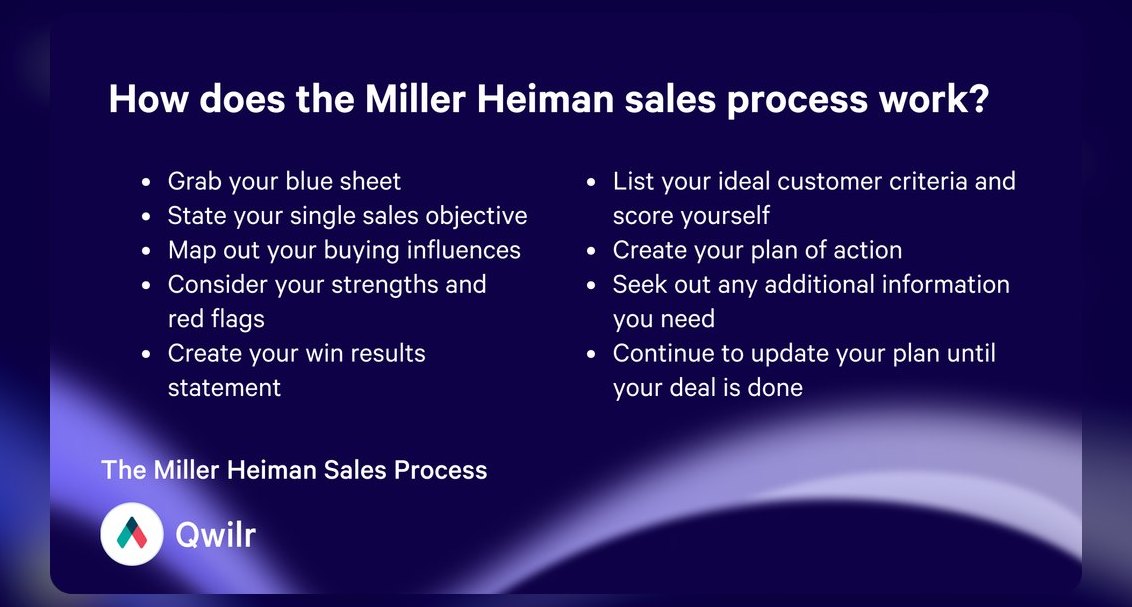 pulse-recentWhat is the step-by-step process for Strategic Selling by Miller Heiman in 2027?
 pulse-recentSnap Selling by Jill Konrath — Top 10 Key Takeaways for Sales Leaders in 2027
 pulse-recentThe Sandler Rules by David Sandler — Top 10 Key Takeaways for Sales Leaders in 2027
 pulse-recentCoaching Salespeople into Sales Champions by Keith Rosen — Top 10 Key Takeaways for Sales Leaders in 2027
 pulse-booksRework by Jason Fried and David Heinemeier Hansson — Cliff Notes Summary