


New Sales Simplified — Cliff Notes Summary
Quality
Certified
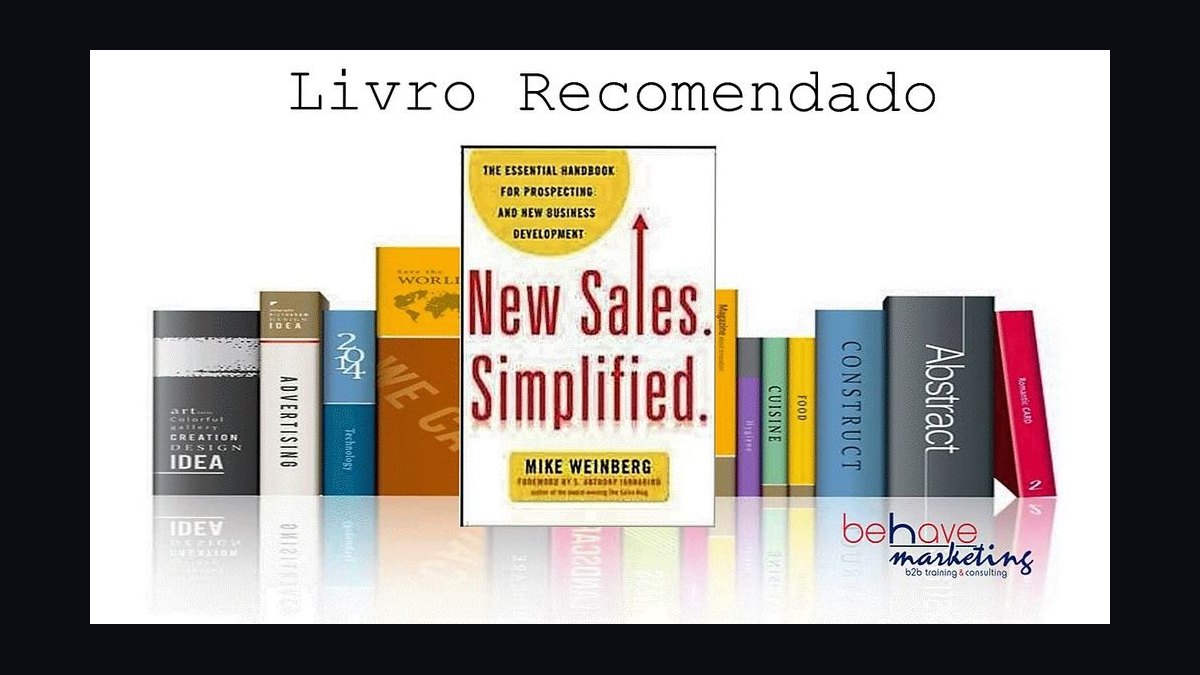
*New Sales. Simplified.* (Mike Weinberg, AMACOM, 2012) is a hunter's handbook for winning net-new accounts. Its spine, the New Sales Driver, has three parts: build a finite, prioritized target list; sharpen three sales weapons — sales story, proactive phone call, face-to-face call; then block calendar time and execute relentlessly.
The Tuesday-morning problem this book was written for
Picture a mid-market AE named Dana. She carries a $1.2M number, inherited eleven existing accounts, and has been told by her VP that "half your number has to come from new logos." It is Tuesday at 9:40 a.m. Her calendar shows no meetings until 2 p.m. By 11:15 she has answered nineteen emails, rebuilt a quote for a renewal that was never at risk, sat in a Slack huddle about a shipping delay, and updated four opportunity close dates because the forecast call is Thursday. She has not spoken to a single person who is not already a customer. At 4 p.m. she tells herself she'll prospect tomorrow.
Nothing Dana did was wrong in isolation. Every task had a requester, a due date, and a small dopamine payoff on completion. That is precisely Weinberg's argument: new-business development loses to everything else because everything else is louder, more urgent, and more socially rewarded. He calls the state reactive mode, and Part 1 of the book is essentially a forensic catalog of how good reps end up living there permanently.
The scenario broadens well past software sales. A commercial insurance producer with a renewal book, a staffing-agency recruiter who also carries a hunting quota, a printing-company rep whose largest client generates constant reprint requests, a freight broker managing daily load exceptions — all of them have the same structural problem. Servicing existing revenue is infinite, immediate, and defensible in a status meeting. Prospecting is finite, delayed, and looks like nothing for six weeks. Left to organic pressure, the account work always wins.

Weinberg's diagnosis assigns blame in two directions, which is part of why the book aged well. Roughly half of Part 1 covers what he calls self-inflicted wounds — the rep's own choices, from having no target list, to leading with product instead of client problems, to treating prospecting as something you do when the pipeline gets thin. The other half covers company-imposed obstacles: comp plans that pay identically on renewal revenue and net-new revenue, territories so large that no rep can name their accounts, CRM hygiene requirements that eat six hours a week, and sales leaders who spend their one-on-ones interrogating the forecast instead of inspecting prospecting activity.
The hunter-farmer confusion sits underneath both. Weinberg's uncomfortable claim is that most underperforming "hunters" are actually account managers who kept the title. They live in named accounts, quote reactively, and label it selling. His prescription is structural rather than motivational: separate the roles with distinct comp plans, distinct account assignments, and distinct calendar expectations, because a rep who is measured on both will always drift toward the safer one. Any RevOps team that has watched a hybrid AE/CSM role quietly become a pure CSM role in nine months has seen this play out.
How the New Sales Driver actually works end to end
The New Sales Driver is the organizing spine of the whole book, and understanding it as a sequence — not a menu — is the difference between reading the book and using it.
Stage one is strategic targeting. A finite, written, prioritized list of accounts that resemble your best existing customers. Weinberg is insistent on all four adjectives. Finite means a real number, not "the mid-market." Written means it exists as a document, not as an intention. Prioritized means tier one gets disproportionate effort rather than an equal slice of every week. Resembling your best customers means the selection criterion is fit — industry, size band, operating model, existing tech, geography — not whoever happened to fill out a form. This is essentially the ICP discipline that RevOps teams formalized a decade later, written before the acronym was in common use.
Stage two is sales weapons. Three of them, built once and sharpened forever: the sales story (captured in a written Power Statement), the proactive phone call, and the face-to-face sales call. The word "weapons" is doing real work here. Weinberg's point is that these are assets you construct offline, in advance, in a quiet room — not things you improvise live while a prospect is deciding whether you're worth another ninety seconds. A rep who builds the weapons once has a durable advantage over a rep who wings every conversation.
Stage three is the attack plan. A one-page personal business plan plus a weekly calendar that reserves actual prospecting hours in blocks. This is the unglamorous layer where most implementations die. Reps love building the target list — it feels like progress and requires no rejection. They will happily workshop the sales story in a team meeting. Then the calendar stays exactly as it was, and nothing changes.
The dependency order matters. Blocks without weapons produce two hours of bad calls that convince the rep prospecting doesn't work. Weapons without a list produce a great story delivered to random people. A list without blocks produces a beautiful spreadsheet that gets reviewed quarterly and acted on never. Each stage is load-bearing for the next.
Inside stage two, the sales story deserves its own mechanics. Weinberg's structure answers three questions in a fixed order: client issues first ("here are the problems we consistently see in companies like yours"), then offerings ("here's what we do about those problems"), then differentiators ("here's why we're unusually good at it"). Most reps invert this completely — company history, product tour, then a vague gesture at value. The order is the entire trick, because a buyer only cares about your differentiators after they've agreed the problem is real and worth solving.

The Power Statement is the physical artifact: roughly one page, two to three minutes spoken, written per buyer persona and per vertical rather than one corporate boilerplate for everyone. A CFO in logistics and a VP of Operations in manufacturing do not share a problem statement, and pretending they do produces the generic pitch Weinberg spends a chapter mocking.
The proactive phone call — he refuses the word "cold" — has a structure rather than a script: introduction, a "steal a minute" hook that acknowledges you've interrupted, a compressed version of the sales story, and a specific ask for a meeting. Reps memorize the shape, not the words, so the call survives contact with a real human. His voicemail position was contrarian in 2012 and remains so: voicemails work when they reference a specific client issue, name a comparable customer, and request a specific next step. What doesn't work is "just checking in, give me a call back."
The face-to-face call gets six phases in fixed order: build rapport, set an upfront contract for how the meeting will run, deliver the sales story, ask discovery questions that genuinely test for fit, actively seek out objections, and agree on a specific next step before anyone leaves. Two of those are counterintuitive. The upfront contract — stating the agenda and the desired outcome at the top — prevents the meeting from drifting into a demo. And seeking objections rather than dodging them treats resistance as engagement data: a buyer with no objections usually has no interest.
The numbers Weinberg gives, and the ones he leaves to you
The book is deliberately light on statistics — Weinberg is suspicious of sales science and says so. But it does contain concrete operating parameters, and separating what he actually specifies from what practitioners have layered on top is worth doing carefully.
Target list size. His governing heuristic is that a rep should be able to name every account on the list from memory. If you can't recite them, the list is too long and you will default to whoever contacted you most recently. In practice this lands somewhere in the dozens, not the hundreds. Enterprise reps working large, complex accounts sit at the low end; transactional mid-market reps can carry more but usually overestimate how many they can genuinely run a campaign against. The test is behavioral, not numerical: can you say what's happening with each account without opening a spreadsheet?
Prospecting hours. Weinberg's floor is modest and intentionally so — a small number of protected hours per week, structured in blocks of at least two hours rather than scattered fifteen-minute gaps. The two-hour minimum has a mechanical justification: the first twenty minutes of a calling block are warm-up, and a thirty-minute block is therefore almost entirely warm-up. Many modern outbound teams block considerably more, but the floor exists so the rule survives a bad week. A target you hit every week beats an aspirational target you abandon in month two.
The talk ratio. Weinberg frames the sales call with the old line about two ears and one mouth, and the practical translation is that the buyer should be doing substantially more of the talking than the rep — roughly a two-to-one or three-to-one split in the buyer's favor during discovery. This is one of the few places where later conversation-intelligence research broadly corroborates the book's instinct, though exact figures vary by vendor, segment, and call type, so treat any precise percentage you see quoted as directional rather than a benchmark to manage against.
The ratios you have to derive yourself. This is Weinberg's most durable operational instruction and the one most often skipped. He tells reps to know their own dials-to-conversations, conversations-to-meetings, meetings-to-opportunities, and opportunities-to-closed-won rates. Not industry averages — your own, from your own last ninety days. The reason is diagnostic. If a rep is short on pipeline, exactly one of four things is broken, and the ratios tell you which: not enough dials (a calendar problem), poor conversation-to-meeting conversion (a sales story problem), poor meeting-to-opportunity conversion (a targeting problem — you're talking to the wrong companies), or poor opportunity-to-close conversion (a qualification or competitive problem). Without the ratios, every pipeline shortfall gets the same generic coaching: "make more calls."
That diagnostic frame is where the book earns its keep for RevOps rather than just for individual reps. The leading indicator most sales orgs never instrument is prospecting-hours-blocked versus prospecting-hours-actually-completed. Activity counts are easy to report and easy to game; protected-time adherence is harder to fake and predicts pipeline six to eight weeks out far better than a raw dial count does.
A useful operating cadence: review activity ratios weekly at the rep level, review target-list composition quarterly, and rebuild the Power Statement whenever the product's positioning materially changes or you enter a new vertical. Weekly ratio review is frequent enough to catch a broken step before it costs a quarter, and quarterly list review is slow enough that reps don't churn their targets every time a week goes badly.
Trade-offs, and where other sales methodologies fit better
*New Sales. Simplified.* is not a universal methodology, and pretending otherwise is the most common way teams misapply it. It is specifically a top-of-funnel, self-sourced-pipeline book. Understanding its boundaries tells you when to reach for something else.
Where it is strongest. Teams whose pipeline is dangerously inbound-dependent. New hunters who need one book before ramp. Sales orgs where reps visibly flinch when asked "so what do you actually do?" Businesses with a long tail of look-alike prospects — professional services, industrial distribution, regional manufacturing, commercial services, staffing, logistics — where the buyer universe is knowable and finite and a named list is genuinely constructible.
Where it is thin. The book barely addresses complex multi-stakeholder deal navigation. Once you're inside an account with a buying committee of seven, a procurement gate, a security review, and a champion who needs internal air cover, Weinberg's framework has largely done its job and handed off. That territory belongs to Miller Heiman's Strategic Selling, with its blue sheets and buying-influence mapping, or to MEDDIC-family qualification frameworks for deal inspection and forecast discipline.

Similarly, the book is not a discovery methodology. It tells you to ask questions that test for fit, but SPIN Selling goes far deeper on question sequencing and the mechanics of building implication before presenting capability. And it is not a negotiation book — nothing in it addresses concession strategy, pricing pressure, or late-stage procurement games.
The practical resolution is that these are complements, not competitors, and they occupy different stages. Weinberg fills the top of the funnel; Strategic Selling or MEDDIC governs what happens once a real opportunity exists; a discovery or negotiation methodology sharpens specific conversations inside that. A sales org that adopts only one of these has a visible weak segment in its funnel, and the shape of the weakness tells you which book is missing.
The dated parts, stated honestly. Written in 2012, the book under-weights email as a channel, pre-dates LinkedIn-led social selling as a mainstream motion, and says nothing about intent data, sequencing platforms, or AI-assisted research and personalization. Its proactive call is presented as a largely standalone motion; in practice it is now one channel inside a multi-touch cadence combining phone, email, social touches, and occasionally video. The underlying discipline — a finite list, a rehearsed story, protected time, honest ratios — transfers cleanly. The channel mix does not.
There's also a tonal trade-off worth naming. Weinberg's voice is loud, blunt, and occasionally scolding. Some reps find that clarifying and some find it alienating, and it lands differently across cultures and selling contexts where high-pressure phone prospecting is less normal. The framework survives translation into a gentler register; the book's delivery is take-it-or-leave-it.
Adjacent applications. The structure generalizes past quota-carrying sales. Agency owners and consultants use the target-list-plus-story-plus-blocks pattern almost verbatim for business development. Recruiters run it against hiring managers. Founders doing early sales before a first rep exists get more from this book than from any framework built for mature funnels, because it assumes no marketing engine, no SDR team, and no brand recognition — which is exactly the founder's starting condition.
Where implementations fail, and the fixes that hold

Most teams that read this book together do not fail at comprehension. The ideas are simple by design — that is the whole premise of the title. They fail at installation, and the failure modes are consistent enough to anticipate.
The blocks get scheduled and then eaten. This is the single most common outcome. A rep adds two recurring two-hour blocks, holds them for eleven days, then a customer escalation lands on a Tuesday morning and the block gets moved. It gets moved again the following week. By week five it exists on the calendar as decoration. The fix is not willpower — it's treating the block as a customer meeting that cannot be double-booked, and having the manager inspect adherence rather than output during the first sixty days. If a leader only asks "how many meetings did you book," reps learn that the block itself is negotiable.
The target list becomes a wish list. Reps load it with logos they'd love to win rather than accounts that resemble customers who already succeed with the product. The tell is a list where the average company is three times larger than any customer you've ever closed. The fix is mechanical: derive the criteria from your actual best customers first — pull your top fifteen accounts by retained revenue, find what they share, and let that define the filter — then populate the list against the filter rather than against ambition.
The Power Statement never leaves the document. Reps write a good one, put it in a shared folder, and never rehearse it aloud. Written and spoken are different skills; a paragraph that reads well often collapses when spoken because the sentences are too long to say on one breath. The fix is rehearsal out loud, repeatedly, until it sounds like speech rather than recitation — and then recording yourself once, which is uncomfortable and unusually effective.

Leadership installs it as a mandate instead of a system. A VP announces the target list requirement, collects fifty spreadsheets, and never looks at them again. Weinberg is explicit that the personal business plan belongs to the rep, not to the manager as a compliance artifact. The moment it becomes paperwork submitted upward, it stops functioning as a plan and becomes a tax. The manager's job as he frames it is narrow and specific: inspect the plan, protect the blocks, coach the weapons. Not collect, not audit, not weaponize in performance reviews.
The comp plan quietly contradicts the strategy. If new-logo revenue and renewal revenue pay the same rate, no framework survives, because the rep is being asked to take rejection for no additional economic return. This is a RevOps fix rather than an enablement fix, and it usually has to come first. Accelerators on net-new, a separate new-logo component, or a hunting bonus tied to first-year contract value all work; identical treatment does not.
Everyone tries to do all three stages in week one. The list, the weapons, and the blocks are a lot of change to absorb simultaneously, and simultaneous change tends to produce partial versions of everything. A staged rollout works better: week one, write and rehearse the Power Statement — nothing else. Week two, build and tier the target list. Week three, install the recurring blocks and start calling with the weapons already sharp. Weeks four through twelve, run the loop and read the ratios weekly. The sequencing means each new habit has something solid to attach to.
The last failure mode is quiet abandonment after a slow start. Outbound has a lag. A rep who installs everything correctly in January may see very little in February and a real pipeline change in March. Teams that judge the effort at the thirty-day mark almost always conclude it didn't work. Judge it on activity adherence for the first sixty days and on pipeline created after ninety, and the picture is honest.
Related questions
Is this book worth reading if I only manage existing accounts?
Partially. The sales story and the six-phase call structure transfer directly to expansion conversations and QBRs. The target list and prospecting-block chapters won't apply. Weinberg's own follow-up, *Sales Management. Simplified.*, is a better fit for leaders.
How does it compare to Fanatical Prospecting?
Both are prospecting-first books with overlapping conclusions. Jeb Blount's is heavier on multi-channel cadence, objection handling, and the psychology of rejection. Weinberg's is tighter, shorter, and more focused on the sales story and target-list construction. Reading both is not redundant.
Can a founder use this before hiring a sales team?
Yes — arguably it's the ideal reader. The framework assumes no marketing engine, no SDR support, and no brand recognition, which describes early-stage founder-led sales precisely. The Power Statement exercise alone tends to sharpen positioning.
Does it include usable scripts and templates?
It includes sample call structures, Power Statement examples, and a personal business plan outline. Weinberg is emphatic they're starting points to adapt to your voice and market, not scripts to read verbatim — a rep reading a script aloud is audibly reading a script.
What should I read next after finishing it?
*Sales Management. Simplified.* if you lead a team, since it covers installing this at the org level. Miller Heiman's *The New Strategic Selling* if your gap is late-stage, multi-stakeholder deals rather than top of funnel.
FAQ
What is the New Sales Driver framework?
It's the book's three-part spine: build a finite, prioritized target list of accounts that look like your best customers; develop three sales weapons (the sales story or Power Statement, the proactive phone call, and the face-to-face sales call); then create an attack plan of protected, recurring calendar blocks. The stages depend on each other in that order.

What does Weinberg mean by "self-inflicted wounds"?
Part 1 catalogs the choices reps make that kill their own new-business results: having no written target list, leading with product instead of client problems, living in reactive mode where inbox and existing accounts consume the day, treating prospecting as something you do only when pipeline gets thin, and being unable to answer "what do you do?" in a compelling way.
How is a Power Statement different from an elevator pitch?
Order and specificity. An elevator pitch typically leads with who you are and what you sell. A Power Statement leads with the client issues you see in companies like the prospect's, then explains your offerings, then your differentiators — and it's written per buyer persona and per vertical rather than as one corporate script.
Does the phone-heavy approach still hold up?
The discipline does; the channel mix has widened. The book predates modern sequencing platforms, social selling, and AI-assisted research, and it under-weights email. Most teams today run the proactive call as one touch inside a multi-channel cadence. The underlying strategy — finite list, rehearsed story, protected time, honest ratios — is unchanged.
Who should skip this book?
Reps who exclusively manage renewals and expansion, and teams whose bottleneck is late-stage deal navigation rather than pipeline creation. If your problem is stalled six-figure deals with a buying committee, a strategic-selling or qualification framework will help more than a prospecting book.
How long does it take to see results after implementing it?
Expect a lag. Activity changes show up in week one, conversation quality in weeks two to four, and meaningful pipeline movement around the ninety-day mark for most sales cycles. Teams that evaluate the effort at thirty days routinely conclude it failed when the leading indicators were actually fine.
Sources
- Amazon — *New Sales. Simplified.* by Mike Weinberg
- Mike Weinberg's official site
- O'Reilly — *New Sales. Simplified.*
- Goodreads — *New Sales. Simplified.* reader reviews
- Shortform — *New Sales Simplified* book summary
- BrightCarbon — Review: *New Sales. Simplified.*
- The Invisible Mentor — *New Sales Simplified* summary and review
- HarperCollins Leadership — publisher page for Mike Weinberg titles
- Miller Heiman / Korn Ferry — Strategic Selling methodology overview
Related on PULSE
- Sales Management. Simplified. by Mike Weinberg — Cliff Notes Summary
- Sales Management Simplified — Cliff Notes Summary
- The New Strategic Selling — Cliff Notes Summary
- The New Conceptual Selling by Miller, Heiman & Tuleja — Cliff Notes Summary
- Fanatical Prospecting by Jeb Blount — Cliff Notes Summary
- SPIN Selling by Neil Rackham — Cliff Notes Summary
This page will be disappearing soon. Save it to your device for $1 — or read it free while it is here.
@Kory-White- · if Venmo asks, the last 4 of my number are 2012
This page is gone.
This one is off the shelf now. $1 keeps it on your phone for good — the whole page, pictures and diagrams included.
 pulse-recentWhat is the first concrete step in The Sandler Rules by David Mattson for building a sales plan in 2027?
 pulse-recentConceptual Selling by Robert Miller and Stephen Heiman — Top 10 Key Takeaways for Sales Leaders in 2027
 pulse-recentHyper Sales Growth by Jack Daly — Top 10 Key Takeaways for Sales Leaders in 2027
 pulse-recentWhat is the most actionable step in The Sandler Rules for Sales Leaders by David Mattson to improve discovery in 2027?
 pulse-recentProActive Selling by Skip Miller — Top 10 Key Takeaways for Sales Leaders in 2027
 pulse-recentSPIN Selling by Neil Rackham — Top 10 Key Takeaways for Sales Leaders in 2027
 pulse-recentNever Lose a Customer Again by Joey Coleman — Top 10 Key Takeaways for Sales Leaders in 2027
 pulse-recentHigh-Profit Prospecting by Mark Hunter — Top 10 Key Takeaways for Sales Leaders in 2027
 pulse-recentSandler Rule #1: What is the first concrete step to build a prospect's trust in a sales conversation in 2027?
 pulse-recentBlueprints for a SaaS Sales Organization by Jacco van der Kooij — Top 10 Key Takeaways for Sales Leaders in 2027