


Sales Management Simplified — Cliff Notes Summary
Quality
Certified

Mike Weinberg's *Sales Management. Simplified.* (AMACOM, 2015) argues teams miss the number because of how they are led, not who is on the roster. It hands front-line managers a blunt operating system: rebuild culture, run Results-Pipeline-Activity 1:1s, own the target list, coach in the field, and refuse non-revenue work.
What the book is and why sales leaders still reach for it
Mike Weinberg spent roughly a decade as the top producer at three different companies before going independent as a sales consultant in 2006. His first book, *New Sales. Simplified.*, was written for individual reps chasing new business. Clients read it, liked it, then asked the obvious follow-up question: what does the manager do? *Sales Management. Simplified.* is that answer — a deliberately short field manual, around 250 pages, that Weinberg has said could have been titled "The Way I Wish Someone Had Managed Me." Jeb Blount's cover blurb calls it arguably the best book ever written on sales management, and that blurb has been doing sales work on Amazon for over a decade now.
The thesis fits on one line: as goes the leader, so goes the organization. If results are bad, look at the leader first. Weinberg's opening chapters are a mirror held up to VPs — bloated calendars, reactive firefighting, no clear account targets, quiet tolerance of mediocrity, and CRM dashboards mistaken for coaching. His most reframing sentence is that the higher you go, the less you should be *doing* and the more you should be *leading*. For a manager who was the number-one rep eighteen months ago, that is a genuinely uncomfortable instruction, because doing is the thing they are provably good at.
The intended reader is specific. First-time VPs of Sales at companies between roughly 30 and 500 people, elevated straight out of the top slot on the leaderboard. Player-coach managers still carrying a bag while supposedly leading a team. CROs and founders auditing an org that keeps missing. And, increasingly, the enablement and RevOps leaders who built beautiful systems that the manager layer never actually adopted — because the book explains exactly why managers ignore systems that do not make their Monday easier.

What makes the book durable is that it is an operating manual, not a theory of selling. Weinberg is not competing with MEDDIC, Challenger, or Command of the Message; those are methodologies for how a rep runs a deal. This is about how a manager runs a week. You can bolt it onto any methodology you already own. That is also why it survived the entire modern RevOps tooling wave — Gong, Clari, Outreach, Salesloft, Apollo all arrived after publication, and none of them replaced the human cadence the book prescribes. They just instrumented it.
The adjacent shelf matters too. Read alongside Roberge's *The Sales Acceleration Formula* you get the data-driven counterweight — Roberge quantifies hiring criteria and ramp; Weinberg tells you what to say in the room. Read alongside Jordan and Vazzana's *Cracking the Sales Management Code* you get the taxonomy — activities, objectives, results — that gives Weinberg's instincts a measurement spine. And Grove's *High Output Management* supplies the general-management theory (managerial leverage, the 1:1 as the highest-return meeting) that Weinberg reinvents for a sales floor without citing it. Anthony Iannarino has long put Weinberg on the short list of books a new VP of Sales should read before their first quarter closes.
The step-by-step process a manager actually runs
The framework collapses the sales manager's job into three buckets and nothing else. Sales Leadership and Culture — direction, standards, energy, accountability. Talent Management — hire, develop, coach, compensate, remediate, separate. Sales Process — targeting, pipeline, methodology, tools. Everything outside those three buckets is noise to be minimized, and Weinberg gives managers explicit permission to say no to it. That permission is the part readers underline, because most managers assume the internal reporting request is non-negotiable when it is merely loud.

The mechanism that makes the three buckets real is the calendar audit, and it is the single most-cited exercise in the book. Print last week's calendar. Color every block: green for direct revenue impact — coaching, joint customer calls, 1:1s, deal strategy; yellow for necessary administration; red for waste. Most managers who do this honestly find well under 20 percent green. The prescription is to flip it, targeting 60 percent or more green within about 90 days. Do the audit weekly for the first month, then monthly. The number is a forcing function, not a metric to report upward — the moment it becomes a dashboard tile someone games it.
Then the heartbeat: the R-P-A 1:1, Weinberg's most-quoted framework. R = Results. Open with the number. Year-to-date attainment, quarter pacing, month closed, new logos booked. No excuses, no preamble. P = Pipeline. Only after results. Walk the top five to ten deals — stage, next step, decision criteria, who else is threaded into the account. A = Activity. Only if results and pipeline are weak. Calls, meetings, proposals, opportunities created.
The order carries the whole idea. Most managers run it backwards: they open with an activity dashboard — you only made twelve dials yesterday — and never get to whether the rep will hit the number. Starting with Results forces an outcomes conversation. Activity becomes a diagnostic you reach for when the outcome is off, not a surveillance ritual you perform regardless. A rep at 118 percent of plan should never have to defend their dial count, and a manager who demands it anyway is teaching the whole team that the game is compliance.
Cadence: 30 to 45 minutes, every two weeks at minimum, weekly for new hires and anyone underperforming. No phones. No laptop open to email. And critically, no skipping when things get busy — Weinberg calls a cancelled 1:1 the loudest possible signal that a manager has lost the plot, because it tells the rep that their development is the first thing to fall off the calendar under pressure.

Talent runs on the Four R's. *Right People* — hire for hunter DNA when you need new business and for relationship depth when you need farming; stop hiring "good salespeople" generically. *Right Roles* — separate hunters from farmers from specialists, because a hunter handed 80 existing accounts will either quit or quietly stop hunting, and both outcomes look identical on a dashboard for about two quarters. *Right Coaching* — coach persistent weak spots rather than strengths, and coach call execution rather than pipeline arithmetic. *Right Compensation* — pay heavy on new revenue, light on renewals and the inherited base book, accelerate above quota, decelerate below.
The last piece is strategic targeting, and Weinberg's position is unambiguous: the manager owns the target list, not the rep. Left alone, ten reps will build ten sprawling lists and chase 800 vague maybes, none of them deeply. His shape is roughly 30 to 50 named accounts for an enterprise hunter and 80 to 150 for mid-market. Pair that with the sharpened sales story pulled forward from his first book — every rep able to explain in about 60 seconds the customer pain you solve, the proof you solve it, and the differentiation against the obvious alternative. If the rep cannot, the manager has not done the job. And wherever possible, assign verticals rather than geography; a rep who has sold into hospitals for eighteen months will out-execute a generalist on every call because they walk in already knowing what breaks.
Time, cost, and the ranges the book actually prescribes
The book is cheap and short — a hardcover, a Kindle edition, an audiobook, and a widely circulated publisher sample PDF covering the intro, contents, and several chapters. Call it a two-evening read, or a single long flight. The cost is not the book. The cost is the calendar, and that is where leaders should do the arithmetic before committing.

Run the numbers on a realistic team. Eight reps, 1:1s at 45 minutes each, weekly for the two new hires and the one struggling rep and biweekly for the other five: that is roughly 3.5 to 4 hours a week of pure 1:1 time, plus prep. Weinberg wants prep to be real — pull the number, scan the top deals, pick one coaching point — so budget 10 to 15 minutes per meeting, another hour a week. Add the weekly team meeting at 45 to 60 minutes. Add field time, where he sets the most aggressive number in the book: 30 to 50 percent of a manager's time in front of customers with reps. On a 45-hour week that is 13 to 22 hours. Sum it and the green portion lands right around the 60 percent target, which is not a coincidence — the 60 percent figure is derived from the activities, not pulled from the air.
Which means something has to go, and Weinberg is specific about what. Internal meetings a manager attends as an observer. Forecast-formatting work that RevOps or an analyst should own. Customer-service escalations that route to the manager only because a rep learned they always would. Vendor demos scheduled out of politeness. Report-building that duplicates a dashboard someone already maintains. In most orgs, reclaiming even half of that block is a negotiation with the manager's own boss, which is why the book spends real time on managing upward.
Timeline for the whole install: expect roughly a quarter before it feels normal, and two to three quarters before the results move. Weeks one and two are audit and design — calendar audit, target lists rebuilt per rep, 1:1s put on the calendar as recurring and treated as immovable. Weeks three through six are the awkward stretch, where reps who have never been asked to open with their number arrive unprepared, and the manager has to hold the format anyway. Weeks six through twelve are when the pipeline conversation gets sharper because reps start pre-walking their own top five before the meeting. Somewhere past the quarter mark, the underperformer question stops being avoidable, because a fortnightly documented Results conversation makes drift impossible to hide.
That last part carries a real, quantifiable cost that the book states in blunt terms: most sales teams have one or two reps everyone knows should not be there — including the manager — and tolerating that for twelve-plus months taxes the whole team. Price it out honestly. A carried underperformer costs salary and benefits, the opportunity cost of an unproductive territory, the manager hours poured into remediation that never converts, and a culture tax on the performers who watch nothing happen. Against that, a replacement carries recruiting time, a ramp period that in most B2B motions runs one to two quarters before real productivity, and the risk the next hire misses too. Hire slow, fire fast is Weinberg's compressed version, and the reason he repeats it is that the arithmetic almost always favors acting sooner than managers do.
Compensation carries its own cost trap, and it is the one Weinberg attacks hardest. A flat-rate plan that pays identically on a ten-year-old renewal and a brand-new logo is, in his framing, a tax on hunters and a welfare program for farmers — a silent killer of new-business growth, because a rational rep will always take the easier dollar. Fixing it is not free either: repricing a comp plan mid-year triggers a retention risk with the reps whose income was built on the old math, so most orgs stage it at the plan-year boundary with a transition guarantee. Adjacent to this sits territory and quota design, which the book touches only lightly but which RevOps teams know determines whether the plan is winnable at all. A perfect R-P-A cadence run against an unwinnable territory produces a very well-documented miss.
Where teams get it wrong
The most common failure is adopting the vocabulary without the sequence. A manager starts saying "R-P-A" and then opens the meeting with a dial count anyway. The letters are not a label for the agenda; they are an order of operations, and inverting them converts a coaching session back into surveillance in about four minutes. If the rep's first sentence is defensive, the order was wrong.
Second: 1:1s that quietly become status updates. The tell is that the manager is learning things they could have read in the CRM. A good R-P-A meeting spends most of its minutes on two or three deals where the rep is stuck, and produces named next steps with owners and dates. If nothing changes in the pipeline as a result of the meeting, the meeting was a report.

Third: skipping under pressure. Weinberg's rule that the 1:1 never moves is easy to endorse in January and hard to hold at quarter end, which is precisely when reps most need it. Managers who cancel during crunch teach the team that coaching is a fair-weather activity, and the cadence rarely recovers on its own.
Fourth: mistaking dashboards for management. This is the line the book hammers, and it has aged into something sharper rather than softer. The modern stack surfaces more signal than 2015 managers dreamed of — call recordings, engagement scoring, AI-generated deal summaries, risk flags on the forecast. But reading a risk flag is not coaching. The manager still has to hear the call, name the specific behavior, model the alternative, and check whether it changed next time. Tools raised the floor on *what you can see* and did nothing to the floor on *what you do about it*.
Fifth: letting reps own the target list. The failure is slow and looks fine early — everyone is busy, activity is up, the funnel has volume. Six months later you find ten reps distributed thinly across hundreds of accounts with no penetration anywhere and no vertical expertise compounding. Manager-owned lists feel controlling to reps who have autonomy, so the fix is to co-build the list once and then hold it fixed for a quarter, rather than negotiating it weekly.
Sixth, and most structural: the executive layer that buries sales managers in non-selling work and then asks why the number missed. Weinberg names senior leadership as one of the three obstacles outright — CEOs and CFOs who do not understand the sales motion, set plans nobody modeled, micromanage the forecast, and have not sat in a customer meeting in two years. A manager cannot install this book alone if their own calendar is owned upstairs. The realistic move is to bring the color-coded calendar audit to their boss as evidence and negotiate specific removals, rather than trying to quietly protect time and failing.

Seventh: the player-coach trap. A manager still carrying a bag will always default to their own deals under pressure, because those they can close personally. If the org genuinely needs a producing manager, the honest fix is to shrink the team, shrink the personal quota, or accept that coaching will be the variable that gives — not to pretend both jobs fit in one week.
Eighth: role confusion masked as flexibility. Asking hunters to also manage the base book reads as efficient on an org chart and destroys new-business output within two quarters. The compensation plan usually reinforces it, which is why Right Roles and Right Compensation have to be fixed together rather than sequentially.
And one that is less a mistake than an honest gap: the book assumes a manager can physically ride along. It predates the normalization of distributed teams, so the field chapter needs translation. Modern operators substitute joining live customer calls as a silent participant, reviewing recorded calls with the rep and stopping on specific moments, and running deal-strategy sessions in a shared room. The intent — you cannot coach what you have not seen — is intact. The logistics are yours to rebuild.
Deciding what to run, and what to layer on top
The book is not a full stack, and treating it as one is its own error. Use this decision frame.
If the org is missing the number and you do not yet know why, start here and start with the calendar audit. It is the cheapest diagnostic in sales management and it usually reveals the problem in an hour. Managers at 15 percent green do not have a talent problem; they have a time-allocation problem wearing a talent problem's clothes.
If the problem is that reps are busy but not winning, the leverage is in targeting and the sales story, not in cadence. Rebuild the named account lists first, drill the 60-second story until every rep can deliver it cold, then install R-P-A on top so the new targeting sticks.
If the problem is that good reps keep leaving, look at Right Roles and Right Compensation before touching the meeting cadence. No 1:1 rhythm survives a plan that pays a hunter the same for a renewal as for a new logo.

If the problem is forecast accuracy specifically, Weinberg is the wrong primary text. His pipeline review is qualitative by design — a conversation about what is real. Layer a quantitative forecasting discipline over it: historical stage-conversion rates, deal-age decay, a clear definition of what makes a stage change legitimate, and inspection of the gap between rep-called and manager-called numbers. *Cracking the Sales Management Code* is the better companion for building that measurement layer, because it separates activities you can control, objectives you can influence, and results you can only report.
If the problem is hiring and ramp, Roberge's formula-driven approach complements this better than it competes. Weinberg tells you what hunter DNA looks like in an interview; Roberge tells you how to score candidates against outcomes and shorten ramp with a structured curriculum.
If the sales motion is genuinely product-led, adapt rather than adopt wholesale. Buyers now do a great deal of evaluation before they ever speak to a rep, which means the hunter motion competes with a self-serve path the book never anticipated. R-P-A still works; the Pipeline conversation just has to include product-qualified signals, expansion within existing usage, and the question of when human contact adds value rather than friction.
The honest summary of what holds up: the R-P-A cadence, the Four R's, the calendar reallocation, the compensation critique, and "coach the field, not the CRM" have all aged well — the comp critique arguably better than the rest, since usage-based pricing and multi-product motions make a 2015-era flat-rate plan look even more broken. What is dated: no tooling chapter worth reading today, no remote or hybrid playbook, and a pipeline review that is qualitative where most modern orgs now want a probabilistic layer as well. None of that is a reason to skip it. It is a reason to read it as an operating manual and get the analytics elsewhere.
Related questions
Is this book worth reading if I am not a manager yet?
Yes, with a caveat. Reps who read it understand why their manager asks what they ask, which makes 1:1s more productive. But the actionable content is all manager-side. A rep aiming at promotion gets more immediate value from *New Sales. Simplified.*, then this one the week the title changes.
How does R-P-A differ from a normal pipeline review?
A pipeline review inspects deals. R-P-A inspects the rep. It opens with attainment against plan, moves to the top handful of deals only after that context is set, and reaches for activity data only when the first two are weak. The sequence is the method.
Does the book work for inside sales and SDR teams?
Mostly. The cadence, the Four R's, and the calendar audit transfer cleanly. The field chapter needs translating into call reviews and live-call shadowing, and SDR management leans harder on leading indicators than the book's Results-first framing assumes, since pipeline created is the SDR's result.
What should I read alongside it?
*Cracking the Sales Management Code* for measurement taxonomy, *The Sales Acceleration Formula* for data-driven hiring and ramp, and *High Output Management* for the general theory of managerial leverage that Weinberg's 1:1 chapter reinvents for a sales floor.
Can RevOps install this without the sales leader buying in?
No. RevOps can build the reporting, define the stages, and make the 1:1 prep effortless, but the cadence lives or dies on whether the manager holds the meeting when the quarter gets ugly. Sell the calendar audit to the leader first; the tooling follows.
FAQ

Is this book only for new sales managers?
No. It is aimed at first-time VPs and newly promoted player-coaches, but experienced leaders who inherited a struggling team get as much out of it — largely because the diagnostic chapters give them language for problems they already sense. Founders and CROs auditing a sales org read it as a checklist.
Does the book focus more on coaching or on firing people?
Coaching and accountability come first; separation is what happens when the accountability cadence has run long enough to make the answer obvious. The Four R's give you a way to test whether the problem is the person, the role, the coaching, or the comp plan before you conclude it is the person.
How much time do the recommended 1:1s actually take?
Thirty to 45 minutes per rep, weekly for new hires and underperformers and at least every other week for everyone else, plus 10 to 15 minutes of prep each. On an eight-rep team that lands near four to five hours a week including prep. Most managers find it displaces longer, less useful meetings.
Is the R-P-A order still relevant with modern revenue tooling?
Yes, and arguably more so. Modern platforms auto-surface results and pipeline data, which removes the excuse for spending the meeting gathering facts. The conversation sequence — outcome, then deals, then activity as a diagnostic — is unchanged by better dashboards.
Does it address remote or hybrid teams?
Not directly; it was written assuming a manager can get in a car. The principles port fine. Substitute live-call shadowing and recorded-call review for ride-alongs, and keep the underlying rule that you cannot coach a call you have not heard.
What if my real problem is lead quality, not management?
Weinberg would push back that thin lead quality is usually a targeting and story problem before it is a marketing problem. Fix the named account lists and the 60-second story first; if pipeline quality still lags after a quarter of disciplined targeting, then the demand-generation argument has evidence behind it.
Sources
- Mike Weinberg — Sales Management. Simplified. author page
- Amazon — Sales Management. Simplified. (AMACOM, 2015)
- Goodreads — ratings and reader reviews
- O'Reilly Library — full text and chapter list
- Blinkist — Sales Management. Simplified. summary
- Shortform — chapter-by-chapter summary
- The Sales Management. Simplified. Podcast (Apple Podcasts)
- Sales Pipeline Radio — Matt Heinz interview with Mike Weinberg
- Peak Sales Recruiting — interview on the book
Related on PULSE
- New Sales. Simplified. by Mike Weinberg — Cliff Notes Summary
- Cracking the Sales Management Code by Jason Jordan and Michelle Vazzana — Summary and RevOps Takeaways
- High Output Management by Andy Grove — Cliff Notes Summary
- New Sales Simplified — Cliff Notes Summary
- New Sales. Simplified. by Mike Weinberg — Cliff Notes Summary & Key Takeaways
This page will be disappearing soon. Save it to your device for $1 — or read it free while it is here.
@Kory-White- · if Venmo asks, the last 4 of my number are 2012
This page is gone.
This one is off the shelf now. $1 keeps it on your phone for good — the whole page, pictures and diagrams included.
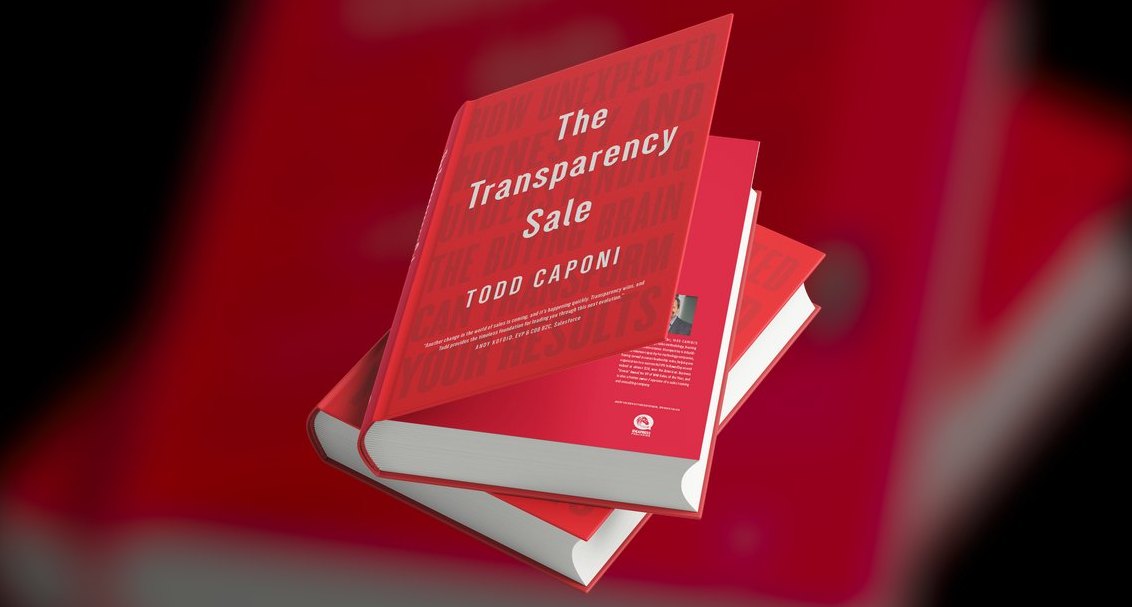 pulse-recentThe Transparency Sale by Todd Caponi — Top 10 Key Takeaways for Sales Leaders in 2027
 pulse-recentWhat are the first three concrete steps in Sandler Rule #1 for a new sales rep in 2027?
 pulse-recentBlue Ocean Strategy by W. Chan Kim and Renee Mauborgne — Top 10 Key Takeaways for Sales Leaders in 2027
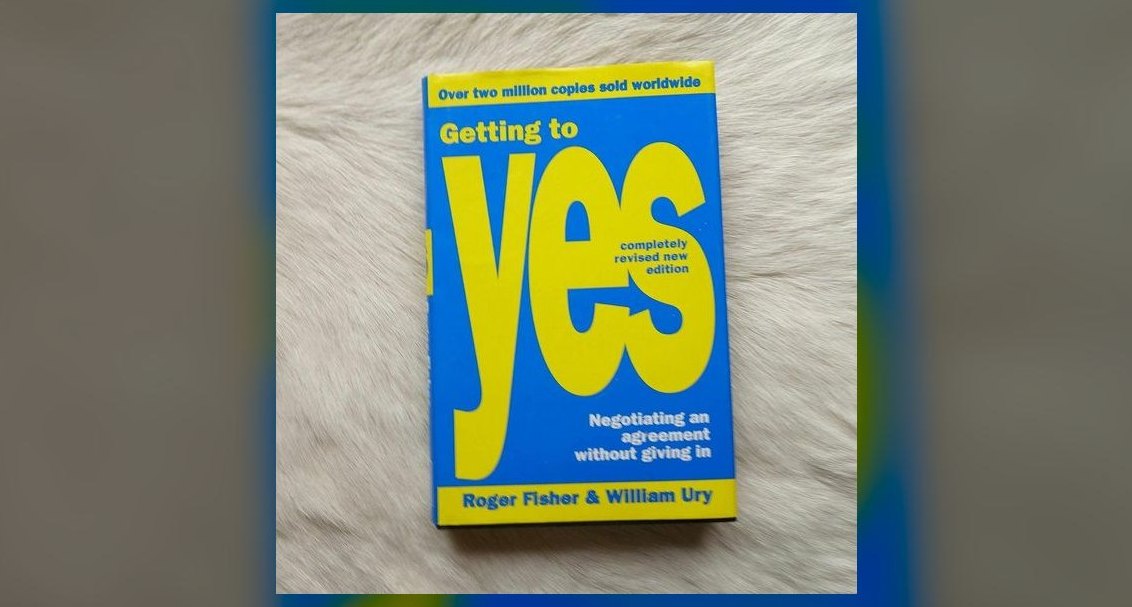 pulse-recentGetting to Yes by Roger Fisher and William Ury — Top 10 Key Takeaways for Sales Leaders in 2027
 pulse-recentThe Challenger Customer by Brent Adamson — Top 10 Key Takeaways for Sales Leaders in 2027
 pulse-recentThe Collaborative Sale by Keith Eades — Top 10 Key Takeaways for Sales Leaders in 2027
 pulse-booksWhat are the most common mistakes in Book Summaries in 2027?
 pulse-booksTop 10 practical takeaways from Atomic Habits for building a new routine in 2027.
 pulse-recentThe Sales Acceleration Formula by Mark Roberge — Top 10 Key Takeaways for Sales Leaders in 2027
 pulse-recentHow to Apply Strategic Selling — Step-by-Step Playbook in 2027