
What’s the most actionable principle from *How to Win Friends and Influence People* for remote work in 2027?
 Curated byKory White · Fractional CRO · Maryland
 PULSEKNOWLEDGE LIBRARY
The most actionable principle from Dale Carnegie's *How to Win Friends and Influence People* for remote work in 2027 is "become genuinely interested in other people," operationalized as a scheduled personal-check-in habit inside every 1:1 and team call. It replaces the hallway conversations and body-language cues that hybrid and fully distributed teams have lost, building trust through deliberate attention rather than leaving connection to chance. The strategy works because it is scheduled, not spontaneous.
The outcome you should expect
Applied consistently, this principle produces a specific, observable shift in how a distributed team behaves within four to eight weeks. Meetings stop opening cold on the agenda and instead spend the first two to three minutes on a real question about the other person's week, project, or life outside work — and the answers get remembered and referenced later. That single habit compounds: people who feel tracked as individuals, not just as task-completers, volunteer information earlier (a slipping deadline, a blocked dependency, a morale problem) instead of letting it surface in a status report after the damage is done. Managers who adopt this report fewer surprises in weekly syncs, because the informal channel that used to run through the office kitchen now runs through a five-minute personal check-in at the top of a call.
The outcome is not warmer small talk for its own sake — Carnegie's principle is a means to an operational end. Teams where the manager can accurately name what each report is working through personally and professionally resolve conflicts faster, because disagreements get framed as "help me understand your side" rather than escalating in a text thread where tone is impossible to read. Attrition risk drops in a specific, visible way: the employees most likely to quit quietly are the ones who feel unseen, and a structured genuine-interest habit is the cheapest available intervention against that specific failure mode. None of this shows up instantly — expect a lag of several weeks between starting the habit and seeing it reflected in retention conversations or engagement survey comments, because trust accrues gradually and is spent all at once if it's ever faked.

The realistic ceiling matters too. This principle does not fix a broken compensation structure, a toxic peer dynamic, or a genuinely bad manager — it fixes the specific problem of remote isolation eroding the interpersonal glue that used to be free in an office. Expect it to move the needle on trust, psychological safety, and early problem-surfacing; do not expect it to substitute for real management competence elsewhere.
What drives that outcome
The mechanism is straightforward: attention is a scarce, visible signal in remote work, and Carnegie's insight is that most people will do more for someone who is sincerely curious about them than for someone who is merely competent. In an office, that curiosity gets expressed for free through overheard conversations, shared commutes, and body language nobody has to schedule. Remote work strips all of that away, so the same signal has to be manufactured on purpose — which is exactly why "genuinely interested" has to become a scheduled behavior rather than a personality trait you hope shows up. The chain runs from a deliberate calendar block, to a short personal question asked with real attention, to the other person feeling specifically seen (not generically managed), to that person extending trust back in the form of candor, effort, and loyalty.

The failure point in this chain is almost always step two or three: leaders schedule the block but ask a generic question ("how's it going?") or ask a good question while visibly distracted, which breaks the signal entirely. Carnegie's original framing — the dog that doesn't need a book on how to make friends because it's simply glad to see you — is the diagnostic test: if the interest has to be performed, it will read as performance, and the entire mechanism above collapses at step three instead of compounding.
Benchmarks and realistic ranges
Concrete cadence matters more than intent here, and the ranges below reflect what is sustainable for a manager carrying a typical remote team rather than an idealized best case. For a direct-report relationship, budget two to three minutes of personal check-in at the start of a weekly or biweekly 1:1 — long enough to ask one specific follow-up question and actually listen to the answer, short enough that it never crowds out the working agenda. For a team-wide meeting of six to ten people, five to seven minutes at the open is a realistic ceiling before the personal-connection time itself starts to feel like a tax on everyone's day.
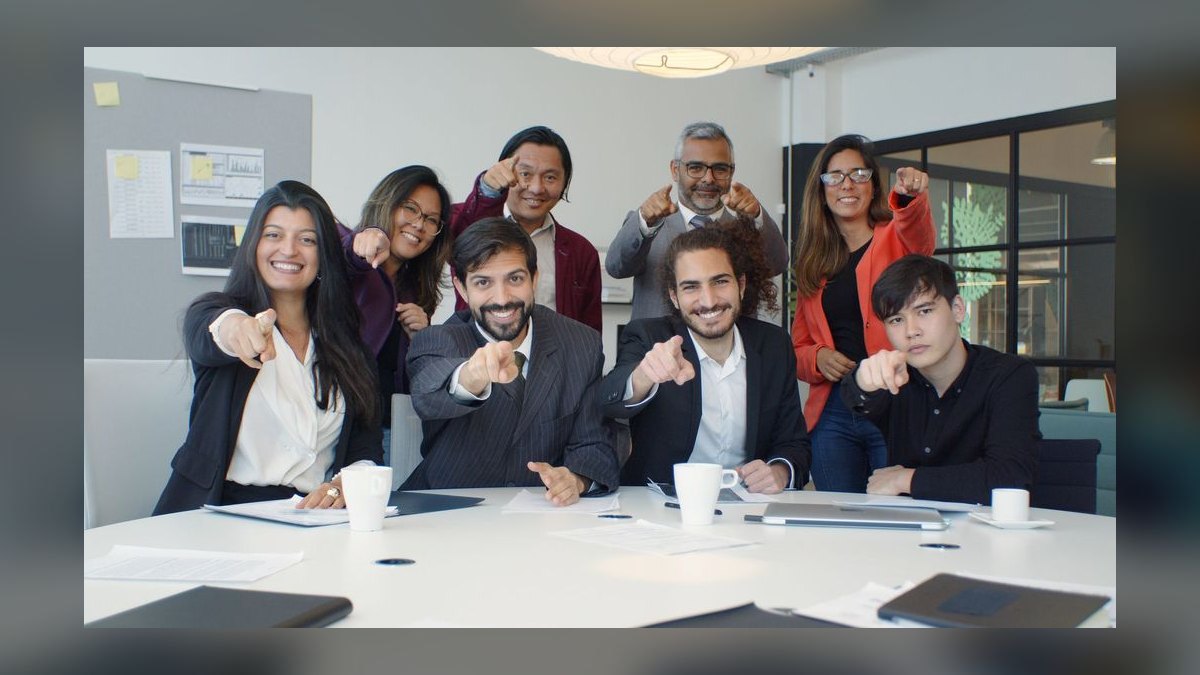
Frequency across relationships is the harder constraint. A manager with eight direct reports cannot sincerely apply this principle to all eight, plus cross-functional peers, plus their own manager, every single day — the honest range is one to three deliberate, personalized touches per day, rotated so that no one relationship goes more than two weeks without one. Spread thinner than that, and the "genuine" part of genuine interest becomes impossible to sustain, because sincerity requires enough bandwidth to actually remember what the last conversation was about.
Recognition cadence follows a similar logic. Public praise that references something specific — a named contribution, a concrete outcome, in the person's own words where possible — holds its value at roughly the frequency of significant, earned events: real wins, not every completed ticket. Praising too often flattens the signal until it means nothing; the practical range is a handful of specific public acknowledgments per week across a team, not one per person per day. On the feedback side, the operative range is zero: critical or corrective feedback delivered in writing should be effectively never, with a live call substituted instead, because text strips the tone cues that keep constructive feedback from reading as an attack.

Risks, edge cases, and failure modes
The single most common failure is the "fake interest" trap: a leader blocks the calendar time and asks the question, but skips the listening, and the recipient can tell within one exchange. Because remote workers have fewer channels of information about their manager, they read insincerity into small signals — a question asked while typing, a follow-up that ignores what was just said, a check-in that vanishes the moment a deadline looms. Once detected, faked interest is worse than no attempt at all, because it signals that the process itself is theater. The fix is structural, not motivational: take a written note of what the person shares, and reference it unprompted in the next conversation — the callback is the actual proof of listening, not the initial question.
A second failure mode is over-praise, which dilutes recognition until it carries no information. If every task completion gets public applause, the team recalibrates and stops trusting the signal, and the leader loses the tool exactly when a genuinely exceptional contribution needs to stand out. The edge case to watch for is a leader compensating for remote distance by praising more often rather than more specifically — frequency is not a substitute for specificity.

A third and higher-stakes failure mode is letting disagreement escalate in writing. A single ambiguous Slack message, read without tone, can spiral into a multi-day conflict that would have dissolved in a two-minute call. The moment a written exchange shows any sign of defensiveness or corrected wording, the correct move is to stop typing and schedule a live conversation — continuing in text is the single most common way a manageable disagreement becomes a lasting rupture on a distributed team.
A subtler edge case involves power dynamics: genuine interest from a manager toward a direct report can read as surveillance rather than care if it arrives only around performance reviews or right before a hard deadline. Timing the habit consistently — independent of whether there's bad news coming — is what keeps it from being reinterpreted as a control tactic. Finally, camera-off culture undercuts the entire mechanism at its source: Carnegie's smile principle depends on visibility, and a team that defaults to cameras off has removed the channel this whole strategy depends on before it even starts.

A practical rollout plan
Rolling this out across a team works best as a staged habit-change, not a policy announcement, because the principle only works if it is sincere and sincerity cannot be mandated by memo. Start with the leader's own behavior for two weeks before asking anyone else to adopt it: block two to three minutes at the top of every 1:1, ask one specific question, take a note, and reference that note at the next conversation. This proves the mechanism to the leader before it becomes a team expectation.
In weeks three and four, extend the cadence to team meetings — open with a short round of personal check-ins, capped at five to seven minutes for a team of six to ten, and pair it with the public-praise habit: one or two specific, earned callouts per week in a shared channel, each tied to a real outcome rather than routine task completion. At the same time, formalize the "no criticism in writing" rule as a team norm — any corrective feedback moves to a live call by default, and the team agrees on this explicitly rather than discovering it inconsistently.

By week five or six, extend deliberate personal touches to cross-functional peers and upward to the leader's own manager, at the one-to-three-per-day cadence described above, rotated so no relationship goes more than two weeks unattended. This is also the point to introduce a lightweight note-taking system — even a simple personal log of what each person shared last — since memory alone will not scale past a handful of relationships.
Treat the first six weeks as a pilot, not a finished system: the honest signal that it's working is that people start referencing the check-ins unprompted ("thanks for asking about that last week") rather than the leader having to track adoption manually. If that unprompted signal never appears, the habit has slipped into performance rather than genuine interest, and the fix is to slow the cadence down rather than push it harder.

Related questions
Does this principle work for asynchronous-only teams with no live meetings?
Less well. The mechanism depends on a live channel — voice or video — where tone and listening are visible; a fully async team should substitute short recorded video messages for text check-ins to preserve the same signal.
How is this different from a standard "personal check-in" agenda item?
The difference is the callback. A generic agenda item asks a question once; Carnegie's principle requires remembering the answer and referencing it later, which is the actual proof of genuine interest.
Should this apply to skip-level relationships too?
Yes, but at a lower frequency — once every few weeks rather than weekly — since the specificity that makes the principle work is harder to sustain across a larger set of relationships.
What replaces this when a team is too large for individual attention?
At scale, the principle shifts from individual check-ins to specific, earned public recognition and small-group rounds, since one leader cannot sincerely track dozens of people's personal details.
FAQ
What's the single most actionable Carnegie principle for remote work in 2027? "Become genuinely interested in other people," applied as a scheduled, specific personal check-in inside every 1:1 and team call rather than left to chance.
How long should a personal check-in actually take? Two to three minutes in a 1:1, five to seven minutes at the top of a larger team meeting — long enough for one specific, remembered question, short enough not to crowd out the agenda.
What's the fastest way to destroy trust while trying to apply this principle? Ask a personal question while visibly distracted, or ask it only when bad news is coming — both read as performance rather than genuine interest and are quickly detected.
Should feedback and correction ever happen in writing? No — the practical rule is to move any corrective or critical feedback to a live call, since text strips the tone cues that keep it from reading as an attack.
How often should public praise happen on a remote team? A handful of specific, earned callouts per week across the team is the sustainable range; praising every task completion dilutes the signal until it stops meaning anything.
Can this principle be automated with AI tools in 2027? AI can help surface reminders or draft notes about what a colleague shared, but the sincerity itself — the listening, the tone, the follow-up — has to come from the person, not the tool.
Sources
- https://www.gallup.com/workplace/321032/state-of-the-global-workplace.aspx
- https://hbr.org
- https://about.gitlab.com/company/culture/all-remote/
- https://www.atlassian.com/blog/teamwork
- https://www.mckinsey.com/capabilities/people-and-organizational-performance/our-insights
- https://www.penguinrandomhouse.com/books/?
- https://www.scpd.stanford.edu
Related on PULSE
- What's the most actionable chapter in *How to Win Friends and Influence People* for cold calling in 2027?
- What's the most actionable chapter in *How to Win Friends and Influence People* for networking in 2027?
- What's the most underrated chapter in *How to Win Friends and Influence People* for building executive relationships?
- What's the one principle from *How to Win Friends and Influence People* that works best for virtual meetings?
- What's the best chapter in *How to Win Friends and Influence People* for leading a team in 2027?
@Kory-White- · if Venmo asks, the last 4 of my number are 2012
 bsWhat are the key lessons from *Never Split the Difference* for negotiating a raise in 2027?
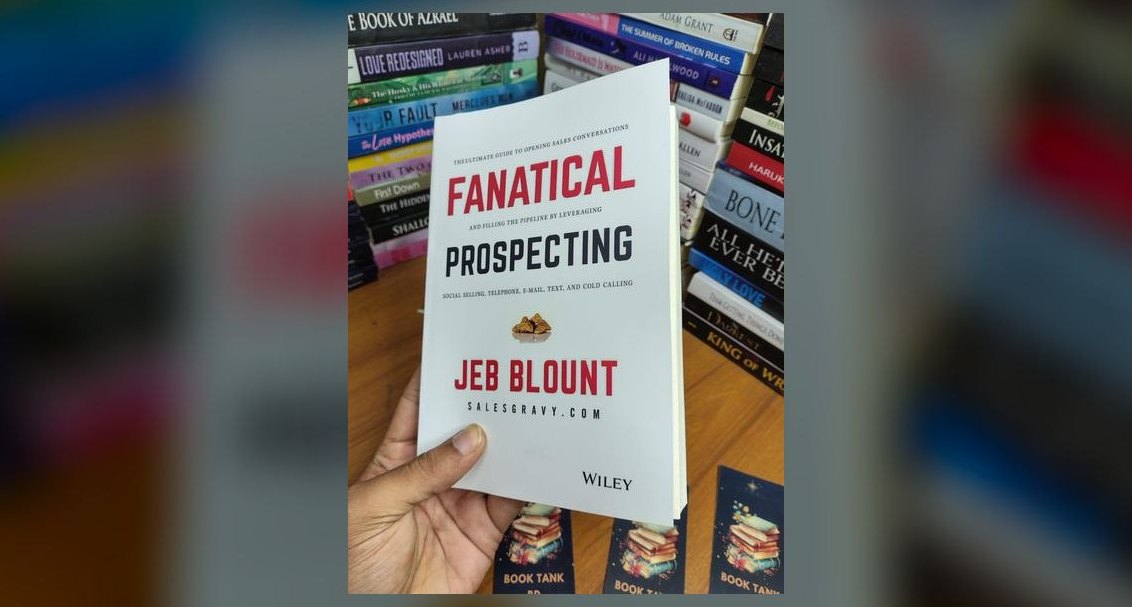 bsHow do you apply *Fanatical Prospecting* to LinkedIn outreach in 2027?
 bsHow does *Gap Selling* help you close more deals in a recession in 2027?
 bsWhat sales script does *New Sales. Simplified.* recommend for cold calls in 2027?
 bsDoes *The Psychology of Selling* still hold up for modern sales techniques in 2027?
 bsWhat’s the biggest mistake *SPIN Selling* warns against in complex B2B sales?
 bsHow does *Fanatical Prospecting* change your daily routine for outbound sales?
 bsWhat’s the most persuasive technique from *Pitch Anything* for investor pitches?
 bsWhat’s the key insight from *The Challenger Sale* for leading a sales team in 2027?
 bsHow do you use *Never Split the Difference* to handle difficult conversations with customers in 2027?