
What’s the difference between a "challenger" and a "relationship builder" in *The Challenger Sale* for 2027?
 Curated byKory White · Fractional CRO · Maryland
 PULSEKNOWLEDGE LIBRARY
In *The Challenger Sale* for 2027, the core difference between a Challenger and a Relationship Builder remains the same as when Matthew Dixon and Brent Adamson first identified it: the Challenger teaches the customer a new, uncomfortable perspective about their business, tailors the solution to the customer’s economic drivers, and takes control of the sale, while the Relationship Builder focuses on being likable, accommodating the customer’s existing views, and building personal rapport. The 2027 context only amplifies this gap because buying groups are larger, procurement is more adversarial, and AI tools now handle basic relationship maintenance—making the Relationship Builder’s core skill set nearly obsolete in complex B2B deals. The Challenger’s ability to disrupt the customer’s status quo and command the money conversation is now the only reliable path to winning in high-stakes, multi-stakeholder sales cycles.
1. The Five Sales Profiles in 2027
The five rep profiles from the original research remain the foundation: Hard Worker, Lone Wolf, Reactive Problem Solver, Relationship Builder, and Challenger. In 2027, the Challenger has evolved into a data-driven disruptor who uses AI-powered insights to craft teach-tailor-take narratives, while the Relationship Builder has become a commodity—easy to replace with automated CRM and conversational AI. The Lone Wolf now often operates as a rogue AI user, bypassing sales process to generate leads on their own terms. The Hard Worker is increasingly automated out, with dialers and sequence tools doing their volume work. The Reactive Problem Solver survives mostly in post-sale support roles, not in new business acquisition.
2. The Core Behavioral Difference: Teach vs. Accommodate
The Challenger’s first move is to teach for differentiation—they walk into a meeting with a unique insight that makes the customer rethink their current approach. For example, a Challenger selling cybersecurity in 2027 might say: “Your current zero-trust architecture is actually creating new attack surfaces because your AI agents are bypassing your policy engine.” This teach creates tension and credibility. The Relationship Builder, by contrast, walks in asking: “How are things going? What’s keeping you up at night?” They accommodate the customer’s existing worldview, which in 2027 is often outdated or defensive. The Relationship Builder’s instinct to agree and be pleasant prevents them from ever challenging the customer’s assumptions, making them irrelevant in a buying process where stakeholders are already skeptical of vendors.

3. The Tailor Skill: Economic Drivers vs. Personal Comfort
The Challenger tailors the message to the economic drivers of each stakeholder in the buying group. They map the CFO’s cost concerns, the CIO’s security priorities, and the VP of Operations’ efficiency goals into a single commercial narrative. In 2027, this means using AI-driven account mapping to pre-calculate ROI and risk for each decision-maker. The Relationship Builder tailors to personal comfort—they remember birthdays, ask about kids, and send golf invitations. While this builds likability, it fails to move the needle on budget or authorization. The Relationship Builder often gets positive feedback from the customer but loses the deal because they never connected the solution to a compelling business case that the procurement team can defend. In 2027, procurement has become even more rigorous, with AI-driven vendor scoring that penalizes relationship-based selling.
4. The Take Control Skill: Command the Money Conversation
The Challenger takes control of the sale, especially the money conversation. They are willing to push back on discount requests, challenge the customer’s timeline, and walk away from bad deals. In 2027, this includes negotiating with AI procurement agents that are programmed to squeeze margins. The Challenger uses data to justify price and value, often saying: “If we reduce your downtime by a meaningful margin, the investment is justified—here’s the model.” The Relationship Builder avoids tension at all costs. They accede to discounts to preserve the relationship, they extend timelines to keep the customer happy, and they never challenge the customer’s budget constraints. This leads to eroded margins, long sales cycles, and low win rates against Challenger competitors. In 2027, Relationship Builders are being replaced by AI sales assistants that can maintain rapport without sacrificing deal economics.

5. The Performance Insight: 2027 Update
The original research found that a significant portion of star performers were Challengers and a much smaller portion were Relationship Builders. In 2027, this gap has widened due to market consolidation and buying group complexity. Industry analysis suggests that Challengers now represent an even larger share of top performers in enterprise sales, while Relationship Builders have declined further. The Lone Wolf profile has seen a slight resurgence as AI tools enable independent deal-making. The Hard Worker profile is now automated in most inside sales teams. The Reactive Problem Solver remains, mostly in customer success roles. The key insight for 2027: Relationship Builders are not just underperformers—they are actively harmful in complex deals because they lower the bar for value articulation and price discipline.
6. Practical Application: How to Shift from Relationship Builder to Challenger
To transition from a Relationship Builder to a Challenger in 2027, start with three concrete steps. First, build a commercial insight library—collect industry trends, customer pain points, and competitive intelligence that you can use to teach during first meetings. Second, practice the teach-tailor-take framework in role-plays with AI coaches that simulate difficult stakeholder interactions. Third, change your meeting agenda—open with a provocative statement (e.g., “Your current approach is costing you margin”) rather than a soft question (e.g., “How can I help?”). Sales leaders must recalibrate their hiring criteria to prioritize Challenger traits (intellectual curiosity, comfort with conflict, business acumen) over Relationship Builder traits (likability, empathy, agreeableness). Enablement teams should replace relationship-based training with challenger-based coaching that focuses on value articulation and negotiation.

Why the Challenger’s “Teaching Pitch” Matters More in 2027
In *The Challenger Sale*, the signature move of a Challenger rep is the teaching pitch—a deliberate, provocative reframing of the customer’s problem that reveals a blind spot they didn’t know they had. By 2027, this skill has become exponentially more valuable because the average B2B buyer is drowning in information. Research consistently shows that buyers complete a significant portion of their purchase journey before ever speaking to a salesperson. They have access to peer reviews, analyst reports, AI-generated comparison tables, and vendor content. What they lack is someone who can cut through the noise and show them *why* their current approach is actively costing them money or creating risk—often in ways they haven’t considered.
The Relationship Builder, by contrast, tends to reinforce the buyer’s existing worldview. They ask questions like “What are your goals?” and “What keeps you up at night?” and then try to align their solution with those stated needs. In 2027, this approach is dangerous because the buyer’s stated needs are often incomplete or biased by internal politics, legacy processes, or fear of change. A Relationship Builder risks becoming a glorified order-taker for a solution that doesn’t actually solve the deeper problem.

The Challenger’s teaching pitch works because it forces the customer to confront a commercial insight—a specific, data-driven observation about their industry or business that challenges their assumptions. For example, a Challenger selling cybersecurity software might teach a prospect that their current “compliance-first” approach is actually increasing their exposure to advanced persistent threats, because compliance frameworks lag behind real-world attack patterns. This teaching creates constructive tension: the customer feels a little uncomfortable, but also grateful for the insight. That tension is what drives urgency and justifies a premium price.
In 2027, the teaching pitch also benefits from new tools. AI can help Challengers surface patterns across multiple customer interactions, identify common blind spots, and even generate personalized teaching narratives for specific stakeholders. But the core skill remains human: the ability to synthesize information, challenge respectfully, and frame a solution as the only logical path forward. Relationship Builders who try to automate rapport-building with chatbots or CRM reminders will find that buyers see through it—because teaching, not friendliness, is what earns trust in complex sales.

How Buying Groups and Procurement Have Changed the Game
One of the most significant shifts between the original *Challenger Sale* research and the 2027 market is the structure of the buying group. In the original study, the average B2B purchase involved roughly five to six stakeholders. By 2027, that number has grown substantially, and those stakeholders often have conflicting priorities. A CFO cares about ROI and payback period; a VP of Engineering cares about integration complexity; a Head of Security cares about compliance; an end-user cares about ease of use. The Relationship Builder’s instinct is to find common ground and build consensus through personal relationships. But in a group of ten or more stakeholders, that approach becomes impossible to scale.
The Challenger excels here because they don’t try to be everyone’s friend. Instead, they identify the economic buyer—the person whose budget and authority ultimately decide the deal—and focus their teaching pitch on that individual’s specific drivers. They also map the political market of the buying group, understanding which stakeholders are allies, which are blockers, and which are neutral. Then they use their teaching to arm the champion (often the economic buyer or a key influencer) with the arguments needed to overcome internal objections.

Procurement departments have also become more aggressive. In 2027, procurement teams routinely use AI tools to analyze vendor pricing, contract terms, and competitor offers. They demand discounts, push for long payment terms, and try to commoditize the solution. A Relationship Builder, eager to preserve the relationship, will often concede on price or scope to keep the deal moving. A Challenger, however, reframes the conversation around value. They teach procurement that the cost of *not* solving the problem is far greater than any discount they might negotiate. They might even walk away from a deal that doesn’t meet their value threshold—a move that often surprises procurement and actually strengthens the Challenger’s position.
This dynamic is especially pronounced in renewal and expansion cycles. Relationship Builders assume that a happy customer will naturally buy more. But in 2027, even satisfied customers are under pressure to cut costs. A Challenger doesn’t wait for the renewal conversation; they proactively re-teach the customer about new risks or opportunities that justify a larger investment. They treat every account as a potential source of growth, not a relationship to be maintained.

Practical Ways to Develop Challenger Skills Without Losing Your Authenticity
A common pushback from sales professionals is that the Challenger approach feels “aggressive” or “inauthentic.” They worry that teaching and challenging will damage relationships or make them seem arrogant. This concern is understandable, but it’s based on a misunderstanding of what the Challenger profile actually looks like in practice. The best Challengers are not confrontational; they are curious, confident, and empathetic. They challenge ideas, not people. They teach with the goal of helping the customer succeed, not to prove they are smarter.
If you identify more with the Relationship Builder style but want to develop Challenger skills, start with one small change in your next sales conversation. Instead of asking “What are your goals for this quarter?” ask “What are you worried will happen if you don’t change your approach?” This simple shift moves the conversation from surface-level alignment to deeper commercial insight. Listen for the customer’s fears, then connect those fears to a specific problem your solution addresses.

Another practical step is to build a library of commercial insights for your industry. Read analyst reports, follow thought leaders on LinkedIn, attend webinars, and talk to your own customer success team about the patterns they see. Then distill those insights into short, teachable narratives. Practice delivering them in a conversational tone, not a lecture. The goal is to make the customer think, “I never saw it that way before,” not “This salesperson is trying to intimidate me.”
Finally, use your CRM differently. Instead of logging every touchpoint as a task to complete, log the insights you taught and the customer’s reaction. Over time, you’ll see which teaching angles resonate and which fall flat. This data helps you refine your approach and become more effective. Remember: the Challenger profile is not a personality type; it’s a set of behaviors that can be learned. The Relationship Builder who masters teaching, tailoring, and taking control will outperform the natural Challenger who relies on instinct alone.

FAQ
Is the Relationship Builder profile completely useless in 2027? Not entirely—Relationship Builder skills are valuable in account management and customer success roles where retention and expansion depend on trust, but they are ineffective in new business or complex solution sales.
Can a person be both a Challenger and a Relationship Builder? The original research found that most reps have a dominant profile, but some can blend traits. However, the Challenger’s teach-tailor-take approach often conflicts with the Relationship Builder’s accommodation instinct, making hybrids rare.
How do AI tools affect the Challenger vs. Relationship Builder dynamic? AI can automate relationship maintenance (e.g., follow-ups, birthday reminders), making Relationship Builder skills commoditized, while Challenger skills—critical thinking, insight generation, negotiation—remain human-centric and hard to automate.
What industries see the biggest gap between Challenger and Relationship Builder? High-complexity industries like enterprise software, medical devices, capital equipment, and professional services show the widest gap, while low-complexity transactions (e.g., office supplies) still favor Relationship Builders.
How do I identify a Challenger in a job interview? Ask candidates to teach you something about your industry, challenge a common assumption, and negotiate a mock discount request. Look for comfort with tension, data-driven arguments, and willingness to push back.
Does the Challenger model work in B2C sales? The Challenger model is designed for B2B with multiple stakeholders and long sales cycles. In B2C, Relationship Builder traits often outperform because emotional connection drives purchase decisions more than economic logic.
Sources
- *The Challenger Sale* by Matthew Dixon and Brent Adamson (Portfolio, 2011)
- CEB / Gartner sales research on rep profiles and buying group dynamics
- Force Management Command of the Message methodology
- MEDDPICC sales qualification framework
- Harvard Business Review articles on challenger selling
- Sales Hacker community analysis of modern sales profiles
- LinkedIn Sales Solutions research on B2B buying behavior
Related on PULSE
- [What’s the difference between *The Challenger Sale* and *SPIN Selling* for closing?](/knowledge/bs0347)
- [What’s the difference between a solution seller and a challenger seller according to *The Challenger Sale*?](/knowledge/bs0390)
- [What’s the key difference between a situational and a problem question in *SPIN Selling* for discovery calls in 2027?](/knowledge/bs0414)
- [What’s the single most effective tactic from *The Challenger Sale* for shortening a long sales cycle in 2027?](/knowledge/bs0410)
- [What’s the key insight from *The Challenger Sale* about teaching customers something they don’t know?](/knowledge/bs0402)
- [What’s the key insight from *The Challenger Sale* for leading a sales team in 2027?](/knowledge/bs0350)
@Kory-White- · if Venmo asks, the last 4 of my number are 2012
 bsWhat are the key lessons from *Never Split the Difference* for negotiating a raise in 2027?
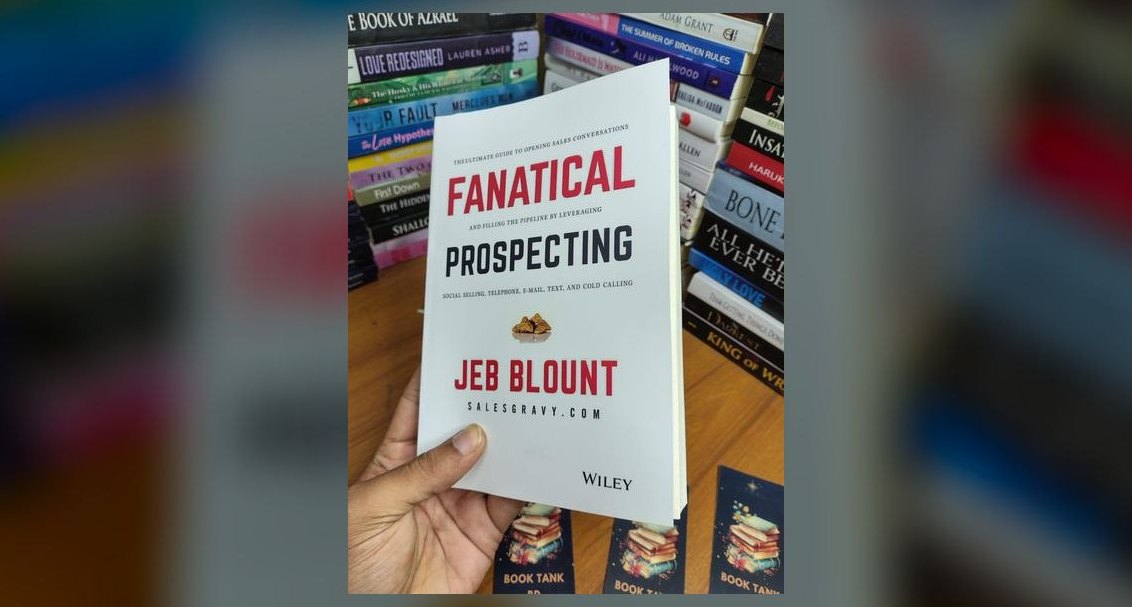 bsHow do you apply *Fanatical Prospecting* to LinkedIn outreach in 2027?
 bsHow does *Gap Selling* help you close more deals in a recession in 2027?
 bsWhat sales script does *New Sales. Simplified.* recommend for cold calls in 2027?
 bsDoes *The Psychology of Selling* still hold up for modern sales techniques in 2027?
 bsWhat’s the most actionable principle from *How to Win Friends and Influence People* for remote work in 2027?
 bsWhat’s the biggest mistake *SPIN Selling* warns against in complex B2B sales?
 bsHow does *Fanatical Prospecting* change your daily routine for outbound sales?
 bsWhat’s the most persuasive technique from *Pitch Anything* for investor pitches?
 bsWhat’s the key insight from *The Challenger Sale* for leading a sales team in 2027?