
What’s the key strategy from *Fanatic Prospecting* for staying motivated during a slump?
 Curated byKory White · Fractional CRO · Maryland
 PULSEKNOWLEDGE LIBRARY
The key strategy from Jeb Blount's *Fanatic Prospecting* for staying motivated during a slump is to double down on the fundamentals — specifically, volume, discipline, and emotional detachment — rather than retreating into analysis paralysis or self-pity. Blount argues that slumps are inevitable in sales, but they are almost always caused by a drop in prospecting activity (fewer calls, fewer conversations, less pipeline) rather than a sudden loss of skill. His proven countermeasure: commit to a non-negotiable daily prospecting routine that is so simple and repeatable that you can execute it even when you feel like quitting. The book's core insight is that motivation follows action, not the other way around — so the only way out of a slump is to prospect *more* (and smarter), not to wait for your mood to improve. Blount also emphasizes emotional resilience through rejection-proofing your mindset and celebrating small wins like dials, conversations, and appointments, not just closed deals.
1. The Psychology of the Slump — Why You Stop Prospecting
Blount dedicates significant space to the psychology of the sales slump because he knows that most reps don't fail from lack of skill — they fail from emotional shutdown. When a rep experiences a string of rejections or lost deals, the brain's amygdala triggers a fight-or-flight response. The natural instinct is to avoid the pain of prospecting (flight) by doing busywork: checking email, updating CRM, rearranging your desk. This is the slump spiral: less prospecting → fewer opportunities → more rejection → even less prospecting.
The key psychological shift Blount prescribes is reframing rejection as data, not judgment. Every "no" is simply a qualification — it tells you that prospect wasn't a fit. The slump is not a reflection of your worth as a person. Emotional detachment from outcomes is the foundation. He calls this "the art of not caring" — not in a lazy way, but in a stoic, disciplined way: you control your activity, not the prospect's response.
2. The Non-Negotiable Daily Routine — Your Slump-Busting Anchor
Blount's most actionable strategy is the non-negotiable daily prospecting block. He insists that every salesperson must schedule a dedicated, uninterrupted block of prospecting time every single day — no excuses, no exceptions, even (especially) during a slump. This block is sacred: no meetings, no email, no CRM cleanup. Just dialing, emailing, and social selling in a focused burst.

During a slump, this routine becomes your anchor. You stop trying to "feel motivated" and instead just execute the process. Blount recommends batching your prospecting: do all your calls in one block, all your emails in another. He also advises starting with the hardest activity first (usually cold calls) because your willpower is highest in the morning. The routine is simple, measurable, and completely within your control — which is exactly what you need when everything else feels out of control.
Example routine:
- Morning block: Cold calling (a high number of dials)
- Mid-morning: Follow-up emails to voicemails
- Late morning: Social selling (LinkedIn outreach, comments)
- Afternoon: Meetings and demos (from pipeline generated in the morning)
3. Volume Cures All — The Math of the Slump
Blount's mantra is "Volume cures all." He breaks down the math of the slump with brutal honesty: if your conversion rate drops, you can either fix your pitch (hard, slow) or increase your volume (easy, immediate). During a slump, most reps do the opposite — they cut volume because they're demoralized. Blount says you must increase your prospecting activity to compensate for lower conversion rates.

He provides a simple formula:
- Current pipeline = (Number of conversations) × (Conversion rate)
- Slump fix = Increase conversations → pipeline stabilizes
He also warns against "shiny object syndrome" — the temptation to chase new tools, scripts, or strategies during a slump. The answer is almost never a new script; it's more reps. Blount's advice: stick with what works, just do more of it. The slump is a volume problem, not a skill problem.

4. Rejection-Proof Your Mindset — The Emotional Armor
Blount dedicates a full chapter to rejection-proofing because he knows that slumps are primarily emotional battles. His key tactics:
- The Reset Rule: After a rejection, give yourself a brief moment to feel frustrated, then take a deep breath and dial the next number. This prevents the emotional spiral from contaminating the next call.
- The "No" is a Gift: Every "no" saves you time and energy that you would have wasted on a bad prospect. Rejection is a qualification tool, not a personal attack.
- Separate Identity from Outcome: You are not your sales numbers. Your worth is not tied to your quota. Blount urges reps to develop a "professional alter ego" — a version of yourself that is confident, persistent, and unfazed by rejection.
- Celebrate Activity, Not Results: During a slump, reward yourself for dials, conversations, and appointments — not just closed deals. This rewires your brain to associate effort with dopamine, not just outcomes.
He also recommends daily affirmations and visualization — but not the fluffy kind. Blount says to visualize handling rejection gracefully, not just closing big deals. Prepare for the worst possible outcome (another "no") and decide in advance how you'll respond. This is emotional inoculation.

5. The Accountability Partner — Why You Can't Do It Alone
Blount emphasizes that slumps thrive in isolation. When you're struggling, your natural instinct is to hide — skip meetings, avoid your manager, stop talking to colleagues. This is the worst thing you can do. He recommends finding an accountability partner — a peer, a manager, or a coach — who will hold you to your daily prospecting routine without judgment.
The accountability partner's job is simple:
- Check in daily on your activity numbers (dials, conversations, appointments)
- Call you out if you're making excuses
- Celebrate small wins with you
- Remind you that slumps are temporary and normal
Blount also suggests public commitment — telling your team or manager that you're going to make a high number of calls that day. Social pressure is a powerful motivator. The key is external accountability because your internal motivation is unreliable during a slump.

6. The Comeback — How to Rebuild Momentum
Blount's final strategy is about rebuilding momentum once you've broken the slump. He warns against immediately relaxing — the danger is that once you close a deal, you'll stop prospecting and fall back into the slump. Instead, he advises overcompensating for a sustained period after you feel "back."
His comeback framework:
- Acknowledge the slump — admit you're in it, without shame
- Commit to the routine — double down on the non-negotiable block
- Increase volume — dial more, send more emails, have more conversations
- Track activity, not results — focus on what you control
- Celebrate small wins — every appointment is a victory
- Stay consistent — even after you close a deal, keep prospecting
He also emphasizes learning from the slump — ask yourself: *What caused it? Was I distracted? Did I stop prospecting? Did I get lazy?* The slump is a teacher. Blount says that the best salespeople emerge from slumps stronger because they've built emotional calluses and a discipline that can't be broken.

The "Activity Gap" — Your Most Dangerous Blind Spot
Blount dedicates significant attention to what he calls the activity gap: the widening chasm between the number of prospecting touches you *think* you're making and the number you're *actually* making. During a slump, this gap becomes a trap. You feel like you're working hard, but your data (or your calendar) tells a different story.
The psychology is subtle: when results drop, your brain interprets the pain of rejection as a signal to *slow down* and "be more strategic." But Blount argues that this instinct is exactly wrong. In a slump, the only thing that has changed is your perception of effort. Your actual output has likely drifted downward by a meaningful margin — fewer calls, shorter conversations, more time spent checking email or "researching" accounts.
His recommended fix is brutally simple: track every single prospecting activity for one week. Not just calls, but voicemails, emails, social touches, and in-person attempts. Most salespeople discover they are doing far less than they believed. The moment you see the gap in black and white, the slump begins to make sense — and the solution becomes obvious. You don't need a new script, a better pitch, or a lucky break. You need to close the activity gap by returning to the raw volume that built your pipeline in the first place.

Blount emphasizes that this tracking should be non-judgmental. The goal is not to shame yourself but to gain clarity. Once you see the data, you can set a simple, achievable daily target (e.g., "I will make a specific number of dials before 10 a.m.") and treat it as a non-negotiable commitment. The slump doesn't care about your feelings — it only responds to activity.
The "Rejection Muscle" — How to Build Emotional Calluses
A central theme in *Fanatic Prospecting* is that rejection is not a personal attack — it's a statistical inevitability. Blount reframes rejection as a form of emotional exercise. Just as a weightlifter builds muscle by repeatedly lifting heavy loads, you build rejection tolerance by repeatedly facing "no." The more you expose yourself to rejection, the less it hurts, and the faster you recover.
During a slump, this muscle atrophies. You start taking every "no" personally, which makes the next call feel heavier. Blount's strategy is to deliberately increase your rejection exposure in a controlled, intentional way. He recommends setting a "rejection goal" — for example, "I will collect a certain number of rejections today" — and treating each one as a small victory. When you reframe rejection as progress (because it means you are taking action), the emotional sting diminishes.

He also advocates for pre-call rituals that reset your emotional state. These can be as simple as standing up, taking three deep breaths, or repeating a short mantra like "The next call is a fresh start." The key is to create a psychological boundary between the last rejection and the next attempt. Without this boundary, you carry the weight of every "no" into the next conversation, which makes you sound hesitant, desperate, or defeated.
Blount also warns against the "comparison trap" — looking at colleagues who seem to be thriving while you struggle. He reminds readers that every top performer has endured slumps, and the only difference is that they kept prospecting through the pain. The rejection muscle is built in the dark, when no one is watching and the results are invisible. But it pays off when the market shifts and you are the one who never stopped moving.

The "Micro-Win" System — Rewriting Your Brain's Reward Circuit
One of Blount's most practical strategies for staying motivated during a slump is to redesign your definition of a "win." In good times, a win might be a closed deal or a signed contract. But in a slump, those outcomes are too rare to sustain motivation. If you only celebrate when you close, you will spend most of your time feeling like a failure.
Blount advocates for a micro-win system — a daily list of small, controllable achievements that you can check off regardless of the outcome. Examples include:
- Making your first batch of dials of the day
- Leaving a voicemail that includes a specific value statement
- Sending a personalized follow-up email
- Booking a meeting (even if it's weeks out)
- Having a conversation that lasts longer than a few seconds

Each micro-win triggers a small dopamine release, which keeps your brain engaged and hopeful. Over time, these small rewards build momentum, and momentum is the natural enemy of a slump. Blount emphasizes that this is not about "participation trophies" — it's about rewiring your brain to associate effort with reward, rather than only outcome.
He also suggests physical markers for micro-wins: a tally mark on a whiteboard, a coin moved from one pocket to another, or a simple checkmark in a notebook. The act of physically recording a micro-win reinforces the neural pathway that says "I am making progress." This is especially powerful on days when the external results are invisible.
The micro-win system also protects you from the "all-or-nothing" thinking that paralyzes many salespeople during slumps. Instead of thinking "I need to close a deal today or I'm failing," you think "I need to complete my five micro-wins today." The pressure drops, your confidence stabilizes, and you keep prospecting — which is the only way the slump ends.
FAQ
What if I don't have time for a dedicated prospecting block? Blount says that's an excuse — everyone can find the time. Wake up earlier, block your calendar, or delegate non-essential tasks. Prospecting is the most important activity in sales.
Does this work for inside sales and field sales equally? Yes. The volume and routine principles apply to both. Field reps should batch their prospecting blocks before or after appointments.
What if my slump is caused by a bad product or market? If the product truly doesn't solve a problem, no amount of volume will fix it. But Blount argues that most slumps are activity-based, not product-based. Test the market first.
How do I find an accountability partner? Ask a trusted peer on your team, your manager, or join a sales mastermind group. The key is someone who will be honest with you.
What if I'm too embarrassed to admit I'm in a slump? Blount says embarrassment is the enemy of recovery. Every top performer has been in a slump. Admitting it is the first step to fixing it.
Can I use this strategy for email prospecting too? Absolutely. Volume applies to all channels. If your email response rate drops, send more emails — but also test different subject lines and value propositions.
Sources
- *Fanatic Prospecting* by Jeb Blount (Wiley, 2015)
- Jeb Blount's Sales Gravy blog and podcast
- *Sales EQ* by Jeb Blount
- *The Psychology of Selling* by Brian Tracy
- Harvard Business Review articles on sales motivation and resilience
- HubSpot's Sales Blog on prospecting routines
- The Challenger Sale by Dixon and Adamson (for contrast on rep profiles)
Related on PULSE
- [What’s the core strategy in *Fanatic Prospecting* for building a pipeline from scratch in 2027?](/knowledge/bs0356)
- [High-Profit Prospecting by Mark Hunter — Cliff Notes Summary & Key Takeaways](/knowledge/bs0024)
- [Fanatical Prospecting by Jeb Blount — Cliff Notes Summary & Key Takeaways](/knowledge/bs0008)
- [Hope Is Not a Strategy by Rick Page: Summary, Key Lessons, and RevOps Takeaways](/knowledge/bs310)
- [Major Account Sales Strategy by Neil Rackham: Summary, Key Lessons, and RevOps Takeaways](/knowledge/bs305)
- [Fanatical Prospecting by Jeb Blount: Summary, Key Lessons, and RevOps Takeaways](/knowledge/bs298)
@Kory-White- · if Venmo asks, the last 4 of my number are 2012
 bsWhat are the key lessons from *Never Split the Difference* for negotiating a raise in 2027?
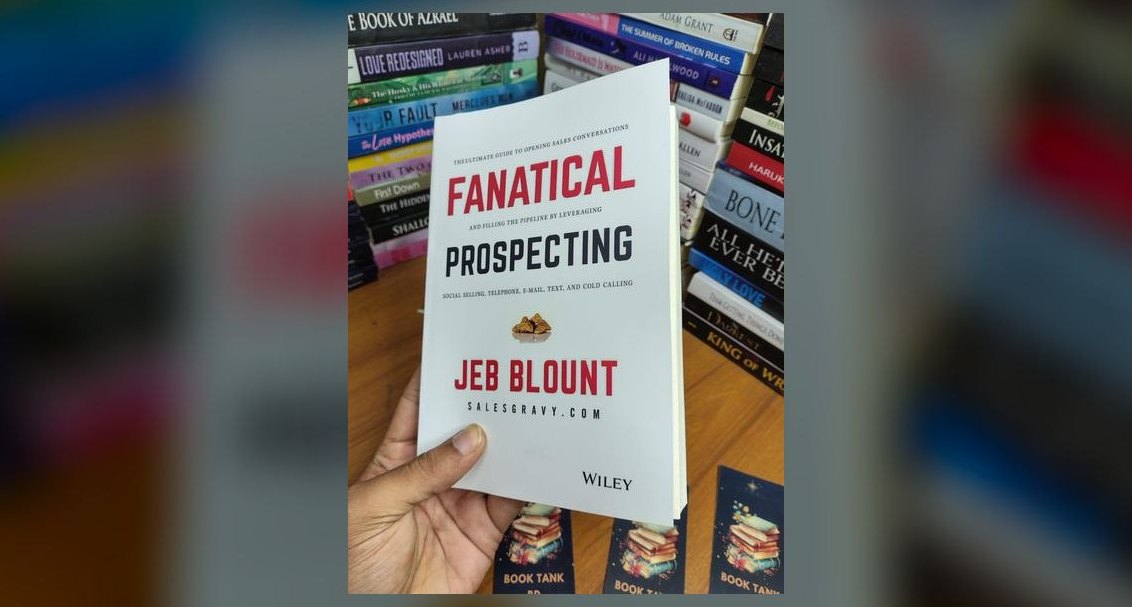 bsHow do you apply *Fanatical Prospecting* to LinkedIn outreach in 2027?
 bsHow does *Gap Selling* help you close more deals in a recession in 2027?
 bsWhat sales script does *New Sales. Simplified.* recommend for cold calls in 2027?
 bsDoes *The Psychology of Selling* still hold up for modern sales techniques in 2027?
 bsWhat’s the most actionable principle from *How to Win Friends and Influence People* for remote work in 2027?
 bsWhat’s the biggest mistake *SPIN Selling* warns against in complex B2B sales?
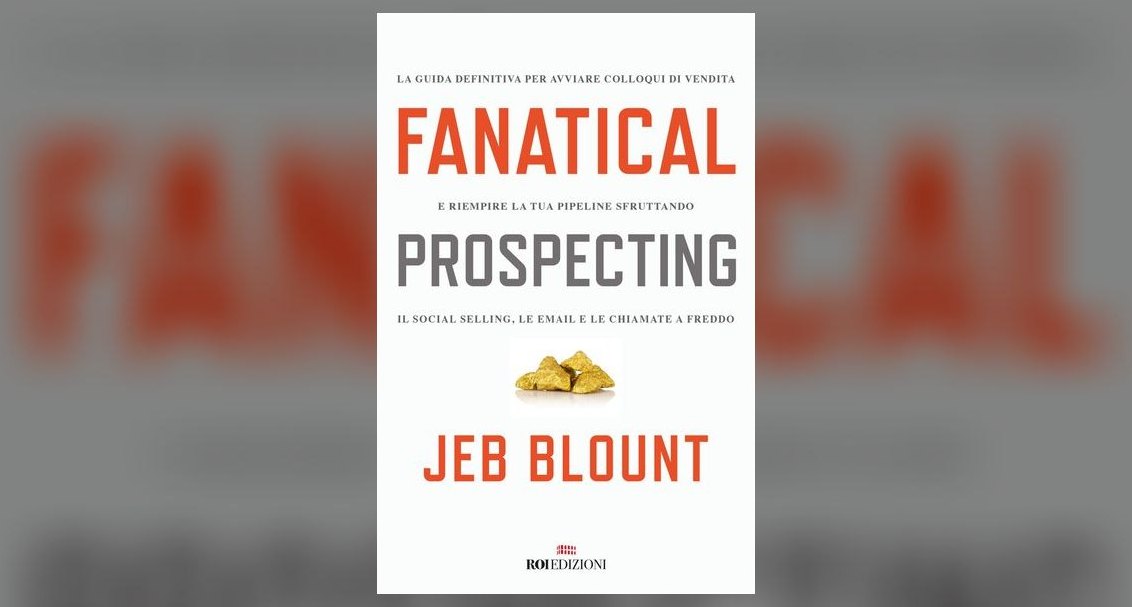 bsHow does *Fanatical Prospecting* change your daily routine for outbound sales?
 bsWhat’s the most persuasive technique from *Pitch Anything* for investor pitches?
 bsWhat’s the key insight from *The Challenger Sale* for leading a sales team in 2027?