


How do you keep a sales team motivated when quotas keep rising but the market isn't growing in 2027?
Quality
Certified

Keep a sales team motivated when quotas keep rising in a flat market by changing *what* you pay for, not just how much. Rebalance incentives toward margin, retention, and pipeline quality; make the number transparent and territory-fair; and replace raw attainment with a mix of leading indicators so reps can win even when the market won't grow.
The two options compared: stretch targets versus rebalanced incentives
When the market isn't growing but quotas keep rising, sales leaders usually reach for one of two levers, and the choice shapes everything downstream.
Option A — the stretch target approach. You keep lifting the number, lean harder on commission accelerators, add a decelerator below threshold, and count on your top quartile to carry the team. The logic is simple: if the market won't give you growth, you extract it from the sales force. This works when there's genuine untapped capacity — a new segment, a neglected product line, a territory that was under-covered. It fails when the number is simply disconnected from the addressable market, because you end up paying more for the same revenue and burning out the middle of the team.
Option B — the rebalanced incentive approach. You hold the total number roughly flat in real terms and change *what* gets rewarded. Instead of paying purely on closed revenue, you shift weight toward margin, multi-year contract value, retention and expansion inside existing accounts, and pipeline quality metrics like qualified-opportunity conversion. Reps can still hit a "quota" — it's just a differently shaped one. This works when the market is genuinely flat and the growth has to come from share, price discipline, and account depth rather than volume.

The two are not mutually exclusive, but you must pick a primary. A team that hears "the number is up 20% and also we're changing the comp plan" reads it as a double squeeze. A team that hears "the number is roughly flat, but here's what we now reward instead" reads it as a fair reset. The framing is the intervention.
The failure mode of Option A in a flat market is well documented in sales-compensation practice: when attainment drops across the board, your best reps leave first because they have the most options, and your median reps disengage because the accelerator feels unreachable. You end up with a plan that pays less to more people and calls it motivation. The failure mode of Option B is complexity — if reps can't explain their own paycheck in one sentence, the plan stops motivating and starts confusing.
How to decide between them

The decision is not philosophical; it's diagnostic. Run four checks before you choose.
First, market check: is your total addressable market actually flat, or is your *share* flat while the market grows? If the market grows 6% and you grow 2%, that's a coverage and execution problem, not a market problem — Option A is defensible. If the market is genuinely flat, Option A is a tax on your team.
Second, capacity check: do you have unworked segments, unlaunched products, or under-penetrated accounts? If yes, you can raise targets honestly. If no, raising targets just redistributes the same revenue.
Third, attrition check: what's your voluntary attrition among reps who hit 70–100% of quota last year? That band is your future. If it's above roughly 15% annually, raising quotas will accelerate the leak.
Fourth, margin check: is your growth coming from discounting? If average discount is creeping up while volume is flat, you have a pricing problem that a revenue-only quota will make worse.

The hybrid branch matters more than it looks. Many teams don't need to choose purely; they need to hold the headline number flat while reweighting the *mix* — for example, keeping 70% of variable pay on revenue and moving 30% onto margin plus renewal. That preserves the familiar shape of a quota while changing the behavior it drives.
Concrete numbers behind each option
Numbers make this decision concrete, so here are realistic ranges a practitioner can sanity-check against their own plan.
Option A, stretch targets. Suppose a rep carried a $1.0M annual quota and the company raises it to $1.2M — a 20% lift — while the addressable market is flat. If the rep closed $1.0M last year at 100% attainment, the same absolute performance now lands at 83%. On a typical plan with a 50/50 split between salary and variable, and an accelerator starting at 100%, that rep loses the entire accelerator portion plus part of base variable. In practice, a rep who earned, say, $150K in variable at 100% attainment might earn roughly $110–120K for identical output. Multiply that across a team and you've cut effective pay by 15–25% without changing anyone's effort. That is the mechanism behind the attrition spike.

Now add the accelerator math. If the accelerator pays 2x rate above 100% and only your top 20% of reps reach it, then 80% of the team is being managed by a rule they will never touch. A rule that only rewards the top quintile is not a motivator; it's a retention strategy aimed at five people.
Option B, rebalanced incentives. Take the same $1.0M quota and hold it flat. Instead, change the payout mix: 60% on closed revenue, 25% on gross margin or discount discipline, 15% on renewal and expansion within existing accounts. A rep who closes $950K but at two points better margin and renews 90% of their book can still reach 100% payout. Now the same flat market produces more profitable revenue, and the rep has three ways to win instead of one.
The second-order effect is pipeline quality. If you add a modest gate — for example, opportunities only count toward quota once they've passed a documented qualification stage — you typically see *reported* pipeline shrink while *converted* pipeline holds or improves. That's not a loss; it's the removal of fantasy. Teams that measure this often find that 20–30% of what was counted as pipeline was never real, and that removing it makes forecasting meaningful again.

The cost of getting it wrong. If you raise quotas 20% into a flat market and lose 20% of your mid-band reps, replacement cost per rep (recruiting, ramp, lost productivity during a 3–6 month ramp) commonly runs into six figures per hire in enterprise sales. Losing five reps can cost more than the incremental revenue the higher quota was supposed to produce. That is the trade-off in one line: you can raise the number or you can keep the team, and sometimes not both.
Implementation details and sequencing
Sequencing is where most rebalances fail. Change too much at once and reps stop trusting the plan; change too little and nothing moves.
Step 1 — Freeze the headline number before you change anything else. Announce that the total quota is flat for the year, in writing, before you introduce new measures. This single act removes the "double squeeze" interpretation and buys you credibility for everything that follows.
Step 2 — Pick two new measures, not five. Margin and renewal are the usual candidates in a flat market. Adding five metrics dilutes all of them and makes the plan unexplainable. Two is the practical ceiling for a plan a rep can recite from memory.

Step 3 — Model the payout for your actual team, not your average rep. Run last year's real numbers through the new plan for every rep individually. You are looking for two things: does anyone's pay drop more than about 10% for identical performance, and does the plan create a perverse incentive (for example, reps refusing small deals because they don't clear a margin threshold). Fix those before you publish.
Step 4 — Publish a one-page plan explainer with three worked examples. A rep at 80%, one at 100%, one at 130%. If you can't produce those three examples cleanly, the plan is too complex.
Step 5 — Run it for two quarters before you judge it. Comp plan changes produce a noisy first quarter as reps learn the new rules. Judging at 60 days produces panic revisions.
Step 6 — Protect the middle band deliberately. The reps at 70–100% are the ones a flat market demoralizes first. Consider a small floor — a guaranteed minimum payout for the first two quarters of the new plan — so the transition doesn't cost them rent money while they adapt.

Step 7 — Give managers a coaching script, not just a plan. The plan changes behavior only if the weekly conversation changes. Managers need to know what to say when a rep says "I can't hit this." The honest answer in a flat market is: "You're right that volume is capped. Here's where the upside now lives."
On communication. The words you use matter as much as the math. "The market isn't growing, so we're changing what we reward" lands very differently from "quotas are rising again." The first is a strategy; the second is a threat. Leaders who keep teams motivated in flat markets are almost always the ones who explain the *why* before the *what*, and who can show a rep a credible path to full pay that doesn't depend on the market magically recovering.
On territory fairness. A flat market exposes territory imbalance that growth was hiding. Before you change incentives, re-run territory potential. If one rep's patch is 30% smaller than another's, no comp plan will fix that; the plan will just make the unfairness visible and resented. Rebalancing accounts is unglamorous and it is often the single highest-leverage move available.
On recognition. Variable pay is not the only motivator. In flat markets, public recognition of margin wins, difficult renewals, and clean pipeline discipline costs nothing and reinforces exactly the behaviors the new plan pays for. Pair the money with the story.

On the risk of over-rotating. If you move too much weight onto margin, reps start declining strategically important logo deals that are thin today but large tomorrow. Keep a documented exception path so managers can approve a low-margin strategic deal without the rep feeling punished for it. Every plan needs a pressure valve.
Related questions
Does rebalancing incentives actually reduce total pay?
Not if you hold the headline number flat and model it properly. Total variable spend usually stays similar; what changes is *who* earns it and *for what*. The risk is complexity, not cost.
How long before a new plan changes behavior?
Expect one quarter of noise, then a real signal by the second quarter. Judging a plan at 60 days produces panic revisions that destroy trust.
What if leadership insists on raising quotas anyway?
Negotiate the *shape*, not just the size. Accept a higher number only if the plan adds margin, renewal, or pipeline-quality credit so reps retain multiple paths to full payout.
Can this work for a small sales team?

Yes, and it's often easier. With under 20 reps you can model every individual payout by hand and explain the plan in a single meeting, which is exactly what makes it stick.
FAQ
What is the single biggest mistake when quotas rise in a flat market? Raising the number and changing the comp plan in the same announcement. Reps read that as a double squeeze and disengage before the new plan has a chance to work. Freeze the headline number first, then introduce new measures.
How many metrics should a rebalanced plan include? Two is the practical maximum. Margin and renewal are the most common choices in a flat market. Beyond two, reps can no longer explain their own paycheck, and a plan nobody can explain stops motivating anyone.
Should we keep accelerators for top performers?

Yes, but recognize they only motivate the top quintile. In a flat market, the leverage is in the 70–100% band, so make sure the base plan pays fairly there before you spend budget on accelerators above 100%.
How do we handle reps whose territories are genuinely smaller? Re-run territory potential before changing incentives. If patches are materially unequal, no comp design fixes it — rebalance accounts first, then apply the plan. Otherwise the plan just makes an existing unfairness visible.
What leading indicators should replace raw attainment? Qualified-opportunity conversion, documented pipeline coverage (typically 3–4x quota), average discount, and renewal rate. These move before revenue does, which means reps get feedback in weeks rather than quarters.
Does this approach work outside B2B software? The mechanics transfer to any consultative sale with a long cycle — industrial equipment, financial services, healthcare services. The specific measures change (margin and renewal are near-universal), but the sequencing does not.
Sources
- Harvard Business Review — How to Motivate Salespeople
- Harvard Business Review — The Right Way to Use Compensation
- Sales Management Association — Sales Compensation Research
- Gartner — Sales Compensation and Quota Research
- WorldatWork — Sales Compensation Practices
- McKinsey — The B2B Pricing and Sales Performance Practice
- SHRM — Employee Recognition and Total Rewards
- Journal of Marketing — Salesforce Compensation and Motivation Research
Related on PULSE
- How do you redesign a sales compensation plan when the market flattens?
- What leading indicators actually predict quota attainment in enterprise sales?
- How do you rebalance sales territories without losing your top performers?
- What is the real cost of sales rep attrition in enterprise B2B?
- How should sales managers coach the middle of the team when targets rise?
- How do you keep a sales team engaged through a flat-growth year?
This page will be disappearing soon. Save it to your device for $1 — or read it free while it is here.
@Kory-White- · if Venmo asks, the last 4 of my number are 2012
This page is gone.
This one is off the shelf now. $1 keeps it on your phone for good — the whole page, pictures and diagrams included.
 bsWhat’s the biggest takeaway from *The Challenger Sale* for B2B sales in 2027?
 bsWhat’s the key difference between a situational and a problem question in *SPIN Selling* for discovery calls in 2027?
 bsWhat’s the core strategy in *Fanatic Prospecting* for building a pipeline from scratch in 2027?
 pulse-booksHow much do executive book summary subscriptions like getAbstract or Blinkist cost in 2027?
 bsWhat’s the main takeaway from *New Sales. Simplified.* for overcoming call reluctance in 2027?
 bsWhat’s the single most effective questioning technique from *SPIN Selling* for enterprise discovery calls?
 bsWhat’s the difference between a "challenger" and a "relationship builder" in *The Challenger Sale* for 2027?
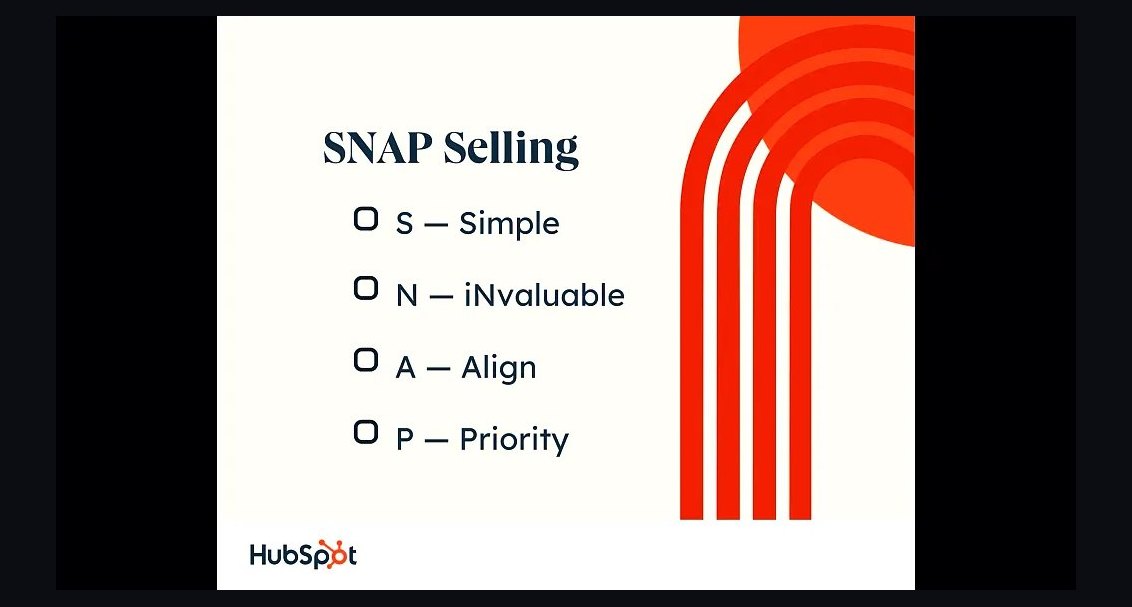 bsHow does *SNAP Selling* help you shorten a six-month sales cycle into three months in 2027?
 bsHow does *Fanatical Prospecting* change your daily routine for outbound sales?
 bsHow does *Gap Selling* help you compete against a lower-priced competitor without discounting in 2027?