
How does *Never Split the Difference* teach you to handle a "we need to think about it" objection in 2027?
 Curated byKory White · Fractional CRO · Maryland
 PULSEKNOWLEDGE LIBRARY
*Never Split the Difference* treats "we need to think about it" as an unspoken objection, not a scheduling issue. Chris Voss's strategy is to label the hesitation aloud, mirror the phrase back, ask a calibrated "what" or "how" question, then stay silent until the real blocker surfaces. You never argue — you make it safe to say no.
The outcome you should expect when you stop accepting the stall
The first thing that changes is not your close rate. It is your forecast accuracy. Most sellers hear "we need to think about it," write a cheerful follow-up, and move the deal to the next stage anyway. Voss's method produces a different result: within the same conversation, you usually learn whether there is a deal at all. Sometimes the answer is worse than you hoped — the buyer has no budget authority, the incumbent contract renews in eleven months, a rival is already in procurement. That is a win. A stall you can name is an object you can work on. A stall you accept is a rumor you carry in your pipeline for a quarter.
Expect three concrete outcomes. First, more conversations end in an explicit, agreed no. Voss argues that "no" is the start of the negotiation because it restores the other side's sense of autonomy; a buyer who has been allowed to say no stops defending and starts explaining. Second, the deals that survive move with fewer, shorter follow-ups, because you are now working the actual obstacle rather than sending value-add emails against a fog. Third — and this is the part most teams underweight — your discovery gets better upstream. Once you have heard "the real reason is my VP got burned by a migration in her last job" four or five times, you start surfacing migration fear in the first call, and the late-stage stall stops appearing as often.
What you should *not* expect is a magic phrase that converts hesitation into signature. Voss is explicit that tactical empathy is not persuasion by wordplay. The techniques lower the emotional temperature enough for information to move. Information is the product. If the information says the deal is dead, the technique worked. Sellers who measure these skills by win rate alone often conclude they "don't work," because the first effect is that bad deals leave the pipeline faster — which makes the numerator and denominator both move before the ratio does. Measure cycle length, stage-slip counts, and the share of closed-lost deals with a written reason instead.

There is an adjacent benefit that shows up in renewals and customer success, not just new business. The same stall appears when a customer says "we need to think about the expansion" or "let's revisit at renewal." The person handling that conversation usually has more context than a new-business rep — they know the usage data, the champion's internal politics, the last support escalation. Applying labels and calibrated questions there tends to surface churn risk a full quarter earlier than a health score does, because a health score reads product telemetry and a label reads the human who signs.
What actually drives the outcome
The mechanism has four parts, and skipping any of them collapses the effect.
Tactical empathy. Voss defines this as understanding the other side's feelings and mindset well enough to hear their voice inside your own head — and, crucially, articulating it back. It is not agreement and it is not niceness. When a buyer stalls, they are managing a private risk calculation you cannot see. Naming the emotion out loud does something specific: it lets the buyer confirm or correct you. Both are useful. A correction ("it's not the price, it's the timing") is the entire prize.

Labels. A label is a short observational sentence starting with "It seems like…", "It sounds like…", or "It looks like…" — never "I". Voss is emphatic about dropping the "I", because "I think you're worried" makes the sentence about you and invites resistance. "It sounds like this needs to survive a conversation you're not in the room for" makes it about them, and it is easy to correct. A mislabel is not a failure; the buyer fixing your label hands you the accurate version for free.
Mirrors. Repeat the last one to three words of what they said, with a rising, questioning tone. "Think about it?" Then stop. Voss calls mirroring the closest thing to a Jedi mind trick in the book precisely because it costs nothing and almost always produces elaboration. The mirror is the cheapest tool available and the one sellers skip most, because three words feels like too little effort to be doing your job.
Calibrated questions. Open-ended questions beginning with *what* or *how* that hand the other side the illusion of control while pointing them at the problem. "What about this feels unresolved?" "How would you like to move forward?" "What's the biggest challenge you face here?" Voss warns against *why* — in most contexts it reads as an accusation and puts people on defense.
Two more elements bind these together. The accusation audit, where you list the negatives the other side might be thinking before they say them ("You're probably thinking we're one more vendor promising a painless rollout"), drains the charge from an objection by saying it first. And the late-night FM DJ voice — a downward-inflecting, calm delivery — which Voss argues signals that you are not a threat. Same words at the wrong pitch produce the opposite effect.

The sequence matters more than any single move. Mirror before label, because the mirror often makes the label unnecessary — the buyer explains themselves and you skip a step. Label before calibrated question, because a question asked into unresolved tension gets a defensive answer. And silence after every one of them. Voss calls it effective pauses; the discomfort does the work. Four to six seconds feels unbearable to the person who just asked and entirely normal to the person deciding whether to answer.
The upstream driver nobody talks about: the stall is often not the buyer's. It is their manager's, or legal's, or a peer who was burned by a similar purchase. When you hear "we need to think about it" from a single-threaded contact, you are frequently hearing a ventriloquist. Calibrated questions are how you find the hand — "How does a decision like this usually get made here?" is a scoping question dressed as courtesy, and it routinely surfaces a second stakeholder you had no idea existed.
Benchmarks and realistic ranges
Be careful with numbers here. *Never Split the Difference* is a book of field-derived technique, not a controlled study, and Voss does not publish conversion benchmarks for sales objections. Anyone quoting a precise lift figure for labeling is making it up. What you can benchmark is your own behavior, and those numbers are worth tracking.

Silence duration. Voss's guidance is to pause and let the discomfort work. In practice, sellers who time themselves find they interrupt at roughly one to two seconds while believing they waited ten. Record three calls and stopwatch it. The gap between perceived and actual pause length is the single most common self-deception in this skill.
Labels per conversation. Voss's own training material emphasizes stacking labels rather than firing one and moving on. A reasonable target on a stalled call is three to five labels across the conversation, not one. If you used exactly one, you probably delivered it, got a half-answer, and retreated to your deck.
Ratio of what/how questions to statements. Track it on a recorded call. Sellers who are new to this typically run heavily toward statements after an objection — the reflex is to answer. The direction you want is more questions than assertions in the two minutes following a stall.

The Ackerman model's specific numbers. When the stall really is price, Voss's Ackerman schedule is one of the few places in the book with hard figures: set your target, open at 65% of it, then step to 85%, 95%, and 100% with increasingly small, oddly-specific increments, using empathy and calibrated questions between each move, and finishing with a non-monetary item thrown in. He is describing a haggling context, and B2B software with published list pricing is not that context — but the underlying logic (decreasing concession sizes signal you are approaching a real limit) transfers cleanly to discount ladders.
Cycle-time expectations. Rather than borrowing an outside benchmark, take your own median days-from-stall-to-resolution for the last two quarters as the baseline, then watch it after the team adopts the pattern. The realistic direction is fewer deals sitting in a "verbal stall" limbo, not universally faster closes. Some deals will get slower and more honest — a buyer who admits the budget unlocks in Q3 has given you a longer, truer timeline than the one you had.
One honest range worth stating: not every "we need to think about it" is a mask. A share of them — small, in most sellers' experience, but not zero — are literal. Someone genuinely needs to read the contract, or run a number, or wait for a board meeting. The tell is that a literal stall survives labeling gracefully. You say "It sounds like there's something unresolved," they say "Honestly no, I just need Thursday to read it properly," and they hold eye contact. That is a real answer. Voss's method still helps: you convert vague into specific by asking what they need to have in hand by Thursday, and who else reads it.

Risks, edge cases, and failure modes
Sounding like a script. The most common failure. A rep learns "It sounds like…" and deploys it seven times in a call, each with the same cadence, and the buyer notices. Labels are observations. If you have not actually observed anything, you are performing empathy, which is worse than no empathy — the buyer's read is "this person is running a technique on me," and trust drops below where you started.
Mirroring into a loop. Repeating three words works once or twice. Repeating them four times reads as mockery or as not listening. If two mirrors produce nothing, escalate to a calibrated question or an accusation audit; do not stand there echoing.
Weaponized calibrated questions. "What would have to be true for you to move forward?" is genuinely useful and has been so thoroughly overused in sales training that many buyers now recognize it as a move. Vary the phrasing, and make sure the question serves the buyer's clarity rather than your close plan. Voss's framing is that calibrated questions give the other side the illusion of control — buyers who suspect the illusion is the whole point react badly.

Cultural and channel mismatch. Effective pauses land very differently across cultures and communication norms. Silence that reads as thoughtful in one setting reads as hostile or as a dropped connection in another. On video with any latency, a four-second pause is indistinguishable from a frozen screen, and buyers start saying "you there?" On email, silence is not available at all as a tool — what transfers to writing is labeling and calibrated questions; what does not is the pause and the FM DJ voice, which is a large share of the mechanism. Treat asynchronous channels as a downgrade and push the real conversation to voice.
Using it on the wrong person. These techniques assume the person in front of you holds or influences the decision. Run a beautiful label-and-silence sequence on a coordinator who is relaying a message and you will get an honest shrug. The failure mode is concluding "they're hiding something" when the truth is they have nothing to hide and no power to give.
The manipulation line. Voss's material frames tactical empathy as a route to genuine understanding, and the ethics hold only if the understanding is genuine. If you use the accusation audit to name a fear you intend to talk them out of rather than address, you are doing something else. The practical consequence is not moral abstraction: buyers who feel handled tell their peers, and in a small market that reputation outlives the deal.

Over-indexing on emotion when the blocker is mechanical. Some stalls are procurement calendars, security-review queues, or a fiscal-year boundary. No amount of labeling moves a SOC 2 review that takes six weeks. The tell is that the buyer answers your calibrated question with a process, not a feeling. Switch modes immediately — start mapping the process, its owner, and its clock, and stop negotiating.
Team-level risk. Rolling this out badly produces a floor of reps who all say "it seems like" and none of whom can handle the answer. The skill that takes longest to build is not the phrase; it is tolerating what comes back. A buyer who says "honestly, we're leaning toward your competitor" has just given you the most valuable sentence of the quarter, and an untrained rep will panic and discount.
A practical rollout plan
Treat this as a behavior change program, not a training event. The book is a two-hour read; the reflex takes a quarter.
Weeks 1–2: individual reps, low stakes only. Voss's own advice is to practice where nothing is on the line. Mirror the barista. Label your teenager's mood. The goal is to get past the physical discomfort of repeating someone's words back, which is the real barrier. Each rep picks one technique — just mirroring — and uses it ten times a day off the job.

Weeks 3–4: recorded internal role-play. Pair reps. One plays a buyer with a written secret blocker on an index card — a competitor, a burned predecessor, a budget freeze, a champion with no authority. The other has to surface it using only mirrors, labels, silence, and calibrated questions. No pitching allowed. Record it. The scoring rubric is not "did they get it" but "how many statements did they make before their first question."
Weeks 5–8: live calls with a stall-log. Every time a rep hears any variant — "let me think," "I'll circle back," "we need to discuss internally," "send me something I can share" — they write the exact wording, what they said next, and what came back. Voss's point about variations matters: the phrasing differs, the function is the same. The log becomes a team-owned library of what the stall actually sounds like in your market and which responses opened it.
Weeks 9–12: deal reviews built on the log. Change one question in your pipeline review. Instead of "what's the next step," ask "what did they say when they hesitated, and what did you learn?" A rep who cannot answer has a deal built on politeness. This single change does more to embed the skill than any workshop, because it makes the behavior load-bearing for something the rep already cares about.

Ongoing: the accusation audit library. Collect the five to seven negatives your buyers most commonly hold — too expensive, another migration, we tried something like this and it failed, my team won't adopt it, you're too small. Write an audit line for each. These are reusable across the team because they are market-level fears, not deal-level ones, and having them ready is what lets a rep get ahead of a stall instead of reacting to one.
Two adjacent surfaces are worth wiring in at the same time. Customer success should run the same stall-log against renewal and expansion conversations, because "let's revisit next quarter" is the identical objection with a different cost. And marketing should read the accusation audit library — the fears reps hear repeatedly are the objections your website is failing to handle before the call. That loop, from stalled conversation back into positioning, is the highest-leverage part of the whole exercise and the part almost nobody builds.
Finally, resist the urge to bolt this onto a methodology stack. If your team already runs MEDDIC or a similar qualification frame, these techniques are the *how* underneath the *what* — the way you actually extract identified pain or find the economic buyer, not a competing system. Presenting it as a replacement guarantees it gets abandoned at the first quarter-end.
Related questions
Is "we need to think about it" ever genuine?
Sometimes, yes. The tell is that it survives a label calmly and converts into specifics: a named document, a named date, a named person. Vague hesitation that shifts when you name a fear was never about thinking.
Does mirroring work on email?
Partially. You can quote a phrase back and ask about it, and labels transfer well in writing. Silence and vocal tone — a large share of the mechanism — do not. Move consequential stalls to a call.
What's the difference between a label and a leading question?
A label is an observation the other side can freely correct: "It seems like timing is the issue." A leading question smuggles in your preferred answer. Voss's version invites contradiction; leading questions punish it.
How is this different from standard objection-handling training?
Conventional training answers the stated objection. Voss's approach assumes the stated objection is a placeholder and spends its effort surfacing the unstated one, using emotional acknowledgment rather than counter-argument.
Should I ever just accept the stall and follow up?
Accept it only after you have named a concrete next step, a date, and who else is involved. "Take your time, I'll check in Friday" without those three things is how deals quietly die.
FAQ
What's the very first thing to say when someone says "we need to think about it"?
Mirror it. Repeat "think about it?" with a rising inflection and then stop talking. It costs three words, requires no preparation, and in most conversations the buyer fills the silence with the actual reason. If the mirror produces nothing, move to a label.
Why does Voss say to avoid "why" questions?
Because in most contexts "why" reads as an accusation and triggers defensiveness — the person starts justifying rather than explaining. "What" and "how" ask for the same information without the implied judgment, which is why Voss builds calibrated questions almost entirely out of those two words.
Is the accusation audit risky? It sounds like arming the other side.
The counterintuitive finding is the opposite. Naming the negative first — "you're probably thinking this is one more tool nobody will adopt" — drains its charge, because an objection you say out loud is harder for them to hold as a private weapon. The risk is delivery: said with the wrong tone, it sounds sarcastic.
Does any of this apply outside sales?
Directly. Voss's material comes from hostage negotiation and he applies it to salary discussions, contract disputes, and everyday conflict. The "we need to think about it" pattern shows up in hiring, in partnerships, and in internal approval conversations, and the same sequence of mirror, label, silence, calibrated question works in all of them.
How do I use this without feeling like I'm manipulating someone?
Make the empathy real. If you label a fear you have no intention of addressing, you are manipulating. If you label it because you want to know whether you can solve it — and are willing to hear that you cannot — you are negotiating. The difference is whether you would walk away from a bad fit.
What if the buyer just repeats "we really do need to think about it"?
Take it, but make it concrete. Ask what specifically they want to have resolved, who else needs to weigh in, and what a reasonable date looks like. Voss's framing is that vague agreements are worthless; a stall you have pinned to a date and a person is a plan, and one you have not is a guess.
Sources
- https://www.blackswanltd.com/ — Chris Voss's negotiation training firm, publisher of ongoing material on labels, mirrors, and calibrated questions
- https://en.wikipedia.org/wiki/Never_Split_the_Difference — overview of the book, its author, and its core concepts
- https://www.harpercollins.com/products/never-split-the-difference-chris-vosstahl-raz — publisher page for the book
- https://hbr.org/2016/12/how-to-negotiate-with-a-liar — Harvard Business Review on negotiation tactics and eliciting honest information
- https://www.pon.harvard.edu/ — Program on Negotiation at Harvard Law School, research and articles on negotiation technique
- https://fbinaa.org/ — FBI National Academy Associates, background on federal negotiation training lineage
- https://www.ted.com/talks — TED archive, including negotiation and persuasion talks referenced widely alongside Voss's work
- https://www.gong.io/resources/ — conversation-analytics research on how objections and talk patterns behave on real sales calls
Related on PULSE
- [How do you use *Never Split the Difference* to handle difficult conversations with customers in 2027?](/knowledge/bs0351)
- [How do you reframe a budget objection using *Never Split the Difference* in 2027?](/knowledge/bs0365)
- [What is the most actionable framework from *Never Split the Difference* for handling a price objection in 2027?](/knowledge/bs448)
- [What's the best way to use *Never Split the Difference* to build rapport with a hostile stakeholder?](/knowledge/bs0404)
- [How do you apply *Never Split the Difference* to a pricing negotiation with a long-time customer in 2027?](/knowledge/bs0391)
- [How does *Never Split the Difference* apply to salary negotiations in 2027?](/knowledge/bs0348)
@Kory-White- · if Venmo asks, the last 4 of my number are 2012
 bsWhat are the key lessons from *Never Split the Difference* for negotiating a raise in 2027?
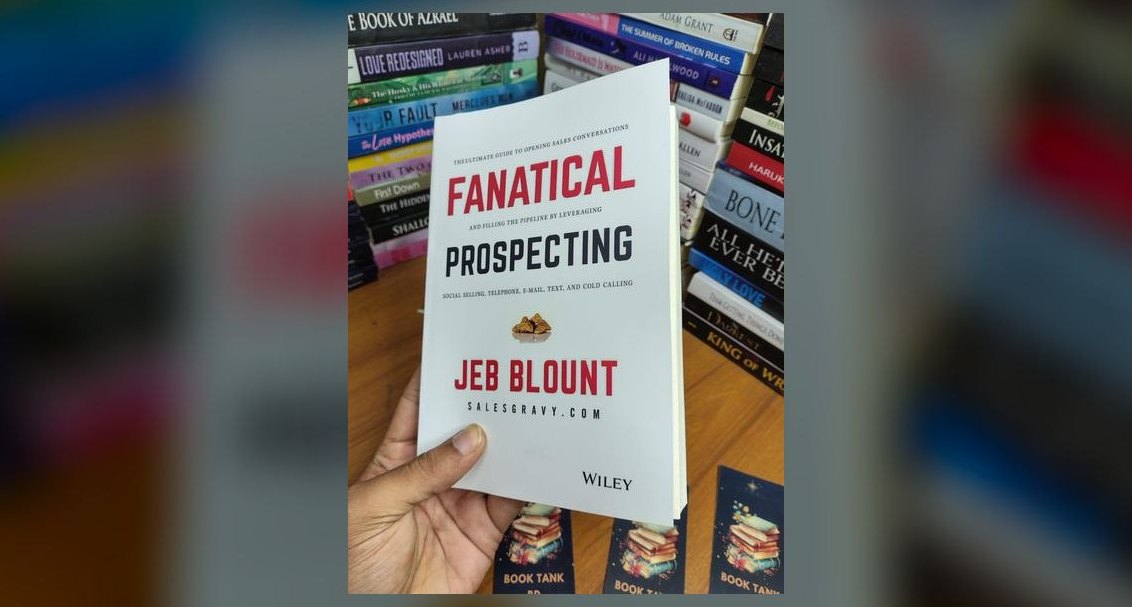 bsHow do you apply *Fanatical Prospecting* to LinkedIn outreach in 2027?
 bsHow does *Gap Selling* help you close more deals in a recession in 2027?
 bsWhat sales script does *New Sales. Simplified.* recommend for cold calls in 2027?
 bsDoes *The Psychology of Selling* still hold up for modern sales techniques in 2027?
 bsWhat’s the most actionable principle from *How to Win Friends and Influence People* for remote work in 2027?
 bsWhat’s the biggest mistake *SPIN Selling* warns against in complex B2B sales?
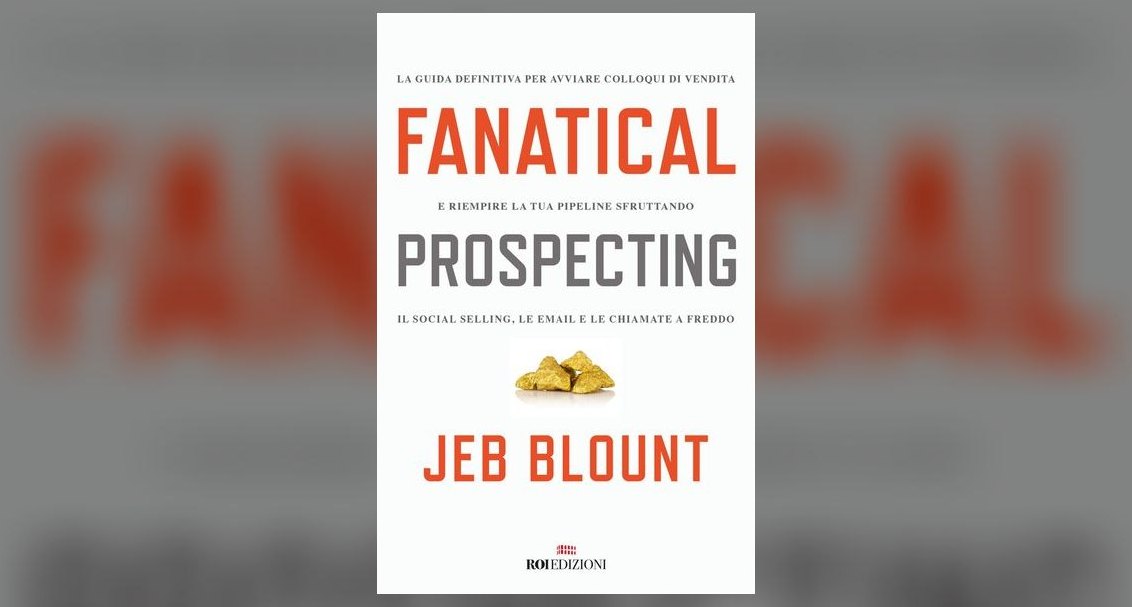 bsHow does *Fanatical Prospecting* change your daily routine for outbound sales?
 bsWhat’s the most persuasive technique from *Pitch Anything* for investor pitches?
 bsWhat’s the key insight from *The Challenger Sale* for leading a sales team in 2027?