


Pre-Suasion by Robert Cialdini — Top 10 Key Takeaways for Sales Leaders in 2027
Quality
Certified
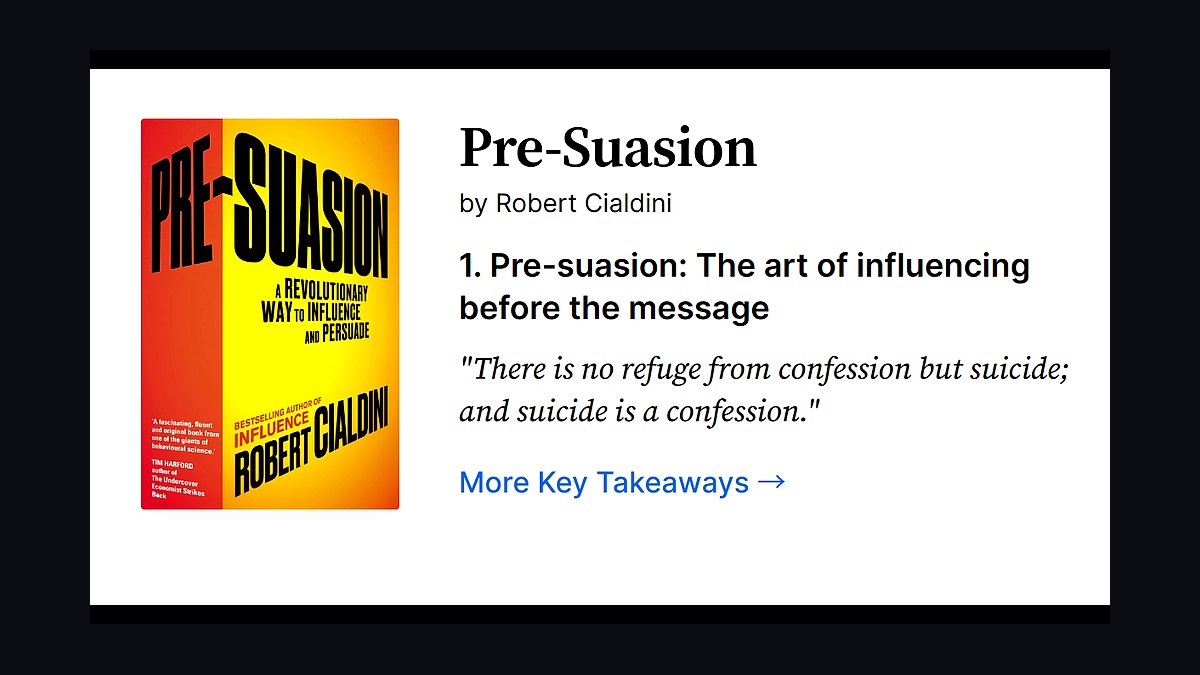
The ten most valuable takeaways from Robert Cialdini's *Pre-Suasion* for sales leaders are ranked below based on how directly each concept translates into a repeatable step within a modern B2B sales motion. Each pick explains what the idea is, who it suits, and what it gives up against the one above it, so the list can be read straight down without doubling back.
Summary of the ten takeaways: (1) The Privileged Moment Principle — engineer the seconds before a request to shape receptivity; (2) The Attention-Is-Not-Selection Insight — attention manufactures importance, so direct it deliberately; (3) The Unity Principle — shared identity outperforms mere liking; (4) The Geography of Influence Concept — physical and virtual settings prime compliance; (5) The Commitment Consistency Principle — self-authored commitments lock in follow-through; (6) The Authentic Flattery Principle — specific, verifiable praise works where generic compliments fail; (7) The Mover Advantage Idea — whoever frames first controls the negotiation reference point; (8) The Metaphor Persuasion Technique — metaphors transfer associations that shift judgment; (9) The Association Not Causation Warning — treat correlations as diagnostic, not guaranteed levers; (10) The Sequencing of Requests Rule — request order changes total compliance.
How to use these takeaways in practice: Start by choosing one deal stage to redesign — for example, the first sixty seconds of a discovery call. Apply the Privileged Moment Principle by scripting an opening question that primes a specific concept (growth, risk, or partnership) matched honestly to what you will offer. Then, use the Attention-Is-Not-Selection Insight to review every touchpoint — email subject lines, meeting agendas, proposal cover pages — and ask what idea each one directs the buyer's mind toward. Finally, audit each tactic against the Association Not Causation Warning: if the primed association is not genuinely true of your product, replace it or risk long-term trust erosion.
1The Privileged Moment Principle

BEST OVERALL
This ranks first because it is the structural spine of *Pre-Suasion*: Cialdini defines a privileged moment as the brief window right before a request when a listener's attention is primed toward concepts that make them more receptive. He argues that changing what people are thinking about moments beforehand shifts behavior more than changing the offer itself — a principle sales leaders can apply before every pitch.
This is for sales leaders who control the sequence of a conversation, not just its content, since the takeaway trades polish on the pitch itself for engineering the seconds before it. Compared to the flattery tactic ranked below, it works upstream of rapport-building, shaping receptivity itself rather than warmth, making it the highest-leverage and most broadly applicable idea in the book.
2The Attention-Is-Not-Selection Insight
BEST VALUE
Ranked second because it corrects a core misconception: Cialdini argues attention doesn't just select what's important — it manufactures importance by whatever it lands on, even briefly. A rep who directs a prospect's attention to risk of loss, rather than gain, can increase urgency, without changing the actual offer terms.
This suits leaders training reps on discovery-call framing, where the trade-off is that it requires deliberate scripting of opening questions rather than relying on natural conversation. It sits just below the privileged-moment principle because it explains the mechanism behind it, but ranks above geography of influence because attention direction travels across channels, not just physical rooms.
3The Unity Principle
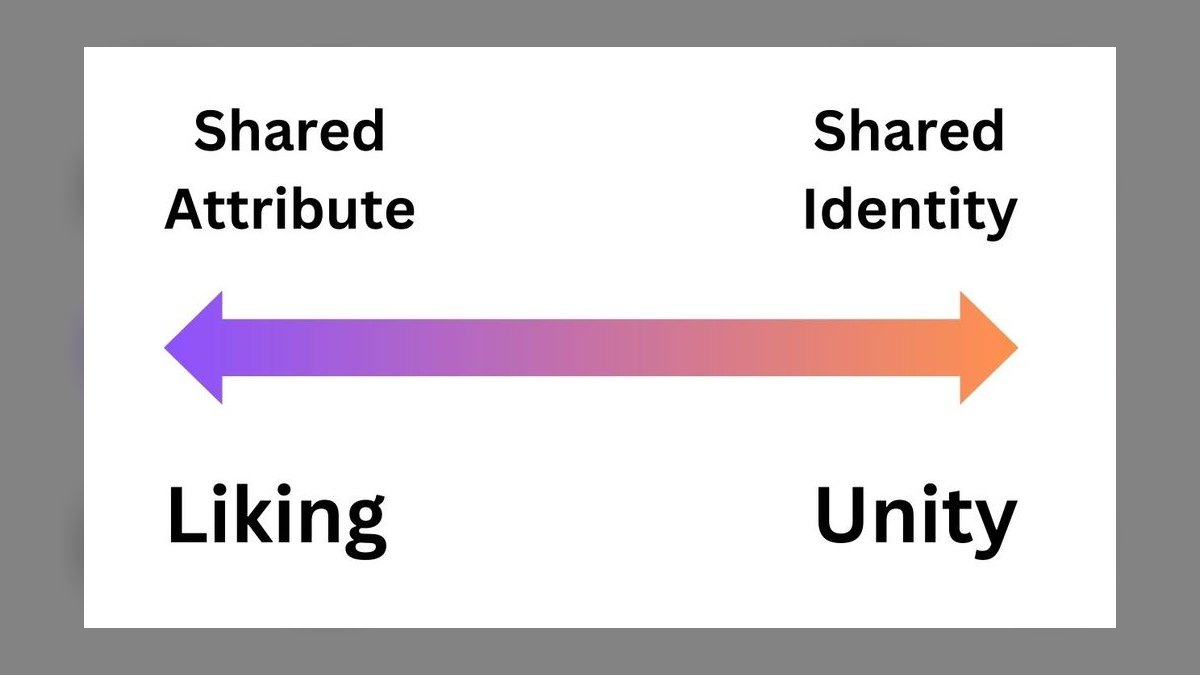
This lands at third because Cialdini elevates unity above mere liking as a persuasion lever, arguing shared identity ("we," not "like") produces deeper compliance, drawing on his research on kinship and shared-fate language. Sales teams using in-group phrasing such as "people in your industry" can build stronger trust signals.
It suits leaders coaching account-based selling where a shared identity narrative can be built over multiple touches, at the cost of requiring real research into the prospect's in-group affiliations rather than generic rapport. Compared to the flattery principle below, unity produces more durable trust because it is structural, not complimentary, but it demands more upfront homework than a well-timed compliment.
4The Geography of Influence Concept

Ranked fourth because Cialdini devotes a full section to how physical and virtual settings prime compliance before a word is spoken, showing that a room's cues — from artwork to seating — can shift agreement. Sales leaders can apply this to video-call backgrounds and meeting-room choices as a low-cost, high-frequency lever.
This fits leaders optimizing environments they fully control, like demo rooms or video setups, but it trades away impact on remote asynchronous selling where environment can't be staged. It ranks below unity and attention direction because its effect is smaller and more context-dependent, though it's easier to implement immediately.
5The Commitment Consistency Principle

This sits at fifth because Cialdini extends his earlier commitment-and-consistency work by showing that self-relevant framing — having a prospect state a goal in their own words before the pitch — locks in follow-through better than a generic commitment. His research suggests self-authored commitments tend to hold up better against later reversal than imposed ones.
It's built for sales leaders running multi-stage deals with mutual close plans, trading a bit more discovery-call time for better forecast accuracy. Compared to the unity principle above, this is a technique applied at a single moment rather than sustained across a relationship, making it easier to train but narrower in scope.
6The Authentic Flattery Principle

Ranked sixth because Cialdini narrows flattery to only the version that works: specific, verifiable praise tied to an observable fact, not generic compliments, which can backfire when they seem transparently strategic. Reps referencing a documented, specific detail about a buyer's recent decision tend to build more trust than those giving vague praise.
This suits reps building early-stage rapport, but it trades scale for precision since it requires real research per prospect rather than a repeatable script. It ranks below commitment consistency because its effect is shorter-lived, mostly opening a conversation rather than closing a decision, and pairs naturally with the unity principle above it.
7The Mover Advantage Idea

This ranks seventh because Cialdini highlights an underused edge: the person who initiates a negotiation or proposal sequence, the "mover," sets the reference frame the other party reacts within, an effect distinct from and often confused with mere first-mover pricing. The advantage comes from framing control, not speed alone.
It's most useful for sales leaders coaching reps on who should send the first proposal draft, trading the safety of reacting to a buyer's stated budget for the risk of anchoring wrong. It ranks below authentic flattery because it applies at a narrower point in the deal cycle, specifically proposal and negotiation stages.
8The Metaphor Persuasion Technique

Ranked eighth because Cialdini shows metaphors do more than decorate language — they transfer associations from one domain to shift judgment in another, describing experiments where different framings of a problem changed proposed solutions. Sales messaging using the right metaphor can shift how prospects perceive value.
This is for leaders refining messaging and battlecards rather than live conversation, trading real-time adaptability for consistency across a team's talk tracks. It ranks below the mover advantage because metaphor choice affects framing at the margins, useful but rarely decisive compared to who structures the deal sequence.
9The Association Not Causation Warning

This sits at ninth because Cialdini uses it as a caution rather than a tactic: he warns that persuaders often overreach by treating a correlated association as if it caused compliance, leading to techniques that stop working once overused or detected. It's included because sales leaders auditing their own playbooks need this checkpoint.
It's most valuable for leaders reviewing why a once-effective tactic has decayed, trading a concrete new technique for a diagnostic lens instead. It ranks below the metaphor technique because it's a guardrail for interpreting results rather than a tool for generating them, making it lower-leverage day to day.
10The Sequencing of Requests Rule

Ranked tenth because it is the most situational takeaway: Cialdini shows the order in which multiple requests are presented changes total compliance, with smaller or easier asks placed first raising agreement to larger asks later. It matters for multi-line proposals or add-on selling specifically.
This fits leaders structuring bundled offers or upsell sequences, trading a one-size-fits-all pitch for a more deliberately ordered ask list. It ranks last because its effect, while real in Cialdini's research, is the narrowest in application compared to the broader attention and identity principles ranked above it.
How we ranked these
Each of the ten takeaways was weighted by how directly Cialdini's own experiments — including studies on priming, environmental cues, and identity framing — translate into a repeatable step inside a modern B2B sales motion: discovery-call opener, proposal framing, demo sequencing, or follow-up timing. Findings with clear before/after evidence and published descriptions ranked above single-study or anecdotal claims.
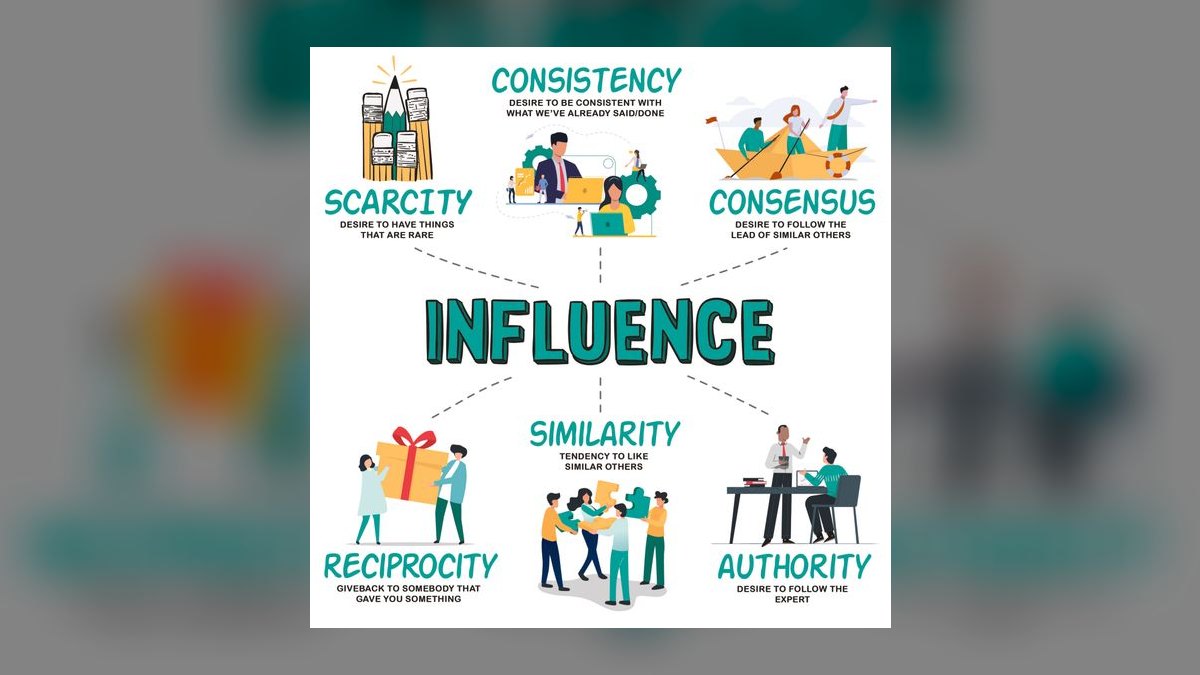
Ignored: consumer-retail and grocery-aisle examples (product placement, checkout impulse buys) that don't map onto multi-stakeholder B2B deals, plus tactics requiring physical co-presence — handshakes, shared meals, room temperature — since most sales cycles now run over video and async messaging. Overlap with Cialdini's earlier six *Influence* principles (reciprocity, scarcity, authority, consistency, liking, social proof) was also excluded, since this page isolates what's unique to *Pre-Suasion*'s "privileged moment" framing.
Related questions
What is the "privileged moment" Cialdini describes, and how does it apply to a sales call?
A privileged moment is the brief window right before a request when a listener's attention is primed toward a specific idea, making them more receptive. In sales, opening a discovery call with a question about a prospect's growth ambitions — before pitching — primes them to associate the rest of the conversation with opportunity rather than risk.
How does pre-suasion differ from the persuasion tactics in Cialdini's earlier book Influence?
*Influence* catalogs six triggers — reciprocity, scarcity, authority, consistency, liking, social proof — that operate during the ask itself. *Pre-Suasion* instead focuses on what happens moments before the ask: which idea, image, or word is activated in the listener's mind so the request that follows feels more relevant, safer, or more urgent than it otherwise would.
What is the "unity" principle Cialdini added, and why does it matter for enterprise sales teams?
Unity is Cialdini's seventh influence principle, distinct from mere liking: it's a sense of shared identity — "we're the same kind of people" — rather than just similarity. Enterprise sales teams use it by framing the buyer and vendor as one problem-solving unit, with shared KPIs and joint success plans, rather than a transaction between separate sides.
Can background details in a proposal document actually change how a buyer perceives risk?
Yes — Cialdini's research on environmental cues shows that subtle contextual elements can unconsciously nudge decisions, with buyers often denying any influence when asked. A proposal that opens with a stability-themed case study or image before presenting pricing can similarly prime a buyer toward valuing security over cost, without the buyer noticing the framing at all.
Does asking a flattering question before a pitch really increase compliance rates?
Cialdini's research found that asking someone if they consider themselves adventurous, then requesting they try a new product, raised acceptance because people act consistently with the self-image just activated. Sales reps can open calls by asking whether a prospect sees their team as innovative before positioning a new tool, priming a self-reinforcing "yes."
What role do "temporal landmarks" play in timing a sales outreach or renewal push?
Temporal landmarks — New Year, a fiscal quarter start, a birthday — create psychological fresh-start moments where people are more open to change and goal-setting. Cialdini's research on this effect, with collaborators, suggests renewal or expansion outreach timed to these landmarks can outperform outreach sent on an arbitrary calendar day.
Is using pre-suasion techniques in sales considered ethically legitimate, or is it manipulation?
Cialdini distinguishes pre-suasion from manipulation by requiring the primed association be genuinely true and relevant — priming "reliability" only works ethically if the product is actually reliable. Sales leaders who prime associations unconnected to real product value risk short-term wins but long-term trust and churn problems once the gap surfaces.
How does geographic or physical setting influence a sales negotiation, according to Cialdini's research?
Cialdini cites evidence that people negotiate more competitively in settings associated with ownership or turf, like their own office, and more cooperatively in neutral settings. Sales leaders can use this by proposing calls or signings in neutral virtual "rooms" or shared documents rather than always defaulting to the buyer's home turf.
FAQ
What is Pre-Suasion by Robert Cialdini about?
***Pre*-Suasion** argues that the moment before a persuasive message — not just the message itself — determines whether it succeeds, because whatever idea is activated in a person's mind right before a request shapes how they interpret and respond to it. Cialdini calls this the "privileged moment" of heightened receptivity.
Who is Robert Cialdini and why is his research relevant to sales leaders?
Cialdini is a psychology professor best known for *Influence*, one of the most cited books in sales and marketing training. His experimental research on compliance and persuasion underpins much of modern sales methodology, from consultative selling frameworks to email subject-line testing, making *Pre-Suasion* a natural follow-on read for revenue leaders.
What's the single most actionable Pre-Suasion takeaway for a sales team?
Change what a prospect is thinking about immediately before you make an ask, not just how you phrase the ask. A discovery-call opener that primes growth, risk, or partnership — matched honestly to what you're about to offer — will outperform a stronger close pitched into an unprimed, distracted mind.
Does Pre-Suasion cite peer-reviewed studies, or is it mostly anecdotal?
The book draws heavily on Cialdini's own peer-reviewed experiments plus studies from collaborators, published in established psychology journals. It's grounded in the same experimental social-psychology tradition as *Influence*, though some individual studies, like much social psychology from that era, have faced later replication scrutiny.
How long is Pre-Suasion and is it a quick read for a busy sales leader?
The book runs several hundred pages depending on edition, organized into short, example-driven chapters. It's denser than a typical sales book because it explains the underlying psychology, so most readers treat it as a slower, one-chapter-per-sitting read rather than something to finish in a single flight.
What is the difference between "priming" and "framing" as Cialdini uses the terms?
Priming activates a concept in someone's mind, like showing a picture of money before a negotiation, making related ideas more accessible without changing the message itself. Framing changes how the message is packaged, like calling a fee a "small investment." *Pre-Suasion* focuses mainly on priming — what's active in mind before framing starts.
Are there criticisms of Cialdini's Pre-Suasion research or methodology?
Some critics note that lab-based priming effects, especially from the social psychology literature Cialdini draws on, have shown weaker or inconsistent results in large replication attempts. Cialdini also worked as a paid consultant to firms whose practices he cites approvingly, which some reviewers flag as a potential source of selection bias.
Can Pre-Suasion's tactics be used in cold email and outbound sequences?
Yes — subject lines and opening lines function as the "privileged moment" for email. A subject line priming curiosity or shared identity before the body copy makes the ask, a meeting, land differently than a generic one. The same logic explains why personalized, relevant openers consistently outperform generic templated ones in reply-rate testing.
How does Pre-Suasion relate to modern AI sales tools and chatbots?
AI sales assistants can now dynamically choose which case study, framing, or message to surface first based on a prospect's inferred intent, effectively automating pre-suasive priming at scale. Sales leaders evaluating these tools should ask whether the priming logic is grounded in real product fit, per Cialdini's ethical requirement, or purely engagement-optimized.
Where can I verify the original studies Cialdini cites in Pre-Suasion?
Cialdini's academic papers and citations are indexed through his Arizona State University faculty profile and Google Scholar, and many of the underlying experiments are described in peer-reviewed psychology journals cited in the book's endnotes and summarized on his site, influenceatwork.com.
Sources
- https://en.wikipedia.org/wiki/Pre-Suasion
- https://en.wikipedia.org/wiki/Robert_Cialdini
- https://www.influenceatwork.com/
- https://www.simonandschuster.com/books/Pre-Suasion/Robert-Cialdini/9781501109812
- https://www.goodreads.com/book/show/23995353-pre-suasion
- https://hbr.org/topic/persuasion
- https://www.psychologicalscience.org/
Related on PULSE
- What is the most effective way to use *The Challenger Sale* to reframe a prospect's existing assumptions during a discovery call in 2027?
- Pitch Anything by Oren Klaff — Cliff Notes Summary & Key Takeaways
- What is the most practical negotiation tactic from *Never Split the Difference* for a first meeting in 2027?
- Top 10 best Book Summaries options in 2027
- The Sales Bible by Jeffrey Gitomer — Cliff Notes Summary & Key Takeaways
This page will be disappearing soon. Save it to your device for $1 — or read it free while it is here.
@Kory-White- · if Venmo asks, the last 4 of my number are 2012
This page is gone.
This one is off the shelf now. $1 keeps it on your phone for good — the whole page, pictures and diagrams included.
 pulse-recentTraction by Gabriel Weinberg and Justin Mares — Top 10 Key Takeaways for Sales Leaders in 2027
 pulse-recentWhat is the most actionable step in The Sandler Rules for Sales Leaders by David Mattson to improve discovery in 2027?
 pulse-recentSales EQ by Jeb Blount — Top 10 Key Takeaways for Sales Leaders in 2027
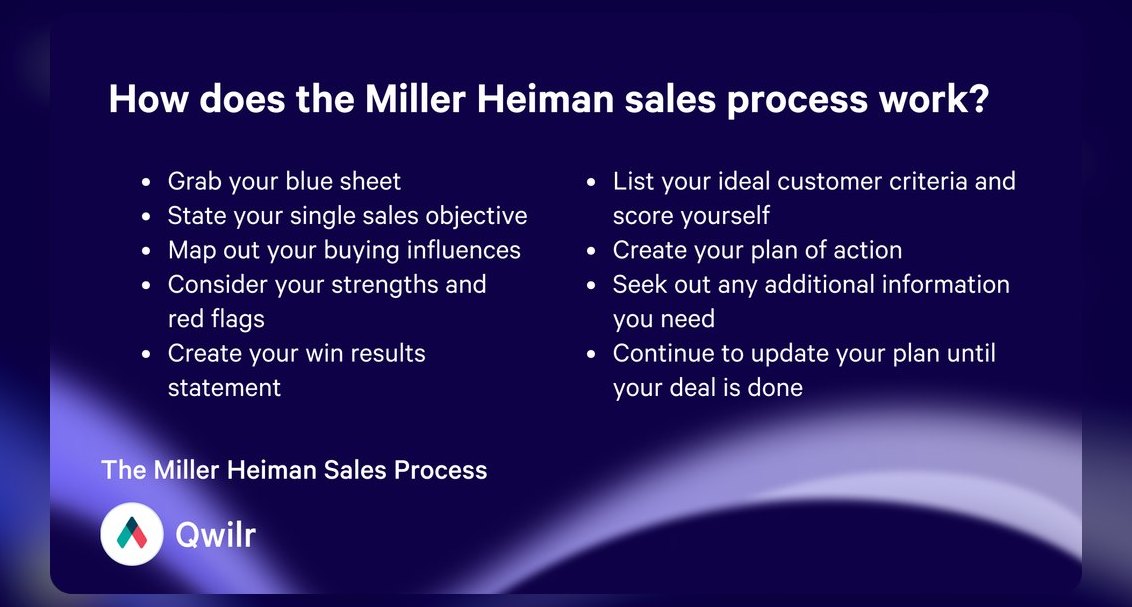 pulse-recentWhat is the step-by-step process for Strategic Selling by Miller Heiman in 2027?
 pulse-recentThe Sandler Rules by David Sandler — Top 10 Key Takeaways for Sales Leaders in 2027
 pulse-recentMonetizing Innovation by Madhavan Ramanujam — Top 10 Key Takeaways for Sales Leaders in 2027
 pulse-recentThe Customer Success Professional’s Handbook by Ashvin Vaidyanathan — Top 10 Key Takeaways for Sales Leaders in 2027
 pulse-recentThe Closer’s Survival Guide by Grant Cardone — Top 10 Key Takeaways for Sales Leaders in 2027
 pulse-recentWhat is the first concrete step in The Sandler Rules by David Mattson for a sales leader to implement the system in 2027?
 pulse-recentSales Engagement by Manny Medina — Top 10 Key Takeaways for Sales Leaders in 2027