
A Toast for a Quinceañera
 Curated byKory White · Fractional CRO · Maryland
 PULSEKNOWLEDGE LIBRARY
Quality
Certified

A Quinceañera toast is a short ceremonial speech honoring the quinceañera, her parents, and her padrinos as she crosses from girlhood into womanhood. Keep it to two or three minutes: greet the room, thank the family, tell one specific story about her, then raise your glass and lead everyone in "¡Salud!"
The moment the microphone lands in your hand
Picture the room. It is 9:40 on a Saturday night in a rented hall or a church social center. Dinner plates have been cleared, the vals has already happened, and the DJ has just cut the reggaetón down to nothing. A hundred and forty people are seated at round tables of ten, half of them your relatives, a quarter of them her school friends who have been on their phones since the entrada, and a handful of them abuelos who flew in and have not heard a word of English all night. The quinceañera is standing near the cake table in a dress that cost more than your car payment, and her mother is already crying. Someone hands you a microphone that squeals for a half second before it settles.
This is the moment almost everybody underestimates. People spend weeks agonizing over what to write and roughly four minutes thinking about what it will actually feel like to say it. The gap between those two efforts is where bad toasts come from — not from bad writing, but from a well-written speech delivered by someone who did not plan for a squealing microphone, a crying mother, or a cousin shouting "¡Órale!" from table nine.
The structural problem is that a Quinceañera toast has to serve four audiences at once, and they want different things. The quinceañera wants to feel seen as an individual, not as a category of person turning fifteen. Her parents want their sacrifice acknowledged — the years of work, the saving, the padrinos they had to ask. The extended family wants the tradition honored, the ritual language spoken, the continuity confirmed. And her friends want it to be short. Any toast that ignores one of those four constituencies feels slightly off, even when nobody can name why.
It helps to know exactly where you sit in the evening's running order. Most quinceañeras follow a recognizable sequence: the entrada or grand entrance, a blessing, dinner, the vals with the father and the chambelanes, the ceremonial changes — the cambio de zapatos where flat shoes are traded for heels, the última muñeca where the last doll is handed to a younger cousin, sometimes a tiara or a cross or a Bible presented by a padrino — then the toast, then the cake, then the floor opens and the real party runs until one in the morning. The toast is the hinge. Everything before it is ceremony; everything after it is celebration. Your job is to close the ceremonial half with feeling and open the celebratory half with permission.
That framing solves most of the anxiety. You are not delivering a eulogy or a valedictory address. You are the transition. Land the emotion, then get out of the way of the music.
How the toast actually works, beat by beat
A toast that lands is not improvised charm; it is a small machine with four moving parts, and the parts have to fire in order. Speakers who blow it almost always blow it by reordering the machine — by starting with the story before greeting the room, or by raising the glass before delivering the wish, which leaves a hundred and forty people holding champagne flutes in the air while you keep talking.
Part one: the address. Ten to fifteen seconds. You name the room and you name yourself. "Buenas noches a todos. For those who don't know me, I'm Marisol — Valentina's tía, her mother's older sister, and the one who taught her every bad word she knows." The self-identification matters more than people think, because at least a third of the room genuinely does not know who you are, and until they place you they are doing that math instead of listening to you.
Part two: the acknowledgment. Fifteen to twenty seconds. Thank the parents by name, and thank the padrinos as a group. A quinceañera is an expensive, logistically brutal undertaking assembled by a network of godparents who each sponsor a piece of it — the padrino de la música, the madrina del pastel, the madrina del ramo. Naming that network in one sentence buys you enormous goodwill: "To Rosa and Miguel, who worked doubles for two years so tonight could exist, and to every padrino and madrina who carried a piece of this — thank you."
Part three: the story. Sixty to ninety seconds, and this is the entire speech. One story. Not three, not a highlight reel, not a chronological march from birth to now. One specific, small, concrete moment that reveals who she is. The kitchen-floor waltz practice at eleven at night, counting under her breath. The sparkly plastic crown she refused to take off at the grocery store when she was five. The way she sat with her younger cousin through a whole birthday party because he was too shy to join. Small and specific beats grand and general every single time, because specificity is the only proof that you actually paid attention to her.
Part four: the turn and the toast. Twenty to thirty seconds. You bridge from the story to the wish — "That's the girl I've watched become this woman" — then you deliver the wish, then and only then you cue the glasses. "So please, everyone, raise your glass. To Valentina — que Dios te bendiga, may your road be long and your people always be near. ¡Salud!" The cue word has to be unmistakable. "Salud" or "cheers" or "to Valentina" — pick one, land it hard, and drink.
A note on the glass itself. In most families the quinceañera and the younger guests toast with sparkling cider, sparkling grape juice, or a non-alcoholic sidra, and the adults toast with whatever they are drinking. Do not make a joke about the cider being non-alcoholic. It is the oldest joke available at these events and it draws a courtesy laugh at best. If there is a champagne fountain — and there often is — the pour usually happens during the toast itself, so give the servers a beat before you cue the raise.
Length, timing, and the numbers that actually govern the room
Almost every practical question about a Quinceañera toast resolves to a number, and the numbers are surprisingly consistent across the events people describe.
Spoken length: 90 seconds to 3 minutes. Under 90 seconds and it reads as perfunctory, like you were drafted an hour ago. Over 3 minutes and the room's attention audibly changes — chairs shift, side conversations resume at the back tables, the teenagers go back to their phones. Over 5 minutes and you have genuinely misjudged the assignment.
Word count: roughly 200 to 400 words. Ceremonial speech runs slower than conversation — call it 110 to 130 words a minute rather than the 150 you'd use talking to a friend, because you will pause for emotion, for laughter, and for the beat where someone translates a line for an abuela. Write 300 words and you will speak for about two and a half minutes. Write 600 and you are at five, which is too long. If you draft on paper, one page double-spaced in 12-point is very close to the right size.

Number of speakers: two to four, total. This is the number people forget, and it is the one that actually breaks evenings. Any single toast at three minutes is fine. Six toasts at three minutes each is eighteen minutes of standing speeches in the middle of a party, and by the fourth one the room has checked out and the fifth speaker — usually a nervous younger sibling — pays the price for everyone else's indulgence. If you are coordinating the event, cap it: one parent, one padrino or madrina, one dama or chambelán or sibling, and optionally the quinceañera herself. If more people want to speak, the answer is a second, informal round later in the night with no microphone.
Preparation lead time: two to three weeks. Draft it early, sit with it a week, then cut it by a third. Practice out loud at least five or six times — out loud, not silently, because the sentences that look elegant on paper are frequently the ones you cannot say. Time at least two of those run-throughs on a phone stopwatch.
Room size: typically 80 to 250 guests. This governs whether you need a microphone at all and how much you need to slow down. In a room over about 60 people, assume a mic. Assume also that the mic will be a handheld on a stand set for someone six inches taller or shorter than you, and adjust before you start rather than during your first sentence.

Placement in the timeline: after dinner, before the cake. Most commonly it falls after the vals and the ceremonial changes and immediately before the cake cutting. There is an argument for placing it right after dinner service ends instead: people are seated, sober-ish, and attentive, and the ceremonial moments then run in an unbroken block into the dancing. Either works. What does not work is a toast after the floor has opened, because you will never get the room back.
The cost context nobody says out loud. Quinceañeras are major family investments — venue, dress, catering, photography, DJ, cake, the court's outfits — and the padrino system exists precisely because the total is more than most families carry alone. You do not need to reference money, and you shouldn't. But understanding that a wide circle of people each paid for a visible piece of the night explains why acknowledging the padrinos, in one clean sentence, matters so much more than it would at a birthday party.
Regional variation, adjacent occasions, and what to do when you are not sure
The core sentiment is stable across the Spanish-speaking world — a girl is honored, a family is thanked, a future is blessed — but the texture varies, and matching the family's texture is most of what "authentic" means here.
Mexican and Mexican-American celebrations tend to lean religious and familial. Many begin with a Misa de acción de gracias, a thanksgiving Mass, before the reception. Toasts commonly carry a blessing — "Que Dios te bendiga" — and often reference the ceremonial objects: the última muñeca, the cambio de zapatos, the tiara, the medal or cross from a padrino. If the family held a Mass, echoing one line of it in the toast connects the two halves of the day.
Puerto Rican and broader Caribbean celebrations often run warmer and looser. The toast may be interrupted, in the good way, by call-and-response — you say something true and the room answers. Code-switching between Spanish and English mid-sentence is normal rather than notable, and a well-placed joke lands harder than it would in a more formal room. The corte de honor is frequently acknowledged directly, by name if the group is small.
Central American families — Guatemalan, Salvadoran, Honduran — commonly place heavier weight on the extended family and on naming individuals: grandparents, godparents, an aunt who traveled, a family friend who is family in every way but paperwork. Toasts here run slightly longer for exactly that reason, and the shoe change is a frequent emotional anchor.
South American celebrations — Colombian, Argentine, Venezuelan, Peruvian — often skew more formal and more poetic in register, with the vals as the evening's centerpiece and the toast frequently framed around it. It is more common here for the speaker to hand over a written letter alongside the spoken toast, which the quinceañera keeps.

Adjacent occasions worth knowing about, because the same skill transfers and because families increasingly blend them: the Brazilian *festa de quinze anos* or debutante ball, which runs the same fifteen-year milestone in Portuguese with its own waltz traditions; the Filipino *debut* at eighteen, with its eighteen roses, eighteen candles, and eighteen treasures — a structure where a dozen-plus people each speak briefly, so a "toast" is a sixty-second contribution rather than a three-minute address; the Jewish bat mitzvah, where the parental speech occupies a structurally identical slot; and Sweet Sixteens, which borrow the quinceañera's shoe-change and father-daughter dance almost directly. If you can give a good Quinceañera toast, you can give any of these, but you must re-time it: an eighteen-roses speech at three minutes turns a ceremony into an hour.
When you are not sure what the family does, ask one person, once, at least a week out — ideally the mother, an aunt, or whoever is actually running the logistics. Three questions cover it: Is the toast before or after the cake? Are the padrinos being acknowledged by name from the microphone, or as a group? And is there anyone we are remembering tonight? That third one matters enormously. If a grandparent died in the last two years, one warm sentence — "and we know exactly who would have been at table one tonight" — will be the line the family remembers for a decade. Delivered without warning to a family that would rather not go there, it can flatten the room. Ask first.
Language, practically. If most of the room speaks Spanish and you do not, deliver in English with two or three Spanish lines placed where they matter: the greeting, the blessing, and the final salud. Practice those lines with a native speaker until they sound like sentences rather than recitations. If most of the room speaks English and the abuelos do not, consider delivering the wish itself twice, once in each language — it costs you fifteen seconds and it means the people who traveled furthest are not left out of the one moment that was about feeling.
The failure modes, and how each one is actually prevented
Bad toasts fail in a small number of predictable ways. Each has a specific, mechanical fix.

Rambling. The most common failure and the easiest to prevent: the fix is a stopwatch, not willpower. Time yourself twice. If you are over three minutes, do not trim adjectives — delete a whole section, usually the second story you did not need. Two stories is always worse than one, because the second one dilutes the first and doubles your risk of losing the thread.
Making it about you. "When I was fifteen…" is a trapdoor. You have thirty seconds of grace to establish your relationship to her, and after that every sentence must point back at her. A useful test: read your draft and underline every sentence whose subject is "I." If more than a third of the sentences are yours, rewrite.
Generic language. "Growing up so fast," "where does the time go," "she's blossomed into a beautiful young woman" — true, warm, and completely interchangeable with every other toast she'll hear. The fix is a hard requirement: at least one detail in your speech must be impossible to say about anyone else on earth. The color-coded school supplies. The specific song she played on repeat. The thing she said at seven that the family still quotes.
Embarrassing her. She is fifteen, standing in front of everyone she knows, in a formal dress, likely already emotional. The joke about her ex-boyfriend, her braces, her middle-school haircut, or anything involving a boy is not a joke tonight, whatever it would be at a wedding. Affectionate teasing about her stubbornness or her taste in music is fine. Anything about her body, her romantic life, or a private struggle is not.
Reading the whole thing off a card. Notes are fine and expected; a full script read verbatim puts a wall between you and the room. Memorize two things only: the first sentence and the last sentence. Everything in the middle can live on a card as four bullet points. Eye contact at the open and at the salud is what people remember.
Toasting before you have finished talking. Genuinely common and genuinely awkward. If you say "raise your glasses" and then keep going for another forty seconds, you have stranded the entire room mid-air. Glasses come up in the last ten seconds. Nothing follows the salud except drinking.
Getting ambushed by your own emotion. This will probably happen and it is not a failure. Stop, breathe, and say the true thing out loud: "I promised her mother I wouldn't do this." The room will applaud, which buys you eight seconds to recover. Keep a tissue on you, and keep a water glass within reach — a sip is the most socially invisible pause available.

Technical chaos. Mic cuts out: stop, wait a beat, then project unamplified toward the far wall. The room will quiet itself to hear you, which is a better outcome than shouting into a dead mic. Music starts under you: stop and wait; do not try to talk over a DJ. A tray drops or a toddler makes a break for the dance floor: acknowledge it in four words and move on. Composure is contagious in both directions, and the room reads yours before it reads your words.
Holding the glass wrong all the way through. Hold it at chest height, not up by your face. High means visible tremor and an aching arm; chest height is steady and reads as relaxed. If your hands shake badly, set the glass down on a table during the story and pick it back up at the bridge.
The unplanned interruption from the honoree. She may come hug you mid-sentence. Take the hug, let the room have it, wait for her to sit, then pick up with the last thing you said. This is not a derailment. It is the best thing that will happen all night, and the photographer will thank you.
Related questions
How long should a Quinceañera toast be?
Ninety seconds to three minutes spoken — roughly 200 to 400 written words. Long enough for one real story and a blessing, short enough that the room is still with you when you raise your glass.
Who traditionally gives the toast?
Most often a parent, a padrino or madrina, or a close aunt or uncle. Older siblings and the quinceañera's closest dama or chambelán are also common. Cap the evening at two to four speakers total.
Should the toast be in Spanish or English?
Match the room. Bilingual families usually blend both. Even if you deliver in English, put the greeting, the blessing, and the closing "¡Salud!" in Spanish, and rehearse those lines with a native speaker.
Can the quinceañera give her own toast?
Yes, and it is increasingly common. Hers is usually the shortest of the night — sixty to ninety seconds thanking her parents, her padrinos, her court, and the guests who traveled. It typically comes last.
When exactly in the evening does the toast happen?
Usually after dinner and the vals, immediately before the cake cutting. It functions as the hinge between the ceremonial half of the night and the dancing. Never schedule it after the dance floor opens.
FAQ
How far in advance should I write it? Two to three weeks. Draft it, leave it alone for about a week, then cut it by roughly a third — the material you delete on the second pass is almost always the material that would have made it too long. Then rehearse it aloud five or six times, timing at least two of those runs.
Is humor appropriate at a Quinceañera? Yes, in the right register. Warm, affectionate humor about her personality — her stubbornness, her competitiveness, her opinions about music — works well and relaxes the room. Avoid anything about her appearance, her romantic life, or a private difficulty. When in doubt, ask yourself whether she'd be comfortable if her grandmother heard the line, because her grandmother will.
What if I forget what I was going to say? Write one fallback sentence on a card and keep it in your pocket: something like "I'm here because I'm proud of the young woman you've become — salud." If your mind blanks, read it, raise your glass, and sit down. A short toast delivered warmly is a complete success; nobody counts words.
Should I mention religion? If the family is religious — and many quinceañera families are, with the celebration frequently including a thanksgiving Mass — a blessing like "Que Dios te bendiga" is expected and welcome. If you genuinely don't know, keep the wish secular and warm. Nobody has ever been offended by "may your road be long and your people always be near."
Can I mention a family member who has died? Only after checking with the quinceañera's parents. Handled right, it is often the most moving line of the night — one sentence, warm, then move forward into the wish. Handled without warning, it can land hard on a family that was deliberately keeping the evening light. One question, asked a week early, resolves it.
What do we toast with if the honoree is fifteen? Sparkling cider, sparkling grape juice, or a non-alcoholic sidra for the quinceañera, her court, and the younger guests; adults drink whatever they're drinking. Make sure servers have poured before you cue the raise, and skip the joke about the cider — it's the most predictable line available at any quinceañera.
Sources
- https://www.britannica.com/topic/quinceanera
- https://www.smithsonianmag.com/
- https://folklife.si.edu/
- https://www.nytimes.com/
- https://www.npr.org/
- https://www.loc.gov/
- https://www.pbs.org/
- https://www.census.gov/
Related on PULSE
This page will be disappearing soon. Save it to your device for $1 — or read it free while it is here.
@Kory-White- · if Venmo asks, the last 4 of my number are 2012
This page is gone.
This one is off the shelf now. $1 keeps it on your phone for good — the whole page, pictures and diagrams included.
 pulse-speechesA Toast for a Housewarming
 pulse-speechesHow to Structure a Best Man Speech in 2027
 pulse-speechesA Graduation Speech for a Graduate as the Class President
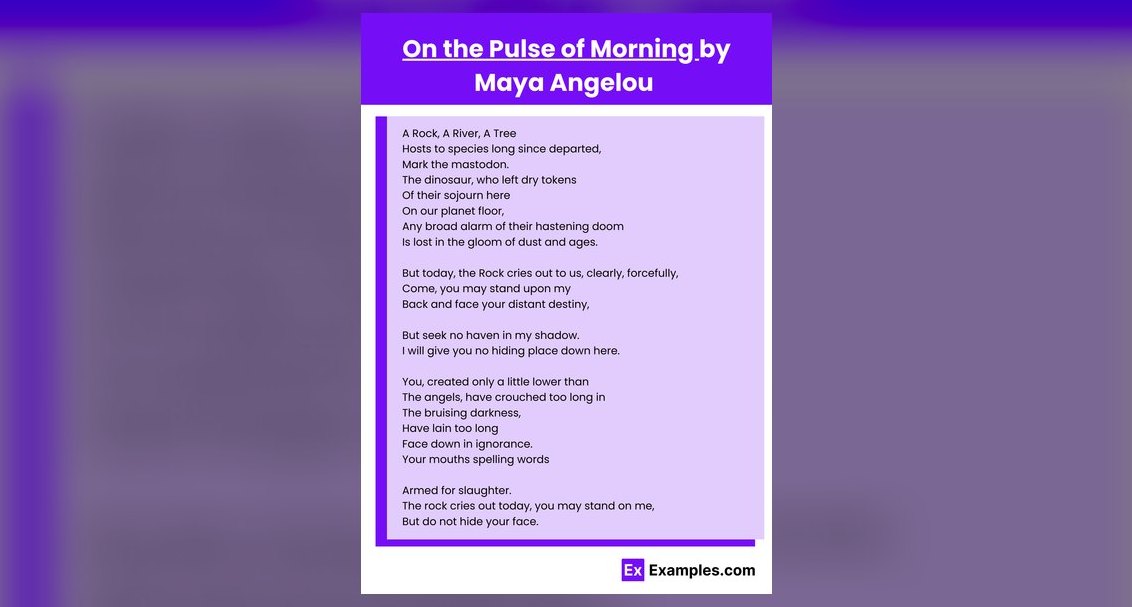 pulse-speechesWhat Makes Maya Angelou’s “On the Pulse of Morning” a Great Speech in 2027
 pulse-speechesA Speech for a Project Wrap Celebration
 pulse-speechesA Retirement Speech for a CEO
 pulse-speechesA Toast for a Baby Shower
 pulse-speechesWhat Makes Winston Churchill's "Their Finest Hour" a Great Speech in 2027
 pulse-speechesA Retirement Speech for a Teacher
 pulse-speechesA Speech for a Team Offsite Kickoff