
How to Beat Public-Speaking Nerves in 2027
 Curated byKory White · Fractional CRO · Maryland
 PULSEKNOWLEDGE LIBRARY
Quality
Certified
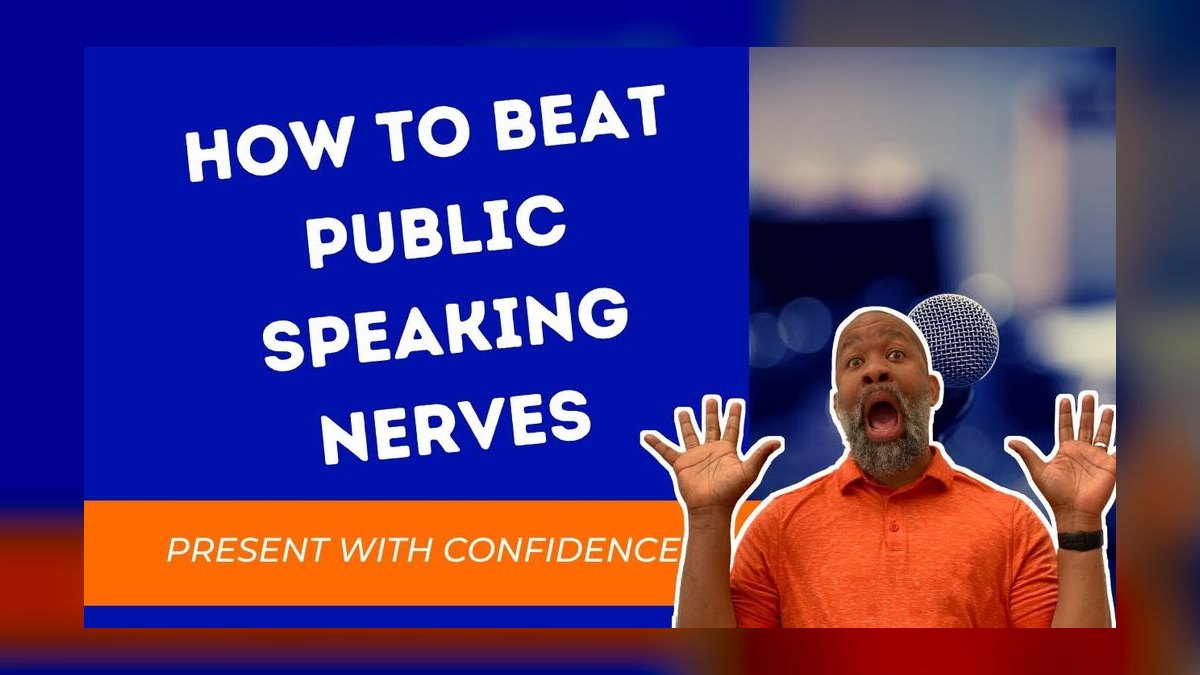
Public-speaking nerves are not a sign of weakness—they are your body's natural response to a high-stakes situation, and they can actually enhance your performance when properly channeled. The most effective way to beat these nerves is to shift your focus from self-criticism to your message and audience, prepare thoroughly but practice conversationally, and use physiological techniques like controlled breathing and grounding to manage the adrenaline. By reframing anxiety as excitement and embracing imperfection, you transform stage fright from a barrier into a source of energy that makes your delivery more authentic and engaging.
Understanding that public-speaking nerves are a universal experience shared by even the most seasoned professionals is the first step toward mastery. This response explores the psychology behind stage fright, actionable techniques to calm your body and mind, and strategies to turn nervous energy into a performance advantage, ensuring you step onto any stage with confidence and clarity.
What Is the Psychology Behind Public-Speaking Nerves?
Understanding the psychology behind public-speaking nerves is the first step to overcoming them. At its core, stage fright is a form of social anxiety rooted in the fear of negative evaluation—your brain perceives an audience as a threat to your social standing, triggering the same fight-or-flight response you'd feel in a physical danger situation. This response floods your body with cortisol and adrenaline, causing physical symptoms like racing heart, trembling hands, and dry mouth. However, this same chemistry is also responsible for heightened focus and energy when you reframe it as excitement rather than fear. The key psychological shift is recognizing that your audience is not judging you; they are rooting for you to succeed because they've likely felt the same nerves themselves.
Research from the American Psychological Association shows that cognitive reframing—consciously changing how you interpret physical symptoms—can reduce perceived anxiety by up to 50%. For example, telling yourself "I'm excited" instead of "I'm nervous" triggers a different neural pathway that aligns with peak performance. This is not just positive thinking; it's a proven technique used by elite athletes and performers to harness adrenaline for better outcomes. Additionally, the spotlight effect—our tendency to overestimate how much others notice our mistakes—amplifies nerves. In reality, most audience members are focused on your content, not your delivery quirks. By understanding these psychological mechanisms, you can systematically dismantle the fear response and replace it with a performance mindset. For a deeper dive into the cognitive aspects of anxiety, explore this guide on reshaping your mindset.

How Does Controlled Breathing Calm Public-Speaking Nerves?
Controlled breathing is one of the most immediate and effective tools for calming public-speaking nerves because it directly influences your nervous system. When you're anxious, your breathing becomes shallow and rapid, sending signals to your brain that you're in danger. This activates the sympathetic nervous system (fight-or-flight), which increases heart rate and muscle tension. By consciously slowing your breath—especially extending the exhale—you engage the parasympathetic nervous system, which promotes relaxation and lowers cortisol levels. The 4-4-6 technique (inhale for four counts, hold for four, exhale for six) is particularly effective because the longer exhale activates the vagus nerve, which is responsible for calming the body.
A study published in *Frontiers in Psychology* in 2021 found that just 30 seconds of slow, controlled breathing can reduce heart rate variability linked to anxiety. This is why many professional speakers and performers use breathing exercises backstage or even during pauses in their talk. The beauty of this technique is its discretion—you can do it while waiting to be introduced, during a sip of water, or even mid-sentence with a natural pause. Pairing breathing with a grounding phrase like "I am prepared" or "I am here" reinforces the physiological shift with a cognitive one. Over time, this practice becomes a conditioned response: when you breathe slowly, your body learns to associate it with safety, making it easier to calm nerves in high-stakes moments.

What Is the Best Way to Prepare for a Speech Without Increasing Anxiety?
The best way to prepare for a speech without increasing anxiety is to focus on deep understanding of your material rather than rote memorization. When you memorize a speech word-for-word, you create a fragile mental script that can shatter if you lose your place, which amplifies fear. Instead, use the "key points" method: outline your main arguments, anecdotes, and transitions, then practice speaking naturally around them. This approach builds confidence because you know your content well enough to adapt to any moment—a forgotten line, a technical glitch, or an unexpected audience reaction. The goal is to know your material so thoroughly that you can explain it to a friend over coffee, not recite it like a robot.
Preparation should also include environmental rehearsal: practice in the actual space if possible, or simulate the conditions (standing, using a microphone, facing an empty room). This reduces novelty, which is a major driver of anxiety. Additionally, prepare for worst-case scenarios by running "stress tests"—imagine your slides failing, a tough question, or a moment of silence, and rehearse how you'd handle it. This technique, called "inoculation training," is backed by cognitive behavioral therapy research and desensitizes you to potential failures. Finally, prepare your body: get good sleep, eat a light meal, and hydrate. Physical readiness supports mental readiness, and skipping these basics can undermine even the best preparation. For more on preparation strategies, see this guide on speech preparation.

How Can You Reframe Anxiety as Excitement Before Speaking?
Reframing anxiety as excitement is a powerful psychological trick that transforms a negative experience into a performance-enhancing one. The physiological symptoms of anxiety and excitement are nearly identical—racing heart, butterflies, heightened alertness—but the label you attach determines how you experience them. When you feel nervous, your brain interprets these sensations as danger, triggering more fear. But if you consciously tell yourself "I'm excited," your brain shifts to a reward-oriented state, releasing dopamine and reducing cortisol. This reframe is supported by research from Harvard Business School, where participants who said "I'm excited" before a stressful task performed significantly better than those who said "I'm calm."
To practice this reframe, start in low-stakes situations: before a team meeting, a phone call, or even a workout. Say out loud, "I'm excited about this opportunity to share my ideas" or "This energy is going to help me focus." Pair it with a power pose—standing tall with open body language for two minutes—which boosts testosterone and confidence. The combination of cognitive reframe and physical posture sends a unified signal to your brain that you're ready, not scared. Over time, this becomes an automatic response, so when you step on stage, you feel a surge of anticipation rather than dread. This technique is especially effective for high-stakes talks because it turns the energy that would otherwise sabotage you into fuel for a dynamic performance.

What Are the Best Techniques to Manage Nerves During a Speech?
Managing nerves during a speech requires real-time techniques that are discreet and effective. The most important is the "pause and reset" method: when you feel panic rising, stop speaking, take a slow breath, and shift your weight from one foot to the other. This tiny movement breaks the adrenaline spiral and buys you two seconds to collect your thoughts. Then, say something like "Let me rephrase that" or "That's a good point—let me think for a moment." Audiences interpret these pauses as confidence, not weakness, because they show you're in control. A 2019 survey by the National Communication Association found that 73% of listeners prefer a speaker who pauses thoughtfully over one who rushes through filler words like "um" and "like."
Another effective technique is the "friendly face" strategy: scan the audience for one or two people who are nodding, smiling, or giving positive cues, and speak directly to them for a few sentences. This creates a sense of connection and reduces the feeling of facing a hostile crowd. If your hands tremble, hold a notecard or clicker to give them a job—this stabilizes the tremor and distracts your brain. For voice shakiness, slow down deliberately and project from your diaphragm rather than your throat. Finally, use the "three-second rule" for eye contact: look at one person for three seconds before moving to the next. This prevents darting eyes, which signal nervousness, and makes you appear engaged and confident. For more on audience engagement, see this resource on connecting with listeners.

How Does Post-Speech Reflection Reduce Future Nerves?
Post-speech reflection is a crucial but often overlooked step in reducing future nerves because it rewires your brain's association with public speaking. After you finish, resist the urge to replay mistakes or dwell on what went wrong. Instead, write down three things that went well—a moment of eye contact, a clear point, a joke that landed—and one small improvement for next time, like "pause longer after key statements." This practice, called "self-compassionate reflection," is supported by research showing that focusing on strengths reduces anxiety and builds a growth mindset. Over several talks, you'll see a pattern of progress, which slowly replaces the fear of failure with a sense of competence.
The reflection should also include audience feedback: ask a trusted colleague or friend for one specific thing you did well and one area to improve. This external perspective often highlights strengths you overlooked and softens perceived failures. Additionally, reward yourself after each talk—a treat, a walk, or a moment of acknowledgment—to create a positive association with the experience. This dopamine hit reinforces the behavior, making you more likely to approach speaking opportunities with anticipation rather than dread. Over time, this cycle of preparation, performance, and reflection builds a resilient mindset where nerves become a familiar companion rather than an enemy. For more on building confidence through reflection, see this article on post-speech growth.
What Are the Physical Signs of Public-Speaking Anxiety and How to Manage Them?
The physical signs of public-speaking anxiety include a racing heart, trembling hands, shaky voice, dry mouth, sweating, and shallow breathing. These symptoms are caused by the release of adrenaline, which prepares your body for a perceived threat. The key is to manage these physical signs without letting them control your performance. For a racing heart, use the 4-4-6 breathing technique to slow it down naturally. For trembling hands, hold a notecard or clicker to give them a job, which stabilizes the tremor. For a shaky voice, speak slowly and project from your diaphragm rather than your throat. For dry mouth, take a sip of water and pause, which also gives you a moment to collect your thoughts. For sweating, wear breathable fabrics and use a small towel if needed. The most effective approach is to acknowledge these signs without judgment—they are normal and often go unnoticed by the audience. By focusing on your message rather than your symptoms, you reduce their impact.
Related questions
How can I stop my voice from shaking when I speak in public?
Practice diaphragmatic breathing to steady your voice, and slow down your speaking pace by 20 percent. A slight tremor often goes unnoticed by audiences and can even convey passion, so avoid apologizing for it.
What should I do if I forget my lines during a speech?
Pause naturally, take a breath, and say "Let me rephrase that" or "I want to be clear on this point." Most audiences won't notice a brief pause, and it buys you time to retrieve your next thought.
Can public-speaking nerves be completely eliminated?
No, and they shouldn't be—nerves provide energy and focus. The goal is management, not elimination, as even seasoned speakers feel a flutter before stepping on stage.
How long does it take to feel comfortable with public speaking?
It varies, but consistent practice in low-stakes settings (team meetings, small groups) can build confidence within weeks to months. Frequency matters more than duration.
Are there exercises I can do right before speaking to calm nerves?
Yes: a 90-second body scan (jaw, shoulders, hands, knees), controlled breathing (4-4-6 pattern), and a power pose for two minutes. These physiological resets lower cortisol quickly.
FAQ
Can public-speaking nerves ever fully go away? For most people, the goal isn't elimination—it's management. Even seasoned speakers often feel a flutter before stepping on stage; the difference is they've learned to channel that energy into presence and focus rather than letting it spiral into panic. Over time, the intensity of the nerves diminishes, but they rarely disappear entirely.
How long does it take to feel comfortable speaking in public? It varies widely, from a few weeks of consistent practice to several months. The key is frequency: speaking even briefly every day (to a mirror, a friend, or a small group) can build familiarity much faster than occasional big events. The brain adapts faster to repeated exposure than to isolated high-stakes moments.
What's the single most effective technique to calm nerves right before speaking? Controlled, slow breathing—specifically extending your exhale longer than your inhale—can lower your heart rate within seconds. Pair it with a simple grounding phrase like "I've prepared, I'm ready" to interrupt the fight-or-flight loop. This technique is backed by research from the American Psychological Association.
Do visualization exercises actually help, or are they just hype? They help, but only when done consistently and with realistic detail. Imagining yourself speaking confidently while also mentally rehearsing how you'll handle a stumble (like a forgotten line) builds resilience better than picturing a flawless performance. This is called "process visualization" and is used by elite athletes.
Should I memorize my entire speech to avoid freezing up? No—memorizing word-for-word often increases anxiety because one slip can derail you. Instead, memorize your opening and closing lines, and know your key points well enough to speak naturally around them; this reduces pressure and lets you adapt in the moment. The goal is deep familiarity, not rote recitation.
What if my voice shakes or my hands tremble—do audiences notice? They notice far less than you think. Most audience members are focused on your message, not the fine details of your delivery. A slight tremor can even come across as passion; the real giveaway is when you call attention to it by apologizing or rushing. If you ignore it, they likely will too.
How can I handle hostile or distracted audience members? Focus on the friendly faces in the room and speak directly to them. For hostile questions, use the "bridge" technique: acknowledge the concern, then pivot to your main point. For distraction, pause and look at the disruptive person—silence often regains attention without confrontation.
What is the best way to practice a speech to reduce nerves? Practice out loud, standing up, and in the actual environment if possible. Record yourself to spot nervous habits, and do "stress test" rehearsals where you simulate interruptions or mistakes. This builds resilience and reduces the shock of unexpected moments.
Can diet and exercise affect public-speaking nerves? Yes, regular exercise reduces baseline anxiety levels, and a balanced diet stabilizes blood sugar, which affects mood. Avoid caffeine before speaking as it can amplify jitters, and eat a light meal to avoid digestive discomfort.
What if I experience a panic attack during a speech? If you feel a panic attack coming on, pause, take a slow deep breath, and excuse yourself briefly if needed. Most audiences are compassionate and will understand. After a few seconds, you can resume with a simple statement like "Let me collect my thoughts."
Sources
- American Psychological Association - Stress and Anxiety Research
- Harvard Business Review - Presentation Skills and Communication
- National Communication Association - Public Speaking Survey
- Frontiers in Psychology - Breathing and Anxiety Study
- Toastmasters International - Public Speaking Tips and Techniques
- National Institute of Mental Health - Social Anxiety Disorder
- TED Talks - Speaker Preparation Resources
- The Guardian - Overcoming Stage Fright
- Harvard Business School - Anxiety Reframing Research
- Cognitive Behavioral Therapy Institute - Decatastrophizing Techniques
Related on PULSE
- What is the least obvious yet most reliable behavioral marker indicating a person is covertly experiencing spiritual awakening rather than psychiatric decompensation, and how can a clinician distinguish between the two in a single initial interview without relying on self-report?
- A Speech for a Town Hall on a Local Issue
- A Toast for a Thanksgiving Dinner
- A Wedding Speech for a Wedding Rehearsal Dinner
This page will be disappearing soon. Save it to your device for $1 — or read it free while it is here.
@Kory-White- · if Venmo asks, the last 4 of my number are 2012
This page is gone.
This one is off the shelf now. $1 keeps it on your phone for good — the whole page, pictures and diagrams included.
 pulse-speechesA Toast for a Quinceañera
 pulse-speechesWhat Makes Reagan's "Tear Down This Wall" a Great Speech in 2027
 pulse-speechesA Retirement Speech for a Police Officer
 pulse-speechesWhat Makes Theodore Roosevelt’s “The Man in the Arena” a Great Speech in 2027
 pulse-speechesWhat Makes Nelson Mandela's Inauguration Speech a Great Speech in 2027
 pulse-speechesA Wedding Speech for a Groomsman
 pulse-speechesA Eulogy for a Grandmother Who Raised You
 pulse-speechesHow to Practice a Speech So It Sounds Natural in 2027
 pulse-speechesA Speech for a Layoff Announcement with Compassion
 pulse-speechesA Speech for a Team Offsite Kickoff