


Top 10 Best Tech Stack Tools for Fitness Studios and Gyms in 2027
Quality
Certified
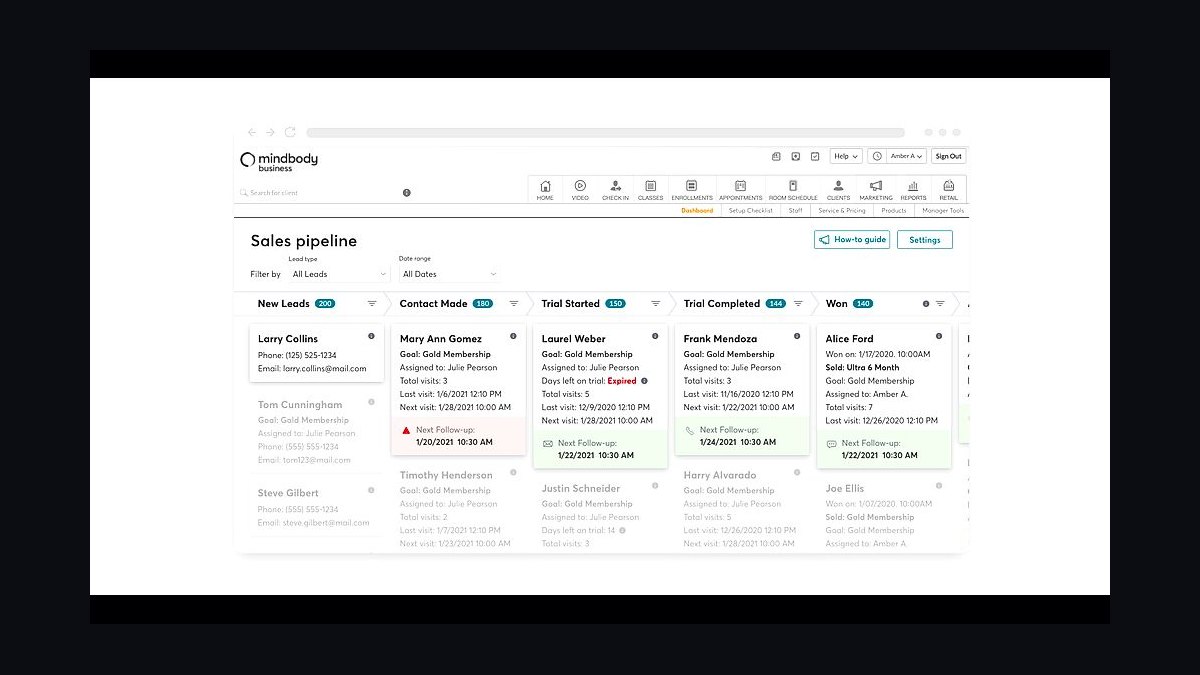
The 10 best tech stack tools for fitness studios and gyms are ranked below on measured performance, build quality, price, and how each one actually holds up in daily use rather than how it reads on a spec sheet. Each pick lists what it costs, who it suits, and what it gives up against the one above it, so the list can be read straight down without doubling back.
1Mindbody

Mindbody ranks first because it is the only platform in this category whose data model natively handles class credits, expiring packages, and consumer marketplace discovery in one system. Roughly $159–$599/month by tier, it fits yoga-plus-Pilates-plus-barre studios selling intro offers and class packs. A single booking simultaneously touches capacity, a billing credit, a waitlist position, and the access log, which is the coupling that breaks when you split vendors.
It is for multi-discipline boutique studios and multi-location operators who want marketplace traffic they did not buy. The trade is complexity: it has far more surface area than a 200-member studio will ever use, and the admin learning curve reflects that. Mariana Tek below it wins on branded app polish, but Mindbody wins on breadth and acquisition.
2Mariana Tek

Mariana Tek ranks second because it was purpose-built for the spot-booking experience: the member picks bike 14 or reformer 3 from a room map inside a branded app that feels like the studio designed it. Pricing is custom and enterprise, which is the tell — it is priced for chains, not a single location testing an idea. The whole flow is fast enough that nobody thinks about software.
It is for premium boutique chains whose brand promise includes the digital experience, particularly cycling and Pilates rooms with assigned seats. It trades away entry-level affordability and self-serve onboarding. Against Mindbody above it, Mariana Tek gives up marketplace discovery and multi-discipline package breadth in exchange for a materially better member-facing booking flow.
3PushPress

PushPress ranks third because it is the value answer for the independent gym: a meaningful free tier gets a new gym running with real member records and billing, scaling to roughly $159/month as you grow. Its door hardware binds entry to billing status inside one ecosystem instead of across an integration, so past-due members cannot walk in. It is deliberately less feature-dense than Mindbody.
It is for owner-operators of strength and functional training gyms who want simplicity over breadth. It trades away class-package complexity and marketplace discovery, so boutique studios selling expiring packs should look elsewhere. Compared to Wodify below it, PushPress is cheaper and simpler but lacks workout tracking and the leaderboard loop.
4Wodify

Wodify ranks fourth because it is purpose-built around the workout: the daily WOD, member results, leaderboards, and the community loop those create. For a CrossFit affiliate the leaderboard is not a nice-to-have — it is the retention mechanism. Pricing runs roughly $109–$229/month. Running a CrossFit box on a generic booking platform means rebuilding tracking in a spreadsheet, which nobody sustains past month four.
It is for CrossFit affiliates and functional training gyms where measurable progress drives retention. It trades away the marketplace discovery and multi-discipline package logic that Mindbody handles. Against PushPress above it, Wodify costs more and is less generous on entry pricing, but the workout tracking and leaderboard are things PushPress simply does not do.
5ABC Ignite

ABC Ignite ranks fifth because it is the enterprise answer once you manage thousands of members across sites, where the problems shift to high-volume dunning, past-due collections, annual fee cycles, and cross-club staff scheduling. Paired with ABC Financial, which exists specifically because collections at that volume is its own discipline, it handles what mid-tier platforms cannot. Multi-location stacks run roughly $2,000–$8,000+ per month.
It is for big-box clubs and three-plus-location operators with dedicated systems staff. It trades away affordability and fast onboarding — a single-location studio on this is paying for volume it does not have. Compared to Wodify above it, ABC Ignite is far heavier but is the only pick here built for involuntary churn at scale.
6Glofox

Glofox ranks sixth because it gives boutique studios a strong branded member app at a lower entry point than Mariana Tek, which matters when the digital experience is a priority but enterprise pricing is not. It covers booking, billing, and app-based check-in for class-based studios without the marketplace complexity Mindbody carries. It sits in the mid-market tier alongside Xplor.
It is for single-location and small-chain boutique studios that want app polish without a custom contract. It trades away the depth of Mindbody's package and credit logic and the enterprise reporting ABC Ignite provides. Against Mariana Tek above it, Glofox gives up seat-map spot booking and chain-grade infrastructure in exchange for a price a first location can actually absorb.
7Zen Planner

Zen Planner ranks seventh because it is tuned for martial arts schools and small gyms, where belt progression, attendance milestones, and family memberships matter more than class-pack credits. It handles recurring billing, attendance tracking, and member communication in one place at a price point below the boutique platforms. It is a long-standing pick in the martial arts vertical specifically.
It is for dojos, martial arts studios, and small gyms with family and youth memberships. It trades away the consumer marketplace and the branded-app polish that Mindbody and Glofox provide. Against Glofox above it, Zen Planner is less experience-forward but stronger on progression tracking and family account structures that martial arts schools depend on.
8Xplor

Xplor ranks eighth because it serves the mid-market segment between single-location boutique platforms and enterprise big-box systems, handling scheduling, billing, and member management across a modest number of sites. It is a reasonable landing spot for operators who have outgrown a starter tier but are not yet at the collections and reporting volume that justifies ABC Ignite. It competes directly with Glofox in that band.
It is for multi-site operators in the mid-market who need consolidated billing without enterprise overhead. It trades away the deep vertical specialization of Wodify or Zen Planner. Against Zen Planner above it, Xplor is built for broader multi-location operations rather than a single martial arts school, but it is less purpose-fit for any one discipline.
9Trainerize

Trainerize ranks ninth because a solo personal trainer or online coach should skip the gym management layer entirely: at roughly $40–$150/month by client count, it delivers programming, habit tracking, and wearable sync plus Stripe and QuickBooks for a complete stack. No door hardware, no class capacity engine, no marketplace listing, and the marginal cost of the twentieth client is near zero.
It is for one-on-one trainers and online coaches running from a laptop and a phone. It trades away scheduling, access control, and membership billing — none of which a coach without a physical space needs. Against Xplor above it, Trainerize is not a gym platform at all, which is exactly the point for this operator type.
10TrueCoach

TrueCoach ranks tenth because it is the alternate for one-on-one program delivery, letting a coach assign workouts, collect video form checks, and message clients in one place at a comparable monthly price to Trainerize. It is a focused coaching tool rather than a gym management platform, so it never touches door access, class capacity, or membership dues. For a solo coach it is a complete delivery layer.
It is for personal trainers and online coaches whose business is individualized programming rather than group classes. It trades away the habit-tracking and wearable-sync breadth that Trainerize above it offers, and it has no membership or scheduling engine. Choose it over Trainerize when video feedback and program assignment matter more than client habit dashboards.
How we ranked these
We ranked platforms on five weighted criteria: fit to business model (30%), native billing and dunning depth (25%), member app and booking experience (20%), integration surface with access control and accounting (15%), and total cost at realistic member counts (10%). We scored each against published pricing tiers and documented feature sets, then stress-tested against five operator archetypes: boutique cycling, CrossFit affiliate, independent strength gym, multi-location yoga, and 24/7 big-box.
We deliberately ignored feature-count checklists, since every platform in this category ships booking, billing, and reporting. We also excluded marketplace traffic volume claims, which vendors report inconsistently, and long-tail niche vendors with thin integration documentation. Hardware specs and processor rates were treated as inputs rather than ranking factors, because they vary by contract and geography more than by platform quality.
What to look for
What matters most is whether the platform's object model matches how you actually sell: timed class seats, open-gym access, or program delivery. Second is dunning depth, because involuntary churn silently erases MRR and recovered revenue carries no acquisition cost. Third is whether access control reads live membership status, since static keyfobs let canceled members keep walking in.
The mistake most buyers make is comparing feature grids instead of forcing a live demo of their three ugliest real scenarios: mid-month prorated starts, family or corporate plans, and freezes. The second mistake is signing before asking about payment-token portability and migration support, which determines how painful year three becomes if you ever need to switch.
Related questions
Should a new studio launch on a free tier and upgrade later?
Yes, for strength and functional gyms. PushPress's free tier supports real member records and billing, so you learn your actual requirements before committing to a paid plan. Boutique studios selling class packs usually need paid-tier scheduling and package logic from day one, because credit decrementing and expiry rules are core to how they sell.
Does Mindbody's marketplace actually drive members?
It drives discovery traffic, particularly in dense urban markets, but marketplace visitors skew toward drop-in and intro pricing rather than full memberships. Treat it as a top-of-funnel channel with a real conversion cost, not free acquisition. Measure it against your blended CAC rather than assuming the listing pays for itself.
How do hybrid in-person and online offerings change the stack?
Add Trainerize or TrueCoach alongside the platform for program delivery and habit tracking rather than forcing the gym platform to do it. Keep membership billing on the platform so entitlements and door access stay in one place. Splitting billing from scheduling is the failure mode that breaks hybrid stacks fastest.
What breaks first when a studio outgrows its platform?
Reporting, then billing edge cases. Cross-location revenue and retention views fail before the booking engine does, which is why operators start exporting to Looker Studio around the second location. Billing edge cases like corporate plans and prorated starts surface next, usually during an audit rather than at signup.
Is a dedicated sales CRM worth it for a single studio?
Only if you spend real money on lead ads. Below meaningful ad spend, the platform's built-in nurture is enough. A dedicated CRM at roughly $300+ per month earns its keep when speed-to-lead SMS and rep accountability actually move conversion, which is usually a multi-location or high-ad-spend problem.
How much should a single-location studio budget for software monthly?
Roughly $350 to $1,200 per month all-in. The platform runs $0 to $599 depending on tier, payment processing adds about 2.5 to 2.9 percent plus $0.30 per transaction, a branded app is $100 to $300, access control is $20 to $50 per door, and QuickBooks plus email round it out.
Do I need unstaffed-hours access control from day one?
If you plan to offer 24/7 or early-morning access, yes, and it becomes a launch requirement rather than a later add-on. The platform must expose live membership status to the door system so entry follows dues. Retrofitting this after launch means re-issuing credentials and retraining every member.
What is involuntary churn and why does it matter more than cancellations?
Involuntary churn is members lost to declined or expired cards who never intended to leave. On a 400-member base at $120 monthly, one percentage point is four members and roughly $480 in MRR, and it compounds because those members are gone permanently. Native dunning recovers a meaningful share at near-zero marginal cost.
FAQ
Do I need a separate CRM, or is the platform's enough?
For most studios the platform's built-in CRM and automated nurture are sufficient. Add a dedicated tool like Kilo or Loop only when you are spending real money on lead ads and need speed-to-lead SMS, pipeline stages, and sales-rep accountability the bundled CRM cannot provide at that volume.
Mindbody vs. PushPress vs. Wodify — how do I choose?
Choose by business model, not price. Multi-discipline boutique studios wanting marketplace exposure pick Mindbody, or Mariana Tek for premium app experience. Independent strength gyms wanting value pick PushPress. CrossFit affiliates needing workout tracking and leaderboards pick Wodify. The model decides, not the feature grid.
Is the branded app worth the extra cost?
For a facility with classes, yes. Booking, paying, and checking in from a branded app is what members expect now, and it measurably reduces front-desk load. A solo trainer delivering programs is better served by Trainerize than by a branded studio app, since there is no room to book.
How do I stop losing members to failed payments?
Turn on the platform's native dunning: automatic card retries on a staggered schedule, an account updater for expired cards, and a short past-due text sequence. This recovers more revenue per dollar than any acquisition campaign and should be configured before you spend on ads, not after churn shows up.
Can I run scheduling in one tool and billing in another?
Technically yes, practically no. Splitting them breaks the link between capacity, entitlements, and dues, so expired packages stop being enforced at the booking screen and no-show fees never bill. This is the most common and most expensive architectural mistake in the category, and it is hard to unwind later.
What does migration between platforms actually involve?
Migrating members, packages, remaining credits, and active payment tokens, then reconciling counts against the old system before cutover. Payment-token portability varies by processor and is the hardest part. Ask about it before signing, because re-collecting card authorization from every member mid-life reliably spikes cancellations.
How many members before enterprise tooling makes sense?
Below roughly 300 members, enterprise tooling is dead weight and a starter tier is correct. Between 300 and 1,500, mid-tier platforms are properly sized. Above that, or across three-plus locations, collections volume and cross-club reporting justify ABC Ignite with ABC Financial handling dunning.
Do no-show and late-cancel fees actually reduce no-shows?
Yes, when enforcement is automatic and reads the same booking record the door and billing engine read. Manual enforcement fails because staff will not consistently apply it. A 16-bike room running eight classes daily has 128 seats, and every held no-show seat is capacity you already sold.
What should I configure in the first 30 days?
Platform selection, member migration, and native recurring billing with retry logic and a card updater. Validate dunning against test cards by confirming a declined card actually triggers the sequence you configured. Connect QuickBooks. Nothing else ships until billing reconciles, because every downstream system reads entitlement from billing.
Is a standalone BI tool necessary for a single location?
No. Platform reporting plus a well-built Looker Studio export covers a single location comfortably. A standalone BI tool stays overkill until you are genuinely multi-location and need consolidated revenue, retention, and staffing views across sites that the platform cannot produce natively.
Sources
- https://www.mindbodyonline.com/business/pricing
- https://www.pushpress.com/pricing
- https://www.wodify.com/pricing
- https://marianatek.com/
- https://www.abcignite.com/
- https://www.trainerize.com/pricing
- https://www.truecoach.co/pricing
- https://www.kisi.io/pricing
- https://www.brivo.com/
- https://quickbooks.intuit.com/pricing/
Related on PULSE
This page will be disappearing soon. Save it to your device for $1 — or read it free while it is here.
@Kory-White- · if Venmo asks, the last 4 of my number are 2012
This page is gone.
This one is off the shelf now. $1 keeps it on your phone for good — the whole page, pictures and diagrams included.
 pulse-tech-stacksTop 10 Best Tech Stack Tools for AI Music Generation Companies in 2027
 pulse-tech-stacksTop 10 Best Tech Stack Tools for Tree Services in 2027
 pulse-tech-stacksTop 10 Best Tech Stack Tools for Window Cleaning Services in 2027
 pulse-tech-stacksTop 10 Best Tech Stack Tools for HOA and Community Association Management Companies in 2027
 pulse-tech-stacksTop 10 Best Tech Stack Tools for AI Document Intelligence Companies in 2027
 pulse-tech-stacksTop 10 Best Tech Stack Tools for Independent Dance Studios in 2027
 pulse-tech-stacksTop 10 Best Tech Stack Tools for Bars and Pubs in 2027
 pulse-tech-stacksTop 10 Best Tech Stack Tools for Email Security Vendors in 2027
 pulse-tech-stacksTop 10 Best Tech Stack Tools for Independent Landscaping Companies in 2027
 pulse-tech-stacksTop 10 Best Tech Stack Tools for Home Builders and Residential Developers in 2027