


Top 10 Best Tech Stack Tools for Chiropractic Practices in 2027
Quality
Certified
The 10 best tech stack tools for chiropractic practices are ranked below on measured performance, build quality, price, and how each one actually holds up in daily use rather than how it reads on a spec sheet. Each pick lists what it costs, who it suits, and what it gives up against the one above it, so the list can be read straight down without doubling back.
1ChiroTouch Chiropractic EHR

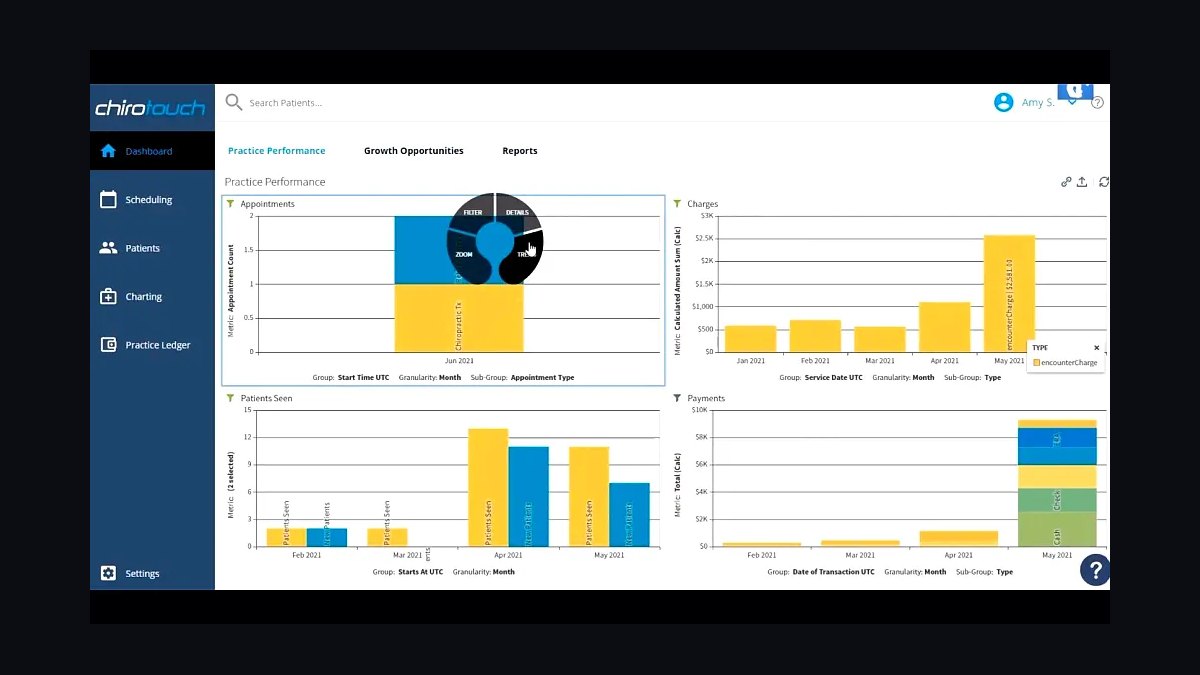
ChiroTouch ranks first because it is the most widely deployed chiropractic-native platform for insurance-heavy, high-volume clinics, with travel-card charting built to keep a 90-visit day moving. It bundles scheduling, SOAP notes, care-plan tracking, claim scrubbing for 98940-98943 with AT modifier logic, and integrated payments in one system of record. Pricing commonly lands around $159 to $299 per provider per month plus onboarding.
It is built for the DC logging 40 to 120 visits daily who bills payers and cannot tolerate double entry. It trades away the polished consumer booking experience and multidisciplinary scheduling flexibility that cash-forward platforms offer, and its interface shows its age. Practices below roughly 40 percent insurance collections should compare it directly against Jane, which costs less and handles wellness memberships more cleanly.
2Genesis Chiropractic Software

Genesis ranks second because its billing engine is the strongest chiropractic-specific revenue cycle tool available, with automated claim scrubbing, ERA posting, and denial worklists tuned to the narrow spinal manipulation code set. It pairs that with online scheduling, care-plan management, and integrated payments, and its per-provider pricing sits in the same $159 to $299 band as ChiroTouch. High-volume insurance offices often choose it specifically for collections performance.
It suits multi-provider insurance practices that want billing automation and are willing to invest in configuration and training. It trades away some of ChiroTouch's charting speed familiarity and carries a steeper learning curve for front-desk staff. A cash or membership practice would pay for claims infrastructure it never uses, making Jane the better comparison at that revenue mix.
3Jane App Practice Management

Jane ranks third because it delivers the best booking, charting, and patient-portal experience in the category at roughly $79 to $109 per practitioner per month, with transparent pricing and no heavy claims module inflating the seat cost. It handles online booking, intake forms, telehealth, treatment notes, and multi-practitioner scheduling cleanly, and it supports insurance billing without the depth of a chiropractic-native RCM engine.
It is the right hub for cash, membership, and multidisciplinary offices running massage, acupuncture, or rehab alongside adjustments. It trades away chiropractic-specific claim scrubbing, travel-card charting speed, and aggressive denial tooling, so an insurance-heavy 90-visit clinic will feel the gap. Compared with Genesis above it, Jane wins on usability and loses on revenue cycle automation.
4ChiroFusion Chiropractic Software

ChiroFusion ranks fourth because it is the strongest value-tier cloud option for smaller insurance practices, offering scheduling, SOAP notes, care-plan tracking, billing, and integrated payments at per-provider pricing below the premium platforms. It is fully cloud-based with no server to maintain, and it handles the core chiropractic workflow of recurring short visits and prepaid plan balances without spreadsheet workarounds.
It fits solo and two-provider offices that bill insurance but cannot justify premium-tier pricing. It trades away the charting speed, reporting depth, and billing automation of ChiroTouch and Genesis, so a 100-visit-per-day clinic will outgrow it. Compared with Jane directly above, it wins on insurance billing capability and loses on booking polish and multidisciplinary scheduling.
5ChiroSpring Chiropractic Software

ChiroSpring ranks fifth because it offers a modern cloud interface with scheduling, documentation, billing, and care-plan management at a mid-tier per-provider price, positioned as an easier-to-learn alternative to legacy chiropractic platforms. It includes online scheduling, patient reminders, and reporting dashboards, and it avoids the on-premise server requirement that older installations still carry.
It suits newer solo practices and small groups that want cloud convenience and a shorter training curve. It trades away the deep billing automation and high-volume charting speed of the top three picks, and its payer tooling is less mature than Genesis. A practice already comfortable with ChiroFusion's value pricing may find the upgrade hard to justify on features alone.
6Availity Clearinghouse

Availity ranks sixth because it is the transmission layer nearly every chiropractic platform assumes exists, handling real-time eligibility checks, claim submission, and electronic remittance advice posting. It is not an EHR and does not replace one, but without a clearinghouse connection the billing module inside ChiroTouch, Genesis, or ChiroFusion cannot get claims to payers or payments back into the ledger.
It is for any practice billing insurance, which in this specialty means the majority of them. It trades away nothing clinically because it has no clinical function, and its cost is typically per-claim or bundled through the EHR vendor. Compared with the EHR hubs above it, Availity is infrastructure rather than a system of record, and it must be configured and tested before go-live.
7Weave Dental and Medical

Weave ranks seventh because it replaces the practice phone system while unifying two-way texting, appointment reminders, and review requests in one platform, typically running roughly $300 to $600 per month per location depending on line count. For a chiropractic office, automated reminders and one-tap rebooking by text protect the visit volume the entire care-plan model depends on.
It is for practices that want the front-desk phone unified with texting rather than just an EHR reminder module. It trades away budget savings, since the EHR's bundled reminders cost far less, and its review features overlap with dedicated reputation tools. Compared with Podium below it, Weave leans harder into phone system replacement while Podium leans into messaging and reviews.
8Podium Patient Messaging

Podium ranks eighth because it specializes in review generation and two-way text messaging, the highest-return marketing layer for a chiropractic practice whose new patients arrive from Google Business Profile and map-pack results. Review requests triggered after a good visit feed local search rankings, and text-based rebooking reduces no-shows without front-desk labor, typically priced around $300 to $500 per month.
It is for practices where review volume is a live constraint on new-patient flow and the front desk cannot manually chase them. It trades away phone system replacement, which Weave above it handles, so a practice wanting both may consolidate with one vendor. Compared with a free Google Business Profile workflow, Podium automates what a 90-visit front desk will never do manually.
9QuickBooks Online Accounting

QuickBooks Online ranks ninth because it is the cloud ledger that closes the loop on prepaid care-plan revenue, typically costing $30 to $90 per month depending on tier. Chiropractic practices collect cash today for visits delivered over four to six months, so the books must record plan payments as deferred revenue and recognize them as visits are delivered, reconciled monthly against the platform's plan-utilization report.
It is for the owner or bookkeeper who needs collected cash distinguished from services delivered, which a spreadsheet cannot do reliably. It trades away chiropractic-specific plan tracking, since it has no concept of visit balances, so it depends on the EHR's reports. Compared with the BI tools below it, QuickBooks handles compliance and tax reporting while BI handles cross-clinic metrics.
10Microsoft Power BI

Power BI ranks tenth because it becomes necessary only when a practice runs multiple locations and needs comparable metrics across sites, or blends clinical, payments, and accounting data that native dashboards cannot combine. It typically runs roughly $10 to $20 per user per month, and it reads exported data from the EHR, payment processor, and ledger into one cross-clinic view.
It is for three-to-eight clinic groups standardizing reporting, not for a single location, which is almost always served by the platform's built-in dashboards. It trades away simplicity, requiring someone to build and maintain the data model and refresh pipeline. Compared with QuickBooks above it, Power BI answers operational questions while the ledger answers financial and tax ones.
How we ranked these
We ranked each tool on five weighted criteria: charting speed for routine spinal adjustments (30%), care-plan and prepaid-visit tracking (20%), insurance billing depth including AT modifier and 98940-98943 handling (20%), communication and review automation (15%), and total monthly cost at a solo and three-clinic scale (15%). Scores came from vendor documentation, published pricing pages, and hands-on demo timing at simulated 80-visit days.
We deliberately ignored brand recognition, demo polish, and feature-count checklists, because every platform demos well on a four-patient schedule and none of those signals predict throughput at 90 visits. We also excluded general-purpose ambulatory EHRs from scoring entirely, plus any vendor that would not quote migration scope in writing, since historical notes and open A/R are where practices actually lose money during a switch.
What to look for
What matters most is whether the platform matches your payer mix and your peak visit count, not its feature list. An insurance-heavy clinic needs native claim scrubbing, clearinghouse connectivity, and ERA posting inside the system of record. A cash or membership office should weight booking speed, portal quality, and multidisciplinary scheduling instead, because claims machinery it never uses is a monthly tax.
The mistake most buyers make is choosing on demo aesthetics and sales rapport rather than timed throughput. Every platform looks fast with four patients on the schedule. Insist the rep run a mock day at your volume, your plan structures, and your most common charting scenario, stopwatch in hand. The second common error is signing before pinning down migration scope, especially open care-plan balances and legacy A/R.
Related questions
Do I need a clearinghouse if my EHR already handles billing?
Yes. The EHR builds and scrubs the claim, but transmission to payers, eligibility verification, and electronic remittance advice run through a clearinghouse such as Availity. They are complementary layers, not substitutes, and nearly every chiropractic platform assumes a clearinghouse connection already exists. Budget clearinghouse fees separately from your EHR subscription.
What is the single most valuable non-EHR tool in the stack?
The communication layer. Automated reminders, no-show recall, and one-tap rebooking directly protect schedule density, which is the revenue engine in a chiropractic office. A front desk running 90 visits a day will never manually call tomorrow's patients. Unified texting and phone typically runs $300 to $600 monthly per location and usually pays for itself in recovered visits.
How long does it take to switch chiropractic platforms?
Expect four to eight weeks from signature to go-live for a single location with plans and templates already defined, and eight to sixteen weeks for a multi-location group standardizing across sites. Add a parallel-operation period for legacy A/R, because open balances frequently do not migrate cleanly. Practices going live in under three weeks almost always skipped configuration.
Should I outsource billing or keep it in-house?
The honest test is whether you already employ a biller who actively works denials rather than just submitting claims. If yes, in-house wins past roughly the mid-six-figure collections mark. If no, a chiropractic-specialized RCM partner at 4 to 8 percent of collections usually pays for itself, because chiropractic denial reasons are specific and generalist billers learn them slowly.
Why do prepaid care plans break generic invoicing tools?
Generic tools model every visit as an isolated charge and have no concept of a multi-visit plan balance. Chiropractic care plans are prepaid bundles delivered over four to six months, so the software must decrement remaining visits automatically, warn the front desk near exhaustion, and let the owner reconcile collected cash against services delivered. Without that, balances live in a spreadsheet.
Is a general-purpose ambulatory EHR ever the right call?
Rarely. General-purpose systems optimize for 20 to 40 minute encounters with schedule slack to absorb interface friction. Chiropractic runs five to ten minute adjustments at 40 to 120 visits daily, where 30 extra seconds per check-in burns roughly 170 front-desk hours annually. Chiropractic-native platforms consistently beat generalists on throughput, which is the primary selection criterion here.
How much should a solo practice budget for software monthly?
Realistically $600 to $1,200 per month for a solo single location, plus card processing at roughly 2.6 to 2.9 percent and RCM fees if outsourced. That covers the EHR hub, communication and reminder tooling, review generation, payments, and a cloud ledger. A three-to-eight clinic group commonly lands between $2,500 and $8,000 monthly as seats and locations multiply.
What documentation do payers actually look for in chiropractic claims?
Documented functional improvement and a treatment plan with measurable goals, not just a record of what was adjusted. Medicare and most commercial payers require the AT modifier to distinguish active treatment from maintenance care, and they enforce visit caps aggressively. Build charting macros that force capture of those elements so correct documentation is the path of least resistance.
FAQ
What is the best tech stack for a chiropractic practice in 2027?
Pair a chiropractic-native EHR hub with unified texting and phone, automated review generation, clearinghouse-backed billing, integrated card-on-file payments, and a cloud ledger. ChiroTouch or Genesis suit insurance-heavy, high-volume clinics; Jane fits cash and wellness offices. The platform choice matters less than whether the layers actually talk to each other without double entry.
Why is speed the primary selection criterion in chiropractic software?
Because the encounter that produces most revenue lasts five to ten minutes and repeats 40 to 120 times daily. If check-in gains 30 seconds per patient across 80 visits, you burn 40 minutes of front-desk labor daily, roughly 170 hours yearly. If charting takes three minutes instead of 45 seconds, the doctor charts at night and documentation quality collapses.
What is the AT modifier and why does it matter?
The AT modifier tells Medicare and most commercial payers that spinal manipulation was active treatment rather than maintenance care. Missing it on a $45 claim is trivial; the same omission repeated across 900 claims a quarter is not. Because chiropractic claims are individually small, modifier errors do not feel urgent until the denial backlog compounds into real money.
Can I run my practice on a spreadsheet for care-plan balances?
You can, but three things break at once. Patients exhaust plans without anyone noticing, so renewal conversations never happen and the schedule quietly thins. The owner cannot separate cash collected from services delivered, so strong cash months mask weak delivery. And the books misstate deferred revenue, which becomes a genuine problem at tax time or during a practice sale.
How do I test a platform's real throughput before buying?
Count your peak daily visits, providers, and treatment rooms, then time your current check-in and charting sequence with a stopwatch. During demos, skip the feature tour and ask the rep to run a mock day at your volume and time the same sequence. A platform charting a routine adjustment in three clicks and one taking nine look identical in a slide deck.
What should migrate when switching platforms, and what usually does not?
Demographics, insurance policies, and future appointments generally migrate cleanly. Historical clinical notes often arrive as flat PDFs rather than structured records. Open accounts receivable frequently does not migrate at all, meaning you run two systems in parallel while legacy claims work down. Get the exact migration scope in writing before signing anything.
Do chiropractic practices really need review-generation software?
Yes, because patient acquisition is almost entirely local and reputational. New patients arrive from Google Business Profile, map-pack results, and word of mouth. Reviews feed the map pack, which feeds new patients. Review platforms typically run $300 to $500 monthly, and some practices consolidate this into their communication vendor to avoid paying twice for overlapping functionality.
What is the biggest mistake practices make when building this stack?
Assembling six disconnected point solutions instead of one platform. Each piece looked better in isolation, so the practice ends up with double entry at the front desk, care-plan balances in no authoritative place, payments that do not post against visits, and reporting that cannot answer basic questions. Best-of-breed is reasonable at 30-minute encounters; at 90 visits daily it is a tax.
When should a multi-location group add a BI tool?
When you need one comparable cross-clinic view that native platform dashboards cannot produce, or when you are blending EHR, payments, and accounting data. Single locations rarely need it. Multi-location groups typically spend $10 to $20 per user monthly on a BI tool, or use a free reporting tool against exported data instead.
How much does payment processing cost on prepaid care plans?
Standard card economics apply, generally 2.6 to 2.9 percent plus a per-transaction fee, with ACH cheaper where supported. A $2,400 plan paid by card costs roughly $70 in processing versus a few dollars by ACH. For practices collecting heavily through prepaid plans, configuring ACH on large plan payments is one of the easiest savings available.
Sources
- https://www.cms.gov/medicare/coding-billing/healthcare-common-procedure-coding-system-cpt-codes
- https://www.ama-assn.org/practice-management/cpt
- https://www.availity.com/
- https://www.chirotouch.com/
- https://www.genesischiropracticsoftware.com/
- https://www.jane.app/
- https://www.chirofusion.com/
- https://www.hhs.gov/hipaa/index.html
- https://www.ftc.gov/business-guidance/privacy-security
Related on PULSE
This page will be disappearing soon. Save it to your device for $1 — or read it free while it is here.
@Kory-White- · if Venmo asks, the last 4 of my number are 2012
This page is gone.
This one is off the shelf now. $1 keeps it on your phone for good — the whole page, pictures and diagrams included.
 pulse-tech-stacksTop 10 Best Tech Stack Tools for Land Surveying Firms in 2027
 pulse-tech-stacksTop 10 Best Tech Stack Tools for AI Document Intelligence Companies in 2027
 pulse-tech-stacksTop 10 Best Tech Stack Tools for Tire Shops in 2027
 pulse-tech-stacksTop 10 Best Tech Stack Tools for Software Development Agencies in 2027
 pulse-tech-stacksTop 10 Best Tech Stack Tools for Mobile Threat Defense (MTD) Vendors in 2027
 pulse-tech-stacksTop 10 Best Tech Stack Tools for Data Loss Prevention (DLP) Software Vendors in 2027
 pulse-tech-stacksTop 10 Best Tech Stack Tools for Bars and Pubs in 2027
 pulse-tech-stacksTop 10 Best Tech Stack Tools for Podiatry Practices in 2027
 pulse-tech-stacksTop 10 Best Tech Stack Tools for Hair Salons in 2027
 pulse-tech-stacksTop 10 Best Tech Stack Tools for Plastics and Injection Molding Manufacturers in 2027