


Top 10 Best Tech Stack Tools for Food and Beverage Manufacturers in 2027
Quality
Certified
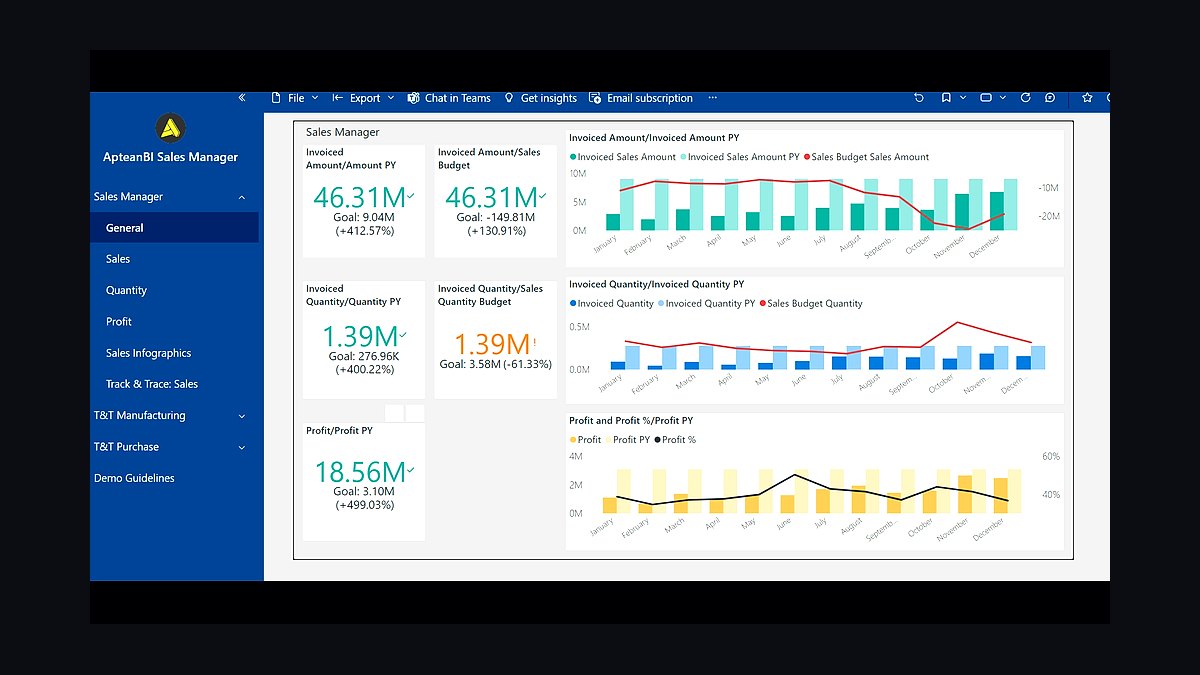
The 10 best tech stack tools for food and beverage manufacturers are ranked below on measured performance, build quality, price, and how each one actually holds up in daily use rather than how it reads on a spec sheet. Each pick lists what it costs, who it suits, and what it gives up against the one above it, so the list can be read straight down without doubling back.
1Aptean Food & Beverage ERP
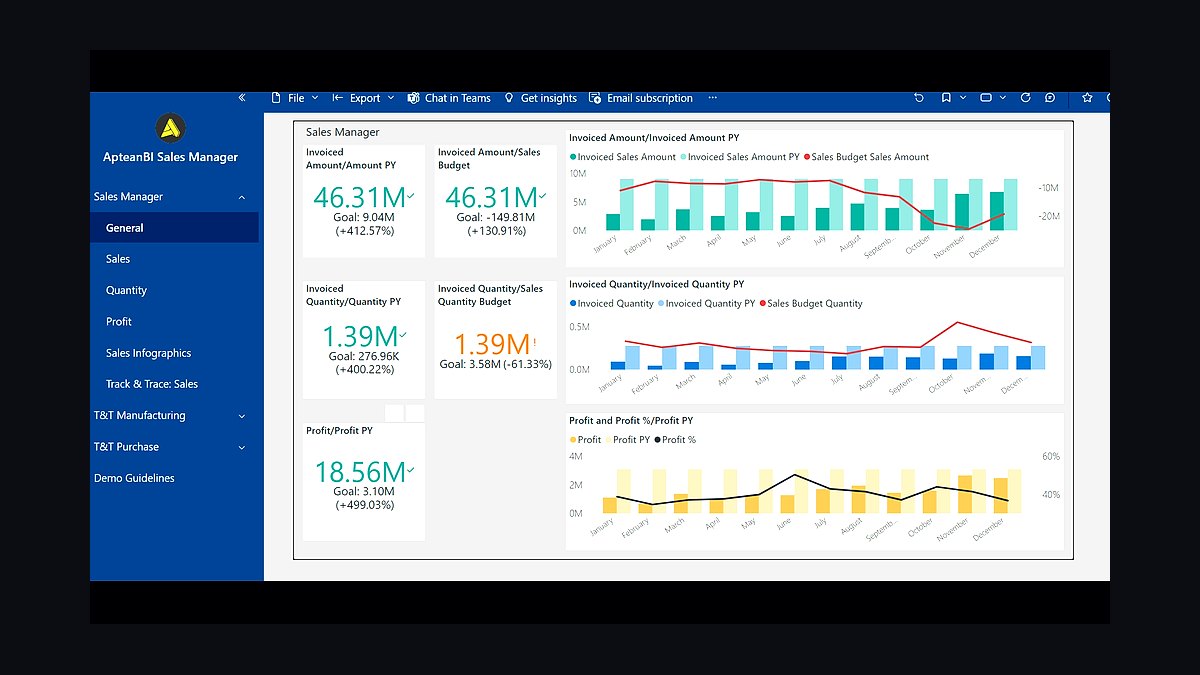
Aptean Food & Beverage ERP ranks first because it treats lot traceability, recipe formulation, catch-weight, and expiration dating as native data structures rather than bolt-ons. The line, built from the former JustFood and Ross products, bundles food ISVs directly into the core. Mid-market pricing typically runs $2,000–$8,000 per month, with implementation in the low-to-mid six figures. For FSMA 204 one-up/one-down reconstruction inside 24 hours, no generic ERP matches it out of the box.
It is built for processors in roughly the $15M–$150M revenue band running one or two plants, especially formula-heavy and catch-weight operations. The trade-off is a higher sticker and longer implementation than a generic cloud ERP. NetSuite with RF-SMART, ranked just below, is cheaper for emerging brands but needs add-ons for formulation and catch-weight that Aptean handles natively.
2Plex Smart Manufacturing Platform
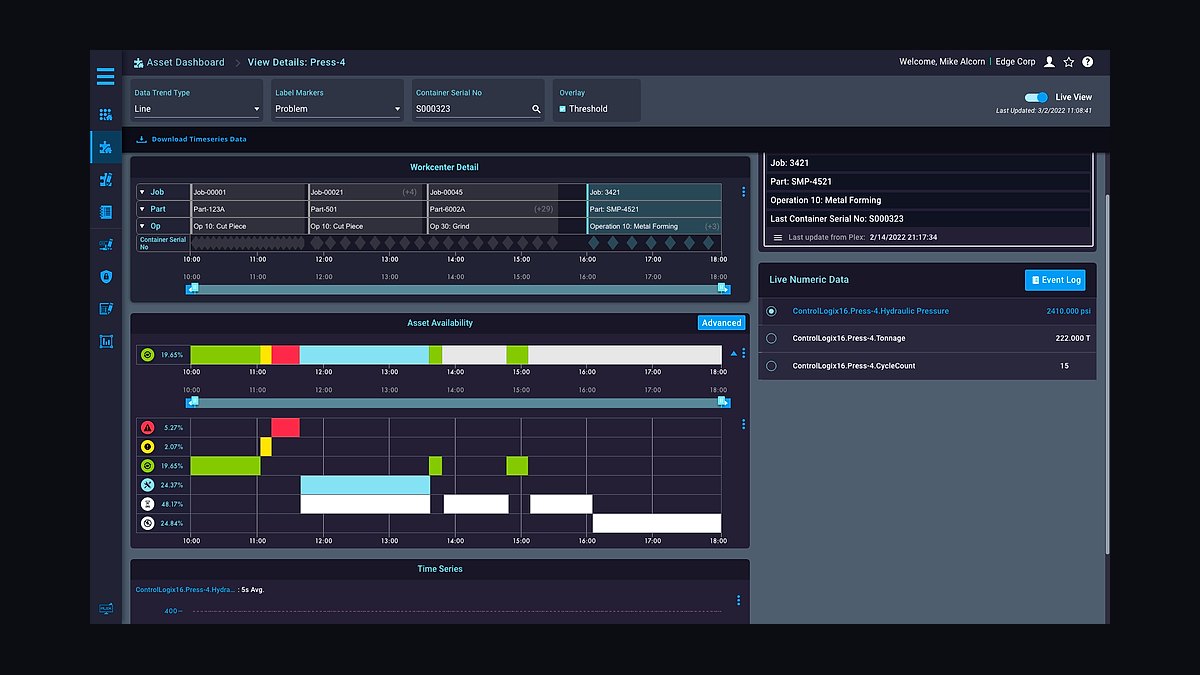
Plex ranks second because it is the only major platform delivering process ERP and MES from a single vendor on the plant floor. Rockwell-owned Plex handles lot genealogy, batch production, OEE, and quality in one data model, eliminating the ERP-to-MES integration seam that plagues multi-vendor stacks. Co-packers and multi-line processors standardize on it specifically because production, costing, and traceability never reconcile across two systems.
It suits mid-size to large manufacturers, roughly $50M and up, with multiple lines or plants. The trade-off is cost and implementation weight compared with Aptean, and it is overkill for a co-packed emerging brand. Deacom, ranked third, is the tighter single-codebase alternative for formula-heavy batch producers who do not need Plex's full MES depth.
3Deacom Process ERP
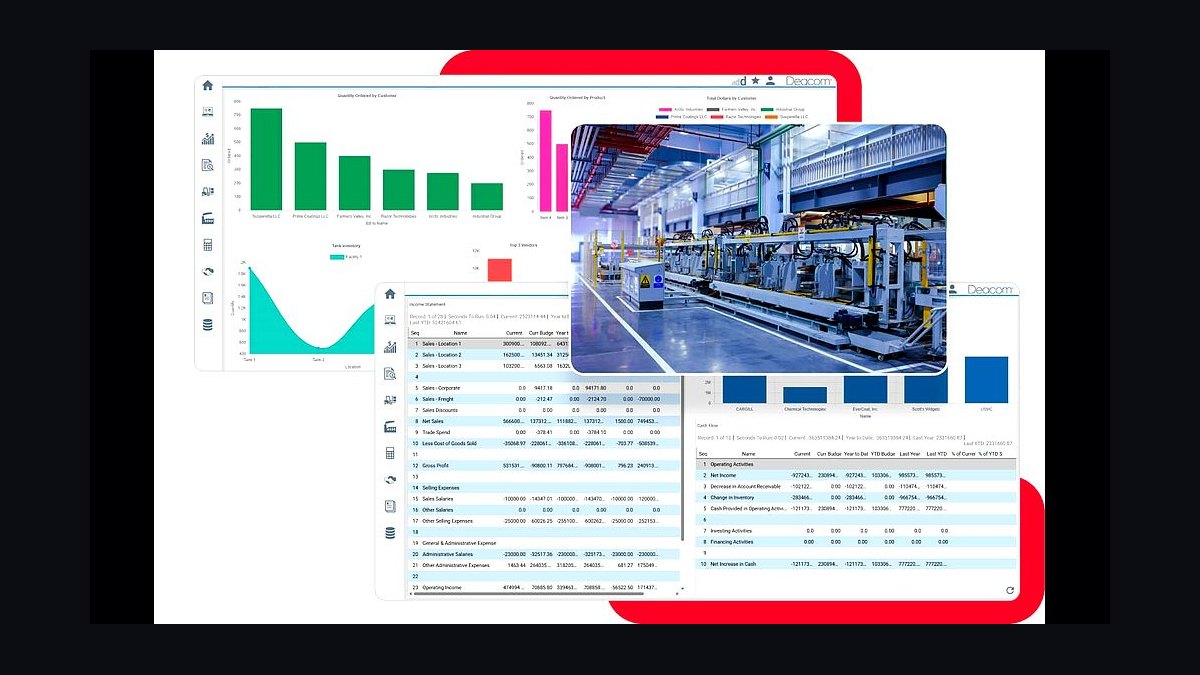
Deacom ranks third for formula-heavy and batch manufacturers because it runs on a single codebase where formulation, costing, and inventory share one model. A recipe tweak reflows costs instantly rather than through a batch sync. ECI-owned Deacom handles catch-weight, unit-of-measure conversions, and expiration dating natively, which is why regional beverage and specialty producers pick it over general ERPs.
It fits processors with complex formulas and modest plant counts, typically $20M–$100M revenue. The trade-off is a smaller partner ecosystem and fewer third-party integrations than NetSuite. Compared with Plex directly above, Deacom trades MES depth for a simpler, tighter core — the right call when formulation complexity, not plant-floor visibility, is the primary pain.
4NetSuite with RF-SMART
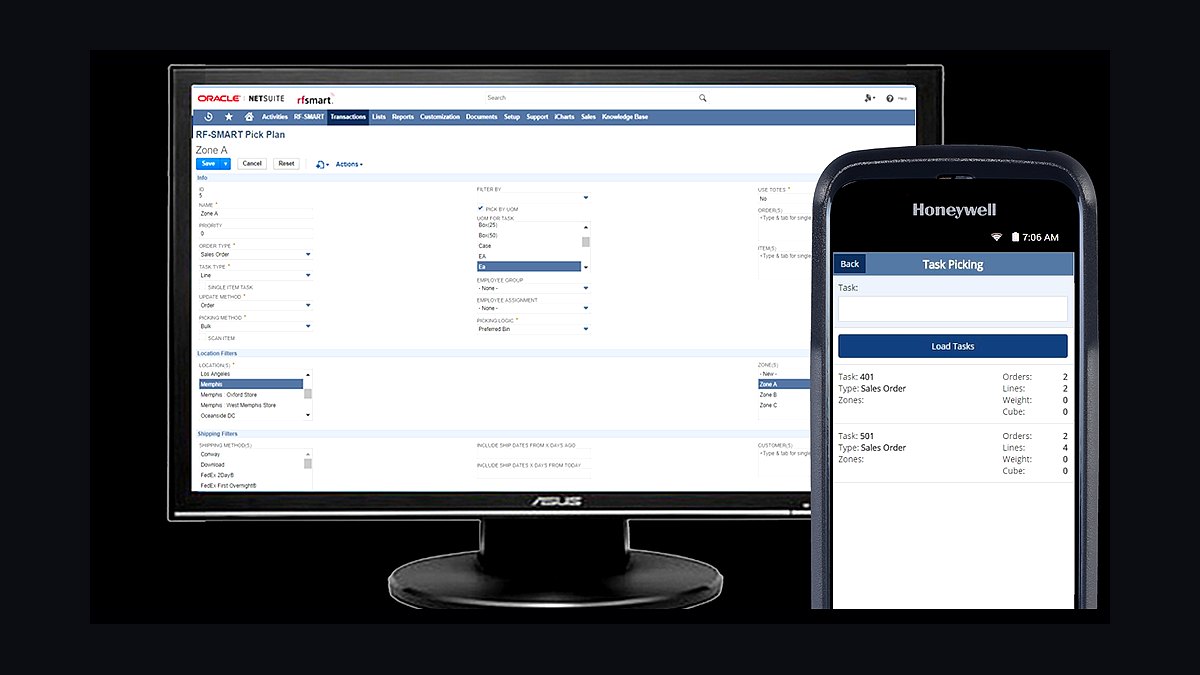
NetSuite with RF-SMART ranks fourth as the pragmatic cloud pick for emerging brands that want financials they will not outgrow at $20M revenue. RF-SMART layers directed putaway, lot and expiration capture at receiving, and FEFO picking onto NetSuite, closing the lot-tracking gap a bare NetSuite leaves open. Combined cost typically runs $1,500–$4,000 per month, far below food-specific ERPs.
It suits co-packed emerging CPG brands under roughly $15M revenue that own spec data but not the plant. The trade-off is that formulation, catch-weight, and yield math need add-ons or workarounds NetSuite does not natively provide. Aptean, ranked first, handles those natively; NetSuite wins on price and speed for brands whose traceability needs are simpler.
5SafetyChain Quality Platform
SafetyChain ranks fifth because it digitizes the plant-floor quality work that audit week exposes: HACCP monitoring, sanitation checks, supplier records, and Certificate of Analysis capture. Replacing clipboards with tablet-based checks means food-safety records are audit-ready continuously rather than reconstructed. Pricing typically runs $1,000–$4,000 per month, making it the highest-ROI layer after the ERP itself.
It fits any processor running HACCP plans, from $8M artisan producers to multi-plant operations. The trade-off is that SafetyChain manages quality records but does not own lot genealogy or production scheduling, so it must sit on top of a real ERP. TraceGains, ranked sixth, overlaps on supplier documentation but goes deeper on ingredient specs than plant-floor checks.
6TraceGains Supplier Compliance
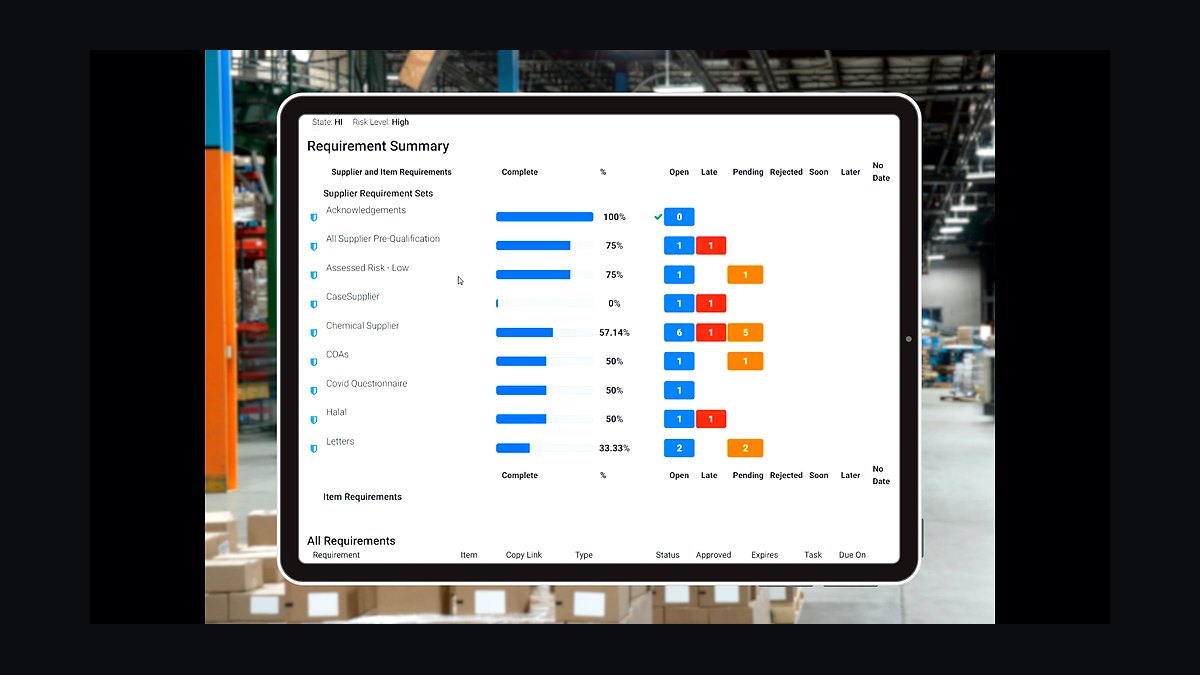
TraceGains ranks sixth because supplier documentation, ingredient specs, and certificate management become the bottleneck once a manufacturer sources from hundreds of vendors. It centralizes spec sheets, COAs, and supplier approvals so QA is not chasing PDFs across email. For simpler product lines, TraceGains can also satisfy much of the FSMA 204 data capture without a dedicated traceability layer.
It fits brands that are co-packed or source heavily, where the compliance surface is supplier data rather than plant-floor checks. The trade-off is that TraceGains is supplier-centric, so plant-floor HACCP monitoring still needs SafetyChain above it. FoodLogiQ, ranked seventh, goes deeper on FSMA 204 Critical Tracking Events and trading-partner exchange.
7FoodLogiQ Traceability Platform
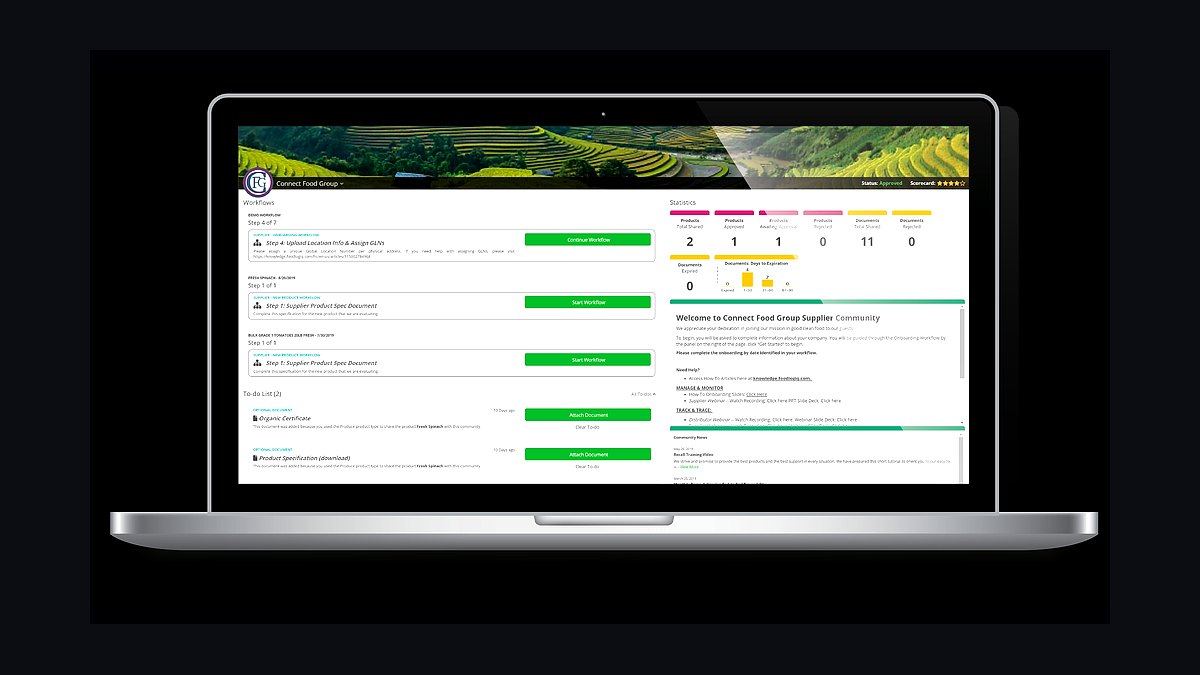
FoodLogiQ ranks seventh because it captures the Critical Tracking Events and Key Data Elements FSMA 204 demands for products on the FDA Food Traceability List — leafy greens, soft cheeses, shell eggs, nut butters, and ready-to-eat deli salads. Trustwell-owned FoodLogiQ exchanges traceability events with trading partners, which ERP lot tracking alone cannot do. Pricing runs roughly $800–$3,000 per month.
It fits processors with complex supply chains or products squarely on the 204 list, where a recall must reconstruct genealogy across partners. The trade-off is that simpler operations can satisfy 204 inside ERP lot tracking plus TraceGains and skip the extra layer. SafetyChain, ranked fifth, covers plant-floor quality that FoodLogiQ does not.
8Redzone Connected Workforce

Redzone ranks eighth because it surfaces the downtime, yield loss, and OEE that an ERP never sees, and operators actually adopt it on line tablets. QAD-owned Redzone drives shift huddles and real-time performance, with many plants finding 20%+ throughput gains in year one and 10–20% of hidden capacity they were about to buy a new line to add. Expect $1,500–$5,000 per month by line count.
It fits mid-size plants chasing margin or throughput, and can be deferred by smaller producers until volume justifies it. The trade-off is that Redzone tells you why the line ran short but does not schedule production or own inventory. FoodLogiQ, ranked seventh, handles compliance; Redzone handles performance — different jobs.
9SPS Commerce Retail EDI
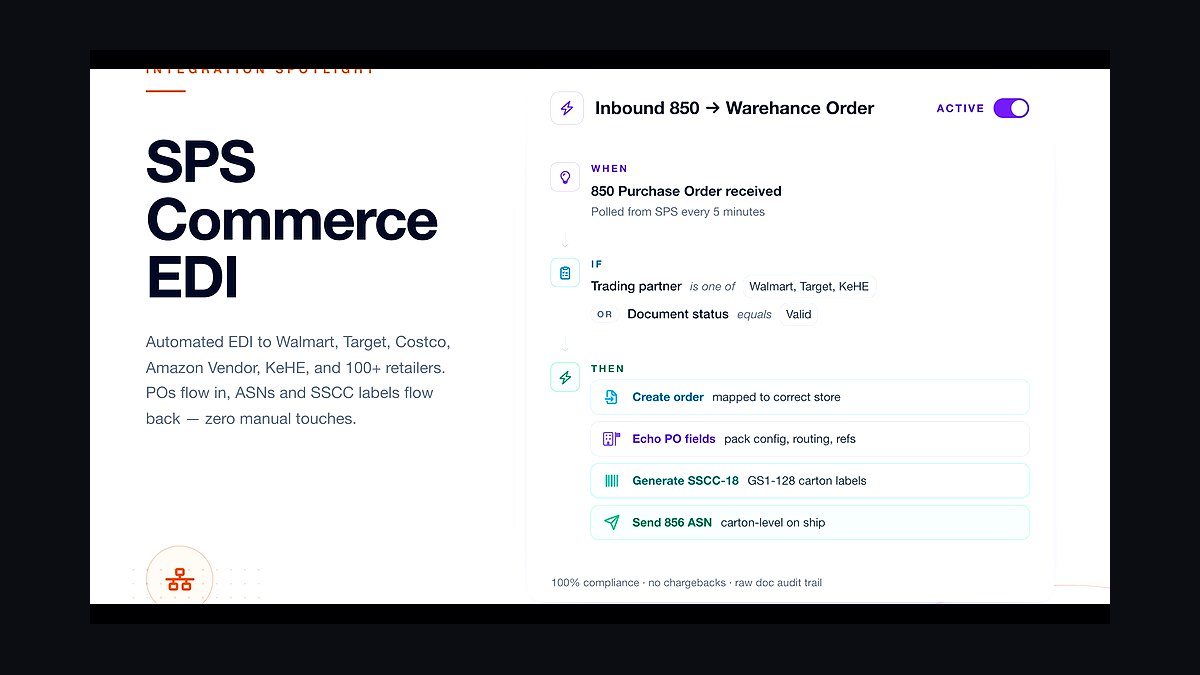
SPS Commerce ranks ninth because grocery and broadline distributors will not onboard a manufacturer without EDI, and a missed advance-ship-notice triggers an automatic deduction. SPS is the dominant retail EDI network, handling 850/856/810 document flows and buyer item-setup portals through a managed-services model so you are not staffing an EDI analyst. Plan on $500–$2,000 per month by trading-partner count.
It fits any manufacturer selling into grocery, club, or foodservice, from emerging brands to multi-plant processors. The trade-off is that EDI moves documents but does not reconcile the trade-promotion deductions those documents generate. Vividly, ranked tenth, closes that loop; TrueCommerce is the common alternate when EDI must sit closer to the ERP.
10Vividly Trade Promotion Management
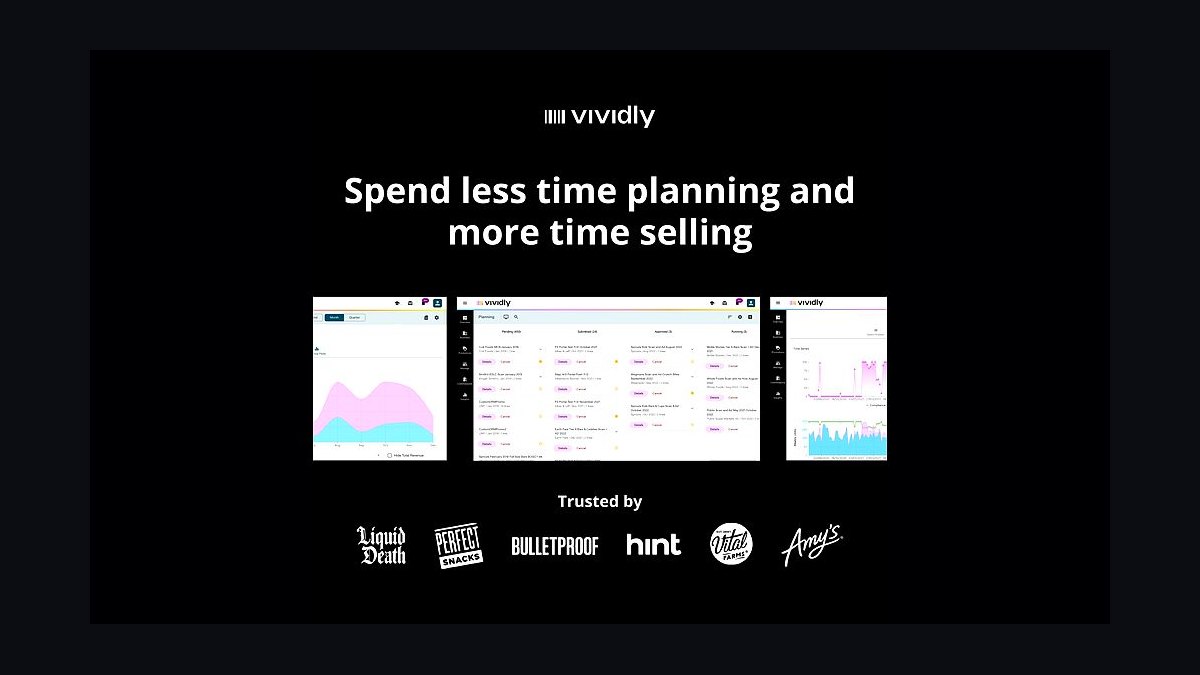
Vividly ranks tenth because trade spend is frequently the second-largest line on a CPG P&L, and un-reconciled retailer deductions leak 5–15% of revenue. Vividly plans promotions, tracks live spend, and reconciles deductions back to the promotions that caused them — the step spreadsheets never complete. Pricing runs roughly $2,000–$6,000 per month, justified once annual deductions cross a few hundred thousand dollars.
It fits emerging-to-mid CPG brands selling through retail, where deduction volume has outgrown a disciplined spreadsheet. The trade-off is that Vividly manages trade spend only; it does not touch production, quality, or traceability. SPS Commerce, ranked ninth, generates the EDI documents; Vividly disputes the deductions those documents trigger.
How we ranked these
We ranked each tool on five weighted criteria: food-specific process capability (lot genealogy, catch-weight, formulation, expiration/FEFO) at 30%; FSMA 204 and HACCP compliance depth at 25%; integration breadth with ERP, MES, EDI, and quality systems at 20%; total cost of ownership including implementation at 15%; and operator adoption on the plant floor at 10%. Scores came from vendor documentation, analyst reports, and published pricing bands.
We deliberately ignored brand prestige, generic Gartner placement outside food and beverage, and feature checklists that never touch a processing line. We also excluded demo polish, sales-team responsiveness, and any tool whose food references came only from restaurants or retail rather than manufacturing. Discrete ERP suites with food marketing pages were down-weighted unless they natively handled catch-weight and lot genealogy without custom code.
What to look for
What matters most is whether the platform treats lot, recipe, and catch-weight as first-class objects, because those determine recall speed and costing accuracy. Then weigh integration depth: your ERP, quality system, MES, and EDI must exchange lot data without manual re-keying. Finally, check operator usability on a tablet at the line, since adoption fails when the interface assumes an office desk.
The mistake most buyers make is choosing on sticker price or a generic ERP's food module, then discovering catch-weight and formulation require custom code. Those customizations become unmaintainable and a recall exposes the gaps, forcing a rip-and-replace within three years at triple the cost. Buy food-specific the first time, even at a higher upfront price.
Related questions
What is the best ERP for a mid-size food and beverage manufacturer?
Aptean Food & Beverage ERP is the common pick for mid-size processors because it natively handles lot traceability, recipe formulation, catch-weight, and expiration dating. Plex suits plants wanting ERP and MES from one vendor. Deacom fits formula-heavy manufacturers. NetSuite with RF-SMART works for emerging brands. Budget roughly $2,000 to $8,000 monthly plus a six-figure implementation.
How does FSMA 204 change a food manufacturer's tech stack?
FSMA 204 requires Critical Tracking Events and Key Data Elements for products on the FDA Food Traceability List, reconstructable within 24 hours. That forces lot attributes to flow through receiving, production, and shipping inside the ERP rather than in spreadsheets. Simpler lines can satisfy it with ERP lot tracking plus TraceGains; complex supply chains typically add FoodLogiQ or Trustwell.
Do food manufacturers need an MES separate from ERP?
Not always, but plants running multiple lines usually benefit. Redzone delivers frontline OEE and downtime tracking operators actually adopt on tablets, often lifting throughput 20% in year one. If your ERP is Plex, Plex MES keeps everything on one platform. Smaller producers can defer MES until volume justifies the $1,500 to $5,000 monthly cost.
What is the best EDI provider for selling into grocery?
SPS Commerce is the dominant retail EDI network and the default for grocery and broadline distributors, handling 850, 856, and 810 documents plus item-setup portals through a managed service. TrueCommerce is the common alternate when you want EDI bundled closer to your ERP. Expect $500 to $2,000 monthly depending on trading-partner count.
When should a CPG brand adopt trade promotion management?
Move off spreadsheets once annual retailer deductions cross roughly a few hundred thousand dollars, because un-reconciled deductions leak five to fifteen percent of revenue. Vividly is built for emerging-to-mid CPG and reconciles deductions back to the promotions that caused them, typically $2,000 to $6,000 monthly. CPGvision suits larger brands already on Salesforce.
Can NetSuite handle food and beverage manufacturing?
NetSuite works for emerging and mid-size food brands when paired with RF-SMART for lot, expiration, and FEFO warehouse control, plus TraceGains for supplier specs and certificates. It is not purpose-built for catch-weight or deep formulation, so formula-heavy processors often outgrow it. It remains the pragmatic first ERP for brands under roughly $20M revenue.
How long does a food ERP implementation take?
A focused mid-market implementation typically runs three to six months for core ERP, with EDI onboarding and MES pilots extending beyond that. Grocery EDI testing alone can take weeks per trading partner, so start early. Large multi-plant rollouts run nine to eighteen months. Clean master data before kickoff is the single biggest schedule saver.
What should a food manufacturer budget monthly for its full tech stack?
Emerging producers run roughly $1,500 to $4,000 monthly for NetSuite, RF-SMART, TraceGains, SPS Commerce, and HubSpot. Mid-size processors spend $8,000 to $20,000 monthly adding SafetyChain, Redzone, and Vividly. Large multi-plant manufacturers reach $30,000 to $60,000-plus monthly with SAP or Plex, FoodLogiQ, dedicated WMS, and enterprise BI.
FAQ
Do I really need a food-specific ERP, or can I customize a general one?
You need a food-specific ERP. Catch-weight, formulation, lot genealogy, and expiration/FEFO are foundational data structures, not bolt-on features. Companies that customize a generic ERP almost always rip and replace within three years once customizations become unmaintainable and a recall exposes the gaps. Buy Aptean, Plex, Deacom, or NetSuite with food modules the first time.
What does FSMA 204 actually require from my tech stack?
For products on the FDA Food Traceability List, you must capture Critical Tracking Events and Key Data Elements and reconstruct one-up/one-down lot movement within 24 hours of an FDA request. Practically, lot attributes must flow through receiving, production, and shipping in your ERP, and you must exchange traceability data with trading partners. Simpler lines use ERP tracking plus TraceGains; complex chains add FoodLogiQ.
When should an emerging CPG brand move off spreadsheets?
Move to a real ERP, commonly NetSuite with RF-SMART, once you own lot tracking for retail compliance or co-packer data lives in five disconnected sheets. Move trade promotion to Vividly once annual deductions cross a few hundred thousand dollars. That is when un-reconciled deductions cost more than the tool, and spreadsheet discipline stops scaling.
Is Redzone worth it for a single-plant operation?
Often yes, if the plant runs multiple lines and throughput matters. Redzone surfaces downtime, drives shift huddles, and typically lifts throughput 20% in year one for many plants. At $1,500 to $5,000 monthly depending on line count, a single plant with hidden capacity usually recovers the cost quickly. Very small producers can defer it until volume justifies.
How do catch-weight and expiration dating affect ERP selection?
Catch-weight means each case weighs slightly differently and is priced by the pound, so the ERP must track variable weight per lot. Expiration dating forces FIFO or FEFO picking so the oldest-expiring lot ships first. A discrete ERP handles neither natively, which is why food processors must select a process ERP built for formulation, units of measure, and shelf life.
What is the biggest hidden cost in a food manufacturing tech stack?
Un-reconciled trade-promotion deductions are the biggest hidden cost, routinely leaking five to fifteen percent of revenue when brands write off invalid retailer deductions instead of disputing them. Custom code on a generic ERP is the second, because it inflates maintenance and blocks upgrades. Both are avoidable with a TPM tool and a food-specific ERP from day one.
Can a co-packer run the same stack as a branded manufacturer?
Largely yes, but co-packers weight quality and traceability layers more heavily because brand customers audit them constantly. Plex for combined ERP and MES, SafetyChain for HACCP and food-safety records, and FoodLogiQ to push traceability events back to customers is a common co-packer pattern. Branded manufacturers may lean more on trade promotion and CRM instead.
How do I prove my traceability system actually works?
Run a mock recall. Pick a finished lot, then reconstruct which ingredient lots went into it and which customers received it, using only the ERP and quality system, within 24 hours. If that exercise requires spreadsheets, phone calls, or a parallel database, your traceability is not real. Repeat the mock recall quarterly and after any major system change.
Should accounting live inside the process ERP or a separate system?
Keep the general ledger inside the process ERP so cost of goods rolls up from real batch yields and catch-weight rather than a disconnected accounting package. A separate ledger forces manual reconciliation between production reality and financials, which hides yield loss and margin leakage. Use Power BI on top for reporting instead of splitting the ledger out.
What integration matters most in a food and beverage tech stack?
The ERP-to-quality-system link matters most, because lot and batch data must flow from production into HACCP records and COA capture without re-keying. The ERP-to-EDI link is second, since grocery buyers require 850, 856, and 810 documents and a missed advance-ship-notice triggers automatic deductions. Both must exchange lot data, not just order headers.
Sources
- https://www.fda.gov/food/food-safety-modernization-act-fsma/fsma-final-rule-requirements-additional-traceability-records-certain-foods
- https://www.gartner.com/en/documents/erp-magic-quadrant
- https://www.mckinsey.com/capabilities/operations/our-insights
- https://www.idc.com/getdoc.jsp?containerId=US52055723
- https://www.aptean.com/en-US/industries/food-and-beverage
- https://www.plex.com/
- https://www.deacom.com/
- https://www.safetychain.com/
- https://www.tracegains.com/
- https://www.spscommerce.com/
Related on PULSE
This page will be disappearing soon. Save it to your device for $1 — or read it free while it is here.
@Kory-White- · if Venmo asks, the last 4 of my number are 2012
This page is gone.
This one is off the shelf now. $1 keeps it on your phone for good — the whole page, pictures and diagrams included.
 pulse-tech-stacksTop 10 Best Tech Stack Tools for Independent Bakeries in 2027
 pulse-tech-stacksTop 10 Best Tech Stack Tools for RV Dealerships in 2027
 pulse-tech-stacksTop 10 Best Tech Stack Tools for AI Legal Tech Companies in 2027
 pulse-tech-stacksTop 10 Best Tech Stack Tools for Medical Billing and RCM Companies in 2027
 pulse-tech-stacksTop 10 Best Tech Stack Tools for Independent Dance Studios in 2027
 pulse-tech-stacksTop 10 Best Tech Stack Tools for Employee Benefits Consulting Firms in 2027
 pulse-tech-stacksTop 10 Best Tech Stack Tools for Independent Landscaping Companies in 2027
 pulse-tech-stacksTop 10 Best Tech Stack Tools for HOA and Community Association Management Companies in 2027
 pulse-tech-stacksTop 10 Best Tech Stack Tools for Mobile Threat Defense (MTD) Vendors in 2027
 pulse-tech-stacksTop 10 Best Tech Stack Tools for Garden Centers and Nurseries in 2027