


Top 10 Best Tech Stack Tools for Garden Centers and Nurseries in 2027
Quality
Certified
The 10 best tech stack tools for garden centers and nurseries are ranked below on measured performance, build quality, price, and how each one actually holds up in daily use rather than how it reads on a spec sheet. Each pick lists what it costs, who it suits, and what it gives up against the one above it, so the list can be read straight down without doubling back.
1Epicor Eagle for Garden Centers
Epicor Eagle ranks first because it is the proven retail core for established garden centers, handling deep plant SKU counts, matrix pricing by container size, and lawn-and-garden category intelligence out of the box. Expect roughly $300-700 per month per location plus hardware and an implementation fee. It models markdowns, shrink, and seasonal sell-through so living inventory is tracked as perishable, not as dry goods.
It suits multi-acre destination centers and multi-location nursery chains that need a system of record before layering anything else on top. The trade-off is cost and setup time compared with lighter registers, and it does not run crop production or field crews. Rapid Garden POS below is the nursery-native challenger for shops that want plant tags and grower features built in from day one.
2Rapid Garden POS
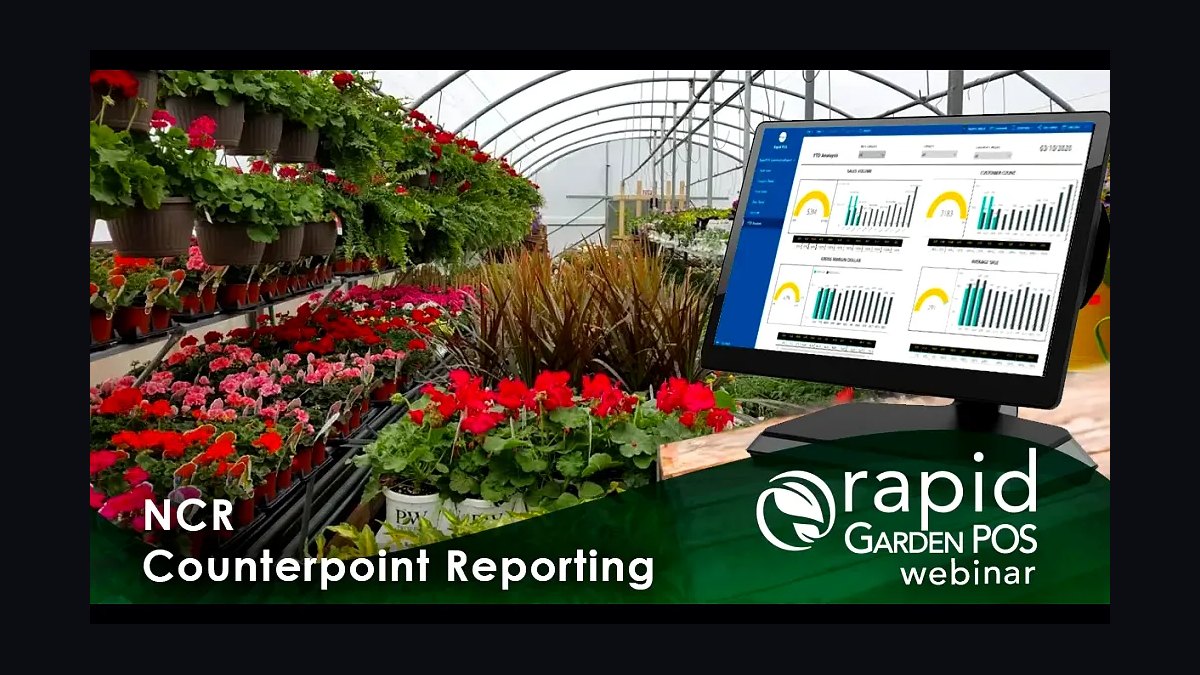
Rapid Garden POS ranks second as the nursery-native challenger, with plant tags, grower features, and horticulture SKUs built into the register rather than bolted on. It targets independent garden centers that print bench and pot tags at receiving and need care data on the same label. Pricing sits below Epicor Eagle, making it the practical first POS for a single-location grower-retailer.
It is for owner-operators who want plant-specific workflows without enterprise implementation overhead. It trades away some of the deep purchasing and matrix-pricing depth that Epicor Eagle carries for large SKU files. Compared with Lightspeed Retail below, it wins on horticulture specificity but loses on the breadth of third-party retail integrations.
3Shopify for Garden Centers
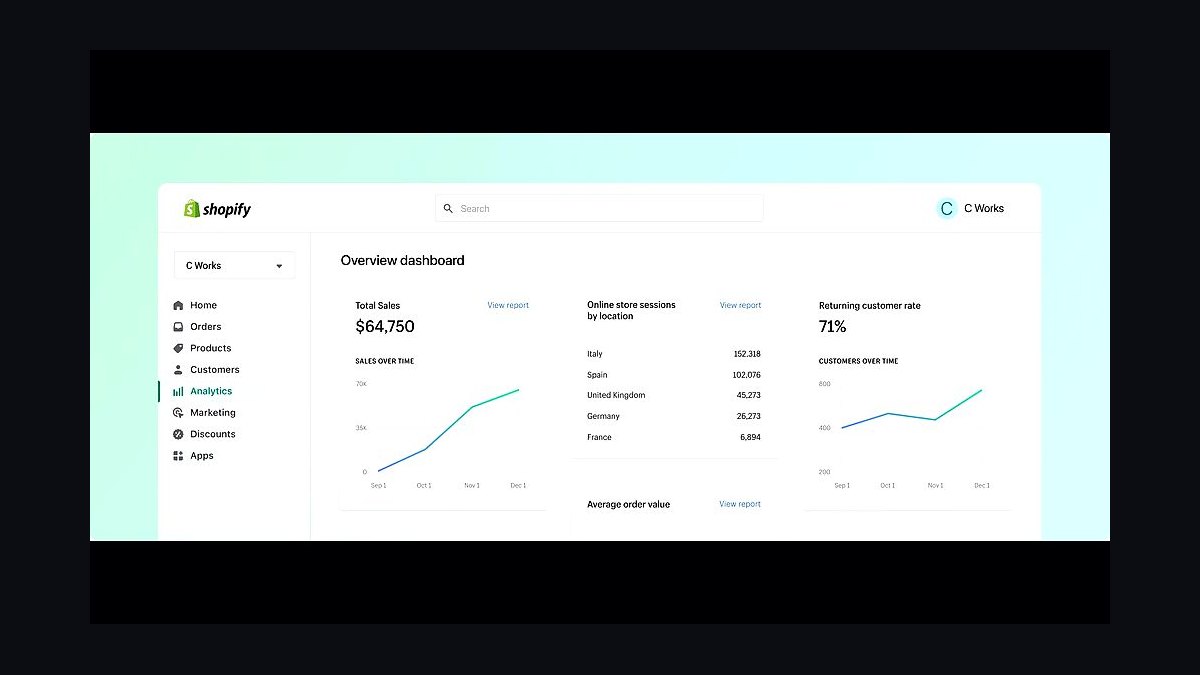
Shopify ranks third because it is the e-commerce layer that lets a garden center sell curated plants online, take curbside and pickup orders, and compete with big-box garden departments. Plans run $39-399 per month and sync to the POS for inventory and order flow. Pointy by Google pushes in-store stock into local search for near-zero effort.
It is for centers that want a real online storefront without building custom infrastructure. The trade-off is that real-time plant inventory sync is fragile because floor counts drift as customers reshuffle benches and product dies, so curated assortments beat full-catalog mirroring. Compared with Marsello below, Shopify captures the order while Marsello captures the repeat customer.
4Marsello Loyalty for Garden Centers
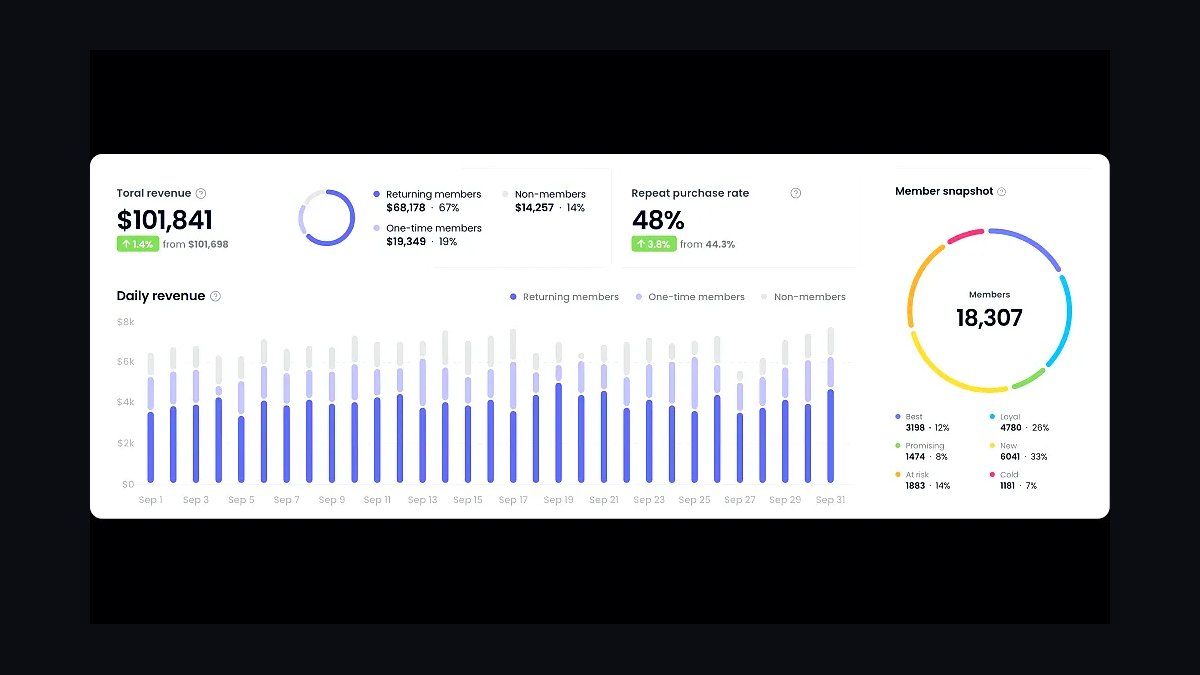
Marsello ranks fourth because repeat local customers are the lifeblood of a garden center, and Marsello layers points, email, and SMS directly onto Lightspeed and Shopify at $135-300 per month. It triggers weather- and season-based campaigns, which matters when a warm dry weekend triples foot traffic with two days notice. Loyalty that syncs to the POS gets honored at the register instead of becoming a punch card nobody redeems.
It is for centers with an existing customer list and enough transaction volume to justify automation. It trades away deep e-commerce segmentation compared with Klaviyo, and it is not a replacement for a POS or a website. Compared with Podium below, Marsello drives repeat visits while Podium drives first-time discovery through reviews.
5Podium for Garden Centers

Podium ranks fifth because foot-traffic businesses live and die on local reviews and open-now search, and Podium automates review requests and webchat at $250-450 per month. A well-run free Google Business Profile is the non-negotiable baseline underneath it. For a garden center competing on weekend drive-by traffic, review volume directly affects whether shoppers find the store at all.
It is for centers in competitive local markets where a competitor sits within a few miles. It trades away marketing automation depth that Marsello or Klaviyo provide, since Podium focuses on reputation and messaging rather than campaigns. Compared with SBI Software below, Podium touches the customer while SBI touches the plants.
6SBI Software for Growers

SBI Software ranks sixth because any garden center that propagates, pots up, or finishes its own material runs a production operation a retail register cannot model. SBI Series 2k and Advance manage crop scheduling, production shrink, and live availability feeds, with quote-based pricing often reaching $1,000-3,000 or more per month. It becomes the source of truth for what is actually ready to sell.
It is for growers and garden centers with real production, not pure retailers who buy finished material. The trade-off is material cost and implementation effort, plus the discipline of reconciling availability against the POS. Compared with Picas below, SBI is the long-standing incumbent while Picas is the strong alternate for crop scheduling.
7Picas Greenhouse Software
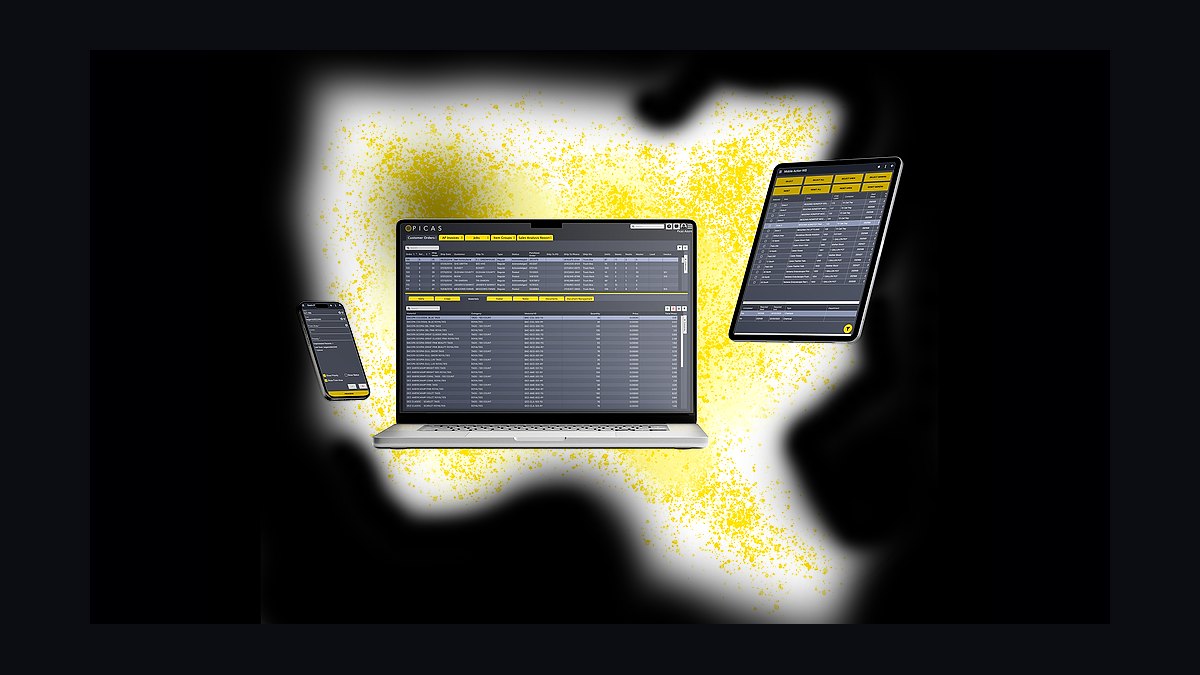
Picas ranks seventh as the strong alternate grower system, handling crop scheduling, production planning, and availability for greenhouses and nurseries that finish their own plant material. It is marketed by IT Works and competes directly with SBI Software on the production side. For growers who find SBI's pricing or fit awkward, Picas is the credible second option rather than a compromise.
It is for production nurseries and garden centers with propagation or finishing operations. It trades away retail POS functionality entirely, so it must feed availability into a separate register. Compared with Komet Sales below, Picas manages what you grow while Komet manages what you sell wholesale to other centers and landscapers.
8Komet Sales Wholesale B2B

Komet Sales ranks eighth because growers and re-wholesalers selling to other garden centers and landscaping firms need order entry, availability publishing, and EDI, and Komet is the category standard at roughly $400-1,200 per month. It publishes live availability to buyers so wholesale orders reflect what is actually on the bench. Retail-only garden centers should skip this layer entirely.
It is for operations with a wholesale arm, not for single-location retail shops. The trade-off is another system to reconcile against production and retail inventory, plus monthly cost that only pays back at real wholesale volume. Compared with Jobber below, Komet handles B2B plant orders while Jobber handles delivery and installation crews.
9Jobber for Garden Centers
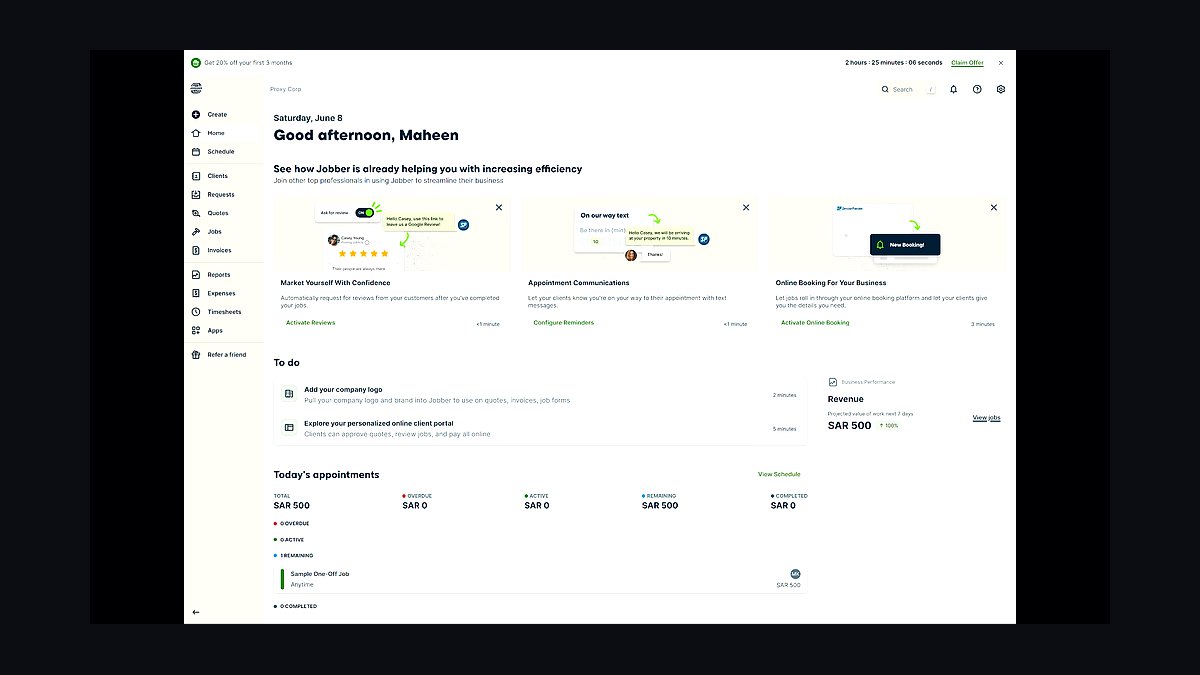
Jobber ranks ninth because the moment a garden center attaches delivery, planting, installation, design consults, or a landscaping-services arm, crews need quoting, scheduling, routing, and invoicing outside the retail register. Plans run $100-350 per month and cover job costing that spreadsheets cannot. Running install crews out of the POS means no route optimization and no per-job margin.
It is for hybrids where services revenue has become material, not for pure retail shops with occasional deliveries. It trades away plant inventory management, so material still flows from the POS into Jobber jobs. Compared with Eventbrite below, Jobber schedules labor while Eventbrite registers class attendees.
10Eventbrite for Garden Centers

Eventbrite ranks tenth because workshops, kids' days, and plant clinics drive traffic and email capture, and Eventbrite handles registration and reminders cleanly at no base cost plus per-ticket fees, or roughly $15-100 per month. Free RSVP by email produces no-show rates that wreck staffing plans. Attendee lists feed directly into loyalty and marketing for follow-up.
It is for centers running a real classes and events calendar rather than occasional one-off demos. It trades away POS integration depth, so ticketing revenue and attendee data need manual reconciliation with the register. Compared with Jobber above, Eventbrite captures demand while Jobber fulfills the installation work that demand creates.
How we ranked these
We ranked each tool on five weighted criteria: horticulture-specific inventory handling (30%), including plant SKUs, bench tags, shrink and mortality tracking; integration depth with POS, e-commerce, and accounting (25%); total cost of ownership at typical garden-center scale (20%); services, delivery, and event scheduling capability (15%); and analyst-validated market presence (10%). Scores came from vendor documentation, published pricing, and operator-reported deployment patterns.
We deliberately ignored generic retail feature checklists, mobile-app polish, and vendor marketing claims about AI. A mall apparel POS may out-feature a nursery system on paper while failing at perishable inventory, so breadth was not rewarded. We also excluded one-off custom builds and legacy on-premise systems with no 2027 roadmap, because integration and support risk outweigh any short-term cost saving.
Related questions
Why can't a generic retail POS handle a garden center?
Generic POS assumes inventory holds value over time. Plants shrink, die, and revalue daily, and a nursery carries tens of thousands of SKUs varying by pot size and cultivar. Without mortality tracking, bench locations, and rapid markdown workflows, margin leaks invisibly into shrink categories that never reconcile against production.
Do I need a separate grower system if I propagate my own plants?
Yes, once production becomes material. Retail POS cannot model crop schedules, live availability, or production shrink. Growers run SBI Software or Picas and feed availability into the POS. Bolting production onto a register means availability is always a guess and oversell risk rises sharply.
How should Shopify sync with my plant inventory?
Conservatively. Real-time full-SKU sync fails because floor counts drift as customers reshuffle benches and product dies. Curate a smaller online assortment, sync on a schedule, and treat e-commerce as a storefront rather than a mirror of the sales floor. Cancellation emails erode local trust fast.
When does a garden center need Jobber or field-service software?
The moment delivery, planting, installation, design consults, or a landscaping arm becomes meaningful revenue. Jobber handles quoting, crew scheduling, routing, and job invoicing. Running install crews from shared calendars and Word quotes produces un-costed jobs and double-booked crews within a single busy season.
What does a realistic monthly tech budget look like?
A single garden center runs roughly $300-900 per month across POS, Shopify, loyalty, and QuickBooks. Multi-location chains land near $1,200-3,000. A garden center plus grower and landscaping operation reaches $3,500-8,000 or more because production and wholesale layers are ERP-grade and quote-priced.
Is loyalty software worth it for a local garden center?
Yes, if it syncs to the POS. Repeat local customers drive garden-center revenue, and Marsello or Klaviyo can trigger weather- and season-based campaigns. Loyalty that lives outside the register becomes a punch card nobody honors, which wastes both the subscription and the staff training time.
How do I stop overselling plants online?
Cap online quantities below floor counts, exclude fragile or fast-turning SKUs, and reconcile weekly. Publish availability from the grower system where possible instead of the retail floor. Treat cancellations as a signal that your sync cadence is too aggressive for how your benches actually move.
Should wholesale growers run a retail POS at all?
Usually no. A production nursery is better served by SBI Software or Picas plus Komet Sales for B2B order entry and availability publishing, with Sage Intacct for multi-entity books. Adding a retail POS only makes sense if you also operate a physical retail storefront with walk-in customers.
FAQ
What is the best POS for a garden center in 2027?
Epicor Eagle and Rapid Garden POS lead for most independents because both handle deep plant SKUs, bench tags, and shrink. Counterpoint and POSIM suit larger operators wanting tighter inventory control. Very small shops can start on Lightspeed Retail or Square and migrate upward as SKU count and services revenue grow.
How much does a garden center tech stack cost per month?
Single locations typically run $300-900 monthly. Multi-location chains land near $1,200-3,000. Operations combining retail, growing, and landscaping reach $3,500-8,000 or more, driven mainly by grower ERP and wholesale layers, which are quote-priced rather than published.
Do garden centers really need plant-tag printing software?
Yes. Bench and pot tags carry SKU, price, and care data, and receiving scans vendor UPCs. Most horticulture POS bundle a tag designer, so budget $50-150 monthly plus a thermal printer. Cheap generic POS forces manual tag workarounds that bury staff during spring receiving peaks.
Can I run a nursery on Shopify alone?
No. Shopify is an e-commerce layer, not an inventory core for perishable plants. It cannot model mortality, bench locations, or grower availability. Pair it with a horticulture POS and sync conservatively. Centers that try to run the whole business on Shopify end up reconciling inventory by hand every week.
What is the biggest mistake garden centers make with tech?
Treating plants like dry goods. Running living inventory on a generic retail POS hides margin loss inside vague shrink categories. Dead and marked-down plant material never gets recorded properly, so owners cannot see where money leaks or which categories actually earn their bench space.
How important is weather-aware marketing for a garden center?
Very. Weather is the single largest demand driver, often tripling weekend foot traffic with two days notice. Marsello, Mailchimp, and Klaviyo can trigger campaigns off forecasts, letting you surge staff, push specific inventory, and book installation jobs before the warm weekend arrives.
Should I use QuickBooks or Sage Intacct?
QuickBooks Online covers single and small multi-location garden centers and integrates with POS and Shopify. Once you cross multiple entities, run a grower operation, or need real job costing on landscaping work, Sage Intacct earns its higher price through consolidation and reporting depth.
How do I pick between Epicor Eagle and Rapid Garden POS?
Eagle suits established centers wanting deep purchasing, matrix pricing, and lawn-and-garden category intelligence with a long track record. Rapid Garden POS is the nursery-native challenger with plant tags and grower features built in. Demo both against your actual SKU file and receiving workflow before deciding.
Do I need Eventbrite if I run classes and workshops?
Only if no-shows are hurting staffing. Eventbrite handles registration, reminders, and paid tickets cleanly for a small per-ticket fee. Free RSVP-by-email events routinely produce no-show rates that wreck labor planning, so paid or confirmed registration usually pays for itself quickly.
What reporting should a garden center owner actually watch?
Sell-through by category, shrink and mortality as separate lines, margin per bench foot, and repeat-customer rate. Power BI or POS-native dashboards can surface these. Never reconciling shrink against production means you cannot see where living inventory is quietly leaking margin all season.
Sources
- https://www.gartner.com/en/documents/retail-unified-commerce-magic-quadrant
- https://www.forrester.com/research/
- https://www.mckinsey.com/industries/retail/our-insights
- https://www.sbigrower.com/
- https://www.kometsales.com/
- https://www.getjobber.com/
- https://www.shopify.com/
- https://quickbooks.intuit.com/
- https://www.marsello.com/
- https://www.epicor.com/en-us/products/retail/
Related on PULSE
This page will be disappearing soon. Save it to your device for $1 — or read it free while it is here.
@Kory-White- · if Venmo asks, the last 4 of my number are 2012
This page is gone.
This one is off the shelf now. $1 keeps it on your phone for good — the whole page, pictures and diagrams included.
 pulse-tech-stacksTop 10 Best Tech Stack Tools for Home Builders and Residential Developers in 2027
 pulse-tech-stacksTop 10 Best Tech Stack Tools for AI Observability Platform Companies in 2027
 pulse-tech-stacksTop 10 Best Tech Stack Tools for Independent Driving Schools in 2027
 pulse-tech-stacksTop 10 Best Tech Stack Tools for Independent Wholesale Distribution Businesses in 2027
 pulse-tech-stacksTop 10 Best Tech Stack Tools for Appliance Repair Services in 2027
 pulse-tech-stacksTop 10 Best Tech Stack Tools for Hardware Security Module (HSM) Vendors in 2027
 tkTop 10 Best Tech Stack Tools for Concrete and Paving Contractors in 2027
 pulse-tech-stacksTop 10 Best Tech Stack Tools for Bot Mitigation Vendors in 2027
 pulse-tech-stacksTop 10 Best Tech Stack Tools for AI Music Generation Companies in 2027
 pulse-tech-stacksTop 10 Best Tech Stack Tools for Public Relations Agencies in 2027