


Top 10 Best Tech Stack Tools for Dialysis Centers in 2027
Quality
Certified
The 10 best tech stack tools for dialysis centers are ranked below on measured performance, build quality, price, and how each one actually holds up in daily use rather than how it reads on a spec sheet. Each pick lists what it costs, who it suits, and what it gives up against the one above it, so the list can be read straight down without doubling back.
1CWOW Dialysis EHR
CWOW ranks first because it is a dialysis-native clinical EHR built specifically for recurring thrice-weekly in-center hemodialysis, not adapted from ambulatory software. It handles per-treatment flowsheets, interdisciplinary care plans, chair scheduling, and native EQRS/ESRD QIP measure capture in one record. Independent 20-chair centers typically land near $2,000–$5,000/month all-in, or roughly $300–$700 per station monthly depending on modules.
CWOW is for single-site and mid-size dialysis organizations that want the clinical record to generate EQRS submissions as a byproduct of daily documentation. It trades away the broad specialty coverage of a general EHR and the deep hospital integration of Epic. Compared to MIRA directly below, CWOW leans toward leaner independent centers, while MIRA suits organizations wanting more enterprise reporting depth.
2MIRA Dialysis EHR

MIRA ranks second as a purpose-built dialysis clinical platform covering recurring treatment scheduling, per-treatment data capture, and ESRD regulatory reporting. Like CWOW, it models the chronic longitudinal record rather than episodic visits, capturing pre/post weight, ultrafiltration goal, dialysate, treatment time, and access type per session. Pricing typically falls in the same $300–$700 per station per month band as CWOW.
MIRA fits mid-size dialysis organizations standardizing across multiple centers. It trades away some of CWOW's independent-center simplicity in exchange for broader multi-facility reporting. Compared to CWOW above, MIRA is the better fit when you need to roll one clinical record across dozens of facilities rather than optimize a single site.
3EQRS Submission Pipeline

EQRS submission ranks third because CMS mandates clinical and quality data reporting through the End-Stage Renal Disease Quality Reporting System, which replaced CROWNWeb. ESRD QIP ties up to 2% of Medicare payment to measures like Kt/V adequacy, fistula versus catheter rates, hypercalcemia, and anemia management. Most dialysis EHRs bundle EQRS interfacing; standalone QIP analytics add roughly $200–$800/month.
This layer is for every facility that bills Medicare, which is nearly all of them. It trades away nothing optional — a weak EQRS pipeline is a dealbreaker when selecting the EHR above it. Compared to the machine data feed below, EQRS is the compliance spine while device integration is the clinical data source.
4Fresenius 2008T Machine Integration
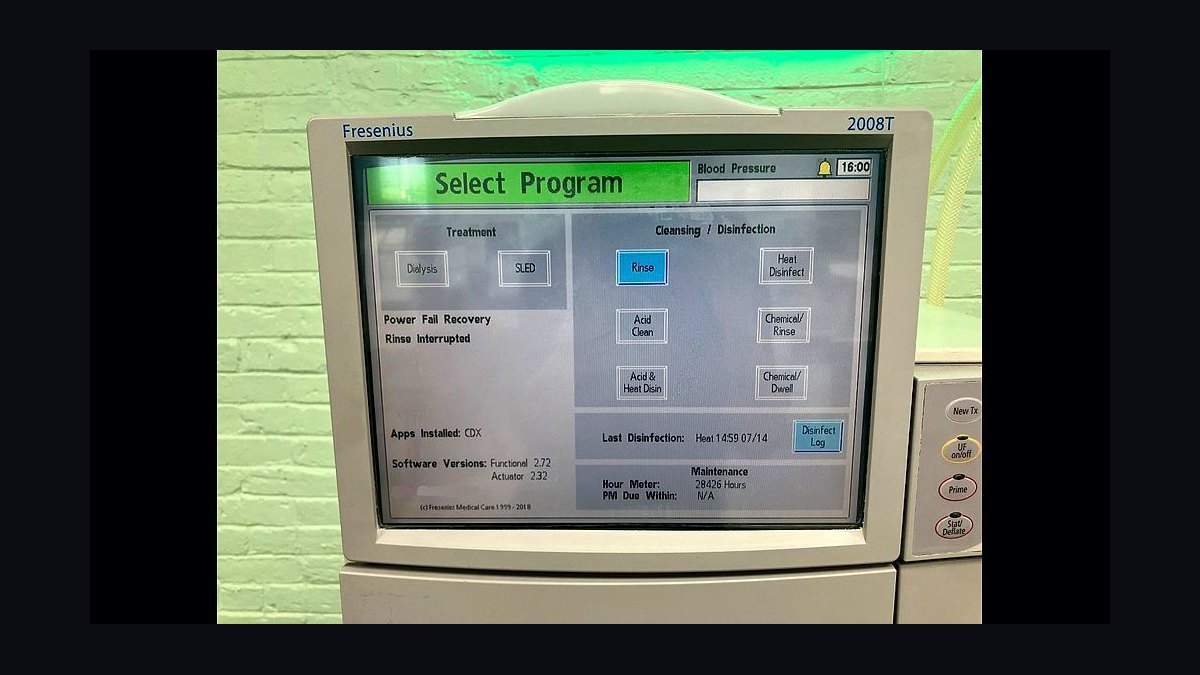
Fresenius 2008T machine integration ranks fourth because the dialysis machine is both clinical equipment and a primary data source. Streaming treatment data directly into the EHR removes hand-keying errors from the exact fields that drive Kt/V adequacy and QIP scoring. Budget a one-time interface charge of roughly $5,000–$25,000 per center for a real device feed.
This integration is for centers running Fresenius 2008T or 5008 fleets that want clean source data rather than reconstructed flowsheets. It trades away the simplicity of manual entry in exchange for materially cleaner adequacy numbers. Compared to the Baxter/Gambro integration below, it serves the Fresenius machine fleet that dominates many US in-center programs.
5Baxter Gambro Machine Integration
Baxter Gambro machine integration ranks fifth as the device-data feed for centers running Baxter/Gambro hemodialysis units rather than Fresenius hardware. It pushes treatment parameters into the dialysis EHR so pre/post weights, blood pressures, and treatment times land in the correct flowsheet fields automatically. Interface costs mirror the Fresenius feed at roughly $5,000–$25,000 one-time per center.
This is for facilities standardized on Baxter/Gambro machines that want the same clean-data benefit as Fresenius sites. It trades away nothing clinically but requires EHR vendor support for the Baxter interface. Compared to the Fresenius integration above, it is the equivalent feed for a different machine fleet, not a lesser option.
6Waystar Revenue Cycle
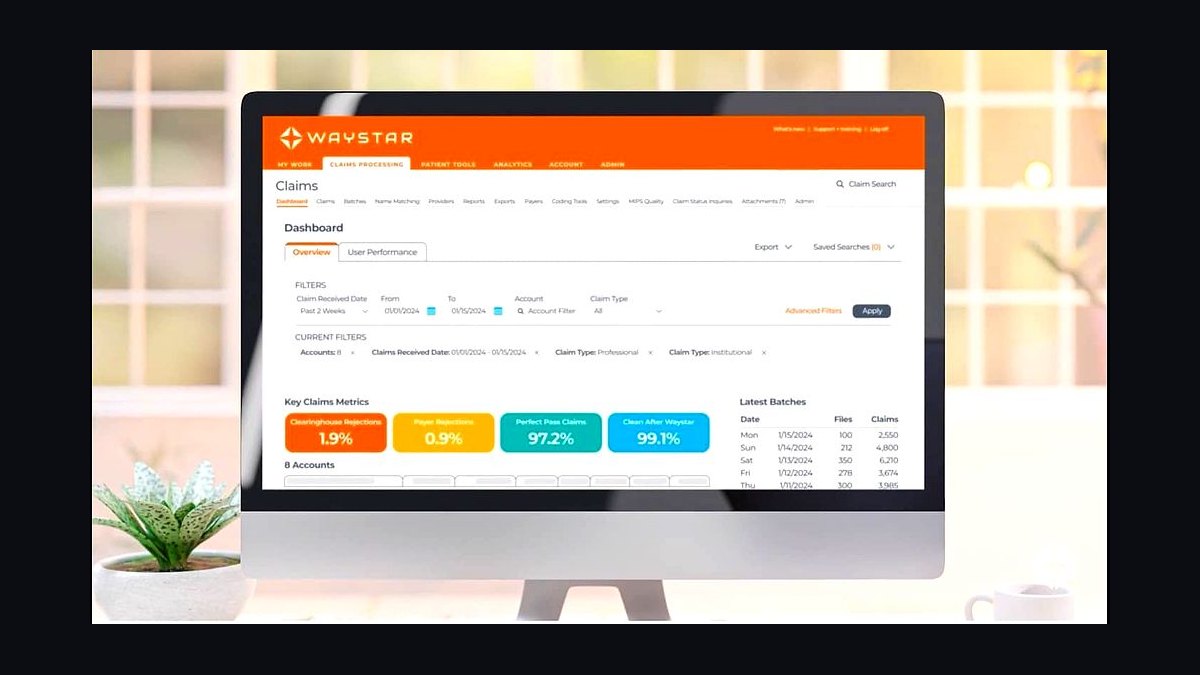
Waystar ranks sixth because dialysis billing runs on the Medicare ESRD bundled Prospective Payment System, requiring 72x bill types, case-mix adjusters, and ESA and lab bundling logic. Generic fee-for-service billing misbills nearly every dialysis claim. Waystar handles claims, eligibility, and remittance for roughly $300–$1,500/month as a clearinghouse.
Waystar is for independent and mid-size centers that want to keep billing in-house with dialysis-tuned logic. It trades away the hands-off simplicity of a full RCM partner, which typically costs 4–7% of net collections. Compared to Availity below, Waystar is the more commonly cited dialysis clearinghouse in this stack.
7Availity Clearinghouse
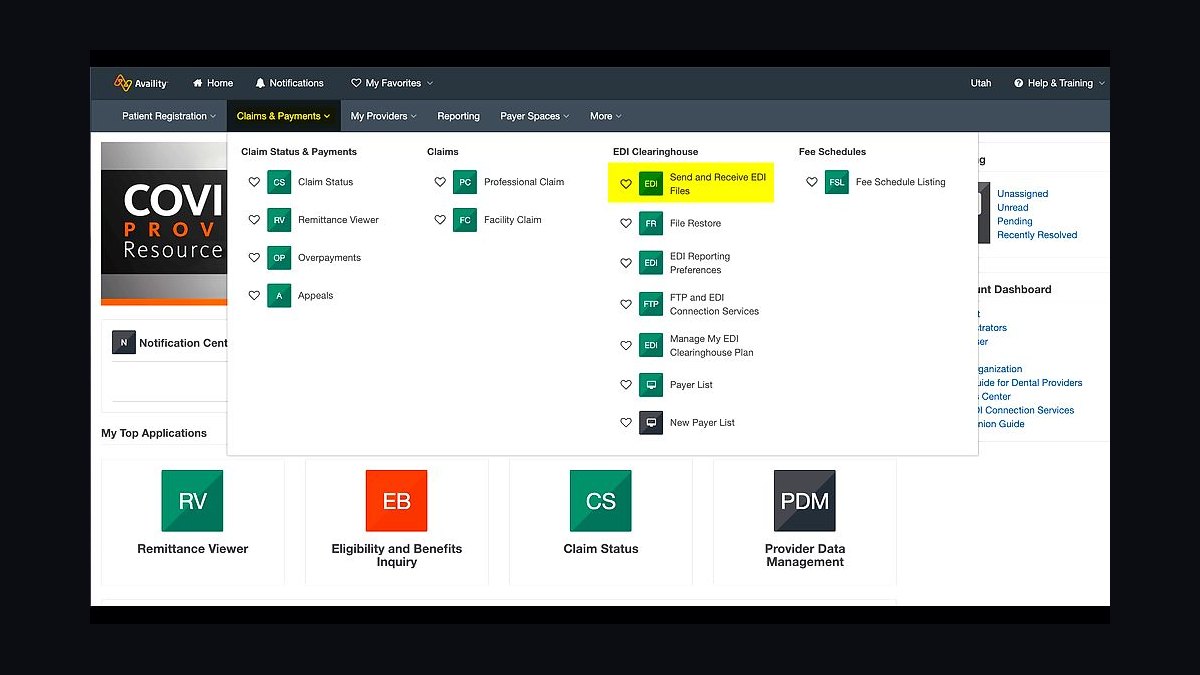
Availity ranks seventh as the alternate clearinghouse for dialysis claims, handling eligibility checks, claim submission, and remittance advice. Like Waystar, it must be configured for the bundled per-treatment PPS model rather than CPT line-item billing. Clearinghouse pricing generally runs $300–$1,500/month depending on claim volume and modules.
Availity fits centers already standardized on its payer connectivity or those wanting a second clearinghouse option. It trades away Waystar's dialysis-specific RCM service breadth in exchange for broad payer network reach. Compared to Waystar above, it is a comparable clearinghouse choice rather than a downgrade.
8Acumen Nephrology EHR
Acumen ranks eighth because the treating nephrologists practice in their own record, and keeping orders and care plans synchronized with the center EHR depends on that integration. Acumen is the dominant nephrology-specific physician platform, including Acumen Epic Connect for hospital-affiliated practices. Physician-side pricing typically runs $400–$700 per provider per month.
Acumen is for dialysis centers whose nephrologists want a specialty physician record rather than documenting in the center EHR. It trades away simplicity in exchange for care-plan synchronization across the physician-center boundary. Compared to the center EHR above it, Acumen is the physician-side complement, not a replacement.
9Sage Intacct Accounting
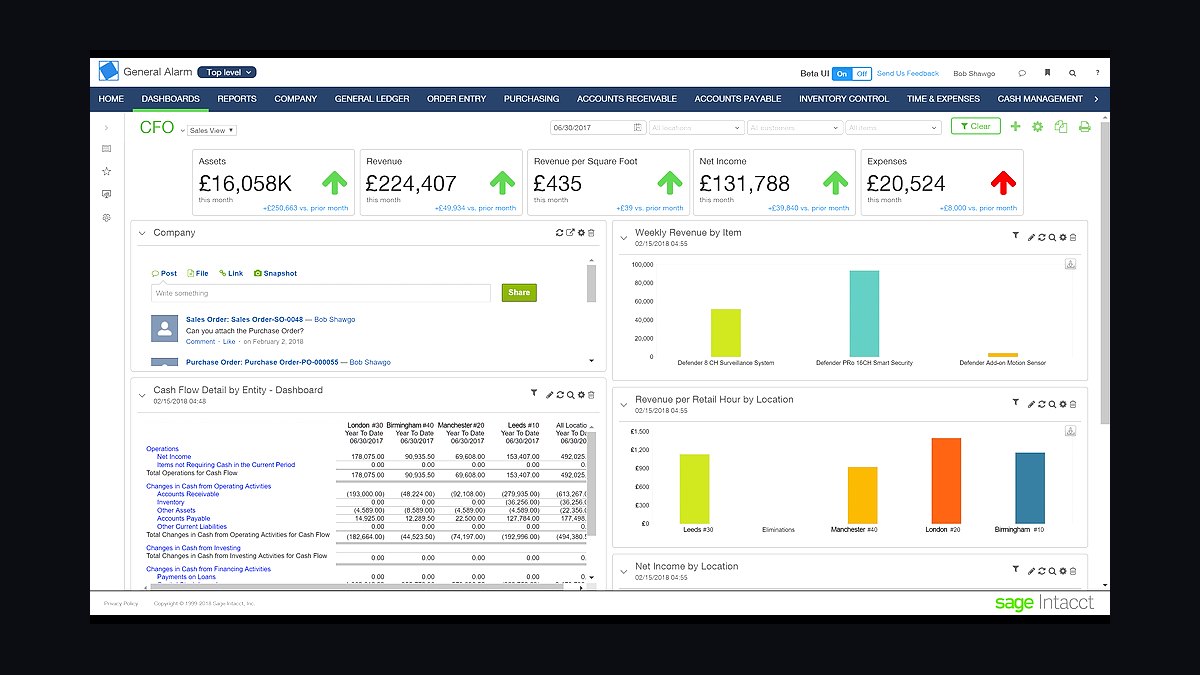
Sage Intacct ranks ninth as the accounting and ERP layer for mid-size dialysis organizations running multiple facilities with dimensional reporting needs. Financials sit outside the clinical record, and Intacct handles multi-entity consolidation, cost allocation, and reporting that QuickBooks cannot. Pricing starts around $400–$1,000/month depending on users and modules.
Sage Intacct is for dialysis organizations operating several centers that need facility-level financial visibility. It trades away QuickBooks' low cost and simplicity in exchange for multi-facility dimensional reporting. Compared to the Power BI layer below, Intacct handles transactional accounting while Power BI handles analytics.
10Power BI Dialysis Analytics
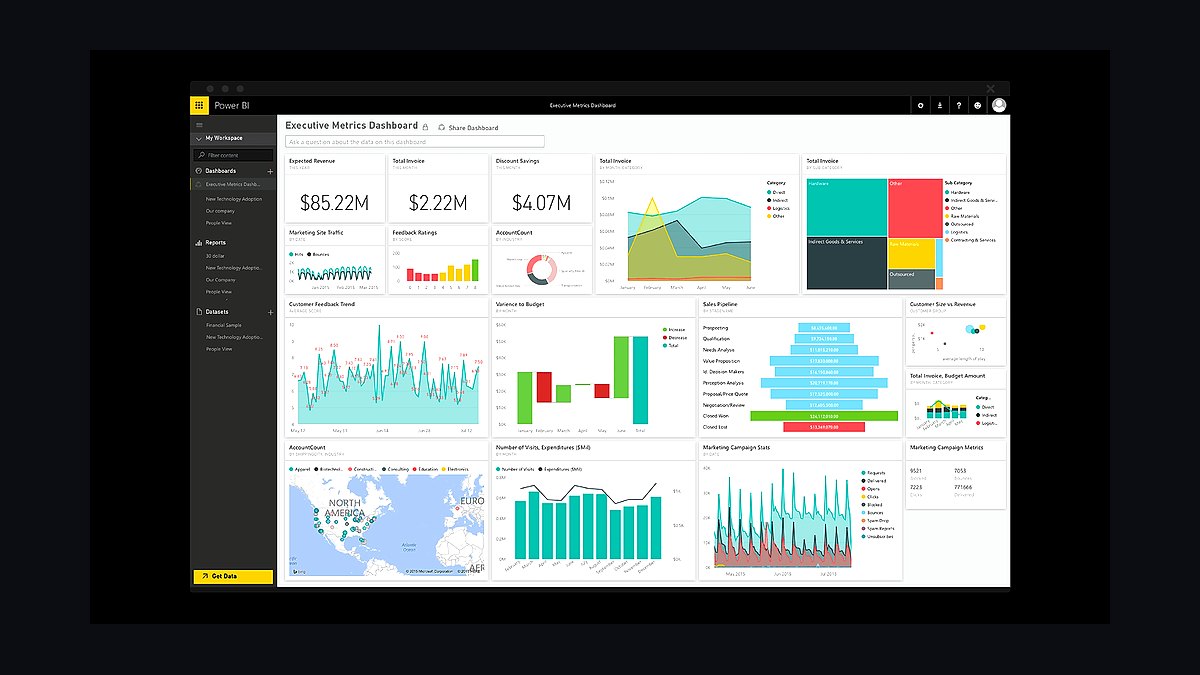
Power BI ranks tenth as the analytics layer that consolidates clinical, QIP, billing, and chair-utilization data into dashboards for mid-size and large dialysis operators. Power BI runs about $14 per user per month, with warehouse costs scaling by operator size. Independents typically rely on the EHR's native reports instead.
Power BI is for organizations with enough center volume to justify a shared data warehouse and cross-facility QIP and utilization reporting. It trades away the zero-additional-cost simplicity of native EHR reports in exchange for consolidated analytics. Compared to Sage Intacct above, Power BI is the reporting and visualization layer rather than the accounting system of record.
How we ranked these
We ranked each tool on five weighted criteria: dialysis-native clinical fit (30%), depth of CMS EQRS and ESRD QIP reporting built into the workflow (25%), ESRD bundled-PPS revenue cycle capability (20%), machine and biomed device-data integration (15%), and total cost of ownership for a 15–25 chair center (10%). Scores came from vendor documentation, CMS program requirements, KLAS and analyst retention data, and published pricing where available.
We deliberately ignored generic ambulatory EHR feature breadth, telehealth bells and whistles, and artificial-intelligence marketing claims, because none of those change whether a center gets paid or passes QIP. We also excluded enterprise-only captive platforms like DaVita Falcon and eCube Clinicals from the ranking itself, since they are not purchasable by independent operators and would distort a buyer-facing list.
What to look for
What actually matters is whether the clinical EHR models recurring thrice-weekly treatments, pushes clean data into EQRS automatically, and speaks the bundled per-treatment PPS claim logic. Confirm the machine interface exists for your Fresenius 2008T/5008 or Baxter/Gambro fleet before signing, and ask for a live EQRS submission demo, not a slide. Chair scheduling and ESA protocol dosing should be native, not bolted on.
The mistake most buyers make is choosing the EHR on price or interface polish, then discovering EQRS reporting is a manual export and billing assumes fee-for-service CPT lines. That combination leaks money on every claim and risks the 2% QIP payment cut. Pick the dialysis EHR first, verify the EQRS and PPS paths end to end, and only then add clearinghouse, accounting, and analytics layers around it.
Related questions
What is the single most important tool in a dialysis center tech stack?
The dialysis-specific clinical EHR is the spine. It must model recurring thrice-weekly treatments, capture per-treatment flowsheets and machine data, and generate CMS EQRS submissions natively. CWOW, MIRA, and dialysis HIM systems exist because generic ambulatory EHRs cannot handle a four-hour treatment repeating 156 times a year. Choose this first; everything else integrates around it.
Does a dialysis center really need a separate billing system from its EHR?
Often yes. ESRD bundled-PPS billing runs on 72x bill types, case-mix adjusters, and ESA/lab bundling that generic clearinghouses mishandle. Waystar and Availity handle the claim mechanics, while dialysis-tuned RCM bureaus take the whole function for 4–7% of net collections. Some EHRs include adequate native billing for a single independent center, so evaluate that module before adding cost.
How does CMS EQRS reporting actually work for a dialysis facility?
EQRS, which replaced CROWNWeb, is the federal pipeline where facilities submit clinical and quality data tied to ESRD QIP measures like Kt/V adequacy, catheter rates, and hypercalcemia. The best stacks generate submissions automatically from normal documentation and track measures on a live dashboard. Weak EQRS integration is a dealbreaker because poor scores cut Medicare payment up to 2%.
Can I run a dialysis center on QuickBooks and a generic EHR?
You can run the accounting on QuickBooks, but not the clinical record. A generic EHR has no concept of recurring treatment cycles, chair scheduling, machine data capture, or EQRS submission. Independents typically pair a dialysis HIM or MIRA EHR with Waystar for claims and QuickBooks for financials, keeping the whole stack under roughly $6,000 per month.
What does dialysis machine integration actually buy you?
Fresenius 2008T/5008 and Baxter/Gambro units can stream treatment data directly into the EHR instead of techs hand-keying flowsheets. That reduces transcription errors in the exact fields driving Kt/V adequacy and QIP scoring. Budget a one-time interface charge of $5,000–$25,000 per center. Hand-keying remains the biggest source of dirty adequacy data at independent facilities.
How much should a 20-chair independent dialysis center budget for software?
Roughly $2,000–$5,000 per month for the dialysis EHR, $300–$1,500 for a clearinghouse like Waystar, $90–$200 for QuickBooks, and modest EQRS or QIP analytics fees if not bundled. A lean single-center stack can run under $6,000 per month all-in. Device integration is a one-time cost, and outsourced RCM adds 4–7% of net collections.
Why do DaVita and Fresenius run proprietary systems instead of buying CWOW or MIRA?
At thousands of stations, building captive platforms like DaVita Falcon or Fresenius eCube Clinicals pays off through native EQRS submission, anemia protocol automation, and chair-utilization optimization tuned to their own operations. Fresenius also owns its machine fleet, so device data feeds directly into its record. Independents cannot replicate that scale and should not try; CWOW, MIRA, or a HIM system is the practical path.
What role does the nephrology practice EHR play in the center stack?
Treating nephrologists document in their own record, typically Acumen or Acumen Epic Connect, with CrescendoBio/Nephrologic as a lighter alternate and Epic at hospital-affiliated units. Integration between the center EHR and the physician record keeps care plans, orders, and anemia protocols in sync. Physician-side EHR pricing usually runs $400–$700 per provider per month.
FAQ
What is the best tech stack for a dialysis center in 2027?
A dialysis-native clinical EHR such as CWOW, MIRA, or a dialysis HIM system, wired into CMS EQRS for ESRD QIP reporting, with machine data capture from Fresenius 2008T/5008 or Baxter/Gambro units, an ESRD bundled-PPS revenue cycle on Waystar or Availity, recurring chair scheduling, and an ESA anemia protocol engine. Independents add QuickBooks; mid-size organizations add Acumen integration and Power BI analytics.
Why can't a dialysis center just use a normal clinic EHR?
Outpatient dialysis is recurring, not episodic. A patient comes three times a week for years, so the EHR must schedule recurring treatment cycles against fixed chairs, capture per-treatment flowsheets, and pull live machine readings. A standard ambulatory EHR built for 15-minute visits has no concept of a four-hour treatment repeating 156 times a year, and it will not produce clean EQRS submissions.
What is EQRS and why does it matter for dialysis software selection?
EQRS is the End-Stage Renal Disease Quality Reporting System that replaced CROWNWeb, and it is the mandatory CMS pipeline for clinical and quality data. ESRD QIP ties Medicare payment to measures like Kt/V adequacy, vascular access type, hypercalcemia, and hospitalization ratios. The EHR must generate audit-ready EQRS submissions as a byproduct of documentation, or the facility risks a payment penalty.
How much does a dialysis EHR cost per station?
Purpose-built dialysis platforms like CWOW and MIRA typically run $300–$700 per station per month depending on modules and patient volume. A single 20-chair independent center often lands near $2,000–$5,000 per month all-in. Lighter dialysis HIM systems cost less but may lack native EQRS interfacing or advanced anemia protocol automation, so compare total cost rather than license fee alone.
Do dialysis centers need device integration from Fresenius or Baxter machines?
It is strongly recommended. Fresenius 2008T/5008 and Baxter/Gambro machines can feed treatment data straight into the EHR, eliminating hand-keyed flowsheets that introduce errors into adequacy and QIP fields. Expect a one-time interface charge of $5,000–$25,000 per center. Facilities that still hand-key should audit entry weekly, because dirty source data produces dirty EQRS submissions.
What revenue cycle tools does an ESRD bundled-PPS center need?
The clearinghouse and RCM logic must understand 72x bill types, case-mix adjusters, and ESA and lab bundling under the Medicare ESRD Prospective Payment System. Waystar and Availity are the common clearinghouse choices at roughly $300–$1,500 per month. Dialysis-specific RCM bureaus take the whole function for 4–7% of net collections, which often beats in-house billing for smaller operators.
How does chair scheduling differ from normal appointment scheduling?
A 20-chair center running three shifts a day, six days a week, against a fixed patient panel is a constrained-resource problem. Patients need recurring slots three times weekly, and chair utilization is the core operational KPI. This lives inside the dialysis EHR for most centers, with large operators building dedicated capacity tooling. Independents pay no meaningful incremental cost beyond the EHR.
What is an ESA protocol engine and why does it matter?
ESRD patients depend on erythropoiesis-stimulating agents and iron protocols, and anemia management is a scored QIP concern. An algorithm-driven protocol engine inside the dialysis EHR handles ESA dosing and pulls hemoglobin, ferritin, transferrin saturation, calcium, phosphorus, and PTH labs directly into the record. Usually bundled in the EHR; standalone anemia modules run $100–$400 per month.
Should a dialysis center outsource billing or keep it in-house?
Independents often start with the EHR's native billing plus Waystar and graduate to an outsourced RCM partner as volume grows. Outsourced dialysis RCM typically costs 4–7% of net collections but brings bundled-PPS expertise and denial management. In-house works when you have a biller who already knows 72x claims and case-mix adjusters. The wrong choice leaks money on every claim.
What analytics stack makes sense for a multi-site dialysis organization?
Independents live in the EHR's built-in reports. Mid-size and large operators consolidate clinical, QIP, billing, and chair-utilization data into a warehouse and report through Power BI at about $14 per user per month, with Tableau as an alternate. The warehouse cost scales with operator size. The payoff is a live QIP dashboard and per-facility margin visibility instead of year-end scorecards.
Sources
- https://www.cms.gov/medicare/quality/end-stage-renal-disease-esrd-quality-incentive-program
- https://www.cms.gov/medicare/quality/end-stage-renal-disease-esrd-quality-reporting-eqrs
- https://www.medicare.gov/basics/costs/help/dialysis-services-supplies
- https://www.waystar.com/solutions/
- https://www.availity.com/
- https://www.klassresearch.com/
- https://www.gartner.com/en/documents/healthcare-software-magic-quadrant
- https://www.idc.com/getdoc.jsp?containerId=USHealthcareITBuyersGuide
- https://www.freseniusmedicalcare.com/en/home/
- https://www.davita.com/about/
Related on PULSE
This page will be disappearing soon. Save it to your device for $1 — or read it free while it is here.
@Kory-White- · if Venmo asks, the last 4 of my number are 2012
This page is gone.
This one is off the shelf now. $1 keeps it on your phone for good — the whole page, pictures and diagrams included.
 pulse-tech-stacksTop 10 Best Tech Stack Tools for Private Ambulance and EMS Companies in 2027
 pulse-tech-stacksTop 10 Best Tech Stack Tools for B2B SaaS Companies in 2027
 pulse-tech-stacksTop 10 Best Tech Stack Tools for Pressure Washing Companies in 2027
 pulse-tech-stacksTop 10 Best Tech Stack Tools for Tire Shops in 2027
 pulse-tech-stacksTop 10 Best Tech Stack Tools for Plastics and Injection Molding Manufacturers in 2027
 pulse-tech-stacksTop 10 Best Tech Stack Tools for Fine-Tuning Platform Companies in 2027
 pulse-tech-stacksTop 10 Best Tech Stack Tools for Mobile Threat Defense (MTD) Vendors in 2027
 pulse-tech-stacksTop 10 Best Tech Stack Tools for Public Relations Agencies in 2027
 pulse-tech-stacksTop 10 Best Tech Stack Tools for Bars and Pubs in 2027
 pulse-tech-stacksTop 10 Best Tech Stack Tools for MSP and IT Services Companies in 2027