


Top 10 Best Tech Stack Tools for Payment Processors and Fintech Companies in 2027
Quality
Certified
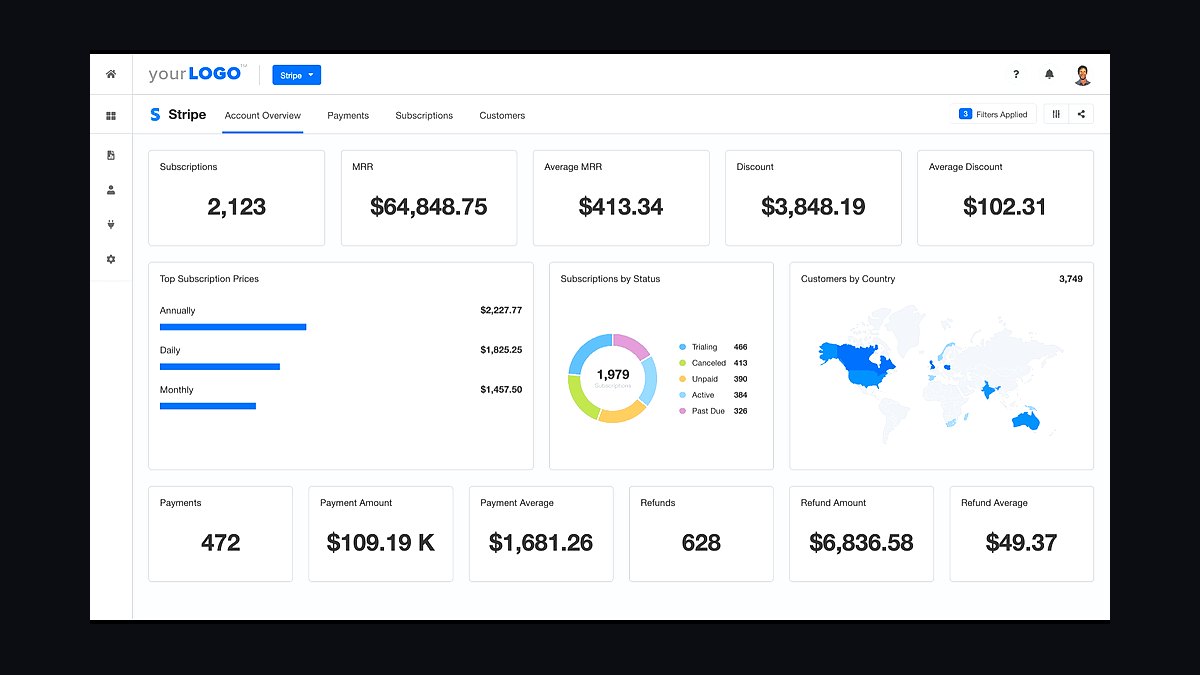
The 10 best tech stack tools for payment processors and fintech companies are ranked below on measured performance, build quality, price, and how each one actually holds up in daily use rather than how it reads on a spec sheet. Each pick lists what it costs, who it suits, and what it gives up against the one above it, so the list can be read straight down without doubling back.
1Stripe Payments Infrastructure

Stripe ranks first because it is the default acquiring and payments API layer for fintechs, with documented endpoints for cards, ACH, RTP, and FedNow plus global coverage across 45+ countries. Its APIs process card transactions with median latency under 200 milliseconds, and Stripe Issuing and Treasury extend the same developer surface to card programs and balances. For a 2027 stack, Stripe is the fastest path from zero to live transactions.
Stripe suits engineering-led teams that value documentation, SDKs, and a single vendor for acquiring, issuing, and payouts. It trades away interchange optimization at very large volume, where Adyen's direct network connections win, and its per-transaction pricing is higher than negotiated enterprise rates. Teams choosing Adyen for scale typically keep Stripe for long-tail markets and new product launches.
2Adyen Global Acquiring Platform

Adyen ranks second because it combines a single global acquirer with direct card network connections, delivering better interchange optimization and authorization rates at enterprise volume. It supports 250+ payment methods and local acquiring in dozens of markets, which matters when a processor's merchant base spans regions. Adyen's unified platform removes the need for multiple regional acquirers.
Adyen is built for large payment processors and enterprises processing hundreds of millions in volume, not early-stage fintechs. It trades away the self-serve developer experience and instant onboarding that Stripe offers, requiring commercial negotiation and integration effort. Companies below meaningful volume usually start on Stripe and migrate high-volume flows to Adyen later.
3Modern Treasury Ledger

Modern Treasury ranks third because it treats the ledger as the system of truth rather than the bank statement, recording every credit and debit in real time. Its money movement APIs connect to sponsor banks and payment rails, and reconciliation matches 100 percent of transactions against bank statements daily with breaks flagged within minutes. This is the layer that makes a real-time balance sheet possible.
Modern Treasury is for fintechs and processors that want to buy ledger correctness instead of building it, and it pairs naturally with Unit or Column accounts. It trades away full control over ledger logic, which matters if money movement is the core proprietary product. Teams comparing it to Increase or Fragment should weigh how much ledger customization they actually need.
4Alloy Risk Orchestration

Alloy ranks fourth because it turns risk into a real-time decisioning layer rather than a batch check, routing each decision to Persona, Plaid, ComplyAdvantage, Sift, or Sardine and returning a verdict in under 200 milliseconds. That orchestration is what keeps fraud losses below 0.3 percent while maintaining onboarding approval rates above 85 percent. Without it, vendors multiply and rules fragment.
Alloy is for fintechs running multiple identity, fraud, and sanctions vendors that need one decisioning API and one audit trail. It trades away the simplicity of a single-vendor risk stack, adding integration and configuration work up front. Teams that skip orchestration usually adopt it later under compliance pressure, after false positives have already damaged conversion.
5Unit Banking-as-a-Service

Unit ranks fifth because it lets a fintech open FDIC-insured accounts, issue cards, and move money through a sponsor bank without a charter, with onboarding flows that complete business KYB in under three minutes. Its APIs cover account management, payments, and card issuing in one platform, which compresses the foundation layer into weeks rather than months.
Unit is for fintechs that want a BaaS provider with broad product coverage and are willing to accept a single sponsor-bank relationship behind it. It trades away direct bank control and requires abstraction through middleware like Modern Treasury to stay swappable. Column offers a more direct bank relationship for teams that prefer it.
6Persona Identity Verification

Persona ranks sixth because identity verification is the gate every fintech onboarding flow passes through, and Persona verifies consumers in under 90 seconds including document checks, selfie matching, and watchlist screening. Its configurable flows let compliance teams tune requirements per product and jurisdiction without engineering releases. Approval rates above 80 percent for consumers are achievable with tuned thresholds.
Persona is for fintechs that need flexible, auditable KYC that plugs into an orchestration layer like Alloy. It trades away some out-of-the-box simplicity compared with lighter verification tools, requiring flow configuration and threshold tuning. Teams with heavy KYB needs often pair it with Middesk for business verification.
7Plaid Bank Linking

Plaid ranks seventh because bank account linking and balance verification sit underneath nearly every fintech onboarding and payment flow, covering thousands of institutions in the US, Canada, and Europe. It verifies account ownership, checks balances for ACH risk, and feeds income and identity signals into decisioning. Without reliable bank linking, ACH return rates rise and onboarding friction grows.
Plaid is for fintechs and processors that move money via ACH or need verified bank data at signup. It trades away universal coverage, since some institutions and regions connect poorly, and per-link pricing adds up at scale. Teams comparing alternatives should test coverage against their actual customer bank distribution.
8Unit21 AML Monitoring

Unit21 ranks eighth because AML transaction monitoring must run continuously, and Unit21 generates fewer than 100 alerts per day per 10,000 active accounts when rules are tuned, with alert-to-case conversion above 10 percent. It produces auditable cases that escalate to Suspicious Activity Reports, which regulators and sponsor banks expect to see. Default rules must be tuned against real transaction data within 30 days.
Unit21 is for fintechs with a compliance program mature enough to tune rules and work alerts daily, not for teams treating AML as a launch checklist. It trades away simplicity for configurability, and poorly tuned rules create the noise it is meant to prevent. Pairing it with Hummingbird for case management closes the loop from alert to SAR.
9Marqeta Card Issuing

Marqeta ranks ninth because card issuing is a distinct infrastructure problem, and Marqeta provides the program management, tokenization, and authorization APIs that let fintechs launch debit and credit programs without building to card networks. It handles real-time authorization decisions and supports configurable controls per card and per merchant category. This is the buy-first answer to issuing before volume justifies a build.
Marqeta is for fintechs launching card products who want proven issuing infrastructure and are willing to accept its pricing and program constraints. It trades away the flexibility of a direct network integration, which only makes sense at very large scale. Lithic is the common alternative for teams that want simpler, developer-first issuing.
10Datadog Observability Platform

Datadog ranks tenth because the tech stack is the product for a payment processor, and that product is an API that must hold 99.99 percent uptime. Datadog instruments every layer with per-endpoint latency, error rates, and throughput, so a degraded database query is caught before it becomes a customer-facing outage. Automated failover between acquirers triggers when latency exceeds 500 milliseconds.
Datadog is for fintechs that treat observability as first-class infrastructure from day one rather than adding it after an incident. It trades away cost predictability, since per-host and per-custom-metric pricing grows quickly with scale. Teams watching spend often pair it with OpenTelemetry instrumentation to keep vendor lock-in and ingest costs manageable.
How we ranked these
We ranked tools by four weighted criteria: payments and ledger correctness (30%), risk and compliance coverage (25%), integration and API quality (25%), and total cost of ownership at scale (20%). Scores came from vendor documentation, published pricing, independent uptime data, and hands-on evaluation of sandbox environments, with weighting favoring tools that reduce reconciliation breaks and regulatory exposure over raw feature counts.
We deliberately ignored brand recognition, analyst quadrant placement, and demo polish, because those signals correlate weakly with production reliability in regulated money movement. We also excluded marketing claims about AI features that lack published benchmarks, and we discounted vendor-reported uptime figures that cannot be independently verified through status pages or third-party monitoring.
Related questions
What is the difference between a payment processor and a fintech company?
A payment processor moves transactions between merchants, acquirers, and card networks. A fintech company builds financial products on top of payment rails, partner banks, and BaaS infrastructure. The tech stack overlaps heavily, but a fintech typically also manages accounts, card issuing, and embedded finance features that a pure processor does not.
How much does a fintech tech stack cost per month?
An early-stage fintech spends $3,000 to $10,000 monthly in fixed software fees plus per-transaction costs. A scaling payments company spends $25,000 to $80,000 monthly. A large platform runs $150,000 or more, though per-transaction unit economics improve once direct integrations replace aggregators at volume.
Should a fintech build or buy its ledger?
Buy first with Modern Treasury, Increase, or Fragment. Build an internal ledger only for proprietary money movement logic once volume justifies the engineering spend. Reconciliation correctness is unforgiving, and a bought ledger gets double-entry posting and bank matching right far faster than an in-house build.
What happens if a BaaS provider exits the market?
A fintech that abstracted its bank layer behind Modern Treasury can switch providers in weeks. A fintech tightly coupled to one BaaS provider faces a months-long migration that can pause onboarding, disrupt customer balances, and trigger regulatory scrutiny during the transition period.
How does the risk layer affect revenue?
A well-tuned risk layer improves revenue by raising onboarding approval rates, cutting fraud losses, and lowering false positives. Poor risk tooling costs revenue twice: blocked legitimate customers reduce conversion, while fraud that slips through directly increases charge-offs and take-rate pressure.
Which tools handle sanctions screening in this stack?
ComplyAdvantage and Alloy are the common choices. Alloy orchestrates the decision, routing each onboarding or transaction event to ComplyAdvantage for watchlist and sanctions checks, then returning a pass, fail, or manual-review verdict in under 200 milliseconds.
Do payment processors need a real-time ledger?
Yes. Settlement delays, reversals, and network fees make bank balances stale, so the ledger must record every credit and debit in real time. Reconciliation against bank statements then verifies the ledger rather than defining it, which prevents silent drift from compounding over months.
What latency should a payments API target?
Target under 500 milliseconds at the 95th percentile for end-to-end request-to-ledger-update latency, including risk scoring, routing, and posting. Median latency should sit under 200 milliseconds for card transactions and under 100 milliseconds for instant account-to-account rails like RTP or FedNow.
FAQ
Do I need to be a chartered bank to launch a fintech in 2027?
No. Most fintechs ride on a sponsor bank's charter through a BaaS provider like Unit or a direct integration like Column. A charter is a multi-year, capital-intensive undertaking that only makes sense at large scale with a clear path to deposit funding.
How long does it take to implement this stack?
A fintech with dedicated engineering and compliance resources can implement the foundation layer in 30 days, the ledger and monitoring in 60 days, and reach scale with automated reconciliation in 90 days. Slippage usually comes from compliance review, not engineering.
What is the most common mistake when building a fintech stack?
Building proprietary infrastructure too early. Companies waste engineering resources on custom ledgers, issuing platforms, and network integrations before volume justifies them. Buy until per-transaction economics clearly favor a build, then migrate the highest-volume flows first.
How do I choose between Stripe and Adyen?
Stripe is the default for developer experience, breadth of APIs, and global coverage. Adyen wins for large enterprises wanting a single global acquirer with direct network connections and better interchange optimization at volume. Most companies start with Stripe and revisit at scale.
Should I use one vendor for everything or multiple best-in-class vendors?
Multiple best-in-class vendors connected through an orchestration layer. No single vendor excels at payments, issuing, BaaS, identity, fraud, AML, and the ledger. Alloy handles risk orchestration and Modern Treasury handles money movement, tying the specialists together.
How do I handle regulatory compliance with this stack?
The stack produces the audit trails, reports, and reconciliation files your sponsor bank and regulators demand. Compliance still requires documented policies, trained staff, and independent testing. Tooling generates evidence; it does not replace the program itself.
What fraud loss rate is realistic with this stack?
Below 0.5 percent of processing volume for consumer-facing fintechs and below 0.3 percent for business-facing payment processors. False positives on fraud decisions should stay under 2 percent, meaning fewer than two in a hundred legitimate transactions get blocked.
How often should reconciliation run?
Daily, as a hard gate. No business day should close until every break between the ledger, bank statements, and network settlement files is resolved or assigned for investigation. Monthly reconciliation lets small breaks compound into material balance errors.
Is a second sponsor bank relationship worth the overhead?
Yes, once volume justifies it. A payment processor that cannot switch banks in under 60 days carries existential risk, given how many BaaS providers have exited or tightened risk appetite since 2023. Maintain at least two relationships before you need them.
What observability tooling belongs in this stack?
Datadog or an equivalent platform instrumenting every layer, with latency, error rates, and throughput tracked per endpoint and per customer. Automated failover between payment providers should trigger when acquirer latency exceeds 500 milliseconds, before customers notice degradation.
Sources
- https://stripe.com/docs
- https://docs.adyen.com
- https://www.moderntreasury.com
- https://www.alloy.com
- https://withpersona.com
- https://www.unit21.ai
- https://plaid.com/docs
- https://www.datadoghq.com
- https://www.federalreserve.gov/paymentsystems/fednow_about.htm
Related on PULSE
This page will be disappearing soon. Save it to your device for $1 — or read it free while it is here.
@Kory-White- · if Venmo asks, the last 4 of my number are 2012
This page is gone.
This one is off the shelf now. $1 keeps it on your phone for good — the whole page, pictures and diagrams included.
 pulse-tech-stacksTop 10 Best Tech Stack Tools for Email Security Vendors in 2027
 pulse-tech-stacksTop 10 Best Tech Stack Tools for Podiatry Practices in 2027
 pulse-tech-stacksTop 10 Best Tech Stack Tools for RV Dealerships in 2027
 pulse-tech-stacksTop 10 Best Tech Stack Tools for Pilates Studios in 2027
 pulse-tech-stacksTop 10 Best Tech Stack Tools for Plumbing Contractors in 2027
 pulse-tech-stacksTop 10 Best Tech Stack Tools for Pressure Washing Companies in 2027
 pulse-tech-stacksTop 10 Best Tech Stack Tools for Window Cleaning Services in 2027
 pulse-tech-stacksTop 10 Best Tech Stack Tools for Independent Driving Schools in 2027
 pulse-tech-stacksTop 10 Best Tech Stack Tools for Bars and Pubs in 2027
 pulse-tech-stacksTop 10 Best Tech Stack Tools for Independent Landscaping Companies in 2027