


Top 10 Best Tech Stack Tools for Venture Capital Firms in 2027
Quality
Certified
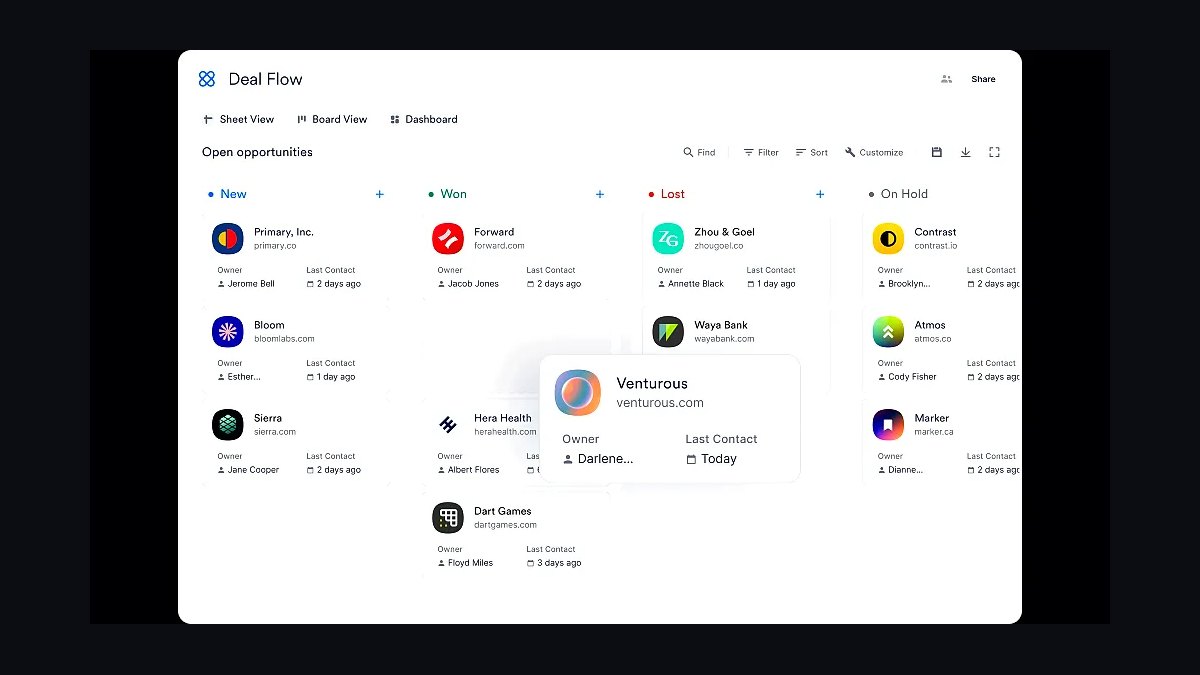
The 10 best tech stack tools for venture capital firms are ranked below on measured performance, build quality, price, and how each one actually holds up in daily use rather than how it reads on a spec sheet. Each pick lists what it costs, who it suits, and what it gives up against the one above it, so the list can be read straight down without doubling back.
1Affinity CRM
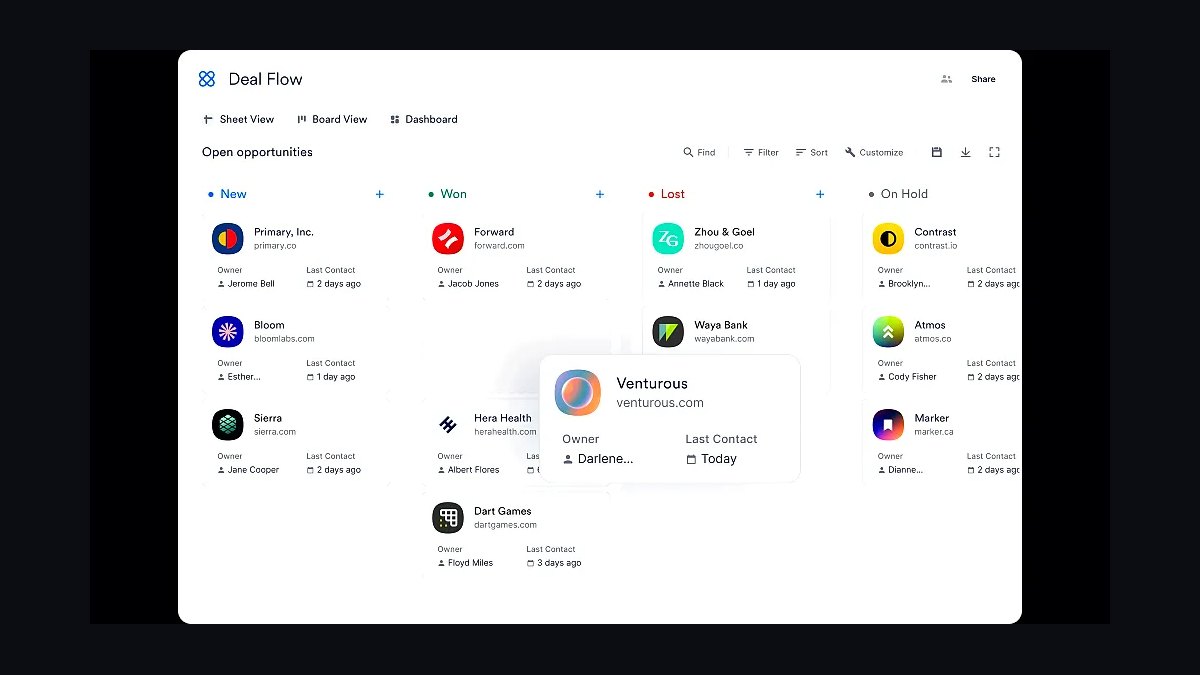
Affinity ranks first because venture returns are generated by sourcing, and Affinity auto-captures partner email and calendar activity into a searchable relationship graph no competitor matches. It is custom-quoted, commonly landing near $2,000 to $3,000 per user per year, so a six-person investment team budgets roughly $12,000 to $18,000 annually. Manual-logging CRMs fail because venture partners never hand-enter activity.
It suits institutional seed and multi-stage firms screening thousands of companies to write twenty checks, where the aggregate network graph is the asset. It trades away cheapness and simplicity: Attio costs tens of dollars per seat monthly and is far easier to deploy. Choose Affinity only when sourcing volume genuinely exceeds what a partner can hold in memory.
2Carta Fund Administration
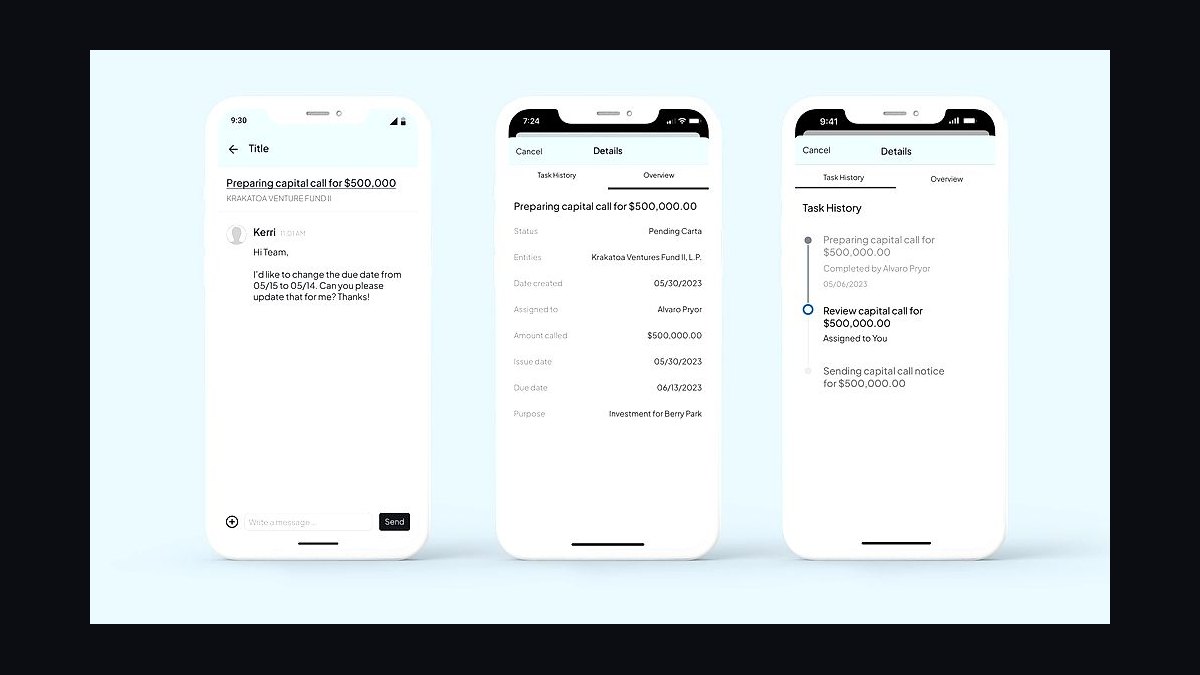
Carta ranks second because it sits on both sides of the cap table, letting portfolio founders manage equity while the fund administers holdings, capital calls, and waterfalls on one shared spine. Fund administration is priced per fund and scales with assets and LP count, commonly $20,000 to $50,000 or more annually. That reconciliation savings is why it became the asset-class default.
It is built for funds with institutional LPs and multiple vehicles, where audit scrutiny and LP reporting demand real bookkeeping. It trades away affordability for sub-$25M vehicles, where AngelList's bundled fee is dramatically cheaper. Against Affinity above it, Carta protects value rather than creating it, so sourcing still needs a separate front-office layer.
3PitchBook
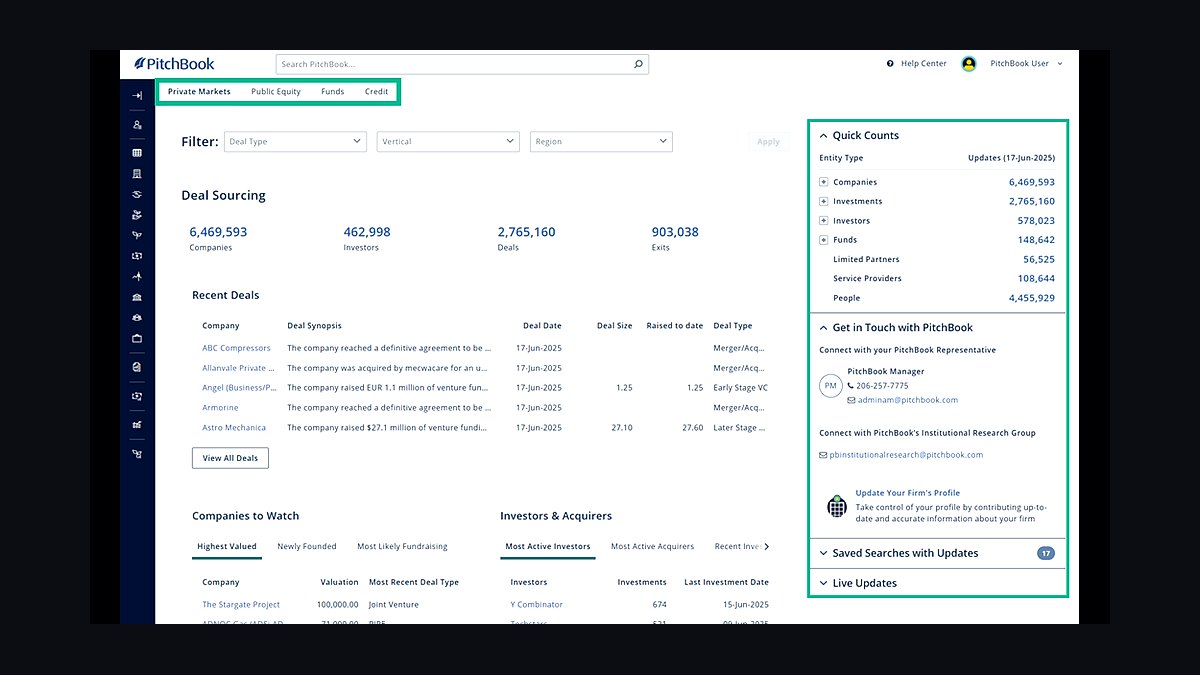
PitchBook ranks third because it supplies the private-market depth Crunchbase cannot: valuation detail, cap-table histories, financing comparables, and fund benchmark quartiles. Enterprise seats for a small investment team commonly run $20,000 to $30,000 per year, a meaningful line that later-stage pricing work and LP benchmark reporting justify. Pre-seed funds often skip it entirely.
It is for firms doing later-stage pricing work or reporting quartile benchmarks to limited partners, not for discovery-stage lookups. It trades away cheapness against Crunchbase, which covers basic company discovery at roughly $100 to $200 per user monthly. Below Carta in cost but narrower in scope, PitchBook feeds sourcing rather than administering the fund.
4Juniper Square
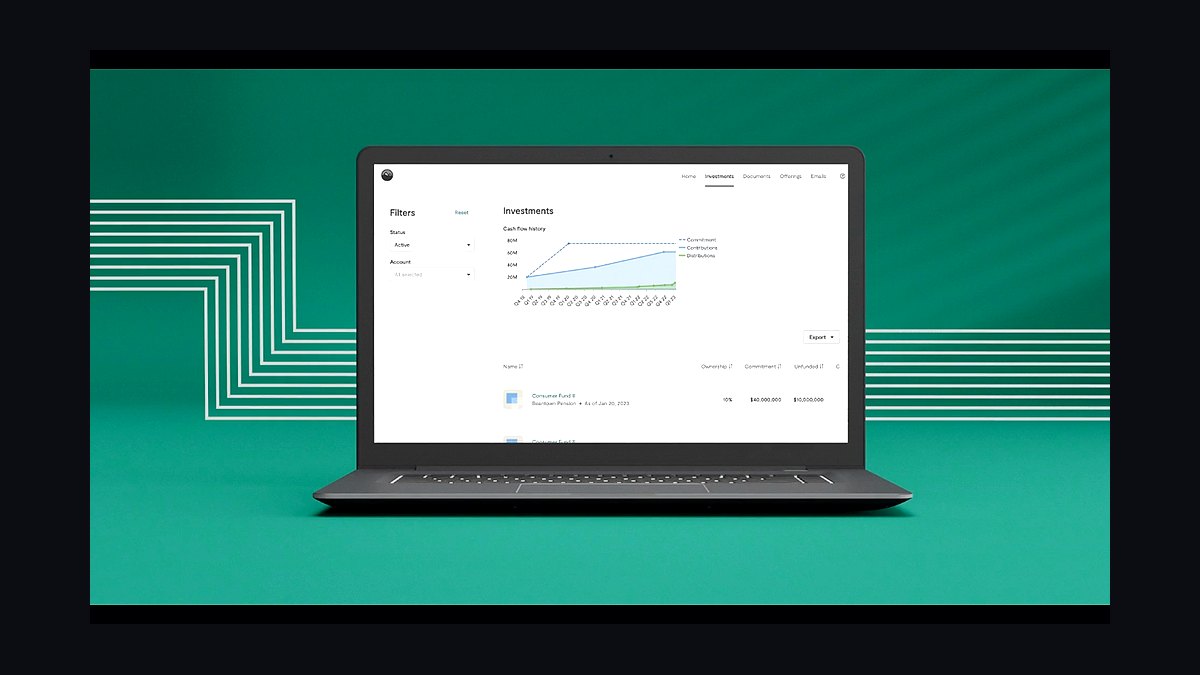
Juniper Square ranks fourth because institutional LP reporting is the hardest recurring operational task in venture, covering capital-call notices, distribution statements, K-1 delivery, and quarterly reports. It is custom-priced and commonly runs $15,000 to $40,000 per year. Pension funds and endowments effectively force this tier of tooling through operational-diligence questionnaires.
It is for funds with institutional LPs and multiple active vehicles, not for emerging managers issuing quarterly PDFs. It trades away affordability and simplicity: Visible can serve as a lightweight LP update channel for a first fund. Sitting below PitchBook, Juniper Square protects LP trust rather than generating deal flow.
5Standard Metrics
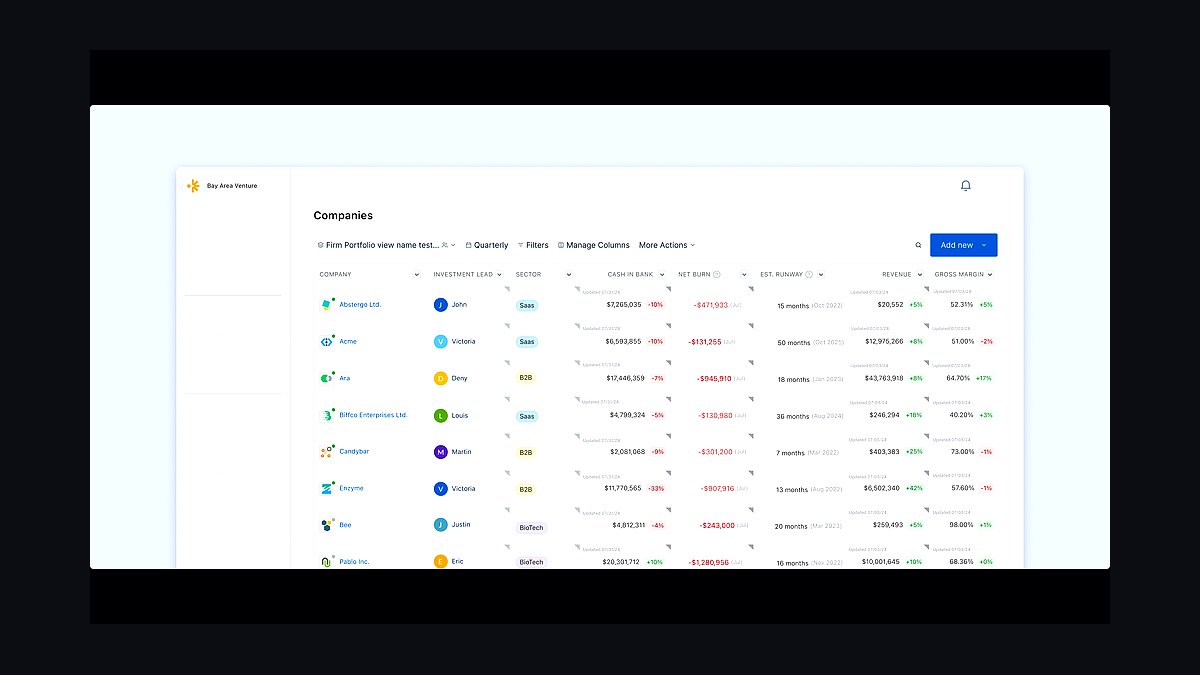
Standard Metrics ranks fifth because finance-grade structured KPI collection is what feeds fund models and LP reporting, and it lands roughly $10,000 to $30,000 per year depending on portfolio size. It optimizes for data rigor, pulling consistent metrics from portfolio companies so reserves modeling and quarterly reporting rest on numbers the partnership can audit.
It is for later-stage portfolios with real CFOs on the other end, where structured collection is achievable. It trades away founder response rate, which is the binding constraint across sixty pre-seed companies with no finance function. Directly above it, Juniper Square handles LP-facing reporting; Standard Metrics feeds the portfolio data that reporting depends on.
6Tactyc
Tactyc ranks sixth because fund construction and reserves modeling need to stay auditable across the partnership, and it typically runs $10,000 to $20,000 per year. It handles entry-ownership targets, follow-on reserve allocation, graduation-rate assumptions, and forecasted TVPI, DPI, and IRR under power-law scenarios. A partner-built spreadsheet works until that partner leaves.
It is for institutional funds whose reserves math multiple partners must trust and inherit. It trades away nothing financially meaningful, but it adds a line item a solo GP can defer. Below Standard Metrics, Tactyc consumes portfolio data rather than collecting it, so the two layers complement rather than overlap.
7Visible.vc
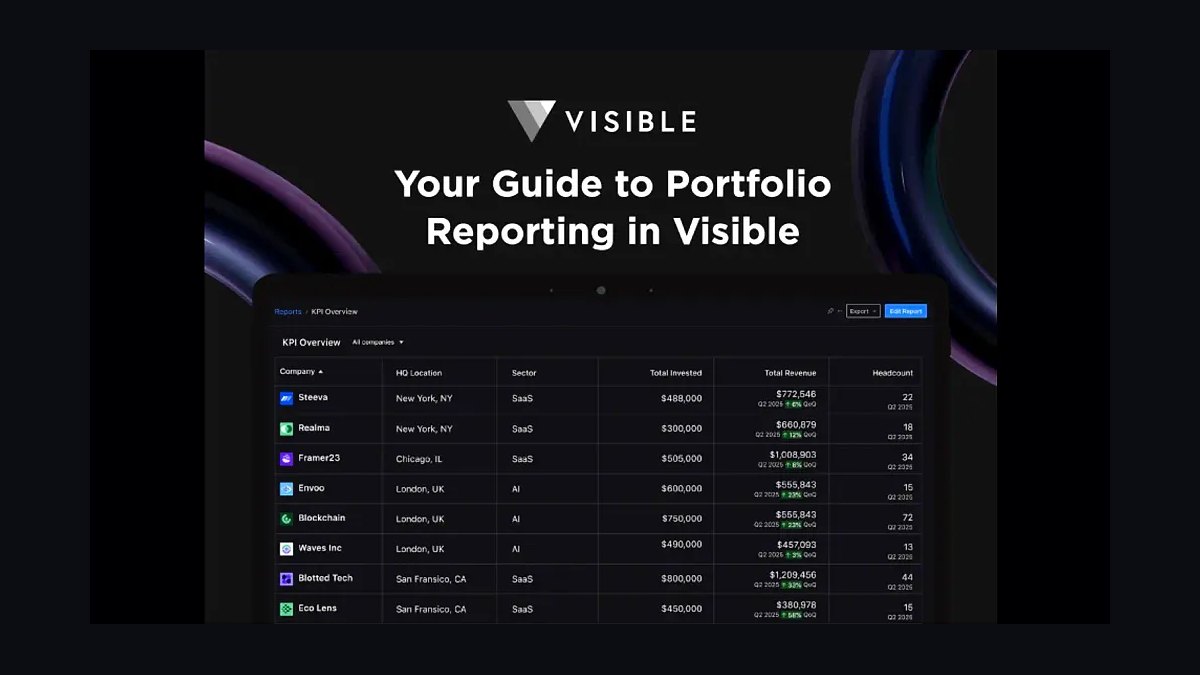
Visible ranks seventh because founder response rate beats data completeness, and it lands roughly $10,000 to $30,000 per year while doubling as a lightweight LP update channel. It optimizes for founder-friendly requests and clean dashboards, which matters when the portfolio is sixty pre-seed companies with no finance function and short templates drive 90 percent response.
It is for emerging managers and pre-seed funds where gentle request flows outperform structured rigor. It trades away finance-grade structured collection, which Standard Metrics handles better. Directly above Tactyc in the stack, Visible supplies the raw portfolio updates that fund-construction modeling consumes.
8AngelList
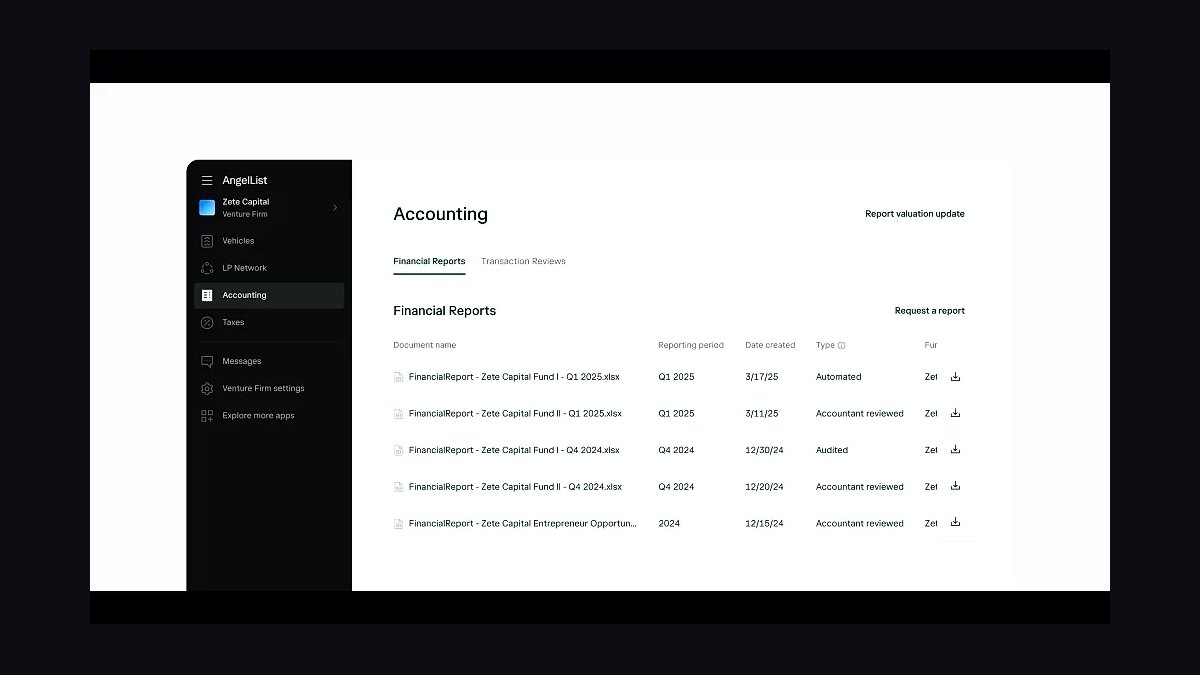
AngelList ranks eighth because it bundles the fund vehicle, capital calls, LP onboarding, K-1 distribution, and SPV formation into one flat or AUM-linked fee that is dramatically cheaper for a $10M vehicle. It is the canonical outsourced architecture for rolling funds and syndicates, absorbing back-office cost into a platform line item rather than headcount.
It is for solo GPs and emerging managers running $10M to $25M debut funds who want administration rented, not built. It trades away control: you inherit the platform's reporting formats, LP portal look, and fee schedule. Above it, Visible handles updates; AngelList handles the vehicle itself.
9Attio
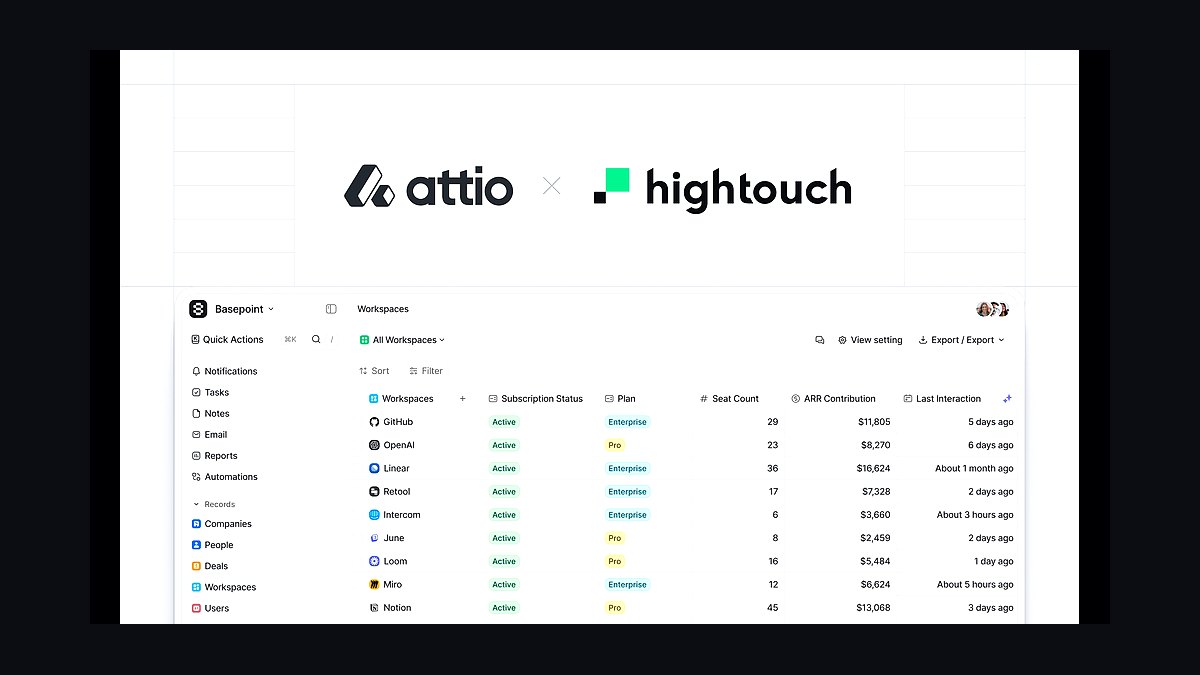
Attio ranks ninth because it publishes per-seat pricing in the tens of dollars per user per month, making it the default CRM for emerging managers who cannot justify Affinity's $2,000 to $3,000 per user annually. It covers pipeline and relationship tracking adequately for a firm writing eight checks a year and screening under 300 companies.
It is for solo GPs and small funds where fixed cost must stay under a single management fee. It trades away auto-capture and network-graph depth, so partners log activity manually and the aggregate graph never forms. Below AngelList, Attio is the front-office half of a deliberately cheap stack.
10DocSend
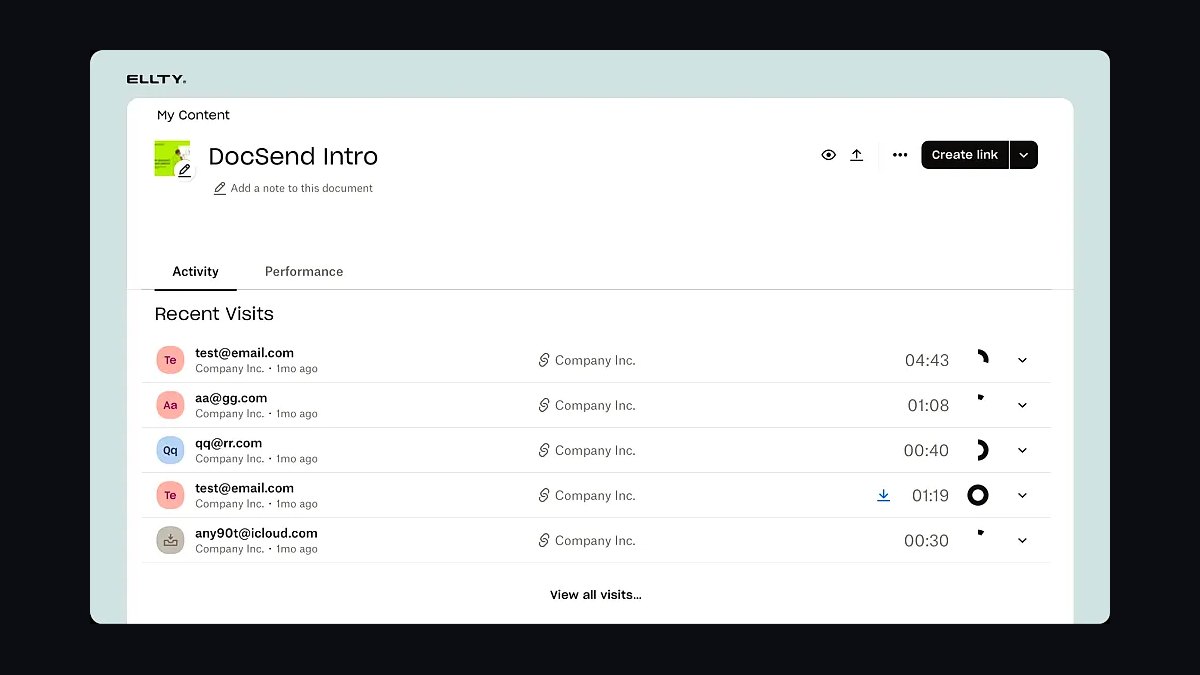
DocSend ranks tenth because page-level analytics on outbound decks reveal which investors actually read which sections, and it runs roughly $45 to $150 per user per month. That visibility is cheap relative to a lost allocation, and inbound deck tracking starts working the day it is wired in during the first thirty days.
It is for every firm sending pitch materials, subscription documents, or updates to LPs and founders. It trades away nothing strategic but adds a per-seat line that solo GPs should still absorb. Above it, Attio tracks the relationship; DocSend tracks the document that moves it forward.
How we ranked these
We ranked each tool on five weighted criteria: deal-flow capture quality (25%), fund-administration depth and audit-readiness (25%), portfolio KPI collection friction (20%), LP reporting and portal capability (15%), and total cost per investment professional (15%). Scores came from vendor documentation, published pricing, LP operational-due-diligence questionnaires, and practitioner interviews across seed through multi-stage firms. Weighting favored tools that reduce partner time rather than add dashboards.
We deliberately ignored brand recognition, conference presence, and feature-count checklists, because venture firms buy outcomes, not SKUs. We also excluded anything requiring disciplined manual data entry, since partners source through conversation and will not log activity. Integration marketplaces were down-weighted: a clean seam at the close event matters more than fifty shallow connectors. Finally, we ignored AI features that lack a verifiable workflow, because most 2026-era announcements remain demos.
What to look for
What matters most is whether the tool removes work from a partner's day or adds a chore. Auto-capture of email and calendar beats any pipeline field, fund administration with a named accountant beats a prettier portal, and a five-field founder KPI request beats a thirty-field dashboard. Match architecture to fee dollars: bundled platforms win below roughly $75M committed, assembled best-of-breed wins above it. Institutional LPs effectively force the assembled stack regardless of size.
The mistake most buyers make is choosing the back office last. Firms pick a CRM, then scramble for administration weeks before first close, then migrate capital-account history mid-fundraise at real cost. Decide the fund vehicle and administrator before you sign a single subscription agreement. The second common error is buying a sales CRM, assuming partners will log activity manually, and watching the pipeline rot within two quarters.
Related questions
Does a venture firm need PitchBook if it already has Crunchbase?
Not always. Crunchbase covers company discovery and basic financing history cheaply. PitchBook adds valuation detail, cap-table histories, fund benchmarks, and comparables. Pre-seed funds often skip it; anyone doing later-stage pricing work or reporting benchmark quartiles to LPs generally cannot. Run Crunchbase first, then add PitchBook when a specific LP question demands it.
Can a venture firm run its entire back office on a spreadsheet?
For a single small SPV, briefly. Once you have multiple vehicles, capital calls, K-1s, and institutional LPs, spreadsheets fail audit scrutiny and consume partner time that should go to sourcing. An outsourced administrator is usually cheaper than the hours it replaces, and it answers the phone during an audit.
How does a venture stack differ from a private equity stack?
Private equity buys control, mandates data feeds, and installs operators. Venture buys minority stakes it cannot direct, so it adds relationship-intelligence sourcing and founder-driven KPI collection, and drops the operating-partner and portfolio-standardization tooling PE depends on. Venture asks founders for numbers; PE requires them contractually.
When should a firm build custom internal tooling instead of buying?
Generally past $500M under management, or when the relationship graph and portfolio warehouse become genuine competitive advantages. Below that, internal engineering costs more than any vendor and diverts attention from investing. The trigger is usually a data question no vendor product can answer, not a preference for building.
What should be migrated first when switching fund administrators?
Capital-account history and prior capital-call notices, in that order. LPs reconcile against their own records, so any gap surfaces immediately and damages trust. Move K-1 archives next, then subscription documents and side letters. Never migrate mid-fundraise if you can avoid it; wait for a quiet window between vehicles.
Is Affinity worth the price for a three-person fund?
Rarely. At roughly $2,000 to $3,000 per user annually, a three-person team pays $6,000 to $9,000 for a network graph that is still small. Attio at tens of dollars per seat covers the same ground until deal volume and team size justify auto-capture across a larger partnership. Revisit around six investment professionals.
How do corporate venture arms fit into this stack?
They bolt a VC-specific CRM onto the parent's existing Salesforce and finance systems rather than replacing them. Fund administration goes to Carta or an outsourced administrator. Reporting doubles: financial return to LPs, plus strategic-fit reporting to a corporate parent. That second axis usually lives in the parent's BI tool, not a venture product.
What founder KPI template actually gets responses?
Five to eight metrics, sent monthly, with a plain-text email fallback. Cash balance, monthly burn, runway months, revenue, and headcount cover most early-stage needs. Response rate collapses with template length, so a 90 percent response on eight fields beats a 40 percent response on thirty. Never demand a warehouse connection from a pre-seed founder.
FAQ
What is the best tech stack for a venture capital firm in 2027?
Pair a relationship-intelligence CRM (Affinity or Attio) with a fund-administration spine (Carta, AngelList, or an outsourced administrator), then add founder-driven KPI collection, purpose-built reserves modeling, and an LP portal. Sourcing wins deals; administration protects them. Everything else is optional and should be justified by a specific workflow it removes.
How much should a venture firm spend on software?
Keep software under roughly 10 to 15 percent of annual management-fee dollars. A solo GP on a bundled architecture lands near $1,500 to $4,000 per month all-in. A three-to-eight person institutional seed fund runs $10,000 to $25,000 monthly. Multi-stage firms with fifteen-plus investors exceed $40,000 monthly before headcount.
Do venture firms need a CRM at all?
Yes, once you screen more than a few hundred companies a year. The value is not any single record but the aggregate graph of who in the partnership can reach whom. Below that threshold, a disciplined Notion base or Attio works. Above it, manual logging fails and warm introductions get lost silently.
What is the difference between bundled and assembled venture stacks?
Bundled means one platform absorbs the fund vehicle, capital calls, LP onboarding, and K-1 distribution, as AngelList does. Assembled means best-of-breed at every layer with integration burden accepted. Bundled wins below roughly $75M committed; assembled wins above it and is what institutional LP diligence implicitly expects.
Which tools do institutional LPs expect to see?
A named fund administrator, a SOC 2 compliant provider somewhere in the stack, and capital-account statements generated in a real system rather than a spreadsheet. Affinity, Carta, Standard Metrics, Tactyc, and Juniper Square form the reference architecture most operational-due-diligence questionnaires are written against.
How long does implementation actually take?
Ninety days is realistic if sequenced correctly. Days 0 to 30 win the front office and backfill email and calendar history. Days 31 to 60 build the back office, including administrator selection before first close. Days 61 to 90 close the portfolio and LP loop with KPI templates and the fund-construction model.
Should fund books and management-company books share software?
No. Keep them strictly separate from day one, with clean intercompany flows for expense reimbursement. Mixing operating expenses with fund-level capital, fees, and carry creates an audit and LP-trust problem that surfaces during Fund II diligence, which is exactly the wrong moment to discover it.
What is the biggest mistake when buying venture software?
Choosing the back office last. Firms pick a CRM, then scramble for administration weeks before first close, then migrate capital-account history mid-fundraise at real cost. Decide the fund vehicle and administrator before signing any subscription agreement, and dry-run a capital call before you need one live.
Can one tool handle both founder updates and LP reporting?
Visible.vc does this credibly for emerging managers, serving as both the founder-update channel and the LP-update channel. Once you need generated capital-account statements and K-1 delivery, you need a real LP portal like Juniper Square or Carta. The overlap window is roughly the first fund.
How does AI change the venture stack in 2027?
Mostly at the edges: sourcing signals, memo drafting, and meeting summarization. Auto-capture of relationship data remains the highest-value automation because it removes manual logging entirely. Treat AI features without a verifiable workflow as demos, and never let them replace the audit-grade fund administration layer.
Sources
- https://carta.com/
- https://affinity.co/
- https://attio.com/
- https://www.angellist.com/
- https://www.junipersquare.com/
- https://tactyc.co/
- https://www.standardmetrics.io/
- https://visible.vc/
- https://pitchbook.com/
- https://www.crunchbase.com/
Related on PULSE
This page will be disappearing soon. Save it to your device for $1 — or read it free while it is here.
@Kory-White- · if Venmo asks, the last 4 of my number are 2012
This page is gone.
This one is off the shelf now. $1 keeps it on your phone for good — the whole page, pictures and diagrams included.
 pulse-tech-stacksTop 10 Best Tech Stack Tools for Commercial HVAC Contractors in 2027
 pulse-tech-stacksTop 10 Best Tech Stack Tools for Tree Services in 2027
 pulse-tech-stacksTop 10 Best Tech Stack Tools for Plumbing Contractors in 2027
 pulse-tech-stacksTop 10 Best Tech Stack Tools for AI Translation API Companies in 2027
 pulse-tech-stacksTop 10 Best Tech Stack Tools for Online Travel Agencies (OTAs) in 2027
 pulse-tech-stacksTop 10 Best Tech Stack Tools for Threat Intelligence Vendors in 2027
 pulse-tech-stacksTop 10 Best Tech Stack Tools for Septic and Portable Sanitation Services in 2027
 pulse-tech-stacksTop 10 Best Tech Stack Tools for Plastics and Injection Molding Manufacturers in 2027
 pulse-tech-stacksTop 10 Best Tech Stack Tools for Independent Roofing Contractors in 2027
 pulse-tech-stacksTop 10 Best Tech Stack Tools for Hardware Security Module (HSM) Vendors in 2027