


Top 10 Best Tech Stack Tools for Real Estate Appraisal Firms in 2027
Quality
Certified
The 10 best tech stack tools for real estate appraisal firms are ranked below on measured performance, build quality, price, and how each one actually holds up in daily use rather than how it reads on a spec sheet. Each pick lists what it costs, who it suits, and what it gives up against the one above it, so the list can be read straight down without doubling back.
1TOTAL by a la mode
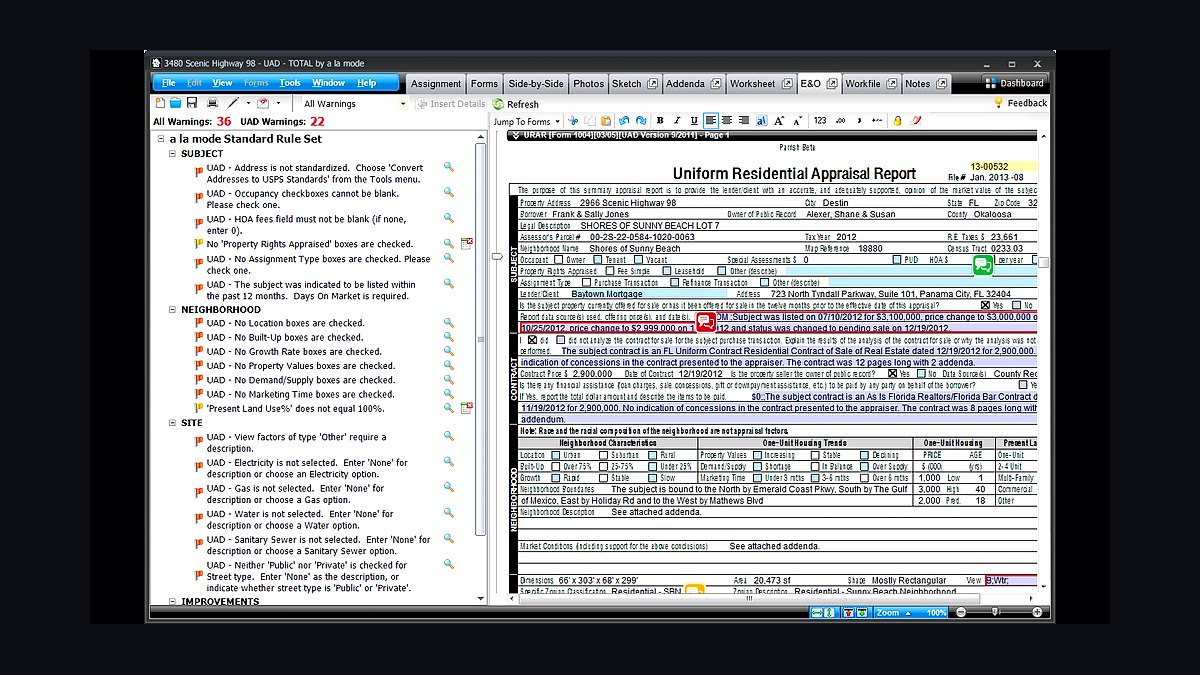
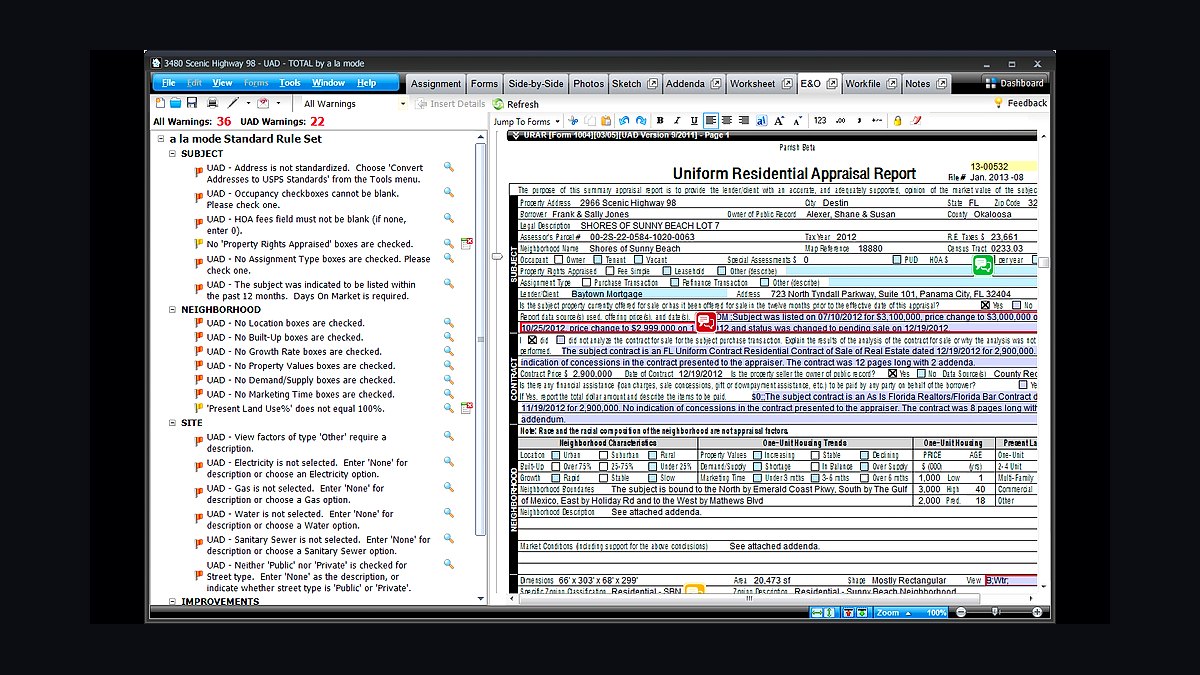
TOTAL by a la mode ranks first because it is the production core the rest of the stack plugs into, with the deepest UAD-compliant forms library and native Mercury Network delivery. It runs roughly $60-$99 per month, handles in-form UAD edit checks before submission, and syncs TOTAL for Mobile field capture back to the desktop report.
It suits solo appraisers and multi-appraiser firms doing residential lending work who want the largest ecosystem and fewest integration gaps. It trades away fully browser-based access, since it remains desktop-rooted, and costs more than Bradford's ClickFORMS. ACI Sky, ranked second, is the better pick only if remote, cloud-native work outweighs TOTAL's deeper forms and Mercury tie-in.
2ACI Sky
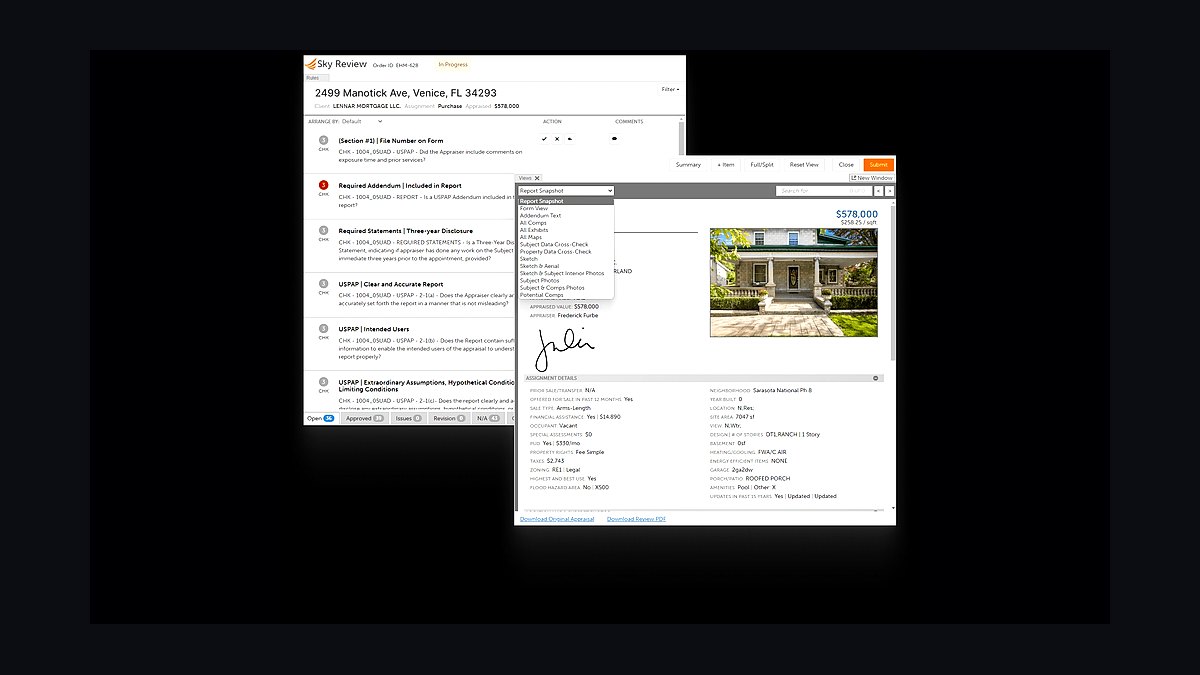
ACI Sky ranks second as the cloud-native alternative to TOTAL, running about $50-$90 per month and delivering UAD-compliant reports to UCDP and EAD entirely in a browser. That matters for firms with multiple locations or remote appraisers who cannot depend on a desktop-rooted client.
It fits firms prioritizing anywhere-access over the deepest possible forms library, and it integrates with DataMaster and Apex Sketch the same way TOTAL does. It trades away TOTAL's native Mercury Network wiring and some ecosystem depth. Against Mercury Network below it, ACI Sky is the production line while Mercury is the order rail feeding it.
3Mercury Network
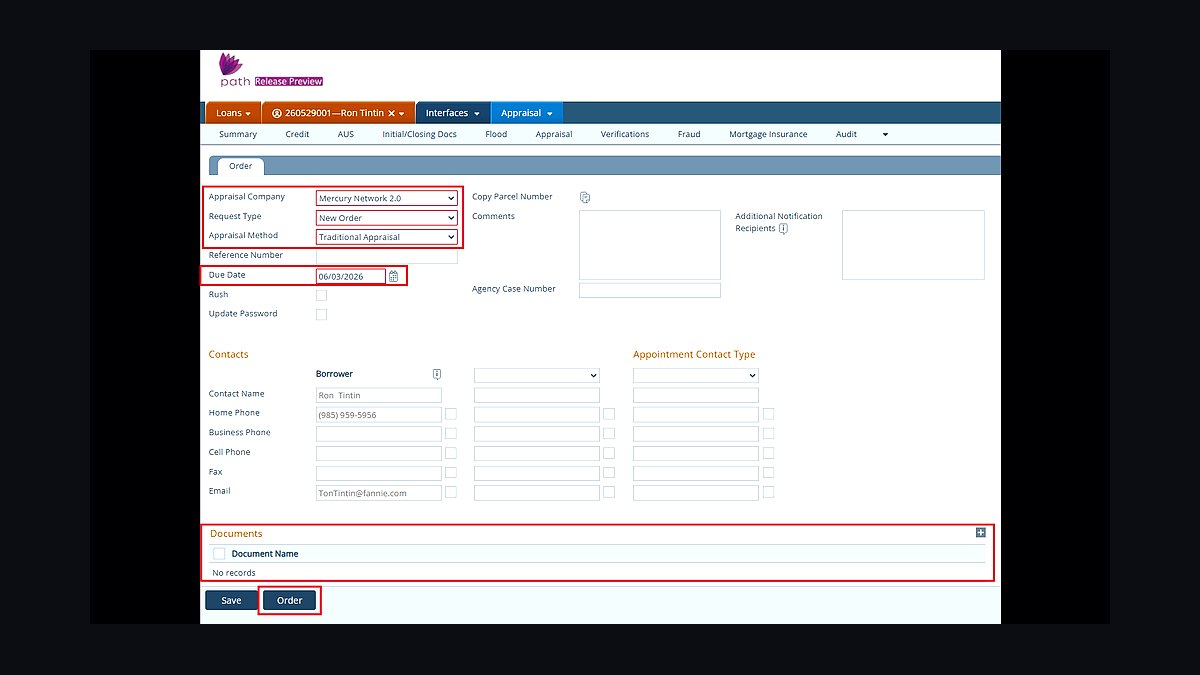
Mercury Network ranks third as the dominant order-intake and delivery rail for AMC and lender assignments, natively wired into TOTAL and routing finished reports to UCDP and EAD. It replaces inbox order management with explicit due dates and status tracking, which is where missed turn-time penalties actually originate.
It is for any firm accepting AMC or lender volume, solo or multi-appraiser, and it charges per-order delivery fees on top of subscriptions. It trades away nothing except the option of handling orders informally, which is the point. AppraisalPort, ranked fourth, serves First American-affiliated workflows rather than the broader AMC market Mercury covers.
4AppraisalPort

AppraisalPort ranks fourth as the second major order-intake rail, used heavily in First American-affiliated lender and AMC workflows. Like Mercury it delivers to UCDP and EAD, but its reach is narrower and it is less natively integrated with TOTAL's order flow.
It fits firms whose client mix skews toward First American channels and who need that specific rail rather than Mercury's broader AMC coverage. It trades away Mercury's dominant market position and deeper TOTAL wiring. Against DataMaster below it, AppraisalPort handles inbound orders while DataMaster handles the comp data feeding the report.
5DataMaster

DataMaster ranks fifth but is arguably the highest-leverage integration in the stack, running roughly $50-$80 per month and importing MLS, Realist, and CRS Data comps directly into TOTAL or ACI Sky. That eliminates hand-keyed comp figures, which are among the most common triggers for UAD edit-check failures and lender kickbacks.
It is for any firm pulling comparables from MLS printouts today, solo or multi-appraiser, and it requires an existing MLS and public-records subscription to function. It trades away nothing meaningful beyond the subscription cost. Apex Sketch, ranked sixth, handles the other required exhibit feeding the adjustment grid.
6Apex Sketch
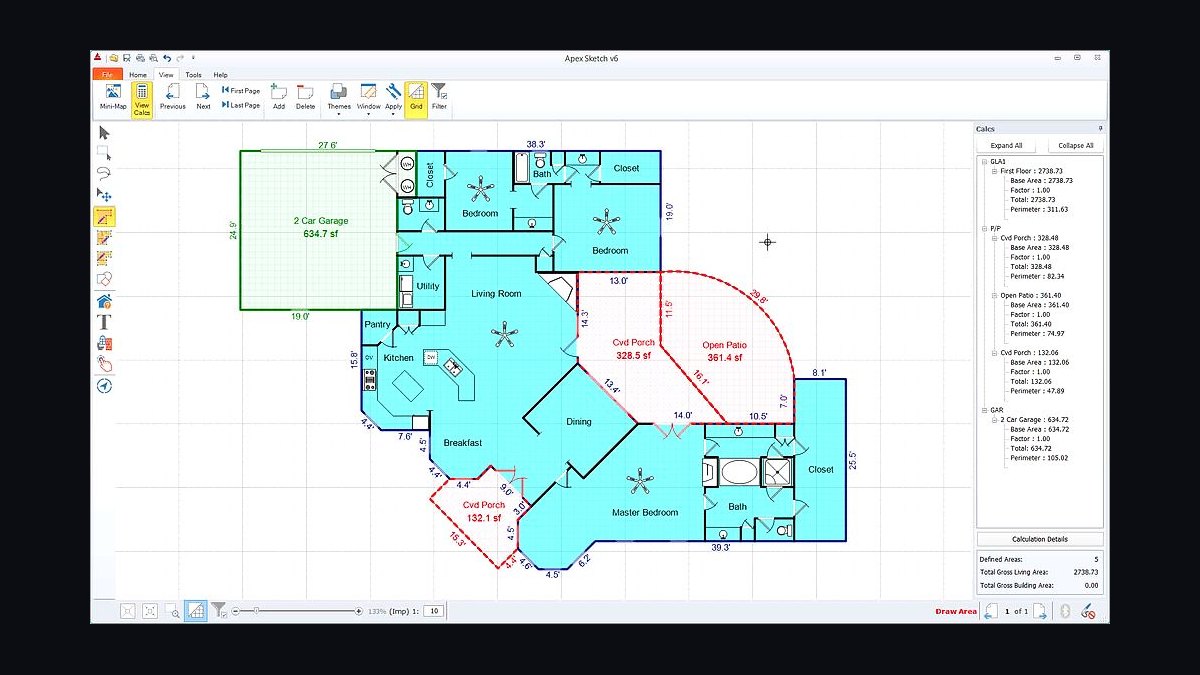
Apex Sketch ranks sixth as the gross-living-area sketch tool producing a required exhibit that feeds directly into the adjustment grid, licensed annually and also bundled in a lighter form inside TOTAL. An error in the sketch propagates into the report's core analysis, which is why it sits in the production core rather than as an accessory.
It is for appraisers who need defensible, lender-accepted area calculations and floor-plan exhibits on every assignment. It trades away nothing except the convenience of the bundled TOTAL sketch tool, which many solo appraisers find sufficient. TOTAL for Mobile, ranked seventh, captures the field data the sketch and report depend on.
7TOTAL for Mobile
_74%2C_programs_a_Trimble_S6_Total_Station_robotic_surveying_system.jpg)
TOTAL for Mobile ranks seventh as the field-capture layer, collecting photos, measurements, and condition notes on-site and syncing them back to the desktop report without retyping. It is included with TOTAL rather than sold separately, which is why it sits below the paid core tools despite being required for inspection work.
It is for any appraiser doing interior inspections, and it matters more as desktop and hybrid appraisal workflows expand under UAD 3.6. It trades away nothing beyond dependence on the TOTAL ecosystem. Anow, ranked eighth, takes over once more than one appraiser needs assignment and scheduling visibility.
8Anow
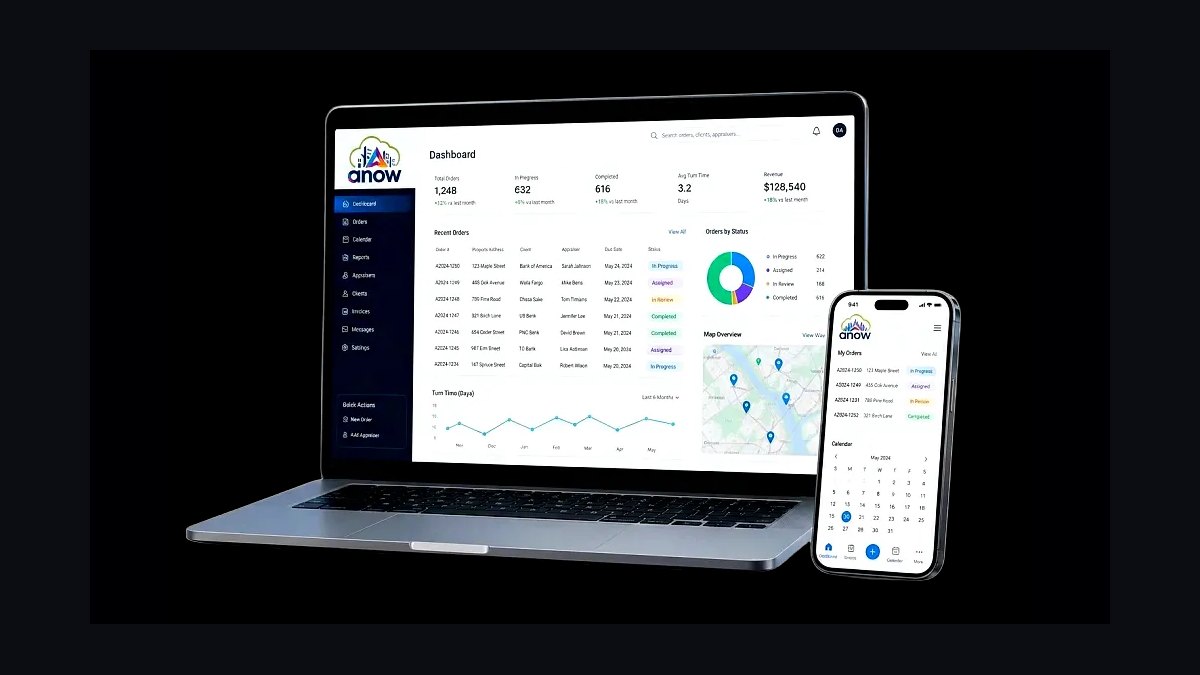
Anow ranks eighth as the firm-management layer for multi-appraiser operations, typically $50-$150 per appraiser per month, handling order assignment, scheduling, turn-time tracking, and fee splits. It is what buys a five-appraiser firm visibility into which orders are late and which appraiser is overloaded, replacing the office manager's memory.
It is for firms with two to fifteen appraisers plus admin and reviewer staff, and it inserts a reviewer step before final delivery. It trades away simplicity and adds per-seat cost that a solo appraiser cannot justify. ValueLink, ranked ninth, serves the same tier with a different feature emphasis and an AMC-grade option.
9ValueLink
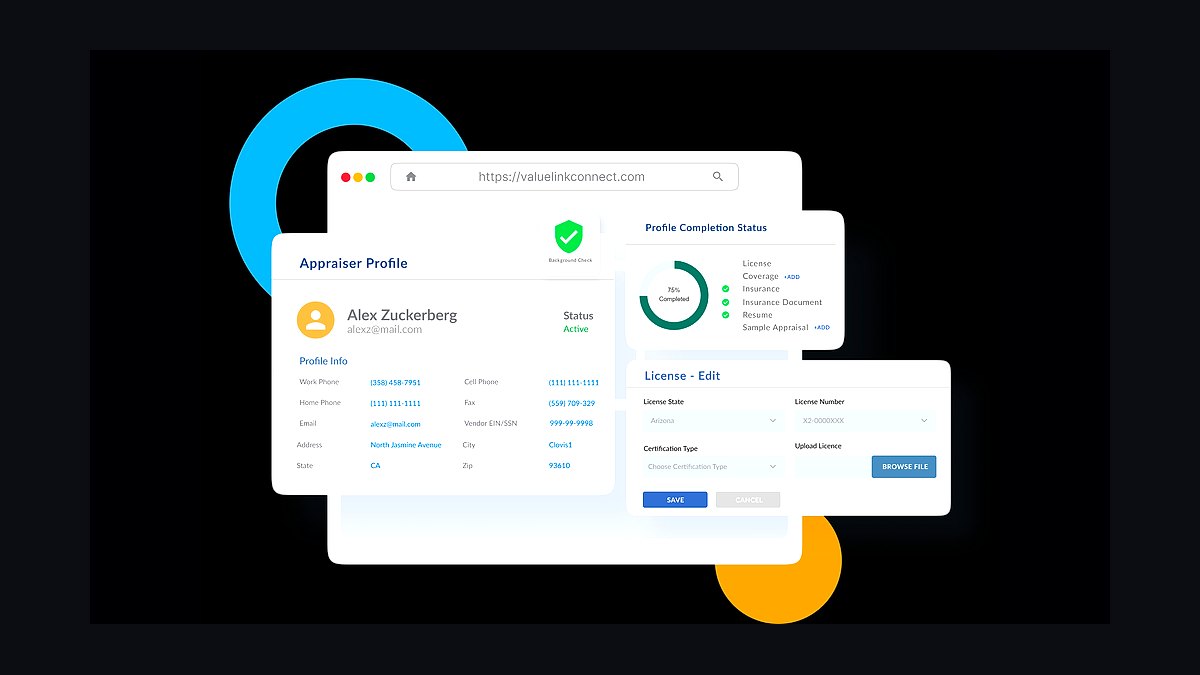
ValueLink ranks ninth as the alternative firm-workflow and AMC-tier platform, covering order routing, vendor compliance, and scheduling at per-seat or per-order pricing. Its AMC tier handles panels of independent appraisers and integrates with multiple lenders' loan-origination systems, which Anow does not target.
It is for multi-appraiser firms comparing workflow platforms and for AMCs routing to a vetted panel. It trades away Anow's simpler per-seat subscription model in favor of enterprise quoting. Power BI Pro, ranked tenth, sits above both as the reporting layer once spreadsheets stop scaling.
10Power BI Pro
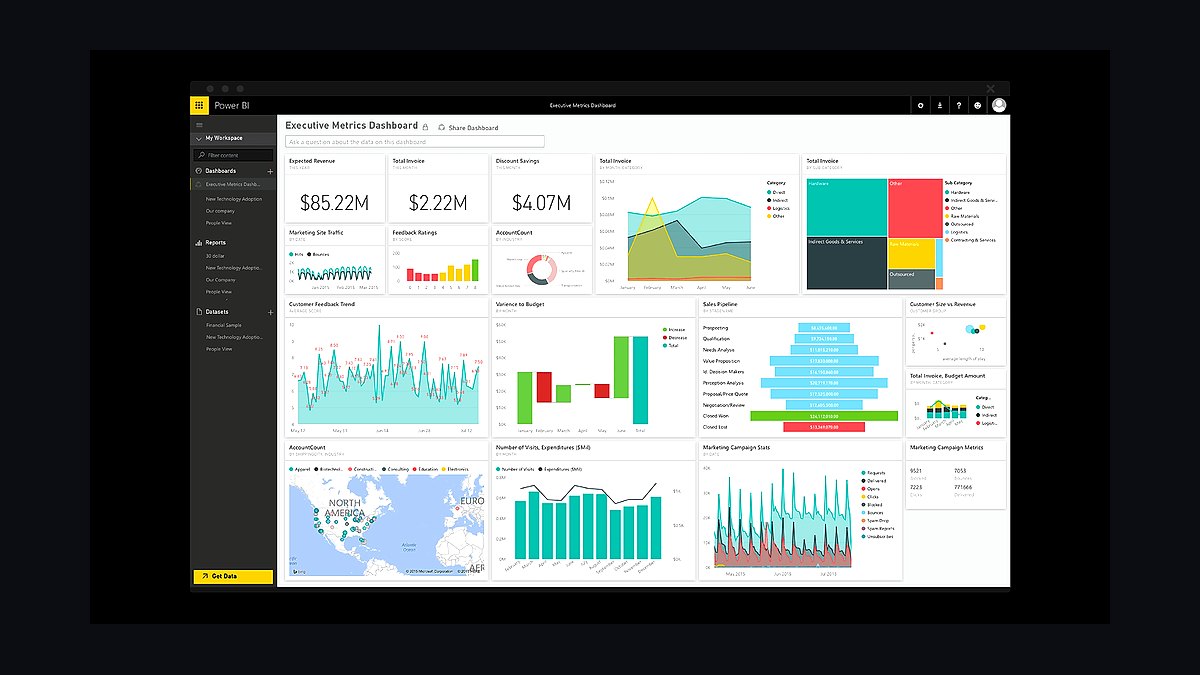
Power BI Pro ranks tenth at roughly $14 per user per month, turning turn-time, revision-rate, and per-client service-level data from Anow, ValueLink, or QuickBooks into dashboards. It is the last piece added, because it only produces value once a firm already has clean order and delivery data flowing.
It is for multi-appraiser firms and AMCs where the office manager has outgrown a spreadsheet for tracking the queue. It trades away simplicity and requires someone to build and maintain the reports. Against ValueLink above it, Power BI is the measurement layer rather than the system of record.
How we ranked these
We ranked tools by weighting four handoffs that determine appraisal firm throughput: order intake and delivery, comp and public-records import, field capture, and UAD/USPAP compliance checking. Form software and order rails carried the heaviest weight because nothing else substitutes for them. Firm-management platforms scored lower for solo appraisers and higher for multi-appraiser shops, where assignment visibility and fee tracking drive real turn-time gains.
We deliberately ignored brand popularity, marketing spend, and feature counts that never touch a residential lending assignment. General-purpose CRMs, generic project tools, and AI writing assistants were excluded because they cannot produce a UAD-compliant report or deliver to UCDP/EAD. Commercial narrative tooling was also excluded, since CRE firms run a fundamentally separate stack. Pricing was treated as context, not a ranking factor.
What to look for
What matters most is whether the four handoffs are actually connected, not which individual product wins a feature comparison. Order intake through Mercury or AppraisalPort, comp import through DataMaster, field capture on TOTAL for Mobile, and delivery to UCDP/EAD should all move data without retyping. A partially wired stack behaves worse than a simpler one that is fully connected end to end.
The mistake most buyers make is choosing form software on price or interface polish, then discovering it lacks native Mercury delivery or UAD edit-checking. Equally common: buying Anow or ValueLink before there is a second appraiser to manage, or deferring UAD 3.6 readiness because the deadline feels distant. Buy the production core first, wire the data feeds second, and add firm workflow only when headcount justifies it.
Related questions
Is TOTAL by a la mode or ACI Sky the better choice for a new firm?
TOTAL has the deepest forms library and native Mercury Network delivery, making it the default for firms wanting the largest ecosystem and fewest integration surprises. ACI Sky is fully cloud-native and browser-based, which suits firms wanting multi-location or fully remote access over a desktop-rooted client. Both deliver to UCDP and EAD.
Do I need Anow or ValueLink as a solo appraiser?
No. TOTAL or ACI Sky plus Mercury Network already covers order intake, form production, and delivery for one person, and adding a firm platform mostly duplicates what the form software handles. Firm-workflow platforms earn their cost once a second appraiser, trainee, or reviewer joins the operation and assignment visibility matters.
How does UAD 3.6 affect an appraisal firm's existing software?
Current form software vendors are building support for the new dynamic Uniform Residential Appraisal Report directly into their existing platforms. The risk isn't the software itself, it's a firm delaying training until after the migration deadline forces adoption, at which point reports get rejected at UCDP with no fallback.
Can a residential appraisal firm also serve commercial clients with the same stack?
Not with one unified toolset. Commercial appraisal work runs on narrative report tooling and commercial comp sources like CoStar, entirely separate from the UAD/URAR form family used for residential lending work. Firms doing both are effectively running two stacks and should budget accordingly rather than forcing one platform to cover both.
What's the fastest way to cut revision requests?
Import comps through DataMaster instead of hand-keying them from MLS printouts, and run UAD edit checks inside the form software before delivery rather than after a lender flags an issue. Most revisions trace back to transcription errors and edit-check failures, both of which are cheaper to catch pre-delivery than post-delivery.
Does Mercury Network or AppraisalPort matter more for order intake?
Mercury Network is the dominant rail and natively wired into TOTAL, so most AMC and lender orders arrive there. AppraisalPort is used heavily in First American-affiliated workflows. Many firms connect both, since refusing one rail means turning away volume from clients who only route through it.
How much should a solo appraiser budget monthly for the full stack?
Roughly $200 to $450 per month all-in: TOTAL or ACI Sky at $50 to $99, DataMaster at $50 to $80, Apex Sketch on an annual license, and QuickBooks Online at $35 to $99. Mercury per-order delivery fees and local MLS dues are billed separately through your association.
When should a firm add Power BI to the stack?
Once the office manager can no longer track the queue in a spreadsheet, typically past three or four appraisers. Power BI Pro runs about $14 per user monthly and pulls turn-time, revision-rate, and per-client service-level dashboards from Anow, ValueLink, or QuickBooks, replacing memory-based status tracking.
FAQ
Do I need a separate firm-management platform like Anow, or is TOTAL and Mercury enough?
For a solo appraiser, TOTAL plus Mercury Network genuinely is enough, since the form software is the factory and Mercury handles order intake and UCDP/EAD delivery. Add a second appraiser, a trainee, or a reviewer, and you need firm-level assignment, scheduling, and fee-split tracking that only Anow or ValueLink provides.
What is the real difference between TOTAL by a la mode and ACI Sky?
Both are UAD-compliant and deliver to UCDP/EAD. TOTAL is the dominant desktop-rooted product with the deepest forms library and native Mercury tie-in; ACI Sky is cloud-native and browser-based, which firms wanting fully online or multi-location work tend to prefer. Neither is strictly better, just differently shaped.
How does UAD 3.6 and the new dynamic URAR change my stack?
The GSEs are collapsing the legacy 1004, 1073, and 1025 forms into one dynamic, data-driven report. Your form software needs to support it and your appraisers need training before migration deadlines, or reports get rejected at UCDP. It also raises the value of solid mobile capture as desktop and hybrid workflows expand.
Do commercial appraisers use the same tech stack as residential appraisers?
No. Commercial appraisal is narrative-based, relying on Word and Excel modeling and commercial comp data from sources like CoStar rather than the URAR form family. UCDP and EAD delivery doesn't apply since commercial reports aren't GSE residential-collateral reports, so the two practices run separate stacks entirely.
How do appraisal management companies fit into the order flow?
AMCs sit between lenders and appraisers, routing assignments to a vetted panel and managing compliance and fee disbursement. From a firm's side, orders arrive through Mercury Network or AMC portals; from the AMC's side, the stack is a routing platform like Appraisal Scope, Reggora, or ValueLink integrated with multiple lenders' systems.
What causes the most revision requests, and which tools reduce them?
Most revisions trace back to data transcription errors and UAD edit-check failures. DataMaster's direct comp import cuts transcription errors, in-form UAD QC catches edit-check failures before delivery, and a reviewer step in Anow or ValueLink at multi-appraiser firms catches consistency issues before a report ever reaches UCDP.
Is running order intake through email ever acceptable for an appraisal firm?
It works until volume spikes, then due dates get missed silently and turn-time penalties accumulate without a clear signal to the firm. Every order should carry an explicit due date and status from acceptance to delivery, which means routing through Mercury Network or a firm platform like Anow rather than a shared inbox.
What does Apex Sketch actually contribute beyond the form software's built-in sketch tool?
Apex Sketch produces the gross-living-area exhibit required in most residential reports and feeds directly into the adjustment grid, so an error there propagates into the core analysis. Its dedicated tooling is faster and more precise than the bundled sketch tool for complex floor plans and multi-level homes.
How long does a full stack rollout realistically take?
About ninety days if sequenced properly. Days zero to thirty cover the form core and Mercury order rail plus QuickBooks; days thirty-one to sixty wire MLS, Realist, DataMaster, and the UAD quality-control step; days sixty-one to ninety add Anow or ValueLink workflow, Power BI dashboards, and UAD 3.6 training.
What happens if a firm defers the UAD 3.6 migration?
Reports get bounced at UCDP with no fallback to the old 1004, 1073, or 1025 forms once the GSEs finalize the collapse into the single dynamic report. There is no grace period built into the delivery portal, so deferring training or software updates converts directly into unbillable rework and missed client deadlines.
Sources
- https://www.alamode.com
- https://www.mercurynetwork.com
- https://www.aciweb.com
- https://www.bradfordsoftware.com
- https://singlefamily.fanniemae.com/delivering/uniform-mortgage-data-program/uniform-appraisal-dataset-uad
- https://www.hud.gov/program_offices/housing/sfh/appr
- https://anow.com
- https://www.reggora.com
- https://www.datamasterusa.com
Related on PULSE
This page will be disappearing soon. Save it to your device for $1 — or read it free while it is here.
@Kory-White- · if Venmo asks, the last 4 of my number are 2012
This page is gone.
This one is off the shelf now. $1 keeps it on your phone for good — the whole page, pictures and diagrams included.
 pulse-tech-stacksTop 10 Best Tech Stack Tools for Mobile Threat Defense (MTD) Vendors in 2027
 pulse-tech-stacksTop 10 Best Tech Stack Tools for Land Surveying Firms in 2027
 pulse-tech-stacksTop 10 Best Tech Stack Tools for Staffing Agencies in 2027
 pulse-tech-stacksTop 10 Best Tech Stack Tools for AI Document Intelligence Companies in 2027
 pulse-tech-stacksTop 10 Best Tech Stack Tools for Plastics and Injection Molding Manufacturers in 2027
 pulse-tech-stacksTop 10 Best Tech Stack Tools for Data Loss Prevention (DLP) Software Vendors in 2027
 pulse-tech-stacksTop 10 Best Tech Stack Tools for Bars and Pubs in 2027
 pulse-tech-stacksTop 10 Best Tech Stack Tools for Podiatry Practices in 2027
 pulse-tech-stacksTop 10 Best Tech Stack Tools for Hair Salons in 2027
 pulse-tech-stacksTop 10 Best Tech Stack Tools for Insulation Contractors in 2027