


Top 10 Best Tech Stack Tools for Food Delivery Marketplaces in 2027
Quality
Certified
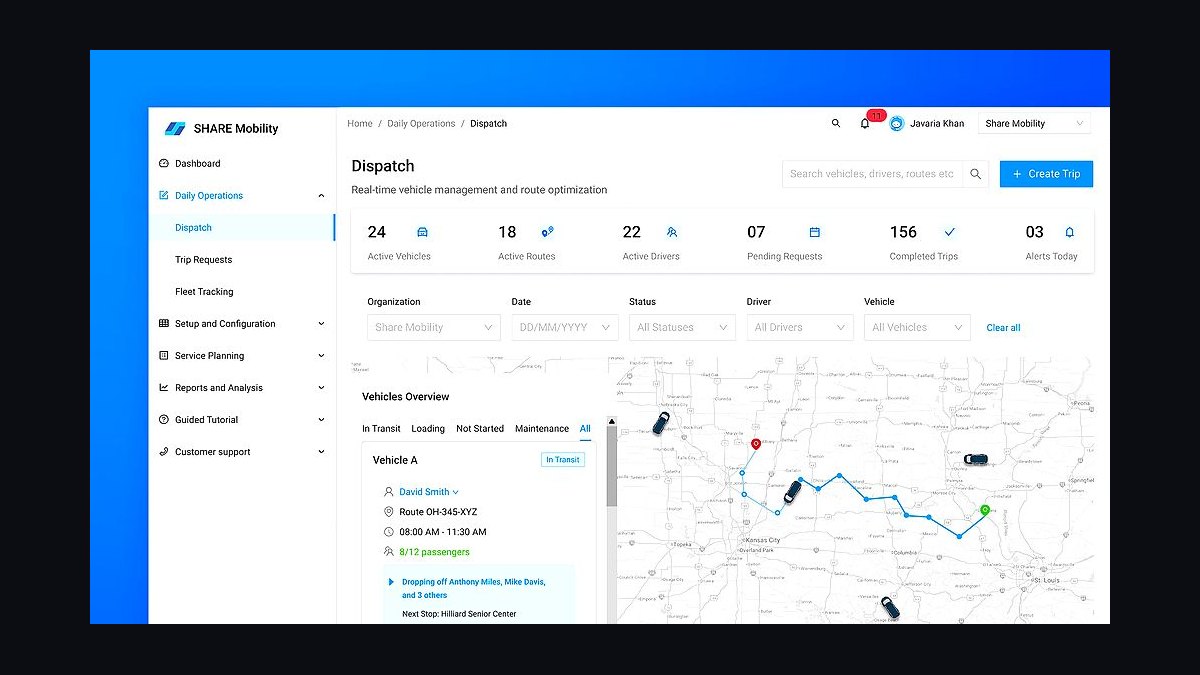
The 10 best tech stack tools for food delivery marketplaces are ranked below on measured performance, build quality, price, and how each one actually holds up in daily use rather than how it reads on a spec sheet. Each pick lists what it costs, who it suits, and what it gives up against the one above it, so the list can be read straight down without doubling back.
1Olo Dispatch
Olo Dispatch ranks first because restaurant POS integration is the layer no food delivery marketplace should ever build in-house past a pilot, and Olo's 100+ POS connections concentrate on the enterprise systems that dominate chain-heavy markets. It pushes orders into Toast, Micros, Aloha, and Brink in real time and returns a ready signal, which is exactly the sync that prevents 86'd items and price changes from triggering cancellations.
It is built for operators whose restaurant base skews toward multi-location chains and franchises, not the long tail of single-location independents that will never justify a custom integration. The trade-off is cost and coverage: at 5,000 restaurants Olo alone can run $1.5 million a month, and it leaves gaps against regional POS systems. Most operators pair it with Otter or Chowly rather than standardizing on Olo everywhere.
2Otter

Otter ranks second because it solves the same POS integration problem as Olo but from the tablet-aggregation side, which makes it the better fit for markets dominated by independent restaurants running multiple delivery platforms. Its tablet model consolidates order flow from several marketplaces into one device, so a single-location restaurant with no enterprise POS still gets real-time menu and order sync without a custom build.
The trade-off is depth: tablet aggregation is less native than a direct POS push, so high-volume chain accounts often outgrow it. It is the right first vendor for an operator entering an independent-heavy city, and the natural complement to Olo in a two-vendor strategy. Compared with Olo Dispatch directly above, Otter trades enterprise integration depth for far broader long-tail coverage at lower cost.
3ItsaCheckmate
ItsaCheckmate ranks third because it attacks the same restaurant-integration layer through direct POS sync rather than tablets, covering the long tail of single-location restaurants that will never get a custom enterprise integration. It sits alongside Chowly in the SMB-oriented tier of the $40 to $300 per restaurant per month range, and its direct sync avoids the failure modes of a tablet farm once a restaurant runs three or more platforms.
It is for operators whose restaurant mix is mostly independents but who want cleaner POS-level sync than tablet aggregation provides. The trade-off is that no single middleware vendor covers every POS system in the field, so ItsaCheckmate is typically contracted as one of two or three vendors rather than the only one. It competes directly with Otter above it on integration method and with Chowly below it on price.
4Chowly

Chowly ranks fourth because it occupies the same direct POS sync niche as ItsaCheckmate but is frequently the cheaper of the two for independent-heavy markets, landing near the bottom of the $40 to $300 per restaurant per month middleware band. It pushes marketplace orders straight into the restaurant's existing POS and returns status signals, which keeps menu and price changes in sync without a tablet sitting on the counter.
It is built for operators who need broad independent coverage at minimal per-restaurant cost and are willing to run a second vendor for the POS systems Chowly does not reach. The trade-off is that enterprise chain accounts with custom systems usually fall outside its coverage. Against ItsaCheckmate directly above, Chowly trades some integration depth for price, and most multi-market operators run both.
5Mapbox
Mapbox ranks fifth because routing and courier navigation are bought, not built, and Mapbox's in-app turn-by-turn navigation runs roughly $0.50 to $5.00 per 1,000 requests, making it the cheaper of the two mainstream routing providers for high-volume dispatch. Every courier ETA and batch decision depends on accurate routing, so this layer sits directly under the in-house dispatch engine and has to be live from day one.
It is for operators who want low per-request cost and are willing to accept slightly less place-data richness than Google Maps Platform, whose geocoding calls run $5 to $17 per 1,000 at scale. The trade-off is that Mapbox alone is not a full fallback story, which is why a second provider is added by day 61 to 90. Compared with the middleware vendors above it, Mapbox is a pure commodity buy with no differentiation to protect.
6Stripe Connect

Stripe Connect ranks sixth because split payments between restaurants, couriers, and the marketplace are a bought primitive, and Stripe Connect covers single-country operations well past regional scale. Processing typically lands between 0.5% and 2.9% plus a fixed fee per transaction depending on card type and payout configuration, and it handles restaurant and courier payouts without a custom ledger. It should be live in the first 30 days alongside the in-house dispatch MVP.
It is for operators running in one country who want fast time-to-production on payments rather than a bespoke settlement system. The trade-off is cross-border cost: Adyen's high-volume and cross-border rate sits closer to 0.6% plus interchange, which is why the largest global operators layer Adyen on top of a Stripe Connect core. Against Mapbox directly above, Stripe Connect carries direct revenue-path risk if it fails, so redundancy and reconciliation matter more.
7Snowflake

Snowflake ranks seventh because demand forecasting and prep-time prediction require a warehouse, and neither is needed on day one but both become necessary around day 31 as order volume grows. Without prep-time prediction, the dispatch engine cannot tell whether a restaurant will have food ready in six minutes or sixteen, and couriers either idle at the counter or arrive before the order exists.
It is for operators past the pilot stage who are scaling toward 10 to 50 cities and need analytics that dispatch and forecasting models can actually consume. The trade-off is that Snowflake adds real monthly cost before it returns anything, so launching it too early wastes budget. Compared with Databricks directly below, Snowflake is the stronger fit for SQL-centric analytics teams, while Databricks suits teams doing heavier model training.
8Databricks
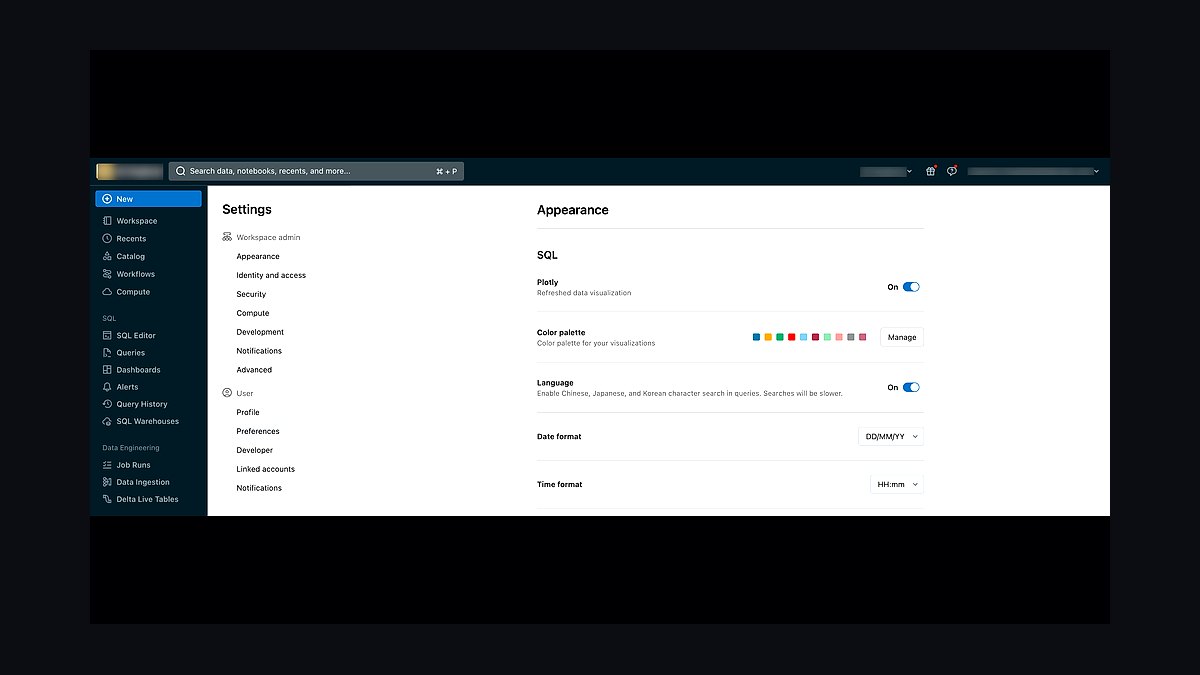
Databricks ranks eighth because it covers the same day-31 data layer as Snowflake but leans toward model training and engineering-heavy workloads, which matters once prep-time prediction and demand forecasting become core to dispatch accuracy. It runs in parallel with Snowflake rather than replacing it at most operators, with order events flowing through Kafka into both systems. Neither is needed on day one, and both become necessary as order volume grows past a single-market pilot.
It is for operators with data engineering and ML talent who want to train and iterate on forecasting models inside the same platform that holds the warehouse. The trade-off is operational overhead: running both Snowflake and Databricks doubles the data-layer cost line, which is why early-stage operators pick one. Against Snowflake directly above, Databricks trades simpler SQL analytics for stronger model-development tooling.
9Sift
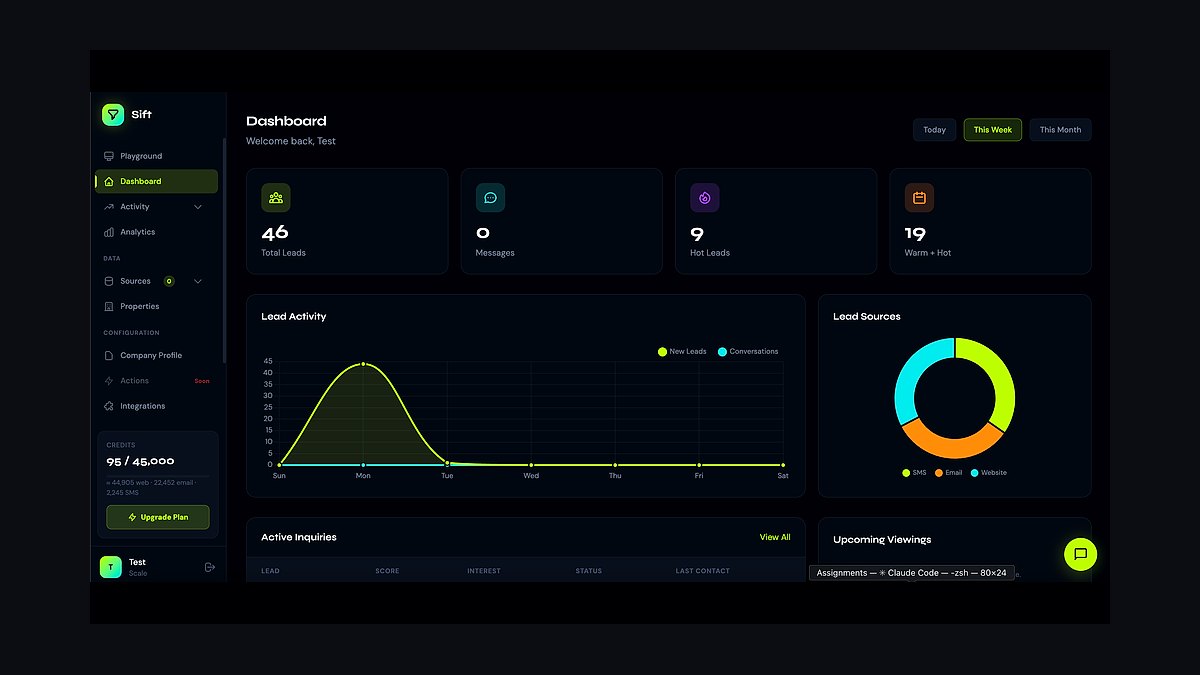
Sift ranks ninth because fraud and risk tooling is priced per scored event at roughly $0.05 to $0.20, and promo abuse alone leaks 1% to 3% of gross order value at any operator running without a real fraud stack. That means the vendor's cost is recovered many times over once daily order volume clears roughly 100,000 orders.
It is for operators whose acquisition spend is increasing, since fraud patterns compound faster once promo volume rises. The trade-off is that below roughly 100,000 orders a day the per-event cost can exceed the leakage it prevents, so smaller operators may defer it. Against Databricks directly above, Sift protects margin rather than improving dispatch, and it competes with Forter on scoring quality rather than price.
10Intercom Fin
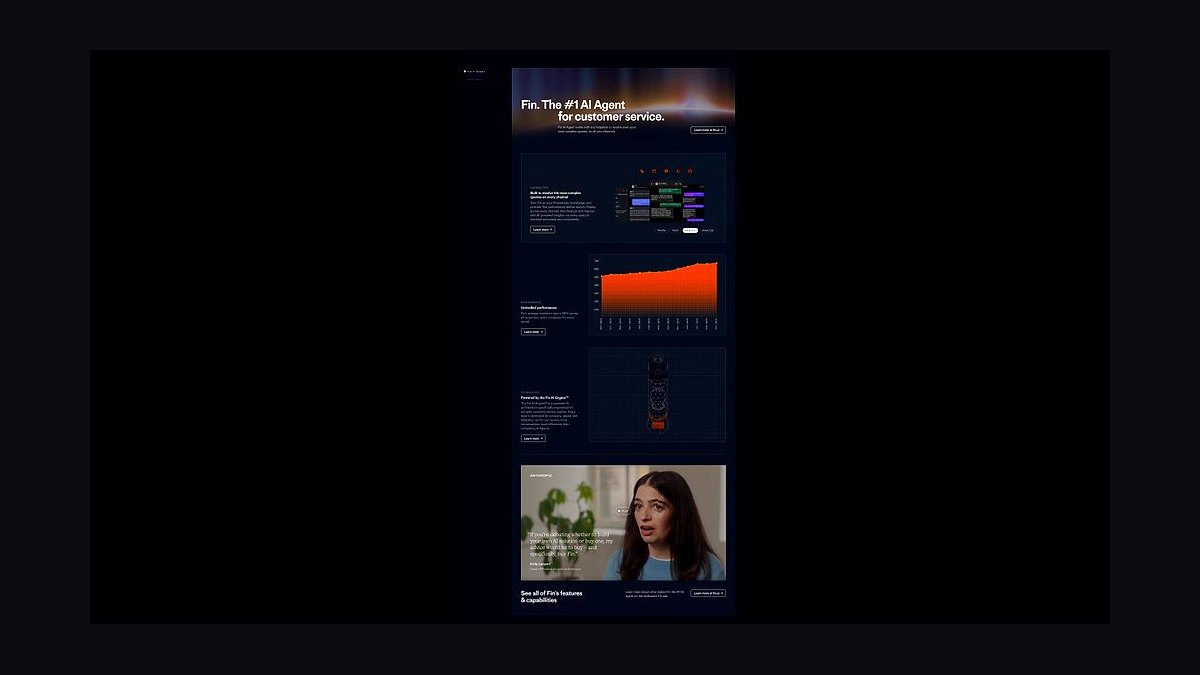
Intercom Fin ranks tenth because AI ticket deflection is the single biggest support-cost lever available, resolving 60% to 70% of contact volume before it reaches a human agent at roughly $0.99 per resolution on top of a $115-per-agent-per-month Zendesk seat. For an operator fielding thousands of order-status and refund tickets a day, that deflection rate directly reduces headcount growth.
It is for operators who want to hold support cost flat while order volume scales, and who accept that chat-only AI cannot handle time-critical issues like an order not showing up at all. The trade-off is that the hardest tickets still need humans, which is why Twilio Flex is added for a dedicated restaurant-and-courier phone line.
How we ranked these
We ranked each tool on four weighted criteria: coverage of the three-sided marketplace problem (30%), integration depth against real POS and payment systems (25%), total cost at 5,000-restaurant scale (25%), and time-to-production for a new market launch (20%). Scores came from vendor documentation, published pricing, and operator-reported deployment timelines. Tools that only solved one side of the marketplace scored lower regardless of polish.
We deliberately ignored brand recognition, analyst-quadrant placement, and demo polish, because none of those predict whether a stack survives contact with 200,000 daily orders. We also excluded headcount and hiring cost, since those vary too widely by geography to compare fairly. Vendor lock-in risk was noted but not weighted, because switching middleware mid-scale is rare in practice.
What to look for
What matters most is POS coverage against your actual restaurant mix, not the vendor's total integration count. A vendor with 100 connections that misses the two systems dominating your city is worse than one with 40 that covers your base. Ask for a coverage map by ZIP code before signing anything, and pilot on ten real restaurants.
The mistake most buyers make is standardizing on a single middleware vendor to simplify procurement. Restaurant POS mix varies city by city, so single-vendor standardization guarantees coverage gaps in every new market. Contract with two or three vendors, route by restaurant, and renegotiate annually once volume gives you leverage.
Related questions
Should I use one restaurant-integration vendor or several?
Most operators run two or three simultaneously — Olo for chain accounts, Otter or Chowly for independents — because no single middleware vendor covers every POS system a restaurant base will include. Standardizing on one vendor looks simpler on a procurement spreadsheet but guarantees coverage gaps the moment you enter a market with a different restaurant mix.
Is in-house dispatch ever the wrong choice for a small operator?
No. Even at three cities, a lightweight in-house matching engine outperforms any licensed alternative, since dispatch logic must encode local density and restaurant timing that no vendor product captures. The build cost is a few engineer-months; the cost of renting someone else's matching logic is permanently capped margin and no defensible moat.
When should Adyen be added on top of Stripe Connect?
Add Adyen once international or high-volume cross-border payment settlement becomes a real percentage of order volume — Stripe Connect alone covers single-country operations well past regional scale. The trigger is usually a second country, not a volume threshold, because Adyen's advantage is cross-border settlement and local payment method coverage.
How much of the budget should go to fraud tooling?
Treat fraud spend as self-funding: Sift or Forter costs pennies per event but typically prevents 1% to 3% of gross order value from leaking to promo abuse and collusion once volume passes 100,000 orders a day. Below that threshold, manual review plus basic rules usually beats a full fraud vendor on cost.
Does prep-time prediction really need to ship in the first 60 days?
Yes, if dispatch accuracy matters. Without prep-time prediction, the dispatch engine cannot tell whether food will be ready in six minutes or sixteen, so couriers either idle at the counter or arrive before the order exists. Both outcomes burn courier trust and restaurant patience faster than almost any other early operational failure.
How do I compare Mapbox and Google Maps for routing cost?
Run both in parallel and route each call type to whichever is cheaper. Mapbox turn-by-turn navigation runs roughly $0.50 to $5.00 per 1,000 requests, while Google's geocoding and place-data calls run $5 to $17 per 1,000 at scale. The dual-provider setup also gives you a routing fallback during outages.
What breaks first when a marketplace scales past ten cities?
Restaurant POS coverage, almost every time. The middleware vendor that covered your first market cleanly will miss systems in the next one, and menu sync failures turn into wrong orders, which turn into restaurants pausing their listings. Adding a second middleware vendor before city eleven is cheaper than recovering churned supply.
Is a proprietary ad server necessary at launch?
No. Sponsored listings and an in-house ad auction are a days 61-90 or later priority — they depend on having enough restaurant density for competitive bidding to generate meaningful revenue. Launching an ad auction into a thin restaurant base produces low clearing prices and restaurant frustration, not margin.
FAQ
Can a Food Delivery Marketplace launch without any restaurant-integration middleware?
Not past a handful of restaurants. Manual order entry or tablet farms collapse once a restaurant runs multiple platforms, since 86'd items and price changes stop syncing and cancellations spike. The maintenance burden of one-off POS integrations also scales linearly with restaurant count and never levels off, which is why buying this layer is the correct operations decision.
Is Snowflake or Databricks the higher priority in the first 90 days?
Neither is needed on day one. Both matter starting around day 31, when prep-time prediction and demand forecasting become necessary to keep dispatch accurate as order volume grows. Snowflake typically lands first as the warehouse, with Databricks following for model training once the event pipeline through Kafka is stable and producing clean data.
Does the recommended stack change for a grocery-plus-restaurant hybrid operator?
The core stays the same, but hybrid operators typically add a second, grocery-specific dispatch path alongside the restaurant dispatch engine, since grocery orders have different weight, batching, and substitution logic. The middleware layer also splits, because grocery inventory systems share almost nothing with restaurant POS platforms like Toast or Aloha.
What is the fastest way to lose restaurant supply in a new market?
Order errors from unsynced menus and inventory. This is why choosing one working POS-integration vendor in the first 30 days outranks every other operations priority at launch. A restaurant that gets three wrong orders from a stale menu sync will pause its listing before a courier quits over a bad week of pay.
Should courier onboarding be manual in an early market?
No. Checkr and Persona should be live from day one; manual review of background checks and identity verification is the most common early bottleneck on courier supply growth. At $25 to $60 per background check plus $1 to $3 per identity verification, automated onboarding is also cheaper per courier than the recruiter hours manual review consumes.
How much does the middleware layer cost at 5,000 restaurants?
Restaurant-integration middleware runs $40 to $300 per restaurant per month depending on vendor and integration depth. At 5,000 active restaurants, that is $200,000 to $1.5 million a month just for the POS-integration layer, which is why middleware contract renegotiation is a recurring line item on every regional operator's budget review.
What share of total spend goes to cloud infrastructure at scale?
For a national operator running 100-plus cities at 10 million-plus orders a day, cloud infrastructure alone consumes 35% to 50% of total software and cloud spend. That ratio surprises operators used to thinking of cloud as a minor line item relative to headcount, and it is the single largest lever in late-stage cost reduction.
Do I need Twilio Flex if I already run Zendesk and Intercom Fin?
Yes, for time-critical issues. Chat-only support cannot handle an order not showing up at all, and restaurant or courier phone lines need a dedicated voice stack. Twilio Flex covers that gap, typically deployed in the days 61-90 window once order volume makes phone escalation a daily occurrence rather than an edge case.
How do I know the first 90 days were sequenced correctly?
The stack should scale from three cities to thirty without a re-platform. If nothing built in the first 90 days needs to be ripped out to support the next twenty markets — only extended — the sequence was right. Needing to replace dispatch or middleware at city eleven is the clearest signal the rollout order was wrong.
Is loyalty and subscription logic worth building in-house?
Yes, on top of a bought billing primitive like Stripe Billing rather than a custom ledger. Eligibility rules, free-delivery thresholds, and cross-pillar bundling sit too close to core unit economics to hand to a vendor, but the billing mechanics underneath are commodity and should never be built from scratch.
Sources
- https://stripe.com/connect
- https://www.olo.com/dispatch
- https://docs.mapbox.com/help/getting-started/maps/
- https://www.snowflake.com/
- https://www.databricks.com/
- https://www.zendesk.com/
- https://www.twilio.com/en-us/flex
- https://www.braze.com/
- https://checkr.com/
- https://www.adyen.com/
Related on PULSE
This page will be disappearing soon. Save it to your device for $1 — or read it free while it is here.
@Kory-White- · if Venmo asks, the last 4 of my number are 2012
This page is gone.
This one is off the shelf now. $1 keeps it on your phone for good — the whole page, pictures and diagrams included.
 tkTop 10 Best Tech Stack Tools for Fencing and Deck Contractors in 2027
 pulse-tech-stacksTop 10 Best Tech Stack Tools for Medical Billing and RCM Companies in 2027
 pulse-tech-stacksTop 10 Best Tech Stack Tools for Window Cleaning Services in 2027
 pulse-tech-stacksTop 10 Best Tech Stack Tools for Embeddings API Companies in 2027
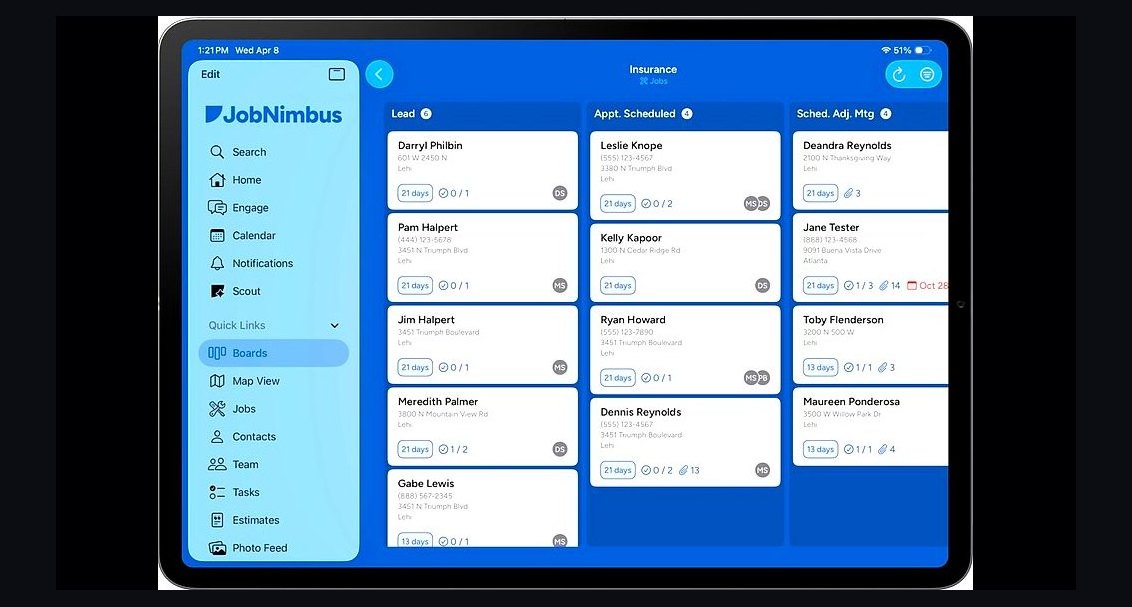 pulse-tech-stacksTop 10 Best Tech Stack Tools for Independent Roofing Contractors in 2027
 pulse-tech-stacksTop 10 Best Tech Stack Tools for Threat Intelligence Vendors in 2027
 pulse-tech-stacksTop 10 Best Tech Stack Tools for Tree Services in 2027
 pulse-tech-stacksTop 10 Best Tech Stack Tools for Tire Shops in 2027
 pulse-tech-stacksTop 10 Best Tech Stack Tools for Bars and Pubs in 2027
 pulse-tech-stacksTop 10 Best Tech Stack Tools for RV Dealerships in 2027